Presented by:
Abhishek Lulla
Vikas Soni
Management Scholars,
Dept. of Pharmaceutical Management,
NIPER, Mohali.
Flow oF presentation……
• What is Manpower planning
• Need of Manpower planning
• Steps of Manpower planning
• Methods involved of Manpower planning steps
• Operational plans of Manpower planning
26-Oct-15
What is Manpower planning(MPP)?
Also known as Human resource planning.
“Human resource planning is the process of determining
manpower requirements and the means for meeting those
requirements in order to carry out the integrated plan of
the organization”.
26-Oct-15 3
Why MPP?
1. Ascertaining manpower needs in number and kind.
2. It presents an inventory of existing manpower of the organization.
3. Helps in determining the shortfall or surplus of manpower.
4. Initiation of various organizational programmes.
5. Acquisition, utilization, improvement of human resources.
26-Oct-15
STEPS IN MPp
26-Oct-15
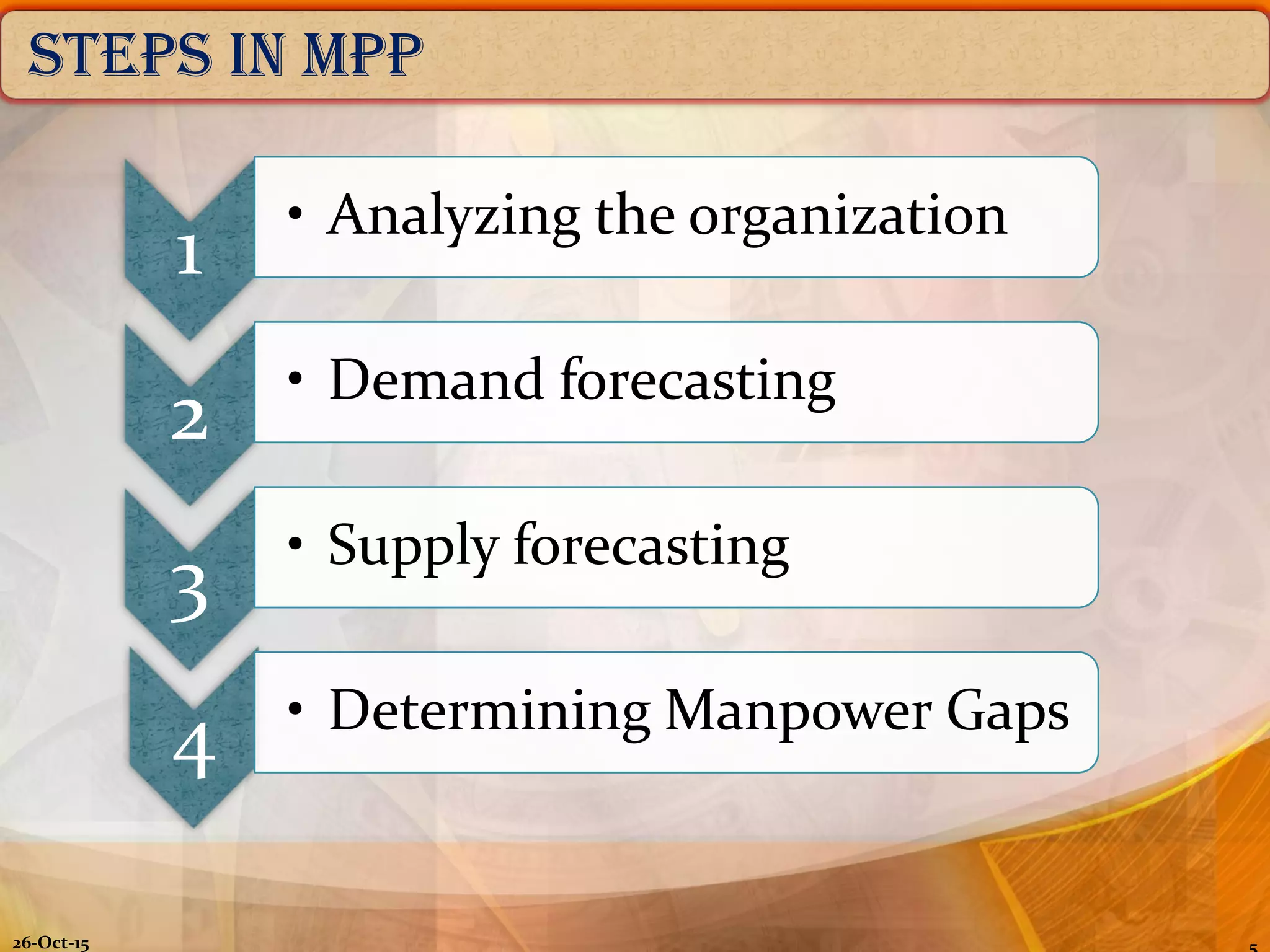
1 • Analyzing the organization
2 • Demand forecasting
3 • Supply forecasting
4 • Determining Manpower Gaps
26-Oct-15
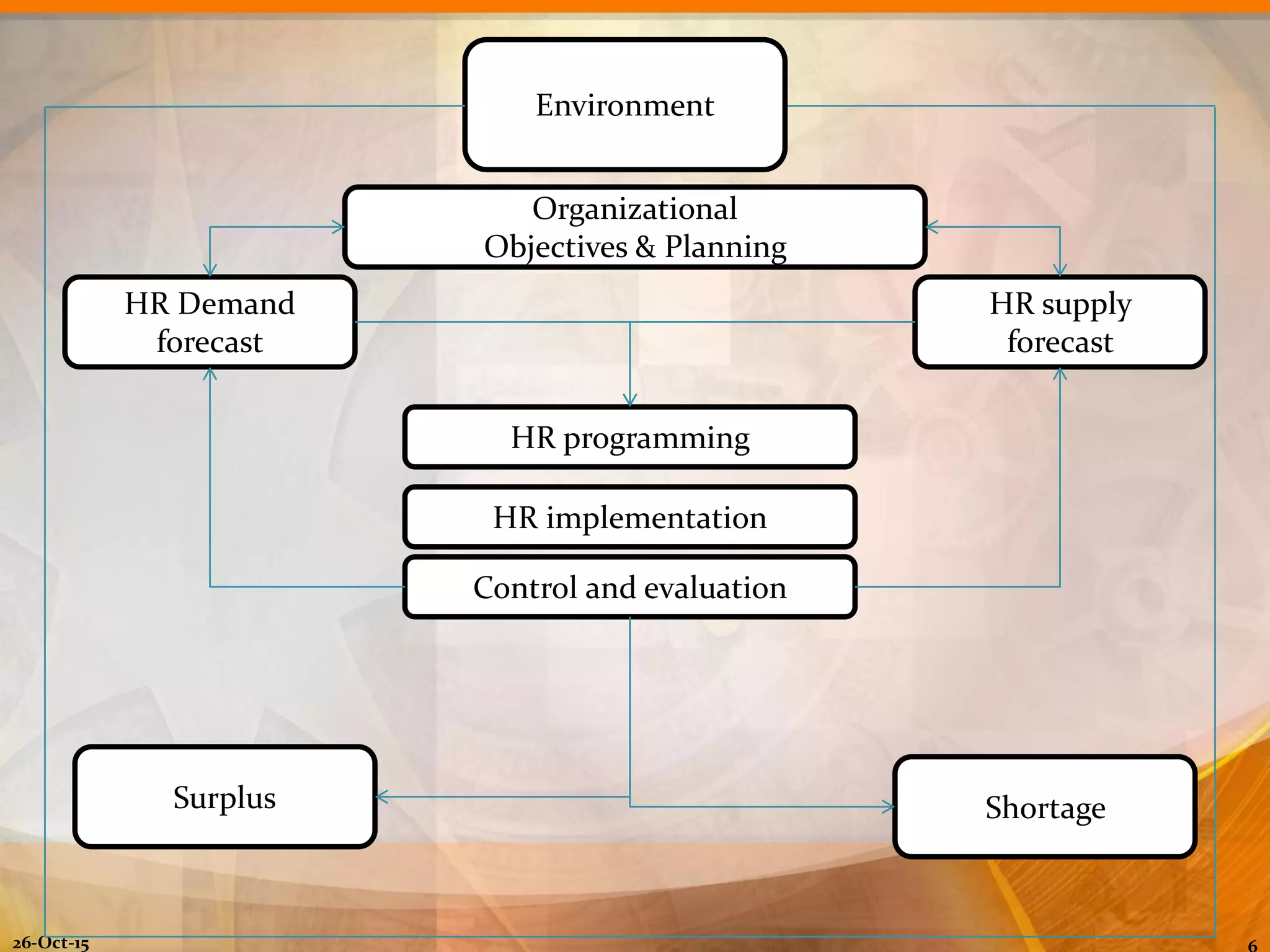
Environment
Organizational
Objectives & Planning
HR supply
forecast
HR implementation
HR Demand
forecast
HR programming
ShortageSurplus
Control and evaluation
26-Oct-15
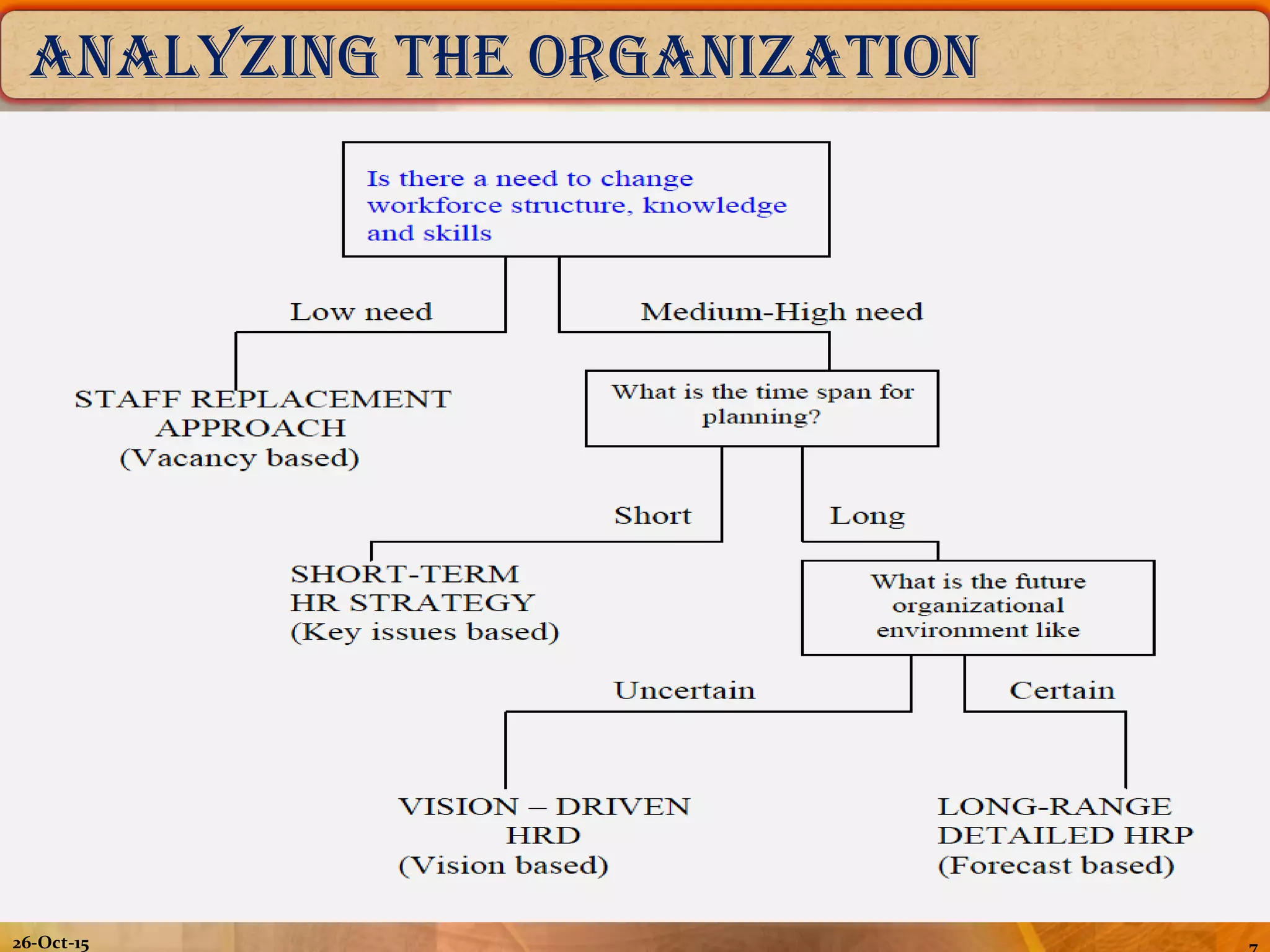
Analyzing the organization
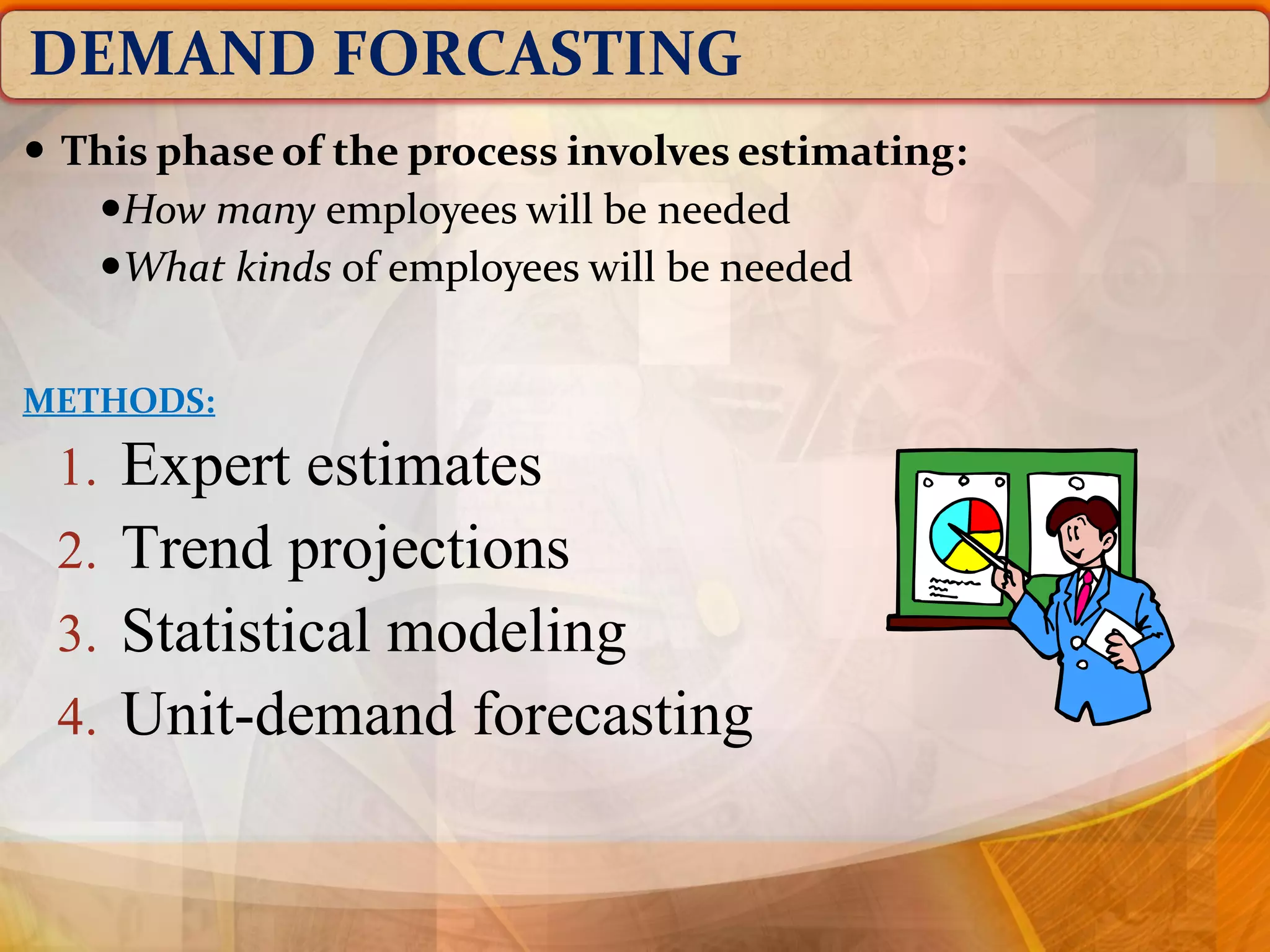
DEMAND FORCASTING
1. Expert estimates
2. Trend projections
3. Statistical modeling
4. Unit-demand forecasting
 This phase of the process involves estimating:
How many employees will be needed
What kinds of employees will be needed
METHODS:
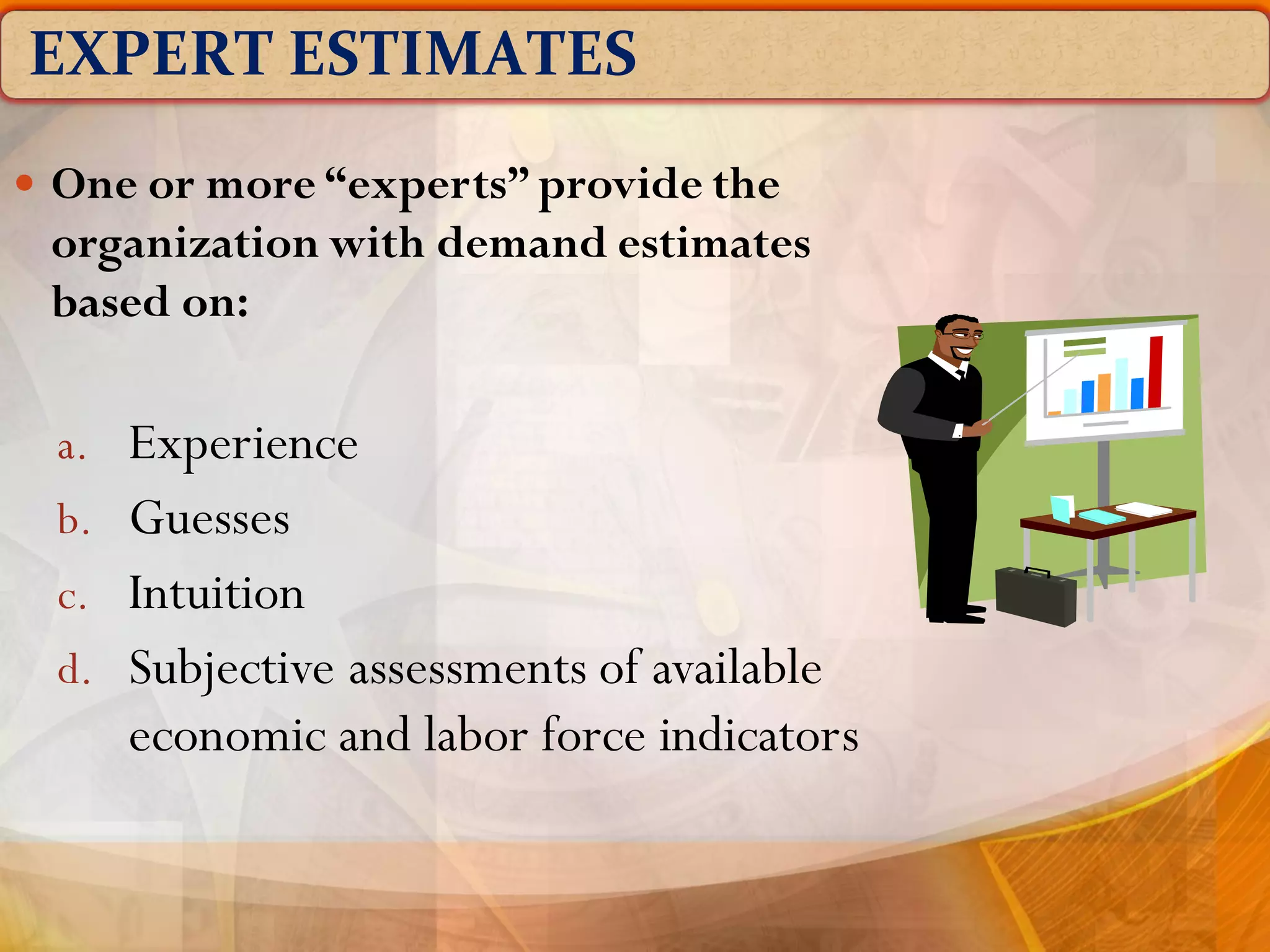
EXPERT ESTIMATES
 One or more “experts” provide the
organization with demand estimates
based on:
a. Experience
b. Guesses
c. Intuition
d. Subjective assessments of available
economic and labor force indicators
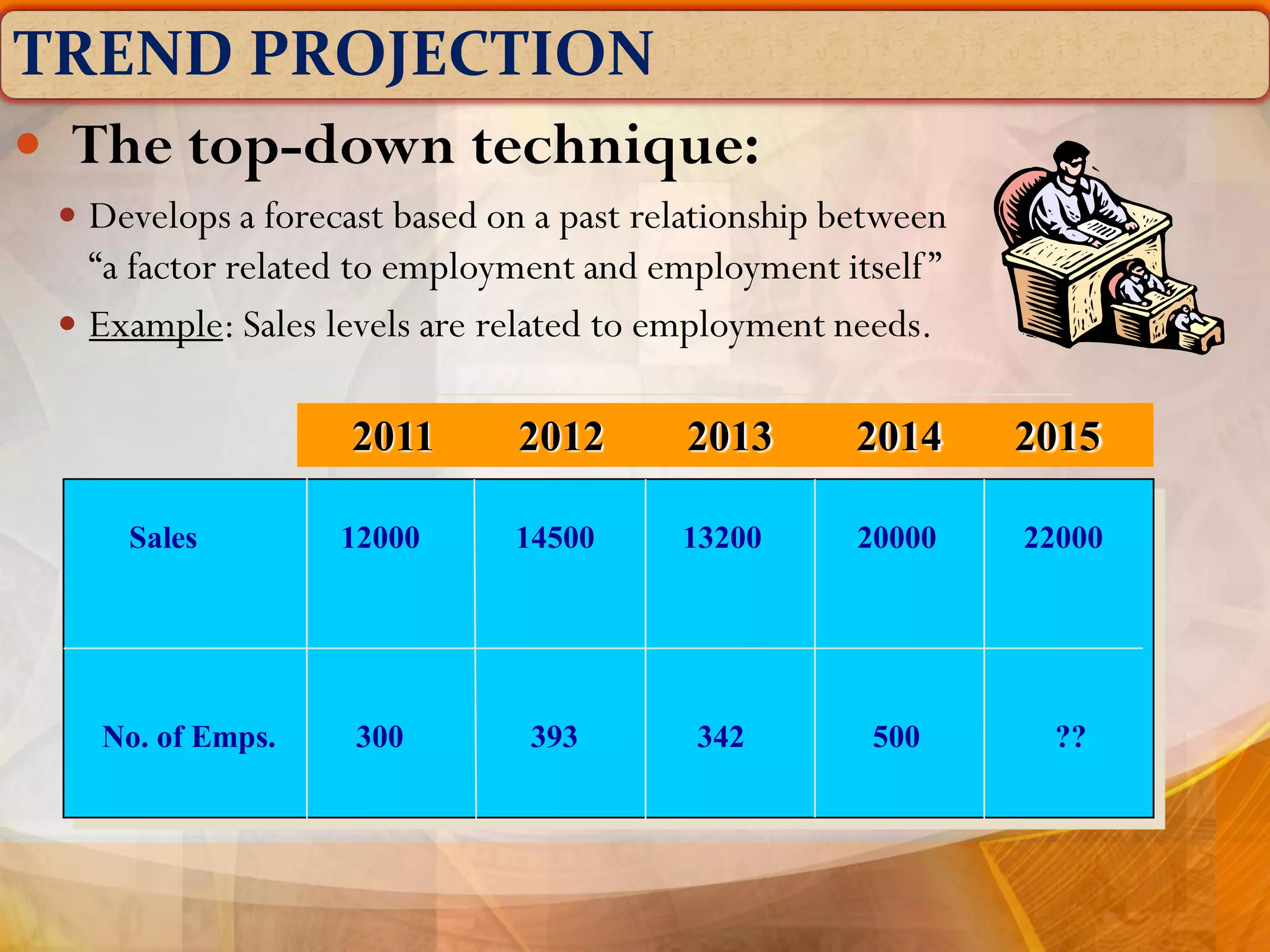
TREND PROJECTION
 The top-down technique:
 Develops a forecast based on a past relationship between
“a factor related to employment and employment itself”
 Example: Sales levels are related to employment needs.
Sales 12000 14500 13200 20000 22000
No. of Emps. 300 393 342 500 ??
2011 2012 2013 2014 2015
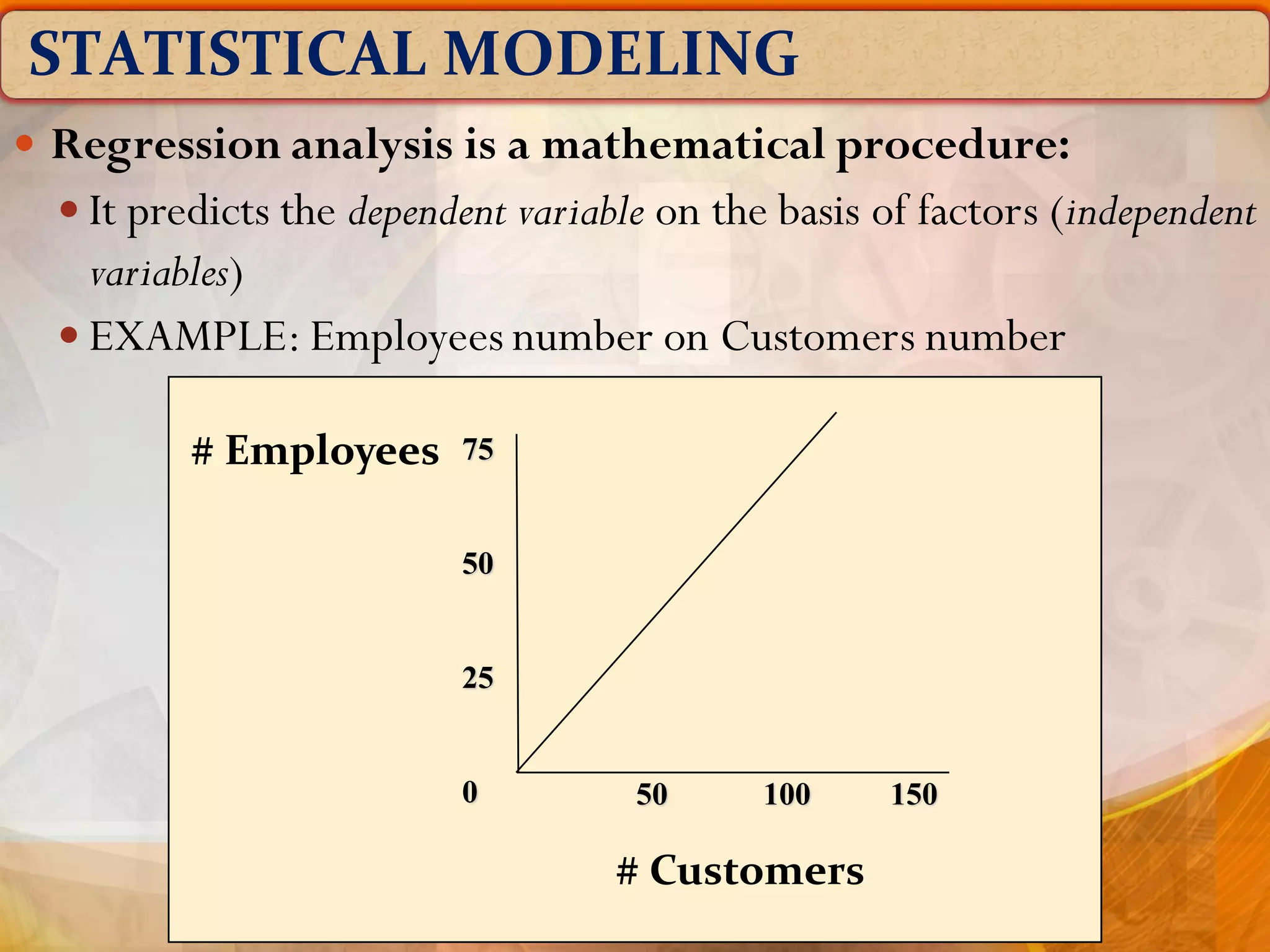
STATISTICAL MODELING
 Regression analysis is a mathematical procedure:
 It predicts the dependent variable on the basis of factors (independent
variables)‫‏‬
 EXAMPLE: Employees number on Customers number
# Employees
# Customers
50 100 150
75
50
25
0
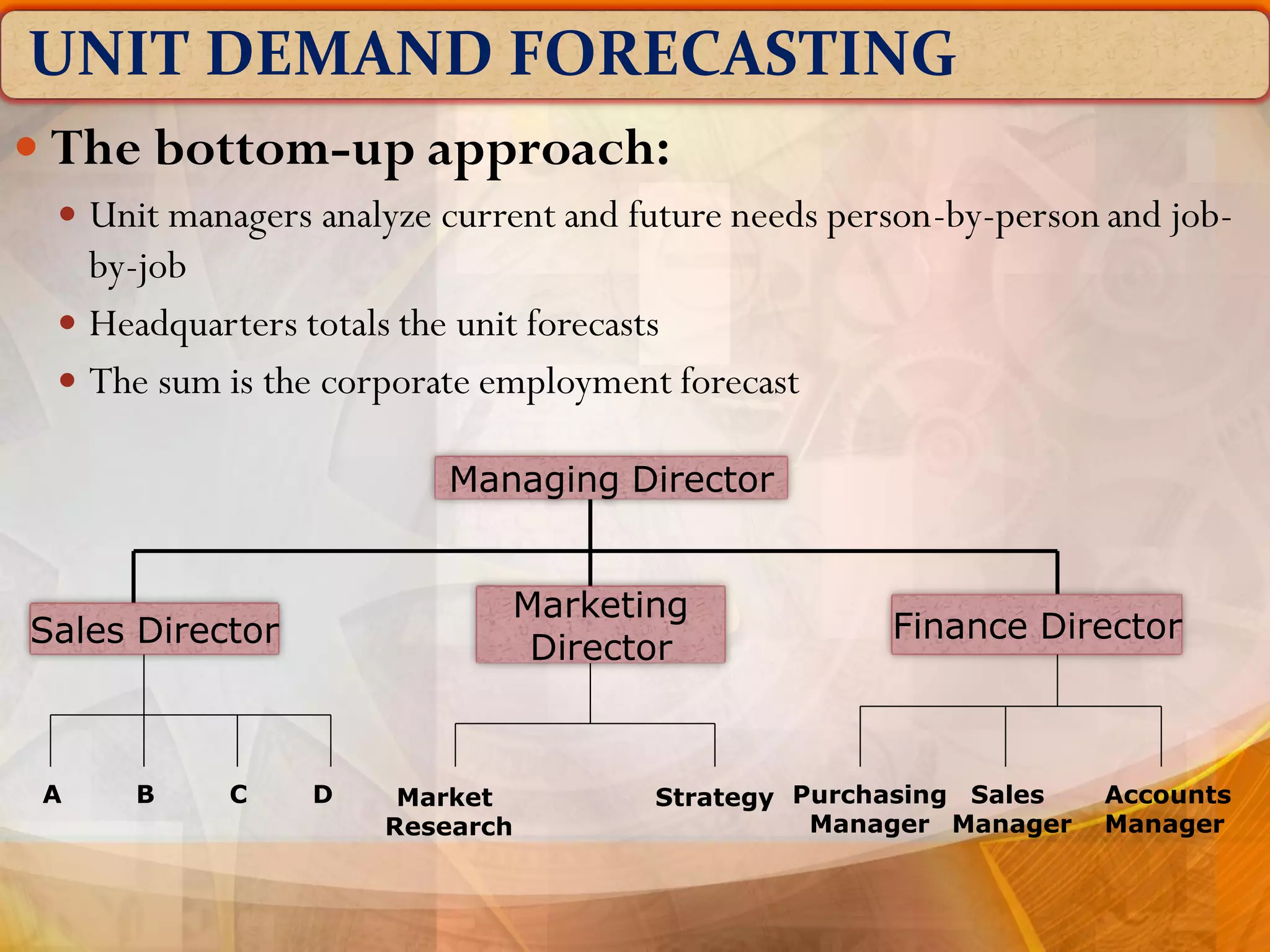
UNIT DEMAND FORECASTING
 The bottom-up approach:
 Unit managers analyze current and future needs person-by-person and job-
by-job
 Headquarters totals the unit forecasts
 The sum is the corporate employment forecast
Managing Director
Sales Director
Marketing
Director
Finance Director
A B C D Market
Research
Strategy Purchasing
Manager
Sales
Manager
Accounts
Manager
26-Oct-15
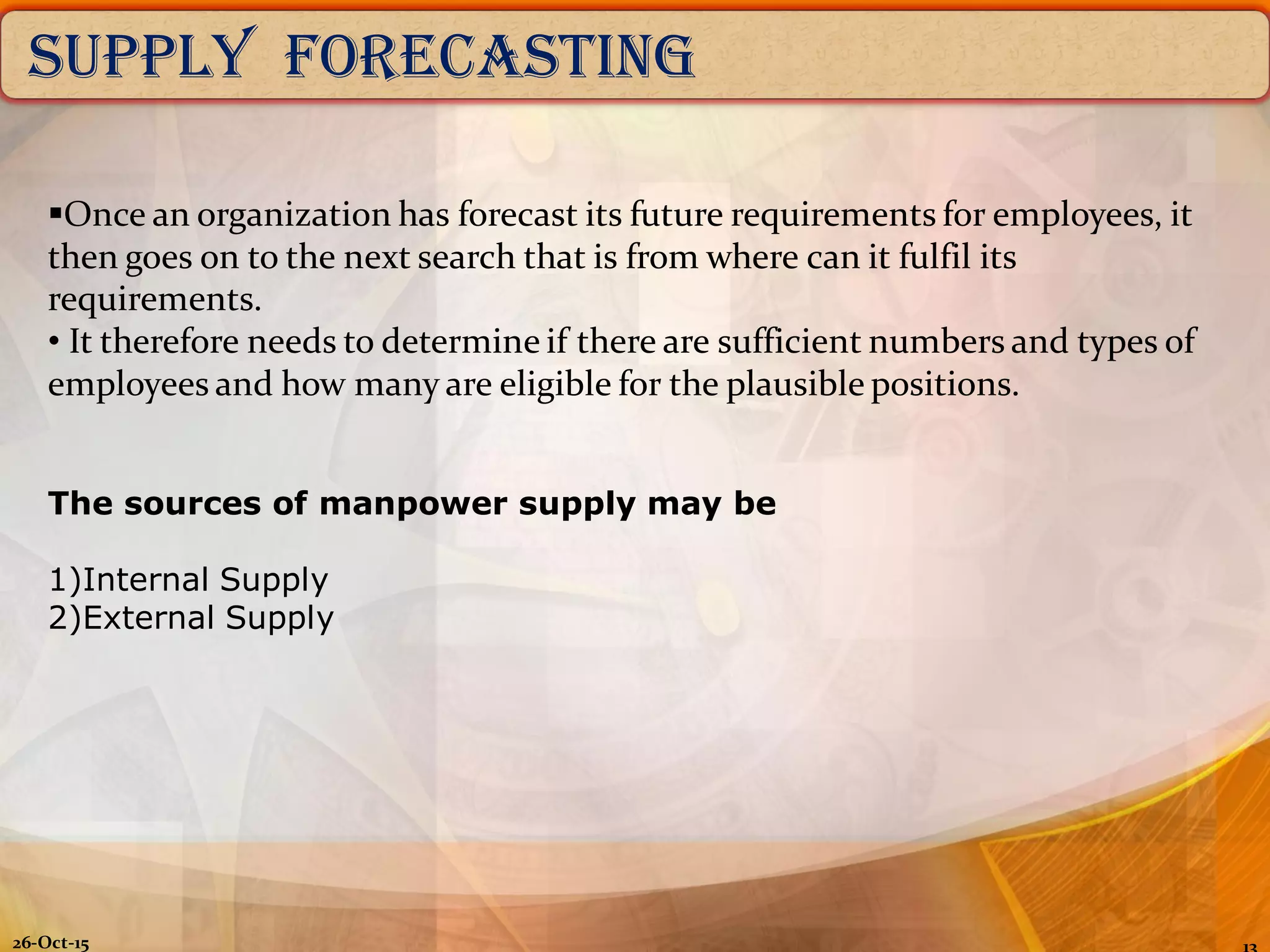
SUPPLY FORECASTING
Once an organization has forecast its future requirements for employees, it
then goes on to the next search that is from where can it fulfil its
requirements.
• It therefore needs to determine if there are sufficient numbers and types of
employees and how many are eligible for the plausible positions.
The sources of manpower supply may be
1)Internal Supply
2)External Supply
26-Oct-15 14
Transfer
Promotion
Internal supply analysis is done with…..
Staffing
tables/mannin
g charts
Skill
inventories
Replacement
chart
Markov
analysis
26-Oct-15
External supply….
•Educational institutes
•Advertisement
•Placement agencies
•Telecasting
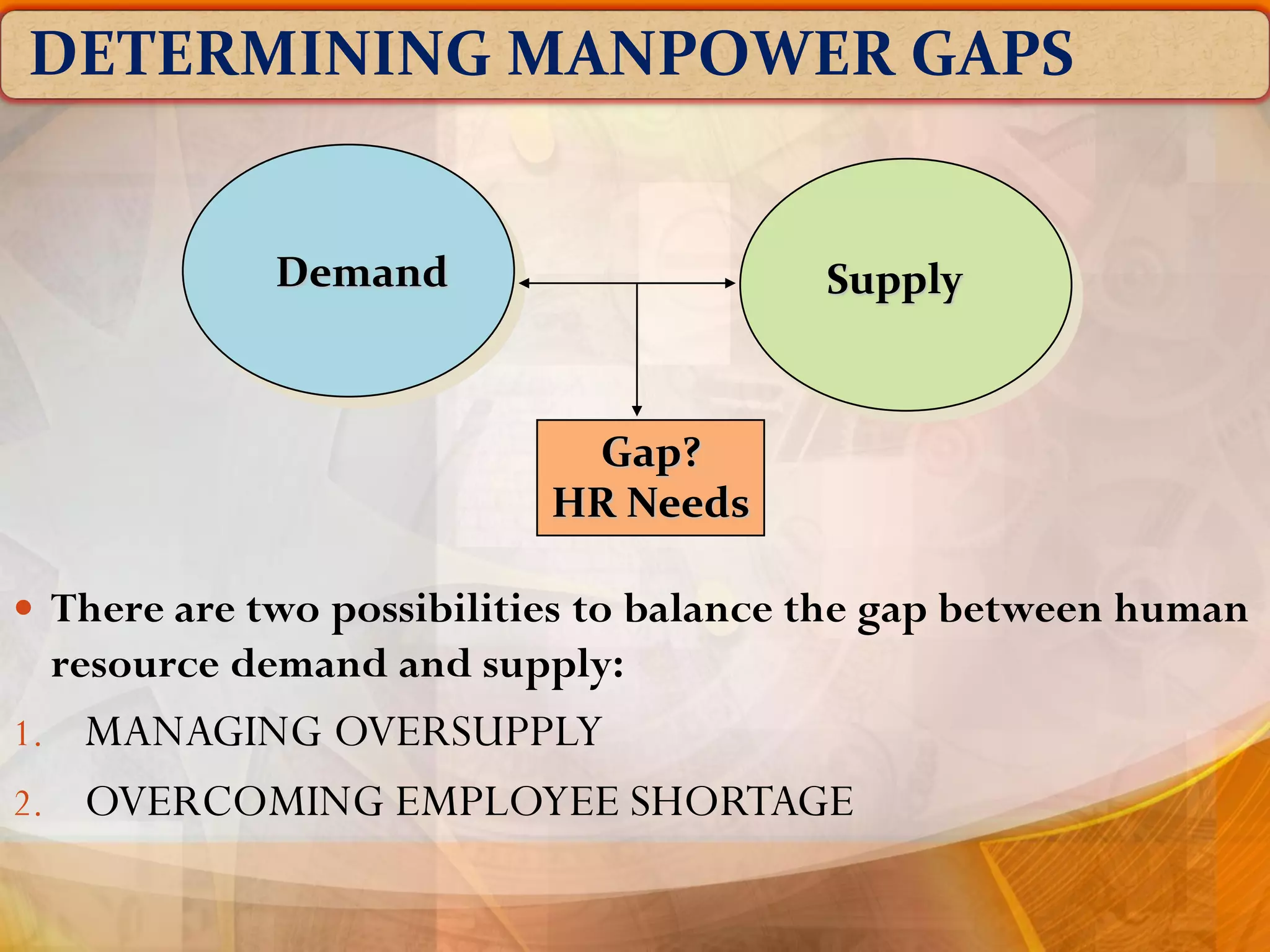
DETERMINING MANPOWER GAPS
 There are two possibilities to balance the gap between human
resource demand and supply:
1. MANAGING OVERSUPPLY
2. OVERCOMING EMPLOYEE SHORTAGE
Demand Supply
Gap?
HR Needs
A. MANAGING OVERSUPPLY:
1. Early retirement offers
2. Internal transfers
3. Job sharing
4. Use of part-time workers
DETERMINING MANPOWER GAPS
B. OVERCOMING EMPLOYEE SHORTAGE:
1. Overtime
2. Part-time workers
3. Temporary employment agencies
4. Transfers
5. Contract workers
6. Promotions
7. Full-time employees
DETERMINING MANPOWER GAPS
OPERATIONAL PLANS
• Recruitment plan
• Redeployment plan
• Redundancy plan
• Training plan
• Productivity plan
• Retention plan
?
CVP
Human Resource Information Systems
 Information is the key to successful HR planning
 A human resource information system (HRIS) is an integrated way to
acquire, store, analyze and control information flow through an organization
 A highly developed HRIS can increase the efficiency and
response times of:
 Tracking applicants
 Skills inventory
 Career planning
 Employee service programs
26-Oct-15
Presented by:
VIKAS SONI
Management Scholar,
Pharmaceutical Management.
NIPER, Mohali, Punjab, India.
Vikas.niper2014@gmail.com
http://in.linkedin.com/in/vikassoni11/
https://www.facebook.com/Vickysoni11

Man power planning

  • 1.
    Presented by: Abhishek Lulla VikasSoni Management Scholars, Dept. of Pharmaceutical Management, NIPER, Mohali.
  • 2.
    Flow oF presentation…… •What is Manpower planning • Need of Manpower planning • Steps of Manpower planning • Methods involved of Manpower planning steps • Operational plans of Manpower planning 26-Oct-15
  • 3.
    What is Manpowerplanning(MPP)? Also known as Human resource planning. “Human resource planning is the process of determining manpower requirements and the means for meeting those requirements in order to carry out the integrated plan of the organization”. 26-Oct-15 3
  • 4.
    Why MPP? 1. Ascertainingmanpower needs in number and kind. 2. It presents an inventory of existing manpower of the organization. 3. Helps in determining the shortfall or surplus of manpower. 4. Initiation of various organizational programmes. 5. Acquisition, utilization, improvement of human resources. 26-Oct-15
  • 5.
    STEPS IN MPp 26-Oct-15 1• Analyzing the organization 2 • Demand forecasting 3 • Supply forecasting 4 • Determining Manpower Gaps
  • 6.
    26-Oct-15 Environment Organizational Objectives & Planning HRsupply forecast HR implementation HR Demand forecast HR programming ShortageSurplus Control and evaluation
  • 7.
  • 8.
    DEMAND FORCASTING 1. Expertestimates 2. Trend projections 3. Statistical modeling 4. Unit-demand forecasting  This phase of the process involves estimating: How many employees will be needed What kinds of employees will be needed METHODS:
  • 9.
    EXPERT ESTIMATES  Oneor more “experts” provide the organization with demand estimates based on: a. Experience b. Guesses c. Intuition d. Subjective assessments of available economic and labor force indicators
  • 10.
    TREND PROJECTION  Thetop-down technique:  Develops a forecast based on a past relationship between “a factor related to employment and employment itself”  Example: Sales levels are related to employment needs. Sales 12000 14500 13200 20000 22000 No. of Emps. 300 393 342 500 ?? 2011 2012 2013 2014 2015
  • 11.
    STATISTICAL MODELING  Regressionanalysis is a mathematical procedure:  It predicts the dependent variable on the basis of factors (independent variables)‫‏‬  EXAMPLE: Employees number on Customers number # Employees # Customers 50 100 150 75 50 25 0
  • 12.
    UNIT DEMAND FORECASTING The bottom-up approach:  Unit managers analyze current and future needs person-by-person and job- by-job  Headquarters totals the unit forecasts  The sum is the corporate employment forecast Managing Director Sales Director Marketing Director Finance Director A B C D Market Research Strategy Purchasing Manager Sales Manager Accounts Manager
  • 13.
    26-Oct-15 SUPPLY FORECASTING Once anorganization has forecast its future requirements for employees, it then goes on to the next search that is from where can it fulfil its requirements. • It therefore needs to determine if there are sufficient numbers and types of employees and how many are eligible for the plausible positions. The sources of manpower supply may be 1)Internal Supply 2)External Supply
  • 14.
    26-Oct-15 14 Transfer Promotion Internal supplyanalysis is done with….. Staffing tables/mannin g charts Skill inventories Replacement chart Markov analysis
  • 15.
  • 16.
    DETERMINING MANPOWER GAPS There are two possibilities to balance the gap between human resource demand and supply: 1. MANAGING OVERSUPPLY 2. OVERCOMING EMPLOYEE SHORTAGE Demand Supply Gap? HR Needs
  • 17.
    A. MANAGING OVERSUPPLY: 1.Early retirement offers 2. Internal transfers 3. Job sharing 4. Use of part-time workers DETERMINING MANPOWER GAPS
  • 18.
    B. OVERCOMING EMPLOYEESHORTAGE: 1. Overtime 2. Part-time workers 3. Temporary employment agencies 4. Transfers 5. Contract workers 6. Promotions 7. Full-time employees DETERMINING MANPOWER GAPS
  • 19.
    OPERATIONAL PLANS • Recruitmentplan • Redeployment plan • Redundancy plan • Training plan • Productivity plan • Retention plan ? CVP
  • 20.
    Human Resource InformationSystems  Information is the key to successful HR planning  A human resource information system (HRIS) is an integrated way to acquire, store, analyze and control information flow through an organization  A highly developed HRIS can increase the efficiency and response times of:  Tracking applicants  Skills inventory  Career planning  Employee service programs 26-Oct-15
  • 21.
    Presented by: VIKAS SONI ManagementScholar, Pharmaceutical Management. NIPER, Mohali, Punjab, India. Vikas.niper2014@gmail.com http://in.linkedin.com/in/vikassoni11/ https://www.facebook.com/Vickysoni11