The MALE 
Gaze
What is it? 
The concept of gaze is one 
that deals with how an 
audience views the people 
presented. 
Feminists have divided this 
concept into the following 
three dimensions: 
 How men look at women 
 How women look at 
themselves 
 How women look at other 
women
Forms 
The spectators gaze: 
this is whereby the 
director is viewing 
the text. 
The Intra-diegetic 
gaze: when the 
character gazes at 
an object or another 
character in the text. 
The Extra-diegetic gaze: 
where the fourth wall is 
broken (the character 
looks into the camera, 
looking right at the 
viewer. 
The camera 
gaze: this is the 
camera editors 
view 
The editorial gaze: 
emphasised a textual aspect 
like the cropping and caption, 
which direct the viewers to 
that particular character.
Visual pleasure and Narrative 
cinema 
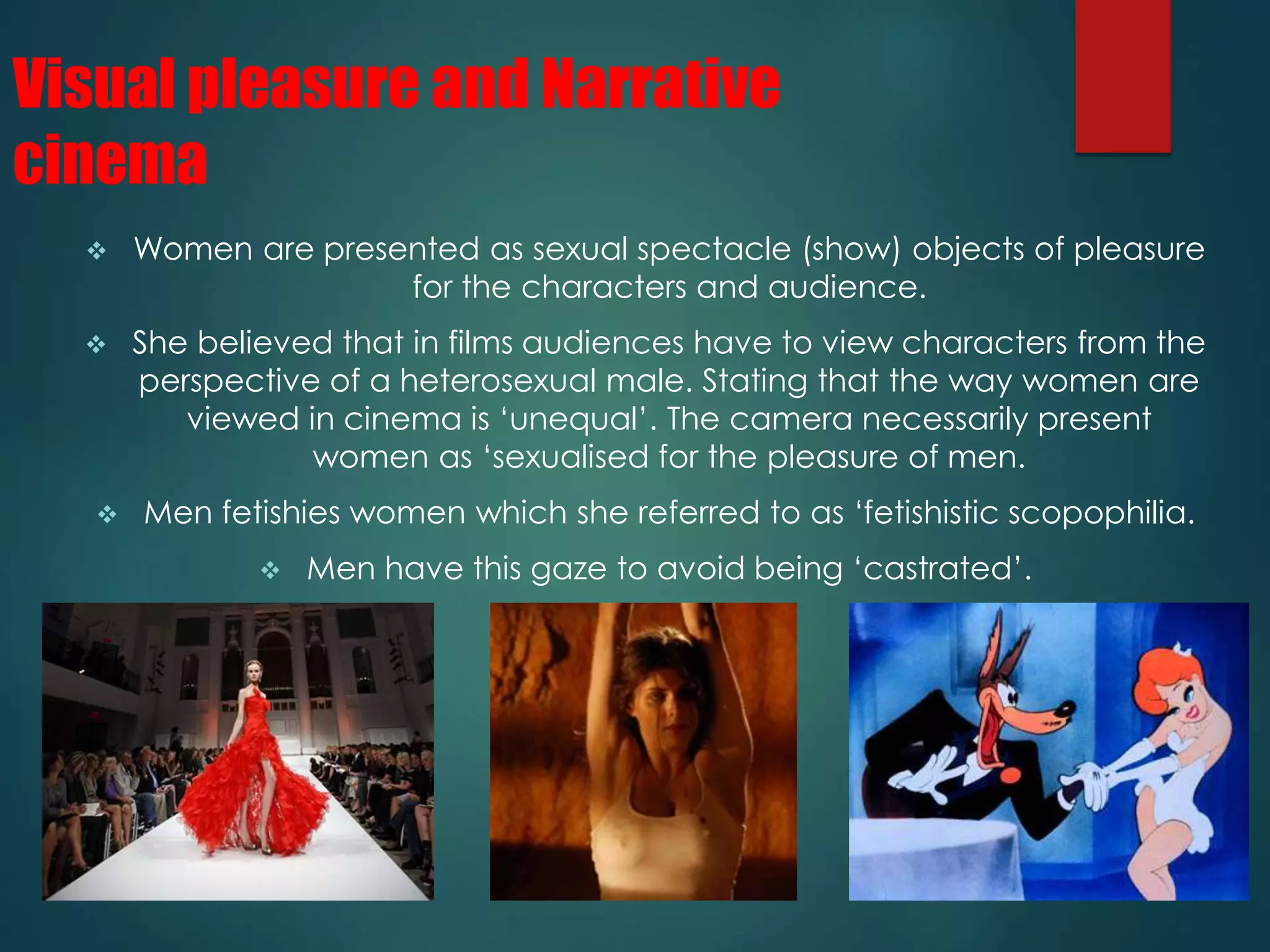
 Women are presented as sexual spectacle (show) objects of pleasure 
for the characters and audience. 
 She believed that in films audiences have to view characters from the 
perspective of a heterosexual male. Stating that the way women are 
viewed in cinema is ‘unequal’. The camera necessarily present 
women as ‘sexualised for the pleasure of men. 
 Men fetishies women which she referred to as ‘fetishistic scopophilia. 
 Men have this gaze to avoid being ‘castrated’.
Laura Mulvey: 
 She was a theorist and a 
feminist 
 Mulvey, came up with the 
concept on male gaze in 
1975. Here Mulvey wrote a 
very influential essay ‘Visual 
pleasure and Narrative 
Cinema’. Stating that women 
are used for visual pleasure-women 
are made to seem 
like sexual objects through 
voyeurism. 
 She argued that women took 
the passive part of a film and 
that all men played an 
active part, in her eye the 
women were objects
Mulvey’s three types of ‘looking’ 
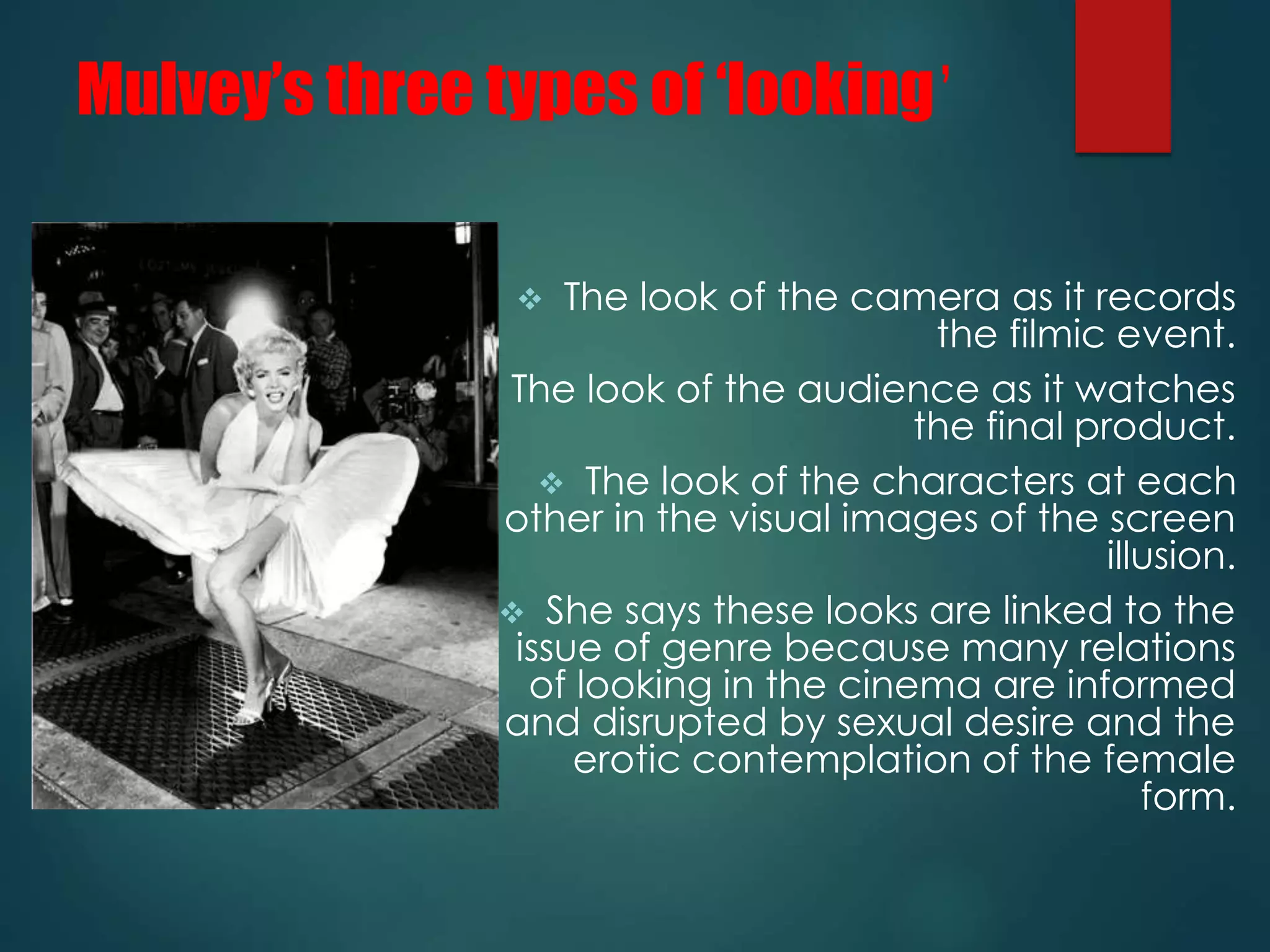
 The look of the camera as it records 
the filmic event. 
 The look of the audience as it watches 
the final product. 
 The look of the characters at each 
other in the visual images of the screen 
illusion. 
 She says these looks are linked to the 
issue of genre because many relations 
of looking in the cinema are informed 
and disrupted by sexual desire and the 
erotic contemplation of the female 
form.

Male gaze

  • 1.
  • 2.
    What is it? The concept of gaze is one that deals with how an audience views the people presented. Feminists have divided this concept into the following three dimensions:  How men look at women  How women look at themselves  How women look at other women
  • 3.
    Forms The spectatorsgaze: this is whereby the director is viewing the text. The Intra-diegetic gaze: when the character gazes at an object or another character in the text. The Extra-diegetic gaze: where the fourth wall is broken (the character looks into the camera, looking right at the viewer. The camera gaze: this is the camera editors view The editorial gaze: emphasised a textual aspect like the cropping and caption, which direct the viewers to that particular character.
  • 4.
    Visual pleasure andNarrative cinema  Women are presented as sexual spectacle (show) objects of pleasure for the characters and audience.  She believed that in films audiences have to view characters from the perspective of a heterosexual male. Stating that the way women are viewed in cinema is ‘unequal’. The camera necessarily present women as ‘sexualised for the pleasure of men.  Men fetishies women which she referred to as ‘fetishistic scopophilia.  Men have this gaze to avoid being ‘castrated’.
  • 5.
    Laura Mulvey: She was a theorist and a feminist  Mulvey, came up with the concept on male gaze in 1975. Here Mulvey wrote a very influential essay ‘Visual pleasure and Narrative Cinema’. Stating that women are used for visual pleasure-women are made to seem like sexual objects through voyeurism.  She argued that women took the passive part of a film and that all men played an active part, in her eye the women were objects
  • 6.
    Mulvey’s three typesof ‘looking’  The look of the camera as it records the filmic event.  The look of the audience as it watches the final product.  The look of the characters at each other in the visual images of the screen illusion.  She says these looks are linked to the issue of genre because many relations of looking in the cinema are informed and disrupted by sexual desire and the erotic contemplation of the female form.