Chapter 2: Putting Thinking at the
Center of the Educational Enterprise
Key Points
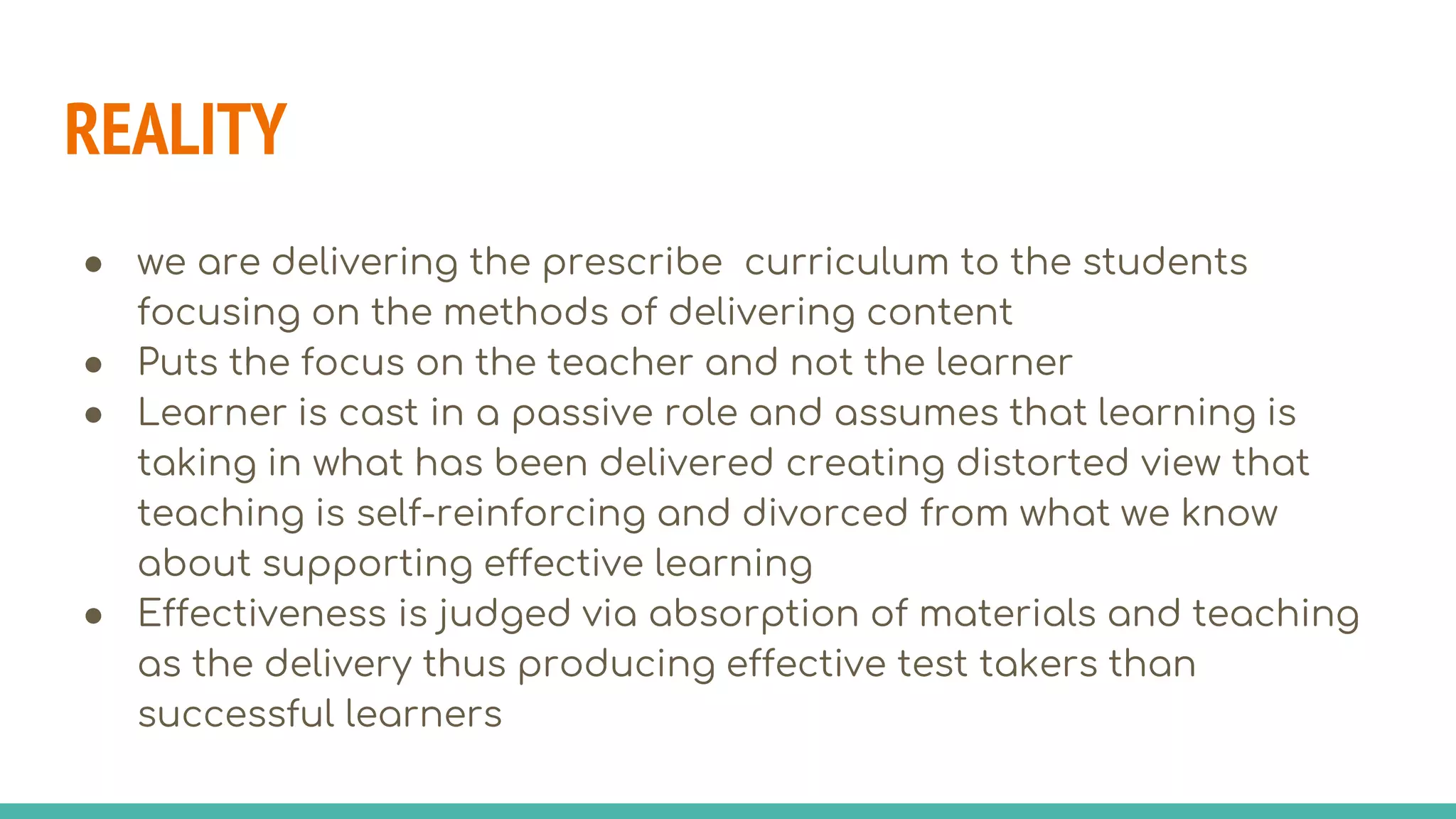
REALITY
● we are delivering the prescribe curriculum to the students
focusing on the methods of delivering content
● Puts the focus on the teacher and not the learner
● Learner is cast in a passive role and assumes that learning is
taking in what has been delivered creating distorted view that
teaching is self-reinforcing and divorced from what we know
about supporting effective learning
● Effectiveness is judged via absorption of materials and teaching
as the delivery thus producing effective test takers than
successful learners
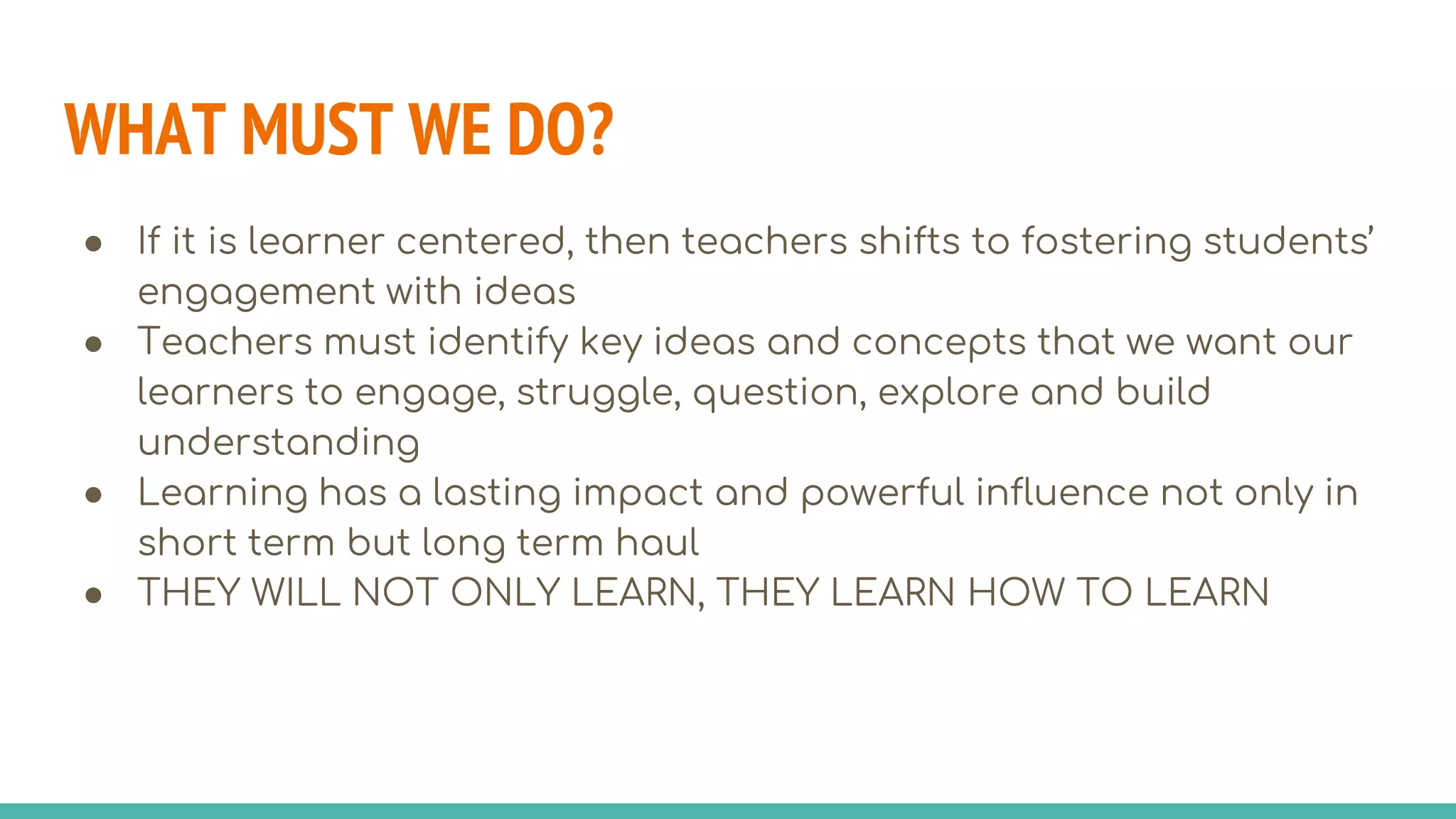
WHAT MUST WE DO?
● If it is learner centered, then teachers shifts to fostering students’
engagement with ideas
● Teachers must identify key ideas and concepts that we want our
learners to engage, struggle, question, explore and build
understanding
● Learning has a lasting impact and powerful influence not only in
short term but long term haul
● THEY WILL NOT ONLY LEARN, THEY LEARN HOW TO LEARN
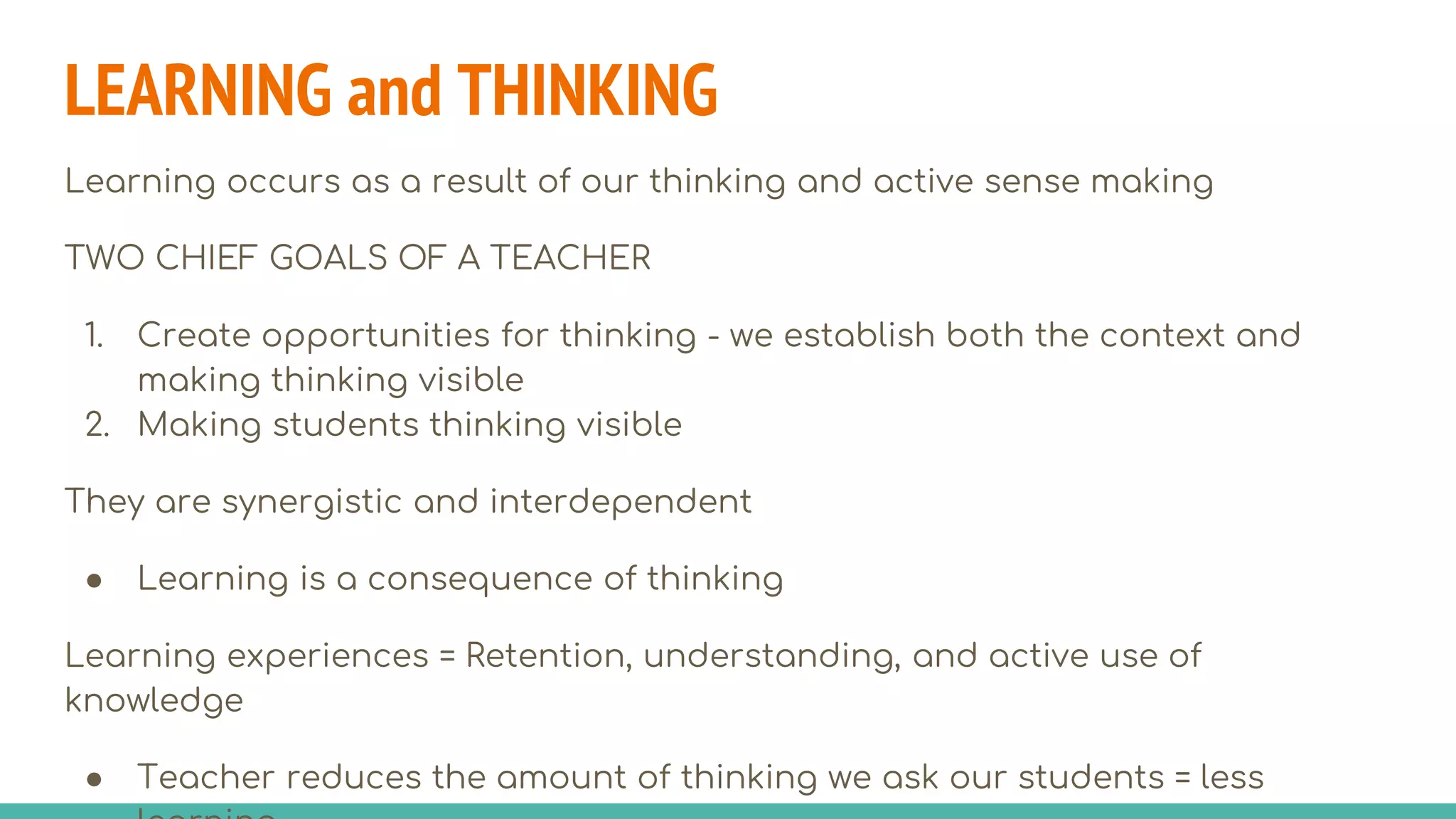
LEARNING and THINKING
Learning occurs as a result of our thinking and active sense making
TWO CHIEF GOALS OF A TEACHER
1. Create opportunities for thinking - we establish both the context and
making thinking visible
2. Making students thinking visible
They are synergistic and interdependent
● Learning is a consequence of thinking
Learning experiences = Retention, understanding, and active use of
knowledge
● Teacher reduces the amount of thinking we ask our students = less
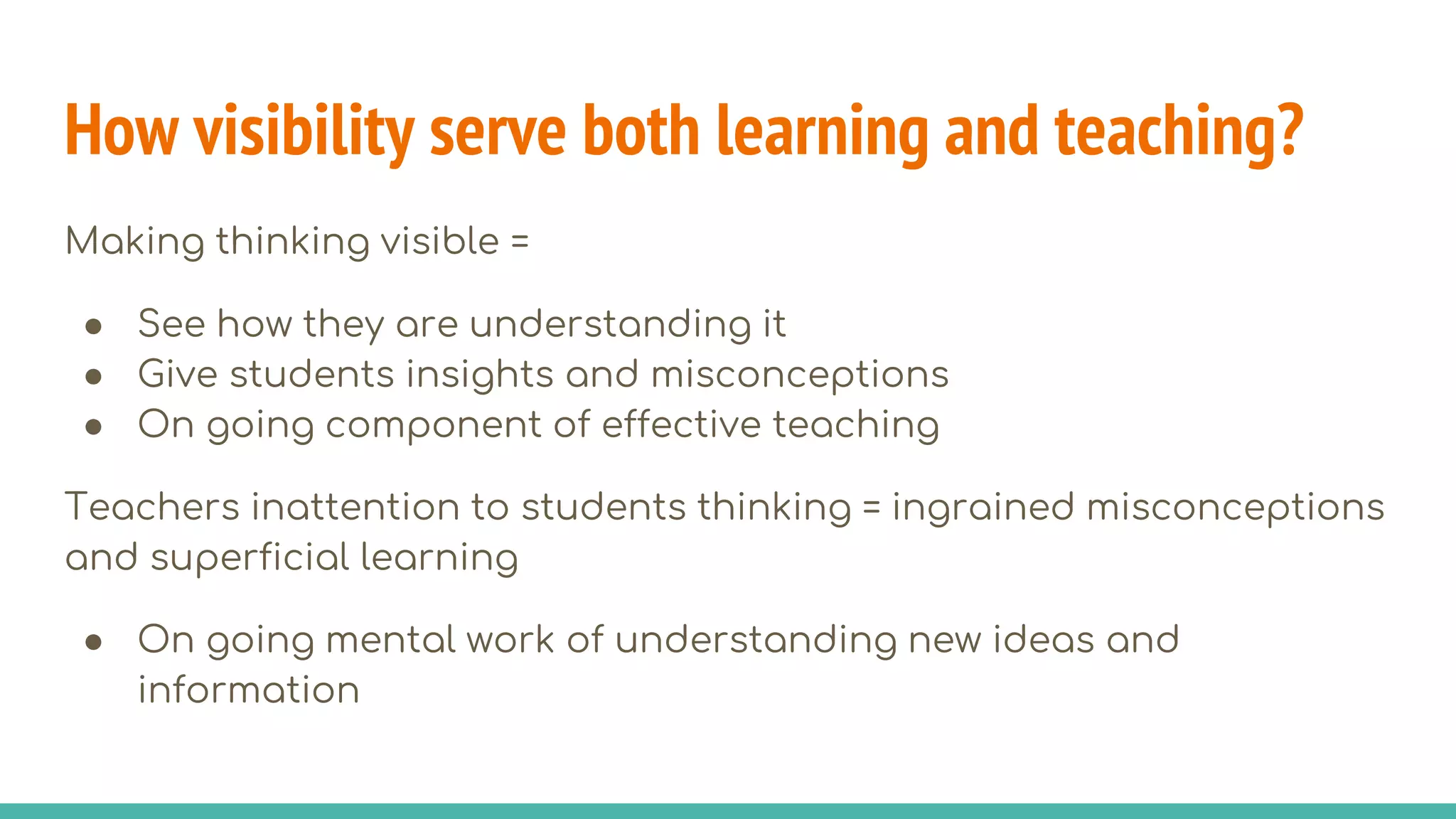
How visibility serve both learning and teaching?
Making thinking visible =
● See how they are understanding it
● Give students insights and misconceptions
● On going component of effective teaching
Teachers inattention to students thinking = ingrained misconceptions
and superficial learning
● On going mental work of understanding new ideas and
information
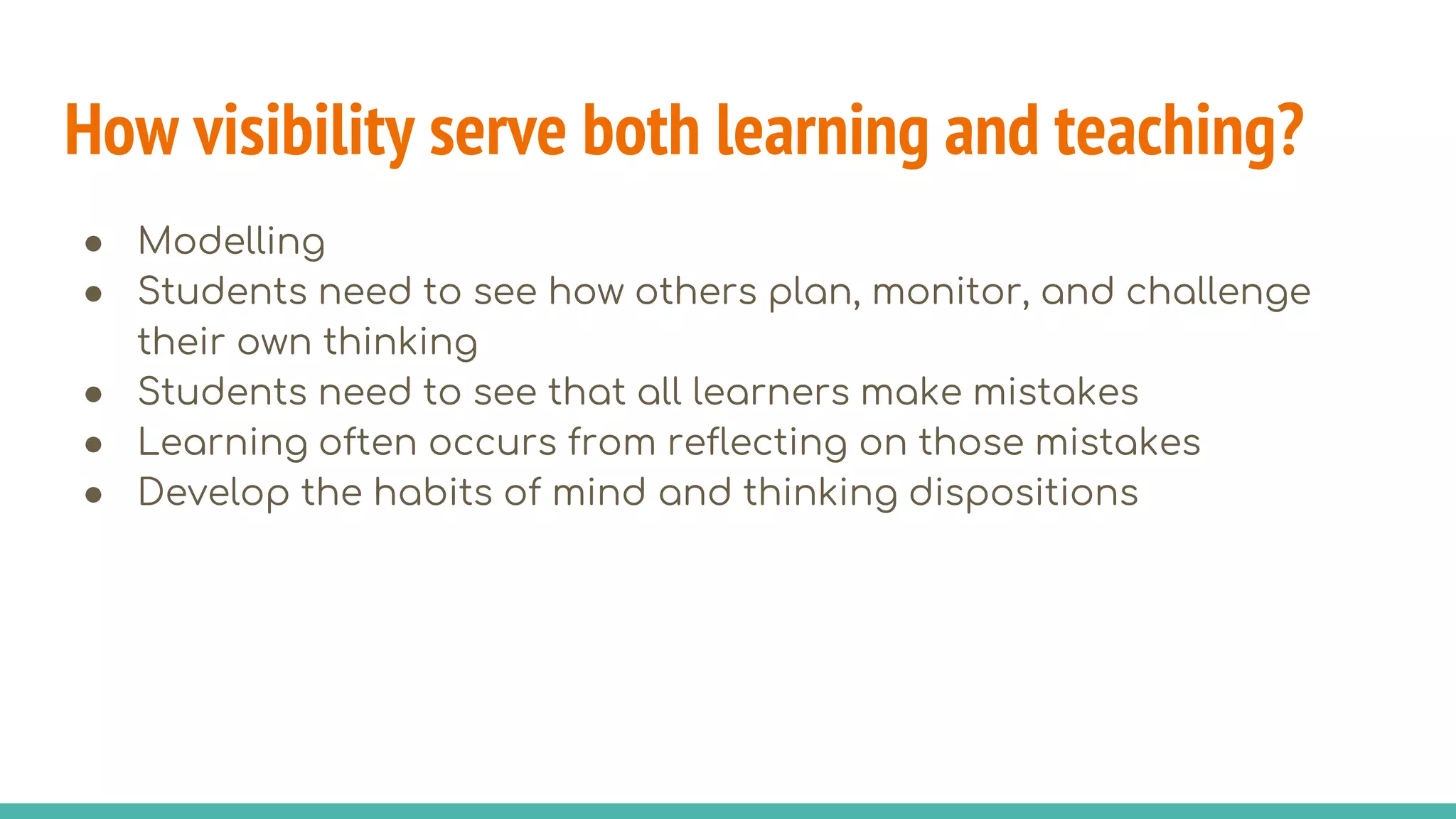
How visibility serve both learning and teaching?
● Modelling
● Students need to see how others plan, monitor, and challenge
their own thinking
● Students need to see that all learners make mistakes
● Learning often occurs from reflecting on those mistakes
● Develop the habits of mind and thinking dispositions
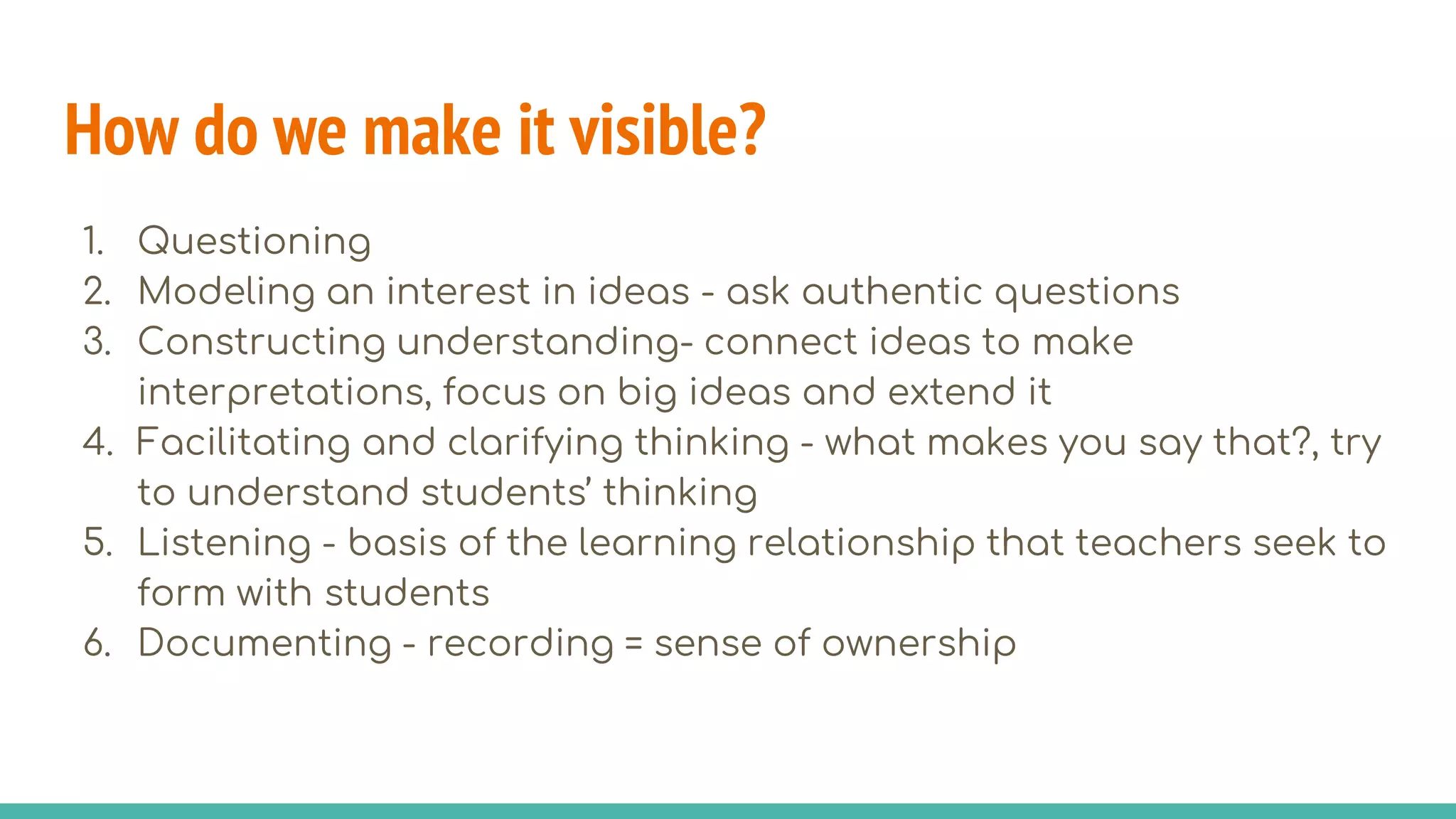
How do we make it visible?
1. Questioning
2. Modeling an interest in ideas - ask authentic questions
3. Constructing understanding- connect ideas to make
interpretations, focus on big ideas and extend it
4. Facilitating and clarifying thinking - what makes you say that?, try
to understand students’ thinking
5. Listening - basis of the learning relationship that teachers seek to
form with students
6. Documenting - recording = sense of ownership

Making Thinking Visible Chapter 2

  • 1.
    Chapter 2: PuttingThinking at the Center of the Educational Enterprise Key Points
  • 2.
    REALITY ● we aredelivering the prescribe curriculum to the students focusing on the methods of delivering content ● Puts the focus on the teacher and not the learner ● Learner is cast in a passive role and assumes that learning is taking in what has been delivered creating distorted view that teaching is self-reinforcing and divorced from what we know about supporting effective learning ● Effectiveness is judged via absorption of materials and teaching as the delivery thus producing effective test takers than successful learners
  • 3.
    WHAT MUST WEDO? ● If it is learner centered, then teachers shifts to fostering students’ engagement with ideas ● Teachers must identify key ideas and concepts that we want our learners to engage, struggle, question, explore and build understanding ● Learning has a lasting impact and powerful influence not only in short term but long term haul ● THEY WILL NOT ONLY LEARN, THEY LEARN HOW TO LEARN
  • 4.
    LEARNING and THINKING Learningoccurs as a result of our thinking and active sense making TWO CHIEF GOALS OF A TEACHER 1. Create opportunities for thinking - we establish both the context and making thinking visible 2. Making students thinking visible They are synergistic and interdependent ● Learning is a consequence of thinking Learning experiences = Retention, understanding, and active use of knowledge ● Teacher reduces the amount of thinking we ask our students = less
  • 5.
    How visibility serveboth learning and teaching? Making thinking visible = ● See how they are understanding it ● Give students insights and misconceptions ● On going component of effective teaching Teachers inattention to students thinking = ingrained misconceptions and superficial learning ● On going mental work of understanding new ideas and information
  • 6.
    How visibility serveboth learning and teaching? ● Modelling ● Students need to see how others plan, monitor, and challenge their own thinking ● Students need to see that all learners make mistakes ● Learning often occurs from reflecting on those mistakes ● Develop the habits of mind and thinking dispositions
  • 7.
    How do wemake it visible? 1. Questioning 2. Modeling an interest in ideas - ask authentic questions 3. Constructing understanding- connect ideas to make interpretations, focus on big ideas and extend it 4. Facilitating and clarifying thinking - what makes you say that?, try to understand students’ thinking 5. Listening - basis of the learning relationship that teachers seek to form with students 6. Documenting - recording = sense of ownership