PRESENTED
BY :
SINDOOR
• Scott Belsky is an American
entrepreneur and best-selling
author.
• Best known for co-creating the
online portfolio platform, Behance,
Inc. In 2010.
• Behance is a platform to showcase and
discover photography, graphic design,
illustration, and fashion.
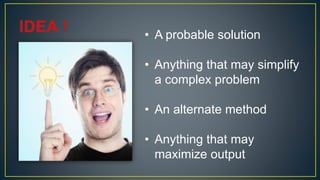
• A probable solution
• Anything that may simplify
a complex problem
• An alternate method
• Anything that may
maximize output
We have so many
great ideas, but
most of them
never see the light
of day
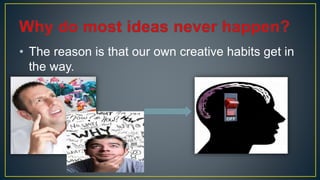
• The reason is that our own creative habits get in
the way.
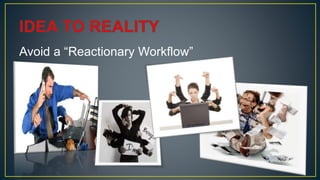
Avoid a “Reactionary Workflow”
• Schedule “windows of non-stimulation” every day.
• To aggregate all messages in a central location.
• Learn to say NO !.
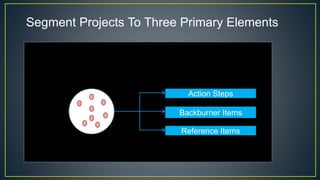
Segment Projects To Three Primary Elements
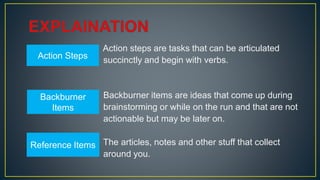
Action Steps
Backburner Items
Reference Items
Action steps are tasks that can be articulated
succinctly and begin with verbs.
Backburner items are ideas that come up during
brainstorming or while on the run and that are not
actionable but may be later on.
The articles, notes and other stuff that collect
around you.
Action Steps
Backburner
Items
Reference Items
Measure Meetings With Action Steps
• Meetings are extremely expensive considering
the cost of time and interruptions they represent.
• Beware of “posting meetings” or meeting
“just because it’s Monday.”
• A meeting that ends without any action steps should have been a
voice mail or email.
Reduce Your Insecurity Work
Insecurity work is stuff we do that
• has no definable outcome,
• does not move the ball forward in any way
and
• takes up so much time that we can do it multiple times a day without
realizing it.
• Becoming self-aware. Identify the insecurity
work in your daily life.
• The second step is to establish guidelines
and rituals for yourself that create discipline.
• The third step, if applicable, is to delegate
your insecurity tasks to a less insecure
colleague, who can review the data
periodically and report any concerns.
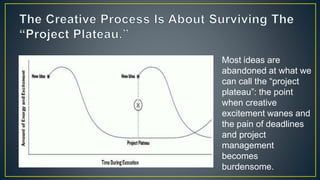
Most ideas are
abandoned at what we
can call the “project
plateau”: the point
when creative
excitement wanes and
the pain of deadlines
and project
management
becomes
burdensome.
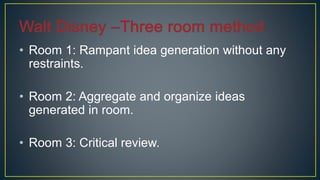
• Room 1: Rampant idea generation without any
restraints.
• Room 2: Aggregate and organize ideas
generated in room.
• Room 3: Critical review.
• “What doesn’t make sense with
our current plan?”
• What external conditions may explain
the failure?
• What internal factors may have
compromised your judgment
• Are there any gems in the unintended
outcome?”
• Show your ideas some respect, and
spend some energy improving
how you execute.
• If not for you, do it for everyone else
who will benefit from your ideas once
they actually see the light of it and
only then you can taste SUCCEES
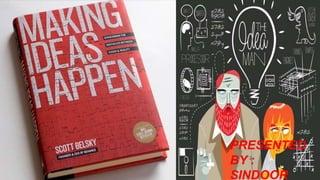
Making ideas happen

Making ideas happen

  • 1.
  • 2.
    • Scott Belskyis an American entrepreneur and best-selling author. • Best known for co-creating the online portfolio platform, Behance, Inc. In 2010. • Behance is a platform to showcase and discover photography, graphic design, illustration, and fashion.
  • 3.
    • A probablesolution • Anything that may simplify a complex problem • An alternate method • Anything that may maximize output
  • 4.
    We have somany great ideas, but most of them never see the light of day
  • 5.
    • The reasonis that our own creative habits get in the way.
  • 6.
  • 7.
    • Schedule “windowsof non-stimulation” every day. • To aggregate all messages in a central location. • Learn to say NO !.
  • 8.
    Segment Projects ToThree Primary Elements Action Steps Backburner Items Reference Items
  • 9.
    Action steps aretasks that can be articulated succinctly and begin with verbs. Backburner items are ideas that come up during brainstorming or while on the run and that are not actionable but may be later on. The articles, notes and other stuff that collect around you. Action Steps Backburner Items Reference Items
  • 10.
    Measure Meetings WithAction Steps • Meetings are extremely expensive considering the cost of time and interruptions they represent. • Beware of “posting meetings” or meeting “just because it’s Monday.” • A meeting that ends without any action steps should have been a voice mail or email.
  • 11.
    Reduce Your InsecurityWork Insecurity work is stuff we do that • has no definable outcome, • does not move the ball forward in any way and • takes up so much time that we can do it multiple times a day without realizing it.
  • 12.
    • Becoming self-aware.Identify the insecurity work in your daily life. • The second step is to establish guidelines and rituals for yourself that create discipline. • The third step, if applicable, is to delegate your insecurity tasks to a less insecure colleague, who can review the data periodically and report any concerns.
  • 13.
    Most ideas are abandonedat what we can call the “project plateau”: the point when creative excitement wanes and the pain of deadlines and project management becomes burdensome.
  • 14.
    • Room 1:Rampant idea generation without any restraints. • Room 2: Aggregate and organize ideas generated in room. • Room 3: Critical review.
  • 15.
    • “What doesn’tmake sense with our current plan?”
  • 17.
    • What externalconditions may explain the failure? • What internal factors may have compromised your judgment • Are there any gems in the unintended outcome?”
  • 18.
    • Show yourideas some respect, and spend some energy improving how you execute. • If not for you, do it for everyone else who will benefit from your ideas once they actually see the light of it and only then you can taste SUCCEES