Making
Data
More
Human
By
Pratyush Sunandan
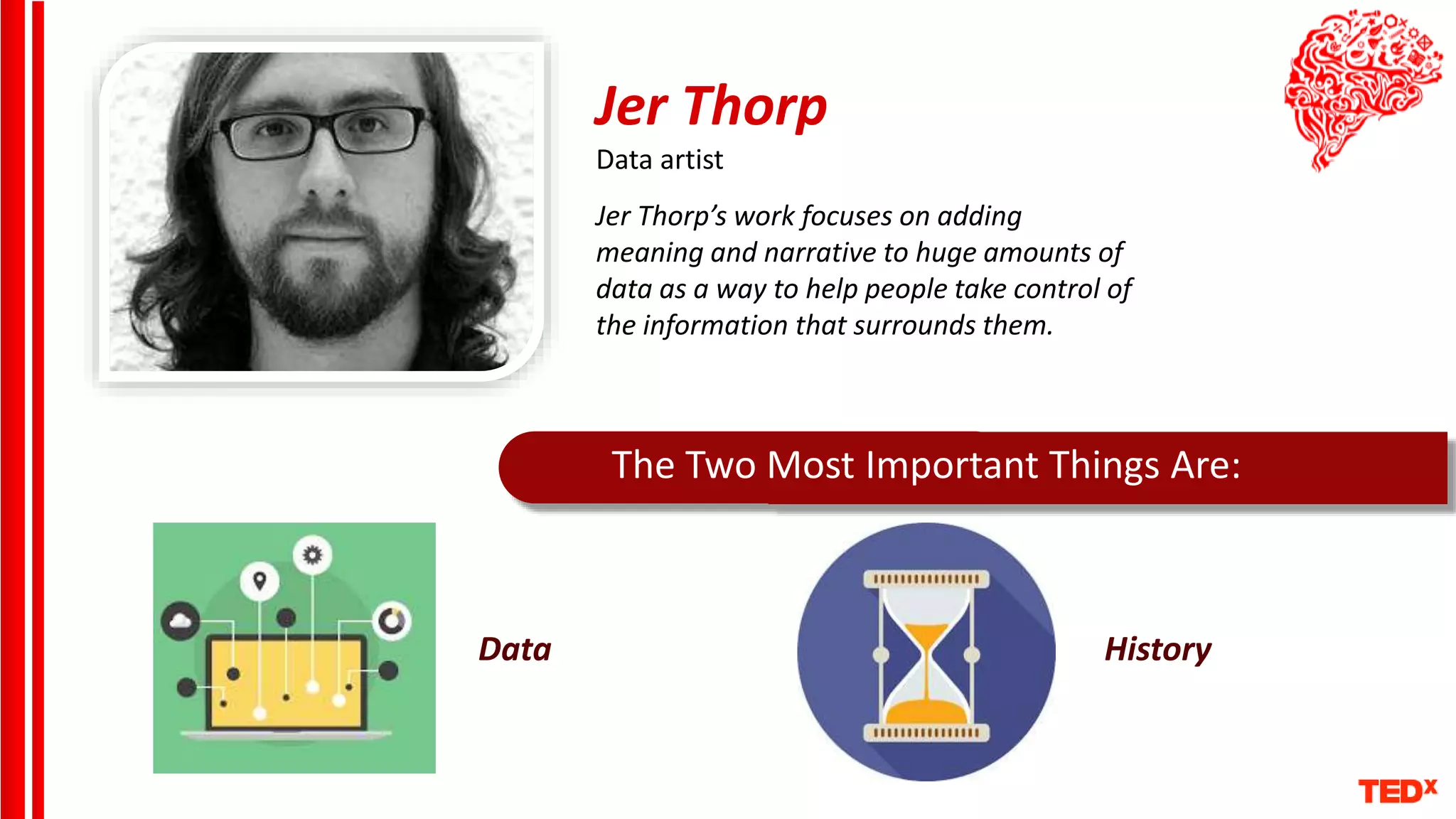
Jer Thorp
Data artist
Jer Thorp’s work focuses on adding
meaning and narrative to huge amounts of
data as a way to help people take control of
the information that surrounds them.
The Two Most Important Things Are:
Data History
The Paradigm Shift
Existence of Computer
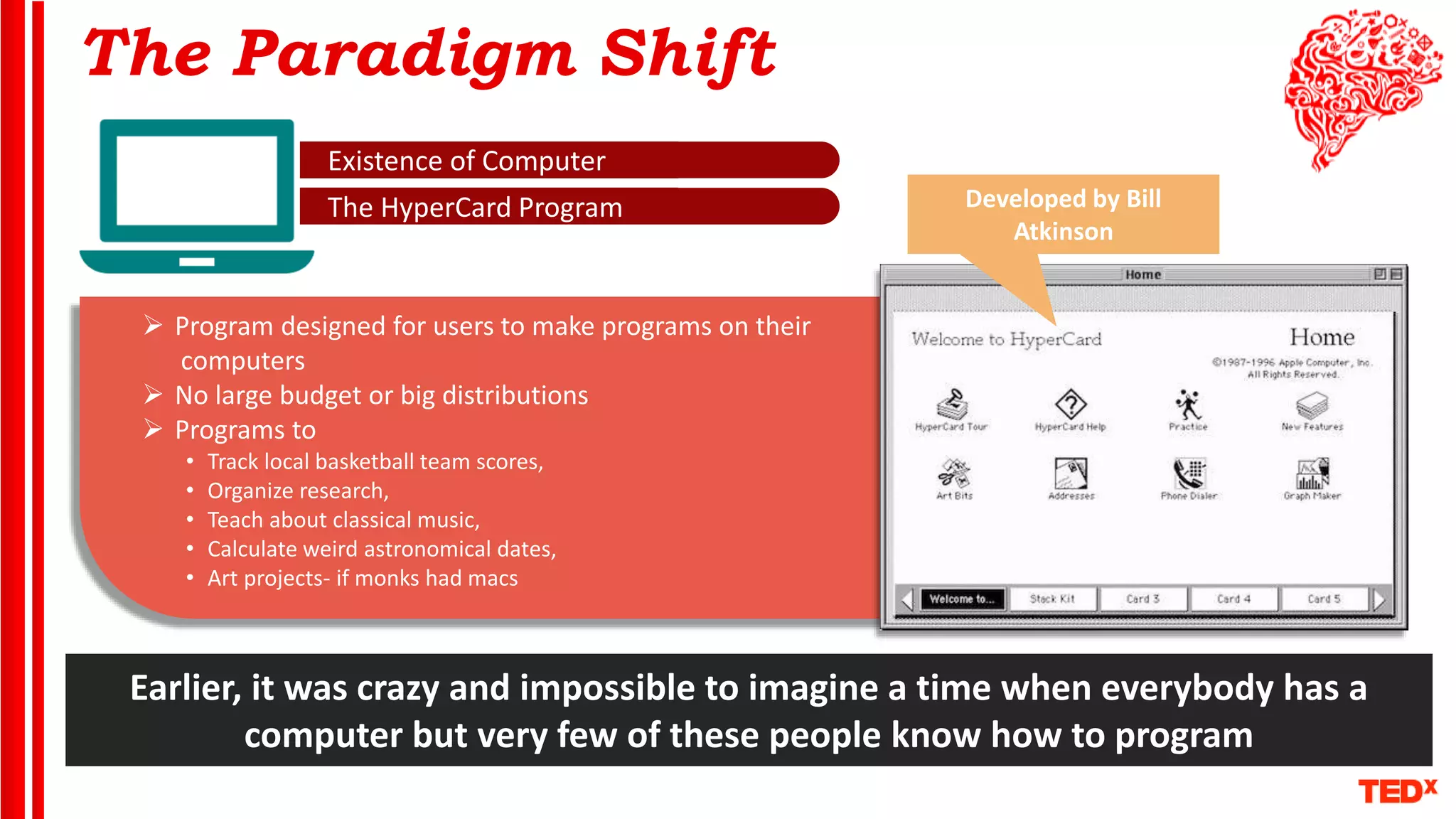
The HyperCard Program
 Program designed for users to make programs on their
computers
 No large budget or big distributions
 Programs to
• Track local basketball team scores,
• Organize research,
• Teach about classical music,
• Calculate weird astronomical dates,
• Art projects- if monks had macs
Earlier, it was crazy and impossible to imagine a time when everybody has a
computer but very few of these people know how to program
Developed by Bill
Atkinson
Fast Forward in Jer’s Life
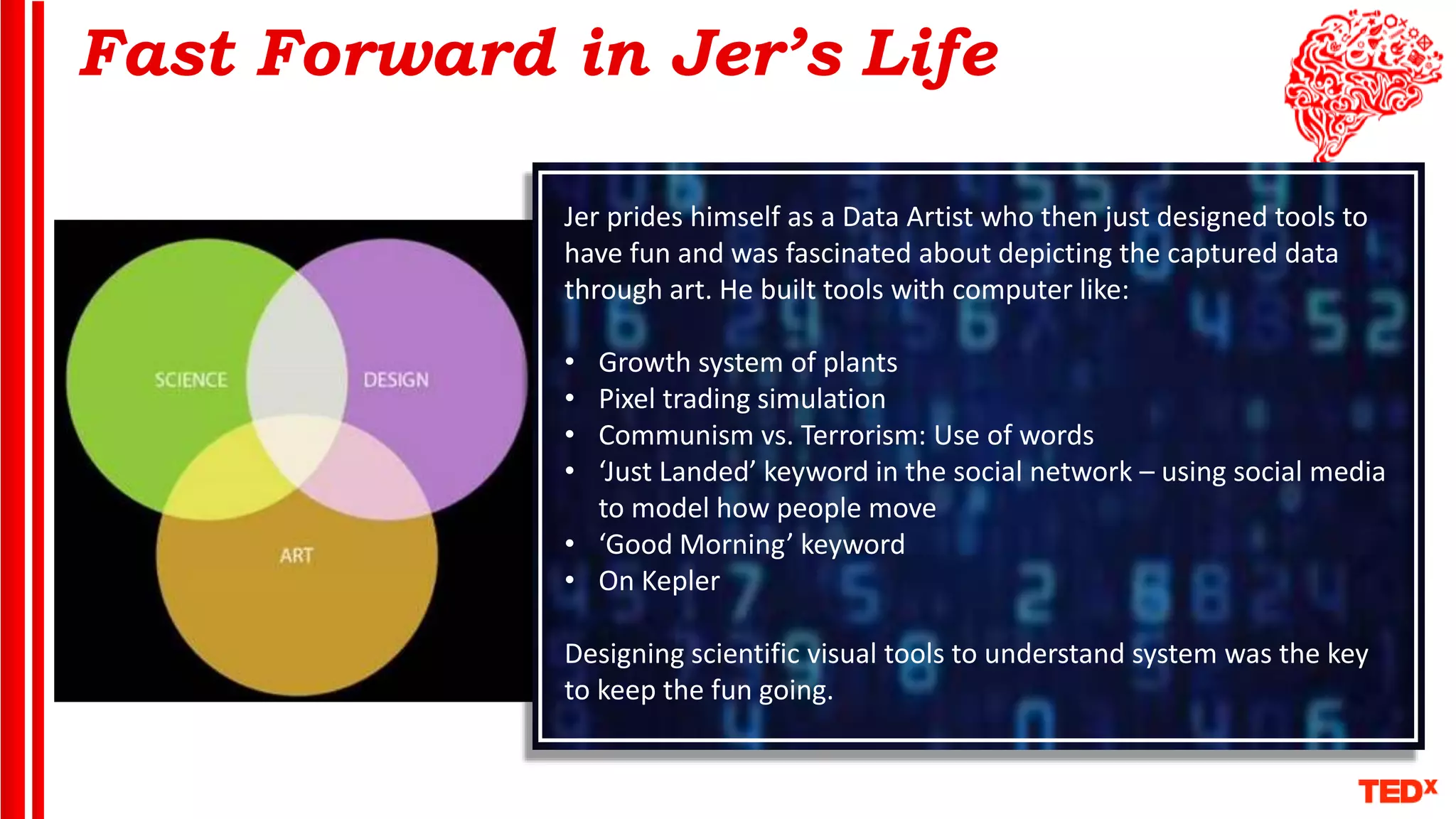
Jer prides himself as a Data Artist who then just designed tools to
have fun and was fascinated about depicting the captured data
through art. He built tools with computer like:
• Growth system of plants
• Pixel trading simulation
• Communism vs. Terrorism: Use of words
• ‘Just Landed’ keyword in the social network – using social media
to model how people move
• ‘Good Morning’ keyword
• On Kepler
Designing scientific visual tools to understand system was the key
to keep the fun going.
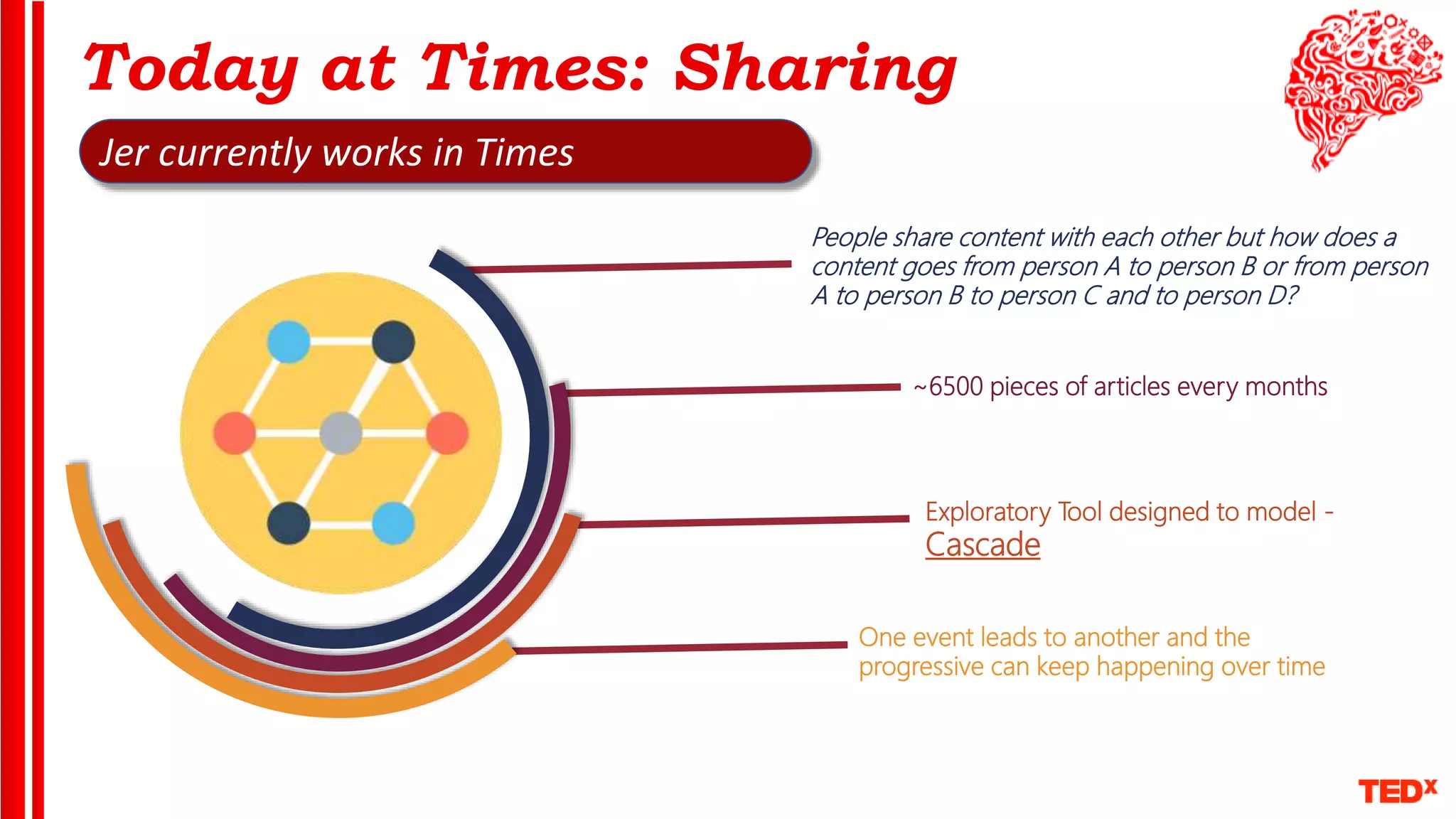
Today at Times: Sharing
People share content with each other but how does a
content goes from person A to person B or from person
A to person B to person C and to person D?
One event leads to another and the
progressive can keep happening over time
Exploratory Tool designed to model -
Cascade
~6500 pieces of articles every months
Jer currently works in Times
Today at Times: Sharing
Key Takeaways
Shearing
structure of the
data revealed
that underlies
the internet
Statistically
rigorous
guesses used for
observations
Rabbi cascade-
An
interesting
example
Tremendously Interesting- Taking single pieces of data to
build narratives structures and history.
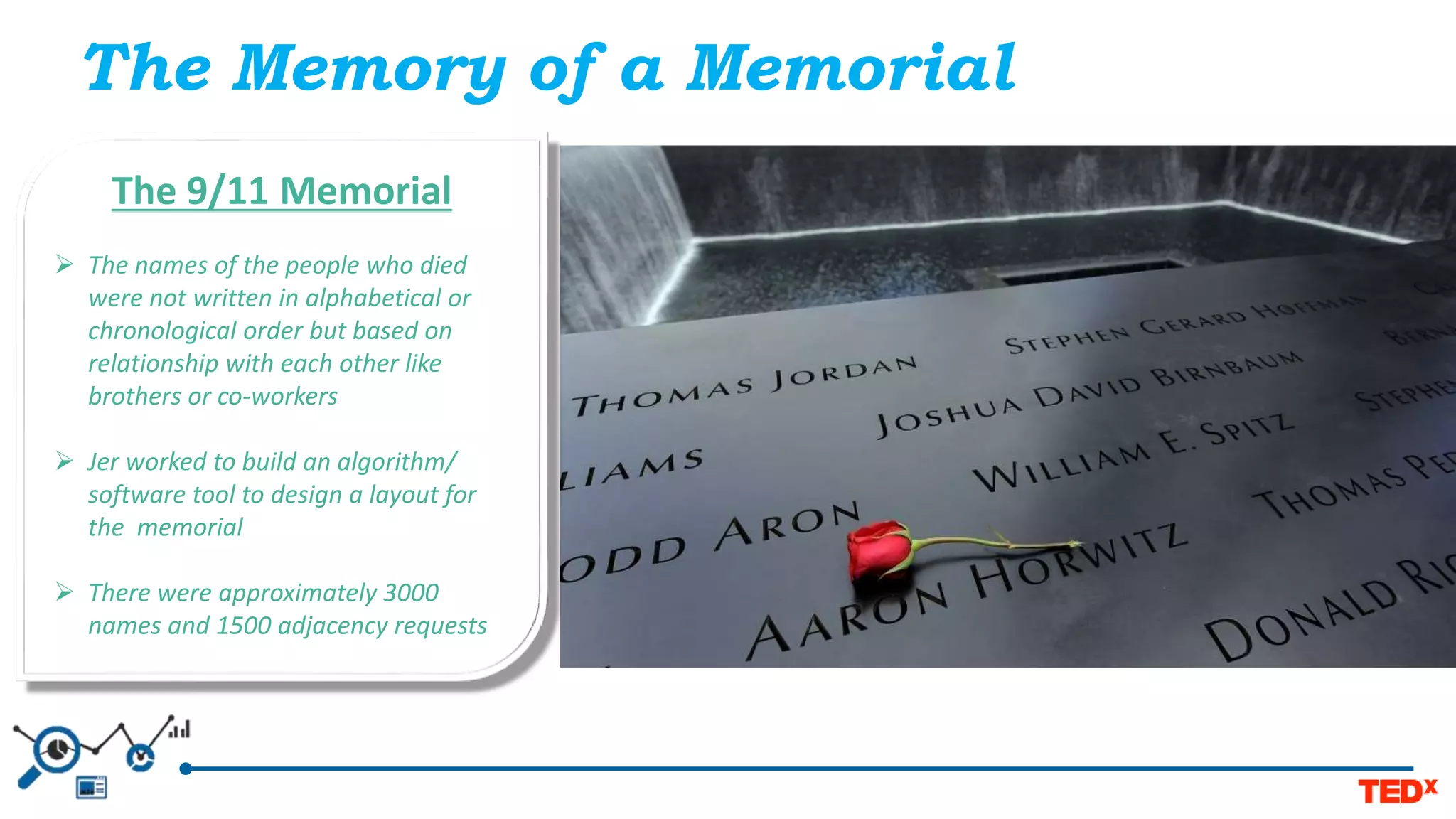
The Memory of a Memorial
The 9/11 Memorial
 The names of the people who died
were not written in alphabetical or
chronological order but based on
relationship with each other like
brothers or co-workers
 Jer worked to build an algorithm/
software tool to design a layout for
the memorial
 There were approximately 3000
names and 1500 adjacency requests
The Tell-a-Tale Memorial
The Perfect Layout
The tool provided the architectural
layout which satisfied all adjacency
requests and most importantly gave
the people space to tell the story they
wanted to convey
The True Social Network
Incredible connect depicted in the era
of the social network. The real life
network that people have as they
walked through their life is actually
embodied in the memorial
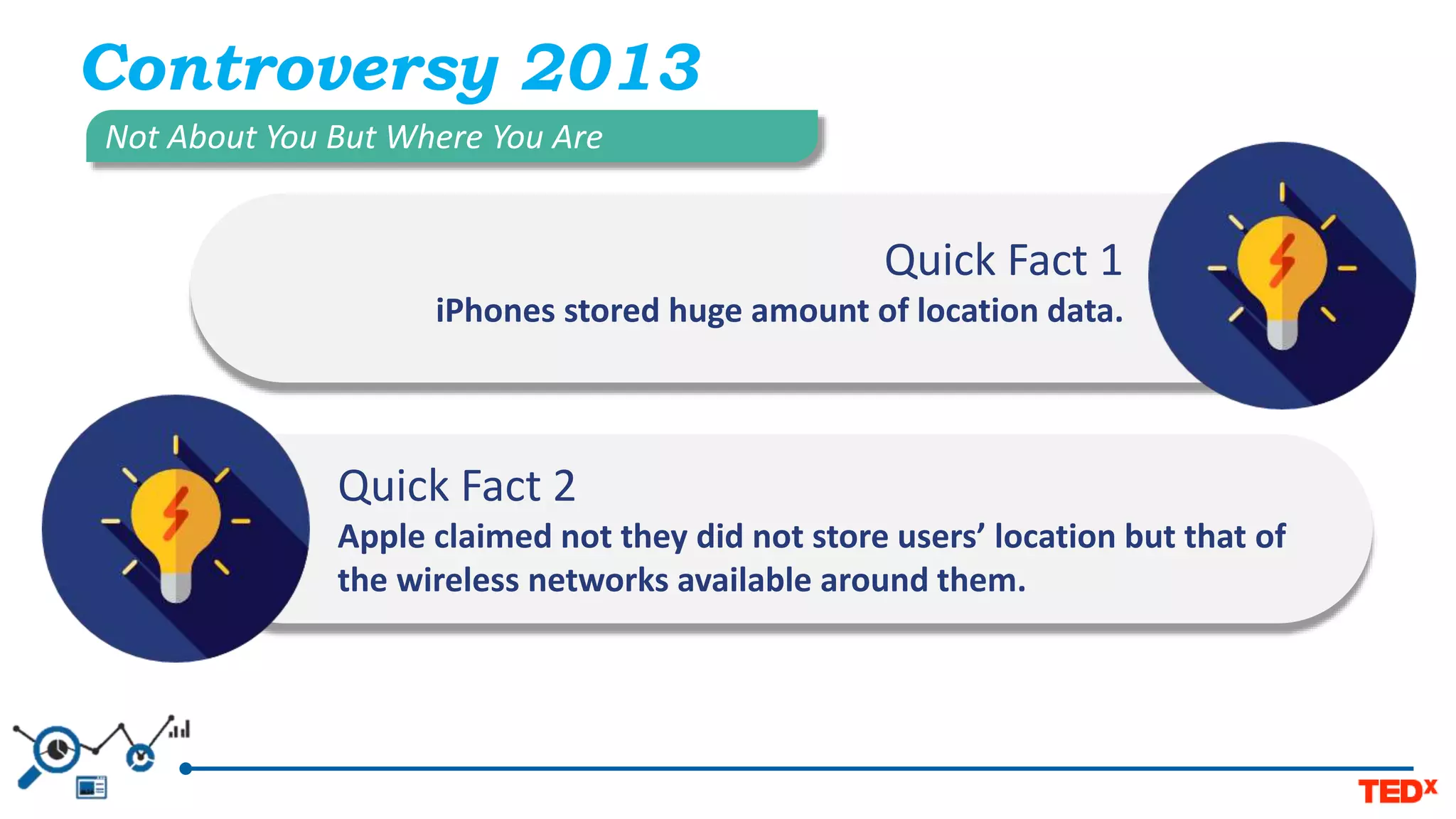
Controversy 2013
Quick Fact 1
iPhones stored huge amount of location data.
Quick Fact 2
Apple claimed not they did not store users’ location but that of
the wireless networks available around them.
Not About You But Where You Are
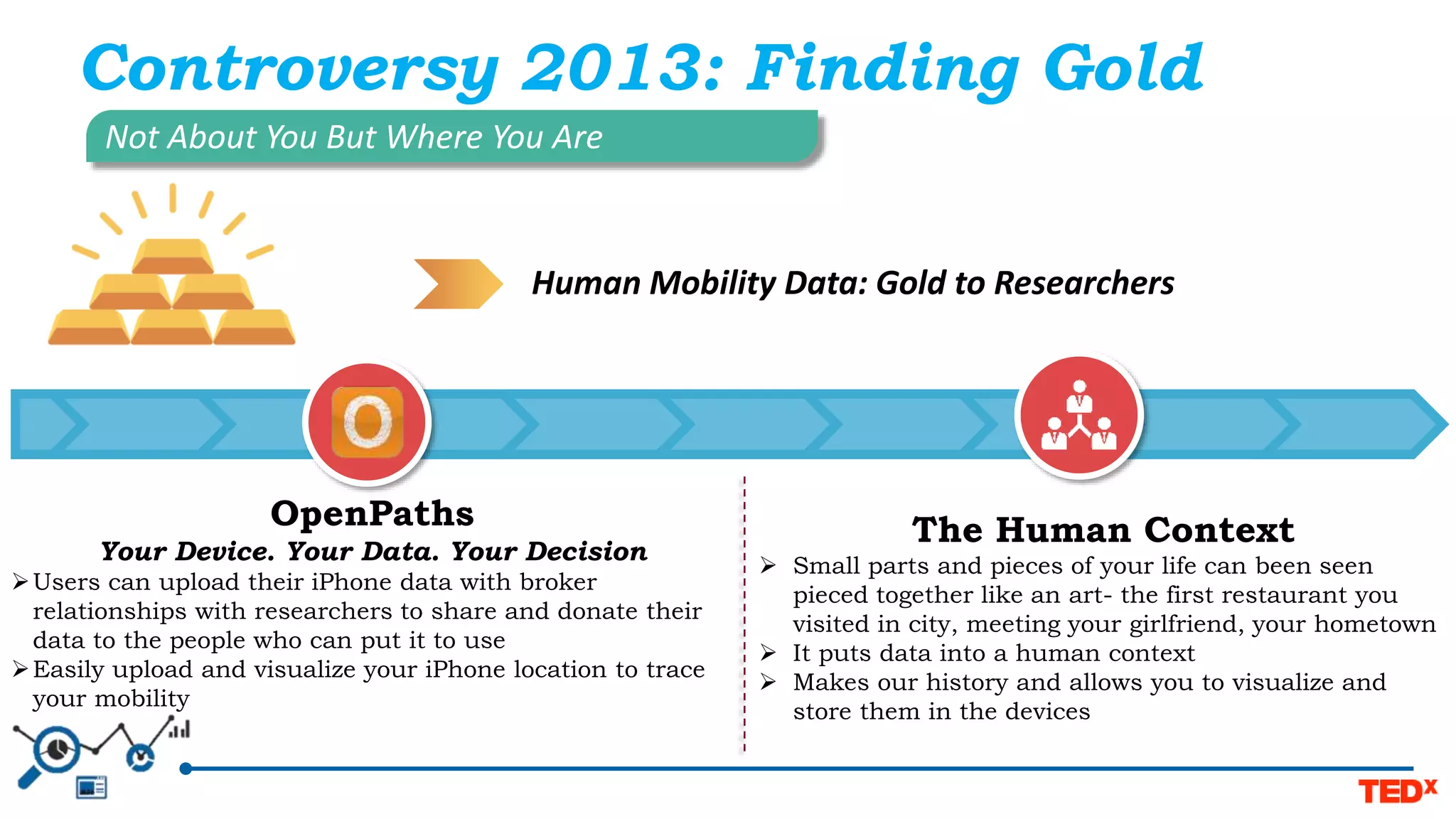
Controversy 2013: Finding Gold
Not About You But Where You Are
Human Mobility Data: Gold to Researchers
OpenPaths
Your Device. Your Data. Your Decision
Users can upload their iPhone data with broker
relationships with researchers to share and donate their
data to the people who can put it to use
Easily upload and visualize your iPhone location to trace
your mobility
The Human Context
 Small parts and pieces of your life can been seen
pieced together like an art- the first restaurant you
visited in city, meeting your girlfriend, your hometown
 It puts data into a human context
 Makes our history and allows you to visualize and
store them in the devices
Putting human context
into the data can
change a lot of things
as it builds
automatically on
empathy for the real
people involved in the
system. This evolves a
fundamental respect
which is currently
missing in the system.
Numbers and Data are
the tethers that
connect people on
social networks to the
real world. Thinking
about data in a
standard abstract
way, without human
context is the absolute
short-sightedness
Conclusion
Putting Data in a Human Context
Big data is a big business
but lacks participation of
dialogues from the multiple
pieces of society
Including artists, musicians, poets and
writers into dialogues, who can bring
human element to data can contribute
in the long run
World of data and technology is going to be transformative for the
society, and unlike resource and finance industry, which we can
take it to tremendous heights
?
?
Two Key Insights:
• The numbers are not just numbers but if analyzed properly they carry a lot of weight
they hold up a lot information which can change life. Like how we see or search people
on social media platforms. This can have a pattern and a lot can be inferred from it,
even from a click of a button, a lot can be inferred.
• Giving data a human context and visualizing it in different, meaningful and beautiful
ways can completely change our relationship and understanding of it.
The Managers can learn about:
• The fundamental respect end users and their data
• Pain points of a standardized, abstract view, use and representation of data
• Understanding and formulating on how to deal with privacy issues
• How to leverage human context to model the data achieving greater results and outputs
• How to be future-ready with evolving market opportunities, technologies and
comprehensive demands where the consumers are more privy, careful and aware of
their data and how it can be used
Thank
You

Making data more human

  • 1.
  • 2.
    Jer Thorp Data artist JerThorp’s work focuses on adding meaning and narrative to huge amounts of data as a way to help people take control of the information that surrounds them. The Two Most Important Things Are: Data History
  • 3.
    The Paradigm Shift Existenceof Computer The HyperCard Program  Program designed for users to make programs on their computers  No large budget or big distributions  Programs to • Track local basketball team scores, • Organize research, • Teach about classical music, • Calculate weird astronomical dates, • Art projects- if monks had macs Earlier, it was crazy and impossible to imagine a time when everybody has a computer but very few of these people know how to program Developed by Bill Atkinson
  • 4.
    Fast Forward inJer’s Life Jer prides himself as a Data Artist who then just designed tools to have fun and was fascinated about depicting the captured data through art. He built tools with computer like: • Growth system of plants • Pixel trading simulation • Communism vs. Terrorism: Use of words • ‘Just Landed’ keyword in the social network – using social media to model how people move • ‘Good Morning’ keyword • On Kepler Designing scientific visual tools to understand system was the key to keep the fun going.
  • 5.
    Today at Times:Sharing People share content with each other but how does a content goes from person A to person B or from person A to person B to person C and to person D? One event leads to another and the progressive can keep happening over time Exploratory Tool designed to model - Cascade ~6500 pieces of articles every months Jer currently works in Times
  • 6.
    Today at Times:Sharing Key Takeaways Shearing structure of the data revealed that underlies the internet Statistically rigorous guesses used for observations Rabbi cascade- An interesting example Tremendously Interesting- Taking single pieces of data to build narratives structures and history.
  • 7.
    The Memory ofa Memorial The 9/11 Memorial  The names of the people who died were not written in alphabetical or chronological order but based on relationship with each other like brothers or co-workers  Jer worked to build an algorithm/ software tool to design a layout for the memorial  There were approximately 3000 names and 1500 adjacency requests
  • 8.
    The Tell-a-Tale Memorial ThePerfect Layout The tool provided the architectural layout which satisfied all adjacency requests and most importantly gave the people space to tell the story they wanted to convey The True Social Network Incredible connect depicted in the era of the social network. The real life network that people have as they walked through their life is actually embodied in the memorial
  • 9.
    Controversy 2013 Quick Fact1 iPhones stored huge amount of location data. Quick Fact 2 Apple claimed not they did not store users’ location but that of the wireless networks available around them. Not About You But Where You Are
  • 10.
    Controversy 2013: FindingGold Not About You But Where You Are Human Mobility Data: Gold to Researchers OpenPaths Your Device. Your Data. Your Decision Users can upload their iPhone data with broker relationships with researchers to share and donate their data to the people who can put it to use Easily upload and visualize your iPhone location to trace your mobility The Human Context  Small parts and pieces of your life can been seen pieced together like an art- the first restaurant you visited in city, meeting your girlfriend, your hometown  It puts data into a human context  Makes our history and allows you to visualize and store them in the devices
  • 11.
    Putting human context intothe data can change a lot of things as it builds automatically on empathy for the real people involved in the system. This evolves a fundamental respect which is currently missing in the system.
  • 12.
    Numbers and Dataare the tethers that connect people on social networks to the real world. Thinking about data in a standard abstract way, without human context is the absolute short-sightedness
  • 13.
    Conclusion Putting Data ina Human Context Big data is a big business but lacks participation of dialogues from the multiple pieces of society Including artists, musicians, poets and writers into dialogues, who can bring human element to data can contribute in the long run World of data and technology is going to be transformative for the society, and unlike resource and finance industry, which we can take it to tremendous heights
  • 14.
    ? ? Two Key Insights: •The numbers are not just numbers but if analyzed properly they carry a lot of weight they hold up a lot information which can change life. Like how we see or search people on social media platforms. This can have a pattern and a lot can be inferred from it, even from a click of a button, a lot can be inferred. • Giving data a human context and visualizing it in different, meaningful and beautiful ways can completely change our relationship and understanding of it. The Managers can learn about: • The fundamental respect end users and their data • Pain points of a standardized, abstract view, use and representation of data • Understanding and formulating on how to deal with privacy issues • How to leverage human context to model the data achieving greater results and outputs • How to be future-ready with evolving market opportunities, technologies and comprehensive demands where the consumers are more privy, careful and aware of their data and how it can be used
  • 15.