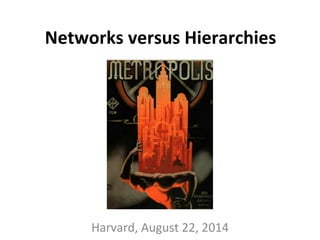
Networks 
versus 
Hierarchies 
Harvard, 
August 
22, 
2014
Study 
ques5ons 
1. Are 
you 
a 
hierarch 
or 
are 
you 
networked?
Study 
ques5ons 
1. Are 
you 
a 
hierarch 
or 
are 
you 
networked? 
2. Do 
you 
think 
the 
social 
and 
other 
networks 
created 
by 
the 
Internet 
will 
ul5mately 
prove 
more 
powerful 
than 
the 
tradi5onal 
hierarchies 
of 
business 
and 
poli5cs?
Study 
ques5ons 
1. Are 
you 
a 
hierarch 
or 
are 
you 
networked? 
2. Do 
you 
think 
the 
social 
and 
other 
networks 
created 
by 
the 
Internet 
will 
ul5mately 
prove 
more 
powerful 
than 
the 
tradi5onal 
hierarchies 
of 
business 
and 
poli5cs? 
3. Which 
markets 
will 
be 
the 
next 
to 
be 
disrupted 
by 
innova5ons 
in 
informa5on 
technology?
Study 
ques5ons 
1. Are 
you 
a 
hierarch 
or 
are 
you 
networked? 
2. Do 
you 
think 
the 
social 
and 
other 
networks 
created 
by 
the 
Internet 
will 
ul5mately 
prove 
more 
powerful 
than 
the 
tradi5onal 
hierarchies 
of 
business 
and 
poli5cs? 
3. Which 
markets 
will 
be 
the 
next 
to 
be 
disrupted 
by 
innova5ons 
in 
informa5on 
technology?
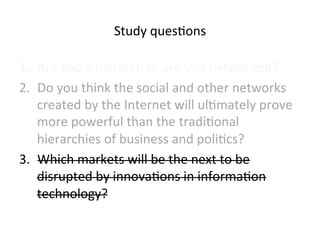
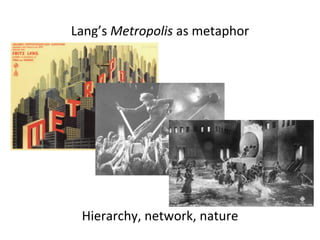
Lang’s 
Metropolis 
as 
metaphor 
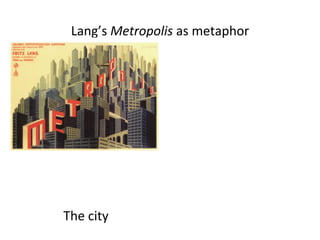
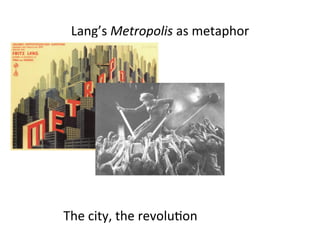
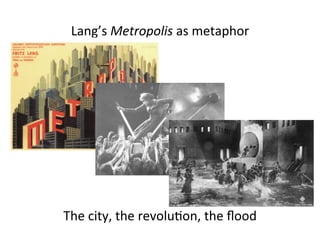
The 
city, 
the 
revolu5on, 
the 
flood
Lang’s 
Metropolis 
as 
metaphor 
The 
city, 
the 
revolu5on, 
the 
flood
Lang’s 
Metropolis 
as 
metaphor 
The 
city, 
the 
revolu5on, 
the 
flood
Lang’s 
Metropolis 
as 
metaphor 
Hierarchy, 
network, 
nature
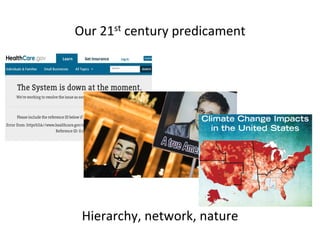
Our 
21st 
century 
predicament 
Hierarchy, 
network, 
nature
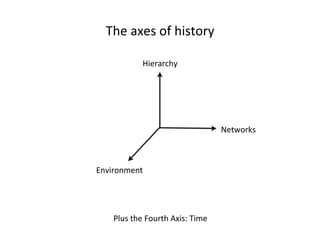
The 
axes 
of 
history 
Hierarchy 
Networks 
Environment 
Plus 
the 
Fourth 
Axis: 
Time
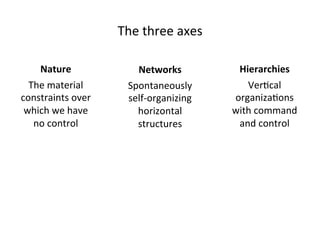
The 
three 
axes 
Nature 
The 
material 
constraints 
over 
which 
we 
have 
no 
control 
Hierarchies 
Ver5cal 
organiza5ons 
with 
command 
and 
control 
Networks 
Spontaneously 
self-­‐organizing 
horizontal 
structures
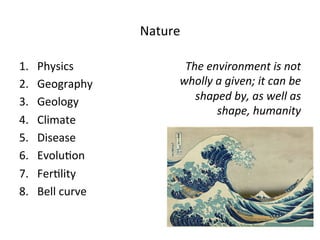
Nature 
1. Physics 
2. Geography 
3. Geology 
4. Climate 
5. Disease 
6. Evolu5on 
7. Fer5lity 
8. Bell 
curve 
The 
environment 
is 
not 
wholly 
a 
given; 
it 
can 
be 
shaped 
by, 
as 
well 
as 
shape, 
humanity
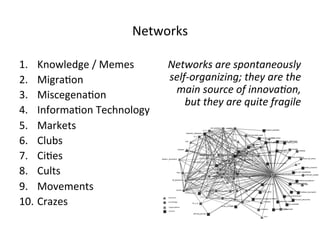
Networks 
1. Knowledge 
/ 
Memes 
2. Migra5on 
3. Miscegena5on 
4. Informa5on 
Technology 
5. Markets 
6. Clubs 
7. Ci5es 
8. Cults 
9. Movements 
10. Crazes 
Networks 
are 
spontaneously 
self-­‐organizing; 
they 
are 
the 
main 
source 
of 
innova?on, 
but 
they 
are 
quite 
fragile
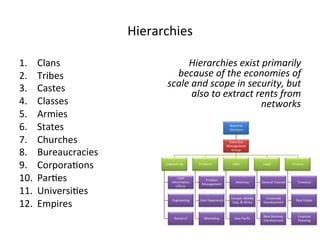
Hierarchies 
1. Clans 
2. Tribes 
3. Castes 
4. Classes 
5. Armies 
6. States 
7. Churches 
8. Bureaucracies 
9. Corpora5ons 
10. Par5es 
11. Universi5es 
12. Empires 
Hierarchies 
exist 
primarily 
because 
of 
the 
economies 
of 
scale 
and 
scope 
in 
security, 
but 
also 
to 
extract 
rents 
from 
networks
History 
explained 
• Environmental 
changes 
oben 
incen5vize 
innova5on 
by 
networks 
• Networks 
tend 
to 
disrupt 
established 
hierarchies 
• Hierarchies 
seek 
to 
exploit 
the 
benefits 
of 
networks
History 
explained 
• Environmental 
changes 
oben 
incen5vize 
innova5on 
by 
networks 
• Networks 
tend 
to 
disrupt 
established 
hierarchies 
• Hierarchies 
seek 
to 
exploit 
the 
benefits 
of 
networks
History 
explained 
• Environmental 
changes 
oben 
incen5vize 
innova5on 
by 
networks 
• Networks 
tend 
to 
disrupt 
established 
hierarchies 
• Hierarchies 
seek 
to 
exploit 
the 
benefits 
of 
networks
History 
explained 
• Environmental 
changes 
oben 
incen5vize 
innova5on 
by 
networks 
• Networks 
tend 
to 
disrupt 
established 
hierarchies 
• Hierarchies 
seek 
to 
exploit 
the 
benefits 
of 
networks 
This 
is 
not 
some 
kind 
of 
determinis?c 
sequence
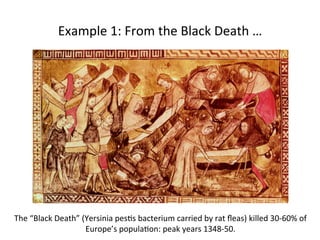
Example 
1: 
From 
the 
Black 
Death 
… 
The 
“Black 
Death” 
(Yersinia 
pes5s 
bacterium 
carried 
by 
rat 
fleas) 
killed 
30-­‐60% 
of 
Europe’s 
popula5on: 
peak 
years 
1348-­‐50.
… 
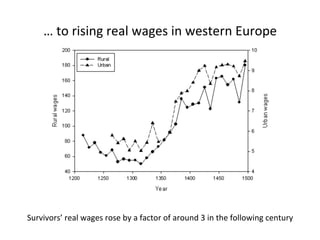
to 
rising 
real 
wages 
in 
western 
Europe 
Survivors’ 
real 
wages 
rose 
by 
a 
factor 
of 
around 
3 
in 
the 
following 
century
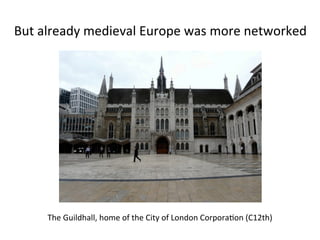
But 
already 
medieval 
Europe 
was 
more 
networked 
The 
Guildhall, 
home 
of 
the 
City 
of 
London 
Corpora5on 
(C12th)
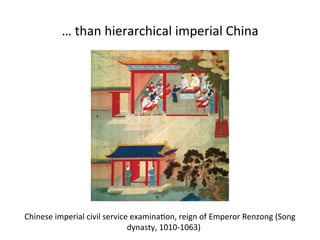
… 
than 
hierarchical 
imperial 
China 
Chinese 
imperial 
civil 
service 
examina5on, 
reign 
of 
Emperor 
Renzong 
(Song 
dynasty, 
1010-­‐1063)
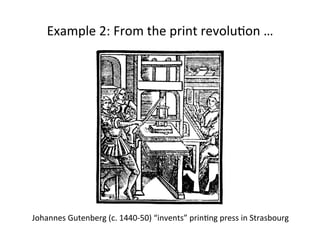
Example 
2: 
From 
the 
print 
revolu5on 
… 
Johannes 
Gutenberg 
(c. 
1440-­‐50) 
“invents” 
prin5ng 
press 
in 
Strasbourg
… 
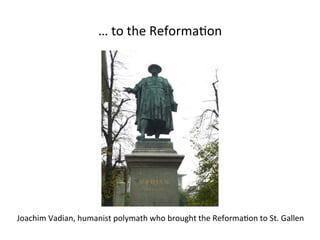
to 
the 
Reforma5on 
Joachim 
Vadian, 
humanist 
polymath 
who 
brought 
the 
Reforma5on 
to 
St. 
Gallen
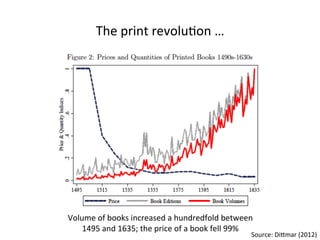
The 
print 
revolu5on 
… 
Volume 
of 
books 
increased 
a 
hundredfold 
between 
1495 
and 
1635; 
the 
price 
of 
a 
book 
fell 
99% 
Source: 
Dinmar 
(2012)
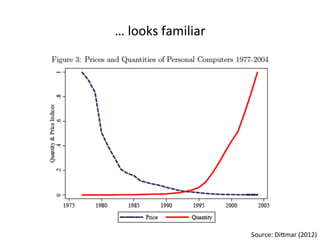
… 
looks 
familiar 
Source: 
Dinmar 
(2012)
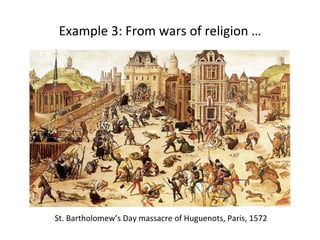
Example 
3: 
From 
wars 
of 
religion 
… 
St. 
Bartholomew’s 
Day 
massacre 
of 
Huguenots, 
Paris, 
1572
… 
to 
hierarchical 
order 
The 
Peace 
of 
Westphalia 
(Treaty 
of 
Munster, 
1648)
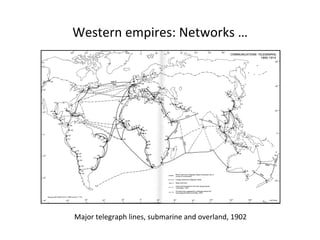
Western 
empires: 
Networks 
… 
Major 
telegraph 
lines, 
submarine 
and 
overland, 
1902
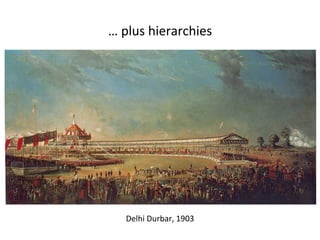
… 
plus 
hierarchies 
Delhi 
Durbar, 
1903
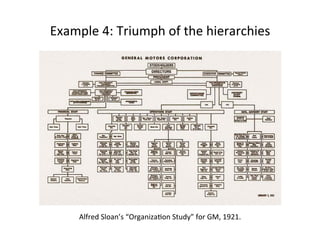
Example 
4: 
Triumph 
of 
the 
hierarchies 
Alfred 
Sloan’s 
“Organiza5on 
Study” 
for 
GM, 
1921.
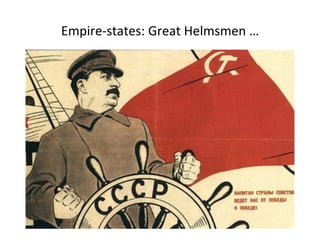
Empire-­‐states: 
Great 
Helmsmen 
…
… 
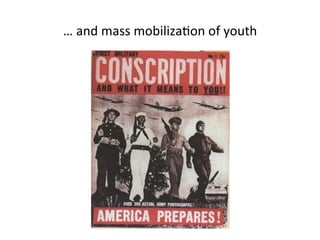
and 
mass 
mobiliza5on 
of 
youth
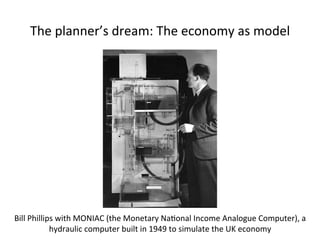
The 
planner’s 
dream: 
The 
economy 
as 
model 
Bill 
Phillips 
with 
MONIAC 
(the 
Monetary 
Na5onal 
Income 
Analogue 
Computer), 
a 
hydraulic 
computer 
built 
in 
1949 
to 
simulate 
the 
UK 
economy
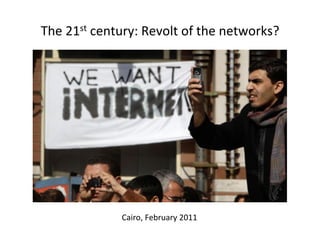
The 
21st 
century: 
Revolt 
of 
the 
networks? 
Cairo, 
February 
2011
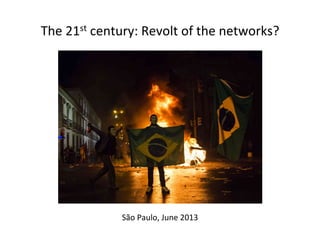
The 
21st 
century: 
Revolt 
of 
the 
networks? 
São 
Paulo, 
June 
2013
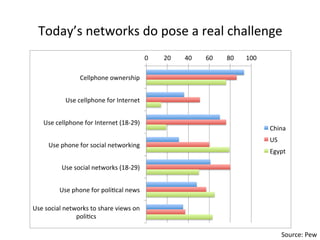
Today’s 
networks 
do 
pose 
a 
real 
challenge 
Source: 
Pew 
0" 20" 40" 60" 80" 100" 
Cellphone"ownership" 
Use"cellphone"for"Internet" 
Use"cellphone"for"Internet"(18929)" 
Use"phone"for"social"networking" 
Use"social"networks"(18929)" 
Use"phone"for"poli?cal"news" 
Use"social"networks"to"share"views"on" 
poli?cs" 
China" 
US" 
Egypt"
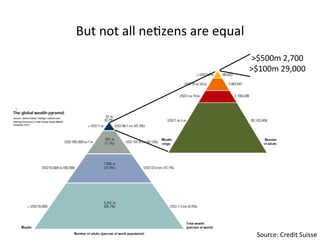
But 
not 
all 
ne5zens 
are 
equal 
>$500m 
2,700 
>$100m 
29,000 
Source: 
Credit 
Suisse
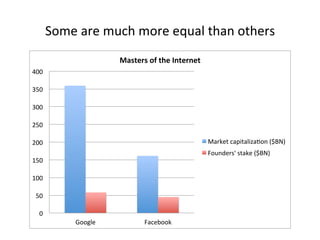
Some 
are 
much 
more 
equal 
than 
others 
400" 
350" 
300" 
250" 
200" 
150" 
100" 
50" 
0" 
Masters'of'the'Internet' 
Google" Facebook" 
Market"capitaliza8on"($BN)" 
Founders'"stake"($BN)"
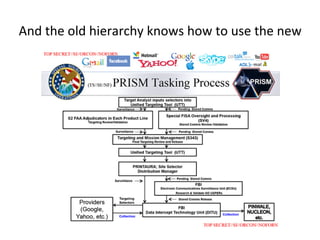
And 
the 
old 
hierarchy 
knows 
how 
to 
use 
the 
new
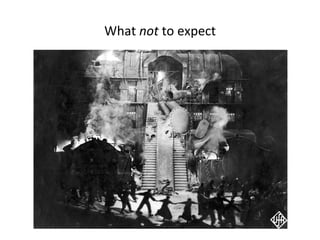
What 
not 
to 
expect
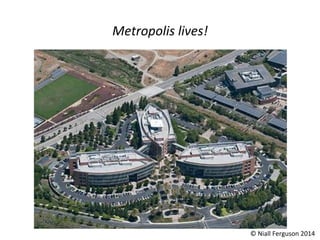
Metropolis 
lives! 
© 
Niall 
Ferguson 
2014

Redes versus Hierarquias, no tempo da História

  • 1.
    Networks versus Hierarchies Harvard, August 22, 2014
  • 2.
    Study ques5ons 1.Are you a hierarch or are you networked?
  • 3.
    Study ques5ons 1.Are you a hierarch or are you networked? 2. Do you think the social and other networks created by the Internet will ul5mately prove more powerful than the tradi5onal hierarchies of business and poli5cs?
  • 4.
    Study ques5ons 1.Are you a hierarch or are you networked? 2. Do you think the social and other networks created by the Internet will ul5mately prove more powerful than the tradi5onal hierarchies of business and poli5cs? 3. Which markets will be the next to be disrupted by innova5ons in informa5on technology?
  • 5.
    Study ques5ons 1.Are you a hierarch or are you networked? 2. Do you think the social and other networks created by the Internet will ul5mately prove more powerful than the tradi5onal hierarchies of business and poli5cs? 3. Which markets will be the next to be disrupted by innova5ons in informa5on technology?
  • 6.
    Lang’s Metropolis as metaphor The city, the revolu5on, the flood
  • 7.
    Lang’s Metropolis as metaphor The city, the revolu5on, the flood
  • 8.
    Lang’s Metropolis as metaphor The city, the revolu5on, the flood
  • 9.
    Lang’s Metropolis as metaphor Hierarchy, network, nature
  • 10.
    Our 21st century predicament Hierarchy, network, nature
  • 11.
    The axes of history Hierarchy Networks Environment Plus the Fourth Axis: Time
  • 12.
    The three axes Nature The material constraints over which we have no control Hierarchies Ver5cal organiza5ons with command and control Networks Spontaneously self-­‐organizing horizontal structures
  • 13.
    Nature 1. Physics 2. Geography 3. Geology 4. Climate 5. Disease 6. Evolu5on 7. Fer5lity 8. Bell curve The environment is not wholly a given; it can be shaped by, as well as shape, humanity
  • 14.
    Networks 1. Knowledge / Memes 2. Migra5on 3. Miscegena5on 4. Informa5on Technology 5. Markets 6. Clubs 7. Ci5es 8. Cults 9. Movements 10. Crazes Networks are spontaneously self-­‐organizing; they are the main source of innova?on, but they are quite fragile
  • 15.
    Hierarchies 1. Clans 2. Tribes 3. Castes 4. Classes 5. Armies 6. States 7. Churches 8. Bureaucracies 9. Corpora5ons 10. Par5es 11. Universi5es 12. Empires Hierarchies exist primarily because of the economies of scale and scope in security, but also to extract rents from networks
  • 16.
    History explained •Environmental changes oben incen5vize innova5on by networks • Networks tend to disrupt established hierarchies • Hierarchies seek to exploit the benefits of networks
  • 17.
    History explained •Environmental changes oben incen5vize innova5on by networks • Networks tend to disrupt established hierarchies • Hierarchies seek to exploit the benefits of networks
  • 18.
    History explained •Environmental changes oben incen5vize innova5on by networks • Networks tend to disrupt established hierarchies • Hierarchies seek to exploit the benefits of networks
  • 19.
    History explained •Environmental changes oben incen5vize innova5on by networks • Networks tend to disrupt established hierarchies • Hierarchies seek to exploit the benefits of networks This is not some kind of determinis?c sequence
  • 20.
    Example 1: From the Black Death … The “Black Death” (Yersinia pes5s bacterium carried by rat fleas) killed 30-­‐60% of Europe’s popula5on: peak years 1348-­‐50.
  • 21.
    … to rising real wages in western Europe Survivors’ real wages rose by a factor of around 3 in the following century
  • 22.
    But already medieval Europe was more networked The Guildhall, home of the City of London Corpora5on (C12th)
  • 23.
    … than hierarchical imperial China Chinese imperial civil service examina5on, reign of Emperor Renzong (Song dynasty, 1010-­‐1063)
  • 24.
    Example 2: From the print revolu5on … Johannes Gutenberg (c. 1440-­‐50) “invents” prin5ng press in Strasbourg
  • 25.
    … to the Reforma5on Joachim Vadian, humanist polymath who brought the Reforma5on to St. Gallen
  • 26.
    The print revolu5on … Volume of books increased a hundredfold between 1495 and 1635; the price of a book fell 99% Source: Dinmar (2012)
  • 27.
    … looks familiar Source: Dinmar (2012)
  • 28.
    Example 3: From wars of religion … St. Bartholomew’s Day massacre of Huguenots, Paris, 1572
  • 29.
    … to hierarchical order The Peace of Westphalia (Treaty of Munster, 1648)
  • 30.
    Western empires: Networks … Major telegraph lines, submarine and overland, 1902
  • 31.
    … plus hierarchies Delhi Durbar, 1903
  • 32.
    Example 4: Triumph of the hierarchies Alfred Sloan’s “Organiza5on Study” for GM, 1921.
  • 33.
  • 34.
    … and mass mobiliza5on of youth
  • 35.
    The planner’s dream: The economy as model Bill Phillips with MONIAC (the Monetary Na5onal Income Analogue Computer), a hydraulic computer built in 1949 to simulate the UK economy
  • 36.
    The 21st century: Revolt of the networks? Cairo, February 2011
  • 37.
    The 21st century: Revolt of the networks? São Paulo, June 2013
  • 38.
    Today’s networks do pose a real challenge Source: Pew 0" 20" 40" 60" 80" 100" Cellphone"ownership" Use"cellphone"for"Internet" Use"cellphone"for"Internet"(18929)" Use"phone"for"social"networking" Use"social"networks"(18929)" Use"phone"for"poli?cal"news" Use"social"networks"to"share"views"on" poli?cs" China" US" Egypt"
  • 39.
    But not all ne5zens are equal >$500m 2,700 >$100m 29,000 Source: Credit Suisse
  • 40.
    Some are much more equal than others 400" 350" 300" 250" 200" 150" 100" 50" 0" Masters'of'the'Internet' Google" Facebook" Market"capitaliza8on"($BN)" Founders'"stake"($BN)"
  • 41.
    And the old hierarchy knows how to use the new
  • 42.
    What not to expect
  • 43.
    Metropolis lives! © Niall Ferguson 2014