Making a Market for Competency-Based
Credentials: What Can Colleges Do?
Final in a series of three webinars
available at www.skilledwork.org

1
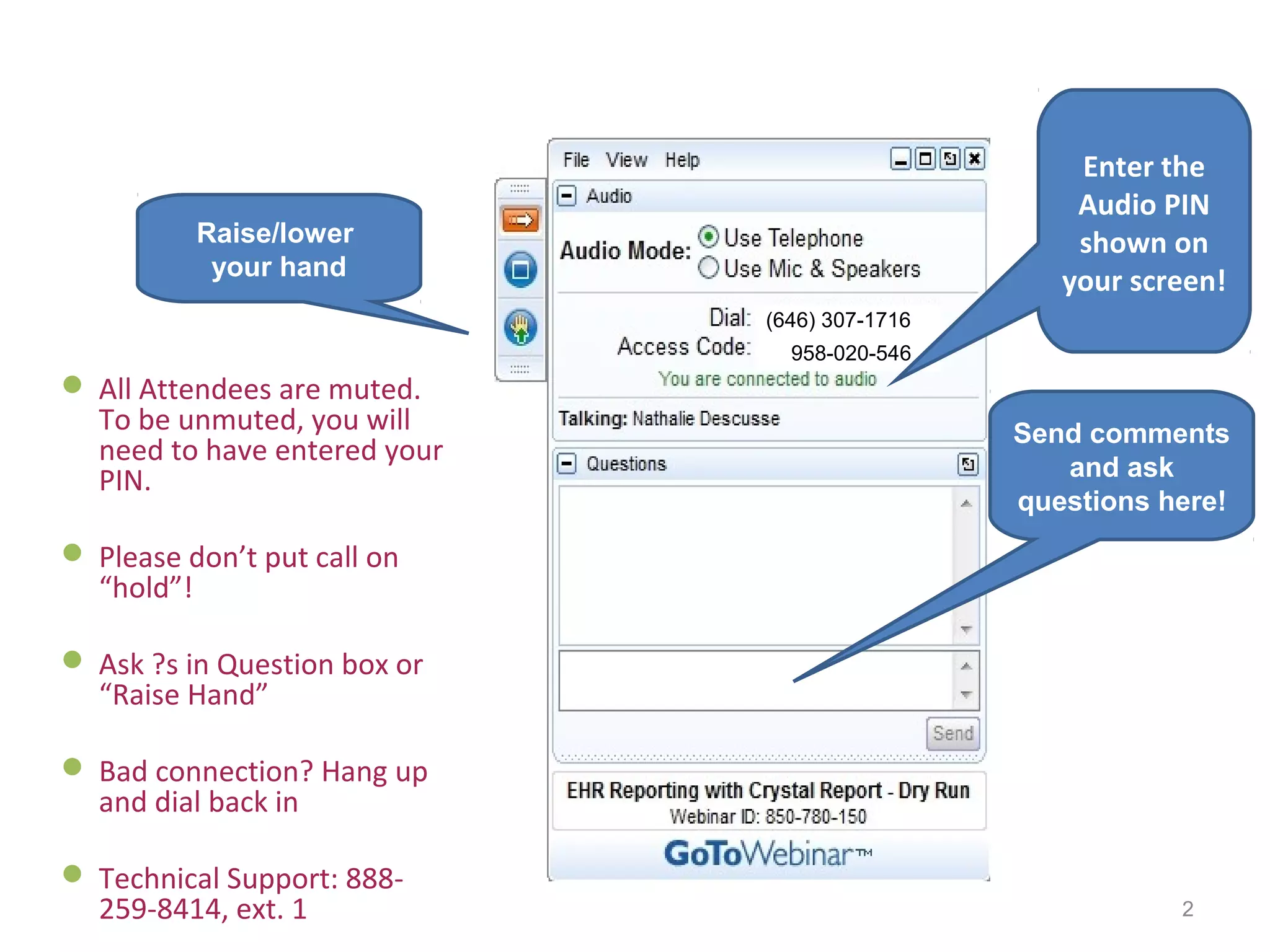
Enter the
Audio PIN
shown on
your screen!

Raise/lower
your hand
(646) 307-1716
958-020-546

 All Attendees are muted.

To be unmuted, you will
need to have entered your
PIN.

Send comments
and ask
questions here!

 Please don’t put call on

“hold”!

 Ask ?s in Question box or

“Raise Hand”

 Bad connection? Hang up

and dial back in

 Technical Support: 888-

259-8414, ext. 1

2
Today’s Presenters

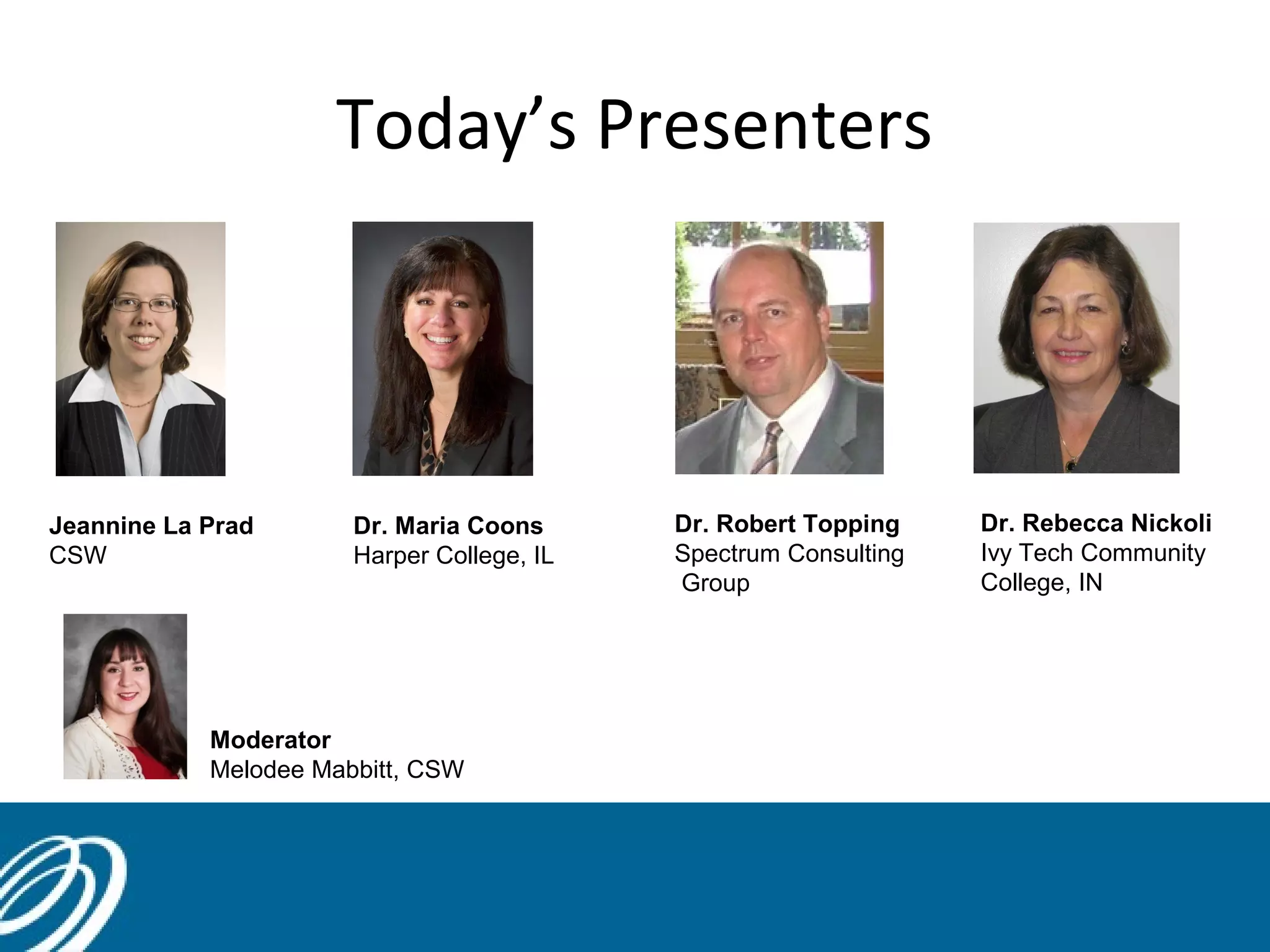
Jeannine La Prad
CSW

Dr. Maria Coons
Harper College, IL

Moderator
Melodee Mabbitt, CSW

Dr. Robert Topping
Spectrum Consulting
Group

Dr. Rebecca Nickoli
Ivy Tech Community
College, IN
Available at www.skilledwork.org
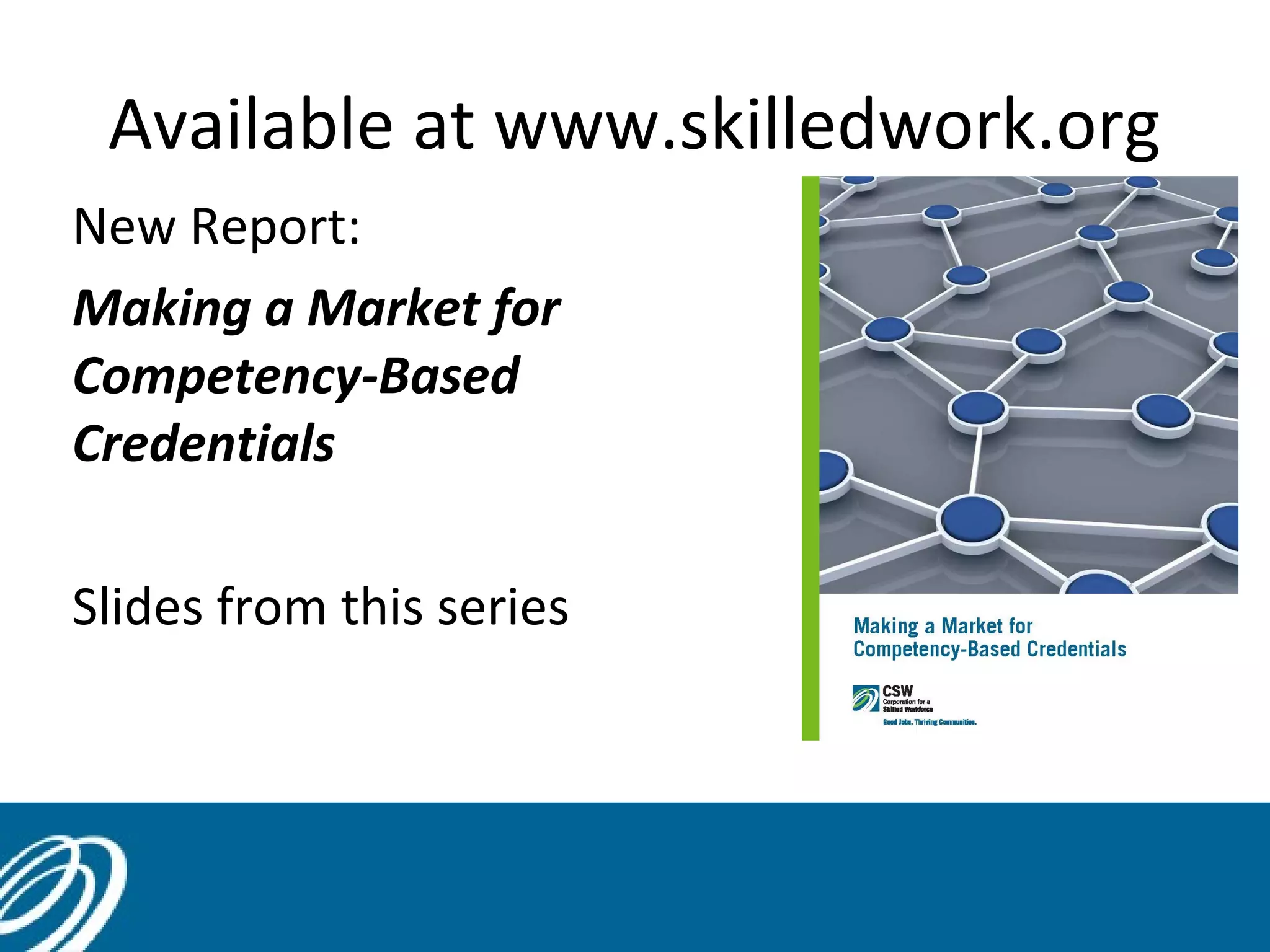
New Report:
Making a Market for
Competency-Based
Credentials
Slides from this series
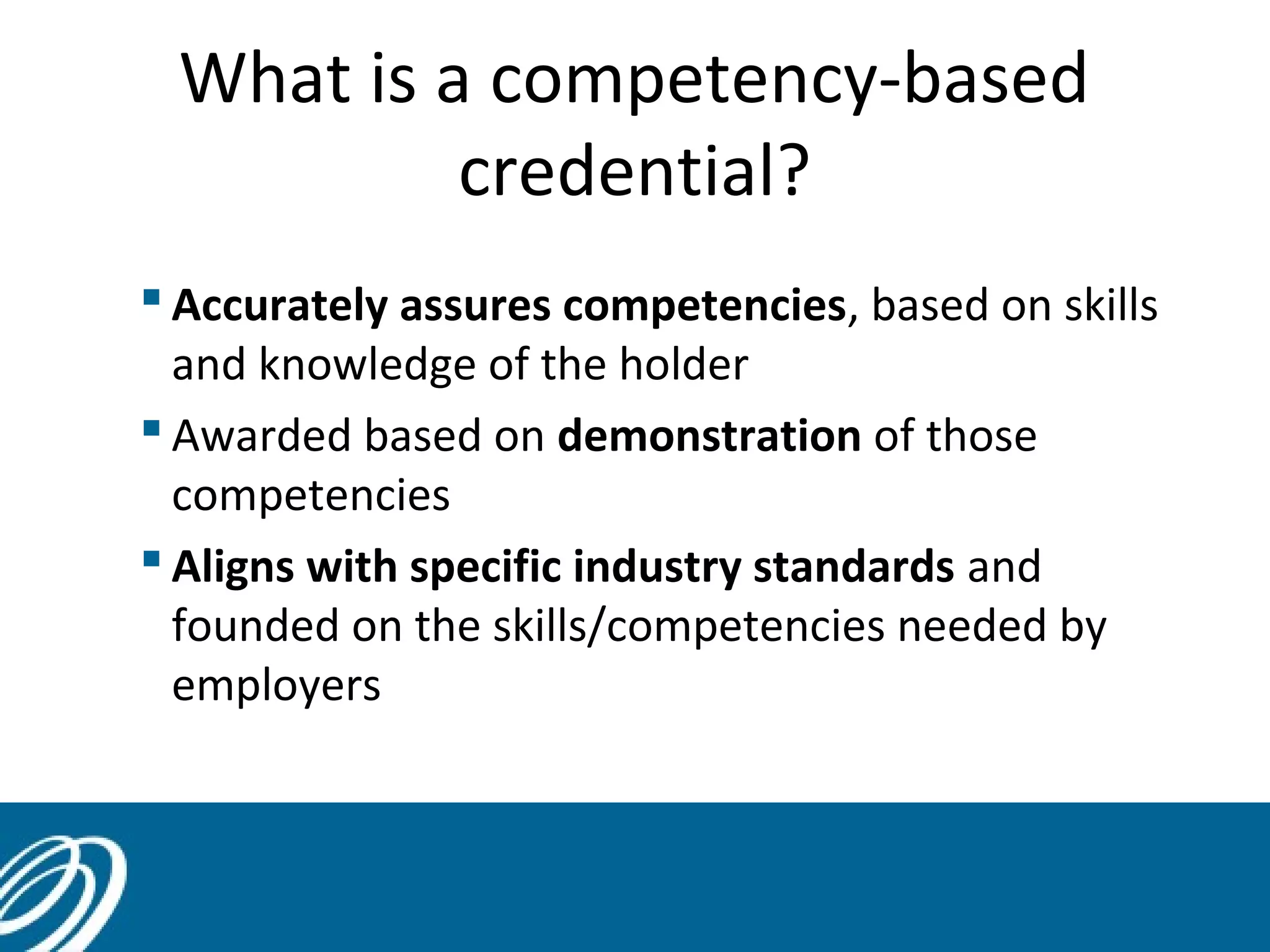
What is a competency-based
credential?
 Accurately assures competencies, based on skills
and knowledge of the holder
 Awarded based on demonstration of those
competencies
 Aligns with specific industry standards and
founded on the skills/competencies needed by
employers
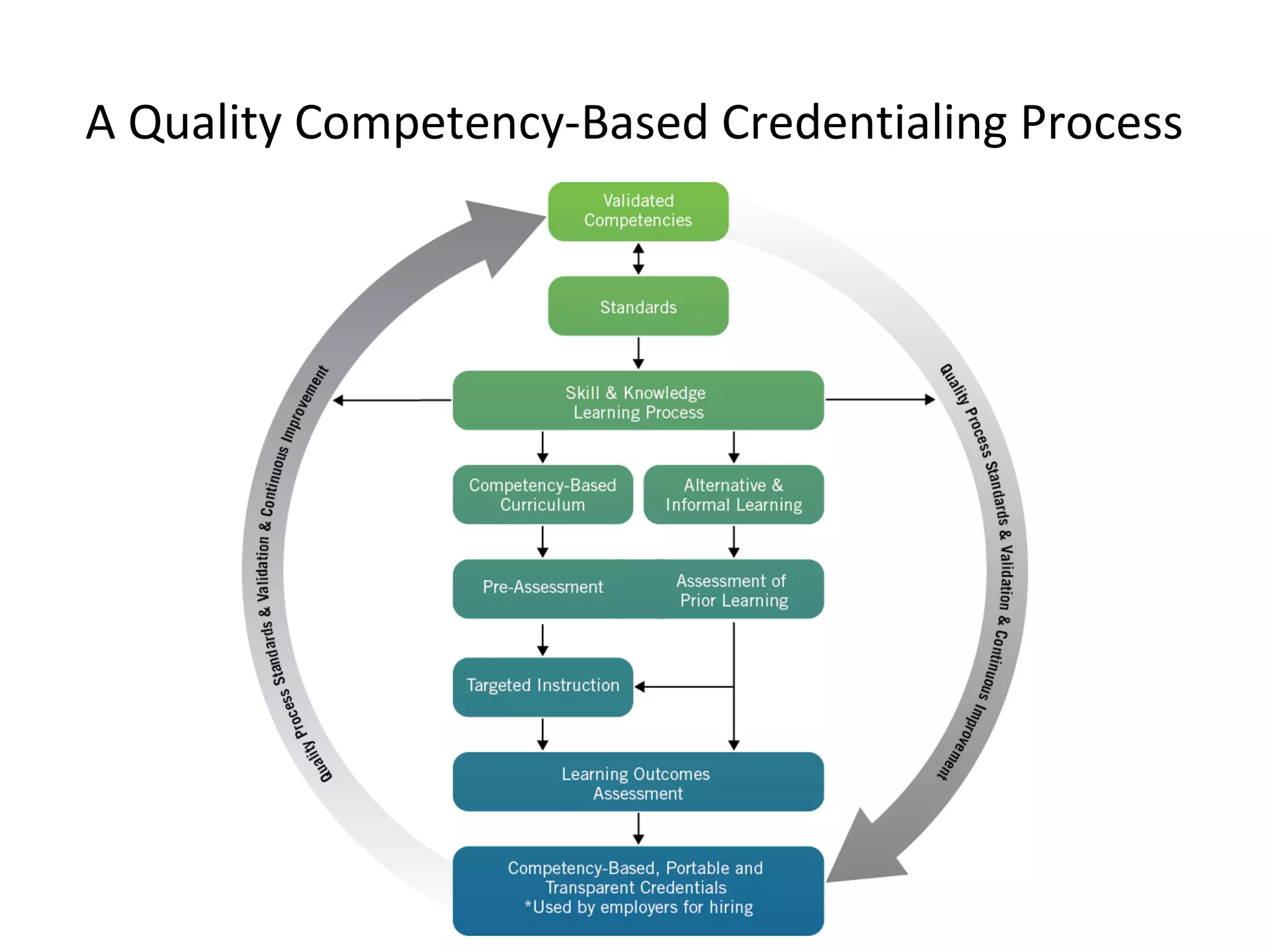
A Quality Competency-Based Credentialing Process
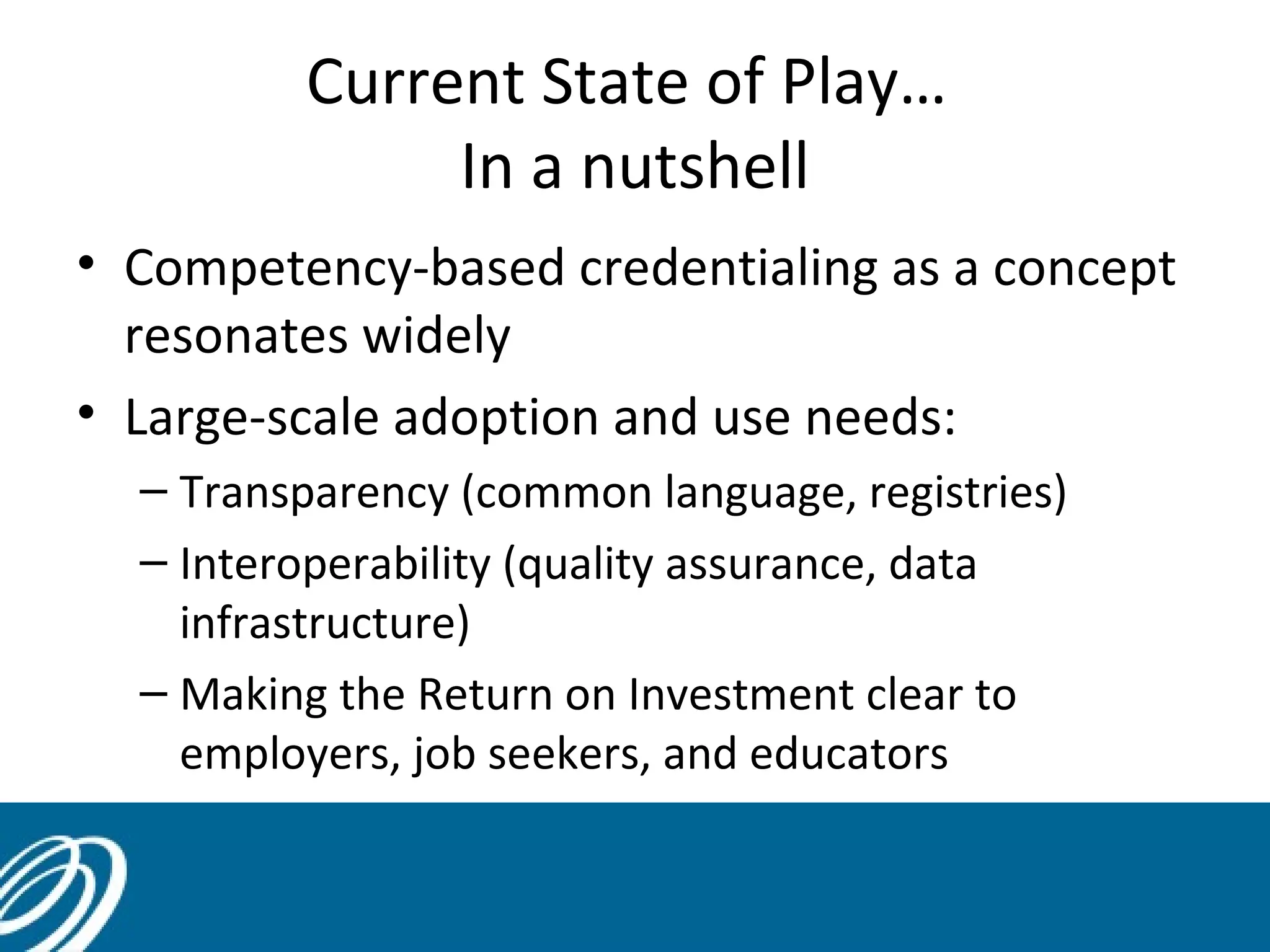
Current State of Play…
In a nutshell
• Competency-based credentialing as a concept
resonates widely
• Large-scale adoption and use needs:
– Transparency (common language, registries)
– Interoperability (quality assurance, data
infrastructure)
– Making the Return on Investment clear to
employers, job seekers, and educators
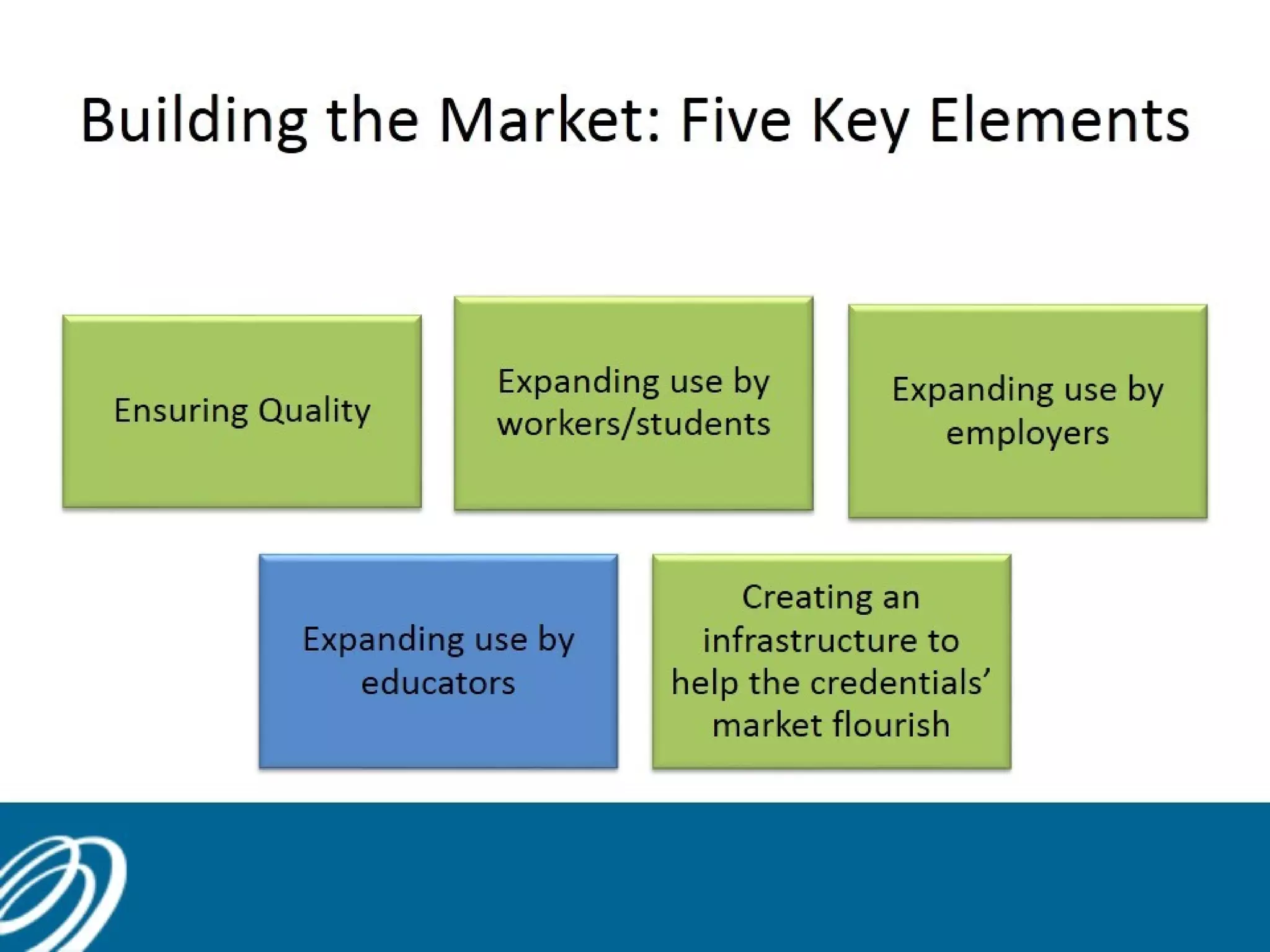
Building the Market: Five Key
Elements
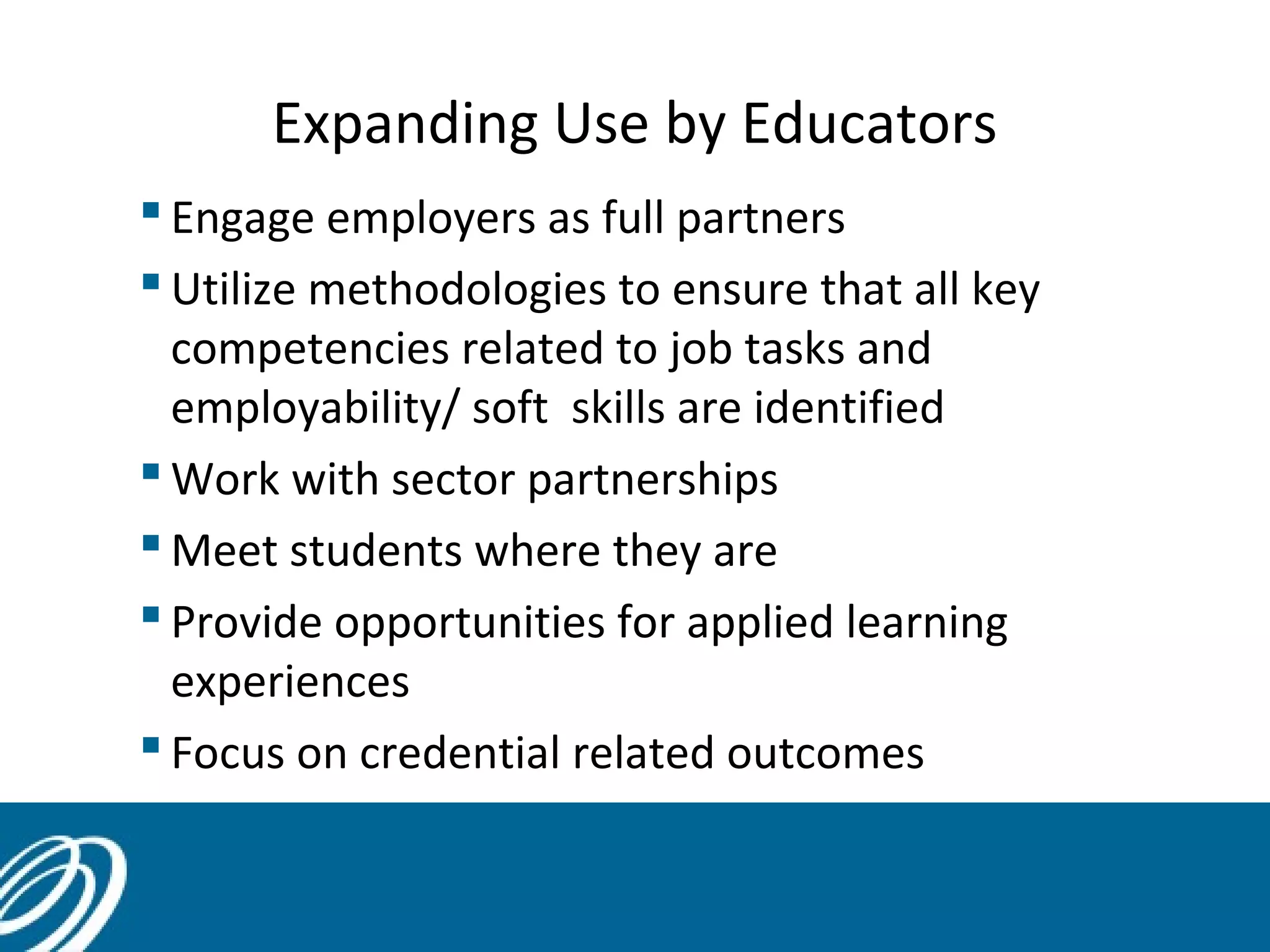
Expanding Use by Educators
 Engage employers as full partners
 Utilize methodologies to ensure that all key
competencies related to job tasks and
employability/ soft skills are identified
 Work with sector partnerships
 Meet students where they are
 Provide opportunities for applied learning
experiences
 Focus on credential related outcomes
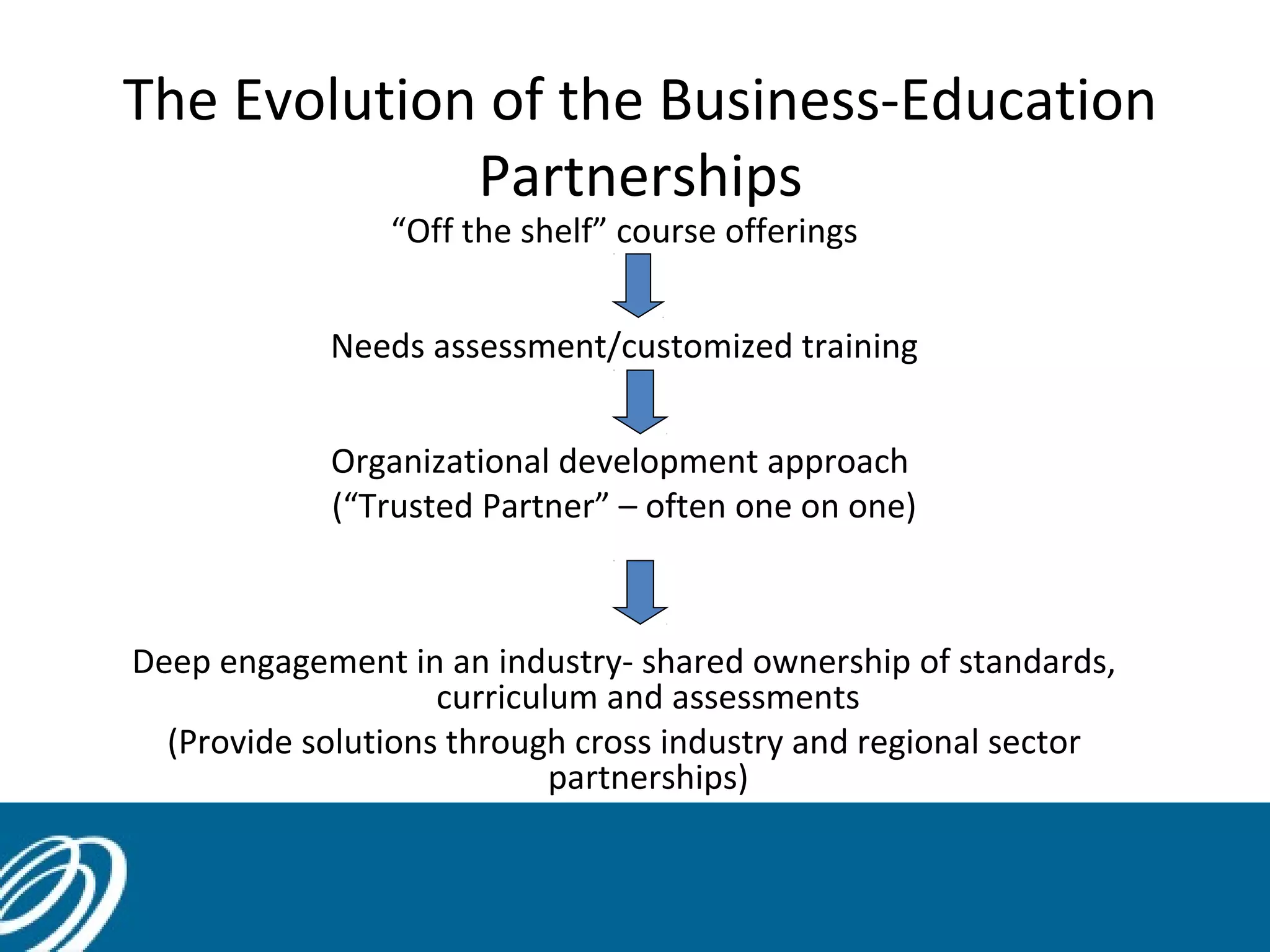
The Evolution of the Business-Education
Partnerships
“Off the shelf” course offerings

Needs assessment/customized training
Organizational development approach
(“Trusted Partner” – often one on one)

Deep engagement in an industry- shared ownership of standards,
curriculum and assessments
(Provide solutions through cross industry and regional sector
partnerships)
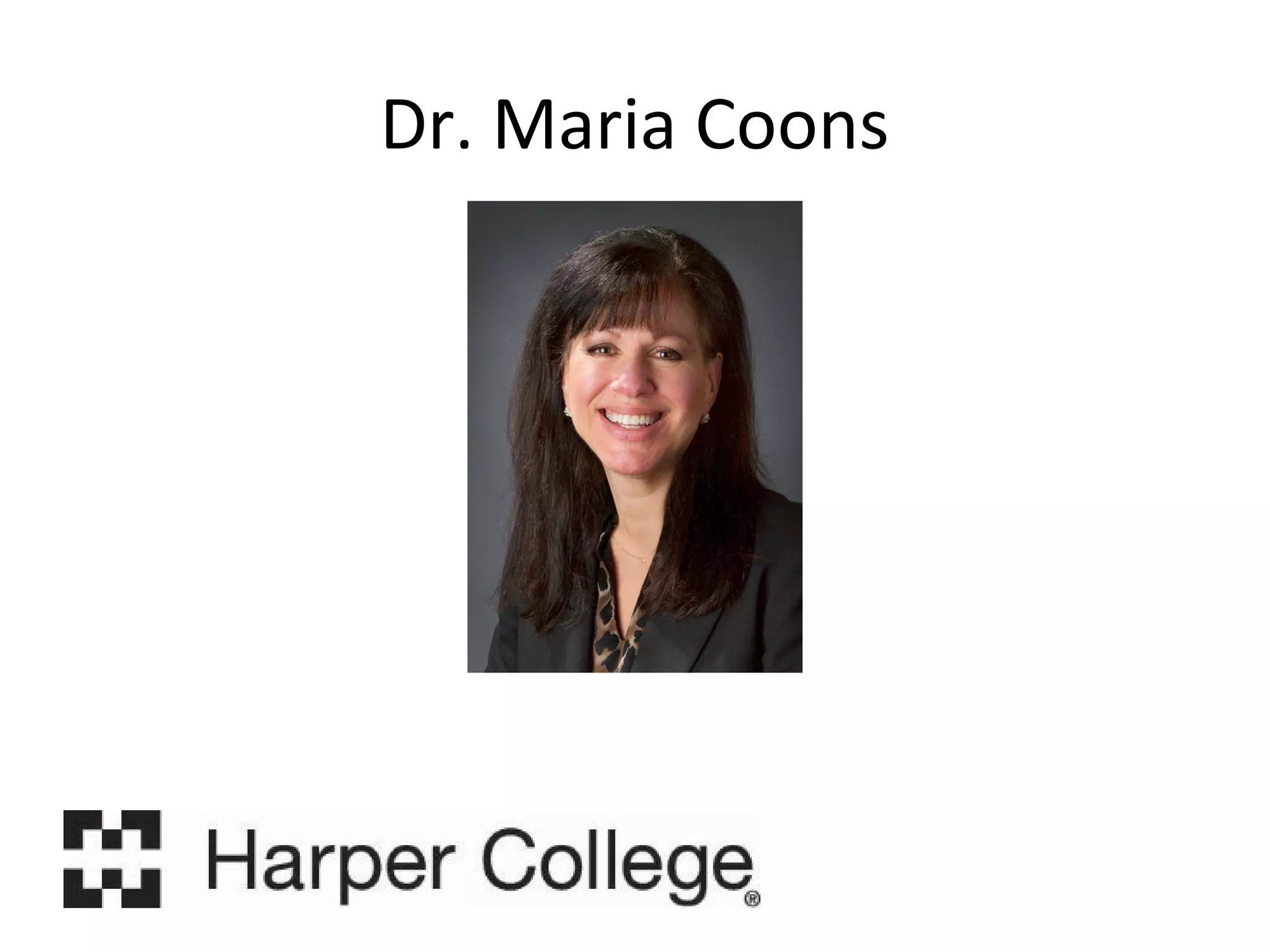
Dr. Maria Coons
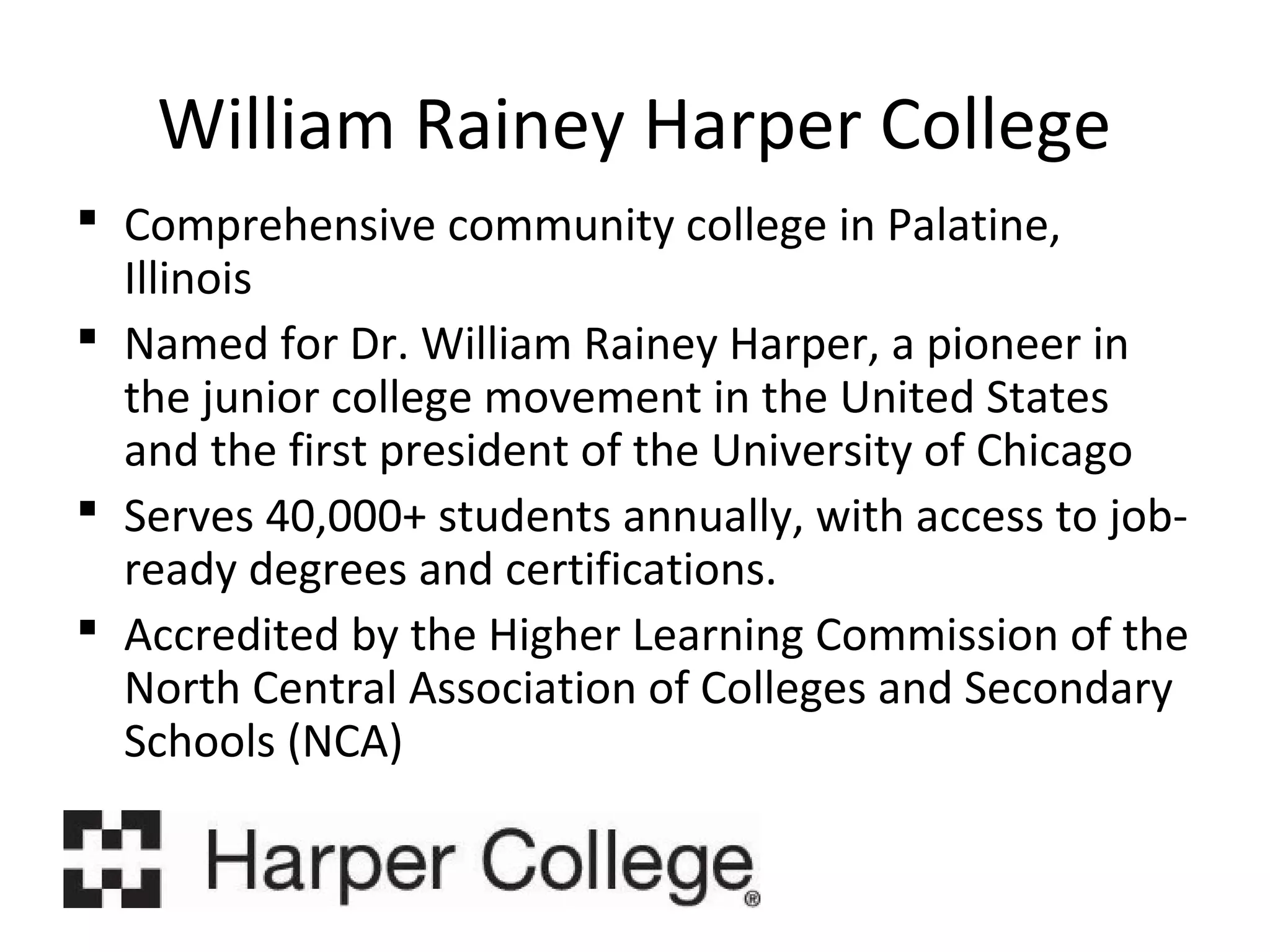
William Rainey Harper College
 Comprehensive community college in Palatine,
Illinois
 Named for Dr. William Rainey Harper, a pioneer in
the junior college movement in the United States
and the first president of the University of Chicago
 Serves 40,000+ students annually, with access to jobready degrees and certifications.
 Accredited by the Higher Learning Commission of the
North Central Association of Colleges and Secondary
Schools (NCA)
Matching Competencies
 Completion of industry certifications
 Quality check

 Demonstration of skills
 Not “life experience”

 Portfolios
 Exams
 Corporate/Military Training (Badging)
 Crosswalk
Example:
Manufacturing Credentials
Long-Standing Manufacturing
Programs

Maintenance Technology
 Associate in Applied Science Degree
 Credit Certificate Programs
–
–
–
–

Basic Maintenance
Commercial Maintenance
Manufacturing Basic Certificate
Supervisory Maintenance Certificate

Welding Technology
 Associate in Applied Science Degree
 Credit Certificate Programs
–
–
–
–

Advanced Welding Certificate
Basic Pipe Welding Certificate
Basic Welding Certificate
Welding Fabrication Certificate
New Initiative

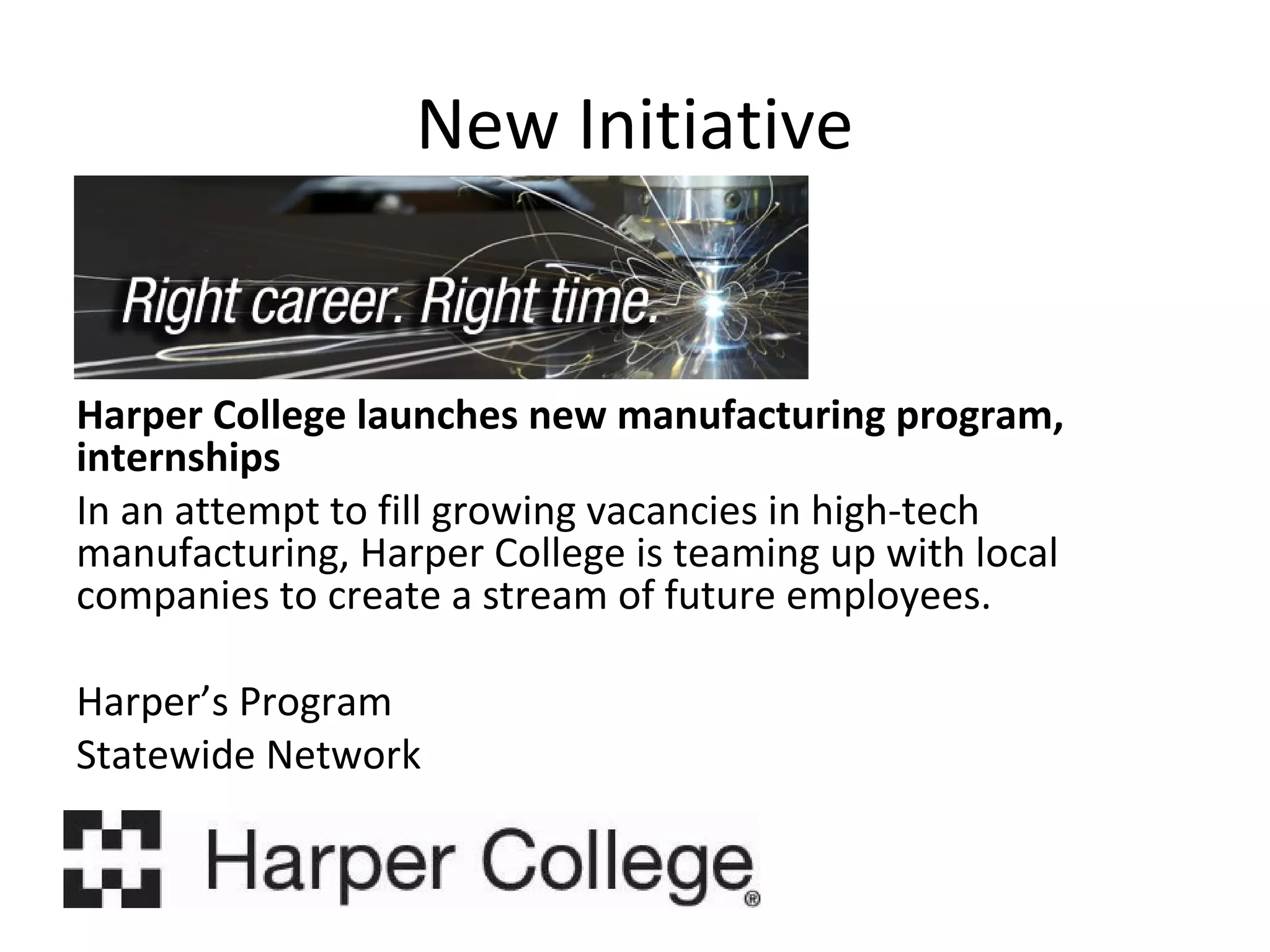
Harper College launches new manufacturing program,
internships
In an attempt to fill growing vacancies in high-tech
manufacturing, Harper College is teaming up with local
companies to create a stream of future employees.
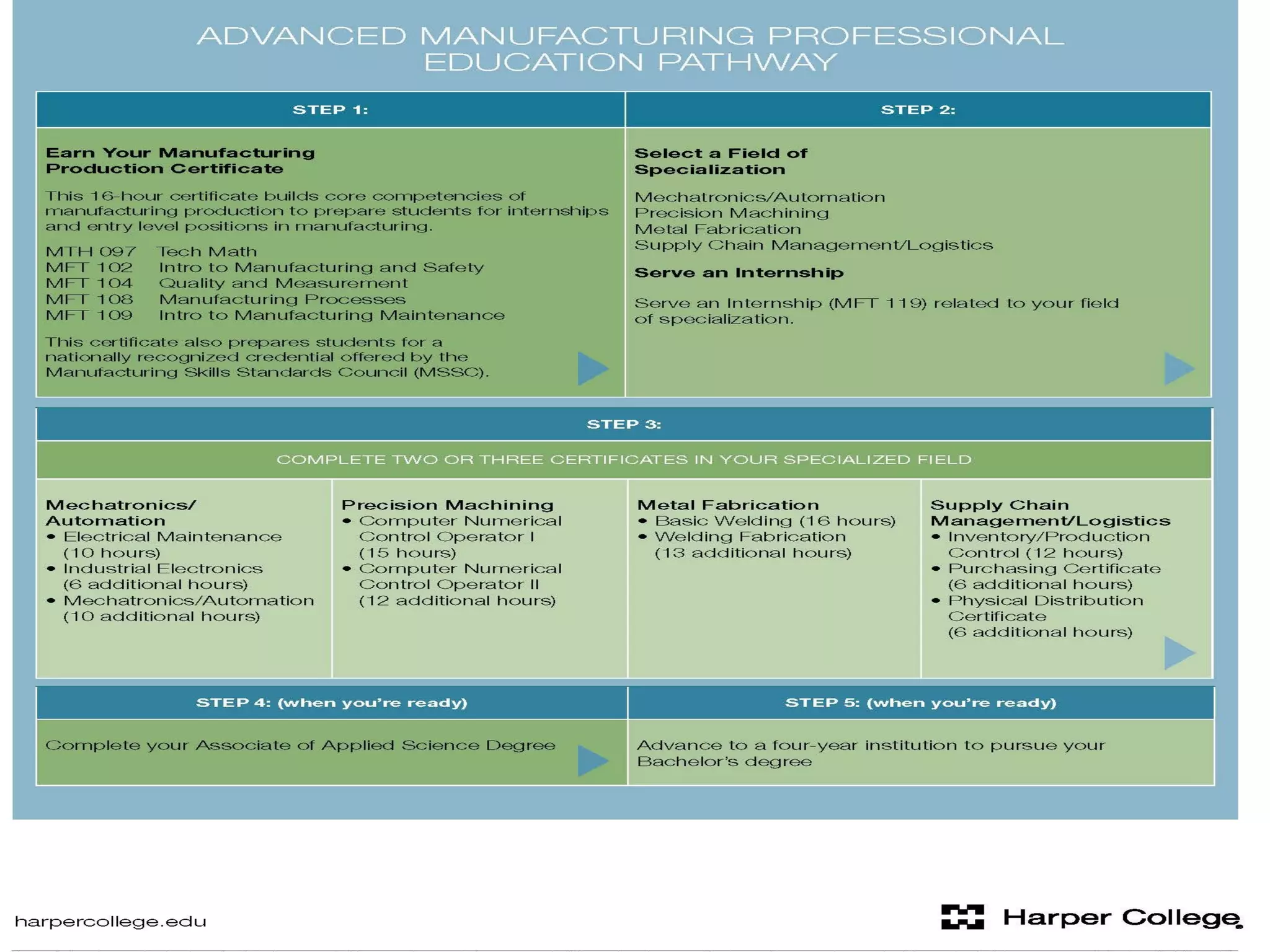
Harper’s Program
Statewide Network
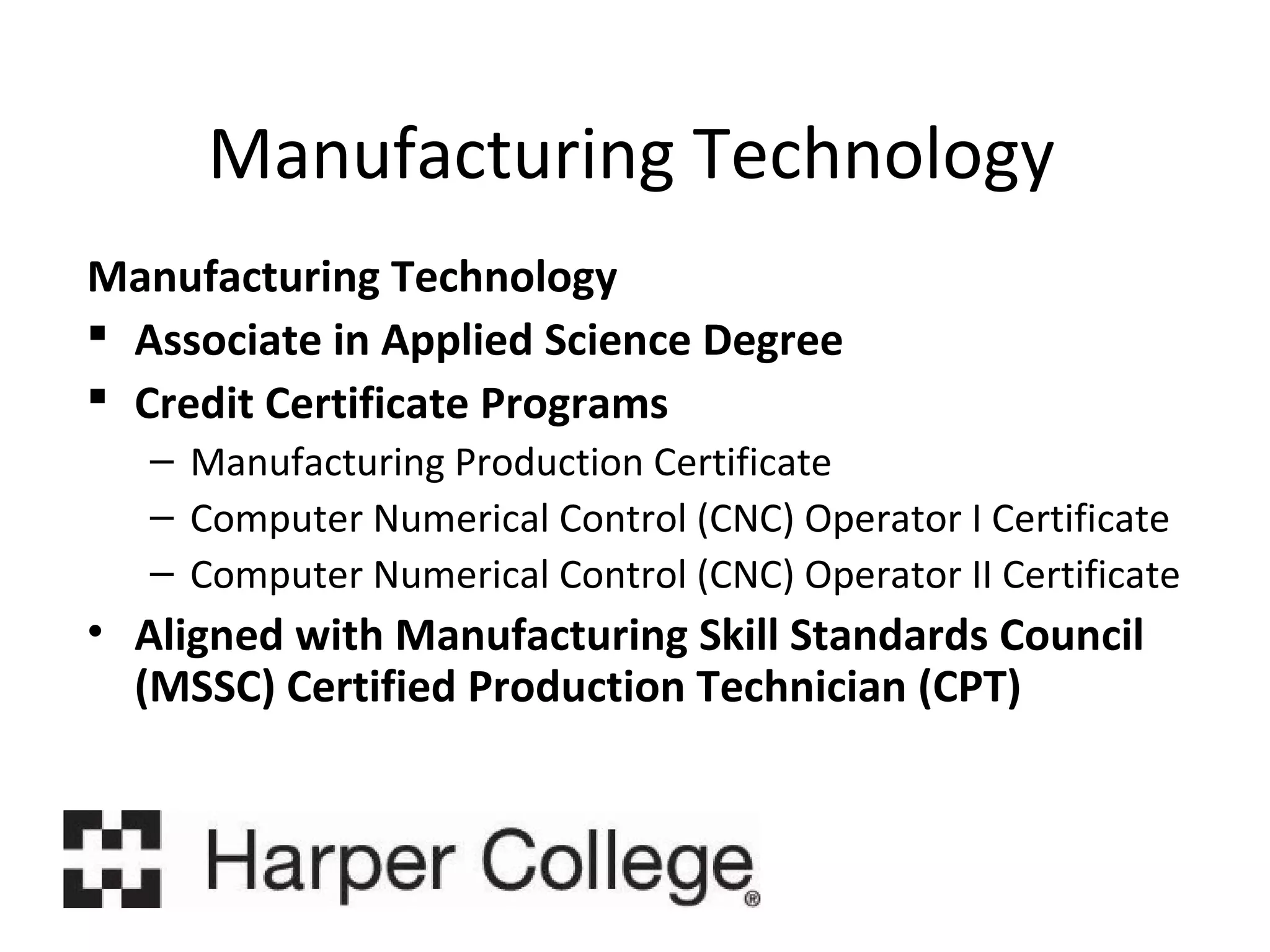
Manufacturing Technology
 Associate in Applied Science Degree
 Credit Certificate Programs
– Manufacturing Production Certificate
– Computer Numerical Control (CNC) Operator I Certificate
– Computer Numerical Control (CNC) Operator II Certificate

• Aligned with Manufacturing Skill Standards Council
(MSSC) Certified Production Technician (CPT)
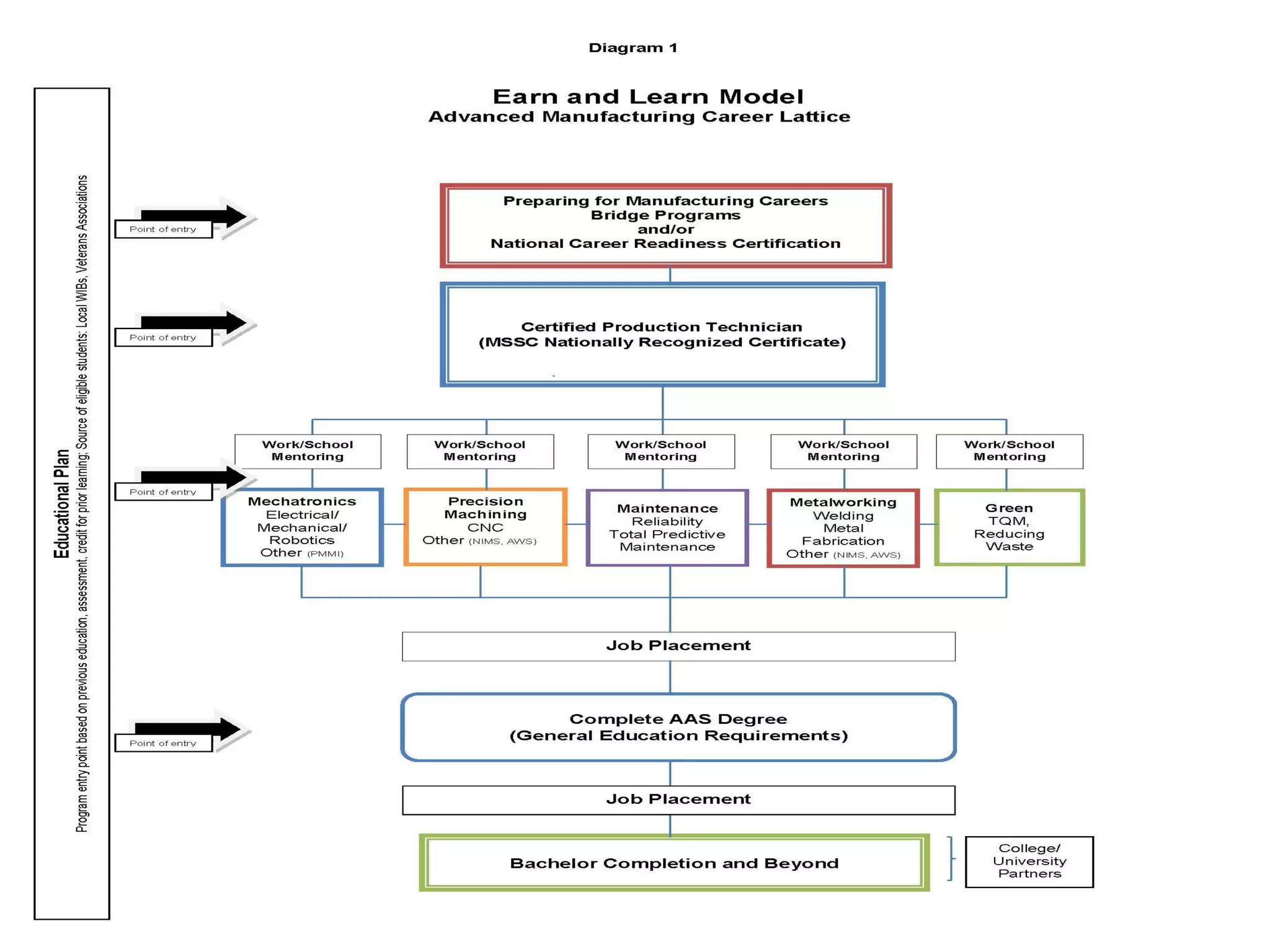
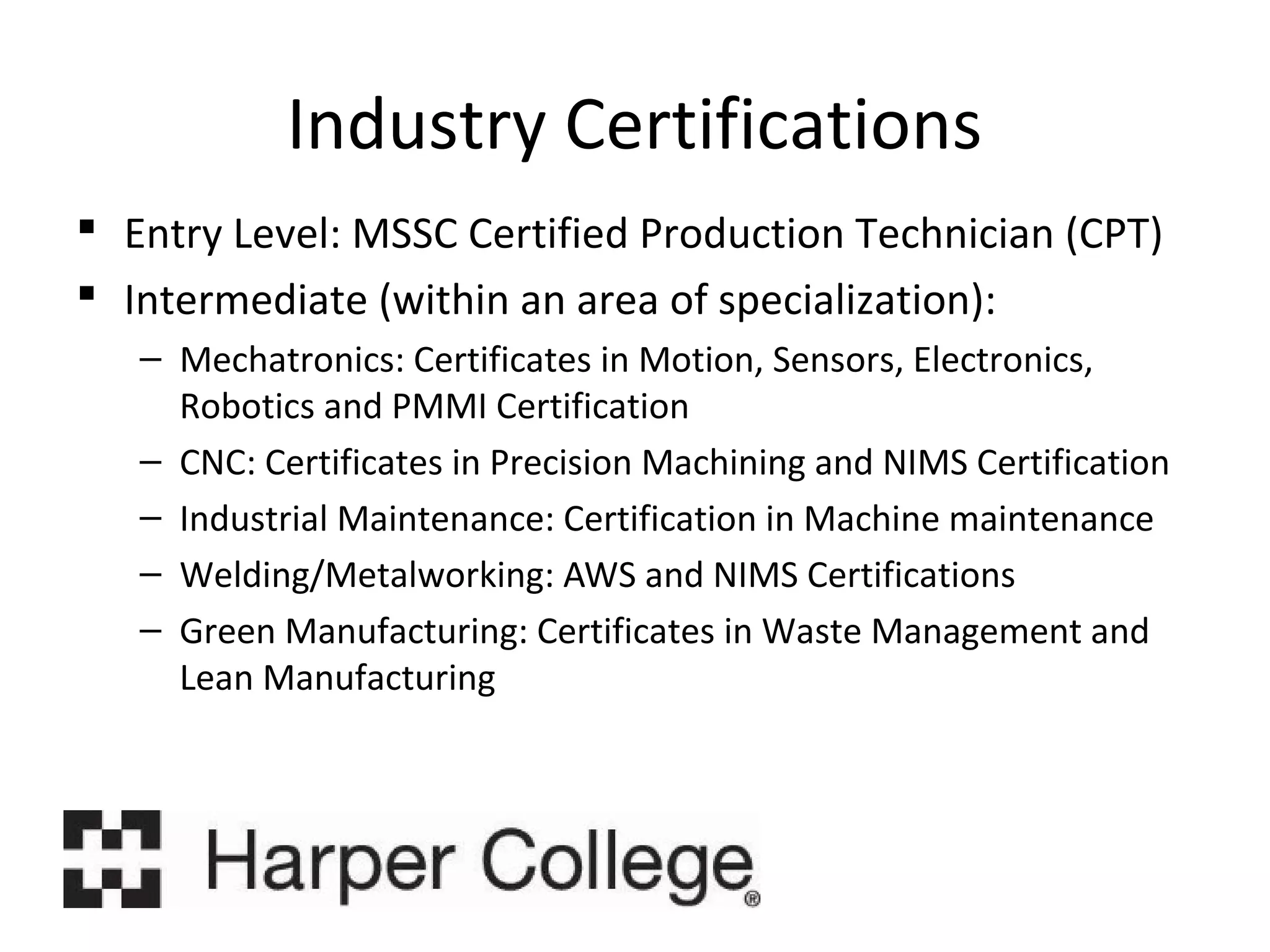
Industry Certifications
 Entry Level: MSSC Certified Production Technician (CPT)
 Intermediate (within an area of specialization):
– Mechatronics: Certificates in Motion, Sensors, Electronics,
Robotics and PMMI Certification
– CNC: Certificates in Precision Machining and NIMS Certification
– Industrial Maintenance: Certification in Machine maintenance
– Welding/Metalworking: AWS and NIMS Certifications
– Green Manufacturing: Certificates in Waste Management and
Lean Manufacturing
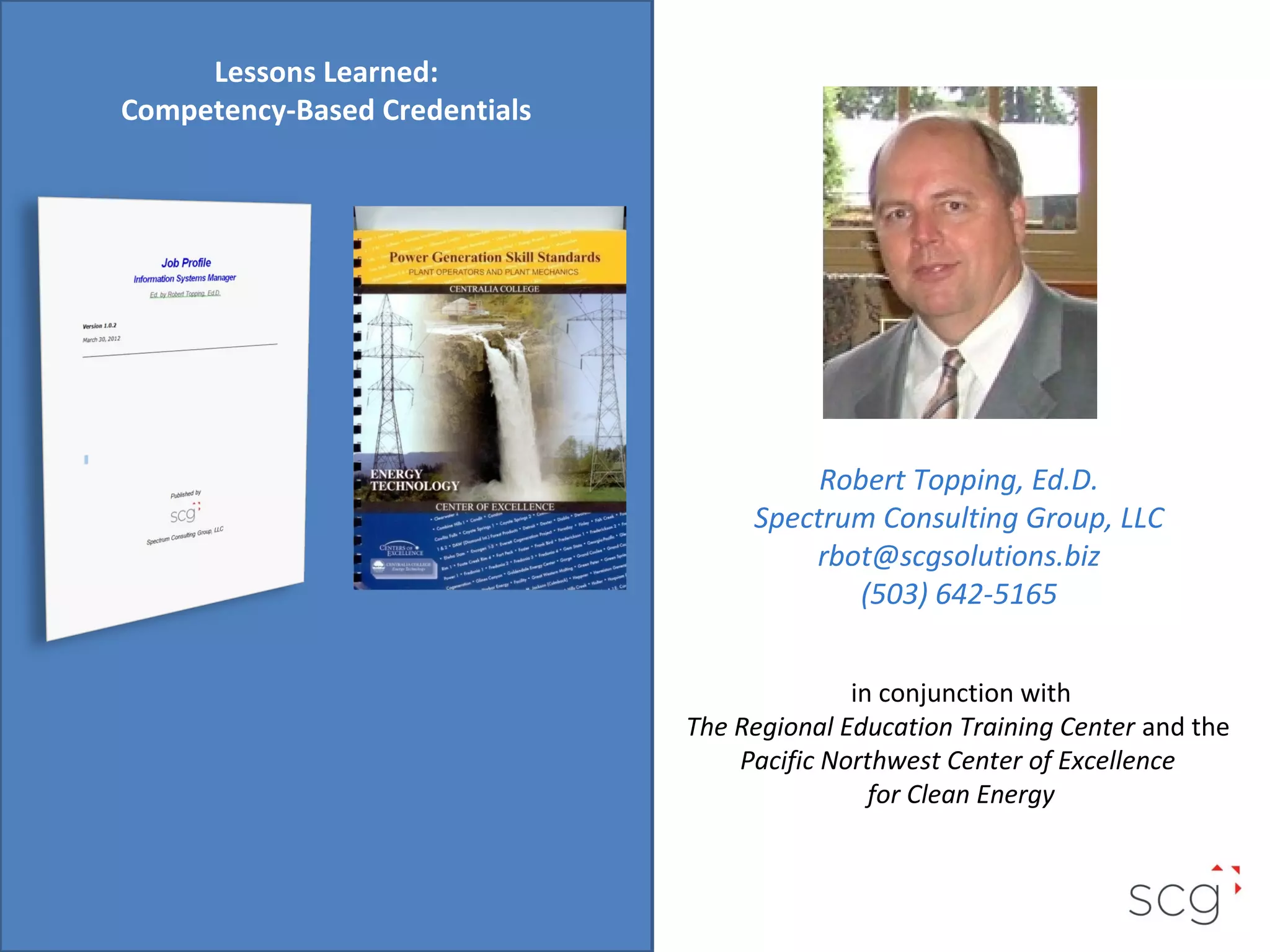
Lessons Learned:
Competency-Based Credentials

Robert Topping, Ed.D.
Spectrum Consulting Group, LLC
rbot@scgsolutions.biz
(503) 642-5165
in conjunction with
The Regional Education Training Center and the
Pacific Northwest Center of Excellence
for Clean Energy
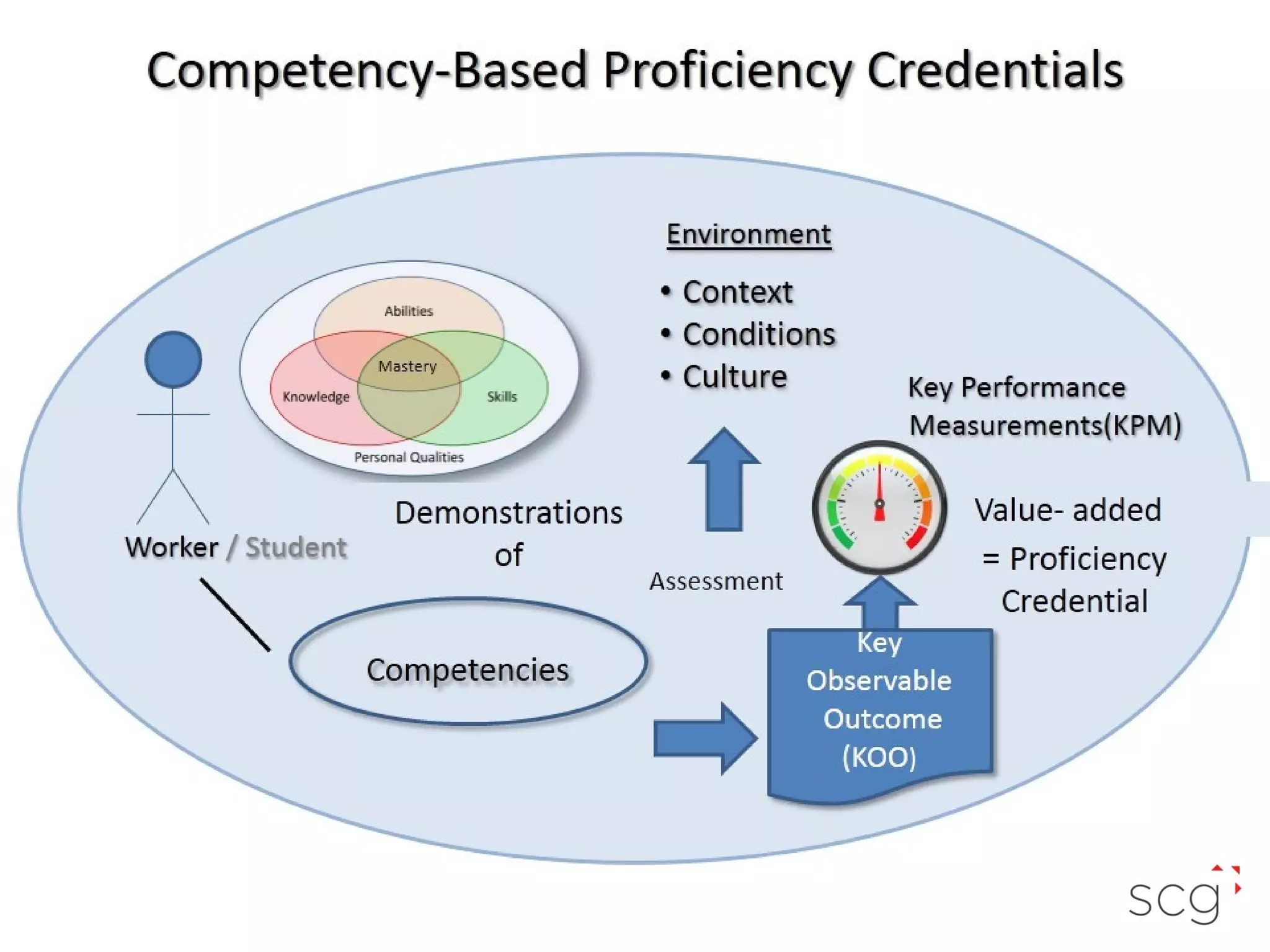
Competency-Based Proficiency Credentials

Mastery

Worker / Student

Demonstrations
of
Competencies

Key Performance
Measurements(KPM)

Value- added
= Proficiency
Credential

Assessment

Key
Key
Observable
Observable
Outcome
Outcome
(KOO))
(KOO
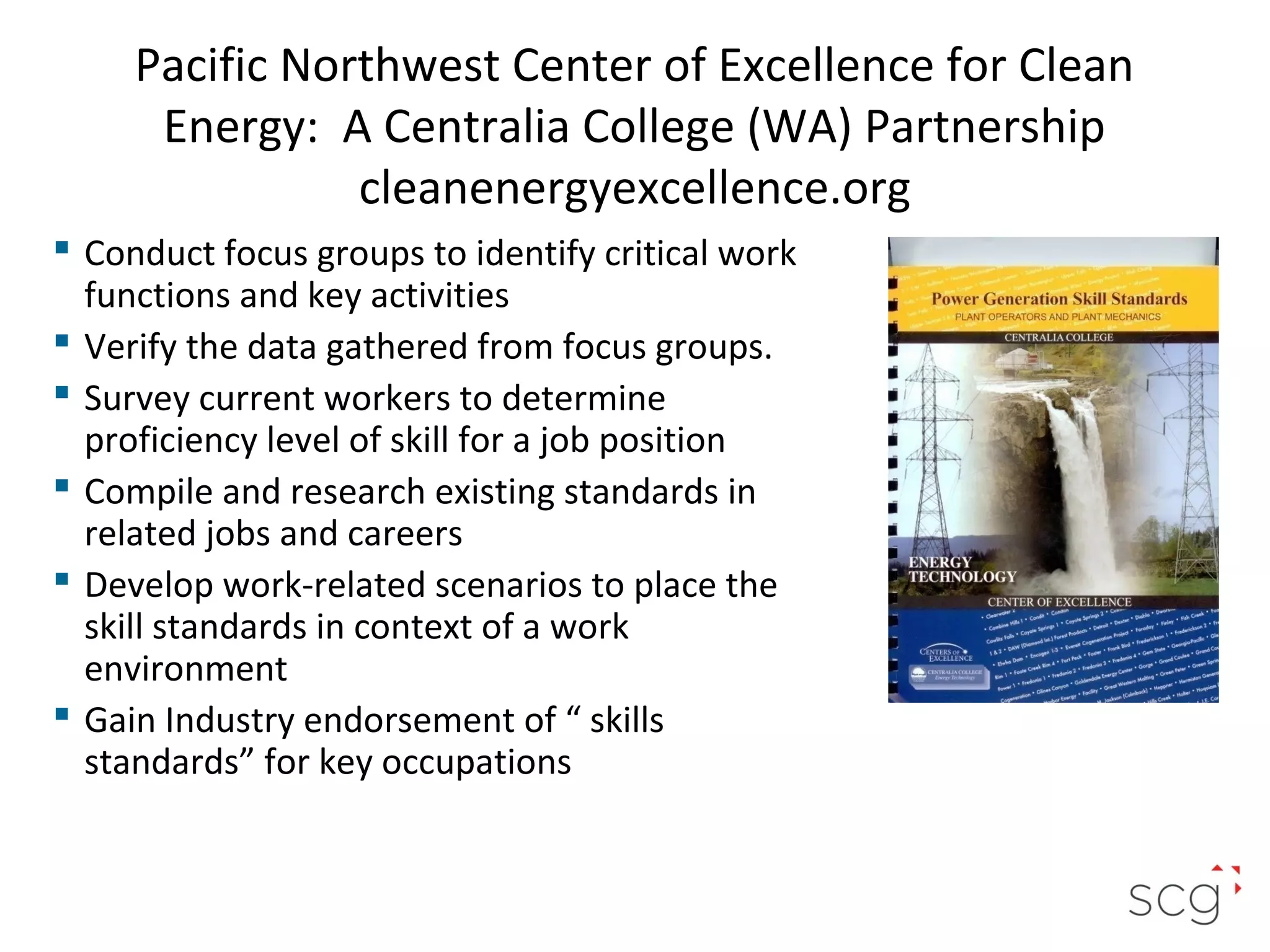
Pacific Northwest Center of Excellence for Clean
Energy: A Centralia College (WA) Partnership
cleanenergyexcellence.org
 Conduct focus groups to identify critical work
functions and key activities
 Verify the data gathered from focus groups.
 Survey current workers to determine
proficiency level of skill for a job position
 Compile and research existing standards in
related jobs and careers
 Develop work-related scenarios to place the
skill standards in context of a work
environment
 Gain Industry endorsement of “ skills
standards” for key occupations

23
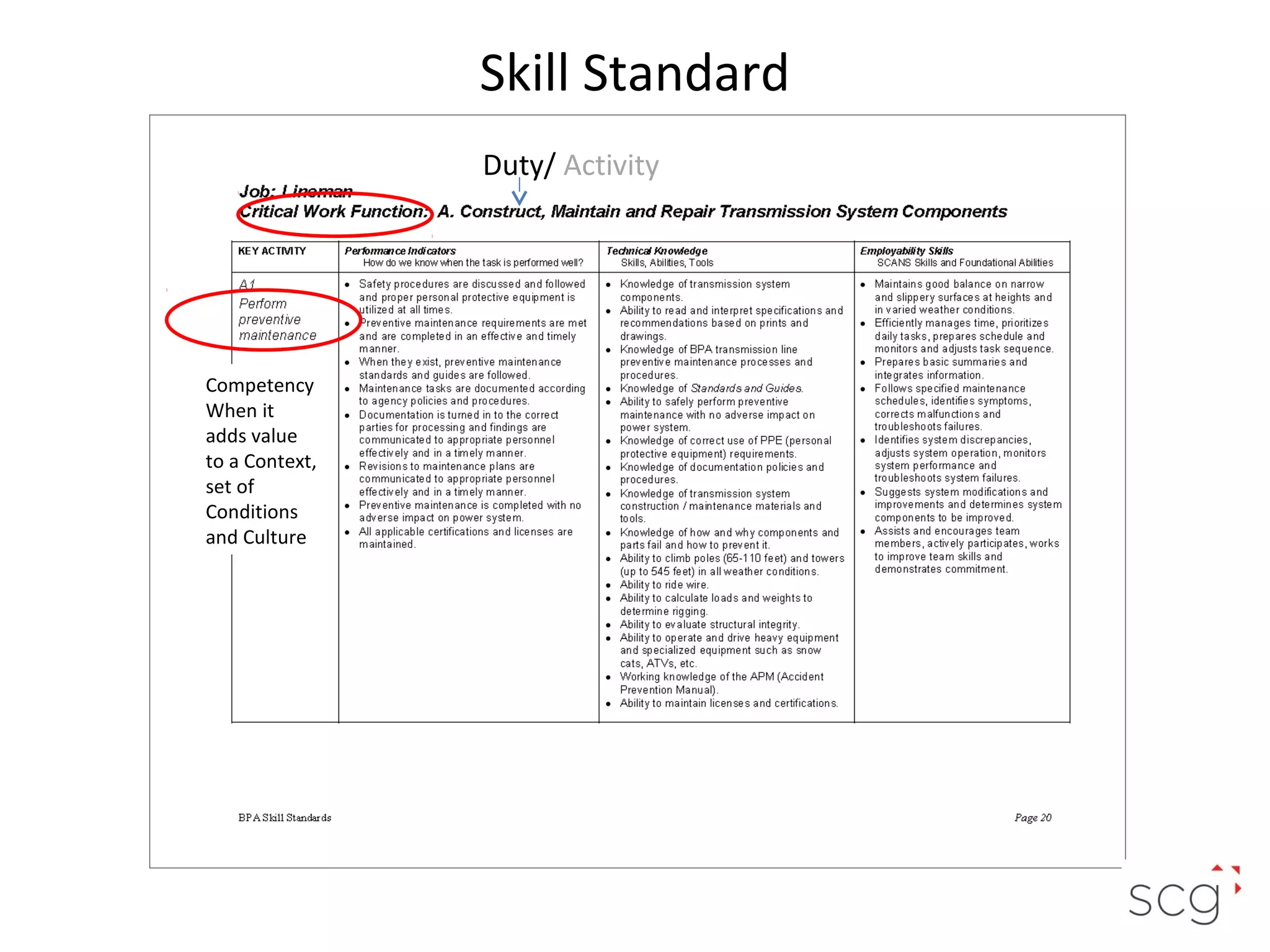
Skill Standard
Duty/ Activity

Competency
When it
adds value
to a Context,
set of
Conditions
and Culture
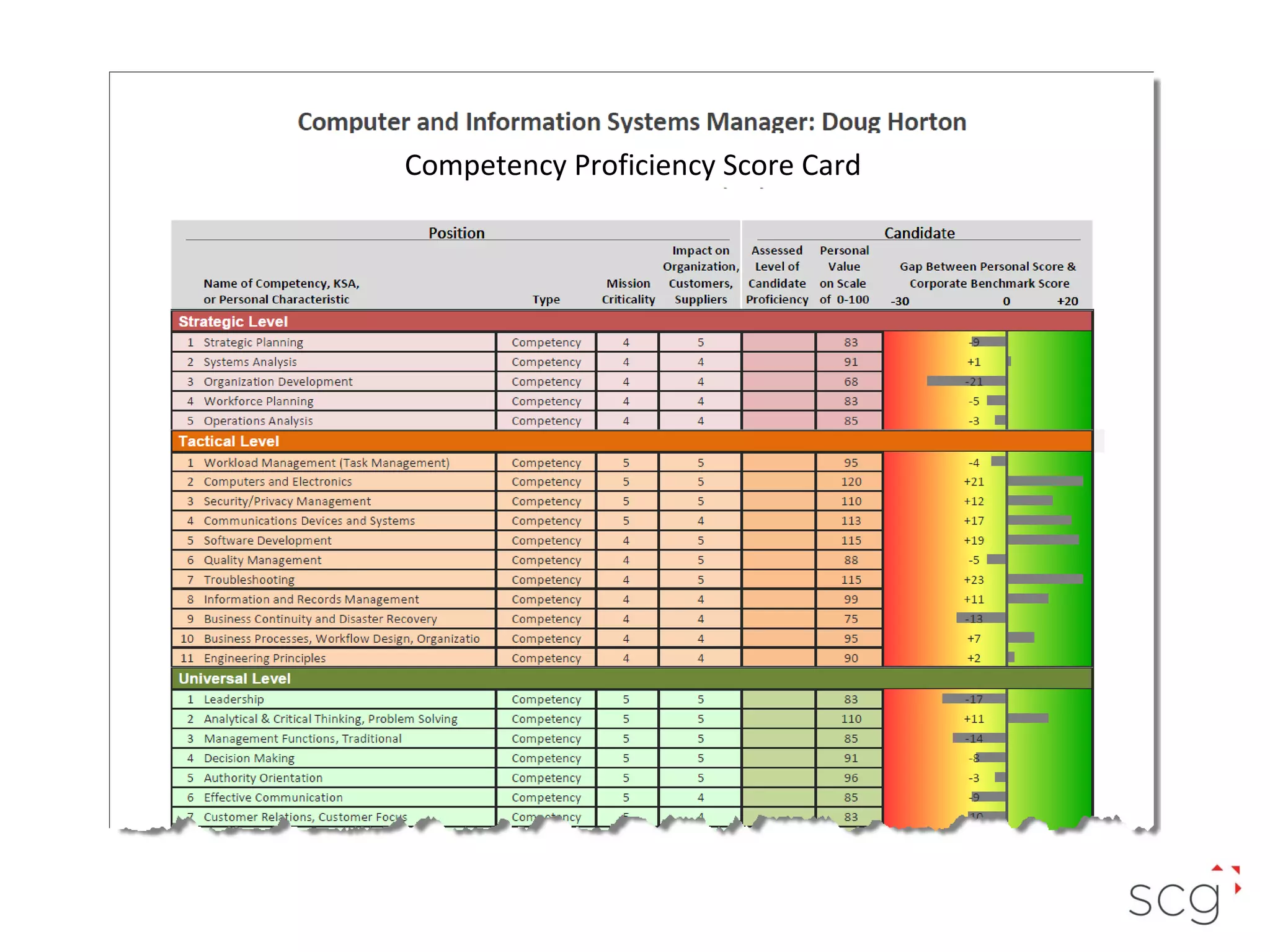
Competency Proficiency Score Card
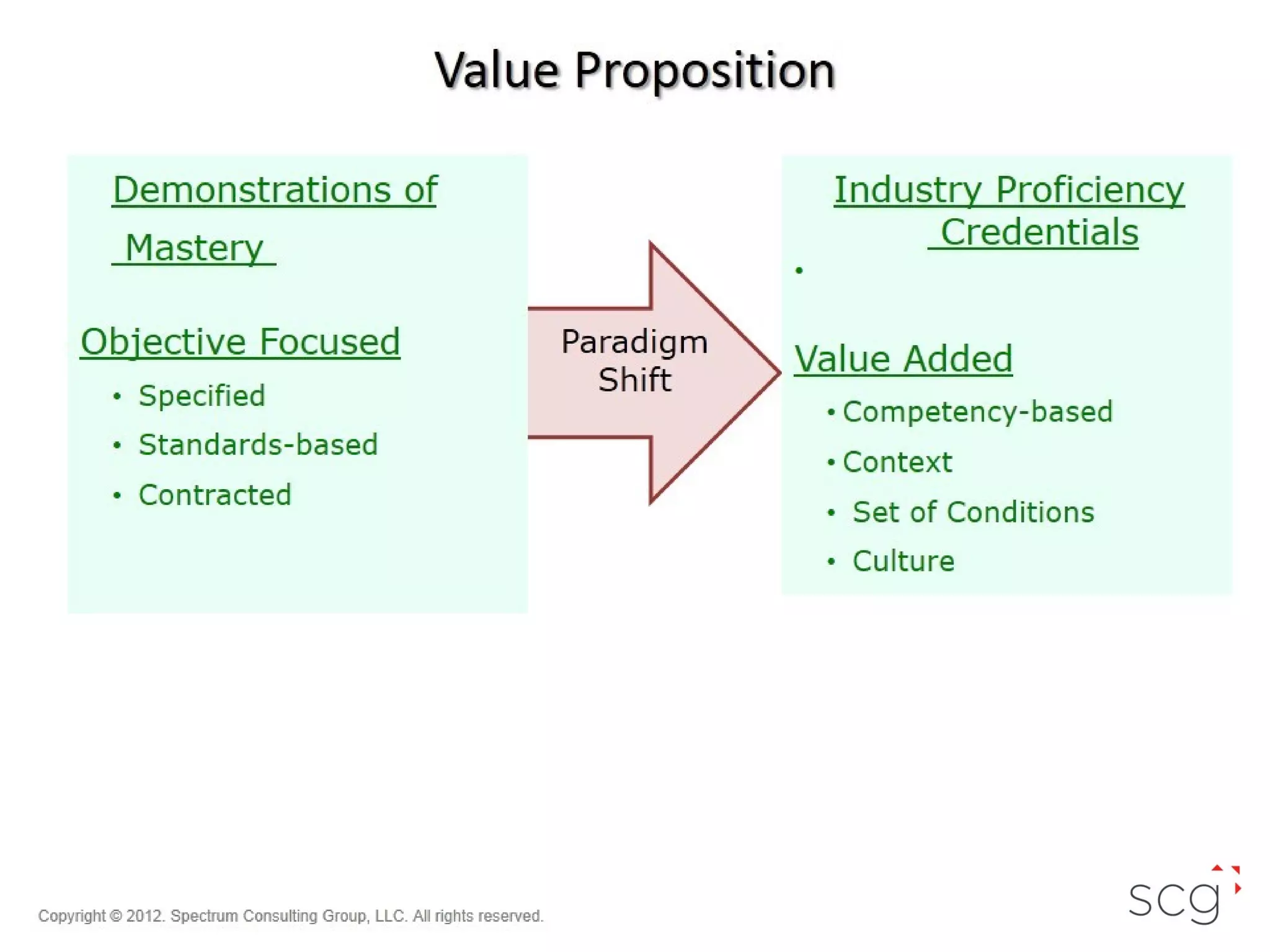
Value Proposition
Demonstrations of

Industry Proficiency
Credentials

Mastery
Objective Focused
• Specified
• Standards-based
• Contracted

•

Paradigm
Shift

Value Added
•Competency-based
•Context
• Set of Conditions
• Culture

Copyright © 2012. Spectrum Consulting Group, LLC. All rights reserved.
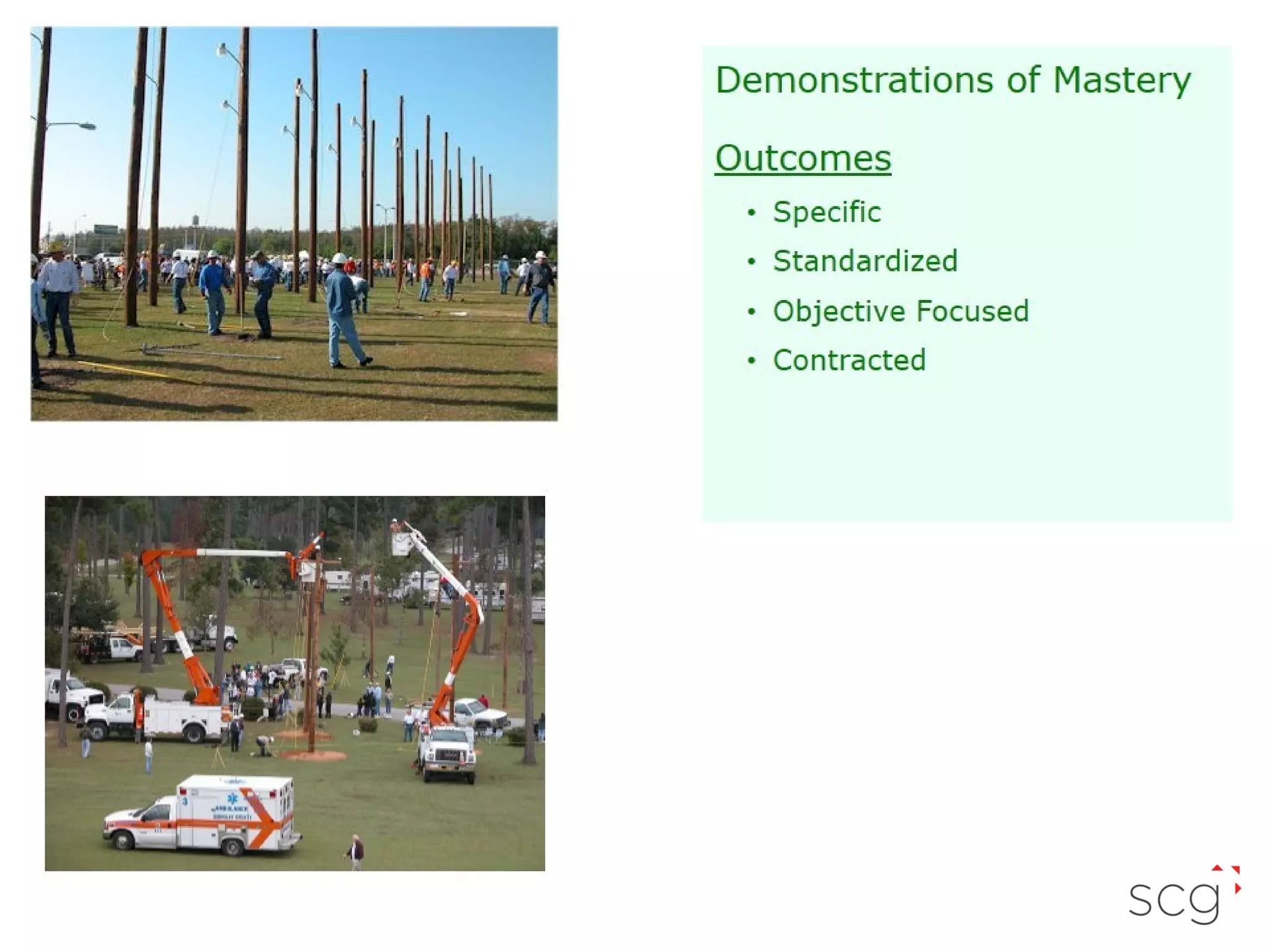
Demonstrations of Mastery
Outcomes
• Specific
• Standardized
• Objective Focused
• Contracted
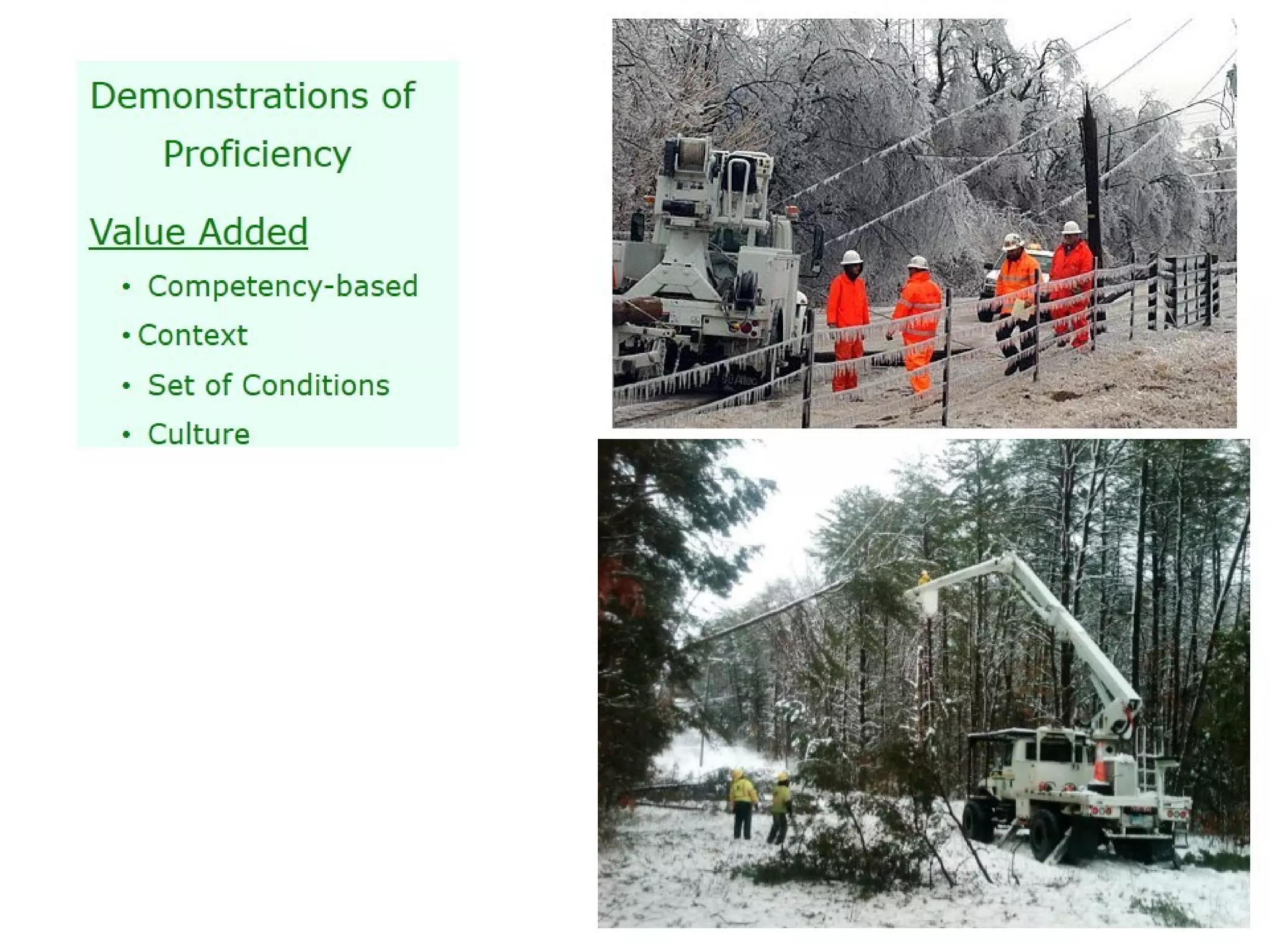
Demonstrations of
Proficiency
Value Added
• Competency-based
•Context
• Set of Conditions
• Culture
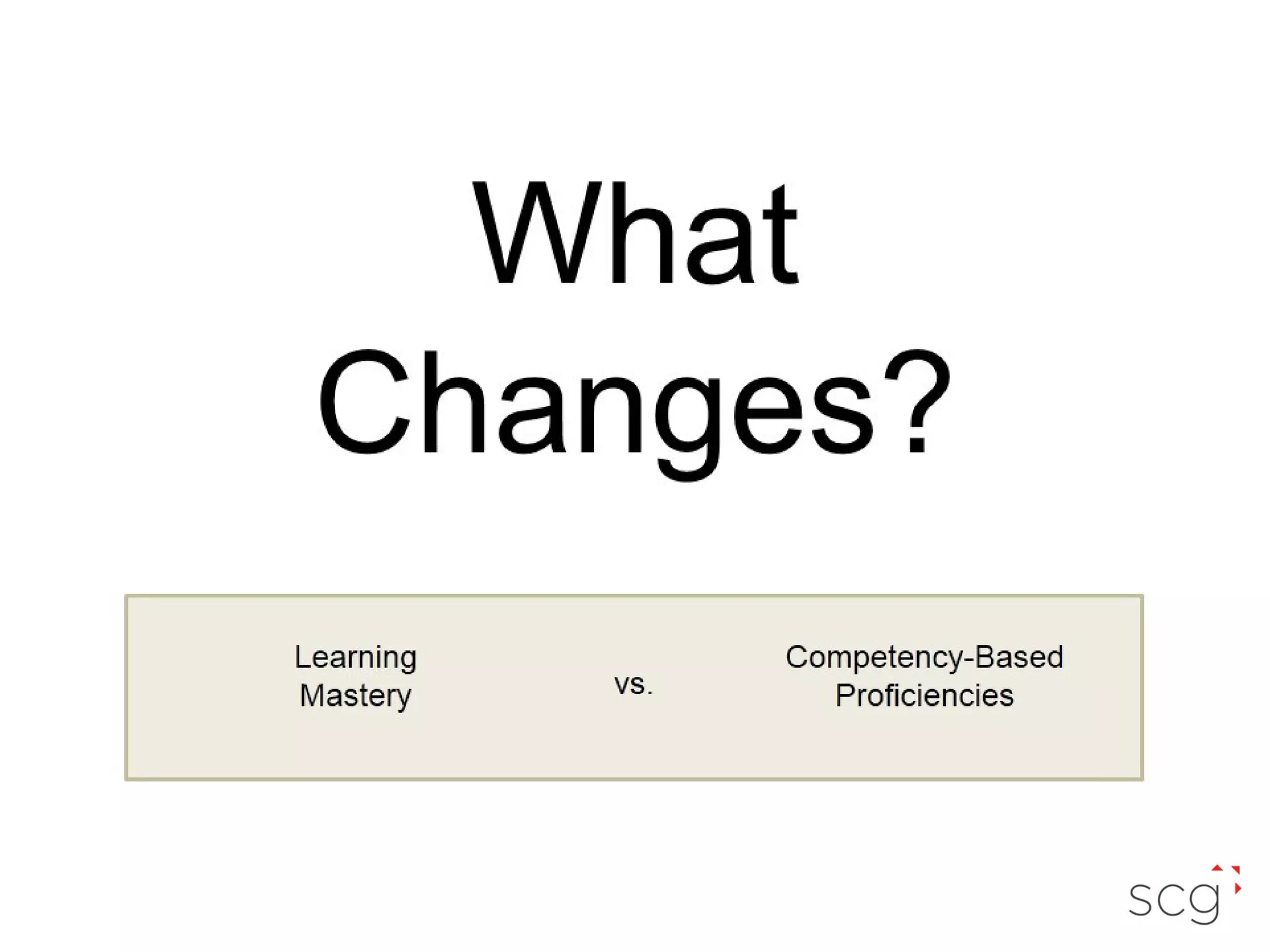
What
Changes?
Learning
Mastery

vs.

Competency-Based
Proficiencies
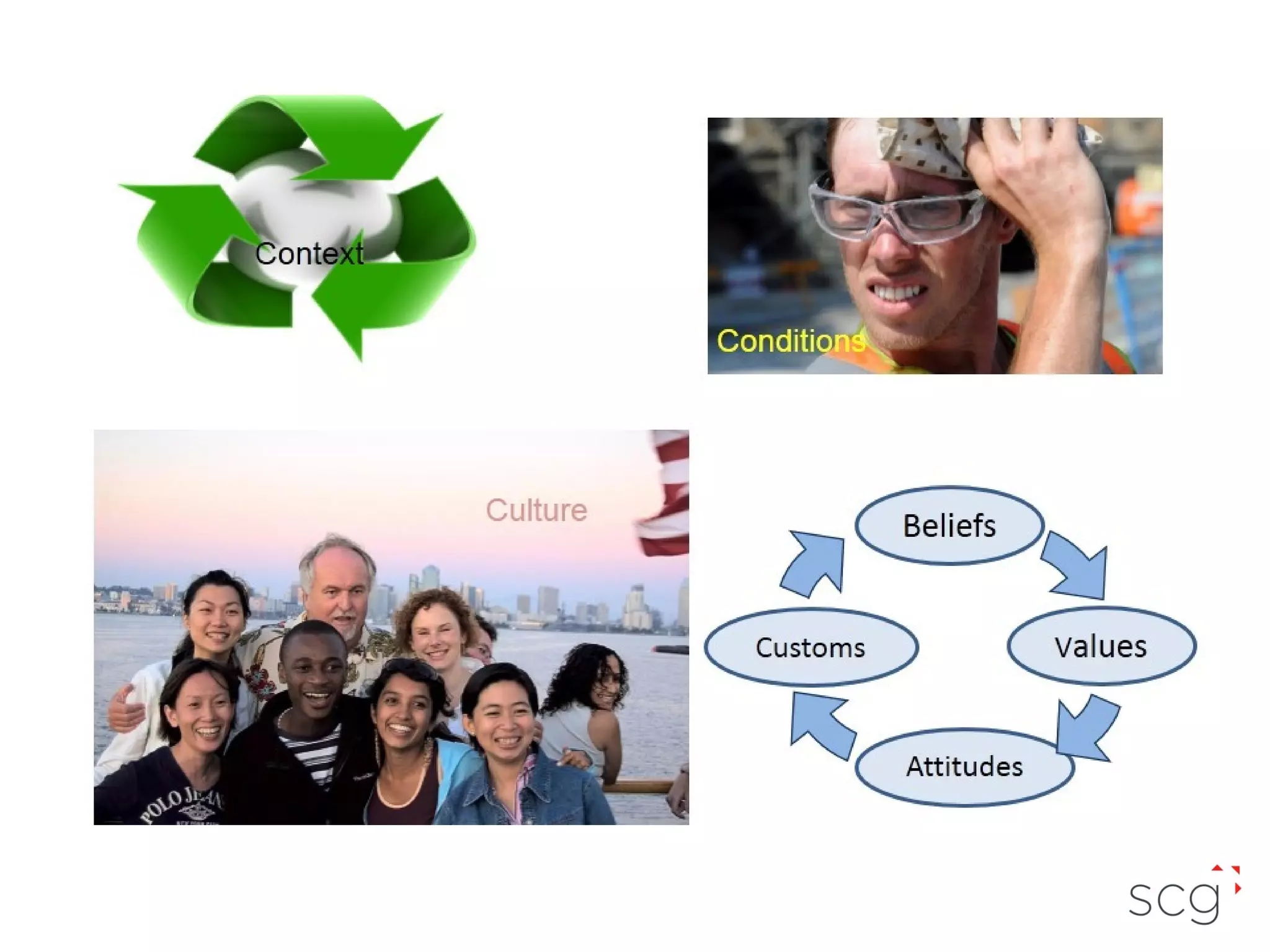
Context
Conditions

Culture

Beliefs
Values

Customs

Attitudes
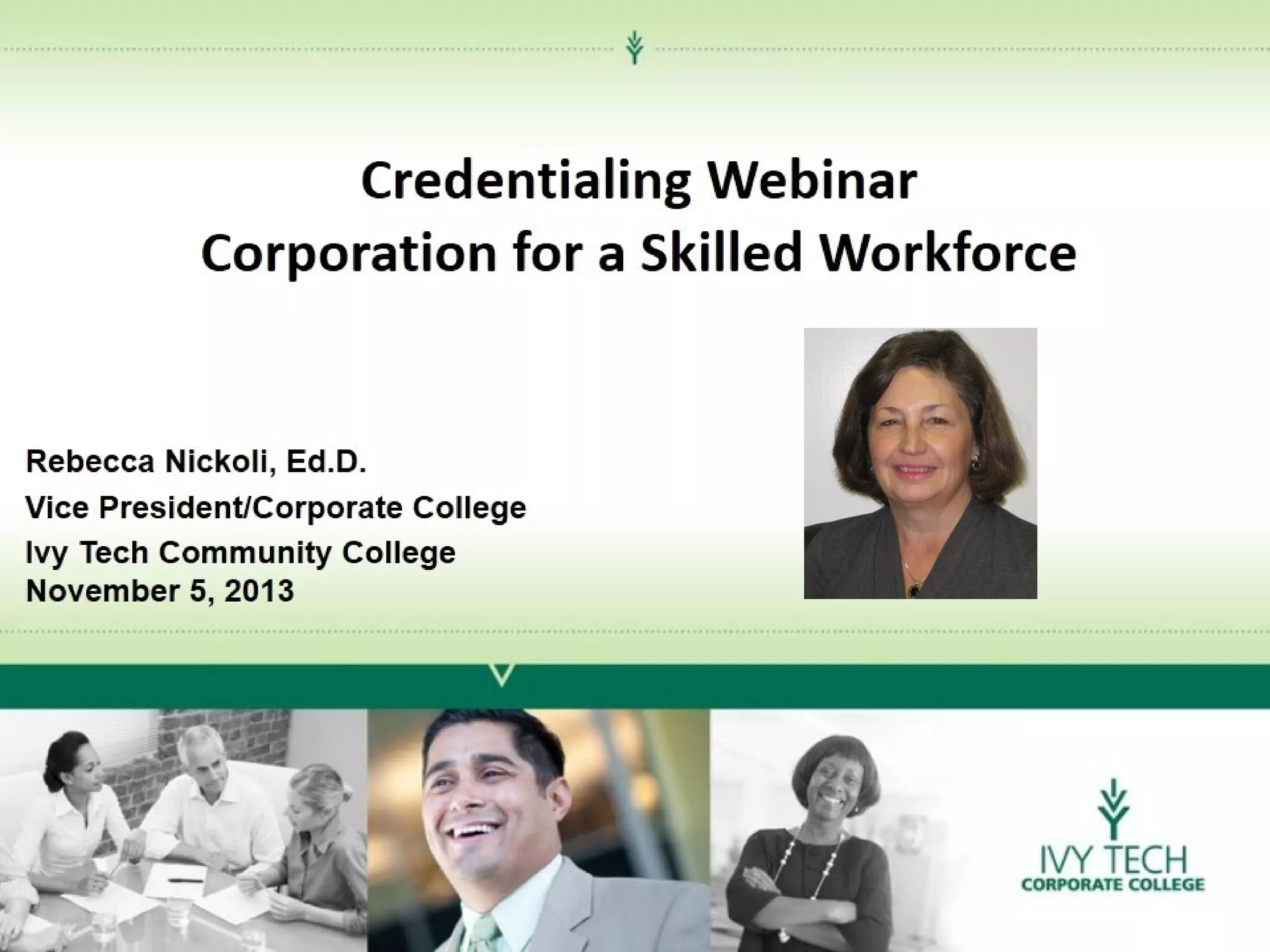
Credentialing Webinar
Corporation for a Skilled Workforce

Rebecca Nickoli, Ed.D.
Vice President/Corporate College
Ivy Tech Community College
November 5, 2013
Alternative Approaches to Completing Credentials
•

Short-term, financial aid eligible certificates

•

Ivy Institutes of Technology

•

Pilot program to develop competency-based degree

•

Role of certification and cross-walking in accelerating
completion
Certificates at Ivy Tech
•

18 to 29 credits ( ¼ to ½ of an associate degree)

•

Federal financial aid available for eligible students

•

One or more certifications embedded

•

Technical, skills-based courses

•

Role of general education
Certificates at Ivy Tech
•

Always include one or more third-party certifications

•
•

Always part of a career ladder
Examples
- Information Security has certificates in data security and network
security
- Human Services has certificates in addiction studies, elder care,
direct support specialist
- New general education certificate has 30 hours that transfer to all
public 4-year colleges in Indiana
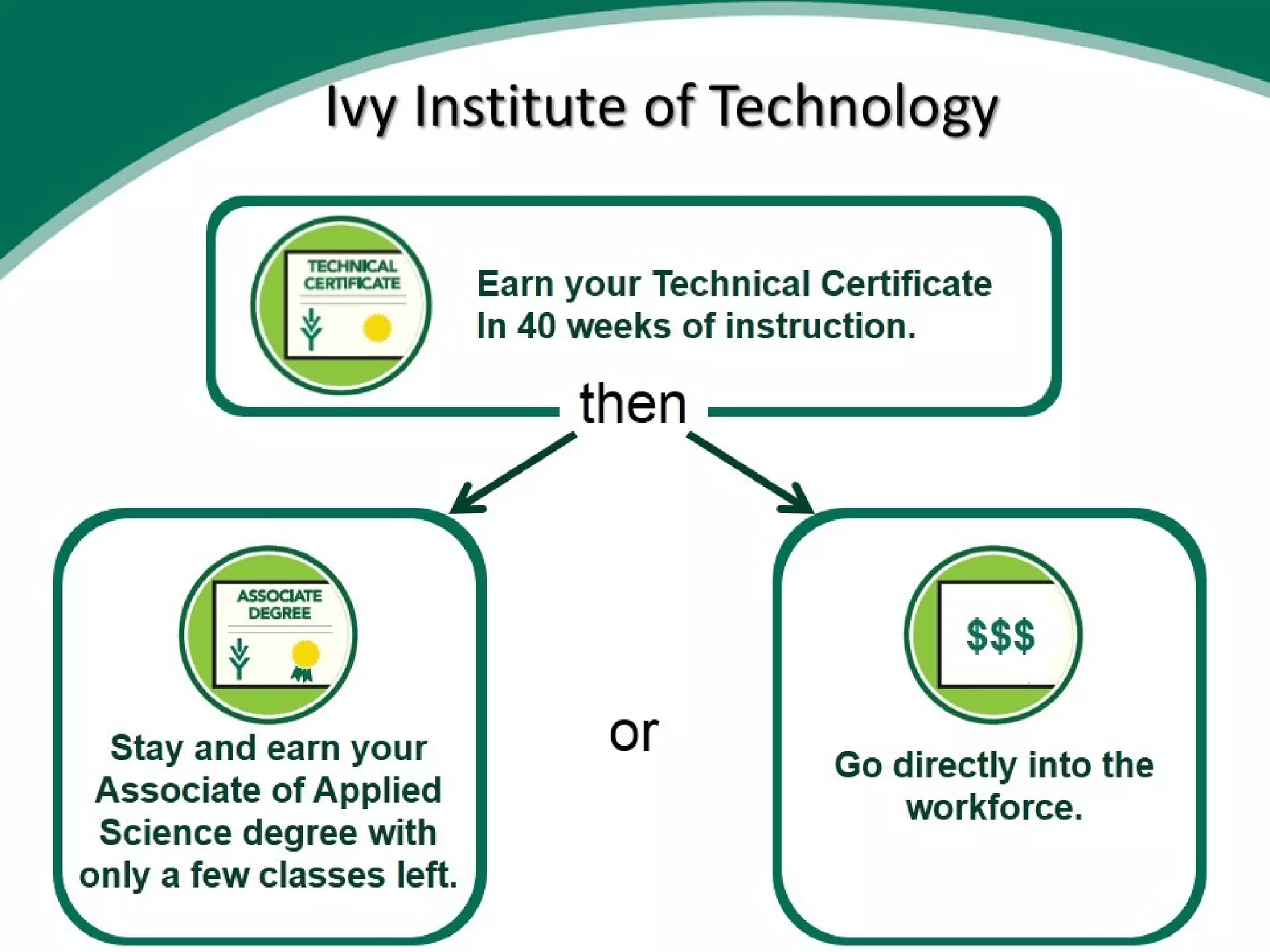
Ivy Institute of Technology
Earn your Technical Certificate
In 40 weeks of instruction.

then

$$$
Stay and earn your
Associate of Applied
Science degree with
only a few classes left.

or

Go directly into the
workforce.
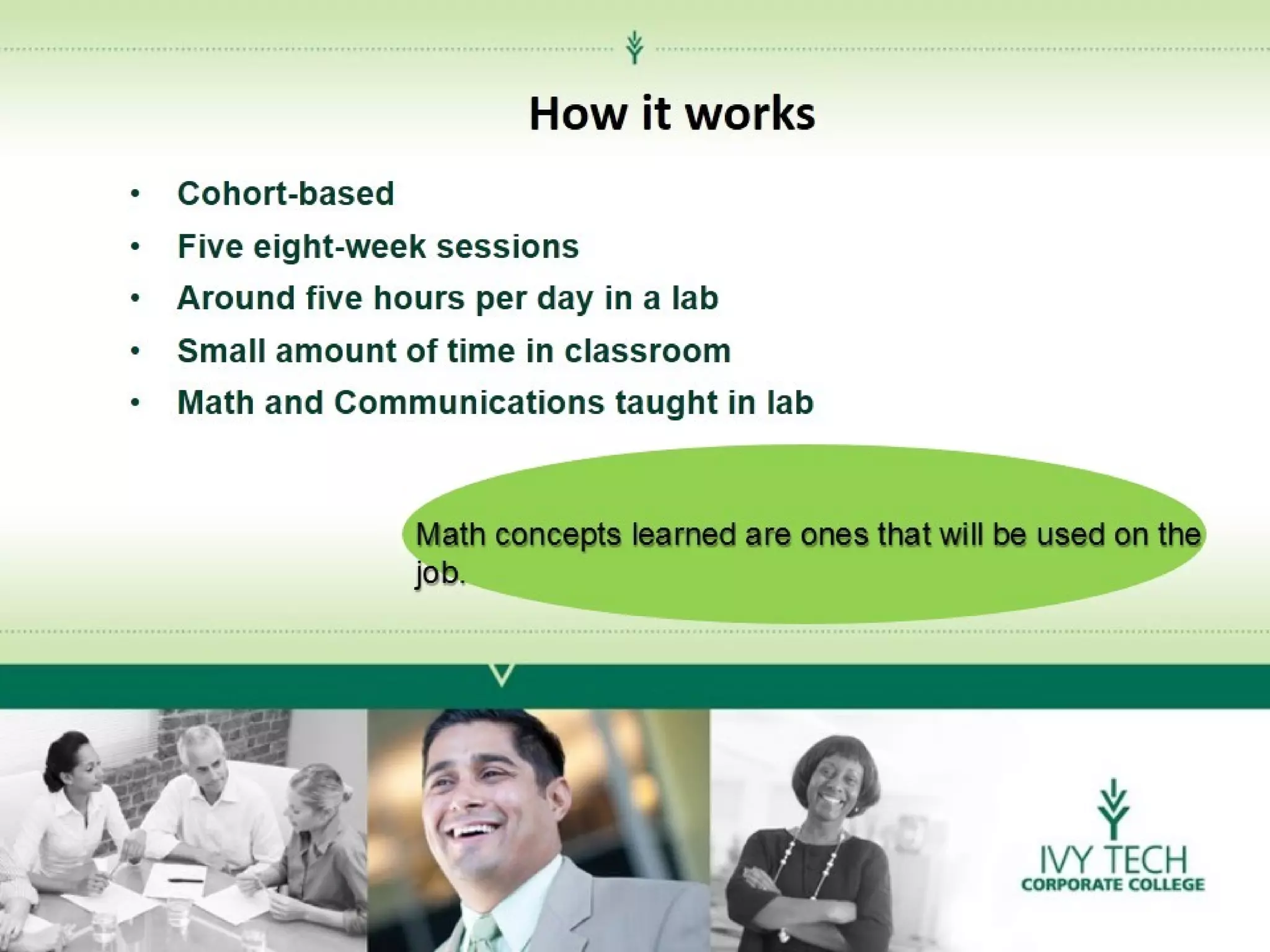
How it works
•Cohort-based
•Five eight-week sessions
•Around five hours per day in a lab
•Small amount of time in classroom
•Math and Communications taught in lab

Math concepts learned are ones that will be used on the
job.
Competency-Based Programs
• Gates Foundation grant with Western Governors University
• Starting with a Technical Certificate in Web Design, moving on
to associate degree
• Rolling out first courses in January 2014
Why is Professional Certification Important?
•

Certifications are portable and stay with the individual. Once certified,
the individual can use them as evidence that one has earned the
professional designation.

•

They are industry-recognized, usually industry-specific and are known to
employers in that discipline world-wide.

•

Issued by professional associations or governing agencies which give
the certification credibility in the field.

•

Certifications (and professional licenses) are required for certain jobs.

•

Certifications often require re-certification or re-training which helps
ensure currency of the credential.
Workforce Certification at Ivy Tech
• Through partnerships with national and international testing
vendors, our centers have access to over 5,000 professional
certification and licensure exams
• In FY 12-13, the centers administered over 42,000 certification
and professional licensure exams.
• Certification Crosswalk at: www.ivytech.edu/
Questions
Rebecca Nickoli
rnickoli@ivytech.edu
Questions from recent NCWE session
How can we make competency based education
fit within parameters for financial aid?
– KCTCS model of chunking modules for credit (as little as 1/2
credit)

41
Questions from recent NCWE session
Are regional accrediting bodies a barrier to this
work? …No

42
Questions from recent NCWE session
Challenge of tracking accountability for outcomes
when students get hired with credentials
– Data elements/ identifiers are not comparable

43
Comments from recent NCWE session
Several people talked about developing their own
aligned curricula and/or credentials
– There is an opportunity for colleges to help develop
certificates/certifications with companies or endorse
those credentials developed by companies (and
develop and align related curriculum).

44
Comments from recent NCWE session
Several people talked about developing their own
aligned curricula and/or credentials
– One college mentioned that the cost of some
proprietary curriculum can be cost prohibitive. They
are developing their own curriculum that aligns with
an industry recognized credential.

45
Questions?
Thank You!
Slides and report available at

www.skilledwork.org

Making a Market for Competency-Based Credentials: What Can Colleges Do?

  • 1.
    Making a Marketfor Competency-Based Credentials: What Can Colleges Do? Final in a series of three webinars available at www.skilledwork.org 1
  • 2.
    Enter the Audio PIN shownon your screen! Raise/lower your hand (646) 307-1716 958-020-546  All Attendees are muted. To be unmuted, you will need to have entered your PIN. Send comments and ask questions here!  Please don’t put call on “hold”!  Ask ?s in Question box or “Raise Hand”  Bad connection? Hang up and dial back in  Technical Support: 888- 259-8414, ext. 1 2
  • 3.
    Today’s Presenters Jeannine LaPrad CSW Dr. Maria Coons Harper College, IL Moderator Melodee Mabbitt, CSW Dr. Robert Topping Spectrum Consulting Group Dr. Rebecca Nickoli Ivy Tech Community College, IN
  • 4.
    Available at www.skilledwork.org NewReport: Making a Market for Competency-Based Credentials Slides from this series
  • 5.
    What is acompetency-based credential?  Accurately assures competencies, based on skills and knowledge of the holder  Awarded based on demonstration of those competencies  Aligns with specific industry standards and founded on the skills/competencies needed by employers
  • 6.
    A Quality Competency-BasedCredentialing Process
  • 7.
    Current State ofPlay… In a nutshell • Competency-based credentialing as a concept resonates widely • Large-scale adoption and use needs: – Transparency (common language, registries) – Interoperability (quality assurance, data infrastructure) – Making the Return on Investment clear to employers, job seekers, and educators
  • 8.
    Building the Market:Five Key Elements
  • 9.
    Expanding Use byEducators  Engage employers as full partners  Utilize methodologies to ensure that all key competencies related to job tasks and employability/ soft skills are identified  Work with sector partnerships  Meet students where they are  Provide opportunities for applied learning experiences  Focus on credential related outcomes
  • 10.
    The Evolution ofthe Business-Education Partnerships “Off the shelf” course offerings Needs assessment/customized training Organizational development approach (“Trusted Partner” – often one on one) Deep engagement in an industry- shared ownership of standards, curriculum and assessments (Provide solutions through cross industry and regional sector partnerships)
  • 11.
  • 12.
    William Rainey HarperCollege  Comprehensive community college in Palatine, Illinois  Named for Dr. William Rainey Harper, a pioneer in the junior college movement in the United States and the first president of the University of Chicago  Serves 40,000+ students annually, with access to jobready degrees and certifications.  Accredited by the Higher Learning Commission of the North Central Association of Colleges and Secondary Schools (NCA)
  • 13.
    Matching Competencies  Completionof industry certifications  Quality check  Demonstration of skills  Not “life experience”  Portfolios  Exams  Corporate/Military Training (Badging)  Crosswalk
  • 14.
  • 15.
    Long-Standing Manufacturing Programs Maintenance Technology Associate in Applied Science Degree  Credit Certificate Programs – – – – Basic Maintenance Commercial Maintenance Manufacturing Basic Certificate Supervisory Maintenance Certificate Welding Technology  Associate in Applied Science Degree  Credit Certificate Programs – – – – Advanced Welding Certificate Basic Pipe Welding Certificate Basic Welding Certificate Welding Fabrication Certificate
  • 16.
    New Initiative Harper Collegelaunches new manufacturing program, internships In an attempt to fill growing vacancies in high-tech manufacturing, Harper College is teaming up with local companies to create a stream of future employees. Harper’s Program Statewide Network
  • 17.
    Manufacturing Technology Manufacturing Technology Associate in Applied Science Degree  Credit Certificate Programs – Manufacturing Production Certificate – Computer Numerical Control (CNC) Operator I Certificate – Computer Numerical Control (CNC) Operator II Certificate • Aligned with Manufacturing Skill Standards Council (MSSC) Certified Production Technician (CPT)
  • 20.
    Industry Certifications  EntryLevel: MSSC Certified Production Technician (CPT)  Intermediate (within an area of specialization): – Mechatronics: Certificates in Motion, Sensors, Electronics, Robotics and PMMI Certification – CNC: Certificates in Precision Machining and NIMS Certification – Industrial Maintenance: Certification in Machine maintenance – Welding/Metalworking: AWS and NIMS Certifications – Green Manufacturing: Certificates in Waste Management and Lean Manufacturing
  • 21.
    Lessons Learned: Competency-Based Credentials RobertTopping, Ed.D. Spectrum Consulting Group, LLC rbot@scgsolutions.biz (503) 642-5165 in conjunction with The Regional Education Training Center and the Pacific Northwest Center of Excellence for Clean Energy
  • 22.
    Competency-Based Proficiency Credentials Mastery Worker/ Student Demonstrations of Competencies Key Performance Measurements(KPM) Value- added = Proficiency Credential Assessment Key Key Observable Observable Outcome Outcome (KOO)) (KOO
  • 23.
    Pacific Northwest Centerof Excellence for Clean Energy: A Centralia College (WA) Partnership cleanenergyexcellence.org  Conduct focus groups to identify critical work functions and key activities  Verify the data gathered from focus groups.  Survey current workers to determine proficiency level of skill for a job position  Compile and research existing standards in related jobs and careers  Develop work-related scenarios to place the skill standards in context of a work environment  Gain Industry endorsement of “ skills standards” for key occupations 23
  • 24.
    Skill Standard Duty/ Activity Competency Whenit adds value to a Context, set of Conditions and Culture
  • 25.
  • 26.
    Value Proposition Demonstrations of IndustryProficiency Credentials Mastery Objective Focused • Specified • Standards-based • Contracted • Paradigm Shift Value Added •Competency-based •Context • Set of Conditions • Culture Copyright © 2012. Spectrum Consulting Group, LLC. All rights reserved.
  • 27.
    Demonstrations of Mastery Outcomes •Specific • Standardized • Objective Focused • Contracted
  • 28.
    Demonstrations of Proficiency Value Added •Competency-based •Context • Set of Conditions • Culture
  • 29.
  • 30.
  • 31.
    Credentialing Webinar Corporation fora Skilled Workforce Rebecca Nickoli, Ed.D. Vice President/Corporate College Ivy Tech Community College November 5, 2013
  • 32.
    Alternative Approaches toCompleting Credentials • Short-term, financial aid eligible certificates • Ivy Institutes of Technology • Pilot program to develop competency-based degree • Role of certification and cross-walking in accelerating completion
  • 33.
    Certificates at IvyTech • 18 to 29 credits ( ¼ to ½ of an associate degree) • Federal financial aid available for eligible students • One or more certifications embedded • Technical, skills-based courses • Role of general education
  • 34.
    Certificates at IvyTech • Always include one or more third-party certifications • • Always part of a career ladder Examples - Information Security has certificates in data security and network security - Human Services has certificates in addiction studies, elder care, direct support specialist - New general education certificate has 30 hours that transfer to all public 4-year colleges in Indiana
  • 35.
    Ivy Institute ofTechnology Earn your Technical Certificate In 40 weeks of instruction. then $$$ Stay and earn your Associate of Applied Science degree with only a few classes left. or Go directly into the workforce.
  • 36.
    How it works •Cohort-based •Fiveeight-week sessions •Around five hours per day in a lab •Small amount of time in classroom •Math and Communications taught in lab Math concepts learned are ones that will be used on the job.
  • 37.
    Competency-Based Programs • GatesFoundation grant with Western Governors University • Starting with a Technical Certificate in Web Design, moving on to associate degree • Rolling out first courses in January 2014
  • 38.
    Why is ProfessionalCertification Important? • Certifications are portable and stay with the individual. Once certified, the individual can use them as evidence that one has earned the professional designation. • They are industry-recognized, usually industry-specific and are known to employers in that discipline world-wide. • Issued by professional associations or governing agencies which give the certification credibility in the field. • Certifications (and professional licenses) are required for certain jobs. • Certifications often require re-certification or re-training which helps ensure currency of the credential.
  • 39.
    Workforce Certification atIvy Tech • Through partnerships with national and international testing vendors, our centers have access to over 5,000 professional certification and licensure exams • In FY 12-13, the centers administered over 42,000 certification and professional licensure exams. • Certification Crosswalk at: www.ivytech.edu/
  • 40.
  • 41.
    Questions from recentNCWE session How can we make competency based education fit within parameters for financial aid? – KCTCS model of chunking modules for credit (as little as 1/2 credit) 41
  • 42.
    Questions from recentNCWE session Are regional accrediting bodies a barrier to this work? …No 42
  • 43.
    Questions from recentNCWE session Challenge of tracking accountability for outcomes when students get hired with credentials – Data elements/ identifiers are not comparable 43
  • 44.
    Comments from recentNCWE session Several people talked about developing their own aligned curricula and/or credentials – There is an opportunity for colleges to help develop certificates/certifications with companies or endorse those credentials developed by companies (and develop and align related curriculum). 44
  • 45.
    Comments from recentNCWE session Several people talked about developing their own aligned curricula and/or credentials – One college mentioned that the cost of some proprietary curriculum can be cost prohibitive. They are developing their own curriculum that aligns with an industry recognized credential. 45
  • 46.
  • 47.
    Thank You! Slides andreport available at www.skilledwork.org

Editor's Notes

  • #22 A cluster of related knowledge, skills, abilities, and personal qualities that are used in an integrated way to add value to an environment (context, conditions, and culture).
  • #23 Introduce the idea of competencies. SCG’s approach to connect competencies to tangible results that we can measure. What is key is that while the duties may change, the competencies to accomplish those duties may remain the same. If the duties change, we must adapt the performance measures to be specific to what the worker is required to do.
  • #24 Key partners are Labor, community colleges, workforce boards, and industry experts Conduct a widely distributed survey of current workers to determine level of skills required for each job. Develop work-related scenarios to place the skill standards in context of the work environment. Verify the data gathered from focus groups. Disseminate skill standards information to involved parties from industry, education and labor for review and editing.