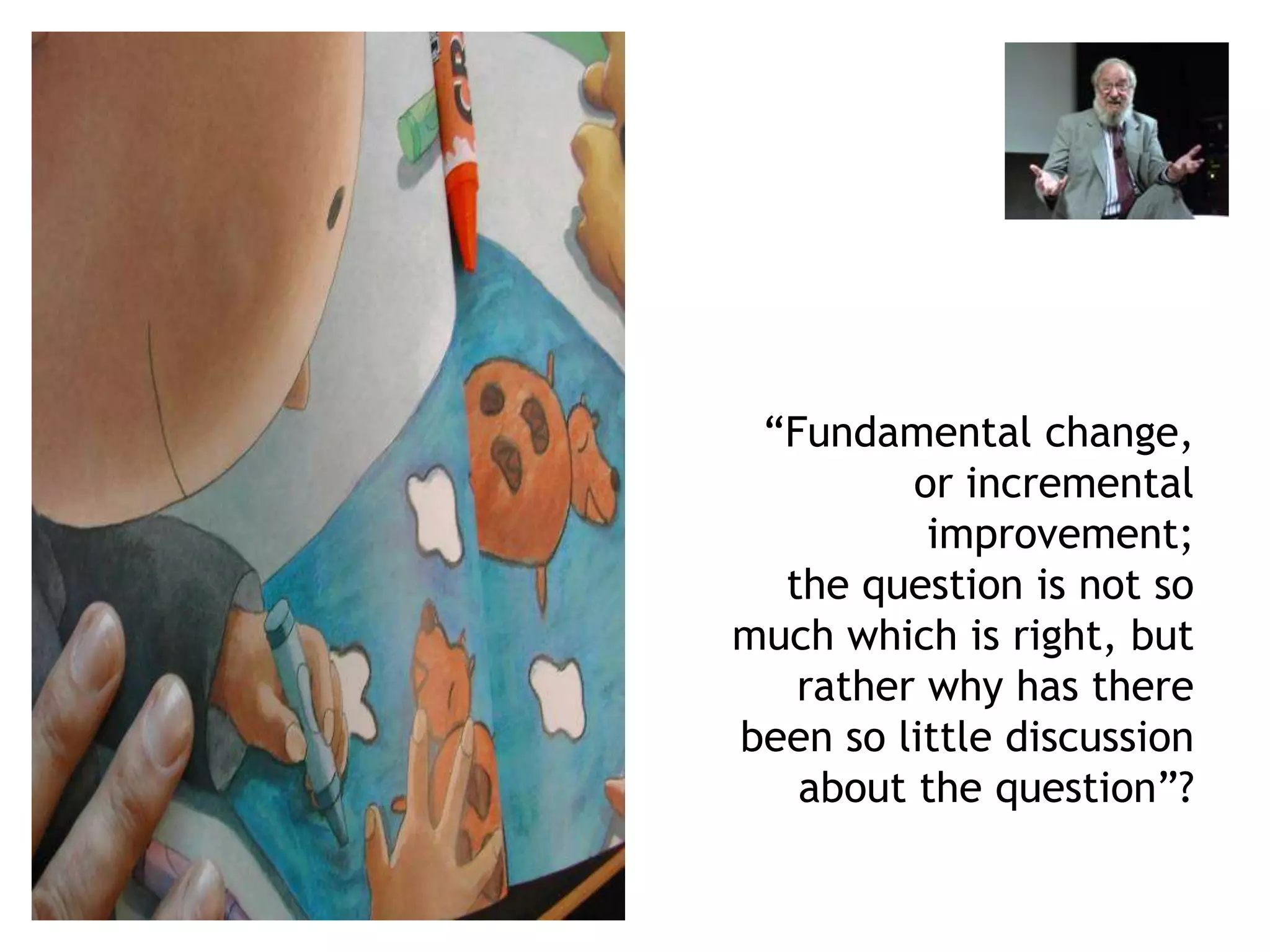
“Fundamental change,
         or incremental
          improvement;
  the question is not so
much which is right, but
   rather why has there
been so little discussion
   about the question”?
Where do you see your school?

   1                   2                      3                        4

Incremental Improvement                               Fundamental Change


Incremental improvement. Continual small changes to the way school
   might function to provide measurable improvement.
Fundamental change/transformation looks very different. It is not
   “tweaking” at the edges; this is not doubling the length of classes or
   developing cross-curricular programs. Rather than build on the
   successes of the past, fundamental change requires a complete
   rethinking of the nature of school and learning from the “ground up”.
Emerging Models of Teaching &
          Learning
 Teacher Learner / Learner Teacher


             Deirdre Butler
       deirdre.butler@spd.dcu.ie
Difficult Questions
• What kind of future do we want to create?
• What kind of people do we wish to
  nurture?
• What are the values we want to live by?
• How can digital technologies help this
  happen?
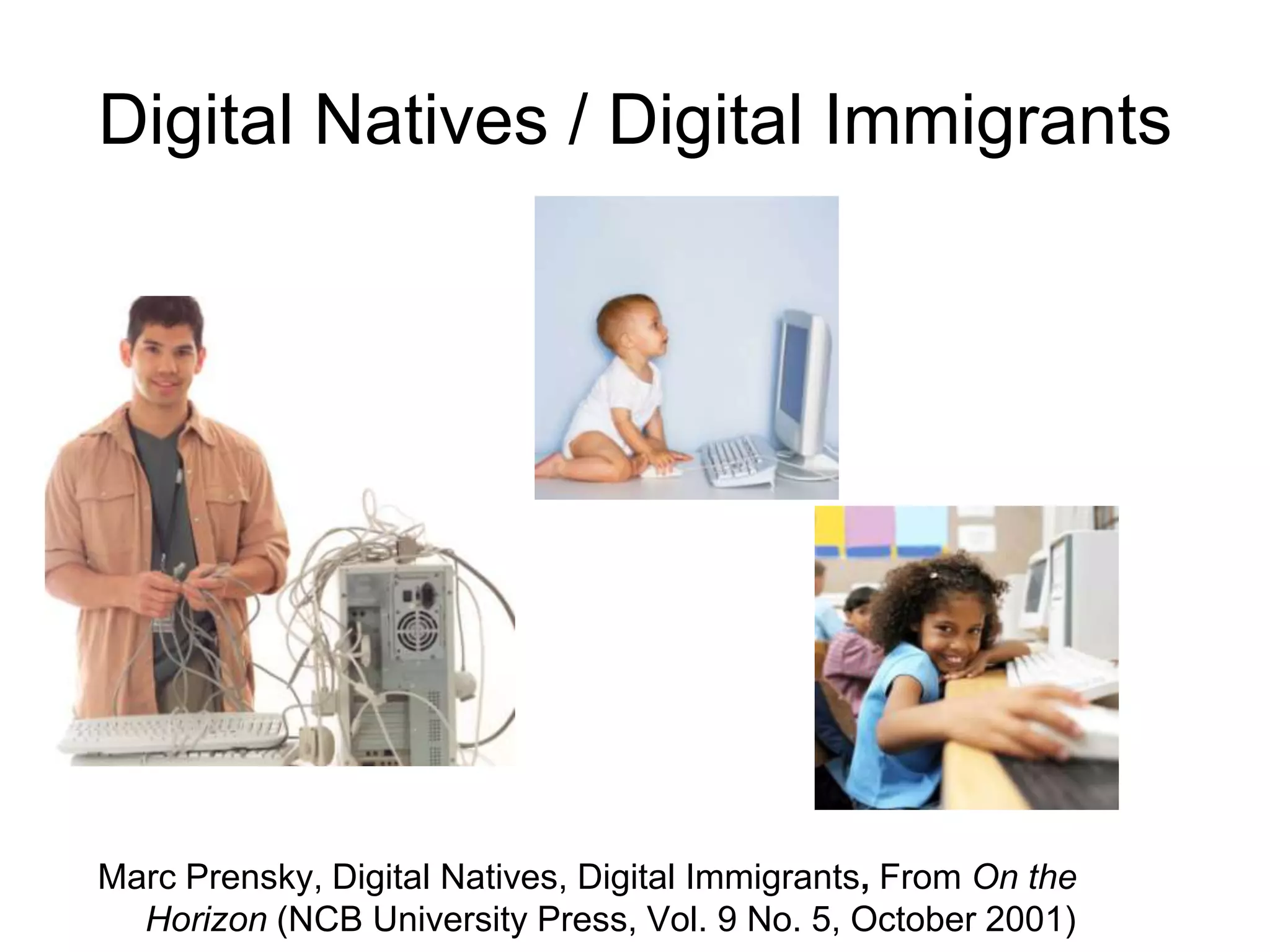
Digital Natives / Digital Immigrants


Marc Prensky, Digital Natives, Digital Immigrants, From On the
  Horizon (NCB University Press, Vol. 9 No. 5, October 2001)
Schools & The Knowledge
              Economy
• In an economy driven by knowledge rather than
  manufacturing, employers are already valuing
  very different skills, such as creativity,
  communication, presentation skills and team-
  building. Schools are at the front line of this
  change and need to think about how they can
  prepare young people for the future workplace.
(Their Space: Education for a digital generation,
  Demos, Hannah Green & Celia Hannon,
  2007,p.15)
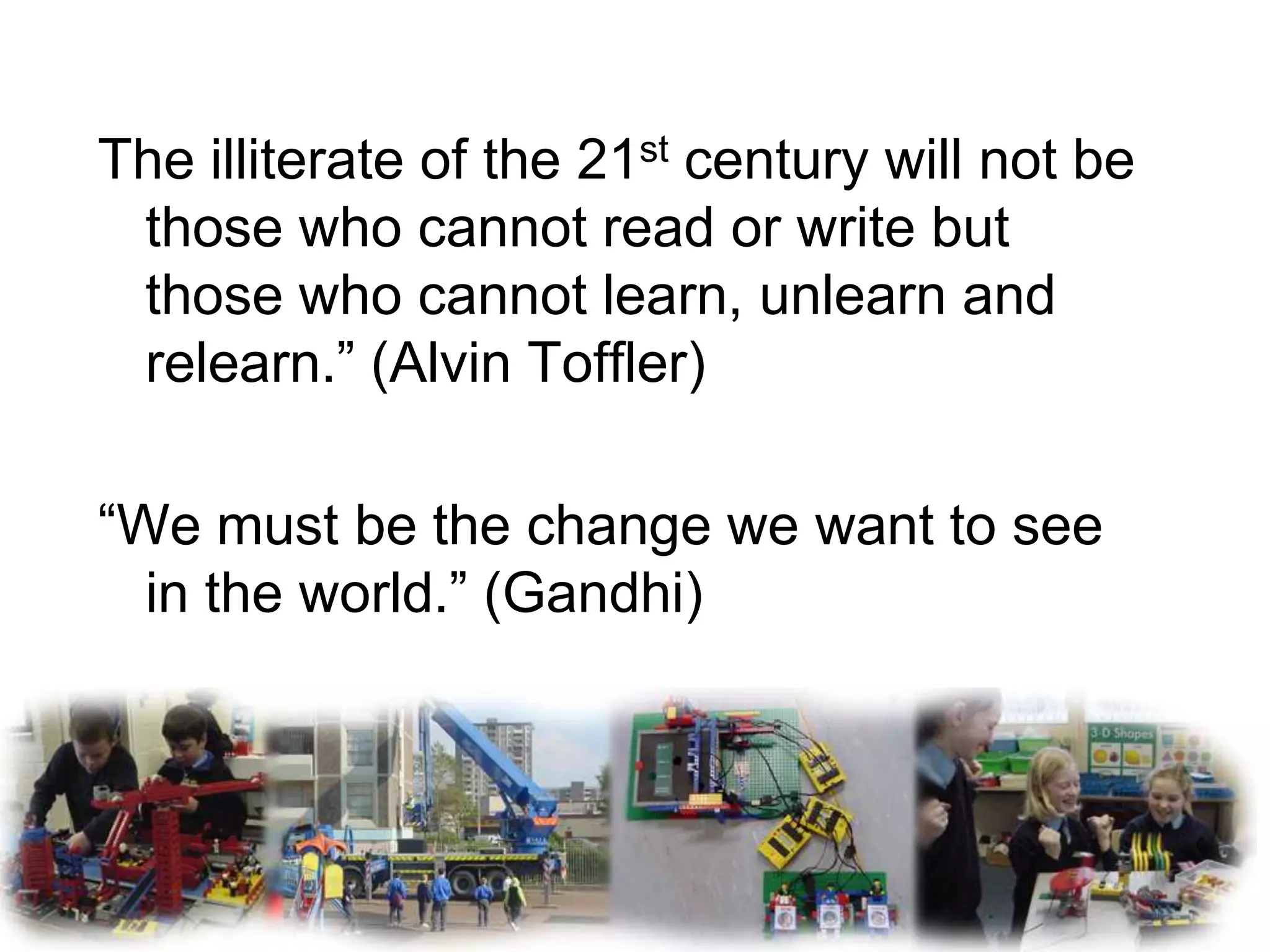
The illiterate of the 21st century will not be
 those who cannot read or write but
 those who cannot learn, unlearn and
 relearn.” (Alvin Toffler)

“We must be the change we want to see
  in the world.” (Gandhi)
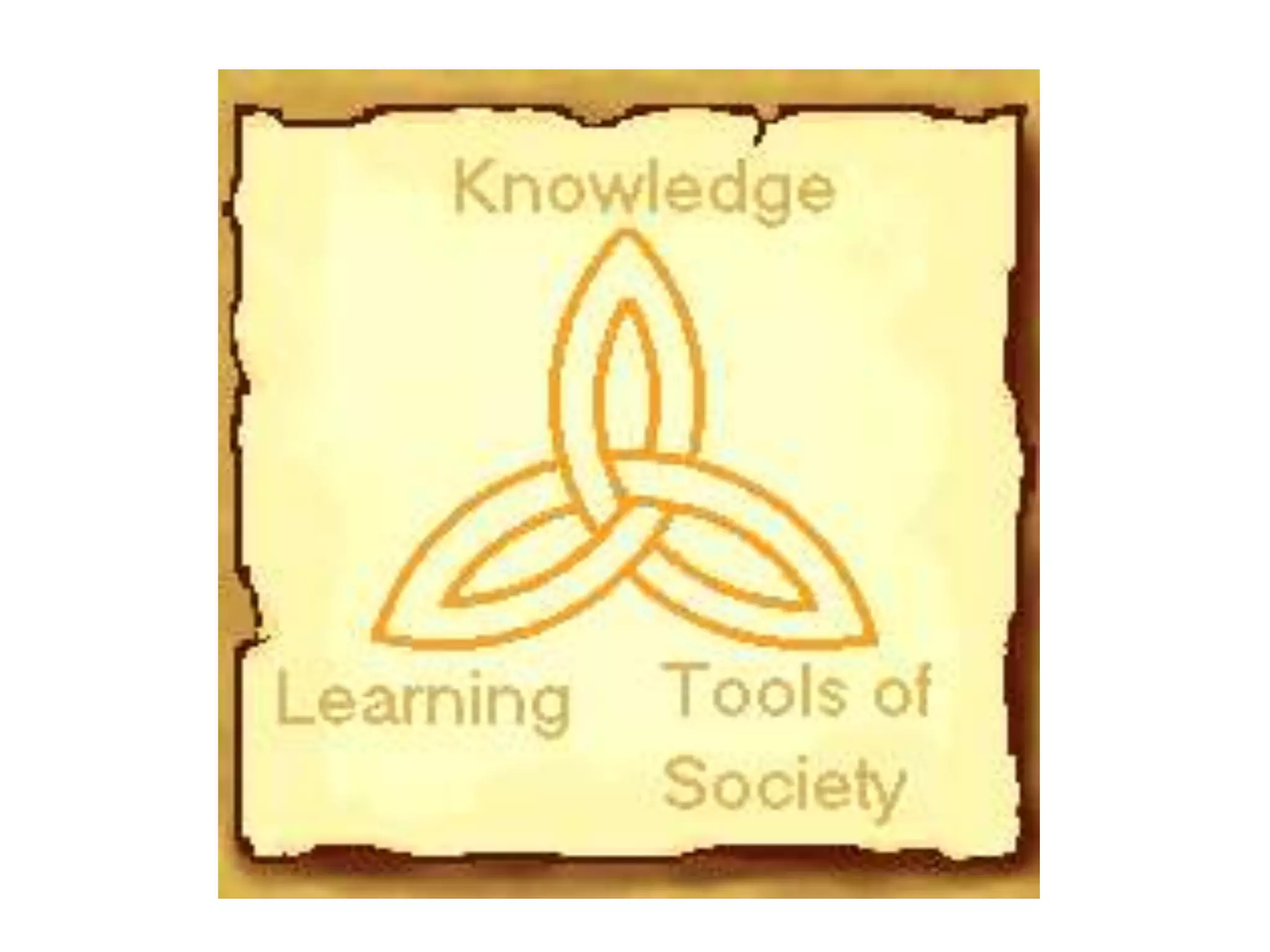
The Trinity Knot
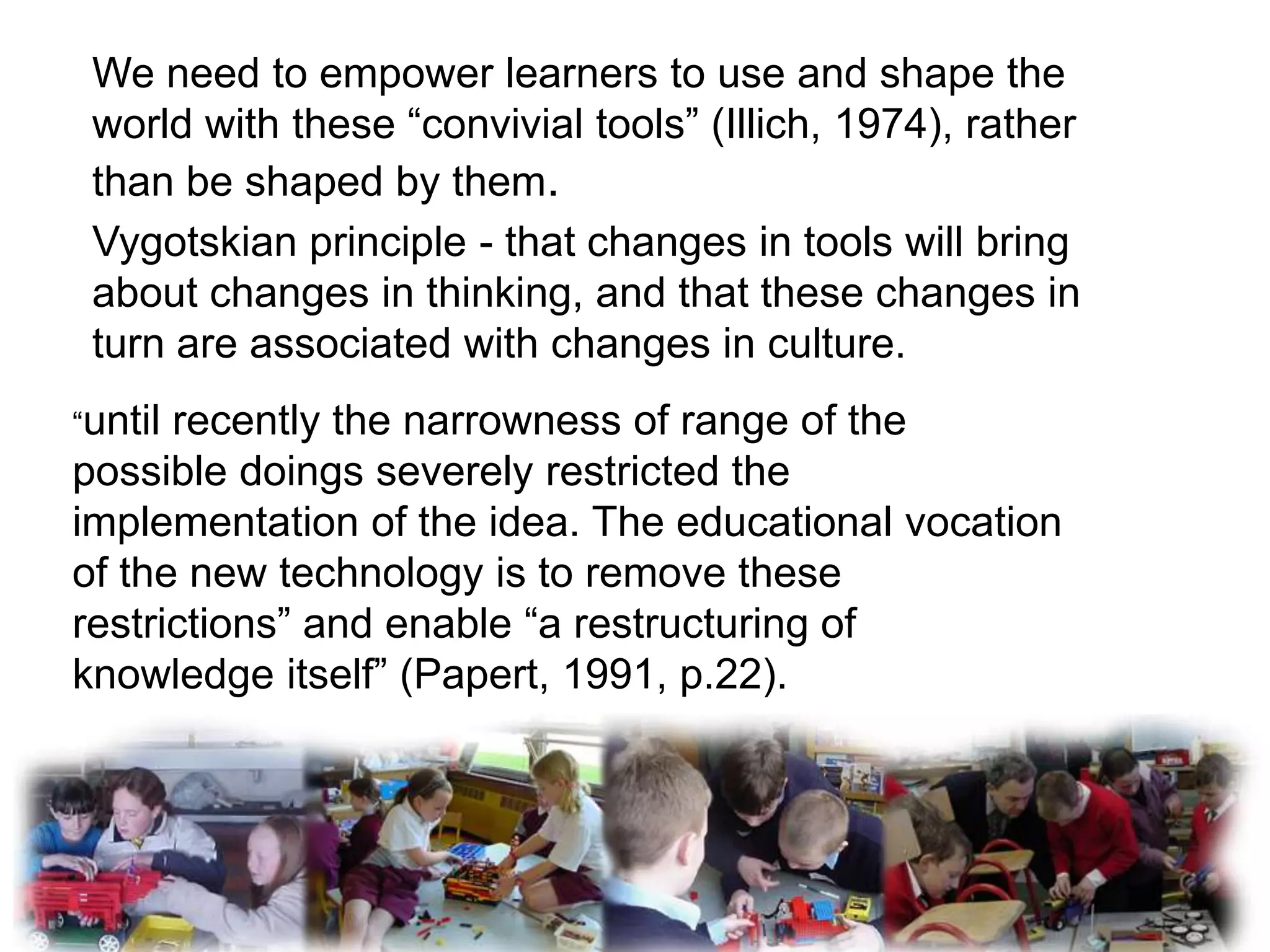
We need to empower learners to use and shape the
 world with these “convivial tools” (Illich, 1974), rather
 than be shaped by them.
 Vygotskian principle - that changes in tools will bring
 about changes in thinking, and that these changes in
 turn are associated with changes in culture.
“untilrecently the narrowness of range of the
possible doings severely restricted the
implementation of the idea. The educational vocation
of the new technology is to remove these
restrictions” and enable “a restructuring of
knowledge itself” (Papert, 1991, p.22).
Invest in people as much as PCs ?
• In order to see change across
  the system, there needs to be
  a shift in thinking about
  investment from hardware
  towards relationships and
  networks. In the last ten years
  we have seen a staggering
  change in the amount of
  hardware in schools, but it
  has not had a significant
  impact on teaching and
  learning styles.
  (Demos p.16)
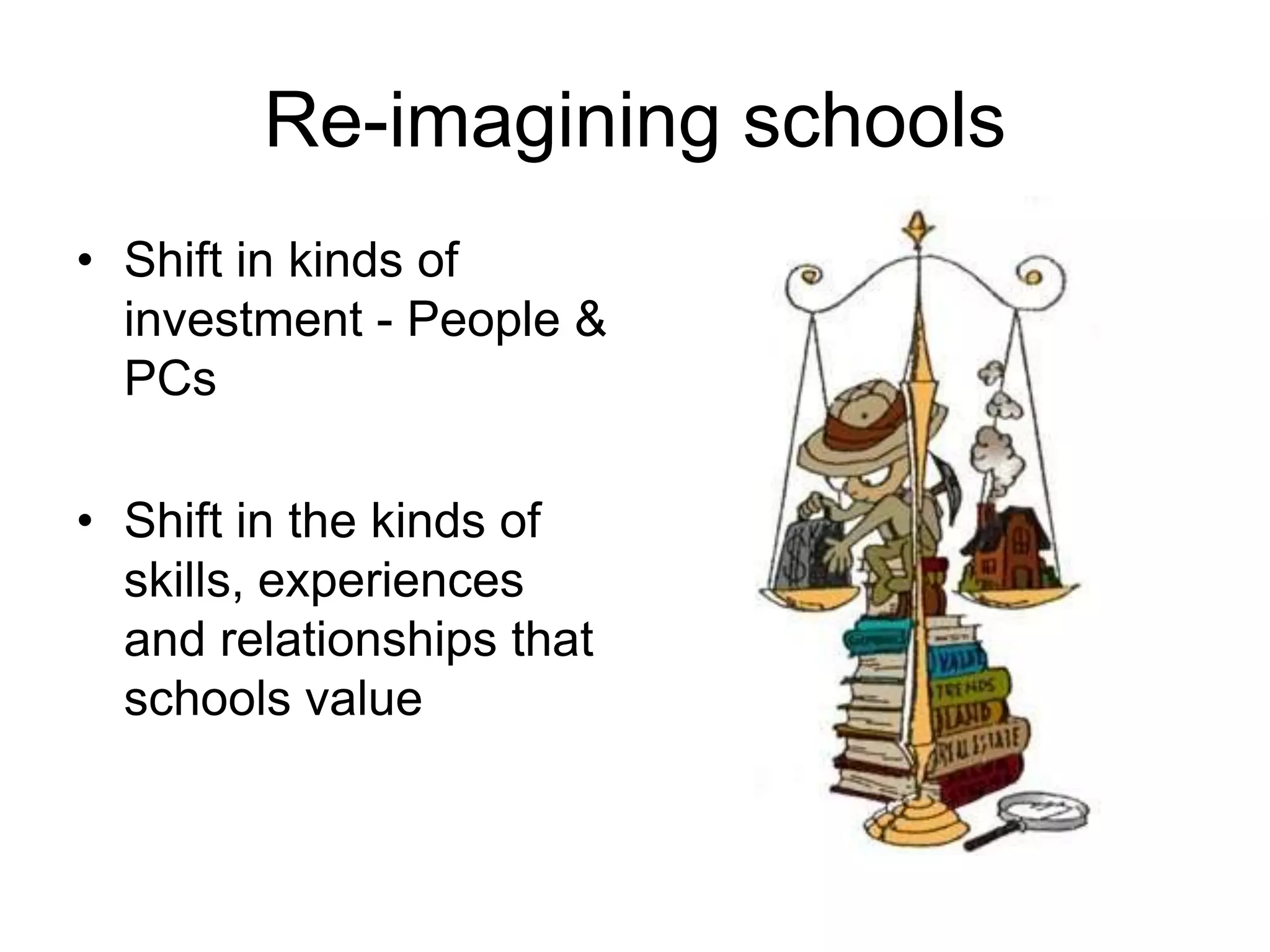
Re-imagining schools
• Shift in kinds of
  investment - People &
  PCs

• Shift in the kinds of
  skills, experiences
  and relationships that
  schools value
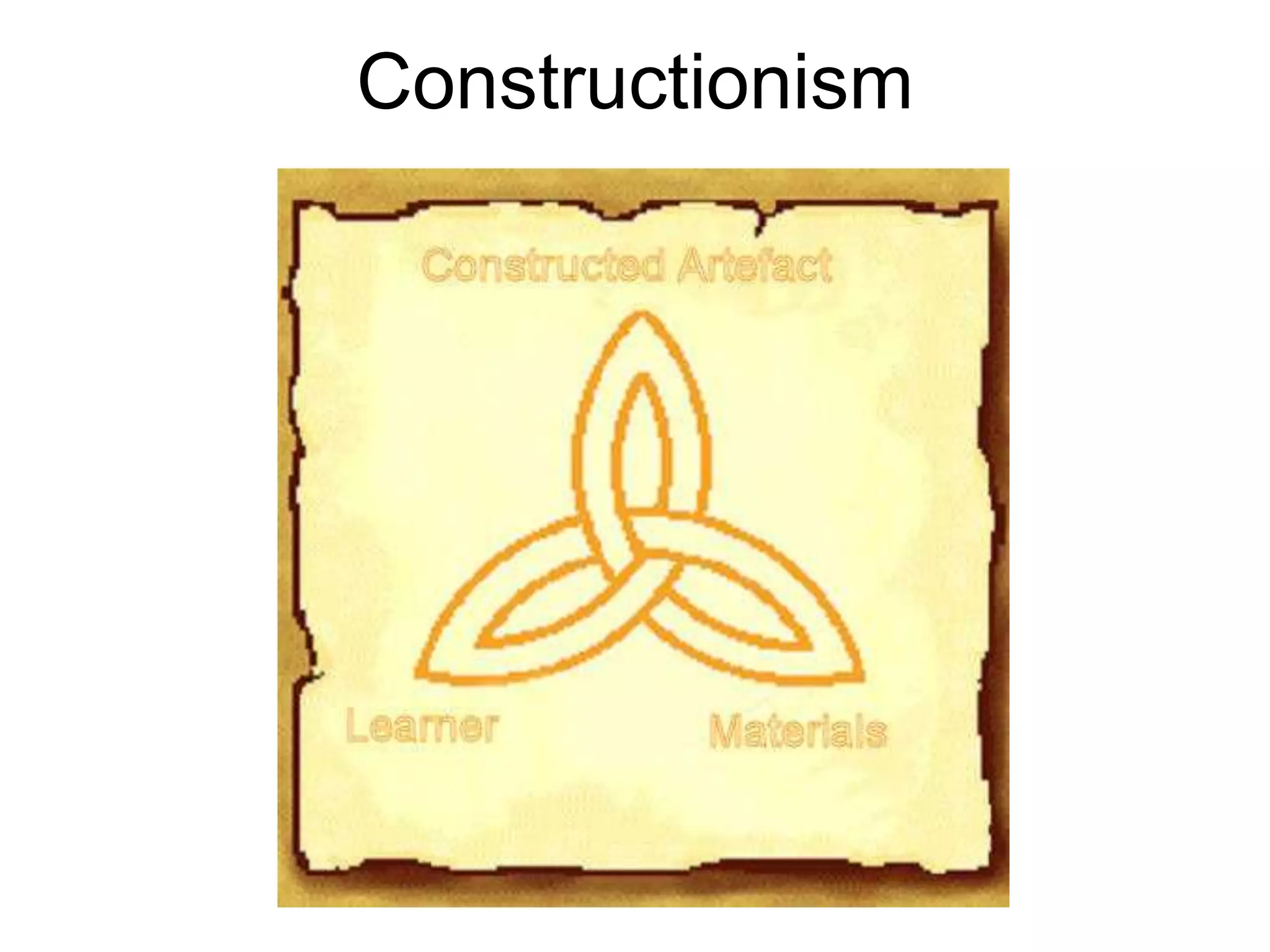
Constructionism
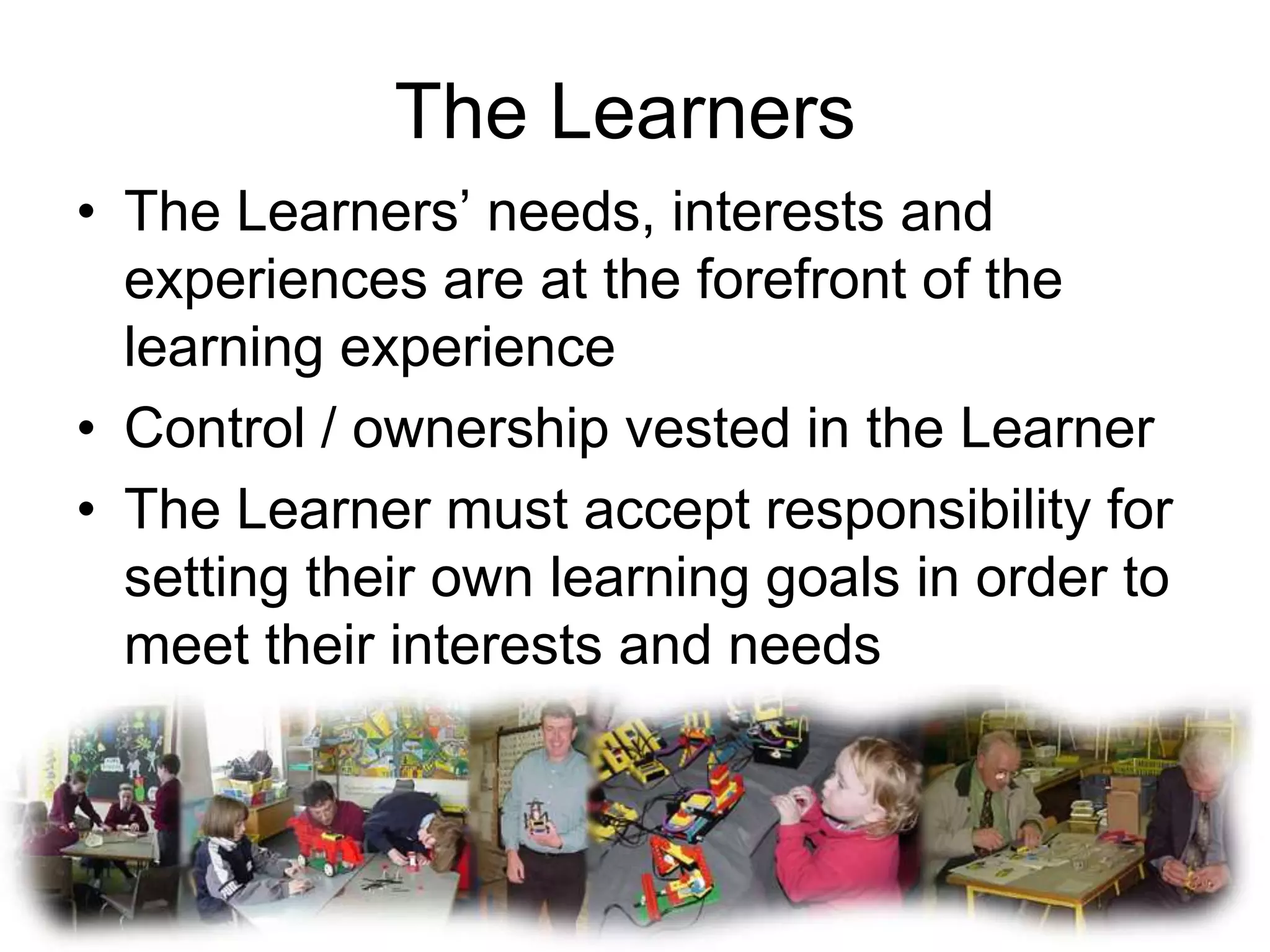
The Learners
• The Learners’ needs, interests and
  experiences are at the forefront of the
  learning experience
• Control / ownership vested in the Learner
• The Learner must accept responsibility for
  setting their own learning goals in order to
  meet their interests and needs
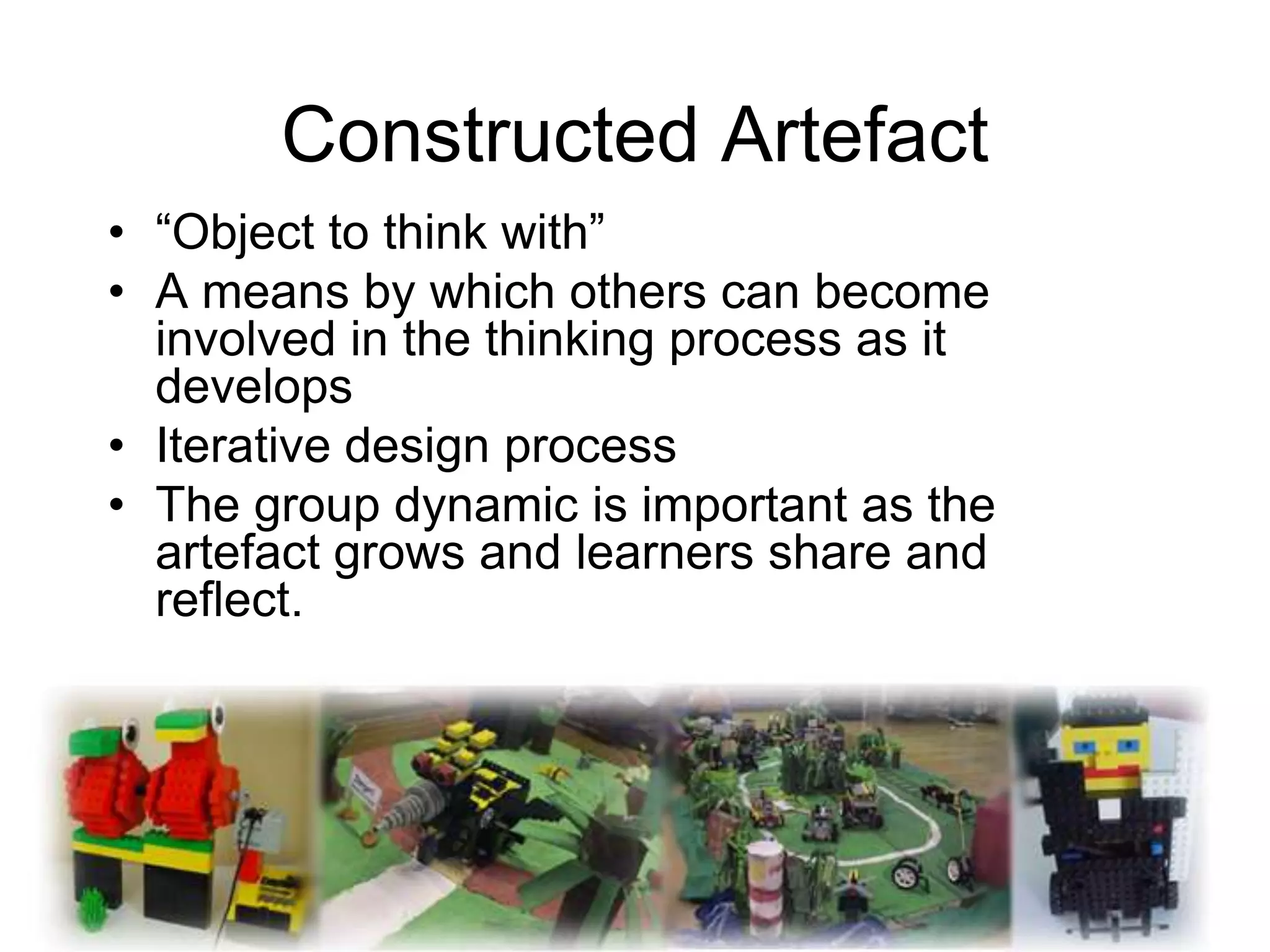
Constructed Artefact
• “Object to think with”
• A means by which others can become
  involved in the thinking process as it
  develops
• Iterative design process
• The group dynamic is important as the
  artefact grows and learners share and
  reflect.
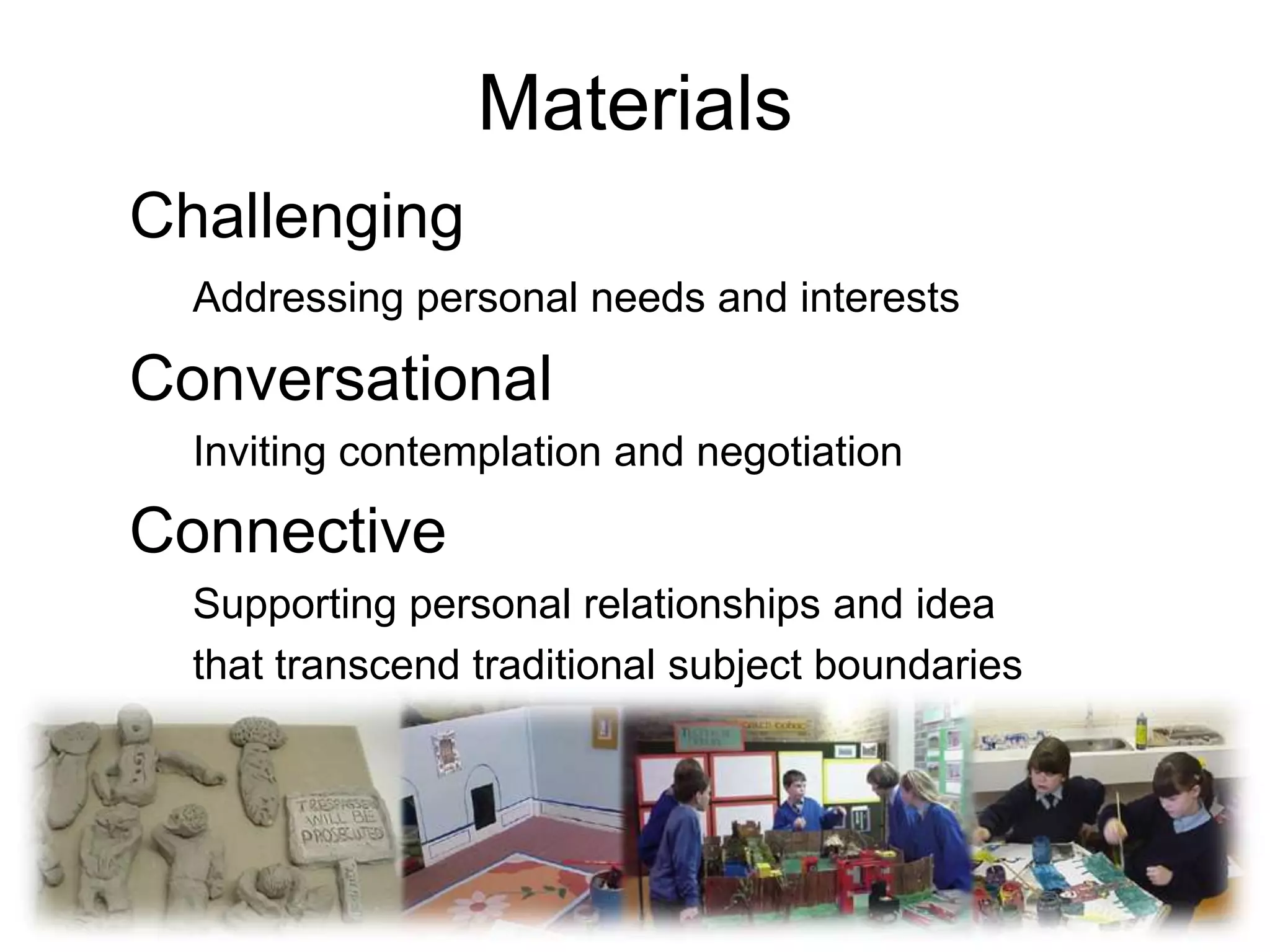
Materials
Challenging
  Addressing personal needs and interests

Conversational
  Inviting contemplation and negotiation

Connective
  Supporting personal relationships and idea
  that transcend traditional subject boundaries
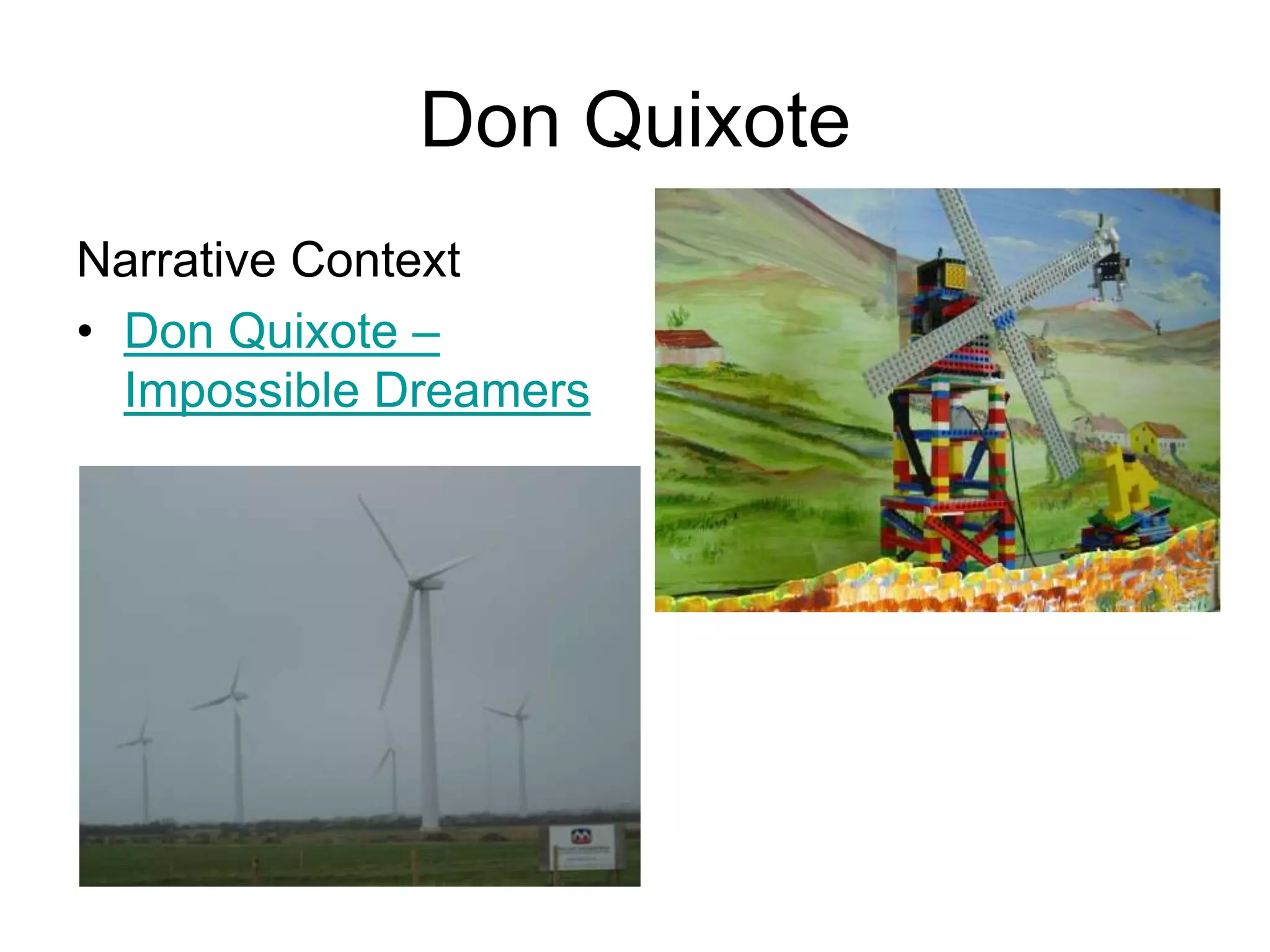
Don Quixote
Narrative Context
• Don Quixote –
  Impossible Dreamers
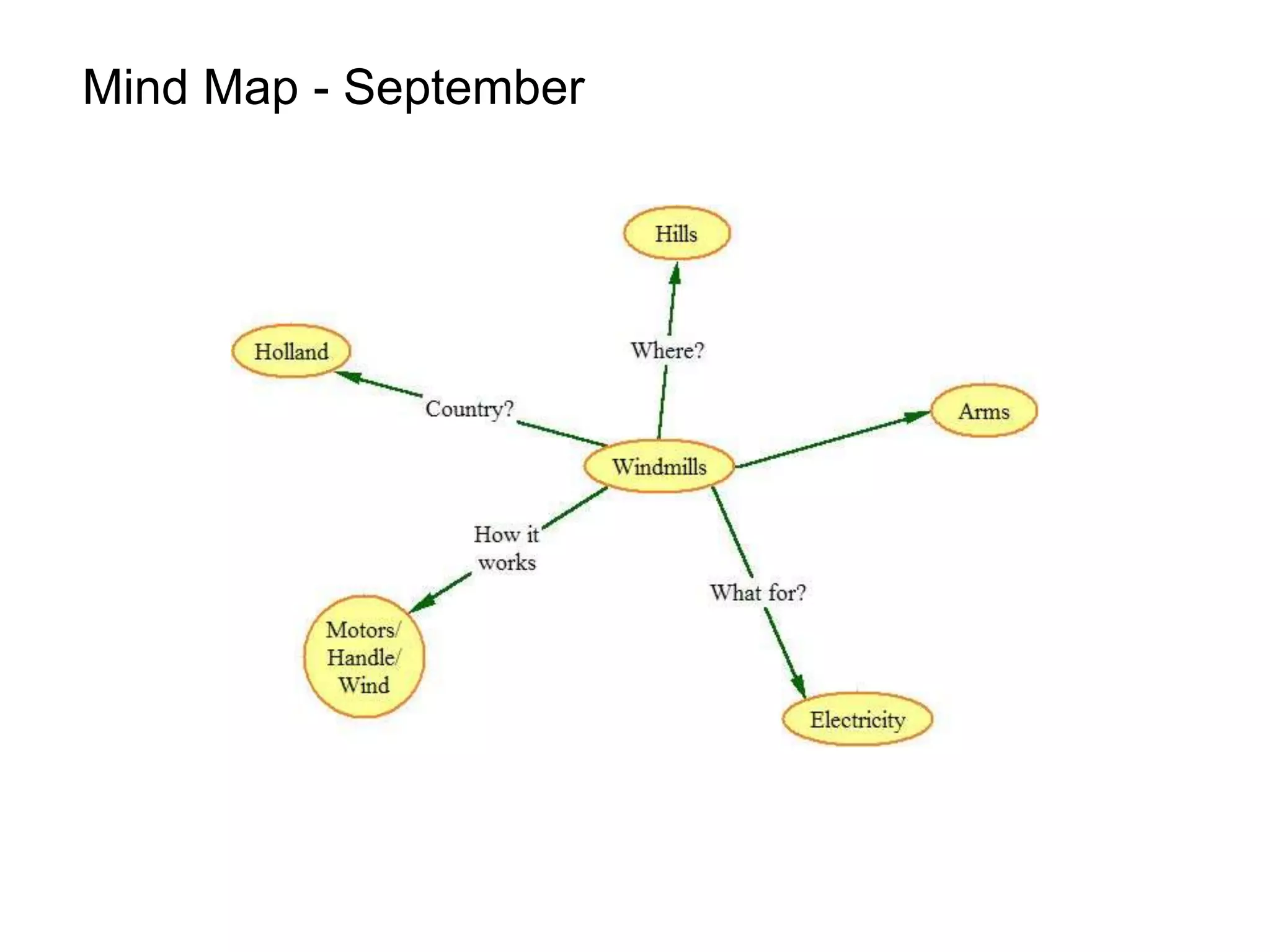
Mind Map - September
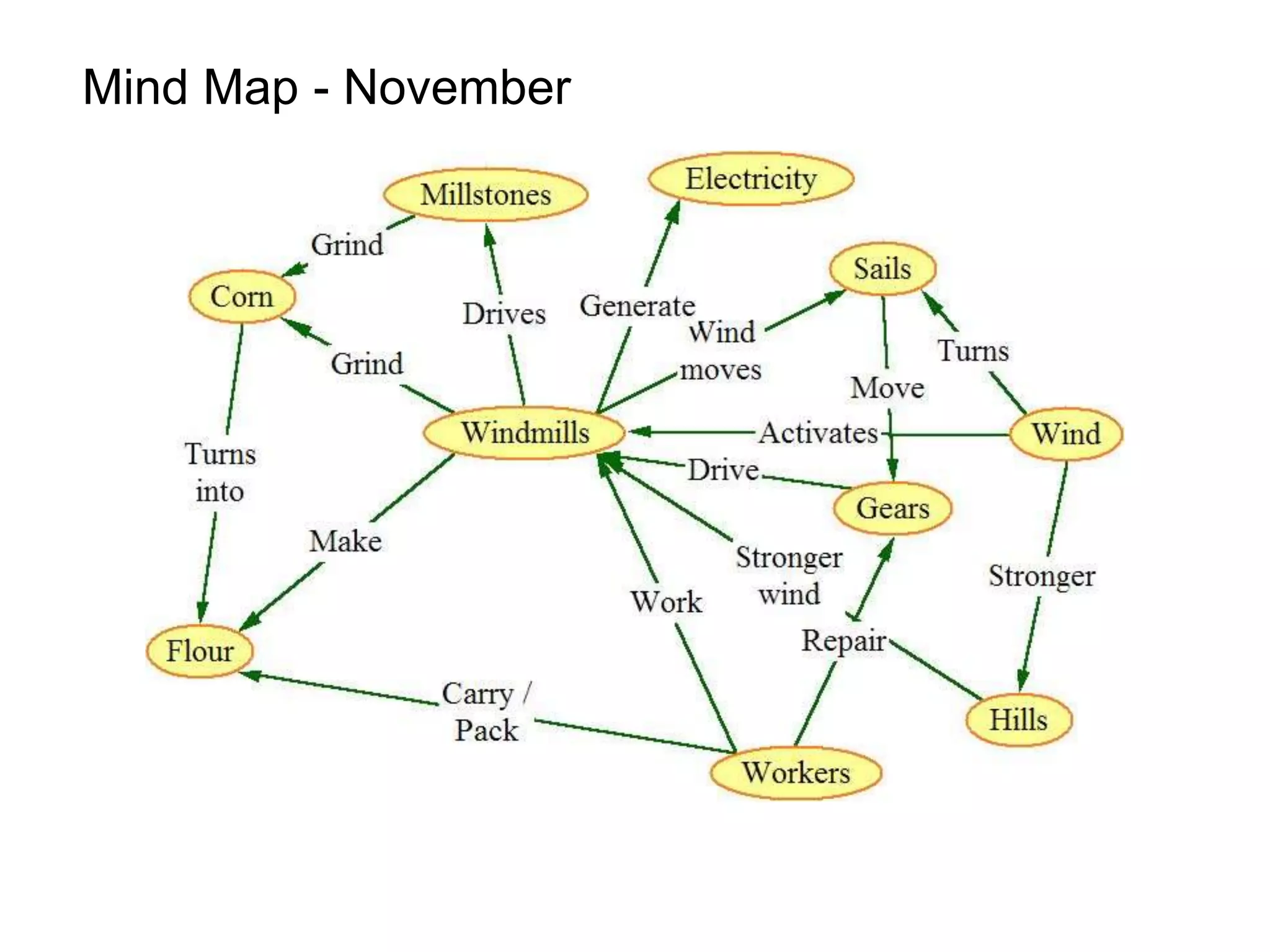
Mind Map - November
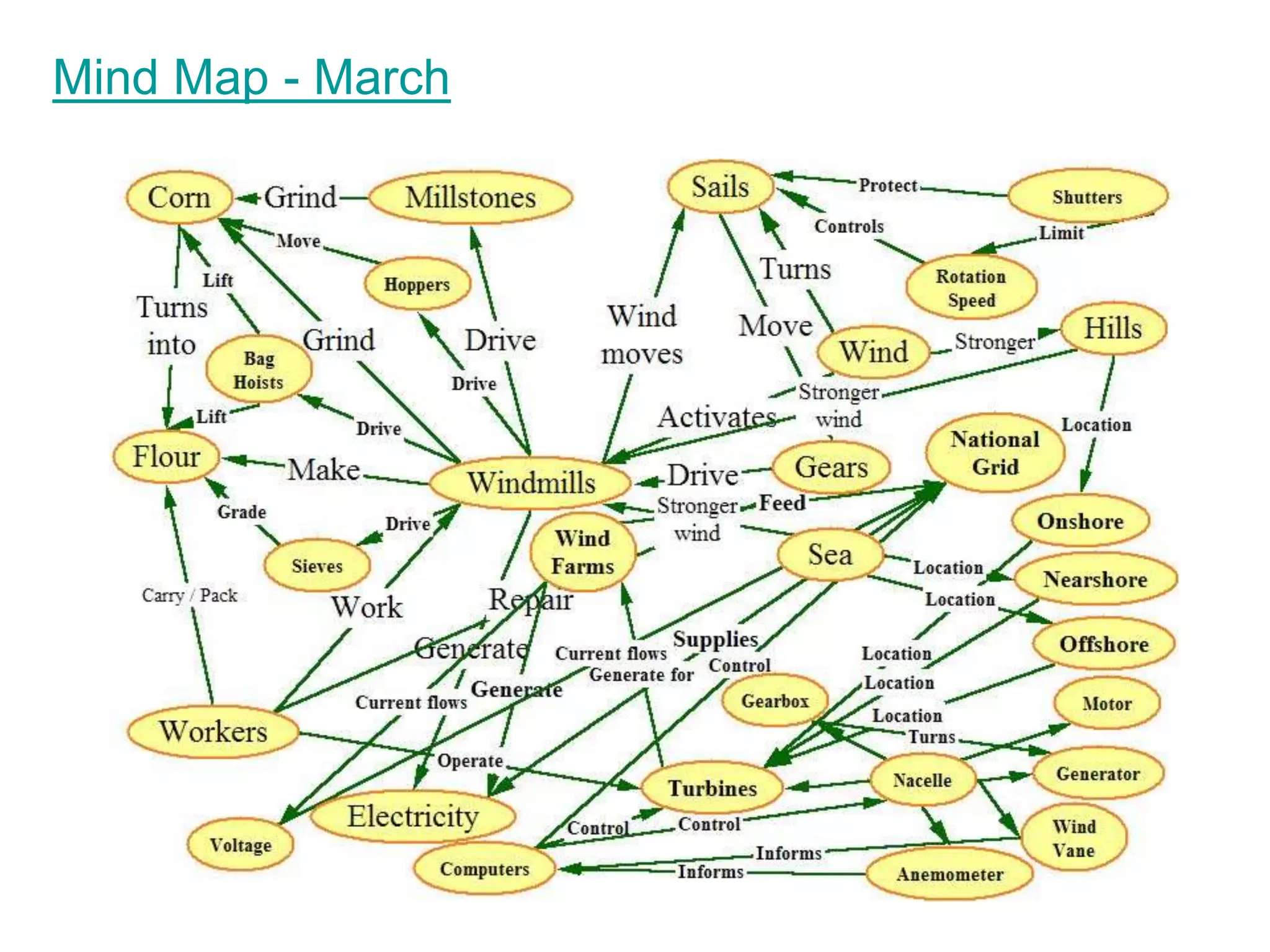
Mind Map - March
Self-Determined Learning
•   Ownership and control vested in the learner [Dignity]
•   Democratic decision making [Inclusion]
•   Provocative, engaging, and challenging computational materials;
•   Challenging learning experiences in sustained, immersive, Atelier-
    style learning environments;
•   Embedding learning in their own experiences (“objects to think
    with”);
•   A support framework that addresses each individual needs,
    interests and experiences;
•   A supportive community with a diverse range of backgrounds;
•   Adequate time to allow self directed learning to develop and
    changes to take place.
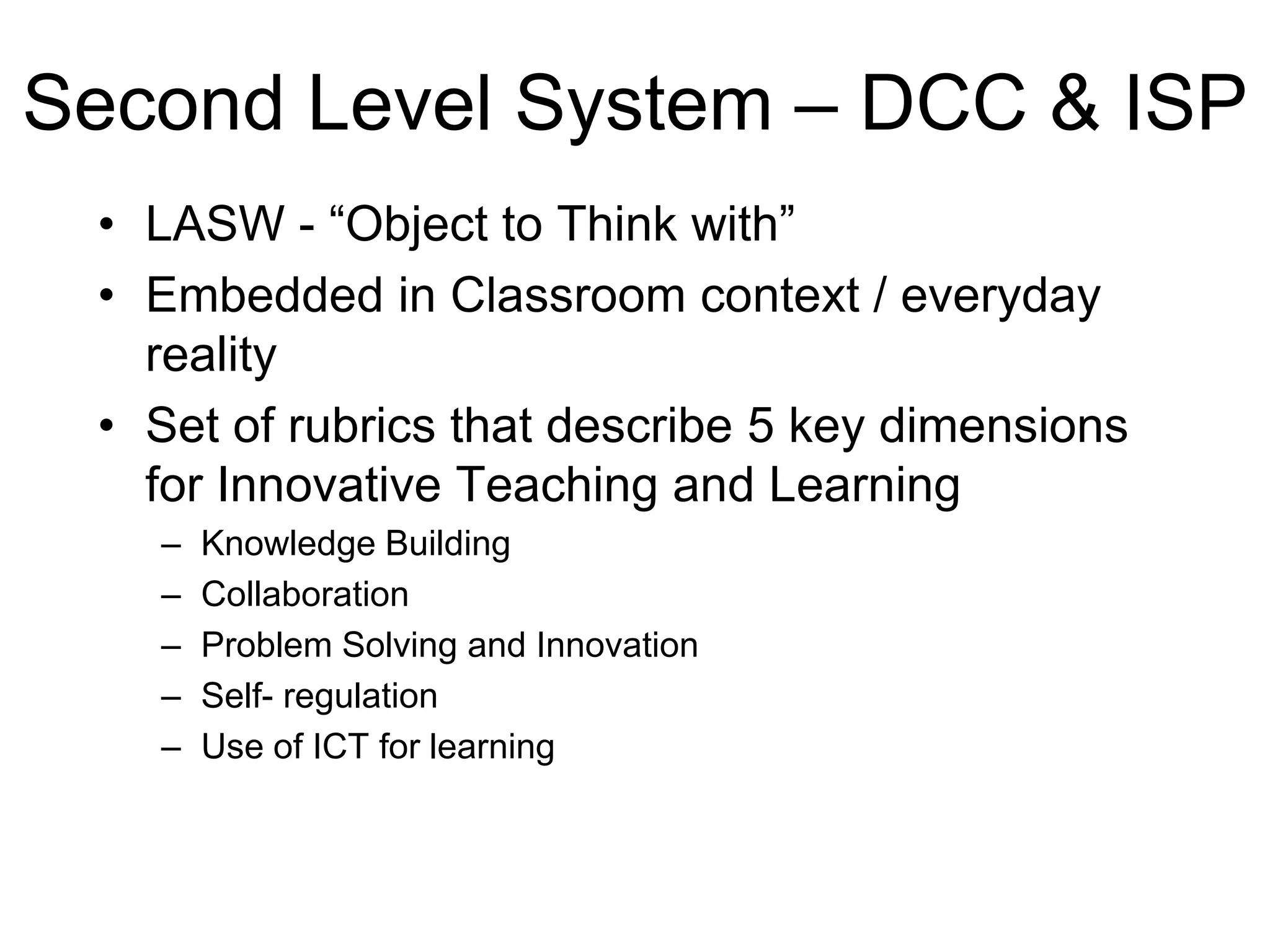
Second Level System – DCC & ISP
 • LASW - “Object to Think with”
 • Embedded in Classroom context / everyday
   reality
 • Set of rubrics that describe 5 key dimensions
   for Innovative Teaching and Learning
   –   Knowledge Building
   –   Collaboration
   –   Problem Solving and Innovation
   –   Self- regulation
   –   Use of ICT for learning
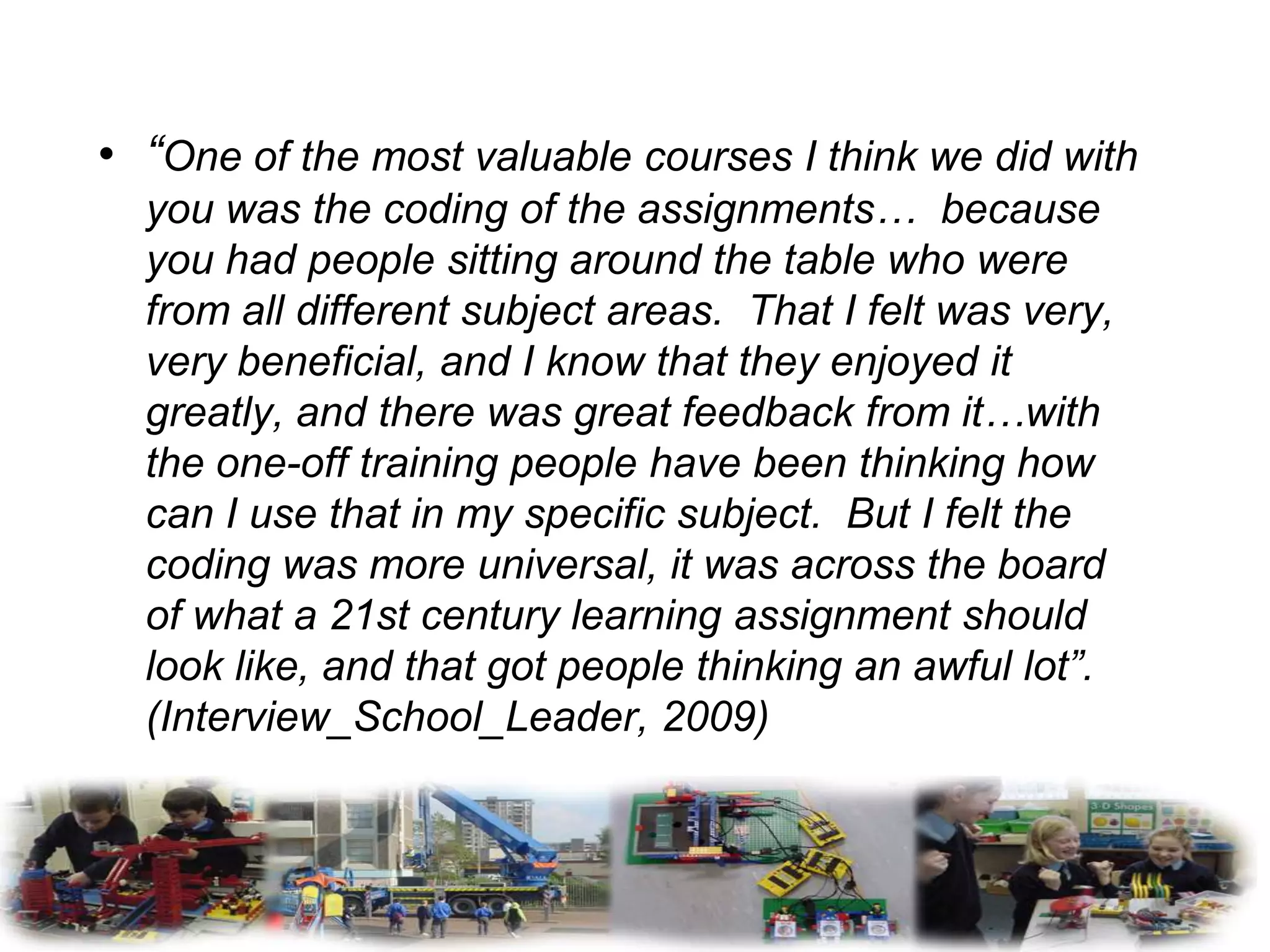
• “One of the most valuable courses I think we did with
  you was the coding of the assignments… because
  you had people sitting around the table who were
  from all different subject areas. That I felt was very,
  very beneficial, and I know that they enjoyed it
  greatly, and there was great feedback from it…with
  the one-off training people have been thinking how
  can I use that in my specific subject. But I felt the
  coding was more universal, it was across the board
  of what a 21st century learning assignment should
  look like, and that got people thinking an awful lot”.
  (Interview_School_Leader, 2009)
Digital Learning Peer Coaching
- “Object to Think with” – Classroom
  practice

- Digital Fluency
- Communication / Collaboration skills
- Deepening understandings of learning

- Sustainable / Scalable Framework
Deirdre Butler- Emerging Models of Teaching & Learning

Deirdre Butler- Emerging Models of Teaching & Learning

  • 1.
    “Fundamental change, or incremental improvement; the question is not so much which is right, but rather why has there been so little discussion about the question”?
  • 2.
    Where do yousee your school? 1 2 3 4 Incremental Improvement Fundamental Change Incremental improvement. Continual small changes to the way school might function to provide measurable improvement. Fundamental change/transformation looks very different. It is not “tweaking” at the edges; this is not doubling the length of classes or developing cross-curricular programs. Rather than build on the successes of the past, fundamental change requires a complete rethinking of the nature of school and learning from the “ground up”.
  • 4.
    Emerging Models ofTeaching & Learning Teacher Learner / Learner Teacher Deirdre Butler deirdre.butler@spd.dcu.ie
  • 5.
    Difficult Questions • Whatkind of future do we want to create? • What kind of people do we wish to nurture? • What are the values we want to live by? • How can digital technologies help this happen?
  • 6.
    Digital Natives /Digital Immigrants Marc Prensky, Digital Natives, Digital Immigrants, From On the Horizon (NCB University Press, Vol. 9 No. 5, October 2001)
  • 7.
    Schools & TheKnowledge Economy • In an economy driven by knowledge rather than manufacturing, employers are already valuing very different skills, such as creativity, communication, presentation skills and team- building. Schools are at the front line of this change and need to think about how they can prepare young people for the future workplace. (Their Space: Education for a digital generation, Demos, Hannah Green & Celia Hannon, 2007,p.15)
  • 8.
    The illiterate ofthe 21st century will not be those who cannot read or write but those who cannot learn, unlearn and relearn.” (Alvin Toffler) “We must be the change we want to see in the world.” (Gandhi)
  • 9.
  • 11.
    We need toempower learners to use and shape the world with these “convivial tools” (Illich, 1974), rather than be shaped by them. Vygotskian principle - that changes in tools will bring about changes in thinking, and that these changes in turn are associated with changes in culture. “untilrecently the narrowness of range of the possible doings severely restricted the implementation of the idea. The educational vocation of the new technology is to remove these restrictions” and enable “a restructuring of knowledge itself” (Papert, 1991, p.22).
  • 12.
    Invest in peopleas much as PCs ? • In order to see change across the system, there needs to be a shift in thinking about investment from hardware towards relationships and networks. In the last ten years we have seen a staggering change in the amount of hardware in schools, but it has not had a significant impact on teaching and learning styles. (Demos p.16)
  • 13.
    Re-imagining schools • Shiftin kinds of investment - People & PCs • Shift in the kinds of skills, experiences and relationships that schools value
  • 14.
  • 15.
    The Learners • TheLearners’ needs, interests and experiences are at the forefront of the learning experience • Control / ownership vested in the Learner • The Learner must accept responsibility for setting their own learning goals in order to meet their interests and needs
  • 16.
    Constructed Artefact • “Objectto think with” • A means by which others can become involved in the thinking process as it develops • Iterative design process • The group dynamic is important as the artefact grows and learners share and reflect.
  • 17.
    Materials Challenging Addressingpersonal needs and interests Conversational Inviting contemplation and negotiation Connective Supporting personal relationships and idea that transcend traditional subject boundaries
  • 20.
    Don Quixote Narrative Context •Don Quixote – Impossible Dreamers
  • 22.
    Mind Map -September
  • 23.
    Mind Map -November
  • 24.
  • 25.
    Self-Determined Learning • Ownership and control vested in the learner [Dignity] • Democratic decision making [Inclusion] • Provocative, engaging, and challenging computational materials; • Challenging learning experiences in sustained, immersive, Atelier- style learning environments; • Embedding learning in their own experiences (“objects to think with”); • A support framework that addresses each individual needs, interests and experiences; • A supportive community with a diverse range of backgrounds; • Adequate time to allow self directed learning to develop and changes to take place.
  • 26.
    Second Level System– DCC & ISP • LASW - “Object to Think with” • Embedded in Classroom context / everyday reality • Set of rubrics that describe 5 key dimensions for Innovative Teaching and Learning – Knowledge Building – Collaboration – Problem Solving and Innovation – Self- regulation – Use of ICT for learning
  • 27.
    • “One ofthe most valuable courses I think we did with you was the coding of the assignments… because you had people sitting around the table who were from all different subject areas. That I felt was very, very beneficial, and I know that they enjoyed it greatly, and there was great feedback from it…with the one-off training people have been thinking how can I use that in my specific subject. But I felt the coding was more universal, it was across the board of what a 21st century learning assignment should look like, and that got people thinking an awful lot”. (Interview_School_Leader, 2009)
  • 28.
    Digital Learning PeerCoaching - “Object to Think with” – Classroom practice - Digital Fluency - Communication / Collaboration skills - Deepening understandings of learning - Sustainable / Scalable Framework

Editor's Notes

  • #3 Such a concept has its ultimate manifestation in W. Edwards Deming’s constant improvement philosophy which became the foundation for much of the quality movement in manufacturing around the world. The parallel to what we look to as incremental improvement in our schools pales by comparison; but many schools have a mission to seek to improve incrementally, building on the successes of their pasthttp://www.deming.org/theman/articles/articles_50influenced02.html
  • #10 Body / Mind / Soul inextricably linked – no beginning and no end
  • #11 For example, if we believe that the learner constructs knowledge and that each individual is an active maker of their own meanings, then we need to empower learners to use and shape the world with these “convivial tools”, rather than be shaped by them (Illich, 1974). We need to ask what these new tools will enable us to do, and what is worth doing? So we can’t consider the question of how digital technologies are to be used in education in isolation, but we must view it according to our definition of the nature of knowledge and the nature of knowing. Concepts of learning and our understandings of knowledge are linked. We cannot possibly have a view of learning without also implying a view of knowledge.