Magical Realism in Literature
 Is a literary genre in which realistic narrative is combined with
surreal elements.
 (Surreal – Adj. : Very Strange and Unusual; Having the quality of
dream)
 In it, the magic elements are a natural part of the world
Magical realism
 “Magic”
 The magic in the story is often strange (it doesn’t seem to fit in with the
world as we know it) but it is accepted in the story.
 The magic is seamlessly integrated with the real world
 “Real”
 Stories take place in a realistic setting. (the story is based in the ‘real
world’ rather than the fantasy land )
 Aside from the magical part, the plot is realistic and believable.
 Characters are also realistic and deal with everyday issues.
The ‘Magic’ and ‘Real’ Part
 Magical realism takes place in the realistic setting, in regards to
time and place, rather than a fantasy world or futuristic space.
How is it different from Science fiction or Fantasy?
Magical Realism is a Style
 There is a poetic nature to the prose
 There is magical element in the plot but in the writing too
 Coined by German art critic, Franz Roh to describe art.
 In the Mid-20th C., became commonly associated with the Latin American writers
and literature
 Gabriel Garcia Marquez, Columbia, 1927
 Jorge Luis Borges, Argentina, 1899-1986
 Gunter Grass, Germany, 1927
 Salman Rushdie India, 1947
History & Prominent Writers
 He lived in Aracataca, Colombia, a banana town by the Caribbean.
 His grandparents were his most important relatives, and influenced him and his
writing later on.
 His grandfather was a general, a hero and a great story teller.
 His grandmother was very superstitious. She filled the house with stories of ghosts
and premonitions.
Gabriel Garcia Marquez
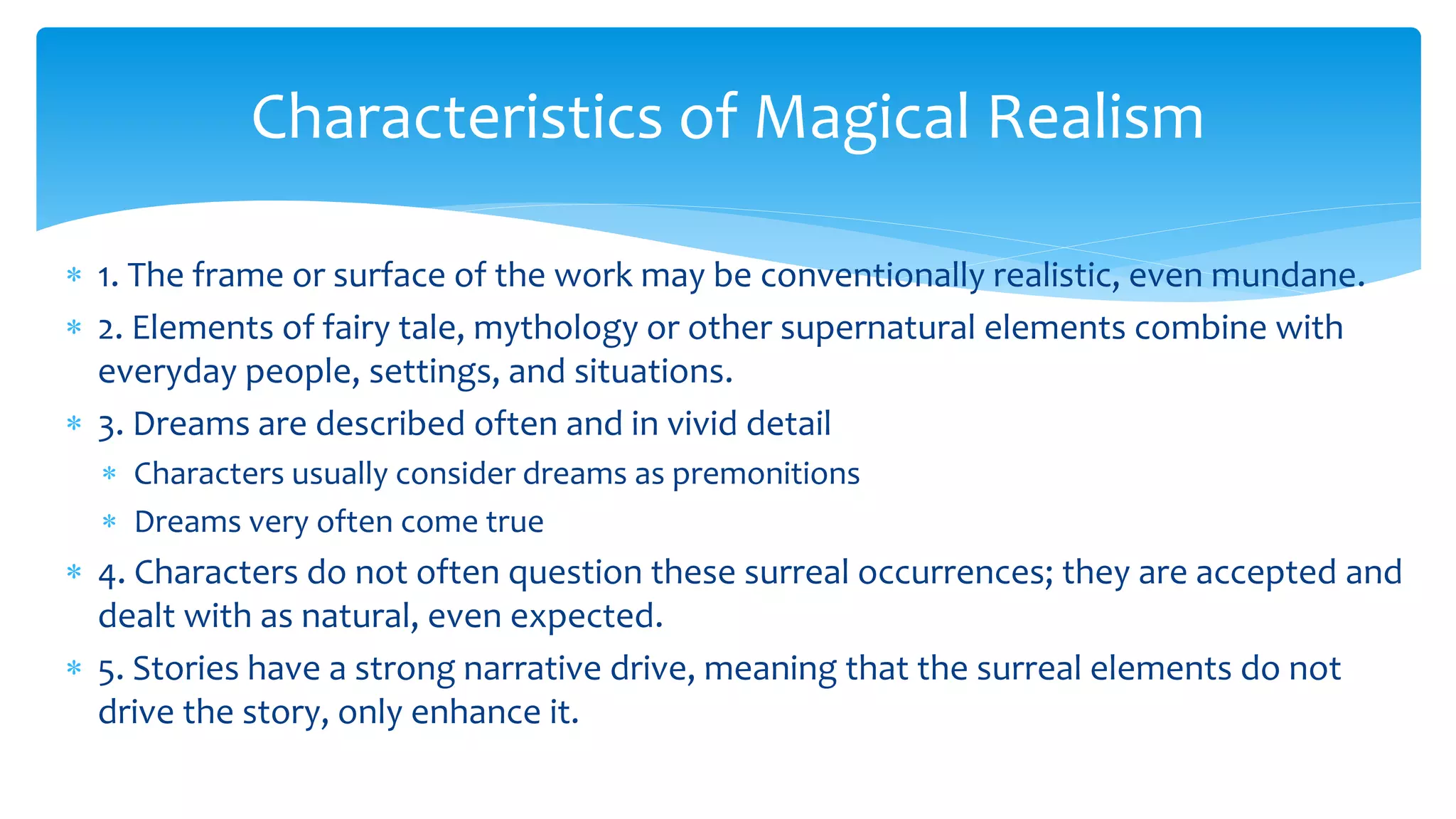
 1. The frame or surface of the work may be conventionally realistic, even mundane.
 2. Elements of fairy tale, mythology or other supernatural elements combine with
everyday people, settings, and situations.
 3. Dreams are described often and in vivid detail
 Characters usually consider dreams as premonitions
 Dreams very often come true
 4. Characters do not often question these surreal occurrences; they are accepted and
dealt with as natural, even expected.
 5. Stories have a strong narrative drive, meaning that the surreal elements do not
drive the story, only enhance it.
Characteristics of Magical Realism
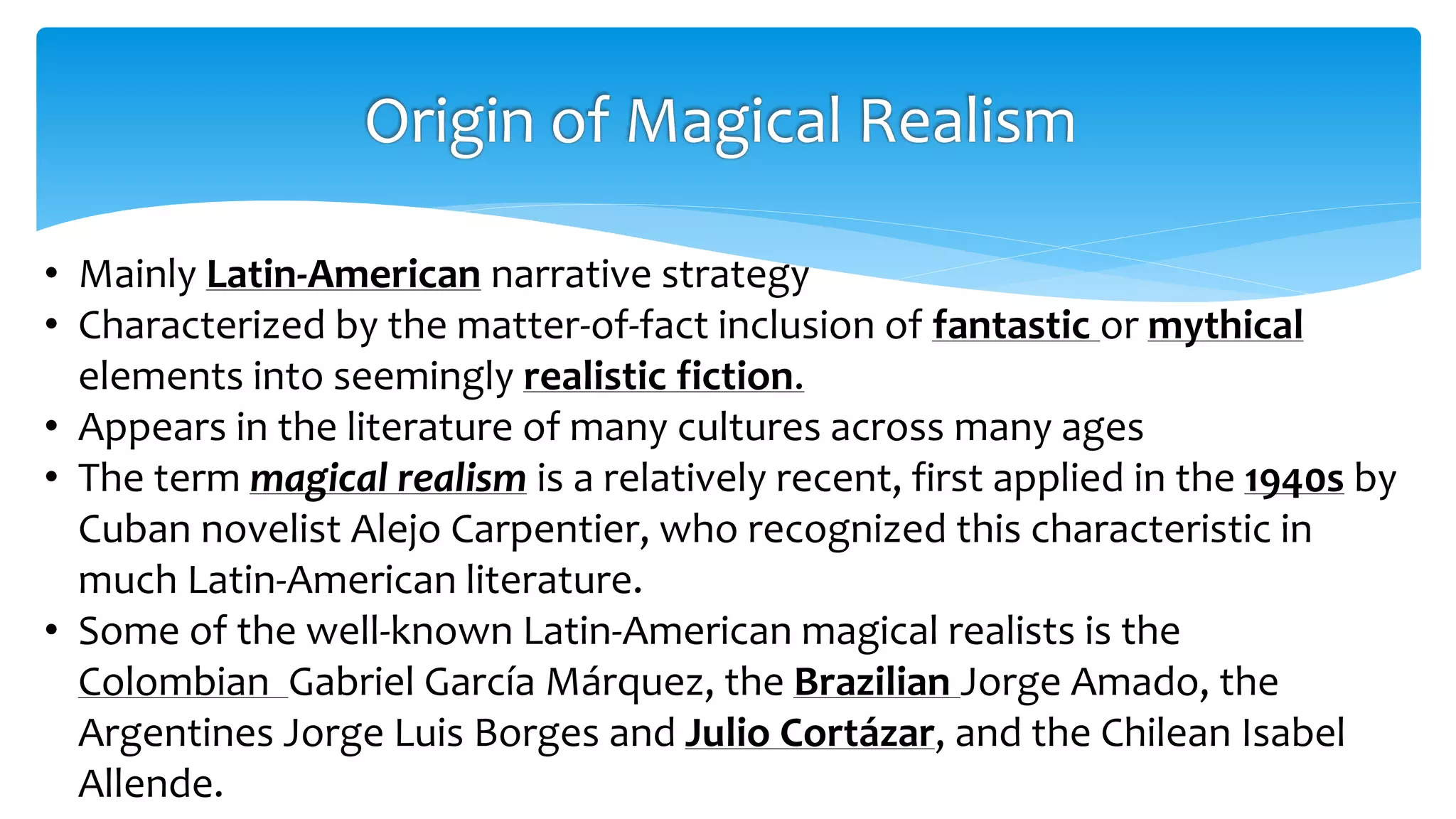
Origin of Magical Realism
• Mainly Latin-American narrative strategy
• Characterized by the matter-of-fact inclusion of fantastic or mythical
elements into seemingly realistic fiction.
• Appears in the literature of many cultures across many ages
• The term magical realism is a relatively recent, first applied in the 1940s by
Cuban novelist Alejo Carpentier, who recognized this characteristic in
much Latin-American literature.
• Some of the well-known Latin-American magical realists is the
Colombian Gabriel García Márquez, the Brazilian Jorge Amado, the
Argentines Jorge Luis Borges and Julio Cortázar, and the Chilean Isabel
Allende.
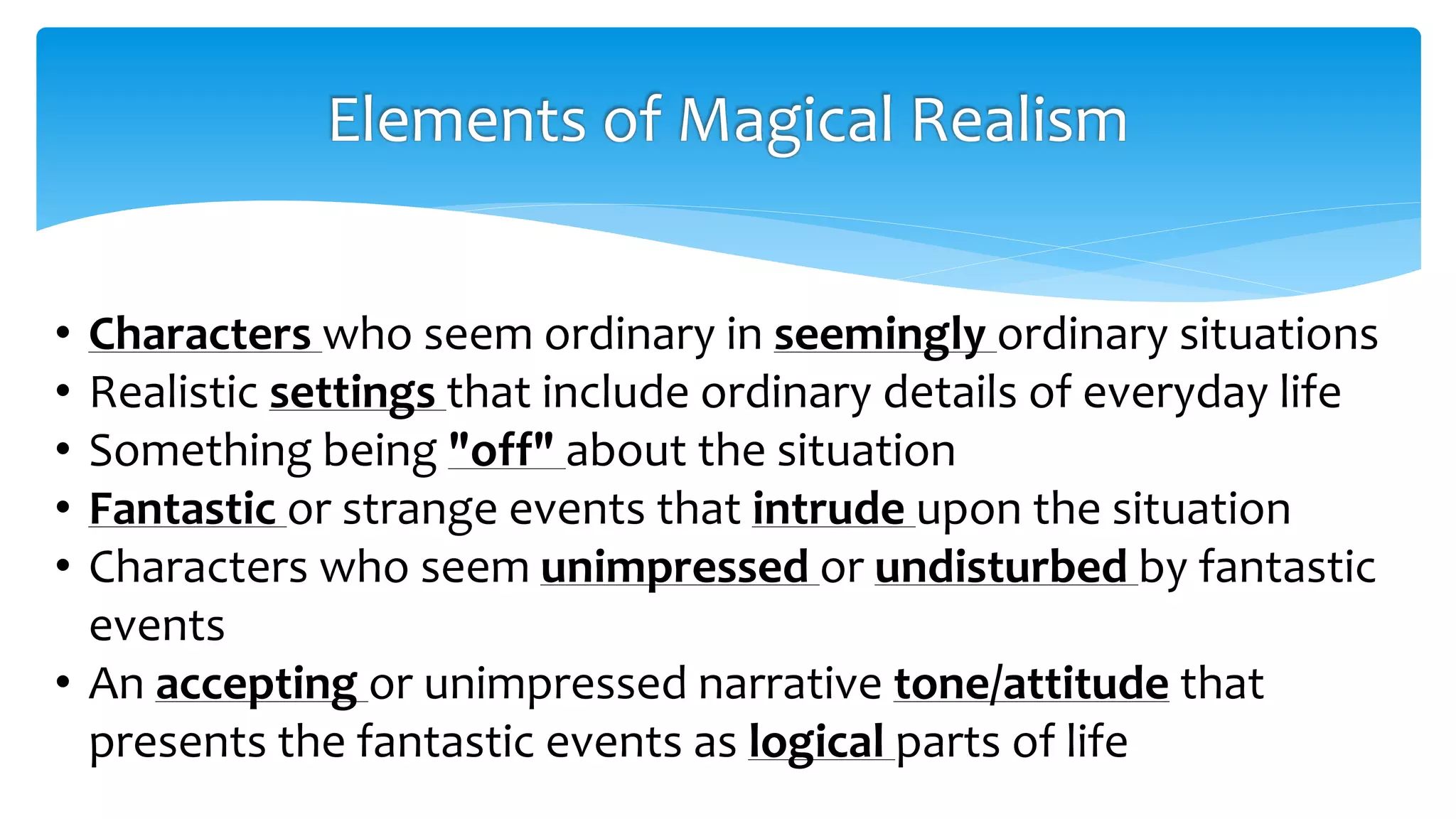
Elements of Magical Realism
• Characters who seem ordinary in seemingly ordinary situations
• Realistic settings that include ordinary details of everyday life
• Something being "off" about the situation
• Fantastic or strange events that intrude upon the situation
• Characters who seem unimpressed or undisturbed by fantastic
events
• An accepting or unimpressed narrative tone/attitude that
presents the fantastic events as logical parts of life

Magical Realism PPT.pptx

  • 1.
  • 2.
     Is aliterary genre in which realistic narrative is combined with surreal elements.  (Surreal – Adj. : Very Strange and Unusual; Having the quality of dream)  In it, the magic elements are a natural part of the world Magical realism
  • 3.
     “Magic”  Themagic in the story is often strange (it doesn’t seem to fit in with the world as we know it) but it is accepted in the story.  The magic is seamlessly integrated with the real world  “Real”  Stories take place in a realistic setting. (the story is based in the ‘real world’ rather than the fantasy land )  Aside from the magical part, the plot is realistic and believable.  Characters are also realistic and deal with everyday issues. The ‘Magic’ and ‘Real’ Part
  • 4.
     Magical realismtakes place in the realistic setting, in regards to time and place, rather than a fantasy world or futuristic space. How is it different from Science fiction or Fantasy? Magical Realism is a Style  There is a poetic nature to the prose  There is magical element in the plot but in the writing too
  • 5.
     Coined byGerman art critic, Franz Roh to describe art.  In the Mid-20th C., became commonly associated with the Latin American writers and literature  Gabriel Garcia Marquez, Columbia, 1927  Jorge Luis Borges, Argentina, 1899-1986  Gunter Grass, Germany, 1927  Salman Rushdie India, 1947 History & Prominent Writers
  • 6.
     He livedin Aracataca, Colombia, a banana town by the Caribbean.  His grandparents were his most important relatives, and influenced him and his writing later on.  His grandfather was a general, a hero and a great story teller.  His grandmother was very superstitious. She filled the house with stories of ghosts and premonitions. Gabriel Garcia Marquez
  • 7.
     1. Theframe or surface of the work may be conventionally realistic, even mundane.  2. Elements of fairy tale, mythology or other supernatural elements combine with everyday people, settings, and situations.  3. Dreams are described often and in vivid detail  Characters usually consider dreams as premonitions  Dreams very often come true  4. Characters do not often question these surreal occurrences; they are accepted and dealt with as natural, even expected.  5. Stories have a strong narrative drive, meaning that the surreal elements do not drive the story, only enhance it. Characteristics of Magical Realism
  • 9.
    Origin of MagicalRealism • Mainly Latin-American narrative strategy • Characterized by the matter-of-fact inclusion of fantastic or mythical elements into seemingly realistic fiction. • Appears in the literature of many cultures across many ages • The term magical realism is a relatively recent, first applied in the 1940s by Cuban novelist Alejo Carpentier, who recognized this characteristic in much Latin-American literature. • Some of the well-known Latin-American magical realists is the Colombian Gabriel García Márquez, the Brazilian Jorge Amado, the Argentines Jorge Luis Borges and Julio Cortázar, and the Chilean Isabel Allende.
  • 10.
    Elements of MagicalRealism • Characters who seem ordinary in seemingly ordinary situations • Realistic settings that include ordinary details of everyday life • Something being "off" about the situation • Fantastic or strange events that intrude upon the situation • Characters who seem unimpressed or undisturbed by fantastic events • An accepting or unimpressed narrative tone/attitude that presents the fantastic events as logical parts of life