Shri. Shamrao Patil (Yadravkar) Educational & Charitable Trust’s
Sharad Institute of Technology, College of Engineering Yadrav- (Ichalkaranji)
(Approved by AICTE, New Delhi, Recognized by Government of Maharashtra & Affiliated to DBATU, Lonere)
Accredited by NAAC ‘A’ Grade and NBA, ISO 9001:2015 Certified Institute
Recognized u/s 2(f) and 12(B) of the UGC Act 1956
An Autonomous Institute
Machining Processes: Milling,
Broaching and Gear
Manufacturing
Mr. S M Ghanvat
ME (CAD/CAM/CAE)
Assistant Professor
Mechanical Department
Introduction
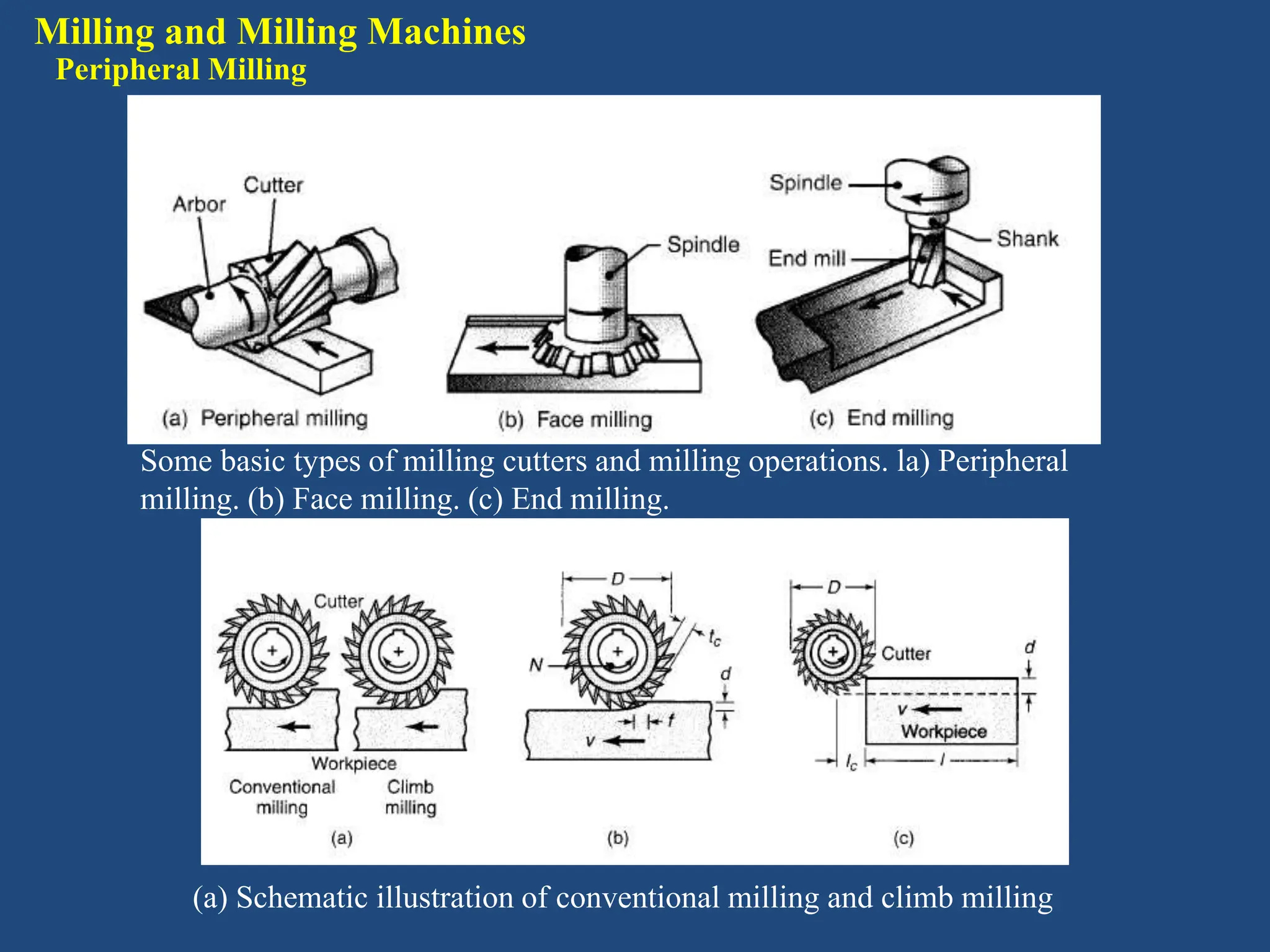
Milling and Milling Machines
Peripheral Milling
Some basic types of milling cutters and milling operations. la) Peripheral
milling. (b) Face milling. (c) End milling.
(a) Schematic illustration of conventional milling and climb milling
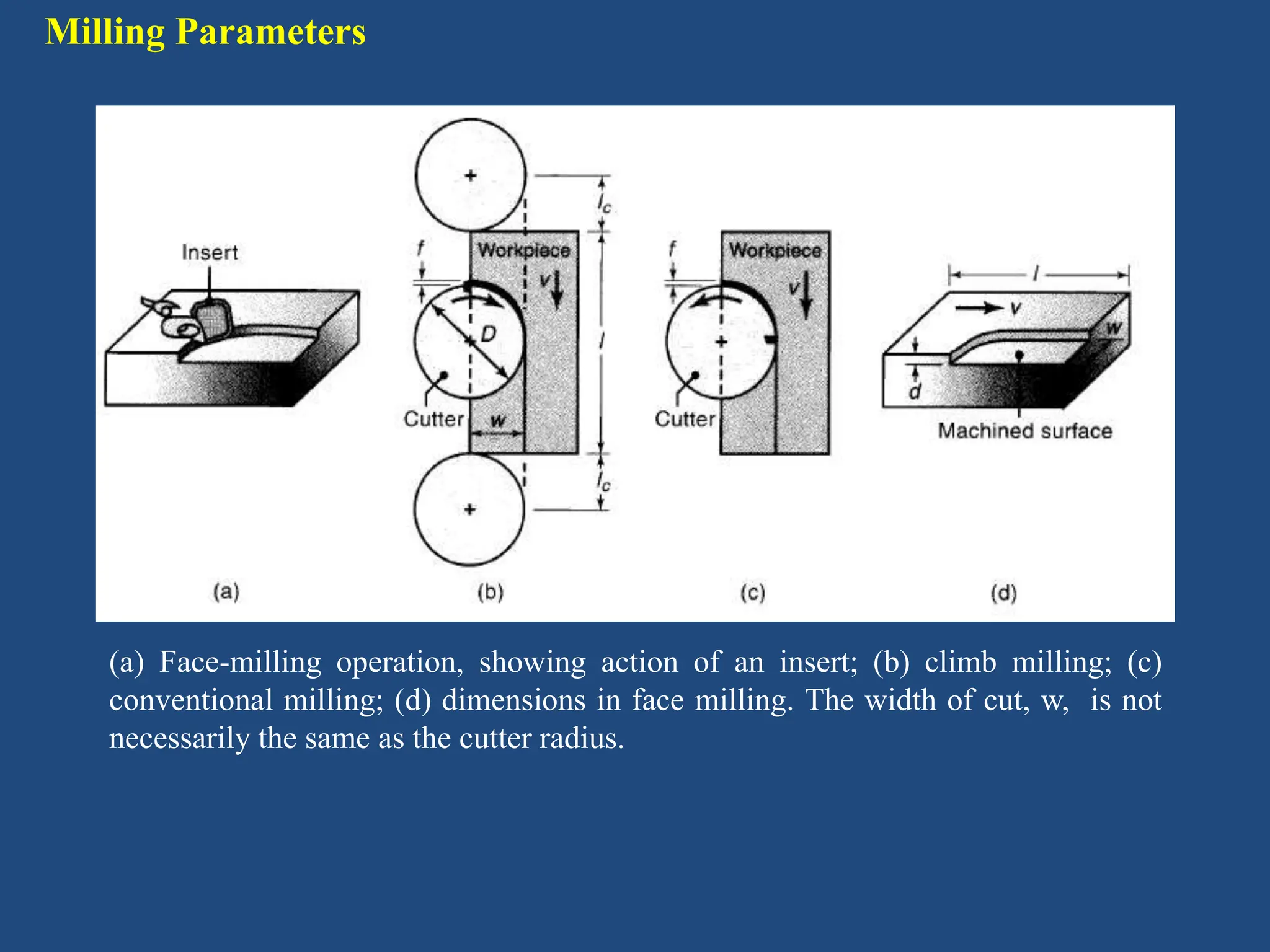
Milling Parameters
(a) Face-milling operation, showing action of an insert; (b) climb milling; (c)
conventional milling; (d) dimensions in face milling. The width of cut, w, is not
necessarily the same as the cutter radius.
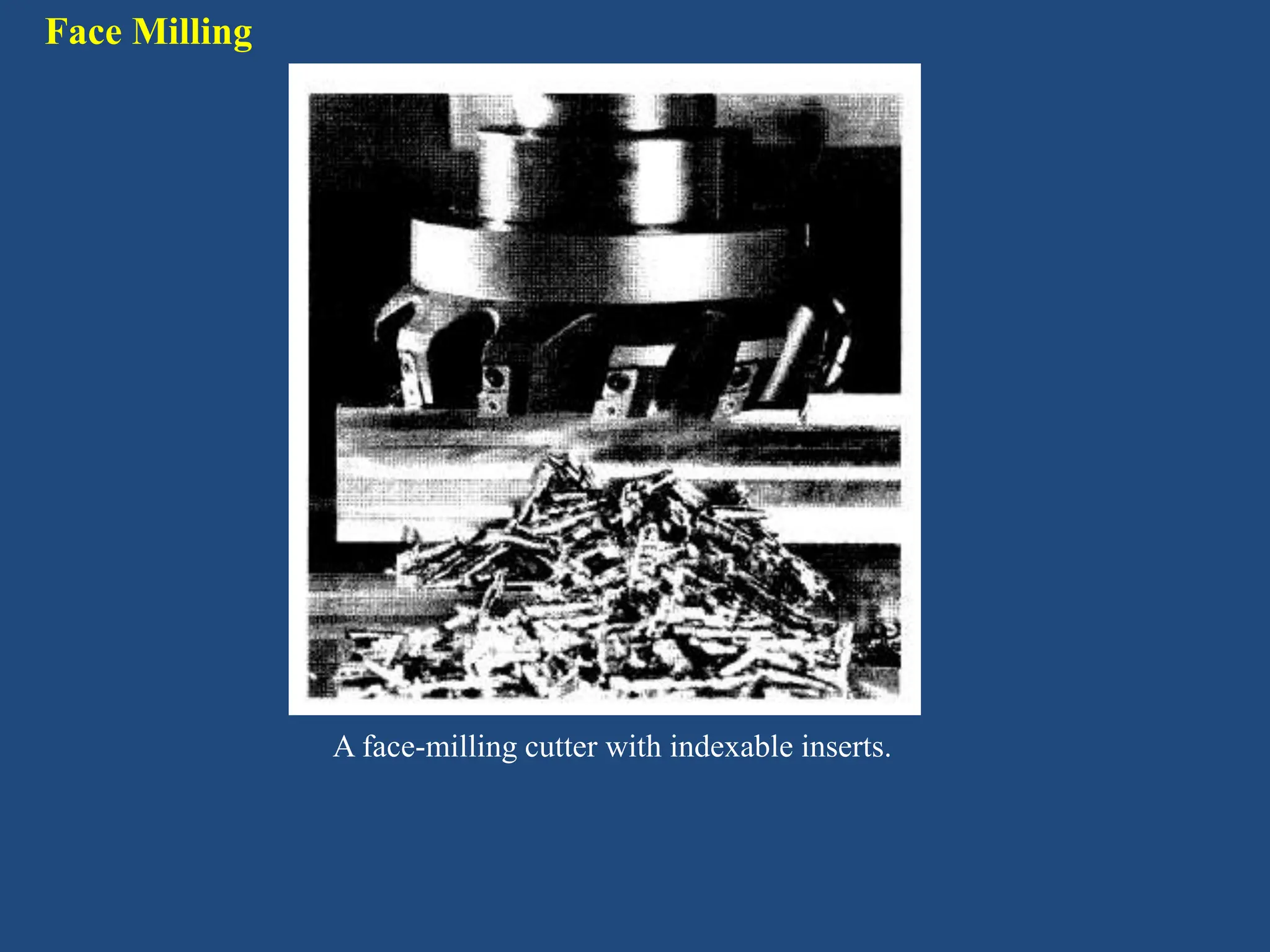
Face Milling
A face-milling cutter with indexable inserts.
Schematic illustration of the effect of insert shape on feed marks on a face milled surface: (a)
small corner radius, (b) corner flat on insert, and (C) Wiper, consisting of a small radius
followed by a large radius, resulting in smoother feed marks. id) Feed marks due to various
insert shapes.
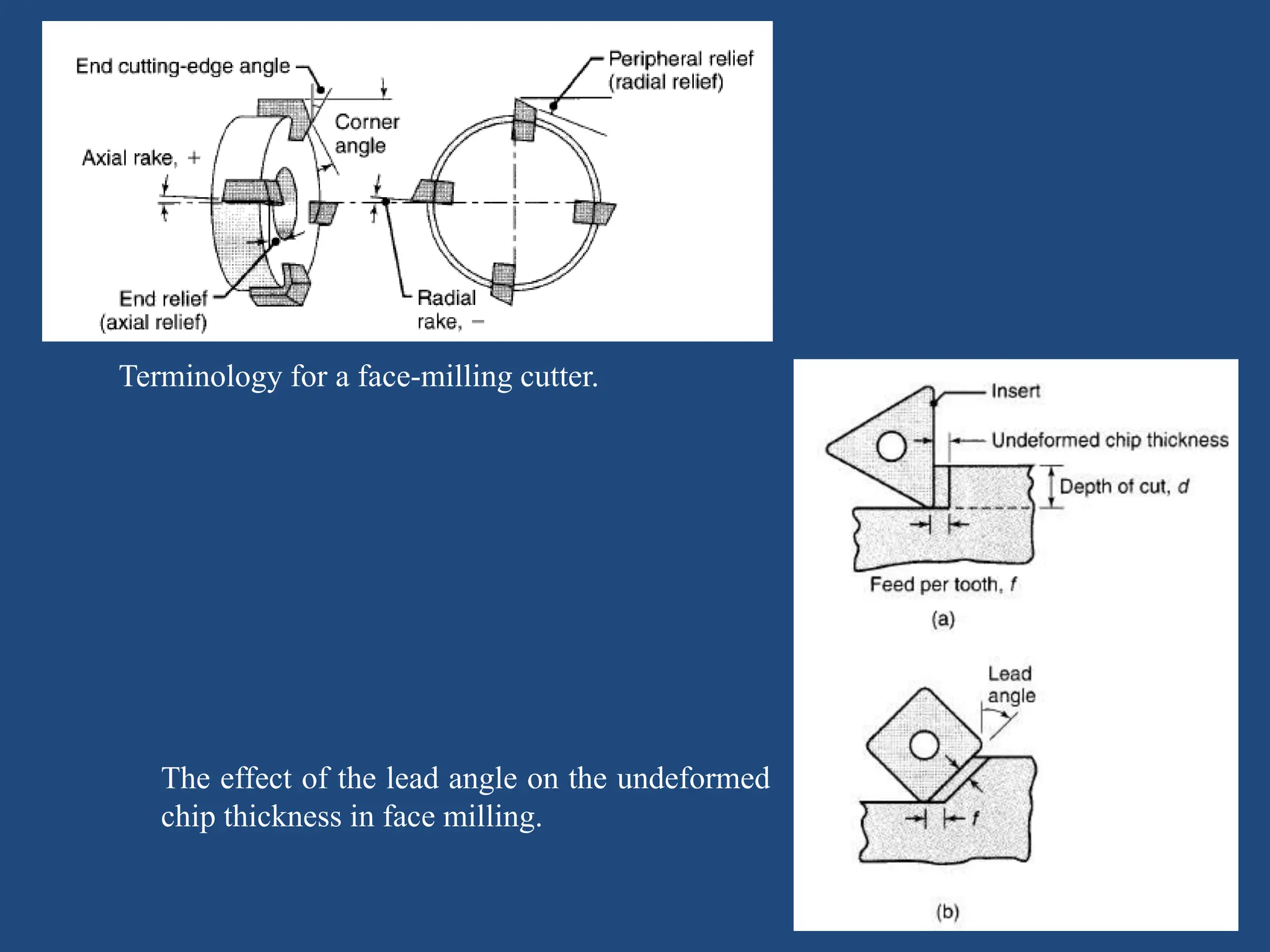
Terminology for a face-milling cutter.
The effect of the lead angle on the undeformed
chip thickness in face milling.
End Milling
Ball nose end mills
Other Milling Operations and Milling Cutters
Cutters for (a) straddle milling, (b) form milling, (c)
slotting, and (d) slitting with a milling cutter.
(a) T-slot cutting with a milling cutter. (b) A shell mill
Toolholders
Milling Process Capabilities
Design and Operating Guidelines for Milling
Milling Machines
Schematic illustration of (al a horizontal-spindle column-and-knee-type milling machine
and (b) vertical-spindle column-and-knee-type milling machine.
Schematic illustration of a bed-type milling machine.
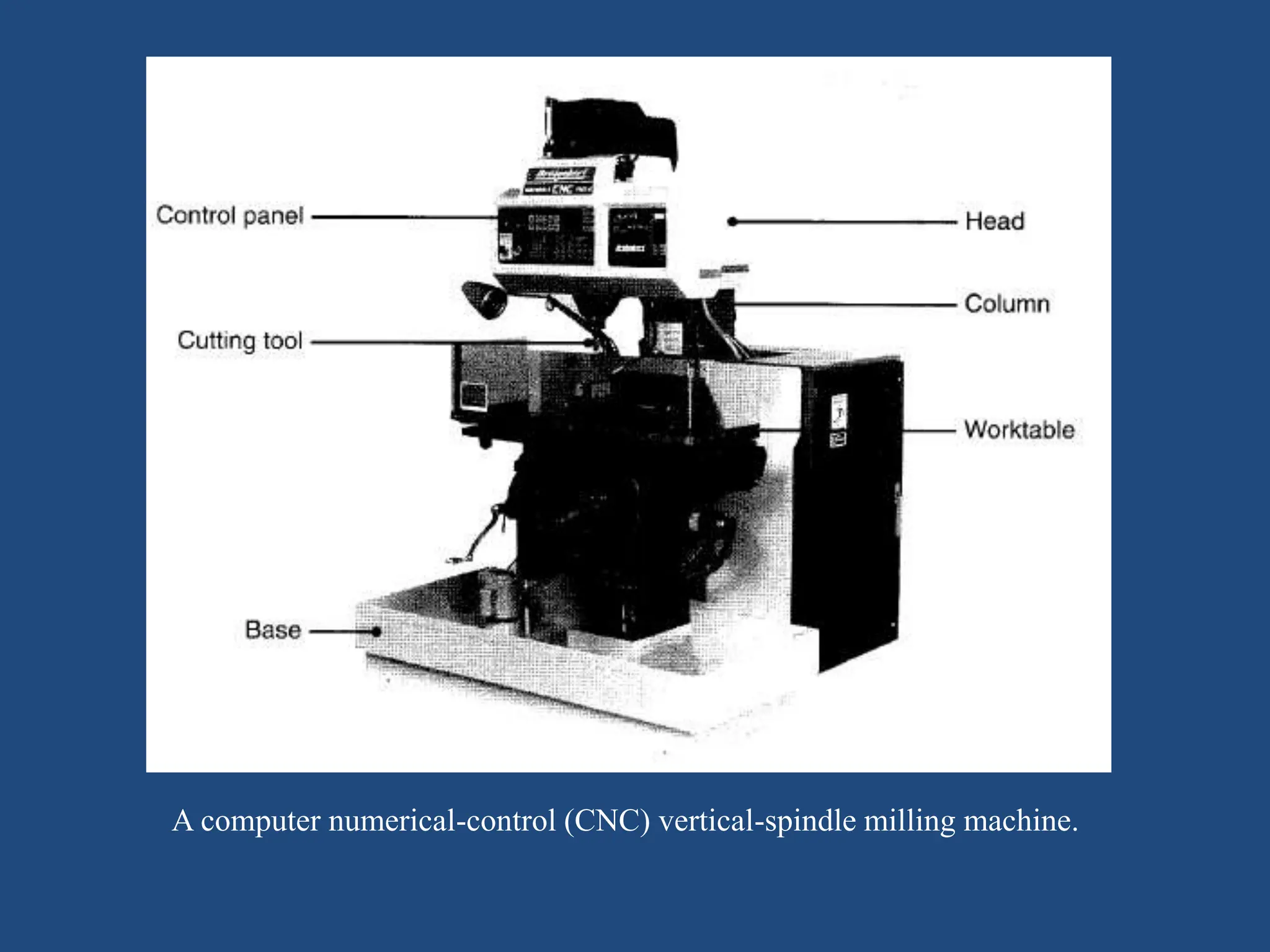
A computer numerical-control (CNC) vertical-spindle milling machine.
Planing and Shaping
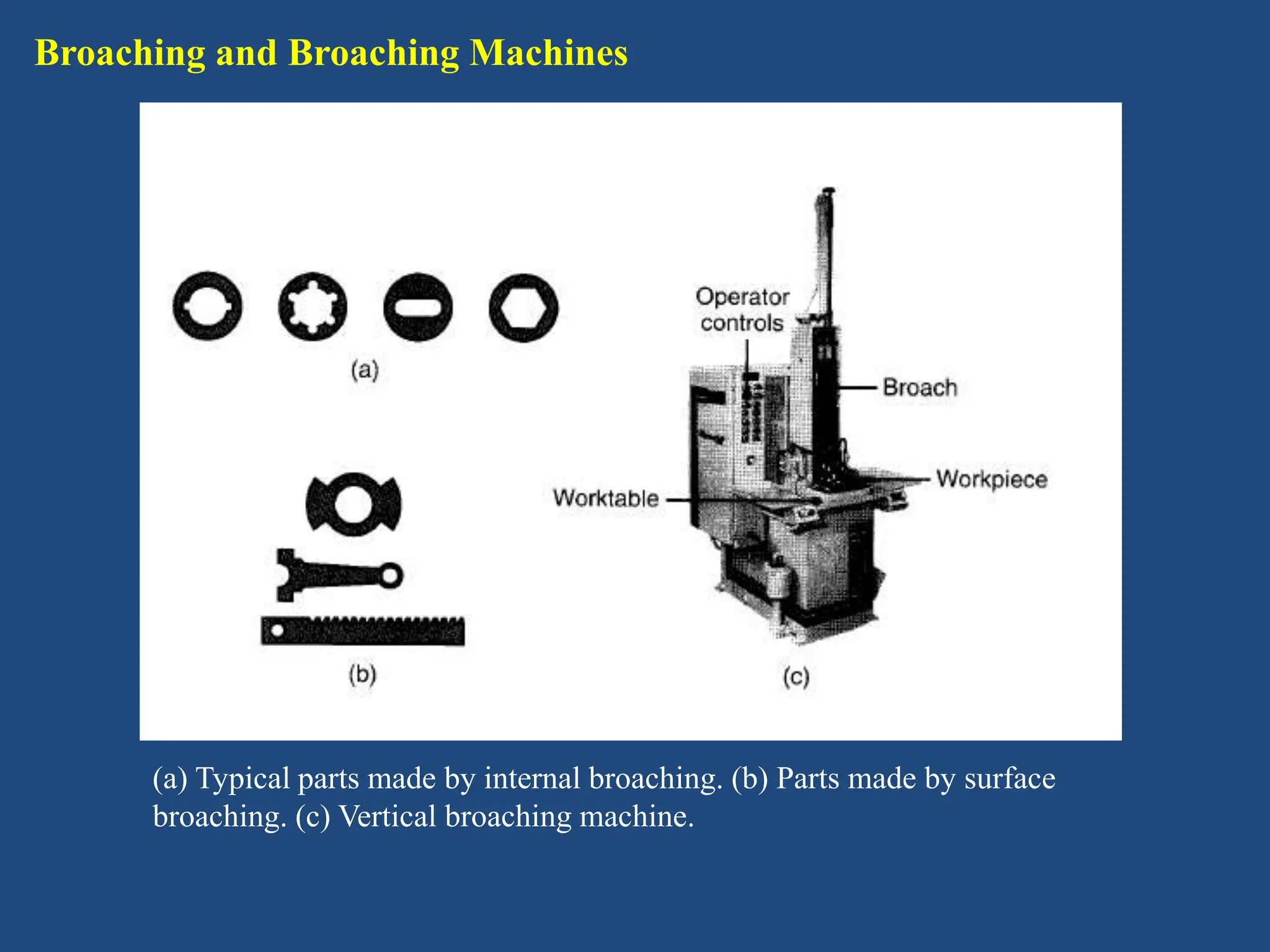
Broaching and Broaching Machines
(a) Typical parts made by internal broaching. (b) Parts made by surface
broaching. (c) Vertical broaching machine.
Gear Manufacturing by Machining
Nomenclature for an involute spur gear.
Form Cutting
(a) Producing gear teeth on a blank by form cutting. (b) Schematic illustration of gear
generating with a pinion-shaped gear cutter. (c) and (d) Gear generating in a gear shaper
using a pinion-shaped cutter. (e) Gear generating with rack-shaped cutter
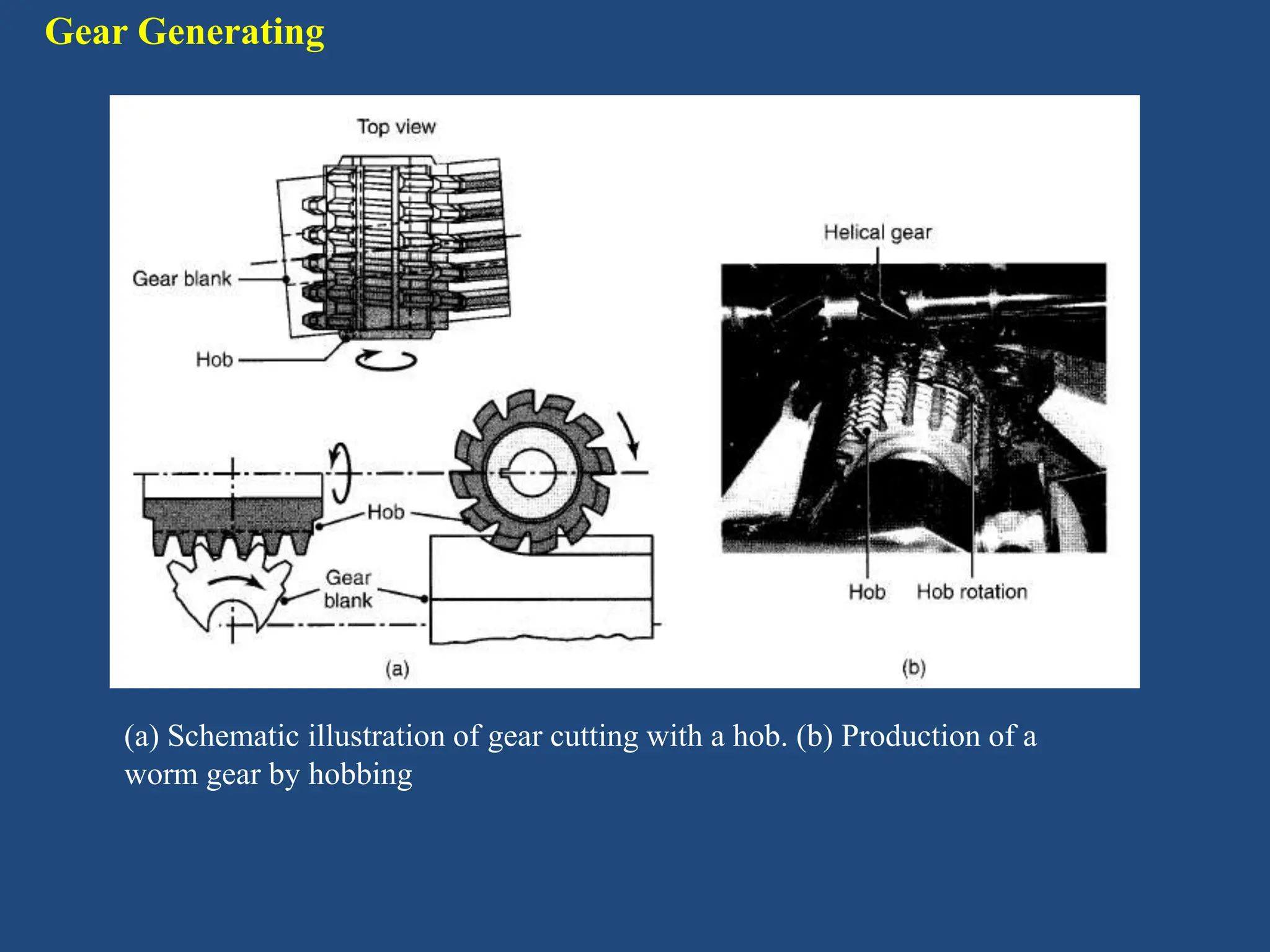
Gear Generating
(a) Schematic illustration of gear cutting with a hob. (b) Production of a
worm gear by hobbing
Cutting Bevel Gears
(a) Cutting a straight bevel-gear blank with two cutters. (b) Cutting a helical
bevel gear.
Gear-finishing Processes
Finishing gears by grinding: (a) form grinding with shaped grinding
Wheels; (b) grinding by generating, using two Wheels.
Design Considerations and Economics of Gear Machining
Gear manufacturing cost as a function of gear quality. The
numbers along the vertical lines indicate tolerances.

Machining Processes- Milling, Broaching and Gear Manufacturing.ppt

  • 1.
    Shri. Shamrao Patil(Yadravkar) Educational & Charitable Trust’s Sharad Institute of Technology, College of Engineering Yadrav- (Ichalkaranji) (Approved by AICTE, New Delhi, Recognized by Government of Maharashtra & Affiliated to DBATU, Lonere) Accredited by NAAC ‘A’ Grade and NBA, ISO 9001:2015 Certified Institute Recognized u/s 2(f) and 12(B) of the UGC Act 1956 An Autonomous Institute Machining Processes: Milling, Broaching and Gear Manufacturing Mr. S M Ghanvat ME (CAD/CAM/CAE) Assistant Professor Mechanical Department
  • 2.
  • 3.
    Milling and MillingMachines Peripheral Milling Some basic types of milling cutters and milling operations. la) Peripheral milling. (b) Face milling. (c) End milling. (a) Schematic illustration of conventional milling and climb milling
  • 4.
    Milling Parameters (a) Face-millingoperation, showing action of an insert; (b) climb milling; (c) conventional milling; (d) dimensions in face milling. The width of cut, w, is not necessarily the same as the cutter radius.
  • 6.
    Face Milling A face-millingcutter with indexable inserts.
  • 7.
    Schematic illustration ofthe effect of insert shape on feed marks on a face milled surface: (a) small corner radius, (b) corner flat on insert, and (C) Wiper, consisting of a small radius followed by a large radius, resulting in smoother feed marks. id) Feed marks due to various insert shapes.
  • 8.
    Terminology for aface-milling cutter. The effect of the lead angle on the undeformed chip thickness in face milling.
  • 9.
  • 10.
    Other Milling Operationsand Milling Cutters Cutters for (a) straddle milling, (b) form milling, (c) slotting, and (d) slitting with a milling cutter.
  • 11.
    (a) T-slot cuttingwith a milling cutter. (b) A shell mill
  • 12.
  • 14.
    Design and OperatingGuidelines for Milling
  • 15.
    Milling Machines Schematic illustrationof (al a horizontal-spindle column-and-knee-type milling machine and (b) vertical-spindle column-and-knee-type milling machine.
  • 16.
    Schematic illustration ofa bed-type milling machine.
  • 17.
    A computer numerical-control(CNC) vertical-spindle milling machine.
  • 18.
  • 19.
    Broaching and BroachingMachines (a) Typical parts made by internal broaching. (b) Parts made by surface broaching. (c) Vertical broaching machine.
  • 20.
    Gear Manufacturing byMachining Nomenclature for an involute spur gear.
  • 21.
    Form Cutting (a) Producinggear teeth on a blank by form cutting. (b) Schematic illustration of gear generating with a pinion-shaped gear cutter. (c) and (d) Gear generating in a gear shaper using a pinion-shaped cutter. (e) Gear generating with rack-shaped cutter
  • 22.
    Gear Generating (a) Schematicillustration of gear cutting with a hob. (b) Production of a worm gear by hobbing
  • 23.
    Cutting Bevel Gears (a)Cutting a straight bevel-gear blank with two cutters. (b) Cutting a helical bevel gear.
  • 24.
    Gear-finishing Processes Finishing gearsby grinding: (a) form grinding with shaped grinding Wheels; (b) grinding by generating, using two Wheels.
  • 25.
    Design Considerations andEconomics of Gear Machining Gear manufacturing cost as a function of gear quality. The numbers along the vertical lines indicate tolerances.