
















Machine Learning
Bayram Annakov, Empatika Open
Types of ML
Supervised
machine learning
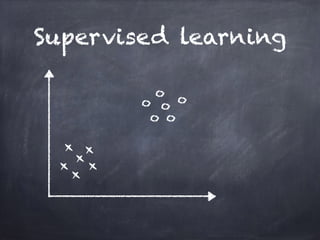
Supervised learning
x
o
x
xx
x
x
o
o
o
o
o
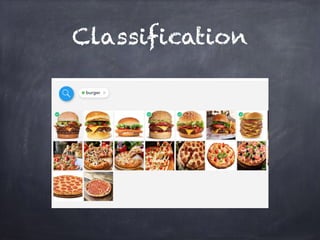
Classification
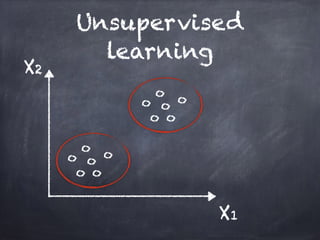
Unsupervised
learning
Unsupervised
learning
o
o
o
o
o
o
o
o
o
o
o
o
X1
X2
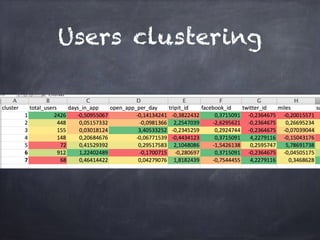
Users clustering
Process
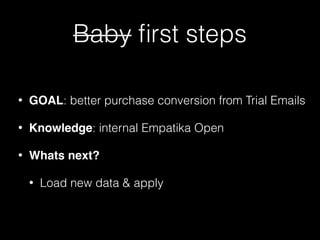
Baby first steps
• GOAL: better purchase conversion from Trial Emails
• Knowledge: internal Empatika Open
• Whats next?
• Load new data & apply
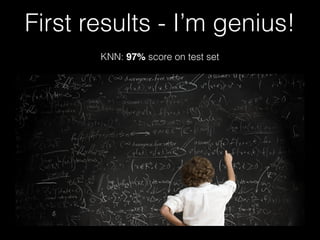
First results - I’m genius!
KNN: 97% score on test set
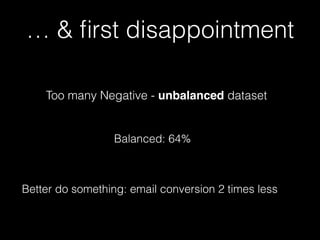
… & first disappointment
Too many Negative - unbalanced dataset
Balanced: 64%
Better do something: email conversion 2 times less
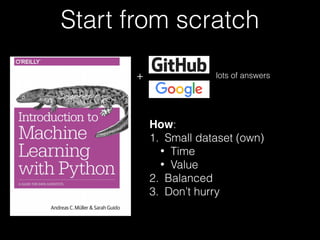
Start from scratch
+
How:
1. Small dataset (own)
• Time
• Value
2. Balanced
3. Don’t hurry
lots of answers
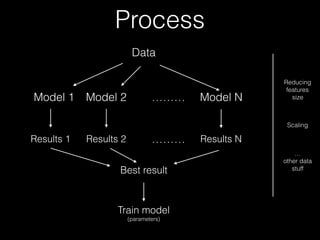
Process
Data
Model 1 Model 2 Model N………
Results 1 Results 2 Results N
Reducing
features
size
Scaling
…
other data
stuffBest result
Train model
(parameters)
………
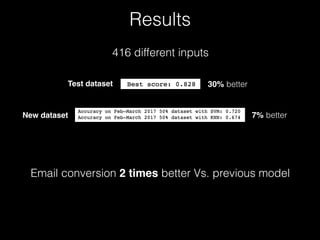
Results
Test dataset
New dataset
30% better
7% better
Email conversion 2 times better Vs. previous model
416 different inputs
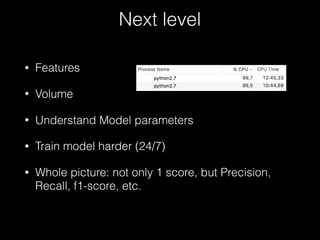
Next level
• Features
• Volume
• Understand Model parameters
• Train model harder (24/7)
• Whole picture: not only 1 score, but Precision,
Recall, f1-score, etc.
Lessons & Knowledge source
• Think about features (valuable VS lots VS less) balance
• Models are sensitive to different data
• Model tuning is important, but long road
• Sources:
• O’REILLY: Introduction to Machine Learning with Python
• scikit-learn.org
• Github
Be patient
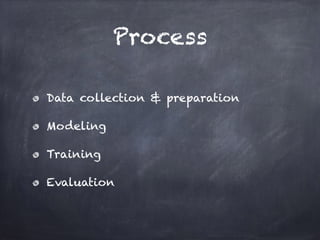
Process
Data collection & preparation
Modeling
Training
Evaluation
Data preparation!!!
Tasks
Images
classification
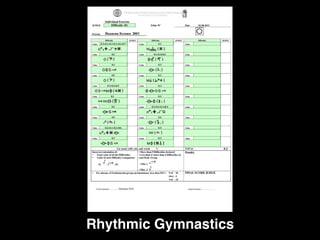
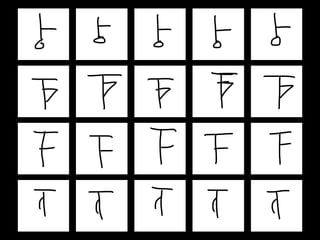
Rhythmic Gymnastics
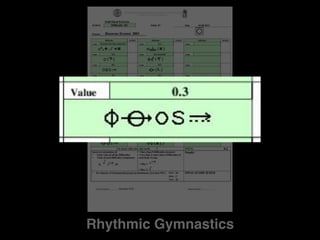
Rhythmic Gymnastics
Approach
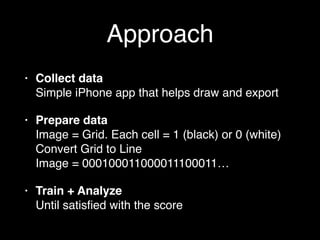
• Collect data

Simple iPhone app that helps draw and export
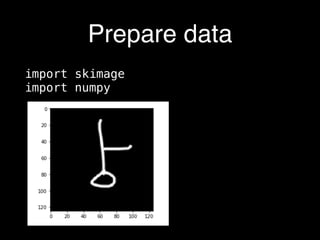
• Prepare data

Image = Grid. Each cell = 1 (black) or 0 (white)

Convert Grid to Line

Image = 000100011000011100011…
• Train + Analyze

Until satisfied with the score
Prepare data
import skimage

import numpy
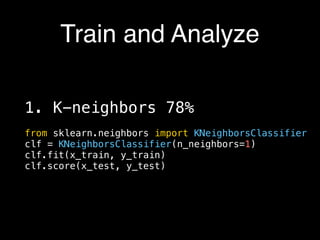
Train and Analyze
1. K-neighbors 78%
from sklearn.neighbors import KNeighborsClassifier
clf = KNeighborsClassifier(n_neighbors=1)
clf.fit(x_train, y_train)
clf.score(x_test, y_test)
Train and Analyze
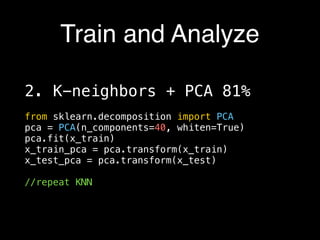
2. K-neighbors + PCA 81%
from sklearn.decomposition import PCA
pca = PCA(n_components=40, whiten=True)
pca.fit(x_train)
x_train_pca = pca.transform(x_train)
x_test_pca = pca.transform(x_test)
//repeat KNN
May be someone has
already solved it?
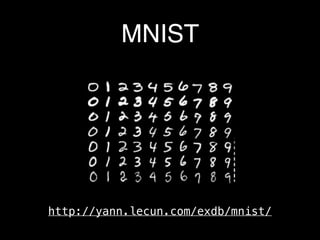
MNIST
http://yann.lecun.com/exdb/mnist/
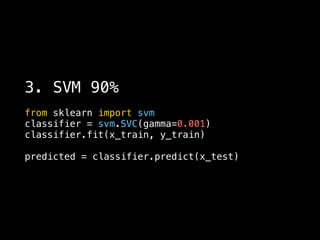
3. SVM 90%
from sklearn import svm
classifier = svm.SVC(gamma=0.001)
classifier.fit(x_train, y_train)
predicted = classifier.predict(x_test)
Neural networks?
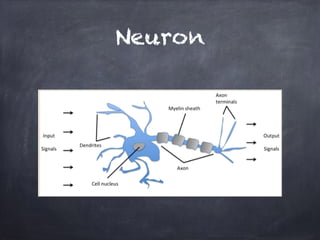
Neuron
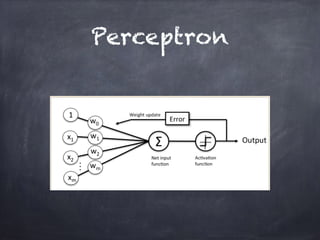
Perceptron
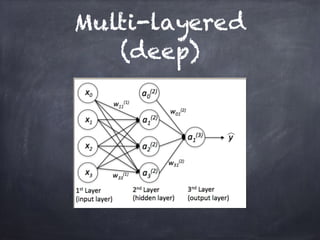
Multi-layered
(deep)
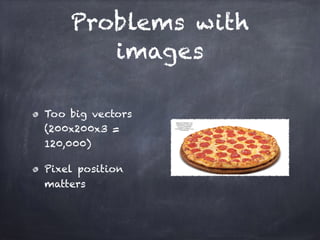
Problems with
images
Too big vectors
(200x200x3 =
120,000)
Pixel position
matters
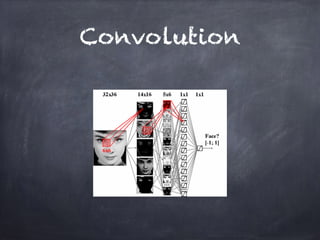
Convolution
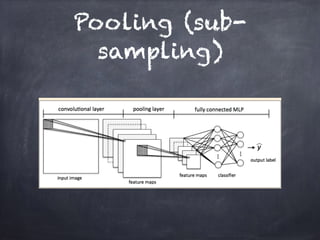
Pooling (sub-
sampling)
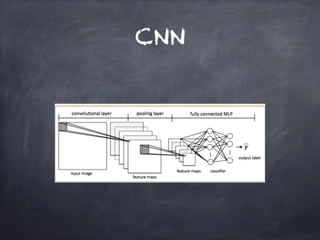
CNN
Object recognition
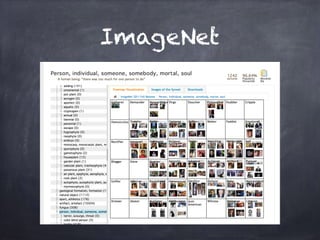
ImageNet
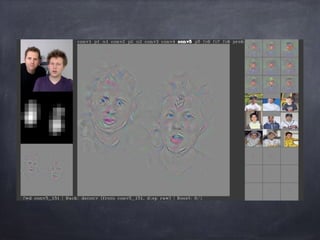
Faces recognition
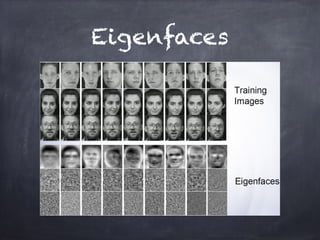
Eigenfaces
LFW
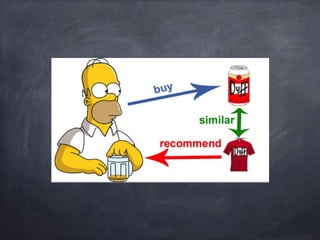
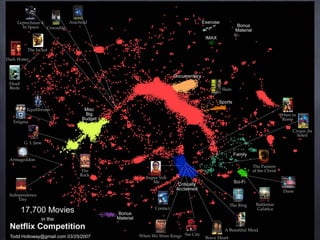
Recommendation
systems
NLP
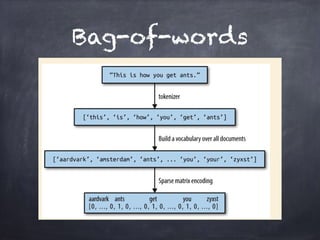
Bag-of-words
Data is key
Competitive
Advantage?
Costs
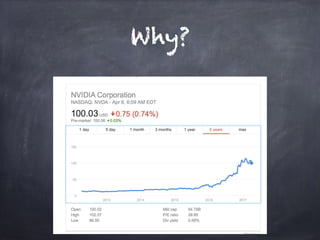
Why?
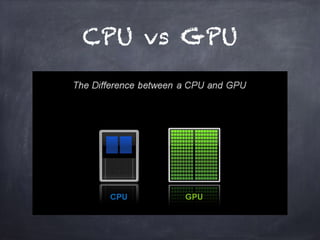
CPU vs GPU
Opportunities
Better than
Google?
Attributes
Proprietary data sets
Domain-specific tasks
Domain-specific knowledge
So,
Useful links
“The Master Algorithm”
Andrew Ng “AI is new electricity”
fast.ai course
“Introduction to ML with Python”
“Python Machine Learning”
one more thing…
Please donate any sum to any fund
Plans
3 universities in Paris
Crowdfunding
Platform
Not only academics
New Tech
How you can help?
Finances
Introductions
Ideas
Expertise
Media
Tech
even frequent flyer miles :)
Thanks
Lucy Evstratova
+79165884397
Unicore.pro
AlfaBank
4154 8120 0093 9516

Sberbank
4276 3800 1234 3302
Ачворвоы выовпывп ывп ыврп

Machine Learning - Empatika Open