LUMBAR PUNCTURE
MR. GANESH CHAKOR
NURSING TUTOR (M.SC NURSING:PEDIATRICS)
M.V.P SAMAJ’S I.N.E ADGAON, NASHIK.
DEFINITION:
Lumbar puncture (LP) or spinal tap is the technique of using a
spinal needle to withdraw cerebrospinal fluid (CSF) from spinal cord.
INDICATION:
 Diagnostic: For diagnosis of malignancy and infection as well as
measurement of CSF pressure.
 Therapeutic: For intrathecal administration of chemotherapeutic
agents.
 Research: Measurement of drug levels.
SITE OF THE LUMBAR PUNCTURE AND THE
POSITIONING OF THE PATIENT:
In lumbar puncture a needle is inserted into the lumbar area (L3-4)
is the preferred site of the subarachnoid space. The patient is placed in
a side lying position at the edge of the table or bed. The patient’s body
should be in the fetal attitude (C shaped) with the full flexion of the
spine. In the neonate, the sitting position may be preferable. To
restrain an older infant or young child in the lateral recumbent
position.
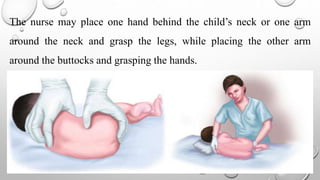
The nurse may place one hand behind the child’s neck or one arm
around the neck and grasp the legs, while placing the other arm
around the buttocks and grasping the hands.
EQUIPMENT NEEDED:
A Sterile tray containing:
 LP needles- 2 sizes with their stylets
 Sponge holding forceps
 Syringe (5ml) with needles to give anesthesia
 Small bowl to take cleaning lotion
 Specimen bottle
 Cotton balls, Gauze pieces and cotton pads
 Gloves, gown and masks
A clean tray containing:
 Mackintosh and towel
 Kidney tray and paper bag
 Antiseptic solution
 2% lignocaine
 Normal saline
 Adhesive plaster and scissors.
GENERAL INSTRUCTIONS:
 Strict aseptic techniques are to be followed
 Child should be placed in a position that will widen the
intervertebral space.
 Uncooperative patients and children are to be restrained.
 The LP needles should be sharp, small in size and not curved
 After the lumbar puncture, the patient should lie flat on the bed.
 The CSF collected should be sent to the laboratory without any
delay.
PREPARATION OF THE PATIENT:
 Explain the procedure to the parents.
 Monitor vitals before the procedure.
 Prepare the skin as for a surgical procedures. Skin is
disinfected with spirit and iodine just before doing the
spinal puncture.
 Put on clean and loose garments.
 Arrange the articles at the bedside table.
AFTER CARE OF THE PROCEDURE:
 A small adhesive bandage should be placed over the puncture site.
 The patient should be kept in recumbent in semiprone position
approximately for 6 hrs. postprocedure.
 Label the specimens before sending to laboratory
 Check for any leakage of CSF
 Monitor vital parameters.
 Encourage to drink extra fluids for the next 24hrs.
 If headache occurs advice for bed rest.
COMPLICATIONS:
 Injury to the spinal cord and spinal nerves.
 Damage to the intervertebral disks.
 Local pain, edema and hematoma at the puncture site.
 Temperature elevation
 Respiratory distress
 CSF leakage
 Infections
THANK YOU…………….

LUMBAR PUNCTURE.....................pptx

  • 1.
    LUMBAR PUNCTURE MR. GANESHCHAKOR NURSING TUTOR (M.SC NURSING:PEDIATRICS) M.V.P SAMAJ’S I.N.E ADGAON, NASHIK.
  • 2.
    DEFINITION: Lumbar puncture (LP)or spinal tap is the technique of using a spinal needle to withdraw cerebrospinal fluid (CSF) from spinal cord.
  • 3.
    INDICATION:  Diagnostic: Fordiagnosis of malignancy and infection as well as measurement of CSF pressure.  Therapeutic: For intrathecal administration of chemotherapeutic agents.  Research: Measurement of drug levels.
  • 4.
    SITE OF THELUMBAR PUNCTURE AND THE POSITIONING OF THE PATIENT: In lumbar puncture a needle is inserted into the lumbar area (L3-4) is the preferred site of the subarachnoid space. The patient is placed in a side lying position at the edge of the table or bed. The patient’s body should be in the fetal attitude (C shaped) with the full flexion of the spine. In the neonate, the sitting position may be preferable. To restrain an older infant or young child in the lateral recumbent position.
  • 5.
    The nurse mayplace one hand behind the child’s neck or one arm around the neck and grasp the legs, while placing the other arm around the buttocks and grasping the hands.
  • 6.
    EQUIPMENT NEEDED: A Steriletray containing:  LP needles- 2 sizes with their stylets  Sponge holding forceps  Syringe (5ml) with needles to give anesthesia  Small bowl to take cleaning lotion  Specimen bottle  Cotton balls, Gauze pieces and cotton pads  Gloves, gown and masks
  • 7.
    A clean traycontaining:  Mackintosh and towel  Kidney tray and paper bag  Antiseptic solution  2% lignocaine  Normal saline  Adhesive plaster and scissors.
  • 8.
    GENERAL INSTRUCTIONS:  Strictaseptic techniques are to be followed  Child should be placed in a position that will widen the intervertebral space.  Uncooperative patients and children are to be restrained.  The LP needles should be sharp, small in size and not curved  After the lumbar puncture, the patient should lie flat on the bed.  The CSF collected should be sent to the laboratory without any delay.
  • 9.
    PREPARATION OF THEPATIENT:  Explain the procedure to the parents.  Monitor vitals before the procedure.  Prepare the skin as for a surgical procedures. Skin is disinfected with spirit and iodine just before doing the spinal puncture.  Put on clean and loose garments.  Arrange the articles at the bedside table.
  • 10.
    AFTER CARE OFTHE PROCEDURE:  A small adhesive bandage should be placed over the puncture site.  The patient should be kept in recumbent in semiprone position approximately for 6 hrs. postprocedure.  Label the specimens before sending to laboratory  Check for any leakage of CSF  Monitor vital parameters.  Encourage to drink extra fluids for the next 24hrs.  If headache occurs advice for bed rest.
  • 11.
    COMPLICATIONS:  Injury tothe spinal cord and spinal nerves.  Damage to the intervertebral disks.  Local pain, edema and hematoma at the puncture site.  Temperature elevation  Respiratory distress  CSF leakage  Infections
  • 12.