Law Society of Ontario
27 January 2021
Paul Maharg
https://paulmaharg.com/slides
Competency, regulation,
professionalism:
’good fast cheap, choose two’?
preview
1. Established approaches to regulation of the profession
need to change
2. Shared space regulation
3. Professionalism is essential to a new approach – but
insufficient
4. The clarifying lens of COVID-19:
– invites us to admit that what we always knew was
wrong about legal education now needs urgent and
radical change, eg -
• the failures of legal edu/tech generally
• the failures of assessment
5. Three examples of future practices
Professor Paul Maharg | CC BY-NC-ND 2.5 CANADA
1
1. Established approaches to regulation need
to change
typical approaches to competency & regulation
1. Competency lists rule… until they don’t. Eg MacCrate, definition of
knowledge + skill, long lists – cp IAALS’ approach
– Q: How to regulate the competencies…?
– A: Manage them by -
• Title?
• Entity?
• Work?
2. When competences crystallize in documents it’s hard to cope with …
– Professional fluidity, eg paralegals
– Fissured, fragmented profession
– Dominant interest groups in the profession
– Contested concepts of public interest: in Bay St? In Saskatoon?
3. Compare with IAALS’ innovative building-block approach, Building a
Better Bar that builds on work from medical and other professions
Professor Paul Maharg | CC BY-NC-ND 2.5 CANADA
3
But goodfastcheap
applies here too…
Eg Colin Scott’s approach:
• ‘a more fruitful approach would be to seek to understand
where the capacities lie within the existing regimes, and
perhaps to strengthen those which appear to pull in the right
direction and seek to inhibit those that pull in the wrong way’
• ‘meta-review’: ‘all social and economic spheres in which
governments or others might have an interest in controlling
already have within mechanisms of steering – whether
through hierarchy, competition, community, design or some
combination thereof’ (2008, 27).
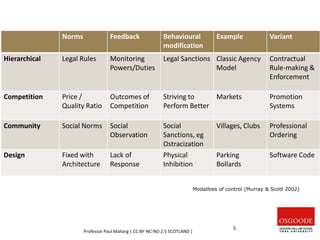
some tools for regulatory analysis:
think about the modalities of control
Norms Feedback Behavioural
modification
Example Variant
Hierarchical Legal Rules Monitoring
Powers/Duties
Legal Sanctions Classic Agency
Model
Contractual
Rule-making &
Enforcement
Competition Price /
Quality Ratio
Outcomes of
Competition
Striving to
Perform Better
Markets Promotion
Systems
Community Social Norms Social
Observation
Social
Sanctions, eg
Ostracization
Villages, Clubs Professional
Ordering
Design Fixed with
Architecture
Lack of
Response
Physical
Inhibition
Parking
Bollards
Software Code
Modalities of control (Murray & Scott 2002)
Professor Paul Maharg | CC BY-NC-ND 2.5 SCOTLAND |
5
2. Shared space regulation has a role to play
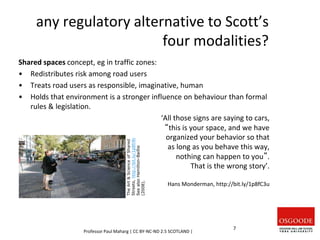
any regulatory alternative to Scott’s
four modalities?
Shared spaces concept, eg in traffic zones:
• Redistributes risk among road users
• Treats road users as responsible, imaginative, human
• Holds that environment is a stronger influence on behaviour than formal
rules & legislation.
‘All those signs are saying to cars,
“this is your space, and we have
organized your behavior so that
as long as you behave this way,
nothing can happen to you”.
That is the wrong story’.
Hans Monderman, http://bit.ly/1p8fC3u
The
Art
&
Science
of
Shared
Streets,
http://bit.ly/1p8fr8r
See
also
Hamilton-Baillie
(2008).
Professor Paul Maharg | CC BY-NC-ND 2.5 SCOTLAND |
7
participative regulation
• Portrait of the regulator as:
– Not QA but QE – Quality Enhancer, to focus on culture
shifts towards innovation, imagination, change for a
democratic society
– A hub of creativity, shared research, shared practices &
guardian of debate around that hub
– Initiating cycles of funding, research, feedback,
feedforward
– Archive of ed tech memory in the discipline
– Founder of interdisciplinary, inter-professional trading
zones
• Regulator as democratic designer
Professor Paul Maharg | CC BY-NC-ND 2.5 SCOTLAND |
8
Legal Education & Training Review
(2013), recommendation 25
A body, the ‘Legal Education Council’, should be established to provide a forum
for the coordination of the continuing review of LSET and to advise the
approved regulators on LSET regulation and effective practice. The Council
should also oversee a collaborative hub of legal information resources and
activities able to perform the following functions:
– Data archive (including diversity monitoring and evaluation of diversity
initiatives);
– Advice shop (careers information);
– Legal Education Laboratory (supporting collaborative research and
development);
– Clearing house (advertising work experience; advising on transfer
regulations and reviewing disputed transfer decisions).
Professor Paul Maharg | CC BY-NC-ND 2.5 SCOTLAND |
9
3. Professionalism is essential – but
insufficient
professionalism…?
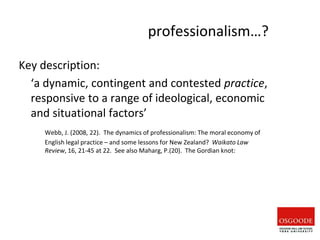
Key description:
‘a dynamic, contingent and contested practice,
responsive to a range of ideological, economic
and situational factors’
Webb, J. (2008, 22). The dynamics of professionalism: The moral economy of
English legal practice – and some lessons for New Zealand? Waikato Law
Review, 16, 21-45 at 22. See also Maharg, P.(20). The Gordian knot:
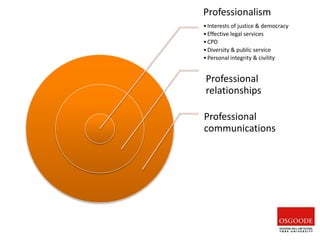
Professionalism
•Interests of justice & democracy
•Effective legal services
•CPD
•Diversity & public service
•Personal integrity & civility
Professional
relationships
Professional
communications
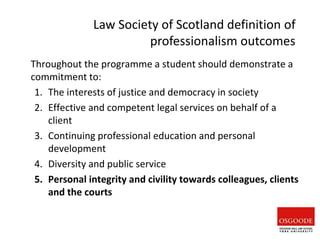
Throughout the programme a student should demonstrate a
commitment to:
1. The interests of justice and democracy in society
2. Effective and competent legal services on behalf of a
client
3. Continuing professional education and personal
development
4. Diversity and public service
5. Personal integrity and civility towards colleagues, clients
and the courts
Law Society of Scotland definition of
professionalism outcomes
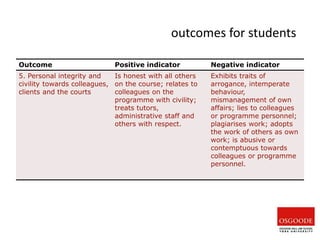
Outcome Positive indicator Negative indicator
5. Personal integrity and
civility towards colleagues,
clients and the courts
Is honest with all others
on the course; relates to
colleagues on the
programme with civility;
treats tutors,
administrative staff and
others with respect.
Exhibits traits of
arrogance, intemperate
behaviour,
mismanagement of own
affairs; lies to colleagues
or programme personnel;
plagiarises work; adopts
the work of others as own
work; is abusive or
contemptuous towards
colleagues or programme
personnel.
outcomes for students
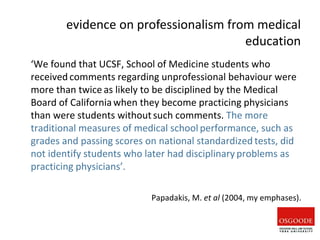
‘We found that UCSF, School of Medicine students who
received comments regarding unprofessional behaviour were
more than twice as likely to be disciplined by the Medical
Board of Californiawhen they become practicing physicians
than were students withoutsuch comments. The more
traditional measures of medical school performance, such as
grades and passing scores on national standardized tests, did
not identify students who later had disciplinary problems as
practicing physicians’.
Papadakis, M. et al (2004, my emphases).
evidence on professionalism from medical
education
4. What does COVID-19 teach us?
the impact of COVID-19 on
competence and LSET
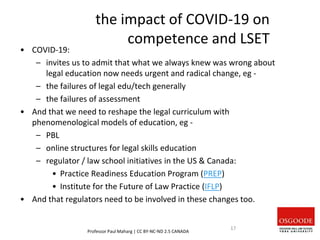
• COVID-19:
– invites us to admit that what we always knew was wrong about
legal education now needs urgent and radical change, eg -
– the failures of legal edu/tech generally
– the failures of assessment
• And that we need to reshape the legal curriculum with
phenomenological models of education, eg -
– PBL
– online structures for legal skills education
– regulator / law school initiatives in the US & Canada:
• Practice Readiness Education Program (PREP)
• Institute for the Future of Law Practice (IFLP)
• And that regulators need to be involved in these changes too.
Professor Paul Maharg | CC BY-NC-ND 2.5 CANADA
17
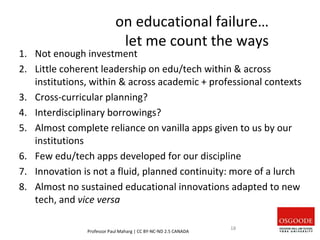
on educational failure…
let me count the ways
1. Not enough investment
2. Little coherent leadership on edu/tech within & across
institutions, within & across academic + professional contexts
3. Cross-curricular planning?
4. Interdisciplinary borrowings?
5. Almost complete reliance on vanilla apps given to us by our
institutions
6. Few edu/tech apps developed for our discipline
7. Innovation is not a fluid, planned continuity: more of a lurch
8. Almost no sustained educational innovations adapted to new
tech, and vice versa
Professor Paul Maharg | CC BY-NC-ND 2.5 CANADA
18
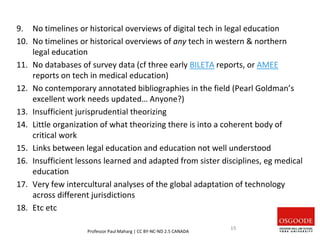
9. No timelines or historical overviews of digital tech in legal education
10. No timelines or historical overviews of any tech in western & northern
legal education
11. No databases of survey data (cf three early BILETA reports, or AMEE
reports on tech in medical education)
12. No contemporary annotated bibliographies in the field (Pearl Goldman’s
excellent work needs updated… Anyone?)
13. Insufficient jurisprudential theorizing
14. Little organization of what theorizing there is into a coherent body of
critical work
15. Links between legal education and education not well understood
16. Insufficient lessons learned and adapted from sister disciplines, eg medical
education
17. Very few intercultural analyses of the global adaptation of technology
across different jurisdictions
18. Etc etc
Professor Paul Maharg | CC BY-NC-ND 2.5 CANADA
19
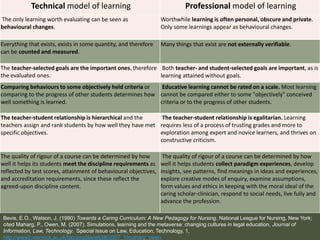
Technical model of learning Professional model of learning
The only learning worth evaluating can be seen as
behavioural changes.
Worthwhile learning is often personal, obscure and private.
Only some learnings appear as behavioural changes.
Everything that exists, exists in some quantity, and therefore
can be counted and measured.
Many things that exist are not externally verifiable.
The teacher-selected goals are the important ones, therefore
the evaluated ones.
Both teacher- and student-selected goals are important, as is
learning attained without goals.
Comparing behaviours to some objectively held criteria or
comparing to the progress of other students determines how
well something is learned.
Educative learning cannot be rated on a scale. Most learning
cannot be compared either to some "objectively" conceived
criteria or to the progress of other students.
The teacher-student relationship is hierarchical and the
teachers assign and rank students by how well they have met
specific objectives.
The teacher-student relationship is egalitarian. Learning
requires less of a process of trusting grades and more to
exploration among expert and novice learners, and thrives on
constructive criticism.
The quality of rigour of a course can be determined by how
well it helps its students meet the discipline requirements as
reflected by test scores, attainment of behavioural objectives,
and accreditation requirements, since these reflect the
agreed-upon discipline content.
The quality of rigour of a course can be determined by how
well it helps students collect paradigm experiences, develop
insights, see patterns, find meanings in ideas and experiences,
explore creative modes of enquiry, examine assumptions,
form values and ethics in keeping with the moral ideal of the
caring scholar-clinician, respond to social needs, live fully and
advance the profession.
Bevis, E.O., Watson, J. (1990) Towards a Caring Curriculum: A New Pedagogy for Nursing, National League for Nursing, New York;
cited Maharg, P., Owen, M. (2007). Simulations, learning and the metaverse: changing cultures in legal education, Journal of
Information, Law, Technology. Special Issue on Law, Education, Technology, 1,
http://www2.warwick.ac.uk/fac/soc/law/elj/jilt/2007_1/maharg_owen
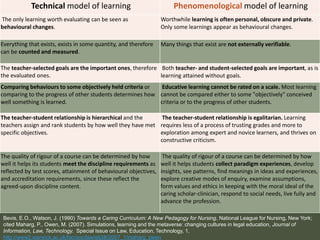
Technical model of learning Phenomenological model of learning
The only learning worth evaluating can be seen as
behavioural changes.
Worthwhile learning is often personal, obscure and private.
Only some learnings appear as behavioural changes.
Everything that exists, exists in some quantity, and therefore
can be counted and measured.
Many things that exist are not externally verifiable.
The teacher-selected goals are the important ones, therefore
the evaluated ones.
Both teacher- and student-selected goals are important, as is
learning attained without goals.
Comparing behaviours to some objectively held criteria or
comparing to the progress of other students determines how
well something is learned.
Educative learning cannot be rated on a scale. Most learning
cannot be compared either to some "objectively" conceived
criteria or to the progress of other students.
The teacher-student relationship is hierarchical and the
teachers assign and rank students by how well they have met
specific objectives.
The teacher-student relationship is egalitarian. Learning
requires less of a process of trusting grades and more to
exploration among expert and novice learners, and thrives on
constructive criticism.
The quality of rigour of a course can be determined by how
well it helps its students meet the discipline requirements as
reflected by test scores, attainment of behavioural objectives,
and accreditation requirements, since these reflect the
agreed-upon discipline content.
The quality of rigour of a course can be determined by how
well it helps students collect paradigm experiences, develop
insights, see patterns, find meanings in ideas and experiences,
explore creative modes of enquiry, examine assumptions,
form values and ethics in keeping with the moral ideal of the
caring scholar-clinician, respond to social needs, live fully and
advance the profession.
Bevis, E.O., Watson, J. (1990) Towards a Caring Curriculum: A New Pedagogy for Nursing, National League for Nursing, New York;
cited Maharg, P., Owen, M. (2007). Simulations, learning and the metaverse: changing cultures in legal education, Journal of
Information, Law, Technology. Special Issue on Law, Education, Technology, 1,
http://www2.warwick.ac.uk/fac/soc/law/elj/jilt/2007_1/maharg_owen
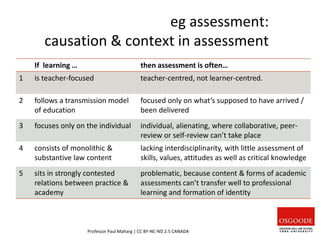
eg assessment:
causation & context in assessment
If learning … then assessment is often…
1 is teacher-focused teacher-centred, not learner-centred.
2 follows a transmission model
of education
focused only on what’s supposed to have arrived /
been delivered
3 focuses only on the individual individual, alienating, where collaborative, peer-
review or self-review can’t take place
4 consists of monolithic &
substantive law content
lacking interdisciplinarity, with little assessment of
skills, values, attitudes as well as critical knowledge
5 sits in strongly contested
relations between practice &
academy
problematic, because content & forms of academic
assessments can’t transfer well to professional
learning and formation of identity
Professor Paul Maharg | CC BY-NC-ND 2.5 CANADA
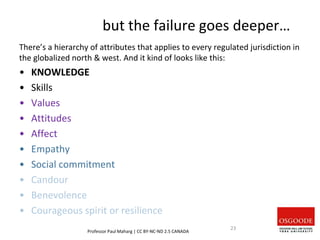
but the failure goes deeper…
There’s a hierarchy of attributes that applies to every regulated jurisdiction in
the globalized north & west. And it kind of looks like this:
• KNOWLEDGE
• Skills
• Values
• Attitudes
• Affect
• Empathy
• Social commitment
• Candour
• Benevolence
• Courageous spirit or resilience
Professor Paul Maharg | CC BY-NC-ND 2.5 CANADA
23
‘Now is your time to begin Practices and lay the Foundation of habits
that may be of use to you in every Condition and in every Profession
at least that is founded on a literary or a Liberal Education. Sapere and
Fari quae sentiat are the great Objects of Literary Education and of
Study. … mere knowledge however important is far from being the
only or most important Attainment of Study.
The Habits of Justice, Candour, Benevolence, and a Courageous Spirit
are the first Objects of Philosophy the Constituents of happiness and
of personal honour, and first Qualifications for human Society and for
Active life.’
Professor Paul Maharg | CC BY-NC-ND 2.5 CANADA
Adam Ferguson Lectures,
1775–76, fols 540–41.
Edinburgh University
Library Special
Collections, EUL.
… and has always had its critics
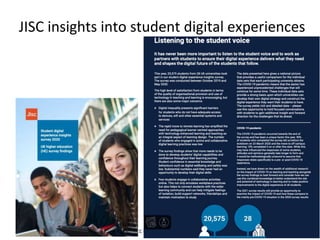
JISC insights into student digital experiences
Professor Paul Maharg | CC BY-NC-ND 2.5 CANADA
25
Professor Paul Maharg | CC BY-NC-ND 2.5 CANADA
26
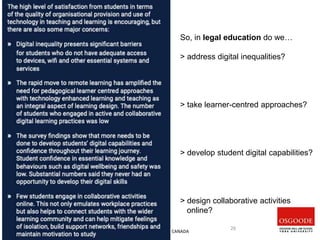
So, in legal education do we…
> address digital inequalities?
> take learner-centred approaches?
> develop student digital capabilities?
> design collaborative activities
online?
Professor Paul Maharg | CC BY-NC-ND 2.5 CANADA
27
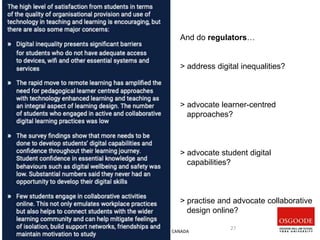
And do regulators…
> address digital inequalities?
> advocate learner-centred
approaches?
> advocate student digital
capabilities?
> practise and advocate collaborative
design online?
5.
Three examples of future practices where
competence, professionalism & regulation can
fuse
Example 1:
Osgoode Professional Development (OPD):
Intensive Trial Advocacy Workshop (ITAW)
In the past:
• ITAW has run for 40 years, f2f, lasts an intensive week,
aimed at practitioners, c. 80-100+ participants
This year:
• Online. Used Zoom, Slack, ePortfolio, Moodle LMS
• We prepped & ran a 40-participant, intensive week-
long pilot
• Faculty were trained in online facilitation – combo of
NITA + cognitive/affective feedback (PM)
Professor Paul Maharg | CC BY-NC-ND 2.5 CANADA
29
Professor Paul Maharg | CC BY-NC-ND 2.5 CANADA
30
ITAW: interim student feedback
• Simply great.
• I realise that my lack of prep is my fault only, so I preface my remarks
with this. I think that maybe a week prior, an hour or two prep session
taking us through Moodle, Slack, lesson prep, etc.?
• I really enjoyed how the faculty were able to separate us into smaller
groups so that they may directly critique our performance to get better
in examinations.
• Well managed. I liked the micro presentation. Don’t have to bite off too
much. Most importantly, I learned at least one major thing today that
will start to benefit my practice immediately. Job well done. Only
negative comment is a better understanding of where [zoom room] to
go in next, which was not clear.
• The first day of the program went really well. The program was planned
really well. There were no issues with technology, timing, etc. even
though this is the first time it is being offered virtually. All the instructors
gave valuable feedback and simplified the processes involved in direct,
cross, and re-examination.
Professor Paul Maharg | CC BY-NC-ND 2.5 CANADA
31
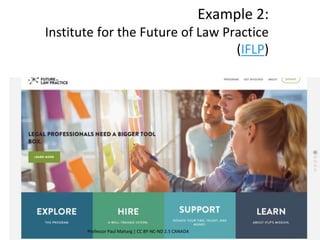
Example 2:
Institute for the Future of Law Practice
(IFLP)
Professor Paul Maharg | CC BY-NC-ND 2.5 CANADA
32
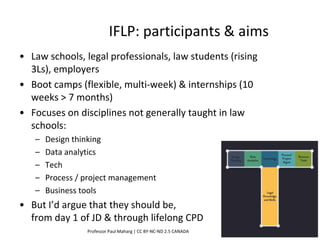
IFLP: participants & aims
• Law schools, legal professionals, law students (rising
3Ls), employers
• Boot camps (flexible, multi-week) & internships (10
weeks > 7 months)
• Focuses on disciplines not generally taught in law
schools:
– Design thinking
– Data analytics
– Tech
– Process / project management
– Business tools
• But I’d argue that they should be,
from day 1 of JD & through lifelong CPD
Professor Paul Maharg | CC BY-NC-ND 2.5 CANADA
33
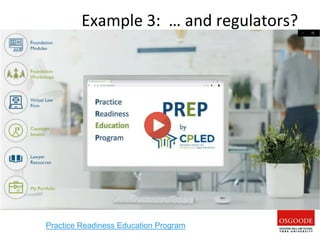
Example 3: … and regulators?
Practice Readiness Education Program
Practice Readiness Education Program (PREP)
Professor Paul Maharg | CC BY-NC-ND 2.5 CANADA
35
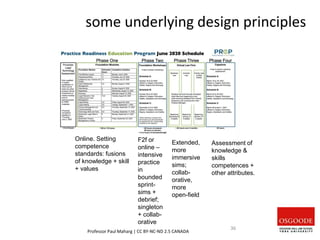
some underlying design principles
Professor Paul Maharg | CC BY-NC-ND 2.5 CANADA
36
Online. Setting
competence
standards: fusions
of knowledge + skill
+ values
F2f or
online –
intensive
practice
in
bounded
sprint-
sims +
debrief;
singleton
+ collab-
orative
Extended,
more
immersive
sims;
collab-
orative,
more
open-field
Assessment of
knowledge &
skills
competences +
other attributes.
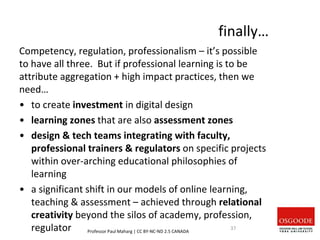
finally…
Competency, regulation, professionalism – it’s possible
to have all three. But if professional learning is to be
attribute aggregation + high impact practices, then we
need…
• to create investment in digital design
• learning zones that are also assessment zones
• design & tech teams integrating with faculty,
professional trainers & regulators on specific projects
within over-arching educational philosophies of
learning
• a significant shift in our models of online learning,
teaching & assessment – achieved through relational
creativity beyond the silos of academy, profession,
regulator Professor Paul Maharg | CC BY-NC-ND 2.5 CANADA
37
some presentation references for follow-up
Barton, K., McKellar, P., Maharg, P. (2007). Authentic fictions: simulation, professionalism and legal learning, Clinical Law
Review, 14, 1, 143-93
de Freitas, S., Maharg, P., eds (2011). Digital Games and Learning. Bloomsbury, London.
Engeström, Y. Centre for Research on Activity, Learning & Development. https://www.helsinki.fi/en/researchgroups/center-
for-research-on-activity-development-and-learning
Hamilton-Baillie, B. (2008). Shared space: reconciling people, places and traffic.
Built Environment, 34, 2, 161-81.
Hmelo-Silver, C. (2004). Problem-based learning: what and how do students learn? Educational Psychology Review, 16, 3,
235-66.
Legal Education & Training Review Report (2013). Available at: http://letr.org.uk
Maharg, P. (2007). Transforming Legal Education: Learning and Teaching the Law in the Early Twenty-first Century. Ashgate
Publishing, Farnham, Surrey. See chapter nine: ‘Multimedia and the docuverse of law: learning and the
representation of knowledge’.
Maharg, P. (2014). Convergence and fragmentation: legal research, legal informatics and legal education. European Journal
of Law and Technology, 5, 3. Available at: http://ejlt.org/index.php/ejlt/.
Maharg, P. (2016). Webcasts and podcasts: digital designs and learning. Faculty seminar, Chinese University of Hong Kong,
June 2016. Available at: https://paulmaharg.com/slides
Maharg P. (2017). Multimedia learning, 2002-2018: A case study across a century of digital learning. Faculty seminar,
Osgoode Hall Law School, April 2018. Available at: http://paulmaharg.com/slides
Maharg, P. (2017). The Gordian knot: Regulatory relationship and legal education. Asian Journal of Legal Education, 4, 2, 79-
94
Monderman, H. (n.d.) http://www.pps.org/reference/hans-monderman/
Murray, A., Scott, C. (2002). Controlling the new media: hybrid responses to new forms of power. Modern Law Review, 65, 4,
491-516.
Papadakis, M. et al (2004) Unprofessional behaviour in medical school is associated with subsequent disciplinary action by a
state medical board, Academic Medicine, 79, 244-79
Scott, C. (2008) Regulating Everything. UCD Geary Institute Discussion Paper Series, Inaugural Lecture, 26 February.
Shulman, L. S. (2005). Signature pedagogies in the professions. Daedalus, 134(3), 52–59
Webb, J. (2008, 22). The dynamics of professionalism: The moral economy of English legal practice – and some lessons for
New Zealand? Waikato Law Review, 16, 21-45 at 22.
Professor Paul Maharg | CC BY-NC-ND 2.5 CANADA
38
Email pmaharg@osgoode.yorku.ca
Web: paulmaharg.com
Slides: paulmaharg.com/slides

Lso presentation 27.1.21

  • 1.
    Law Society ofOntario 27 January 2021 Paul Maharg https://paulmaharg.com/slides Competency, regulation, professionalism: ’good fast cheap, choose two’?
  • 2.
    preview 1. Established approachesto regulation of the profession need to change 2. Shared space regulation 3. Professionalism is essential to a new approach – but insufficient 4. The clarifying lens of COVID-19: – invites us to admit that what we always knew was wrong about legal education now needs urgent and radical change, eg - • the failures of legal edu/tech generally • the failures of assessment 5. Three examples of future practices Professor Paul Maharg | CC BY-NC-ND 2.5 CANADA 1
  • 3.
    1. Established approachesto regulation need to change
  • 4.
    typical approaches tocompetency & regulation 1. Competency lists rule… until they don’t. Eg MacCrate, definition of knowledge + skill, long lists – cp IAALS’ approach – Q: How to regulate the competencies…? – A: Manage them by - • Title? • Entity? • Work? 2. When competences crystallize in documents it’s hard to cope with … – Professional fluidity, eg paralegals – Fissured, fragmented profession – Dominant interest groups in the profession – Contested concepts of public interest: in Bay St? In Saskatoon? 3. Compare with IAALS’ innovative building-block approach, Building a Better Bar that builds on work from medical and other professions Professor Paul Maharg | CC BY-NC-ND 2.5 CANADA 3 But goodfastcheap applies here too…
  • 5.
    Eg Colin Scott’sapproach: • ‘a more fruitful approach would be to seek to understand where the capacities lie within the existing regimes, and perhaps to strengthen those which appear to pull in the right direction and seek to inhibit those that pull in the wrong way’ • ‘meta-review’: ‘all social and economic spheres in which governments or others might have an interest in controlling already have within mechanisms of steering – whether through hierarchy, competition, community, design or some combination thereof’ (2008, 27). some tools for regulatory analysis: think about the modalities of control
  • 6.
    Norms Feedback Behavioural modification ExampleVariant Hierarchical Legal Rules Monitoring Powers/Duties Legal Sanctions Classic Agency Model Contractual Rule-making & Enforcement Competition Price / Quality Ratio Outcomes of Competition Striving to Perform Better Markets Promotion Systems Community Social Norms Social Observation Social Sanctions, eg Ostracization Villages, Clubs Professional Ordering Design Fixed with Architecture Lack of Response Physical Inhibition Parking Bollards Software Code Modalities of control (Murray & Scott 2002) Professor Paul Maharg | CC BY-NC-ND 2.5 SCOTLAND | 5
  • 7.
    2. Shared spaceregulation has a role to play
  • 8.
    any regulatory alternativeto Scott’s four modalities? Shared spaces concept, eg in traffic zones: • Redistributes risk among road users • Treats road users as responsible, imaginative, human • Holds that environment is a stronger influence on behaviour than formal rules & legislation. ‘All those signs are saying to cars, “this is your space, and we have organized your behavior so that as long as you behave this way, nothing can happen to you”. That is the wrong story’. Hans Monderman, http://bit.ly/1p8fC3u The Art & Science of Shared Streets, http://bit.ly/1p8fr8r See also Hamilton-Baillie (2008). Professor Paul Maharg | CC BY-NC-ND 2.5 SCOTLAND | 7
  • 9.
    participative regulation • Portraitof the regulator as: – Not QA but QE – Quality Enhancer, to focus on culture shifts towards innovation, imagination, change for a democratic society – A hub of creativity, shared research, shared practices & guardian of debate around that hub – Initiating cycles of funding, research, feedback, feedforward – Archive of ed tech memory in the discipline – Founder of interdisciplinary, inter-professional trading zones • Regulator as democratic designer Professor Paul Maharg | CC BY-NC-ND 2.5 SCOTLAND | 8
  • 10.
    Legal Education &Training Review (2013), recommendation 25 A body, the ‘Legal Education Council’, should be established to provide a forum for the coordination of the continuing review of LSET and to advise the approved regulators on LSET regulation and effective practice. The Council should also oversee a collaborative hub of legal information resources and activities able to perform the following functions: – Data archive (including diversity monitoring and evaluation of diversity initiatives); – Advice shop (careers information); – Legal Education Laboratory (supporting collaborative research and development); – Clearing house (advertising work experience; advising on transfer regulations and reviewing disputed transfer decisions). Professor Paul Maharg | CC BY-NC-ND 2.5 SCOTLAND | 9
  • 11.
    3. Professionalism isessential – but insufficient
  • 12.
    professionalism…? Key description: ‘a dynamic,contingent and contested practice, responsive to a range of ideological, economic and situational factors’ Webb, J. (2008, 22). The dynamics of professionalism: The moral economy of English legal practice – and some lessons for New Zealand? Waikato Law Review, 16, 21-45 at 22. See also Maharg, P.(20). The Gordian knot:
  • 13.
    Professionalism •Interests of justice& democracy •Effective legal services •CPD •Diversity & public service •Personal integrity & civility Professional relationships Professional communications
  • 14.
    Throughout the programmea student should demonstrate a commitment to: 1. The interests of justice and democracy in society 2. Effective and competent legal services on behalf of a client 3. Continuing professional education and personal development 4. Diversity and public service 5. Personal integrity and civility towards colleagues, clients and the courts Law Society of Scotland definition of professionalism outcomes
  • 15.
    Outcome Positive indicatorNegative indicator 5. Personal integrity and civility towards colleagues, clients and the courts Is honest with all others on the course; relates to colleagues on the programme with civility; treats tutors, administrative staff and others with respect. Exhibits traits of arrogance, intemperate behaviour, mismanagement of own affairs; lies to colleagues or programme personnel; plagiarises work; adopts the work of others as own work; is abusive or contemptuous towards colleagues or programme personnel. outcomes for students
  • 16.
    ‘We found thatUCSF, School of Medicine students who received comments regarding unprofessional behaviour were more than twice as likely to be disciplined by the Medical Board of Californiawhen they become practicing physicians than were students withoutsuch comments. The more traditional measures of medical school performance, such as grades and passing scores on national standardized tests, did not identify students who later had disciplinary problems as practicing physicians’. Papadakis, M. et al (2004, my emphases). evidence on professionalism from medical education
  • 17.
    4. What doesCOVID-19 teach us?
  • 18.
    the impact ofCOVID-19 on competence and LSET • COVID-19: – invites us to admit that what we always knew was wrong about legal education now needs urgent and radical change, eg - – the failures of legal edu/tech generally – the failures of assessment • And that we need to reshape the legal curriculum with phenomenological models of education, eg - – PBL – online structures for legal skills education – regulator / law school initiatives in the US & Canada: • Practice Readiness Education Program (PREP) • Institute for the Future of Law Practice (IFLP) • And that regulators need to be involved in these changes too. Professor Paul Maharg | CC BY-NC-ND 2.5 CANADA 17
  • 19.
    on educational failure… letme count the ways 1. Not enough investment 2. Little coherent leadership on edu/tech within & across institutions, within & across academic + professional contexts 3. Cross-curricular planning? 4. Interdisciplinary borrowings? 5. Almost complete reliance on vanilla apps given to us by our institutions 6. Few edu/tech apps developed for our discipline 7. Innovation is not a fluid, planned continuity: more of a lurch 8. Almost no sustained educational innovations adapted to new tech, and vice versa Professor Paul Maharg | CC BY-NC-ND 2.5 CANADA 18
  • 20.
    9. No timelinesor historical overviews of digital tech in legal education 10. No timelines or historical overviews of any tech in western & northern legal education 11. No databases of survey data (cf three early BILETA reports, or AMEE reports on tech in medical education) 12. No contemporary annotated bibliographies in the field (Pearl Goldman’s excellent work needs updated… Anyone?) 13. Insufficient jurisprudential theorizing 14. Little organization of what theorizing there is into a coherent body of critical work 15. Links between legal education and education not well understood 16. Insufficient lessons learned and adapted from sister disciplines, eg medical education 17. Very few intercultural analyses of the global adaptation of technology across different jurisdictions 18. Etc etc Professor Paul Maharg | CC BY-NC-ND 2.5 CANADA 19
  • 21.
    Technical model oflearning Professional model of learning The only learning worth evaluating can be seen as behavioural changes. Worthwhile learning is often personal, obscure and private. Only some learnings appear as behavioural changes. Everything that exists, exists in some quantity, and therefore can be counted and measured. Many things that exist are not externally verifiable. The teacher-selected goals are the important ones, therefore the evaluated ones. Both teacher- and student-selected goals are important, as is learning attained without goals. Comparing behaviours to some objectively held criteria or comparing to the progress of other students determines how well something is learned. Educative learning cannot be rated on a scale. Most learning cannot be compared either to some "objectively" conceived criteria or to the progress of other students. The teacher-student relationship is hierarchical and the teachers assign and rank students by how well they have met specific objectives. The teacher-student relationship is egalitarian. Learning requires less of a process of trusting grades and more to exploration among expert and novice learners, and thrives on constructive criticism. The quality of rigour of a course can be determined by how well it helps its students meet the discipline requirements as reflected by test scores, attainment of behavioural objectives, and accreditation requirements, since these reflect the agreed-upon discipline content. The quality of rigour of a course can be determined by how well it helps students collect paradigm experiences, develop insights, see patterns, find meanings in ideas and experiences, explore creative modes of enquiry, examine assumptions, form values and ethics in keeping with the moral ideal of the caring scholar-clinician, respond to social needs, live fully and advance the profession. Bevis, E.O., Watson, J. (1990) Towards a Caring Curriculum: A New Pedagogy for Nursing, National League for Nursing, New York; cited Maharg, P., Owen, M. (2007). Simulations, learning and the metaverse: changing cultures in legal education, Journal of Information, Law, Technology. Special Issue on Law, Education, Technology, 1, http://www2.warwick.ac.uk/fac/soc/law/elj/jilt/2007_1/maharg_owen
  • 22.
    Technical model oflearning Phenomenological model of learning The only learning worth evaluating can be seen as behavioural changes. Worthwhile learning is often personal, obscure and private. Only some learnings appear as behavioural changes. Everything that exists, exists in some quantity, and therefore can be counted and measured. Many things that exist are not externally verifiable. The teacher-selected goals are the important ones, therefore the evaluated ones. Both teacher- and student-selected goals are important, as is learning attained without goals. Comparing behaviours to some objectively held criteria or comparing to the progress of other students determines how well something is learned. Educative learning cannot be rated on a scale. Most learning cannot be compared either to some "objectively" conceived criteria or to the progress of other students. The teacher-student relationship is hierarchical and the teachers assign and rank students by how well they have met specific objectives. The teacher-student relationship is egalitarian. Learning requires less of a process of trusting grades and more to exploration among expert and novice learners, and thrives on constructive criticism. The quality of rigour of a course can be determined by how well it helps its students meet the discipline requirements as reflected by test scores, attainment of behavioural objectives, and accreditation requirements, since these reflect the agreed-upon discipline content. The quality of rigour of a course can be determined by how well it helps students collect paradigm experiences, develop insights, see patterns, find meanings in ideas and experiences, explore creative modes of enquiry, examine assumptions, form values and ethics in keeping with the moral ideal of the caring scholar-clinician, respond to social needs, live fully and advance the profession. Bevis, E.O., Watson, J. (1990) Towards a Caring Curriculum: A New Pedagogy for Nursing, National League for Nursing, New York; cited Maharg, P., Owen, M. (2007). Simulations, learning and the metaverse: changing cultures in legal education, Journal of Information, Law, Technology. Special Issue on Law, Education, Technology, 1, http://www2.warwick.ac.uk/fac/soc/law/elj/jilt/2007_1/maharg_owen
  • 23.
    eg assessment: causation &context in assessment If learning … then assessment is often… 1 is teacher-focused teacher-centred, not learner-centred. 2 follows a transmission model of education focused only on what’s supposed to have arrived / been delivered 3 focuses only on the individual individual, alienating, where collaborative, peer- review or self-review can’t take place 4 consists of monolithic & substantive law content lacking interdisciplinarity, with little assessment of skills, values, attitudes as well as critical knowledge 5 sits in strongly contested relations between practice & academy problematic, because content & forms of academic assessments can’t transfer well to professional learning and formation of identity Professor Paul Maharg | CC BY-NC-ND 2.5 CANADA
  • 24.
    but the failuregoes deeper… There’s a hierarchy of attributes that applies to every regulated jurisdiction in the globalized north & west. And it kind of looks like this: • KNOWLEDGE • Skills • Values • Attitudes • Affect • Empathy • Social commitment • Candour • Benevolence • Courageous spirit or resilience Professor Paul Maharg | CC BY-NC-ND 2.5 CANADA 23
  • 25.
    ‘Now is yourtime to begin Practices and lay the Foundation of habits that may be of use to you in every Condition and in every Profession at least that is founded on a literary or a Liberal Education. Sapere and Fari quae sentiat are the great Objects of Literary Education and of Study. … mere knowledge however important is far from being the only or most important Attainment of Study. The Habits of Justice, Candour, Benevolence, and a Courageous Spirit are the first Objects of Philosophy the Constituents of happiness and of personal honour, and first Qualifications for human Society and for Active life.’ Professor Paul Maharg | CC BY-NC-ND 2.5 CANADA Adam Ferguson Lectures, 1775–76, fols 540–41. Edinburgh University Library Special Collections, EUL. … and has always had its critics
  • 26.
    JISC insights intostudent digital experiences Professor Paul Maharg | CC BY-NC-ND 2.5 CANADA 25
  • 27.
    Professor Paul Maharg| CC BY-NC-ND 2.5 CANADA 26 So, in legal education do we… > address digital inequalities? > take learner-centred approaches? > develop student digital capabilities? > design collaborative activities online?
  • 28.
    Professor Paul Maharg| CC BY-NC-ND 2.5 CANADA 27 And do regulators… > address digital inequalities? > advocate learner-centred approaches? > advocate student digital capabilities? > practise and advocate collaborative design online?
  • 29.
    5. Three examples offuture practices where competence, professionalism & regulation can fuse
  • 30.
    Example 1: Osgoode ProfessionalDevelopment (OPD): Intensive Trial Advocacy Workshop (ITAW) In the past: • ITAW has run for 40 years, f2f, lasts an intensive week, aimed at practitioners, c. 80-100+ participants This year: • Online. Used Zoom, Slack, ePortfolio, Moodle LMS • We prepped & ran a 40-participant, intensive week- long pilot • Faculty were trained in online facilitation – combo of NITA + cognitive/affective feedback (PM) Professor Paul Maharg | CC BY-NC-ND 2.5 CANADA 29
  • 31.
    Professor Paul Maharg| CC BY-NC-ND 2.5 CANADA 30
  • 32.
    ITAW: interim studentfeedback • Simply great. • I realise that my lack of prep is my fault only, so I preface my remarks with this. I think that maybe a week prior, an hour or two prep session taking us through Moodle, Slack, lesson prep, etc.? • I really enjoyed how the faculty were able to separate us into smaller groups so that they may directly critique our performance to get better in examinations. • Well managed. I liked the micro presentation. Don’t have to bite off too much. Most importantly, I learned at least one major thing today that will start to benefit my practice immediately. Job well done. Only negative comment is a better understanding of where [zoom room] to go in next, which was not clear. • The first day of the program went really well. The program was planned really well. There were no issues with technology, timing, etc. even though this is the first time it is being offered virtually. All the instructors gave valuable feedback and simplified the processes involved in direct, cross, and re-examination. Professor Paul Maharg | CC BY-NC-ND 2.5 CANADA 31
  • 33.
    Example 2: Institute forthe Future of Law Practice (IFLP) Professor Paul Maharg | CC BY-NC-ND 2.5 CANADA 32
  • 34.
    IFLP: participants &aims • Law schools, legal professionals, law students (rising 3Ls), employers • Boot camps (flexible, multi-week) & internships (10 weeks > 7 months) • Focuses on disciplines not generally taught in law schools: – Design thinking – Data analytics – Tech – Process / project management – Business tools • But I’d argue that they should be, from day 1 of JD & through lifelong CPD Professor Paul Maharg | CC BY-NC-ND 2.5 CANADA 33
  • 35.
    Example 3: …and regulators? Practice Readiness Education Program
  • 36.
    Practice Readiness EducationProgram (PREP) Professor Paul Maharg | CC BY-NC-ND 2.5 CANADA 35
  • 37.
    some underlying designprinciples Professor Paul Maharg | CC BY-NC-ND 2.5 CANADA 36 Online. Setting competence standards: fusions of knowledge + skill + values F2f or online – intensive practice in bounded sprint- sims + debrief; singleton + collab- orative Extended, more immersive sims; collab- orative, more open-field Assessment of knowledge & skills competences + other attributes.
  • 38.
    finally… Competency, regulation, professionalism– it’s possible to have all three. But if professional learning is to be attribute aggregation + high impact practices, then we need… • to create investment in digital design • learning zones that are also assessment zones • design & tech teams integrating with faculty, professional trainers & regulators on specific projects within over-arching educational philosophies of learning • a significant shift in our models of online learning, teaching & assessment – achieved through relational creativity beyond the silos of academy, profession, regulator Professor Paul Maharg | CC BY-NC-ND 2.5 CANADA 37
  • 39.
    some presentation referencesfor follow-up Barton, K., McKellar, P., Maharg, P. (2007). Authentic fictions: simulation, professionalism and legal learning, Clinical Law Review, 14, 1, 143-93 de Freitas, S., Maharg, P., eds (2011). Digital Games and Learning. Bloomsbury, London. Engeström, Y. Centre for Research on Activity, Learning & Development. https://www.helsinki.fi/en/researchgroups/center- for-research-on-activity-development-and-learning Hamilton-Baillie, B. (2008). Shared space: reconciling people, places and traffic. Built Environment, 34, 2, 161-81. Hmelo-Silver, C. (2004). Problem-based learning: what and how do students learn? Educational Psychology Review, 16, 3, 235-66. Legal Education & Training Review Report (2013). Available at: http://letr.org.uk Maharg, P. (2007). Transforming Legal Education: Learning and Teaching the Law in the Early Twenty-first Century. Ashgate Publishing, Farnham, Surrey. See chapter nine: ‘Multimedia and the docuverse of law: learning and the representation of knowledge’. Maharg, P. (2014). Convergence and fragmentation: legal research, legal informatics and legal education. European Journal of Law and Technology, 5, 3. Available at: http://ejlt.org/index.php/ejlt/. Maharg, P. (2016). Webcasts and podcasts: digital designs and learning. Faculty seminar, Chinese University of Hong Kong, June 2016. Available at: https://paulmaharg.com/slides Maharg P. (2017). Multimedia learning, 2002-2018: A case study across a century of digital learning. Faculty seminar, Osgoode Hall Law School, April 2018. Available at: http://paulmaharg.com/slides Maharg, P. (2017). The Gordian knot: Regulatory relationship and legal education. Asian Journal of Legal Education, 4, 2, 79- 94 Monderman, H. (n.d.) http://www.pps.org/reference/hans-monderman/ Murray, A., Scott, C. (2002). Controlling the new media: hybrid responses to new forms of power. Modern Law Review, 65, 4, 491-516. Papadakis, M. et al (2004) Unprofessional behaviour in medical school is associated with subsequent disciplinary action by a state medical board, Academic Medicine, 79, 244-79 Scott, C. (2008) Regulating Everything. UCD Geary Institute Discussion Paper Series, Inaugural Lecture, 26 February. Shulman, L. S. (2005). Signature pedagogies in the professions. Daedalus, 134(3), 52–59 Webb, J. (2008, 22). The dynamics of professionalism: The moral economy of English legal practice – and some lessons for New Zealand? Waikato Law Review, 16, 21-45 at 22. Professor Paul Maharg | CC BY-NC-ND 2.5 CANADA 38
  • 40.