LPG Policy (1991) Presented BY
Shruti Kumari
Contents
Liberalisation ( External and Internal)
Extending Privatisation
Globalisation of the Economy
Reasons for implementing LPG
Large and growing fiscal imbalances (Gross fiscal deficit rose to
12.1% of the GDP in 1991)
Growing inefficiency in resources
High inflation rate(13.87% in the year 1990-1991)
Low Foreign Exchange Reserve ($1.2 billion in January 1991)
The low annual growth rate of Indian economy stagnated around
3.5% from 1950s – 1980s)
Per capita income averaged 1.3%
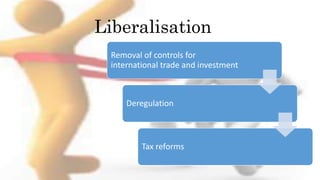
Liberalisation
Removal of controls for
international trade and investment
Deregulation
Tax reforms
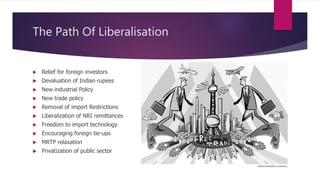
The Path Of Liberalisation
 Relief for foreign investors
 Devaluation of Indian rupees
 New industrial Policy
 New trade policy
 Removal of import Restrictions
 Liberalization of NRI remittances
 Freedom to import technology
 Encouraging foreign tie-ups
 MRTP relaxation
 Privatization of public sector
Perks
Increase in employment
GDP Growth
Industrial licensing
Increase the foreign investment.
Increase the foreign exchange reserve.
Increase in consumption
Reduction in dependence on external commercial borrowings
Increment in competition
Downside
• Loss of domestic units
• Increase in dependence of foreign nation
• Increase in unemployment
Privatisation
 Selling of government equity partially or wholly to private parties.
 Disinvestment
 Mergers
 Acquisition
Advantages
Increase in efficiency
Reduction in Political Interference
Increased Competition
Reduction in economic burden
Increase in economic growth
Positive impact on financial health of public sectors
Better service to customers
Disadvantages
• Lack of social welfare
• Class struggle
• Increase in inequality
• Increase in unemployment
• Exploitation of weaker section
Globalisation
Free access to the market
Globally standardised products need to be marketed all over the world
Requires resources ( raw materials, finance , technology etc )
Free mobility of managerial personal and entrepreneurs.
Mergers , takeovers and structural regrouping
Blessings of globalisation
Rapid economic development
More Investment
More Employment
Increase efficiency of domestic companies
Consumer at advantage
Inventions and Discoveries
Growth of the agriculture
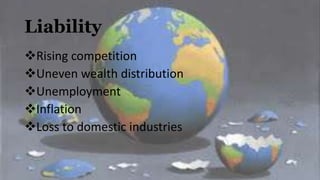
Liability
Rising competition
Uneven wealth distribution
Unemployment
Inflation
Loss to domestic industries
PICTURE GALLERY
Liberalization privatization and globalization LPG 1991

Liberalization privatization and globalization LPG 1991

  • 1.
    LPG Policy (1991)Presented BY Shruti Kumari
  • 2.
    Contents Liberalisation ( Externaland Internal) Extending Privatisation Globalisation of the Economy
  • 3.
    Reasons for implementingLPG Large and growing fiscal imbalances (Gross fiscal deficit rose to 12.1% of the GDP in 1991) Growing inefficiency in resources High inflation rate(13.87% in the year 1990-1991) Low Foreign Exchange Reserve ($1.2 billion in January 1991) The low annual growth rate of Indian economy stagnated around 3.5% from 1950s – 1980s) Per capita income averaged 1.3%
  • 4.
    Liberalisation Removal of controlsfor international trade and investment Deregulation Tax reforms
  • 5.
    The Path OfLiberalisation  Relief for foreign investors  Devaluation of Indian rupees  New industrial Policy  New trade policy  Removal of import Restrictions  Liberalization of NRI remittances  Freedom to import technology  Encouraging foreign tie-ups  MRTP relaxation  Privatization of public sector
  • 6.
    Perks Increase in employment GDPGrowth Industrial licensing Increase the foreign investment. Increase the foreign exchange reserve. Increase in consumption Reduction in dependence on external commercial borrowings Increment in competition
  • 7.
    Downside • Loss ofdomestic units • Increase in dependence of foreign nation • Increase in unemployment
  • 8.
    Privatisation  Selling ofgovernment equity partially or wholly to private parties.  Disinvestment  Mergers  Acquisition
  • 9.
    Advantages Increase in efficiency Reductionin Political Interference Increased Competition Reduction in economic burden Increase in economic growth Positive impact on financial health of public sectors Better service to customers
  • 10.
    Disadvantages • Lack ofsocial welfare • Class struggle • Increase in inequality • Increase in unemployment • Exploitation of weaker section
  • 11.
    Globalisation Free access tothe market Globally standardised products need to be marketed all over the world Requires resources ( raw materials, finance , technology etc ) Free mobility of managerial personal and entrepreneurs. Mergers , takeovers and structural regrouping
  • 12.
    Blessings of globalisation Rapideconomic development More Investment More Employment Increase efficiency of domestic companies Consumer at advantage Inventions and Discoveries Growth of the agriculture
  • 13.
    Liability Rising competition Uneven wealthdistribution Unemployment Inflation Loss to domestic industries
  • 14.