Lockout / Tagout
(LOTO)
Control of
Hazardous
Energy
ADIS: P-6 [1-14]
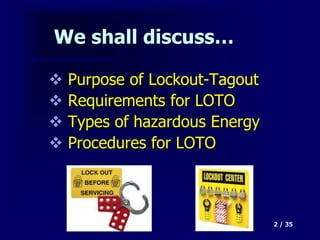
We shall discuss…
 Purpose of Lockout-Tagout
 Requirements for LOTO
 Types of hazardous Energy
 Procedures for LOTO
2 / 35
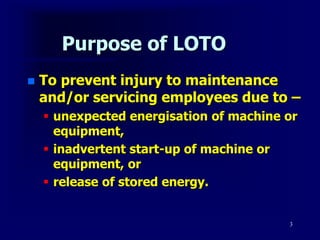
Purpose of LOTO
 To prevent injury to maintenance
and/or servicing employees due to –
 unexpected energisation of machine or
equipment,
 inadvertent start-up of machine or
equipment, or
 release of stored energy.
3
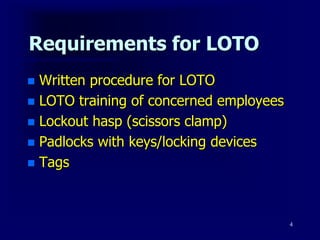
Requirements for LOTO
 Written procedure for LOTO
 LOTO training of concerned employees
 Lockout hasp (scissors clamp)
 Padlocks with keys/locking devices
 Tags
4
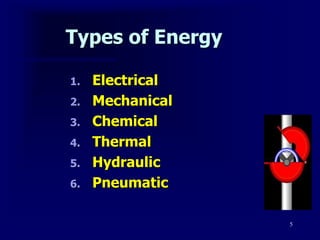
Types of Energy
1. Electrical
2. Mechanical
3. Chemical
4. Thermal
5. Hydraulic
6. Pneumatic
5
Electric shock can kill
 As low as 30 volts can carry enough
current to kill a person.
6
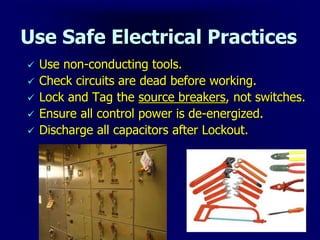
Use Safe Electrical Practices
 Use non-conducting tools.
 Check circuits are dead before working.
 Lock and Tag the source breakers, not switches.
 Ensure all control power is de-energized.
 Discharge all capacitors after Lockout.
7
Mechanical Energy Hazards
Two types:
 Kinetic – in motion
(Example: A moving shaft)
 Potential – stored
(Example: Compressed air)
8
Kinetic Energy Hazards
Energy of moving machinery
can cause:
– Amputations
– Lacerations
– Fractures
– Loss of life
9
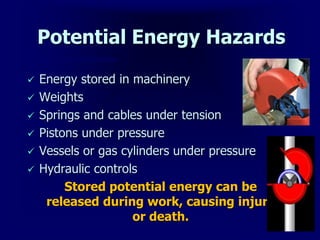
Potential Energy Hazards
 Energy stored in machinery
 Weights
 Springs and cables under tension
 Pistons under pressure
 Vessels or gas cylinders under pressure
 Hydraulic controls
Stored potential energy can be
released during work, causing injury
or death. 10
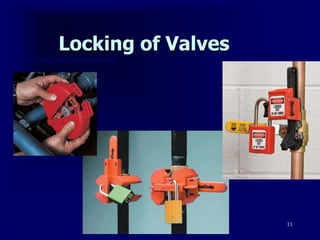
Locking of Valves
11
Chemical Energy Hazards
Chemicals have energy that can –
 start fires;
 cause skin burns;
 generate harmful gases or fumes.
Before working – release/vent or drain
chemicals safely.
12
Thermal Energy Hazards
Energy of Heat (and cold)
 Hot equipment and fluids can burn you
 Cold fluids can also cause cold burns
 Quick release of compressed or
liquefied gases can freeze your skin
 Allow equipment to reach a safe
temperature before starting work.
13
HOT
Hydraulic Energy
Energy of Liquids Under Pressure
Pressure can cause equipment to move
Rapid release can cause injury, or
Ejection of the system parts
Relieve pressure by draining liquid
slowly into a proper container.
14
Pneumatic Energy Hazards
Energy of Compressed Gases
 Uncontrolled release can cause injury.
 Rapid de-pressurization can create
extremely low temperatures.
 Excessive pressure may rupture the vessel
or piping
Properly depressurize and vent the entire
system before starting work.
15
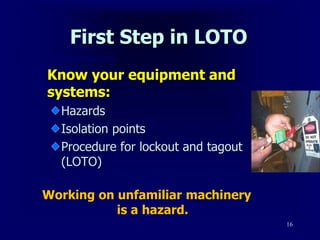
First Step in LOTO
Know your equipment and
systems:
Hazards
Isolation points
Procedure for lockout and tagout
(LOTO)
Working on unfamiliar machinery
is a hazard.
16
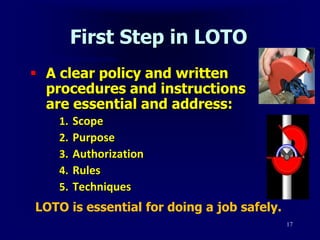
First Step in LOTO
 A clear policy and written
procedures and instructions
are essential and address:
1. Scope
2. Purpose
3. Authorization
4. Rules
5. Techniques
17
LOTO is essential for doing a job safely.
Who Can Lockout
Equipment?
Only the employees who
have been trained and
authorized by the
management
18
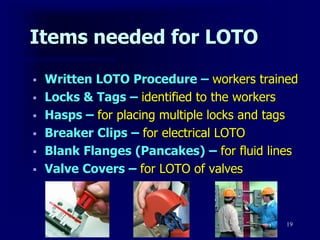
Items needed for LOTO
 Written LOTO Procedure – workers trained
 Locks & Tags – identified to the workers
 Hasps – for placing multiple locks and tags
 Breaker Clips – for electrical LOTO
 Blank Flanges (Pancakes) – for fluid lines
 Valve Covers – for LOTO of valves
19
Use of Locks & Tags
 Use only those issued to you
 Ask your supervisor if you need more
LOTO equipment
20
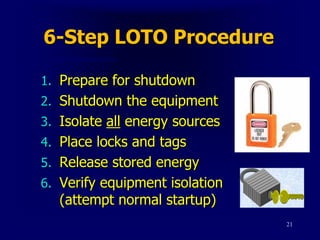
6-Step LOTO Procedure
1. Prepare for shutdown
2. Shutdown the equipment
3. Isolate all energy sources
4. Place locks and tags
5. Release stored energy
6. Verify equipment isolation
(attempt normal startup)
21
1. Prepare for Shutdown
 Understand equipment hazards.
 Notify other workers of shutdown.
22
Hasp
2. Shutdown Equipment
 Use normal shutdown procedure.
 Turn all switches to “OFF” position.
 Shut all control valves.
 Disable all sources of energy.
23
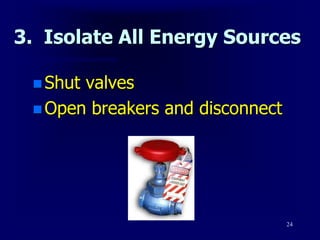
3. Isolate All Energy Sources
 Shut valves
 Open breakers and disconnect
24
Stored Energy
Lockout procedure must address Stored Energy
Awareness of how energy is transferred and
potentially stored is essential
An assessment of the systems involved is
required
Simply locking out a particular machine or
equipment is not enough
 All stored energy must be relieved
 Verify that there is no potential for re-accumulation
 Assessment of related equipment
25
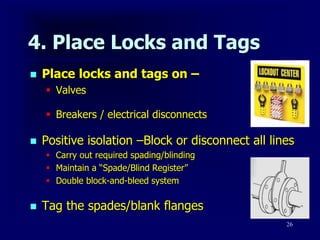
4. Place Locks and Tags
 Place locks and tags on –
 Valves
 Breakers / electrical disconnects
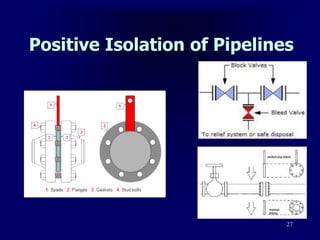
 Positive isolation –Block or disconnect all lines
 Carry out required spading/blinding
 Maintain a “Spade/Blind Register”
 Double block-and-bleed system
 Tag the spades/blank flanges
26
Positive Isolation of Pipelines
27
 Customised
attention-grabbing
tags to place
emphasis on
locked-out
equipment
28
Circuit-Breaker
lockout device
featuring a bar
clamp design
Customised LOTO Tags
5. Release or Block
all Stored Energy
 Discharge capacitors
 Block or release springs
 Block elevated parts
 Stop rotating flywheels
 Relieve system pressure
 Drain fluids
 Vent gases
 Allow system to attain ambient
temperature (cool down /warm up) 29
6. Verify Equipment
Isolation
 Check all other workers are clear
 Check locking devices securely placed
 Check isolation
 Attempt normal startup
 Return controls to OFF/Neutral
30
Release from LOTO
 Inspect area and equipment
 Ensure all machine guards are in place
 Move tools away from equipment
 Inform others of startup
 Remove spades/blinds (Record in register)
 Restore system connections
 Remove locks and tags
 Restore equipment to normal (energise)
 Conduct normal startup
31
Who can remove
Locks and Tags?
 Only the employee who
placed the tag
or
 a supervisor, after obtaining
permission from the worker
who placed the tag.
32
A piece of equipment already has
a lock and tag.
Do I have to place my own locks
and tags?
YES.
All persons working on the
equipment must place their
own locks and tags to ensure
their safety.
33
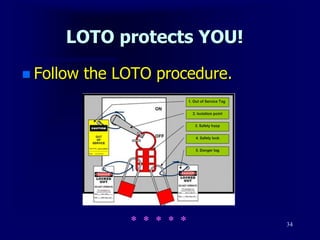
LOTO protects YOU!
 Follow the LOTO procedure.
34* * * * *
Thank you for
your interest

LOTO

  • 1.
    Lockout / Tagout (LOTO) Controlof Hazardous Energy ADIS: P-6 [1-14]
  • 2.
    We shall discuss… Purpose of Lockout-Tagout  Requirements for LOTO  Types of hazardous Energy  Procedures for LOTO 2 / 35
  • 3.
    Purpose of LOTO To prevent injury to maintenance and/or servicing employees due to –  unexpected energisation of machine or equipment,  inadvertent start-up of machine or equipment, or  release of stored energy. 3
  • 4.
    Requirements for LOTO Written procedure for LOTO  LOTO training of concerned employees  Lockout hasp (scissors clamp)  Padlocks with keys/locking devices  Tags 4
  • 5.
    Types of Energy 1.Electrical 2. Mechanical 3. Chemical 4. Thermal 5. Hydraulic 6. Pneumatic 5
  • 6.
    Electric shock cankill  As low as 30 volts can carry enough current to kill a person. 6
  • 7.
    Use Safe ElectricalPractices  Use non-conducting tools.  Check circuits are dead before working.  Lock and Tag the source breakers, not switches.  Ensure all control power is de-energized.  Discharge all capacitors after Lockout. 7
  • 8.
    Mechanical Energy Hazards Twotypes:  Kinetic – in motion (Example: A moving shaft)  Potential – stored (Example: Compressed air) 8
  • 9.
    Kinetic Energy Hazards Energyof moving machinery can cause: – Amputations – Lacerations – Fractures – Loss of life 9
  • 10.
    Potential Energy Hazards Energy stored in machinery  Weights  Springs and cables under tension  Pistons under pressure  Vessels or gas cylinders under pressure  Hydraulic controls Stored potential energy can be released during work, causing injury or death. 10
  • 11.
  • 12.
    Chemical Energy Hazards Chemicalshave energy that can –  start fires;  cause skin burns;  generate harmful gases or fumes. Before working – release/vent or drain chemicals safely. 12
  • 13.
    Thermal Energy Hazards Energyof Heat (and cold)  Hot equipment and fluids can burn you  Cold fluids can also cause cold burns  Quick release of compressed or liquefied gases can freeze your skin  Allow equipment to reach a safe temperature before starting work. 13 HOT
  • 14.
    Hydraulic Energy Energy ofLiquids Under Pressure Pressure can cause equipment to move Rapid release can cause injury, or Ejection of the system parts Relieve pressure by draining liquid slowly into a proper container. 14
  • 15.
    Pneumatic Energy Hazards Energyof Compressed Gases  Uncontrolled release can cause injury.  Rapid de-pressurization can create extremely low temperatures.  Excessive pressure may rupture the vessel or piping Properly depressurize and vent the entire system before starting work. 15
  • 16.
    First Step inLOTO Know your equipment and systems: Hazards Isolation points Procedure for lockout and tagout (LOTO) Working on unfamiliar machinery is a hazard. 16
  • 17.
    First Step inLOTO  A clear policy and written procedures and instructions are essential and address: 1. Scope 2. Purpose 3. Authorization 4. Rules 5. Techniques 17 LOTO is essential for doing a job safely.
  • 18.
    Who Can Lockout Equipment? Onlythe employees who have been trained and authorized by the management 18
  • 19.
    Items needed forLOTO  Written LOTO Procedure – workers trained  Locks & Tags – identified to the workers  Hasps – for placing multiple locks and tags  Breaker Clips – for electrical LOTO  Blank Flanges (Pancakes) – for fluid lines  Valve Covers – for LOTO of valves 19
  • 20.
    Use of Locks& Tags  Use only those issued to you  Ask your supervisor if you need more LOTO equipment 20
  • 21.
    6-Step LOTO Procedure 1.Prepare for shutdown 2. Shutdown the equipment 3. Isolate all energy sources 4. Place locks and tags 5. Release stored energy 6. Verify equipment isolation (attempt normal startup) 21
  • 22.
    1. Prepare forShutdown  Understand equipment hazards.  Notify other workers of shutdown. 22 Hasp
  • 23.
    2. Shutdown Equipment Use normal shutdown procedure.  Turn all switches to “OFF” position.  Shut all control valves.  Disable all sources of energy. 23
  • 24.
    3. Isolate AllEnergy Sources  Shut valves  Open breakers and disconnect 24
  • 25.
    Stored Energy Lockout proceduremust address Stored Energy Awareness of how energy is transferred and potentially stored is essential An assessment of the systems involved is required Simply locking out a particular machine or equipment is not enough  All stored energy must be relieved  Verify that there is no potential for re-accumulation  Assessment of related equipment 25
  • 26.
    4. Place Locksand Tags  Place locks and tags on –  Valves  Breakers / electrical disconnects  Positive isolation –Block or disconnect all lines  Carry out required spading/blinding  Maintain a “Spade/Blind Register”  Double block-and-bleed system  Tag the spades/blank flanges 26
  • 27.
  • 28.
     Customised attention-grabbing tags toplace emphasis on locked-out equipment 28 Circuit-Breaker lockout device featuring a bar clamp design Customised LOTO Tags Customised LOTO Tags
  • 29.
    5. Release orBlock all Stored Energy  Discharge capacitors  Block or release springs  Block elevated parts  Stop rotating flywheels  Relieve system pressure  Drain fluids  Vent gases  Allow system to attain ambient temperature (cool down /warm up) 29
  • 30.
    6. Verify Equipment Isolation Check all other workers are clear  Check locking devices securely placed  Check isolation  Attempt normal startup  Return controls to OFF/Neutral 30
  • 31.
    Release from LOTO Inspect area and equipment  Ensure all machine guards are in place  Move tools away from equipment  Inform others of startup  Remove spades/blinds (Record in register)  Restore system connections  Remove locks and tags  Restore equipment to normal (energise)  Conduct normal startup 31
  • 32.
    Who can remove Locksand Tags?  Only the employee who placed the tag or  a supervisor, after obtaining permission from the worker who placed the tag. 32
  • 33.
    A piece ofequipment already has a lock and tag. Do I have to place my own locks and tags? YES. All persons working on the equipment must place their own locks and tags to ensure their safety. 33
  • 34.
    LOTO protects YOU! Follow the LOTO procedure. 34* * * * *
  • 35.