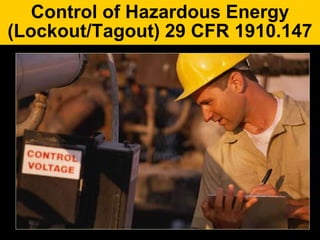
Control of Hazardous Energy
(Lockout/Tagout) 29 CFR 1910.147
What Is Lockout/Tagout?
 Referred to as LOTO
 Blocks flow of energy from power source
to the equipment
 Provides means of warning (tag)
 29 CFR 1910.147–Control of Hazardous Energy
 Covers operators and service personnel
 Requires training of employees
Regulatory Requirements
 Locks
 Blocks
 Chains
 Multilock hasps
 Wheel valve covers
 Ball valve covers
Types of Lockout Devices
Requirements For
Lockout/Tagout Devices
They must be:
 Durable
 Standardized
 Substantial
 Identifiable
Energy Sources
 Electricity
 Hydraulic
 Pneumatic
 Steam
 Thermal
 Chemical
Typical Equipment
Requiring LOTO
 Presses
 Saws
 Pumps
 Production
Equipment
 Trash
Compactors
 Ovens
When Must LOTO Be Used?
When servicing or maintaining equipment where:
 Hazardous energy exists
 Unexpected start-up could occur
 Either of these could harm an employee
LOTO Shall Be Used When:
 Employees are required to remove or
bypass a safety device
 Employees are required to place any part
of their body in harm’s way
 Employees are exposed to hazardous
energy
LOTO Exceptions
 Work where hazardous energy does
not exist
 Activities performed during routine
production processes
 Work on cord-controlled devices
 Hot tap operations where shutdown
is not feasible
Typical LOTO Procedures
 Performing a shutdown
 Isolating equipment
 Applying and removing lockout devices
 Safely releasing stored energy
Affected Employees
Employees who
 Operate
 Work around
 Occasionally adjust equipment that is
subject to LOTO
Authorized Employee
 Maintains equipment
 Services equipment
 Is trained to use LOTO
Company Responsibilities
 Ensure de-energization of equipment
 Ensure employee awareness
 Provide appropriate levels of training
 Review program effectiveness
 Maintain and revise program
 Administer appropriate disciplinary actions
Affected Employee
Responsibilities
 Notify maintenance, etc., when equipment
needs repair or adjustment
 Leave all LOTO devices in place
 Verify equipment is safe to operate
following LOTO
 Follow all safety rules while operating the
equipment
Authorized Employee
Responsibilities
 Repair or service equipment as needed
 Ensure that all energy sources are locked
out
 Test equipment to verify residual energy is
dissipated
 Place a “Danger—Do Not Operate” tag on
equipment
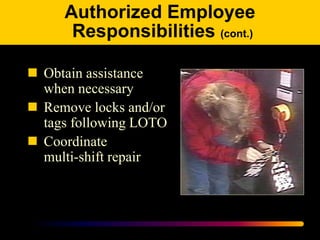
Authorized Employee
Responsibilities (cont.)
 Obtain assistance
when necessary
 Remove locks and/or
tags following LOTO
 Coordinate
multi-shift repair
How to Perform LOTO Safely
 Follow company safety procedures for LOTO
 Refer to procedures on how to lockout specific
equipment
 Keep everyone informed when equipment is
repaired or serviced
 Stay alert
 Use common sense

LOTO 2.ppt

  • 1.
    Control of HazardousEnergy (Lockout/Tagout) 29 CFR 1910.147
  • 2.
    What Is Lockout/Tagout? Referred to as LOTO  Blocks flow of energy from power source to the equipment  Provides means of warning (tag)
  • 3.
     29 CFR1910.147–Control of Hazardous Energy  Covers operators and service personnel  Requires training of employees Regulatory Requirements
  • 4.
     Locks  Blocks Chains  Multilock hasps  Wheel valve covers  Ball valve covers Types of Lockout Devices
  • 5.
    Requirements For Lockout/Tagout Devices Theymust be:  Durable  Standardized  Substantial  Identifiable
  • 6.
    Energy Sources  Electricity Hydraulic  Pneumatic  Steam  Thermal  Chemical
  • 7.
    Typical Equipment Requiring LOTO Presses  Saws  Pumps  Production Equipment  Trash Compactors  Ovens
  • 8.
    When Must LOTOBe Used? When servicing or maintaining equipment where:  Hazardous energy exists  Unexpected start-up could occur  Either of these could harm an employee
  • 9.
    LOTO Shall BeUsed When:  Employees are required to remove or bypass a safety device  Employees are required to place any part of their body in harm’s way  Employees are exposed to hazardous energy
  • 10.
    LOTO Exceptions  Workwhere hazardous energy does not exist  Activities performed during routine production processes  Work on cord-controlled devices  Hot tap operations where shutdown is not feasible
  • 11.
    Typical LOTO Procedures Performing a shutdown  Isolating equipment  Applying and removing lockout devices  Safely releasing stored energy
  • 12.
    Affected Employees Employees who Operate  Work around  Occasionally adjust equipment that is subject to LOTO
  • 13.
    Authorized Employee  Maintainsequipment  Services equipment  Is trained to use LOTO
  • 14.
    Company Responsibilities  Ensurede-energization of equipment  Ensure employee awareness  Provide appropriate levels of training  Review program effectiveness  Maintain and revise program  Administer appropriate disciplinary actions
  • 15.
    Affected Employee Responsibilities  Notifymaintenance, etc., when equipment needs repair or adjustment  Leave all LOTO devices in place  Verify equipment is safe to operate following LOTO  Follow all safety rules while operating the equipment
  • 16.
    Authorized Employee Responsibilities  Repairor service equipment as needed  Ensure that all energy sources are locked out  Test equipment to verify residual energy is dissipated  Place a “Danger—Do Not Operate” tag on equipment
  • 17.
    Authorized Employee Responsibilities (cont.) Obtain assistance when necessary  Remove locks and/or tags following LOTO  Coordinate multi-shift repair
  • 18.
    How to PerformLOTO Safely  Follow company safety procedures for LOTO  Refer to procedures on how to lockout specific equipment  Keep everyone informed when equipment is repaired or serviced  Stay alert  Use common sense