Dr. Kevin Burden:The
University of Hull
Designing Meaningful
Pedagogies for Mobile
Learning in schools
D4DL Mobile Workshop,
BRISTOL
9th
October 2013
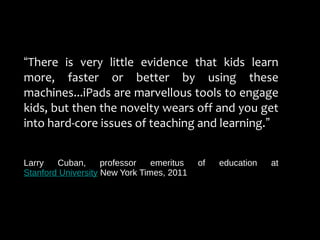
“There is very little evidence that kids learn
more, faster or better by using these
machines...iPads are marvellous tools to engage
kids, but then the novelty wears off and you get
into hard-core issues of teaching and learning.”
Larry Cuban, professor emeritus of education at
Stanford University New York Times, 2011
• Do we know what pedagogical theories/strategies
work best with mobile learning?
• Do we know why and how they work?
• Can we therefore identify key design principles for
mobile learning in different environments/contexts?
• What is currently missing from how we design for
mobile learning in schools?
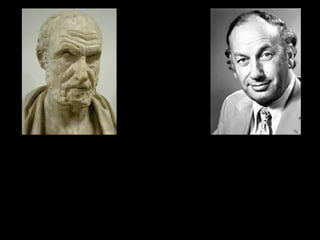
Greece:5th century, BC U.K: 1971
Hippocrates John Robert Vane
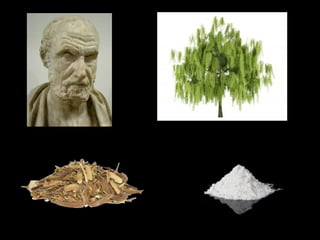
acetylsalicylic acid
1861
John Robert Vane (1971)
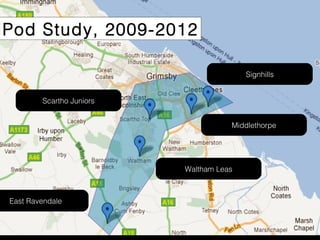
Waltham Leas
East Ravendale
Scartho Juniors
Signhills
Middlethorpe
iPod Study, 2009-2012
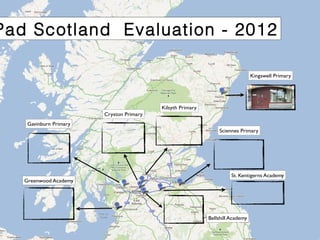
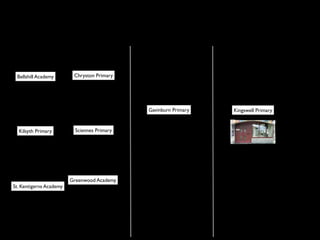
Kilsyth Primary
Cryston Primary
Gavinburn Primary
Kingswell Primary
Sciennes Primary
St. Kentigerns Academy
Bellshill Academy
Greenwood Academy
Pad Scotland Evaluation - 2012
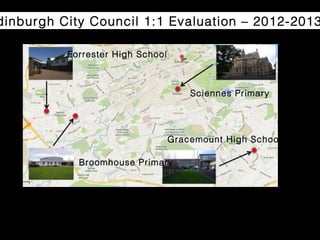
dinburgh City Council 1:1 Evaluation – 2012-2013
Forrester High School
Gracemount High School
Sciennes Primary
Broomhouse Primary
Headline findings
Kingswell Primary
St. Kentigerns Academy
Bellshill Academy Chryston Primary
Sciennes Primary
Greenwood Academy
Kilsyth Primary
Gavinburn Primary
Entirely personal devices Personal in school Class sets
Personal ownership
Modes of ‘ownership’
Class setsPersonal use
in school
Ubiquitous Personal use
Significantly greater access to technology when it is needed:
‘just in time’ rather than ‘just in case’
What works?
Personal ownership
Personal ownership
Collaborative learning
What works?
Classroom dynamics
Personal ownership
Collaborative learning
What works?
Informal & situated use
limited
Classroom dynamics
Personal ownership
Collaborative learning
What works?
Outdoor learning
Classroom dynamics
Personal ownership
Bridging home-school divide
Collaborative learning
What works?
25
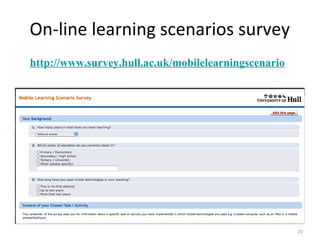
On-line learning scenarios survey
http://www.survey.hull.ac.uk/mobilelearningscenario
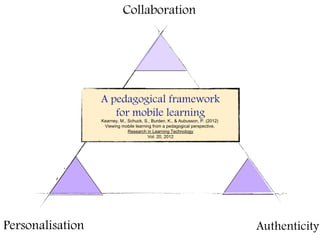
Collaboration
Datasharing
Conversation
Authenticity
Contextualised
Situated
Personalisation
Agency
Customisation
A pedagogical framework
for mobile learning
Kearney, M., Schuck, S., Burden, K., & Aubusson, P. (2012)
Viewing mobile learning from a pedagogical perspective,
Research in Learning Technology
Vol. 20, 2012
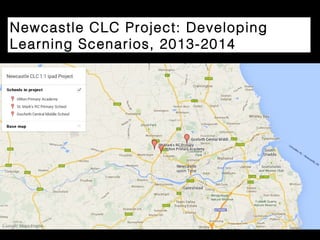
Newcastle CLC Project: Developing
Learning Scenarios, 2013-2014
iPads for Initial Teacher Training (2013-
2015)
http://www.mmiweb.org.uk/hull/site/ipad/ipad_1.html
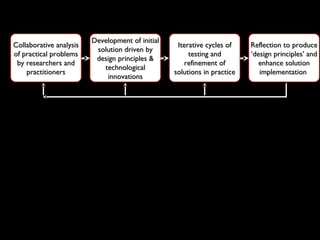
Collaborative analysisCollaborative analysis
of practical problemsof practical problems
by researchers andby researchers and
practitionerspractitioners
Reflection to produceReflection to produce
‘‘design principlesdesign principles’’ andand
enhance solutionenhance solution
implementationimplementation
Design Based Research
Development of initialDevelopment of initial
solution driven bysolution driven by
design principles &design principles &
technologicaltechnological
innovationsinnovations
Iterative cycles ofIterative cycles of
testing andtesting and
refinement ofrefinement of
solutions in practicesolutions in practice
refinement of problems, solutions and design principles
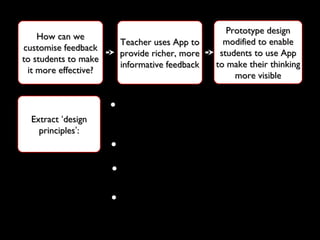
How can weHow can we
customise feedbackcustomise feedback
to students to maketo students to make
it more effective?it more effective?
Teacher uses App toTeacher uses App to
provide richer, moreprovide richer, more
informative feedbackinformative feedback
Prototype designPrototype design
modified to enablemodified to enable
students to use Appstudents to use App
to make their thinkingto make their thinking
more visiblemore visible
ExtractExtract ‘‘designdesign
principlesprinciples’’::
•Use the App to encourage two-way
flow of feedback data
•Focus on ‘threshold concepts’
•Encourage peer-to-peer feedback
•Use feed-back to inform future
planning
• Do we know what pedagogical theories/strategies
work best with mobile learning?
• Do we know why and how they work?
• Can we therefore identify key design principles for
mobile learning in different environments/contexts?
• What is currently missing from how we design for
mobile learning in schools?
Conclusions
39
Dr. Kevin Burden
The Centre for
Educational Studies
The Faculty of Education
The University of Hull
k.j.burden@hull.ac.uk
07815184477

D4DL Workshop presentation at Bristol: 9th October 2013

  • 1.
    Dr. Kevin Burden:The Universityof Hull Designing Meaningful Pedagogies for Mobile Learning in schools D4DL Mobile Workshop, BRISTOL 9th October 2013
  • 3.
    “There is verylittle evidence that kids learn more, faster or better by using these machines...iPads are marvellous tools to engage kids, but then the novelty wears off and you get into hard-core issues of teaching and learning.” Larry Cuban, professor emeritus of education at Stanford University New York Times, 2011
  • 4.
    • Do weknow what pedagogical theories/strategies work best with mobile learning? • Do we know why and how they work? • Can we therefore identify key design principles for mobile learning in different environments/contexts? • What is currently missing from how we design for mobile learning in schools?
  • 5.
    Greece:5th century, BCU.K: 1971 Hippocrates John Robert Vane
  • 8.
  • 9.
  • 12.
    Waltham Leas East Ravendale ScarthoJuniors Signhills Middlethorpe iPod Study, 2009-2012
  • 13.
    Kilsyth Primary Cryston Primary GavinburnPrimary Kingswell Primary Sciennes Primary St. Kentigerns Academy Bellshill Academy Greenwood Academy Pad Scotland Evaluation - 2012
  • 14.
    dinburgh City Council1:1 Evaluation – 2012-2013 Forrester High School Gracemount High School Sciennes Primary Broomhouse Primary
  • 16.
  • 17.
    Kingswell Primary St. KentigernsAcademy Bellshill Academy Chryston Primary Sciennes Primary Greenwood Academy Kilsyth Primary Gavinburn Primary Entirely personal devices Personal in school Class sets Personal ownership Modes of ‘ownership’ Class setsPersonal use in school Ubiquitous Personal use
  • 18.
    Significantly greater accessto technology when it is needed: ‘just in time’ rather than ‘just in case’
  • 19.
  • 20.
  • 21.
  • 22.
    Informal & situateduse limited Classroom dynamics Personal ownership Collaborative learning What works?
  • 23.
    Outdoor learning Classroom dynamics Personalownership Bridging home-school divide Collaborative learning What works?
  • 24.
    25 On-line learning scenariossurvey http://www.survey.hull.ac.uk/mobilelearningscenario
  • 25.
    Collaboration Datasharing Conversation Authenticity Contextualised Situated Personalisation Agency Customisation A pedagogical framework formobile learning Kearney, M., Schuck, S., Burden, K., & Aubusson, P. (2012) Viewing mobile learning from a pedagogical perspective, Research in Learning Technology Vol. 20, 2012
  • 26.
    Newcastle CLC Project:Developing Learning Scenarios, 2013-2014
  • 27.
    iPads for InitialTeacher Training (2013- 2015) http://www.mmiweb.org.uk/hull/site/ipad/ipad_1.html
  • 28.
    Collaborative analysisCollaborative analysis ofpractical problemsof practical problems by researchers andby researchers and practitionerspractitioners Reflection to produceReflection to produce ‘‘design principlesdesign principles’’ andand enhance solutionenhance solution implementationimplementation Design Based Research Development of initialDevelopment of initial solution driven bysolution driven by design principles &design principles & technologicaltechnological innovationsinnovations Iterative cycles ofIterative cycles of testing andtesting and refinement ofrefinement of solutions in practicesolutions in practice refinement of problems, solutions and design principles
  • 30.
    How can weHowcan we customise feedbackcustomise feedback to students to maketo students to make it more effective?it more effective? Teacher uses App toTeacher uses App to provide richer, moreprovide richer, more informative feedbackinformative feedback Prototype designPrototype design modified to enablemodified to enable students to use Appstudents to use App to make their thinkingto make their thinking more visiblemore visible ExtractExtract ‘‘designdesign principlesprinciples’’:: •Use the App to encourage two-way flow of feedback data •Focus on ‘threshold concepts’ •Encourage peer-to-peer feedback •Use feed-back to inform future planning
  • 31.
    • Do weknow what pedagogical theories/strategies work best with mobile learning? • Do we know why and how they work? • Can we therefore identify key design principles for mobile learning in different environments/contexts? • What is currently missing from how we design for mobile learning in schools? Conclusions
  • 33.
    39 Dr. Kevin Burden TheCentre for Educational Studies The Faculty of Education The University of Hull k.j.burden@hull.ac.uk 07815184477

Editor's Notes

  • #2 Could be called: Three Models and a Challenge - Distinctive Pedagogies for Tablet Computers
  • #4 ( http://www.nytimes.com/2011/01/05/education/05tablets.html?_r=0 )
  • #5 Will argue that we are gaining a better idea of what currently works well especially in formal school contexts through a number of studies and case studies which have merged recently. However, when we analyse these carefully – and I include my own work here – we don’t know sufficient about why or how they work to duplicate and replicate them at scale (yet)
  • #8 As long back as ancient times physicians and doctors like Hippocrates knew that the bark of this tree (the willow) when ground down (powder) produced a compound with great analgesic powers to reliev a wide variety of minor aliment and pains including inflammation and headaches. It continued to be used as a remedy for hundreds of years until in the 1860s it was identified as acetylsalicylic acid ’ In 1899 Bayer (the US pharmaceutical company) patented this chemical as Aspirin but it was not until 1971 that John Robert Vane actually discovered the mechanism behind this drug. Since John Vane made his discovery numerous other applications have been developed moving far beyond the original purpose which was simple pain relief - it is now used extensively to prevent heart attacks and strokes
  • #13 In 1997 Gary Kasparov, a grand-master of chess then at the top of his game, decided to accept the challenge offered by IBM to play their super-computer – Deep Blue – in a series of speed games played over a relatively short period of time (60 minutes). Although it was anticipated Karsparove intuition and brilliant flair for ambitious and unexpected moves would trump the computer, Deep Blue trounced him sound xxxxxx, leaving many to conclude that chess as a game was dead if computers could win so easily. Kasparov was not so pessimistic and reasoned that his defeats by Deep Blue were a combination of the time factor and the computer’s brute force ability to handle milions of calculations every second, effectively looking forwards 7 or 8 moves into the game. Despite what you may have heard or read this feat of forward planning is exceptionally rare for human-beings and even the best grand masters find it difficult to calculate all of the possible moves 4/5 move out, and that is with the benefit of time. In the case of this challenge deepBlue simply out-calculated Kasparov. But then something unexpected happened. Kasparov decided it would be interesting to explore how a computer like Deep Blue and a grand master like himself would fare in a contest against equal oppontents: i.e another computer and another grand master, and the concept of Advanced Chess was born. The results were startling and somewhat surprising. What kasparov discovered was that whilst his intuition combined with the brute calculating and logic force of the computer to produce a formidable duo, they were not unbeatable! In fact in xxxx two relative amateurs (xxxxxx) won the Advanced Chess world championships beating other higher ranking combinations of grand-masters and computers. How could this happen: the answer was complementarity. Xxxxx and xxxxx understood better than anybody else how to harness the power of the computer but also when to ignore it. In effect they were excellent at managing the computer, effectively extending their own cognition in the process. And when they were challenged to compete against the most powerful super computer of its time (Hydra – many time smore powerful than Deep Blue) they also beat that even though they were only using a standrad laptop computer program anybody could buy in the shop. This story shows how technology can be used to enhance our cognition and understanding significantly but also how it requires a careful understanding and appreciation of when and how to harness the technology, and indeed, when not to. The story has resonance for our modern digital technologies such as mobile devices and this leads me to think we need to understand the processes or affordances better if we are to exploit the opportunities for learning which technology offers.
  • #17 Where is this evidence located ? A growing number of studies led by this one in Scotland - NEED OTHER STUDIES HERE - 2008, MELBOURNE STUDY, ETC
  • #27 To support this form of research we are using a largely theoretical framework for mobile learning developed between myself and colleagues at the University of Technology, Sydney. It identifies three broad areas to investigate and within this six strands or designs