Logistics
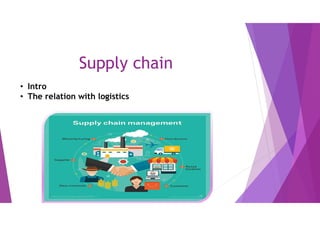
Supply chain
• Intro
• The relation with logistics
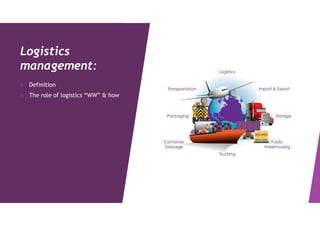
Logistics
management:
 Definition
 The role of logistics “WW” & how
Logistics management:
Transportation
Warehousing and Inventory Management
network
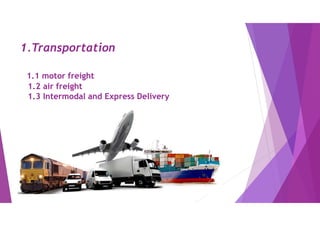
1.Transportation
1.1 motor freight
1.2 air freight
1.3 Intermodal and Express Delivery
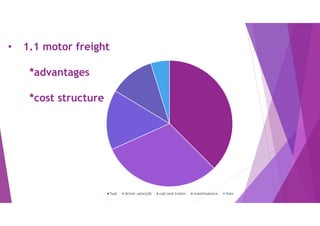
• 1.1 motor freight
*advantages
*cost structure
fuel driver salary26 cab and trailer maintinannce fees
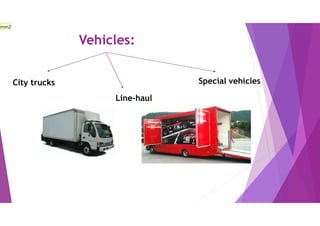
Vehicles:
City trucks
Line-haul
Special vehicles
mm2
Slide 7
mm2 the game video
mohamed motamed, 2/13/2019
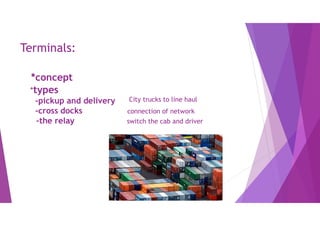
Terminals:
*concept
*types
-pickup and delivery
-cross docks connection of network
-the relay switch the cab and driver
City trucks to line haul
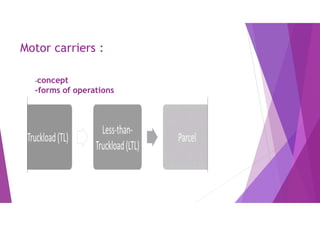
Motor carriers :
-concept
-forms of operations
-competition
questions?
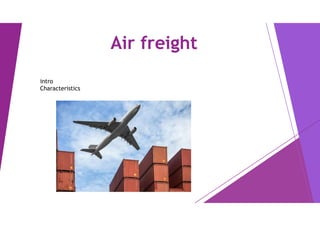
Air freight
intro
Characteristics
Air freight
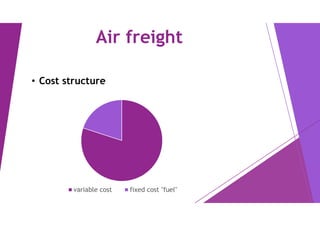
• Cost structure
variable cost fixed cost "fuel"
Air freight
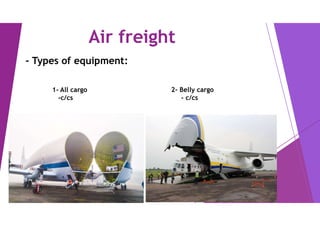
- Types of equipment:
1- All cargo
-c/cs
2- Belly cargo
- c/cs
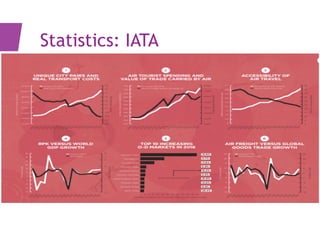
Statistics: IATA
Air carriers
• The basic operation
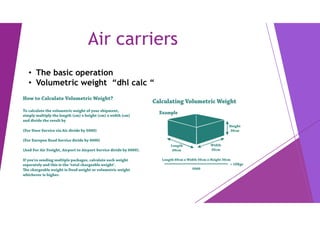
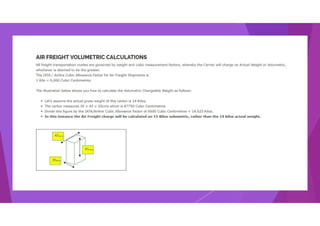
• Volumetric weight “dhl calc “
Air carriers
• Competition
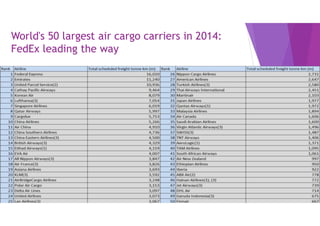
World's 50 largest air cargo carriers in 2014:
FedEx leading the way
Intermodal
and express
delivery :
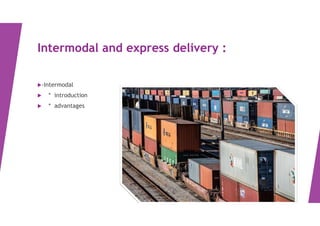
Intermodal and express delivery :
-Intermodal
 * introduction
 * advantages
Intermodal and express delivery :
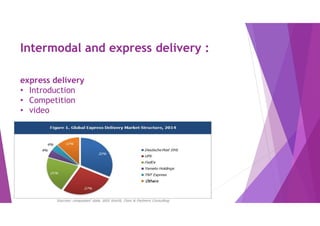
express delivery
• Introduction
• Competition
• video
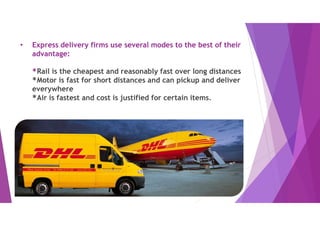
• Express delivery firms use several modes to the best of their
advantage:
*Rail is the cheapest and reasonably fast over long distances
*Motor is fast for short distances and can pickup and deliver
everywhere
*Air is fastest and cost is justified for certain items.
the giants…
China:
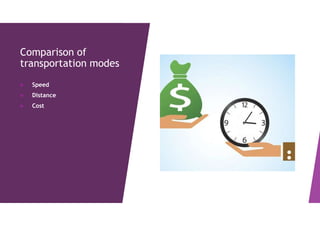
Comparison of
transportation modes
 Speed
 Distance
 Cost
Speed
Truck: approximately 50 miles (or 80 kilometers) per hour over the highway for up to 500
miles (800 kilometers)
Train: approximately 30 miles (or 50 kilometers) per hour over almost any distance.
Air: upwards of 200 miles (or 320 kilometers) per hour for distances of more than 500 miles
(800 kilometers), including ground operations.
Distance
Truck: up to 500 miles (800 kilometers) is the ideal distance, but there are still advantages
over the other modes up to 750 miles (1200 kilometers).
Train: for distances of more than 750 miles intermodal has some speed advantages, but the
average distance for intermodal is somewhere around 1,700 miles.
Air: at least 500 miles (800 kilometers) but typically more than 2000 miles.
Cost
Truck: current rates are highly variable, but $1.50 per mile is a reasonable starting value for
a TL shipment
Rail: intermodal freight shipments are typically much cheaper than TL and a common rule of
thumb is about 60-80% of the price of a TL shipment.
Air: typically we consider air freight to be about 6 to 8 times more expensive than truck.
Details
Warehousing
Management :
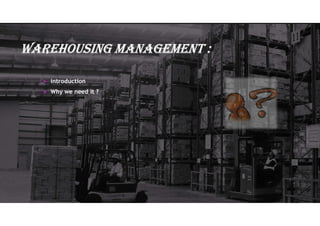
Warehousing ManageMent :
 introduction
 Why we need it ?
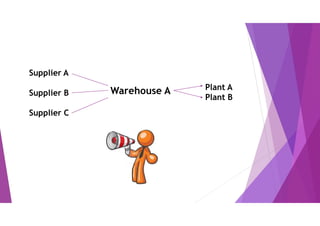
Supplier A
Supplier B
Supplier C
Warehouse A Plant A
Plant B
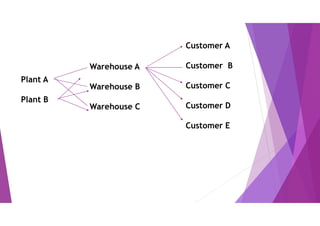
Plant A
Plant B
Warehouse A
Warehouse B
Warehouse C
Customer A
Customer B
Customer C
Customer D
Customer E
Warehousing
Management :
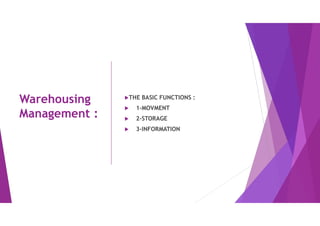
THE BASIC FUNCTIONS :
 1-MOVMENT
 2-STORAGE
 3-INFORMATION
Warehousing Management :
WHAT MAKES WARHOUSES GOOD :
 1-SPEED
 2-QUALITY
 3-PRODUCTIVITY
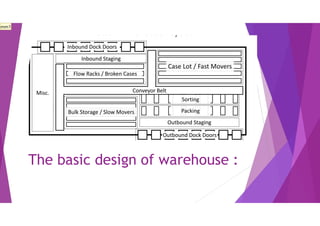
The basic design of warehouse :
mm1
Slide 35
mm1 then the second video
mohamed motamed, 2/13/2019
Questions?

Logistics managment part 1