

BUSINESS
Session 2
Feasibility Study
Feasibility study
 Definition: evaluation and analysis of a project or system
that somebody has proposed.
 Goal: The study tries to determine whether the project is
technically, legally and financially feasible, means whether
the project is feasible within the estimated cost.
 When
-during the project lifecycle.
-after the business case.
Is it feasible?
Go
No-go
Feasibility study vs.
business plan
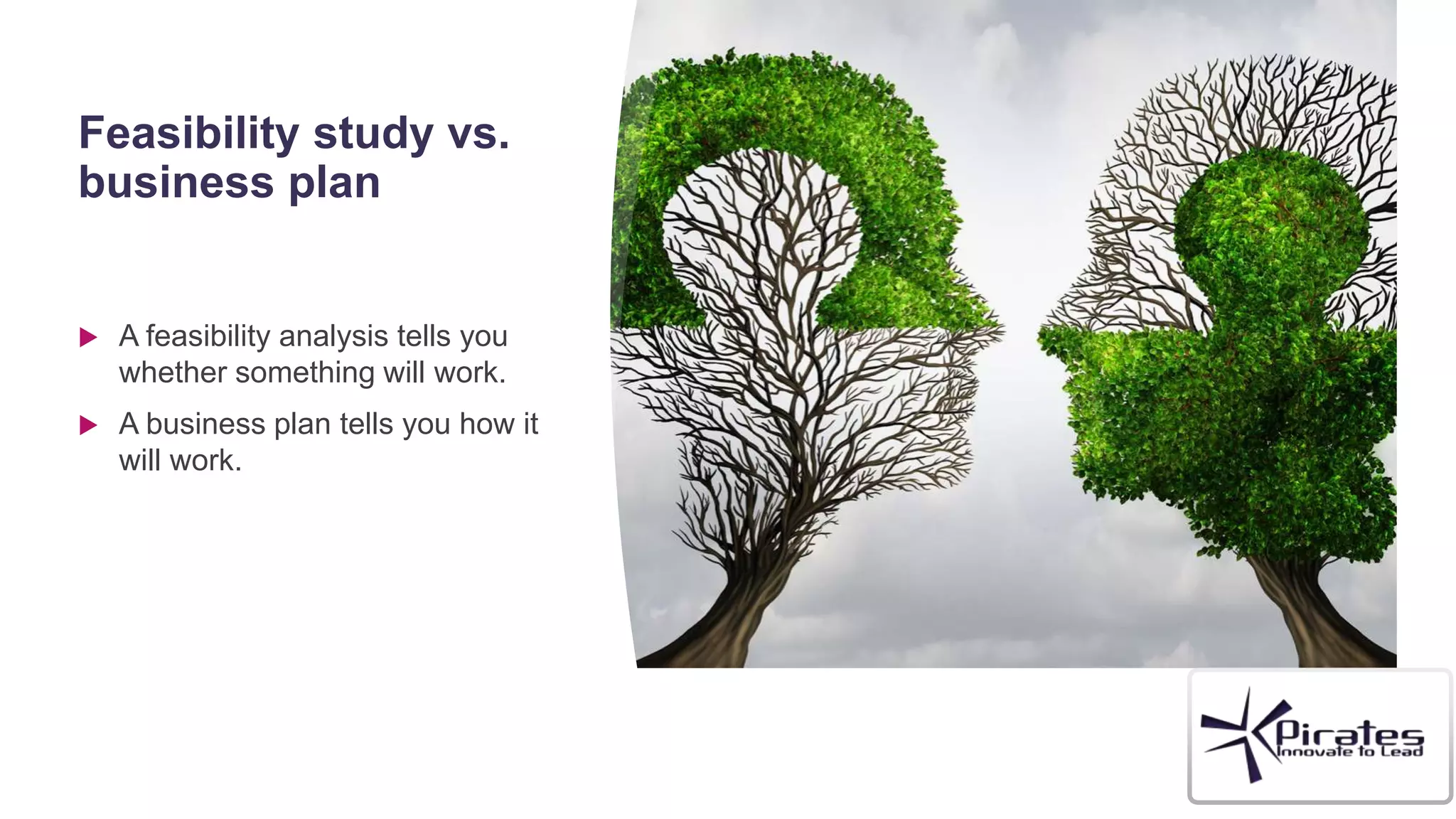
 A feasibility analysis tells you
whether something will work.
 A business plan tells you how it
will work.
Feasibility
studies
Technical feasibility
Financial feasibility
Market feasibility
Organizational feasibility
Technical feasibility
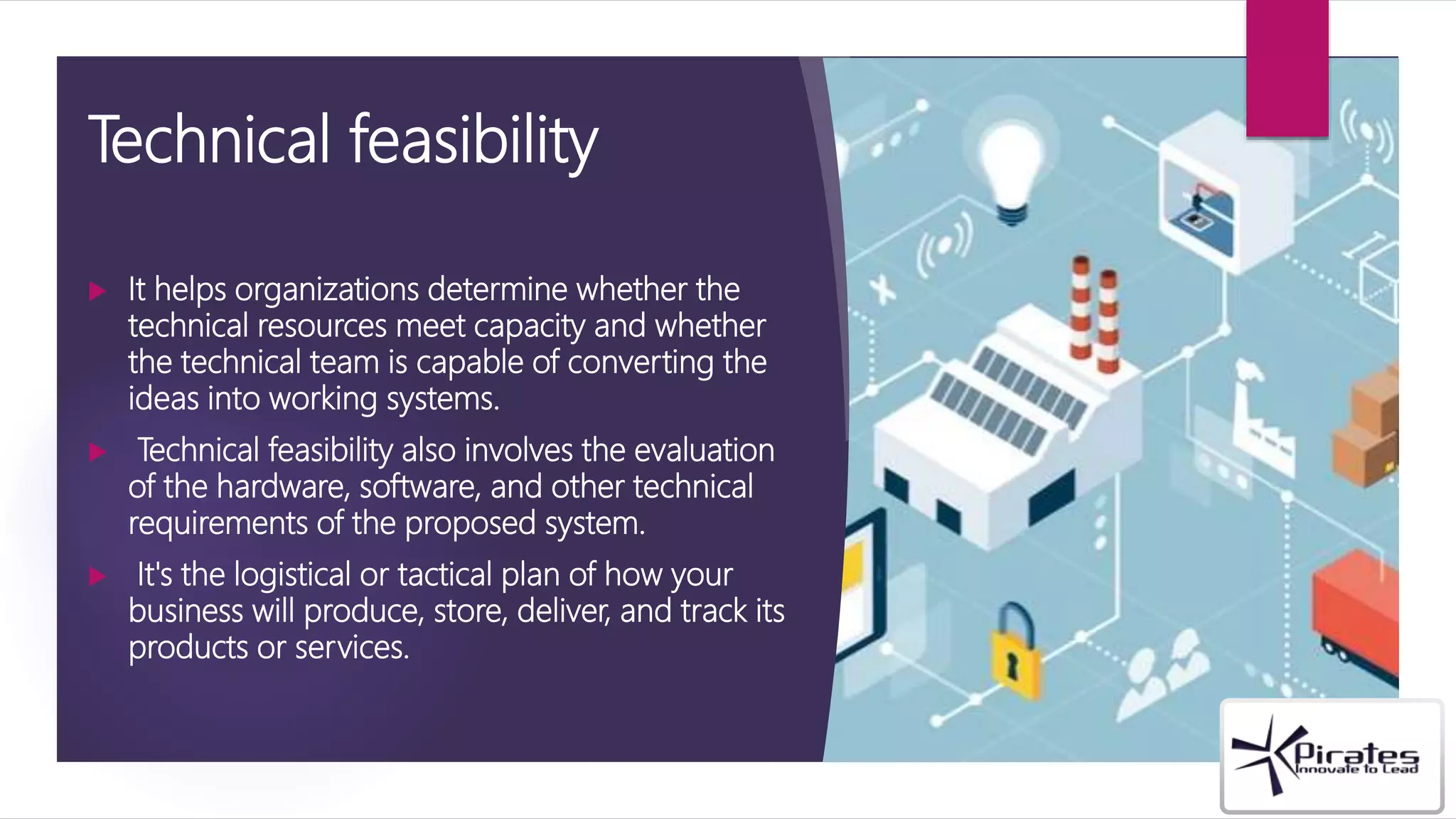
 It helps organizations determine whether the
technical resources meet capacity and whether
the technical team is capable of converting the
ideas into working systems.
 Technical feasibility also involves the evaluation
of the hardware, software, and other technical
requirements of the proposed system.
 It's the logistical or tactical plan of how your
business will produce, store, deliver, and track its
products or services.
Technical feasibility
 Scopes of tech. feasibility study:
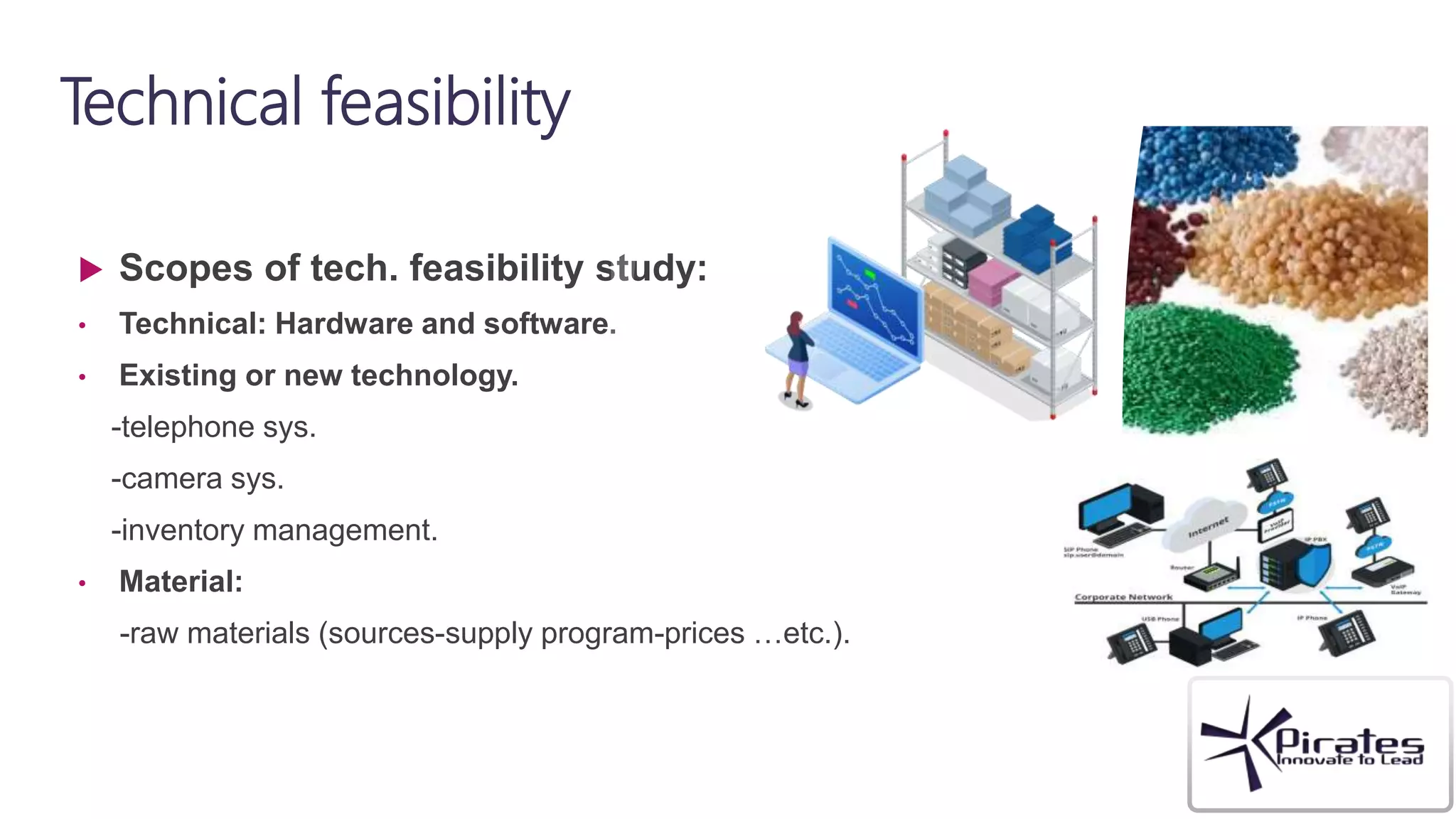
• Technical: Hardware and software.
• Existing or new technology.
-telephone sys.
-camera sys.
-inventory management.
• Material:
-raw materials (sources-supply program-prices …etc.).
Technical feasibility
 Scopes of tech. feasibility
study:
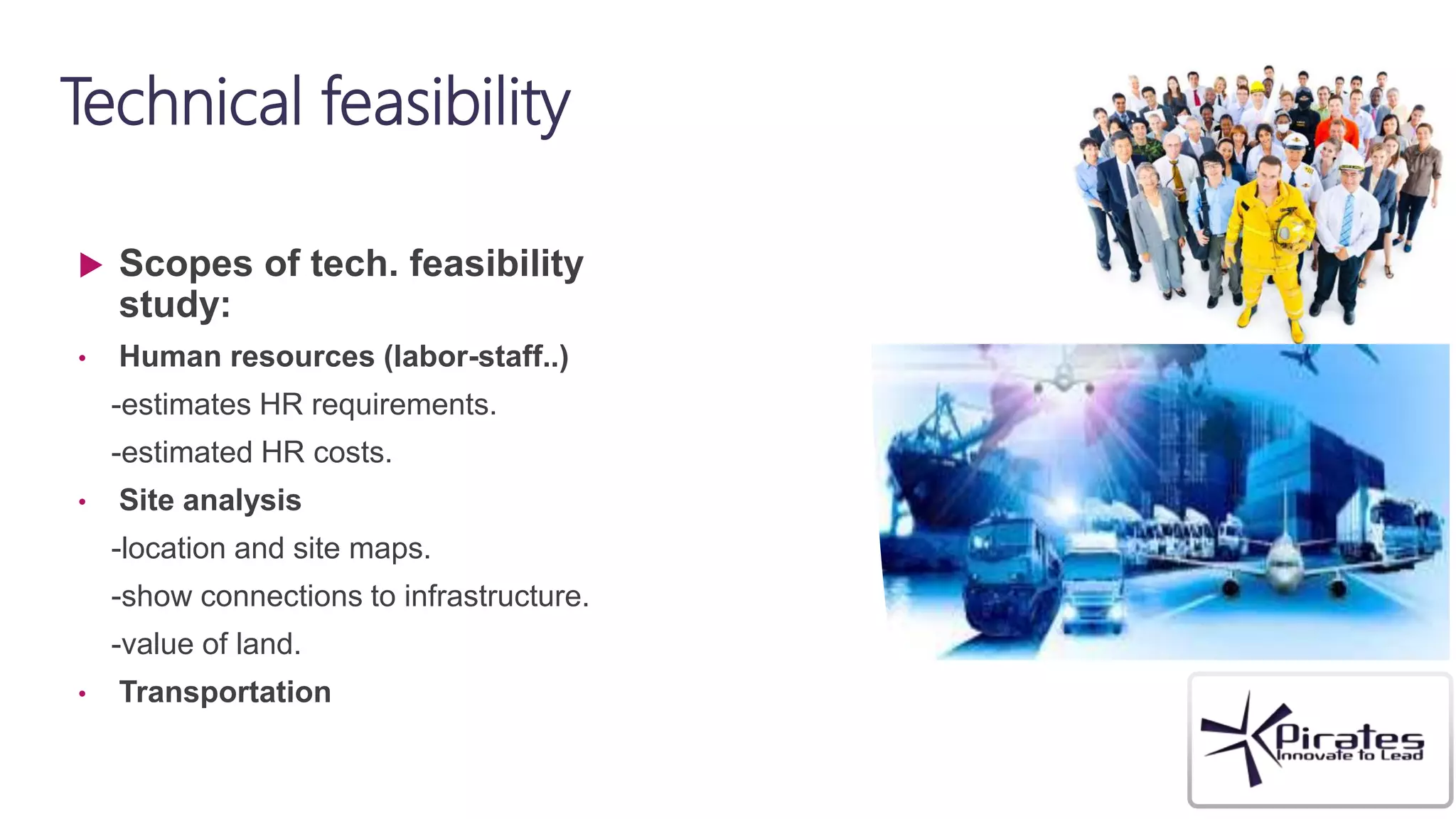
• Human resources (labor-staff..)
-estimates HR requirements.
-estimated HR costs.
• Site analysis
-location and site maps.
-show connections to infrastructure.
-value of land.
• Transportation
game
 ‫الي‬ ‫المربع‬ ‫بتقسيم‬ ‫قم‬7‫متساوية‬ ‫اجزاء‬
financial feasibility
 A financial feasibility study projects
how much start-up capital is needed, sources
of capital, returns on investment, and other
financial considerations.
 The study considers how much cash is
needed, where it will come from, and how it
will be spent.
financial feasibility
The scopes of financial feasibility:
i. Initial investment “capital requirements”
1-Start-up capital is how much cash you need to start your
business and keep it running until it is self-sustaining.
2-Although many business or sole proprietorships determine
their capital requirements individually, larger corporations may
use the help of their respective bank or capital firm to pinpoint
capital requirements for either a round of funding or business
launch.
i. Resources to procure capital:
1-investors are more likely to invest, banks are more likely to
approve loans, and large corporations are more likely to give
you contracts if you have personally invested in the business
yourself.
financial feasibility
The scopes of financial feasibility:
i. Return on investment.
1- In order to entice investors you need to show how your business
will make profits, when it will begin to make profits, how
much profit it will make, and what investors will gain from their
investment.
i. Paying back investors.
1-Most investment returns are typically distributed on a quarterly, bi-
annual, or annual basis.
2-Consider how the various distribution cycles could affect your
business' cash flow during the first two years of operation. In other
words, do not just run one set of numbers, examine each type of
distribution and support why you think the option you choose is the
best one.
financial feasibility
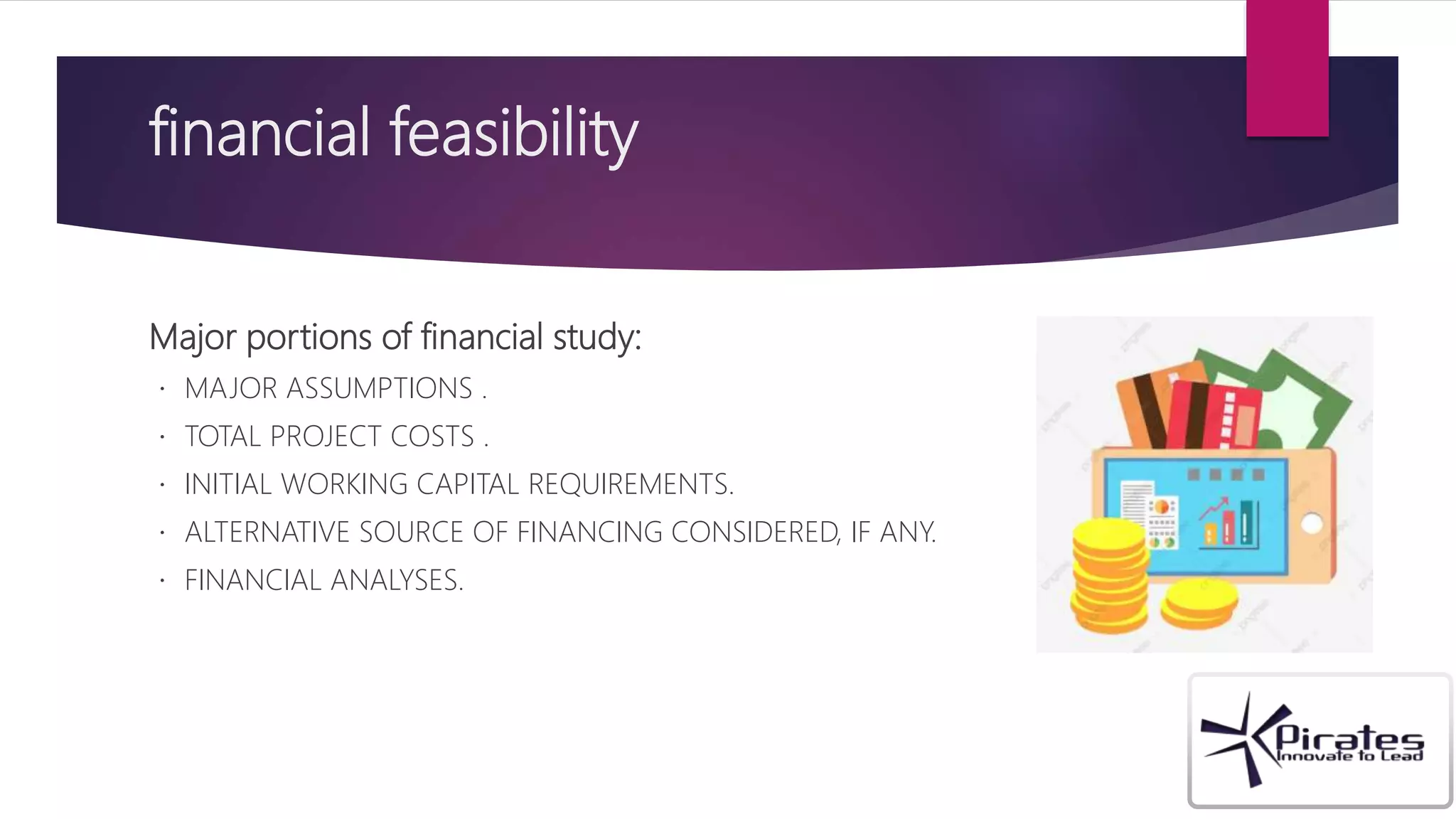
Major portions of financial study:
MAJOR ASSUMPTIONS .
TOTAL PROJECT COSTS .
INITIAL WORKING CAPITAL REQUIREMENTS.
ALTERNATIVE SOURCE OF FINANCING CONSIDERED, IF ANY.
FINANCIAL ANALYSES.
Market feasibility
 Market feasibility studies help identify market competition, potential markets,
and market analysis to assess a business idea.
 Market feasibility studies should include a description of the industry, current
market analysis, competition, anticipated future market potential, potential
sources of revenue, and sales projections.
 It helps the companies estimate the demand.
 If the market feasibility is negative search new investment or modify it and find
another market .
Market feasibility
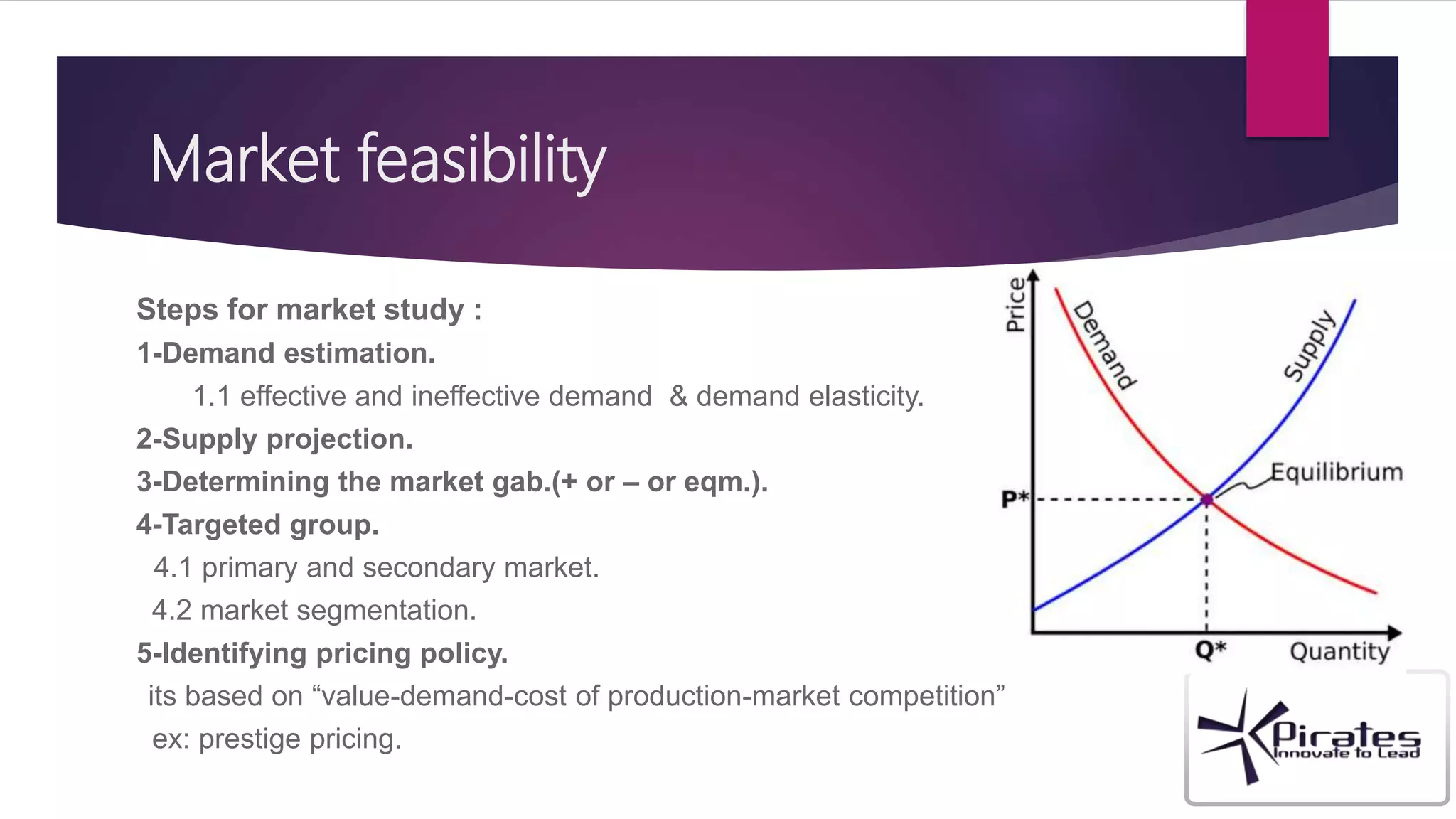
Steps for market study :
1-Demand estimation.
1.1 effective and ineffective demand & demand elasticity.
2-Supply projection.
3-Determining the market gab.(+ or – or eqm.).
4-Targeted group.
4.1 primary and secondary market.
4.2 market segmentation.
5-Identifying pricing policy.
its based on “value-demand-cost of production-market competition”
ex: prestige pricing.
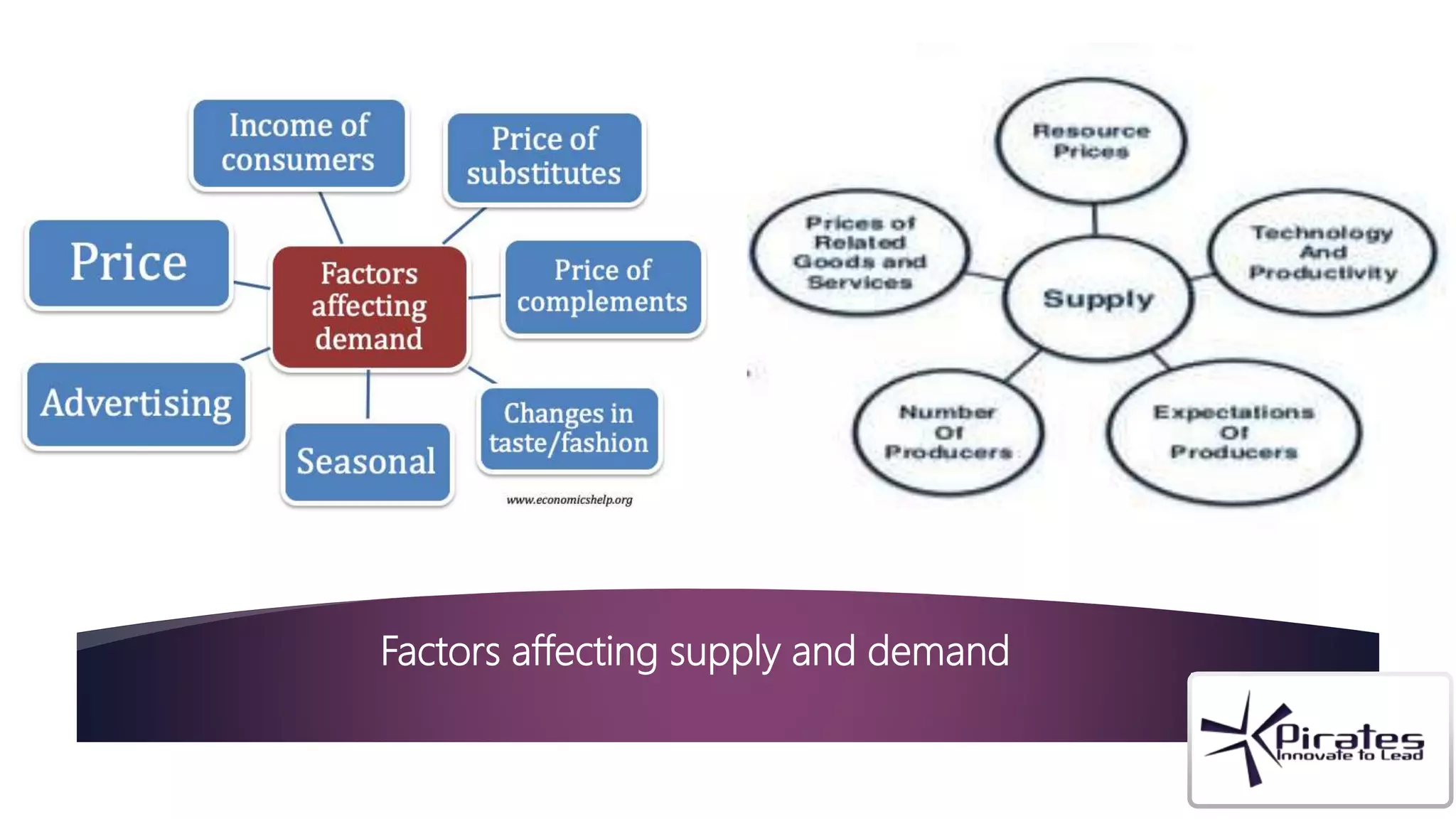
Factors affecting supply and demand
Market feasibility
 Goals for Market Study:
• Determine the market structure and shape.
• Determine exact demand for product.
• Identify the factors affecting the market demand and supply.
• Identify market targeted groups, and market segments.
• Selecting the price policy and the best .
Market feasibility
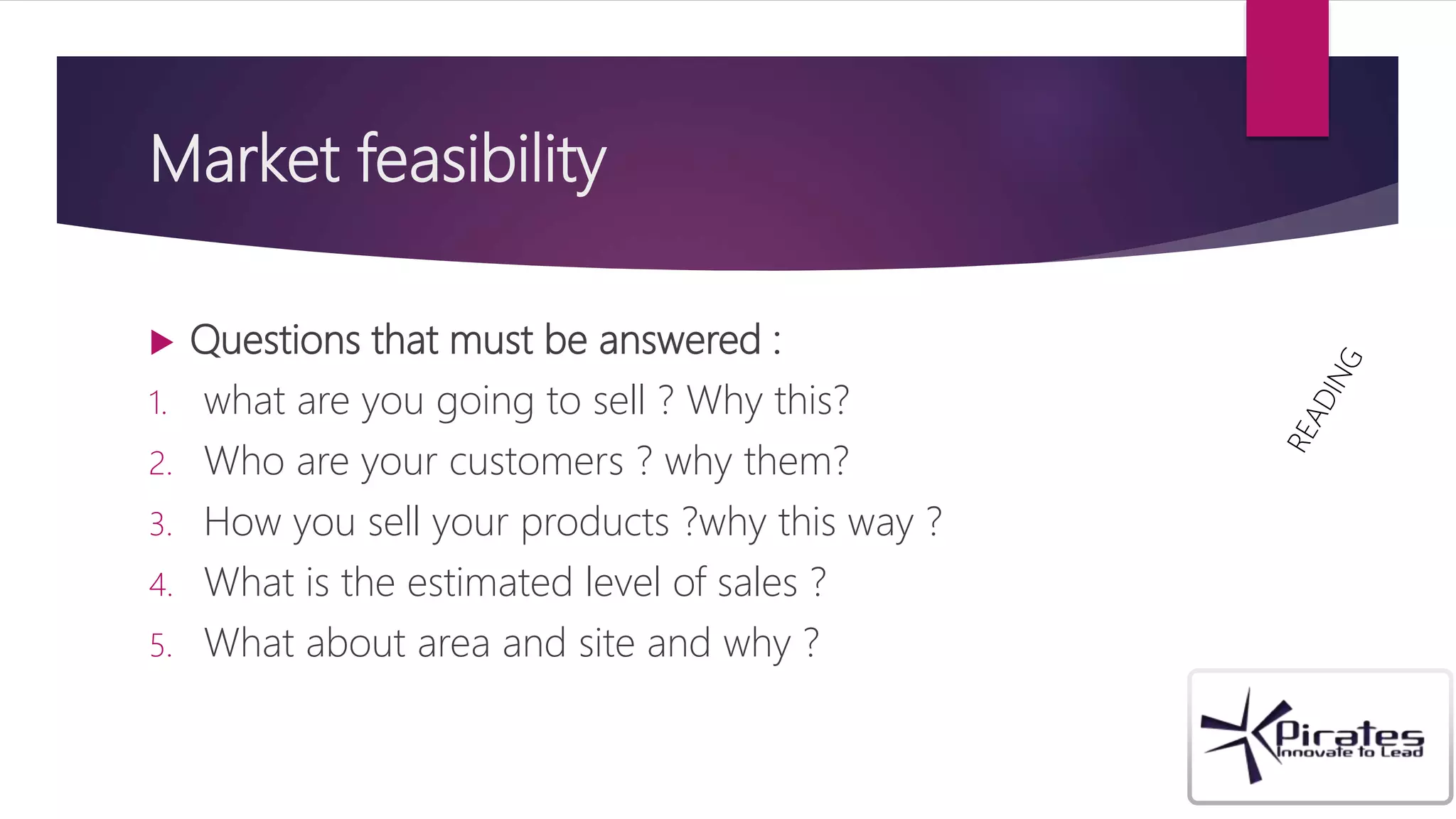
 Questions that must be answered :
1. what are you going to sell ? Why this?
2. Who are your customers ? why them?
3. How you sell your products ?why this way ?
4. What is the estimated level of sales ?
5. What about area and site and why ?
Legal and investment environmental feasibility
 This study is conducted by experts and specialists in the field of law
and legislation concerning investment and employment, insurance,
taxes... etc.,
 contains four elements:
1- Analysis of investment environment.
• Customs, traditions and social values (habits and social values) such as Ramadan.
• Economic and political system.
• Grants and subsidies .
2- Study of investment laws.
The investor should consider public laws and regulations that affect costs and revenues
of the project i.e. civil, commercial, and economic laws such as:
• Incentives and mechanisms to encourage investment.
• Customs and tax laws.
• Commercial and economic laws.
3- Enhancing and controlling investments
 Investment restrictions.
 Incentives/advantages:
Direct investment incentives - Indirect investment incentives.
4-Specifying the legal personality
 Sole Proprietorship.
 General Partnership.
 Corporation .
 nonprofit Corporation.
Who preparers the Feasibility study should identify some environmental
components of social, political, and economic study which require certain
elements .
Legal and investment environmental feasibility
Feasibility report
questions
Thank you

Feasibility study

  • 1.
  • 2.
  • 3.
    Feasibility study  Definition:evaluation and analysis of a project or system that somebody has proposed.  Goal: The study tries to determine whether the project is technically, legally and financially feasible, means whether the project is feasible within the estimated cost.  When -during the project lifecycle. -after the business case.
  • 4.
  • 6.
    Feasibility study vs. businessplan  A feasibility analysis tells you whether something will work.  A business plan tells you how it will work.
  • 7.
  • 8.
    Technical feasibility  Ithelps organizations determine whether the technical resources meet capacity and whether the technical team is capable of converting the ideas into working systems.  Technical feasibility also involves the evaluation of the hardware, software, and other technical requirements of the proposed system.  It's the logistical or tactical plan of how your business will produce, store, deliver, and track its products or services.
  • 9.
    Technical feasibility  Scopesof tech. feasibility study: • Technical: Hardware and software. • Existing or new technology. -telephone sys. -camera sys. -inventory management. • Material: -raw materials (sources-supply program-prices …etc.).
  • 10.
    Technical feasibility  Scopesof tech. feasibility study: • Human resources (labor-staff..) -estimates HR requirements. -estimated HR costs. • Site analysis -location and site maps. -show connections to infrastructure. -value of land. • Transportation
  • 11.
  • 16.
     ‫الي‬ ‫المربع‬‫بتقسيم‬ ‫قم‬7‫متساوية‬ ‫اجزاء‬
  • 18.
    financial feasibility  Afinancial feasibility study projects how much start-up capital is needed, sources of capital, returns on investment, and other financial considerations.  The study considers how much cash is needed, where it will come from, and how it will be spent.
  • 19.
    financial feasibility The scopesof financial feasibility: i. Initial investment “capital requirements” 1-Start-up capital is how much cash you need to start your business and keep it running until it is self-sustaining. 2-Although many business or sole proprietorships determine their capital requirements individually, larger corporations may use the help of their respective bank or capital firm to pinpoint capital requirements for either a round of funding or business launch. i. Resources to procure capital: 1-investors are more likely to invest, banks are more likely to approve loans, and large corporations are more likely to give you contracts if you have personally invested in the business yourself.
  • 20.
    financial feasibility The scopesof financial feasibility: i. Return on investment. 1- In order to entice investors you need to show how your business will make profits, when it will begin to make profits, how much profit it will make, and what investors will gain from their investment. i. Paying back investors. 1-Most investment returns are typically distributed on a quarterly, bi- annual, or annual basis. 2-Consider how the various distribution cycles could affect your business' cash flow during the first two years of operation. In other words, do not just run one set of numbers, examine each type of distribution and support why you think the option you choose is the best one.
  • 21.
    financial feasibility Major portionsof financial study: MAJOR ASSUMPTIONS . TOTAL PROJECT COSTS . INITIAL WORKING CAPITAL REQUIREMENTS. ALTERNATIVE SOURCE OF FINANCING CONSIDERED, IF ANY. FINANCIAL ANALYSES.
  • 22.
    Market feasibility  Marketfeasibility studies help identify market competition, potential markets, and market analysis to assess a business idea.  Market feasibility studies should include a description of the industry, current market analysis, competition, anticipated future market potential, potential sources of revenue, and sales projections.  It helps the companies estimate the demand.  If the market feasibility is negative search new investment or modify it and find another market .
  • 23.
    Market feasibility Steps formarket study : 1-Demand estimation. 1.1 effective and ineffective demand & demand elasticity. 2-Supply projection. 3-Determining the market gab.(+ or – or eqm.). 4-Targeted group. 4.1 primary and secondary market. 4.2 market segmentation. 5-Identifying pricing policy. its based on “value-demand-cost of production-market competition” ex: prestige pricing.
  • 24.
  • 25.
    Market feasibility  Goalsfor Market Study: • Determine the market structure and shape. • Determine exact demand for product. • Identify the factors affecting the market demand and supply. • Identify market targeted groups, and market segments. • Selecting the price policy and the best .
  • 26.
    Market feasibility  Questionsthat must be answered : 1. what are you going to sell ? Why this? 2. Who are your customers ? why them? 3. How you sell your products ?why this way ? 4. What is the estimated level of sales ? 5. What about area and site and why ?
  • 27.
    Legal and investmentenvironmental feasibility  This study is conducted by experts and specialists in the field of law and legislation concerning investment and employment, insurance, taxes... etc.,  contains four elements: 1- Analysis of investment environment. • Customs, traditions and social values (habits and social values) such as Ramadan. • Economic and political system. • Grants and subsidies . 2- Study of investment laws. The investor should consider public laws and regulations that affect costs and revenues of the project i.e. civil, commercial, and economic laws such as: • Incentives and mechanisms to encourage investment. • Customs and tax laws. • Commercial and economic laws.
  • 28.
    3- Enhancing andcontrolling investments  Investment restrictions.  Incentives/advantages: Direct investment incentives - Indirect investment incentives. 4-Specifying the legal personality  Sole Proprietorship.  General Partnership.  Corporation .  nonprofit Corporation. Who preparers the Feasibility study should identify some environmental components of social, political, and economic study which require certain elements . Legal and investment environmental feasibility
  • 29.
  • 30.
  • 31.