The document discusses customer service in the context of logistics and supply chain management, emphasizing its importance in building customer loyalty through satisfaction and competitive differentiation. It outlines the components and drivers of customer service, as well as economic considerations, including setting service standards and prioritizing resources effectively. Key takeaways include the significance of understanding customer needs and shaping expectations to ensure timely and reliable service delivery.
Why customer service?
Commodity nature of products
Cost sensitive customers
Cost pressures
The 3rd P of marketing
Difference between you and your competitors is
based primarily on price OR customer service
5.
Service Objective
Tocreate such a level of satisfaction with
customers that they do not feel it necessary to
consider alternative offers or suppliers.
6.
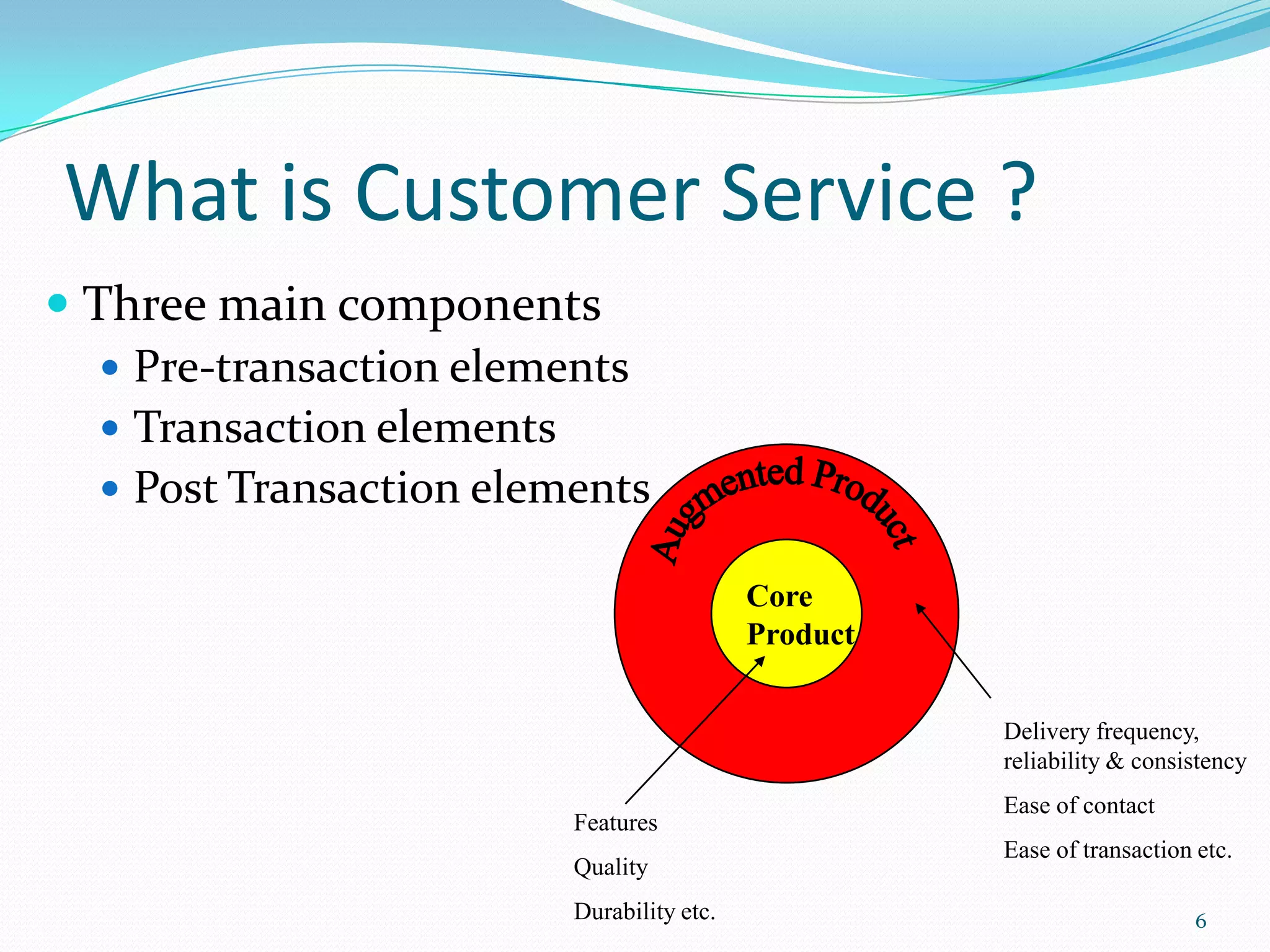
What is CustomerService ?
Three main components
Pre-transaction elements
Transaction elements
Post Transaction elements
Core
Product
Delivery frequency,
reliability & consistency
Ease of contact
Features
Ease of transaction etc.
Quality
Durability etc. 6
7.
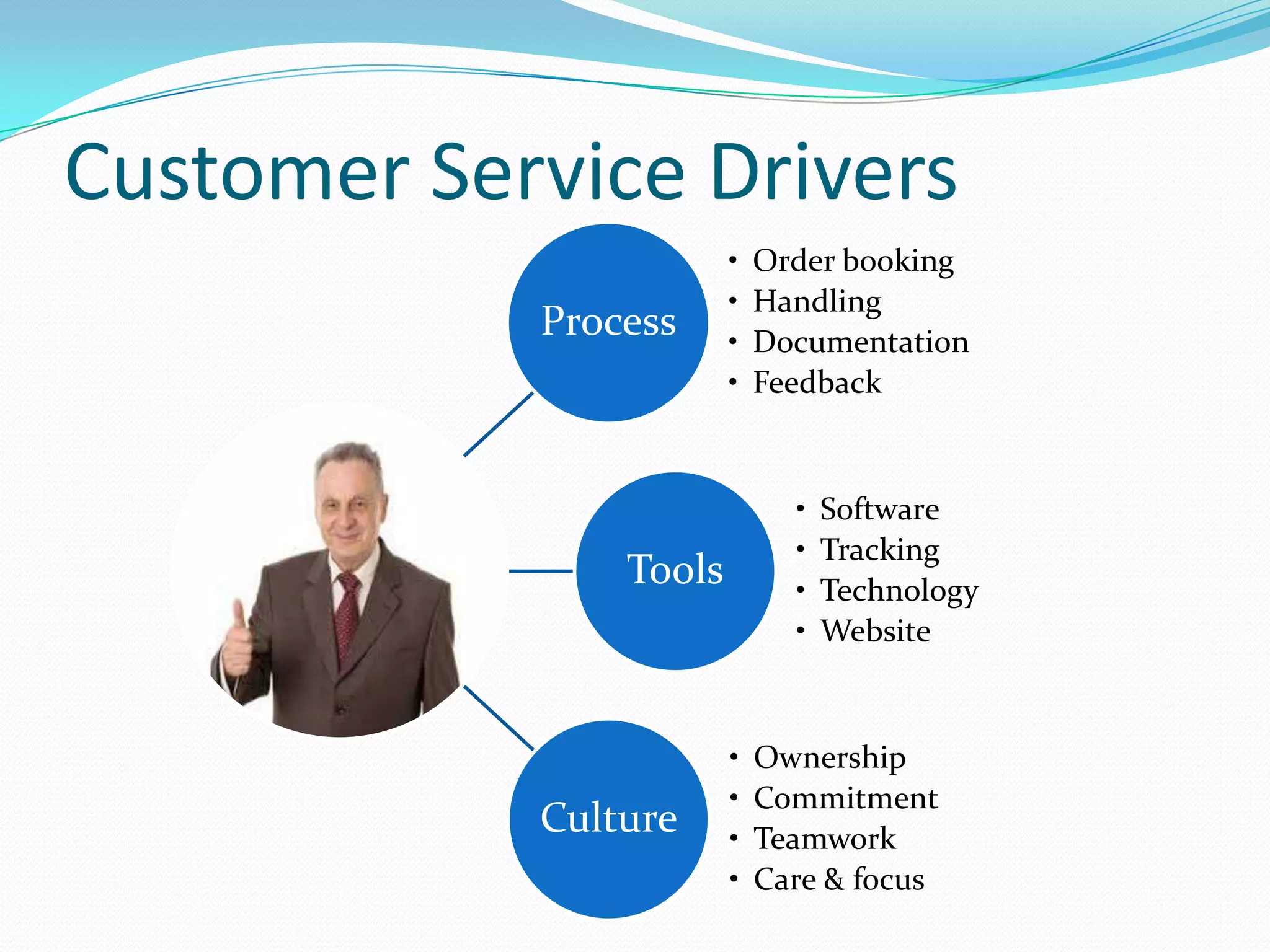
Customer Service Drivers
• Order booking
• Handling
Process • Documentation
• Feedback
• Software
• Tracking
Tools • Technology
• Website
• Ownership
• Commitment
Culture • Teamwork
• Care & focus
8.
Customer Service Economics
Define customer service objectives
Write a customer service policy
Remember !
Pareto’s law
Law of diminishing returns.
8
9.
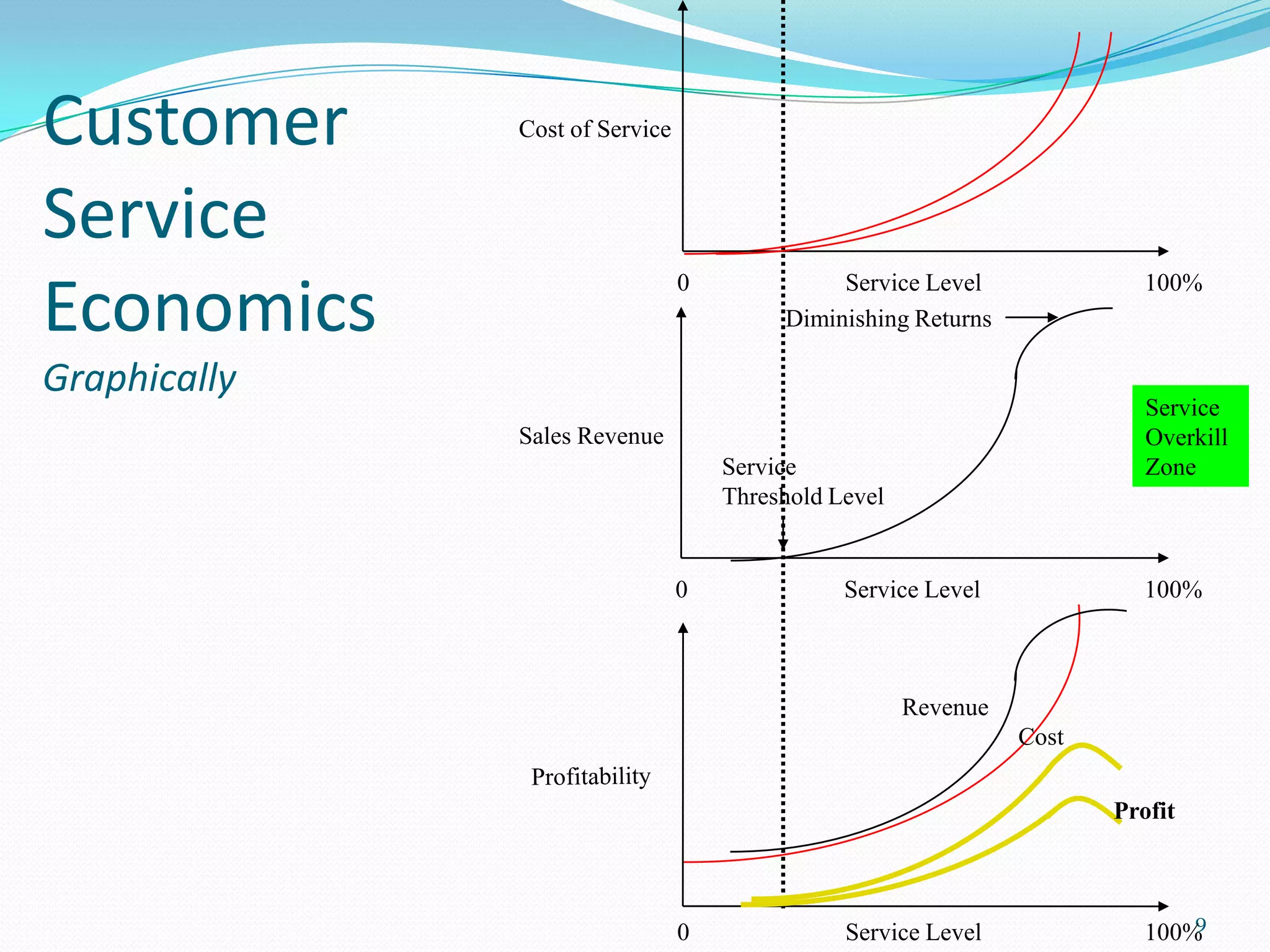
Customer Cost of Service
Service
Economics
0 Service Level 100%
Diminishing Returns
Graphically
Service
Sales Revenue Overkill
Service Zone
Threshold Level
0 Service Level 100%
Revenue
Cost
Profit
9
0 Service Level 100%
10.
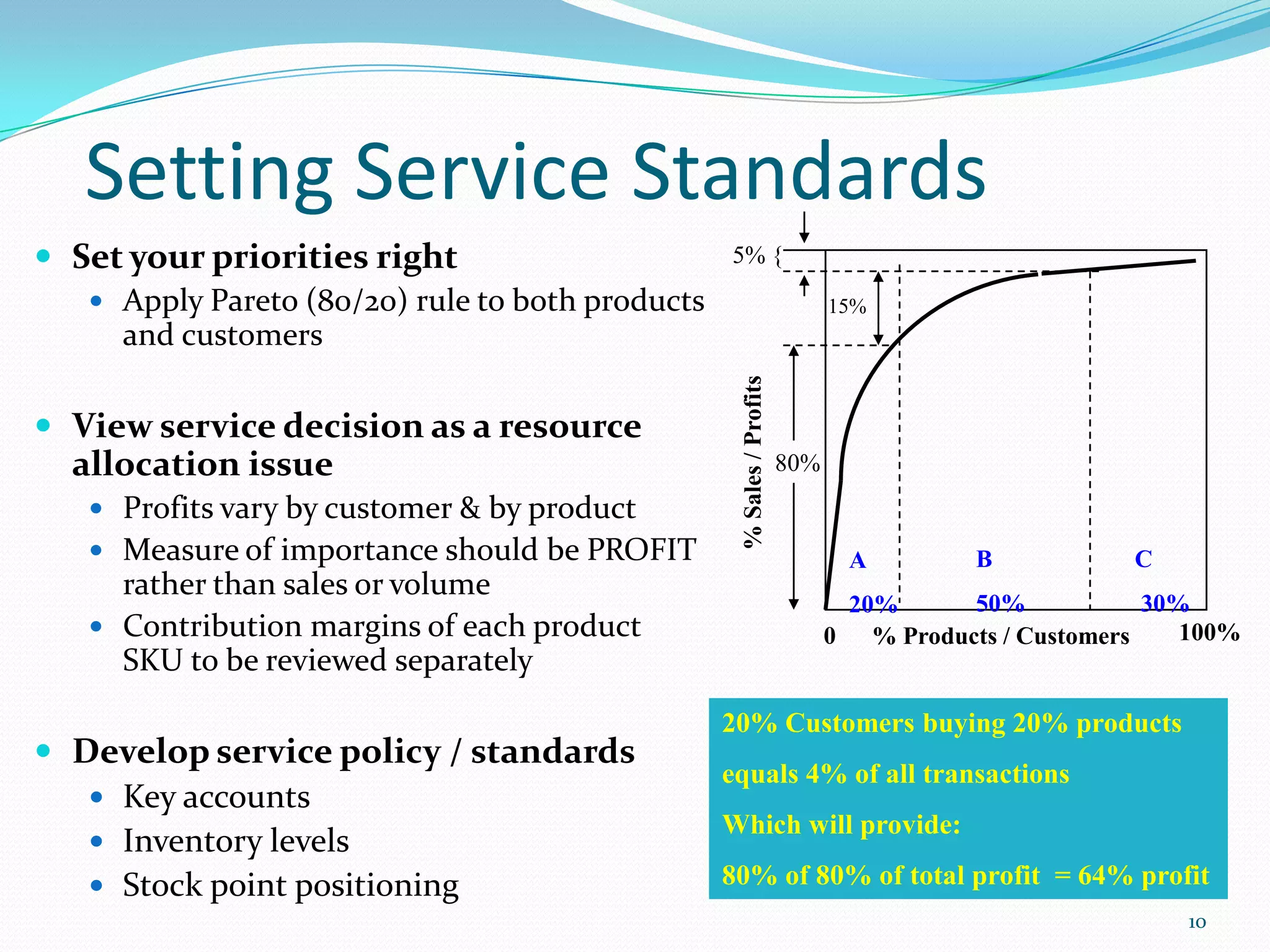
Setting Service Standards
Set your priorities right 5% {
Apply Pareto (80/20) rule to both products 15%
and customers
% Sales / Profits
View service decision as a resource
allocation issue 80%
Profits vary by customer & by product
Measure of importance should be PROFIT A B C
rather than sales or volume
20% 50% 30%
Contribution margins of each product 0 % Products / Customers 100%
SKU to be reviewed separately
20% Customers buying 20% products
Develop service policy / standards
equals 4% of all transactions
Key accounts
Which will provide:
Inventory levels
Stock point positioning 80% of 80% of total profit = 64% profit
10
11.
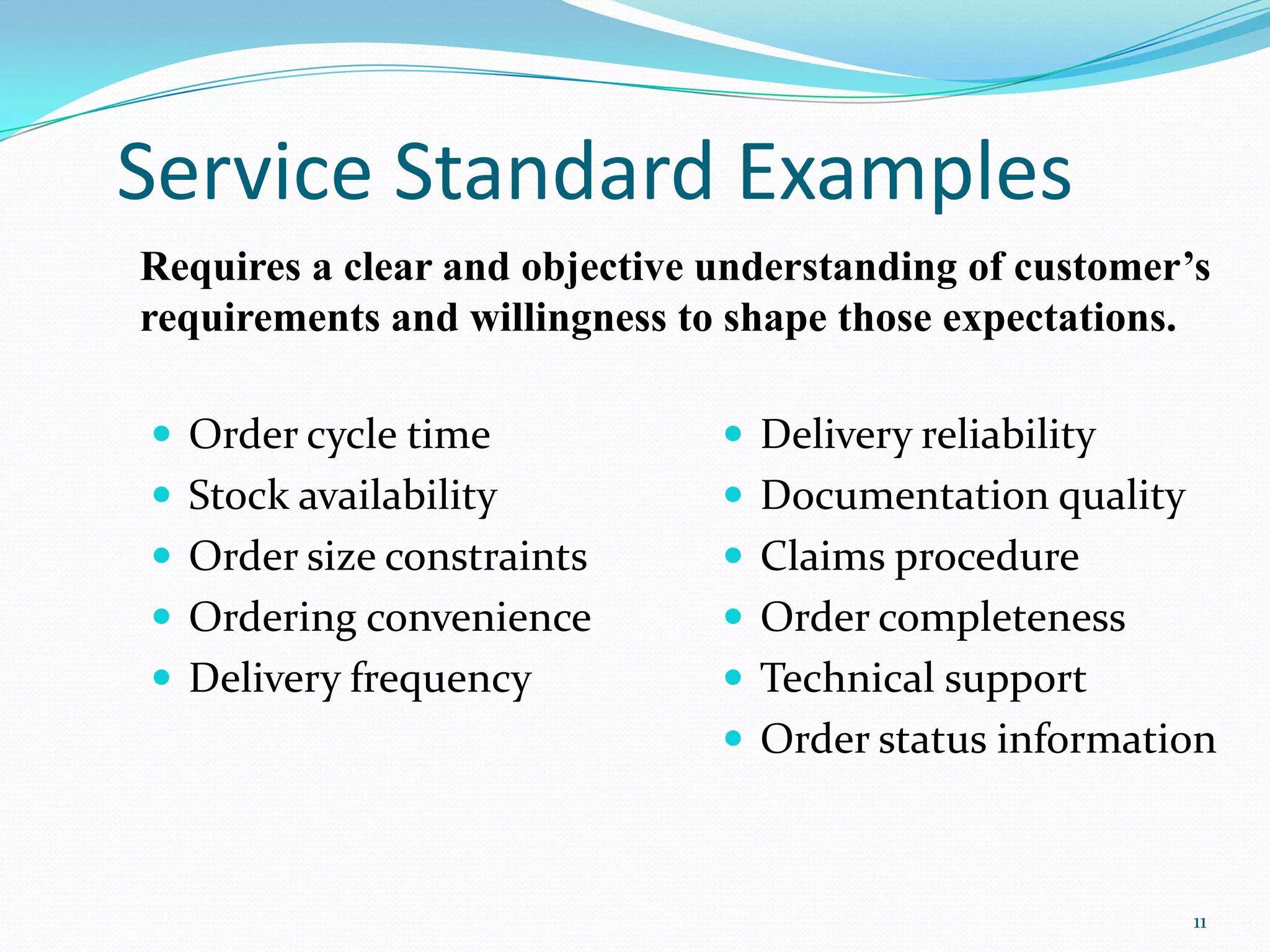
Service Standard Examples
Requiresa clear and objective understanding of customer’s
requirements and willingness to shape those expectations.
Order cycle time Delivery reliability
Stock availability Documentation quality
Order size constraints Claims procedure
Ordering convenience Order completeness
Delivery frequency Technical support
Order status information
11
12.
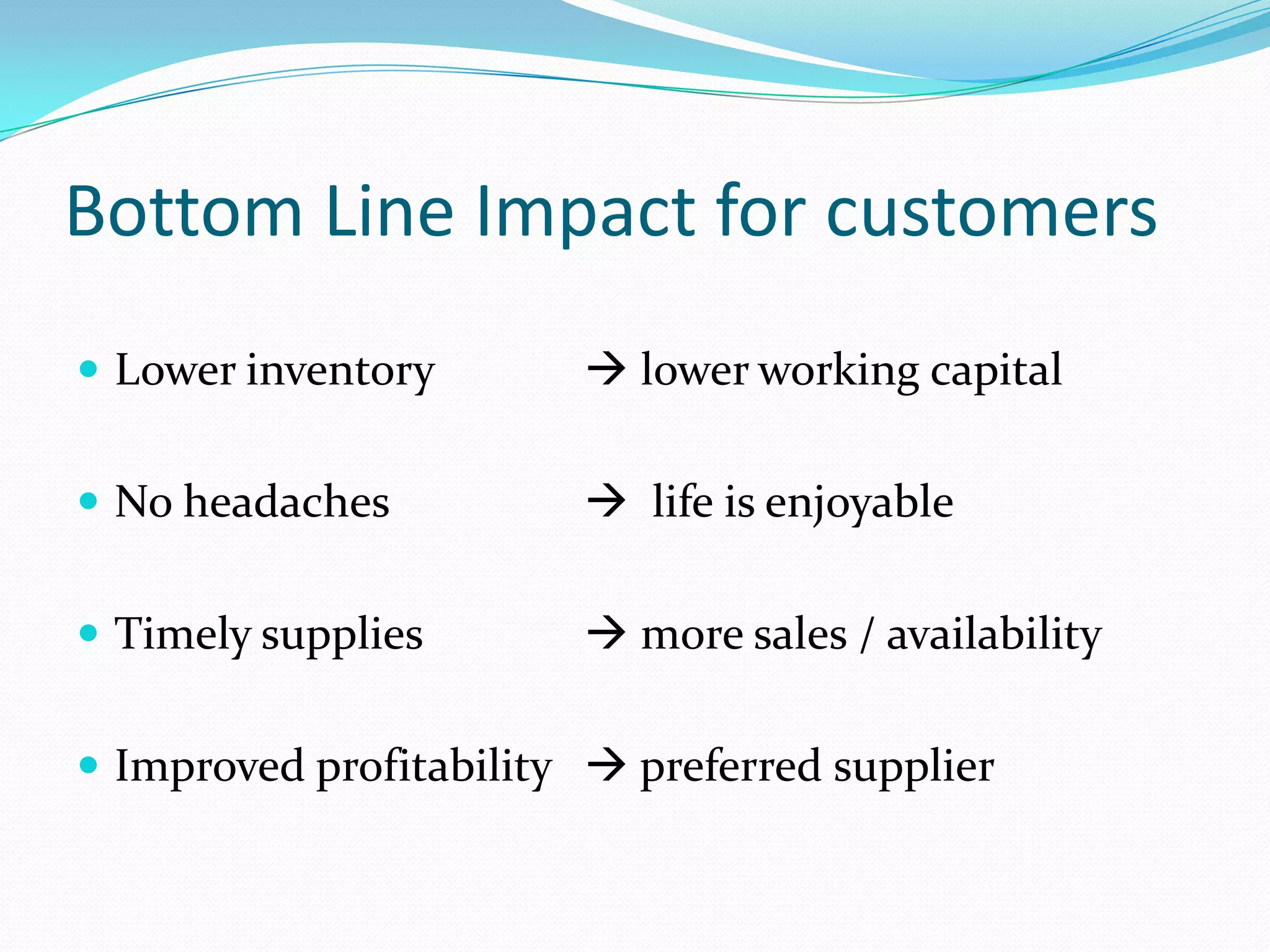
Bottom Line Impactfor customers
Lower inventory lower working capital
No headaches life is enjoyable
Timely supplies more sales / availability
Improved profitability preferred supplier
13.
A Positive Feedbackon Logistics
The service during my pick up was great. They were
very thorough and careful with all of our things.
While my things were in transit, your service was also
good. I received calls and emails with updates.
Also, whenever I had questions, they answered
them all to my satisfaction.
Your service during delivery was also very great.
The guys were very nice and efficient.
I can say that you certainly delivered my things on
time.
I will definitely recommend your moving services to
others, thank you!