
Logistics
Presented by: Jeannefer Escandor
Source: Production and Operations
Management, Mc Graw Hill Companies, Inc.
French logistique art of calculating, logistics
Greek logistikē art of calculating, from feminine of logistikos of
calculation, from logizein to calculate, from logos reason.
First Known Use: circa 1861 (merriam-webster.com)
Original use: to describe the science of movement, supplying &
maintenance of military forces in the field (firstfreight.com)
Around 2700 B.C.:
Material handling technology in pyramid construction.
Blocks of stone weighing several tons were transported
and assembled at the construction site.
(dhl-discoverlogistics.com)
 The movement of materials, services, cash
and information in a supply chain
1. From incoming vehicles to receiving
2. From receiving to storage
3. From storage to the point of use
4. From one work center to the next/temporary storage
5. From the last operation to final storgae
6. From storage to packaging/shipping
7. From shipping to outgoing vehicles
Logistics
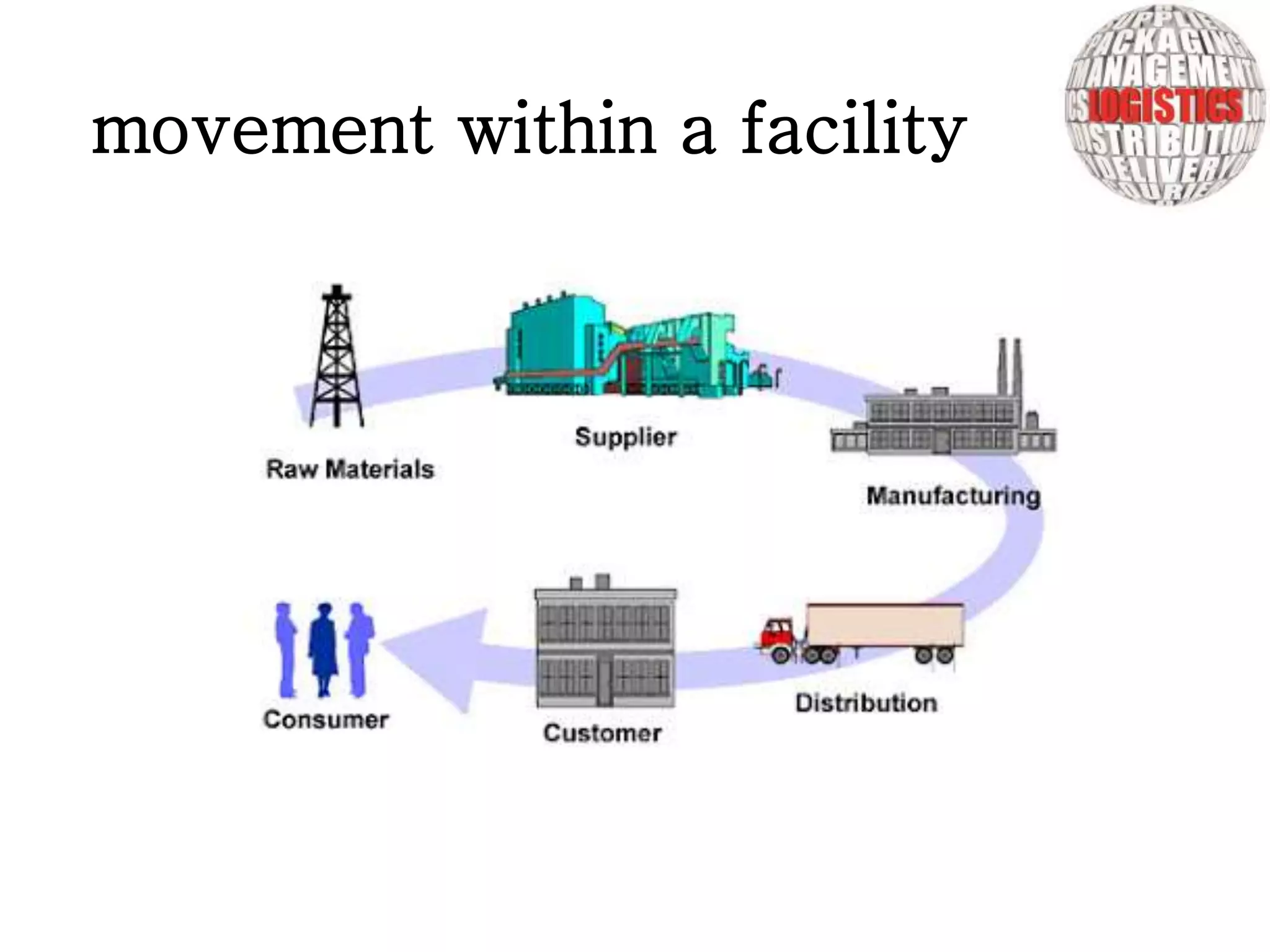
movement within a facility
Overseeing the shipment of incoming and
outgoing goods
Shipping method and time
Cost of Alternatives
Government regulations
Quantities and timing
Potential shipping delays/disruptions
Traffic Management
System of inventory management and
distribution planning
Management uses DRP to plan and coordinate:
• Transportation
• Warehousing
• Workers
• Equipment
• Financial flows
Distribution Requirements Planning
(DRP)
Outsourcing of logistics management
Third Party Logistics (3-PL)
Backward flow of goods returned to the
supply chain from their final destination
Goal: to capture/ create value in returned goods
or to properly dispose of goods that cannot be
resold
Reverse Logistics
Two key elements
 Gatekeeping –screening of returned goods to
prevent incorrect acceptance of goods
• Control the rate of returns w/o negatively
impacting customer service
 Avoidance –finding ways to minimize the number
of items that are returned
• Product design and quality assurance
Reverse Logistics
The use of electronic technology to facilitate
business transactions
Using Internet technologies to conduct any
level of business
Two essential features
1. Web site (front end)
2. Order fulfillment (back end)
E-Business
Companies
– Global presence
– Access to their service any place, any time
– Electronically monitor customers’ choices and requests
– Analyze product demand
– Collection of detailed data about clients’ preferences
– Supply chain response times are shortened
– Intermediaries are reduced/eliminated—disintermediation
– Creation of virtual companies that distribute only through
Web
E-Business Advantages
• Share forecasts
• Determine status of orders in real time
• Access inventory data of partners
Successful supply chain requirements
 Trust
 Effective communication
 Supply chain visibility
 Event management capability
 Performance metrics
Effective Supply Chain
Supply Chain Visibility
A major trading partner can connect to its
supply chain to access data in real time
Event Management
The ability to detect and respond to
unplanned events
 A technology that uses radio waves to
identify objects such as goods in supply
chains
Radio Frequency Identification (RFID)
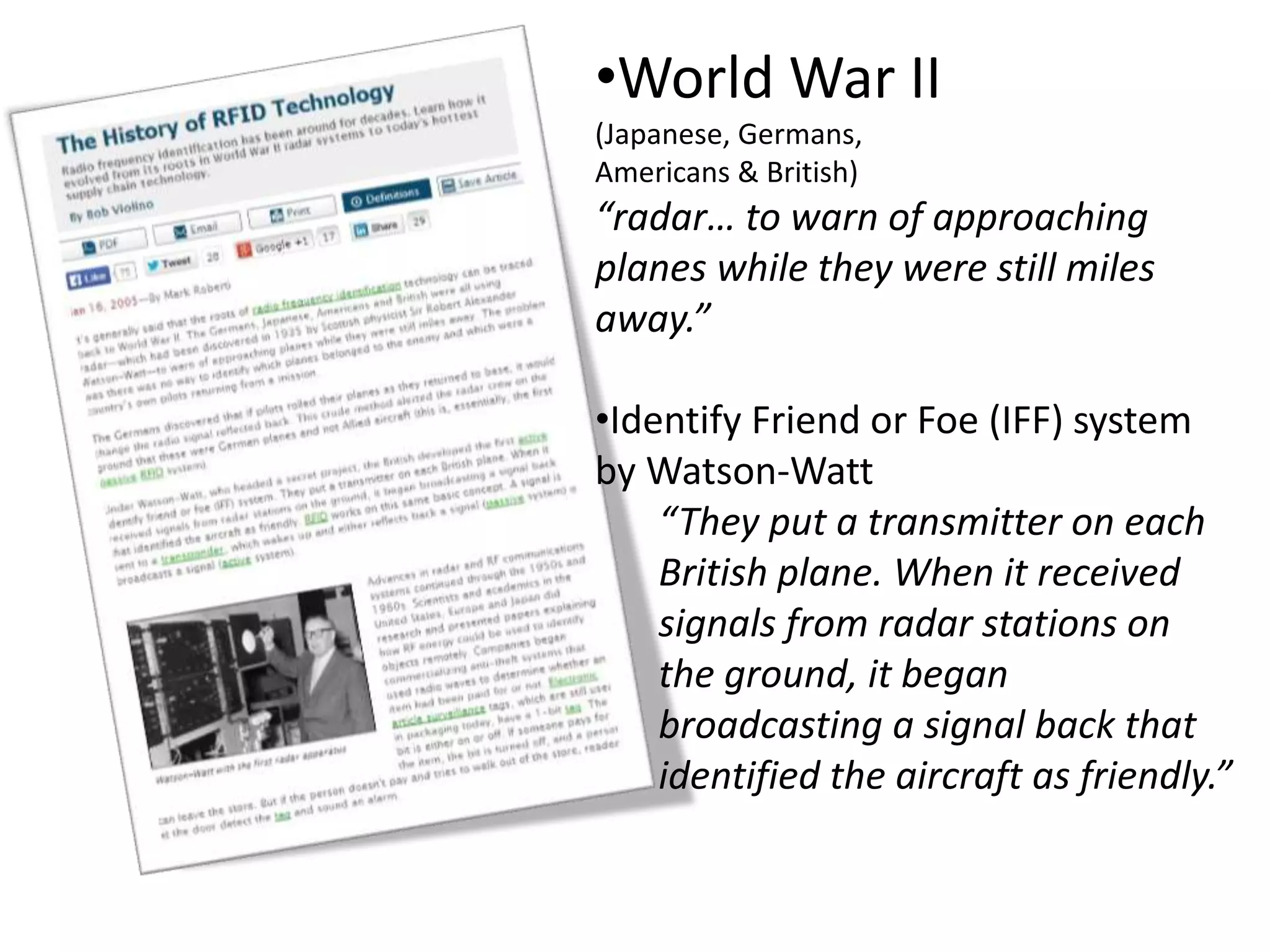
•World War II
(Japanese, Germans,
Americans & British)
“radar… to warn of approaching
planes while they were still miles
away.”
•Identify Friend or Foe (IFF) system
by Watson-Watt
“They put a transmitter on each
British plane. When it received
signals from radar stations on
the ground, it began
broadcasting a signal back that
identified the aircraft as friendly.”
“Mario W. Cardullo claims to have received the first
U.S. patent for an active RFID tag with rewritable
memory on January 23, 1973. That same year,
Charles Walton, a California entrepreneur,
received a patent for a passive transporder used
to unlock a door without a key. A card with an
embedded transporder communicated a signal to
a reader near the door. When the reader detected
a valid identity number stored within the RFID
tag, the reader unlocked the door.”
First RFID Patents
(rfidjournal.com)
RFID

Logistics

  • 1.
    Logistics Presented by: JeanneferEscandor Source: Production and Operations Management, Mc Graw Hill Companies, Inc.
  • 2.
    French logistique artof calculating, logistics Greek logistikē art of calculating, from feminine of logistikos of calculation, from logizein to calculate, from logos reason. First Known Use: circa 1861 (merriam-webster.com) Original use: to describe the science of movement, supplying & maintenance of military forces in the field (firstfreight.com) Around 2700 B.C.: Material handling technology in pyramid construction. Blocks of stone weighing several tons were transported and assembled at the construction site. (dhl-discoverlogistics.com)
  • 3.
     The movementof materials, services, cash and information in a supply chain 1. From incoming vehicles to receiving 2. From receiving to storage 3. From storage to the point of use 4. From one work center to the next/temporary storage 5. From the last operation to final storgae 6. From storage to packaging/shipping 7. From shipping to outgoing vehicles Logistics
  • 4.
  • 5.
    Overseeing the shipmentof incoming and outgoing goods Shipping method and time Cost of Alternatives Government regulations Quantities and timing Potential shipping delays/disruptions Traffic Management
  • 6.
    System of inventorymanagement and distribution planning Management uses DRP to plan and coordinate: • Transportation • Warehousing • Workers • Equipment • Financial flows Distribution Requirements Planning (DRP)
  • 7.
    Outsourcing of logisticsmanagement Third Party Logistics (3-PL)
  • 8.
    Backward flow ofgoods returned to the supply chain from their final destination Goal: to capture/ create value in returned goods or to properly dispose of goods that cannot be resold Reverse Logistics
  • 9.
    Two key elements Gatekeeping –screening of returned goods to prevent incorrect acceptance of goods • Control the rate of returns w/o negatively impacting customer service  Avoidance –finding ways to minimize the number of items that are returned • Product design and quality assurance Reverse Logistics
  • 10.
    The use ofelectronic technology to facilitate business transactions Using Internet technologies to conduct any level of business Two essential features 1. Web site (front end) 2. Order fulfillment (back end) E-Business
  • 11.
    Companies – Global presence –Access to their service any place, any time – Electronically monitor customers’ choices and requests – Analyze product demand – Collection of detailed data about clients’ preferences – Supply chain response times are shortened – Intermediaries are reduced/eliminated—disintermediation – Creation of virtual companies that distribute only through Web E-Business Advantages
  • 12.
    • Share forecasts •Determine status of orders in real time • Access inventory data of partners Successful supply chain requirements  Trust  Effective communication  Supply chain visibility  Event management capability  Performance metrics Effective Supply Chain
  • 13.
    Supply Chain Visibility Amajor trading partner can connect to its supply chain to access data in real time Event Management The ability to detect and respond to unplanned events
  • 14.
     A technologythat uses radio waves to identify objects such as goods in supply chains Radio Frequency Identification (RFID)
  • 15.
    •World War II (Japanese,Germans, Americans & British) “radar… to warn of approaching planes while they were still miles away.” •Identify Friend or Foe (IFF) system by Watson-Watt “They put a transmitter on each British plane. When it received signals from radar stations on the ground, it began broadcasting a signal back that identified the aircraft as friendly.”
  • 16.
    “Mario W. Cardulloclaims to have received the first U.S. patent for an active RFID tag with rewritable memory on January 23, 1973. That same year, Charles Walton, a California entrepreneur, received a patent for a passive transporder used to unlock a door without a key. A card with an embedded transporder communicated a signal to a reader near the door. When the reader detected a valid identity number stored within the RFID tag, the reader unlocked the door.” First RFID Patents (rfidjournal.com)
  • 17.