Lock them up!
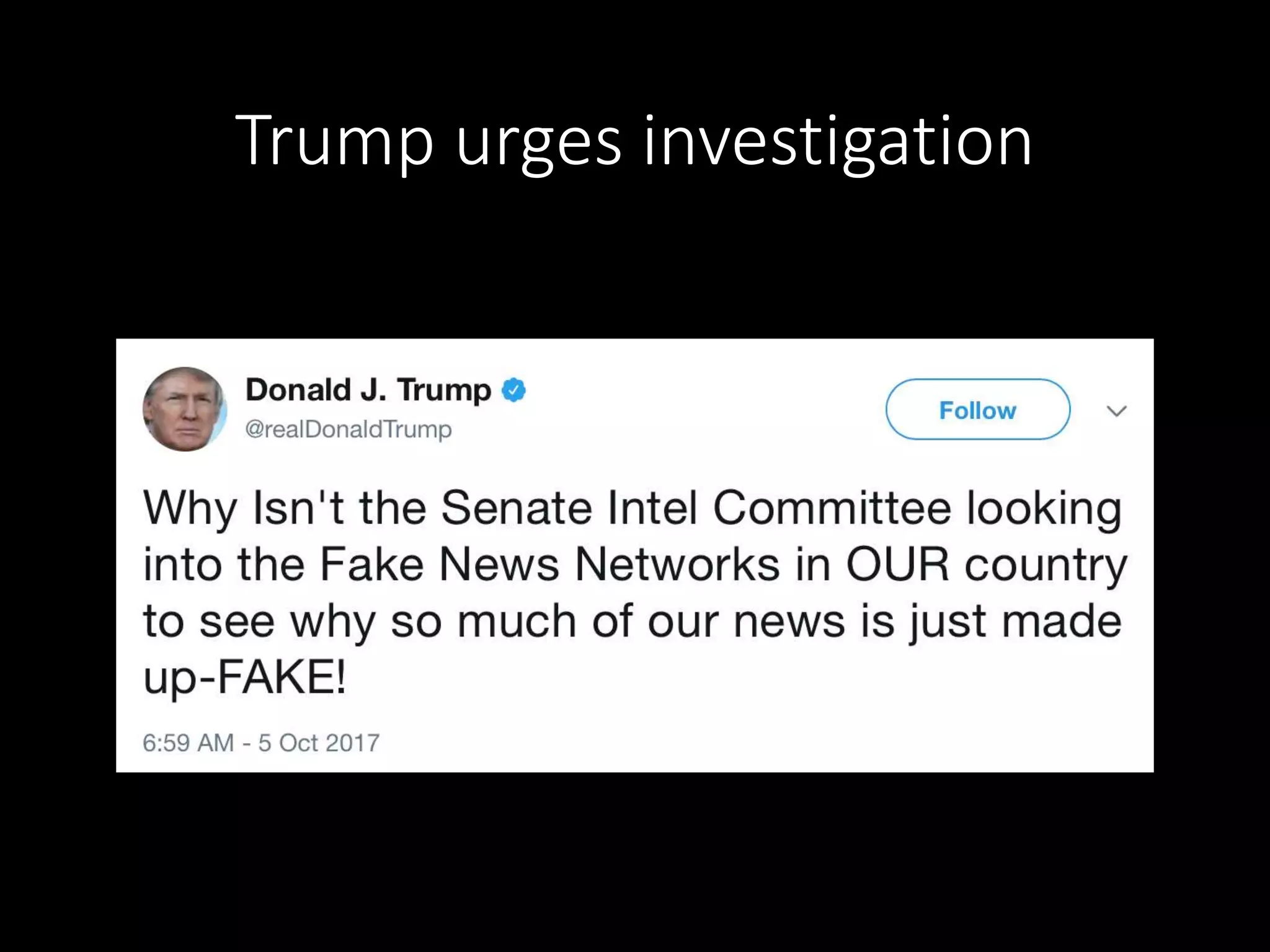
The president urges federal officials to investigate
journalists who rely on leaks and report “fake news”
Comey meets with Trump
“Mr. Trump … [said]
that Mr. Comey should
consider putting
reporters in prison for
publishing classified
information, according
to one of Mr. Comey’s
associates.”
— New York Times, 5/16/17
Trump urges investigation
What does the Constitution say?
• Do you think journalists have a right to protect their
anonymous sources?
What does the Constitution say?
• Do you think journalists have a right to protect their
anonymous sources?
• Do you think journalists have a right to publish
news that endangers national security?
What does the Constitution say?
• Do you think journalists have a right to protect their
anonymous sources?
• Do you think journalists have a right to publish
news that endangers national security?
• They do not. They are protected only by social
norms.
An age-old dilemma
• In 1848, John Nugent of the New York Herald was
held for refusing to identify a source to the Senate
An age-old dilemma
• In 1848, John Nugent of the New York Herald was
held for refusing to identify a source to the Senate
• He was confined to a committee room and
continued to file stories datelined “Custody of the
Sergeant-at-Arms”
An age-old dilemma
• In 1848, John Nugent of the New York Herald was
held for refusing to identify a source to the Senate
• He was confined to a committee room and
continued to file stories datelined “Custody of the
Sergeant-at-Arms”
• The sergeant-at-arms would take Nugent home
each night; after a month, the Senate gave up
Branzburg v. Hayes (1972)
• On a 5-4 vote, the Supreme Court ruled that the
First Amendment does not protect reporters who
wish to keep their confidential sources anonymous
Branzburg v. Hayes (1972)
• On a 5-4 vote, the Supreme Court ruled that the
First Amendment does not protect reporters who
wish to keep their confidential sources anonymous
• Justice Lewis Powell’s “enigmatic concurring
opinion” suggested that judges should engage in a
case-by-case analysis
Branzburg v. Hayes (1972)
• On a 5-4 vote, the Supreme Court ruled that the
First Amendment does not protect reporters who
wish to keep their confidential sources anonymous
• Justice Lewis Powell’s “enigmatic concurring
opinion” suggested that judges should engage in a
case-by-case analysis
• Judges are reluctant to force journalists to reveal
their sources, but there is no reporter’s privilege at
the federal level
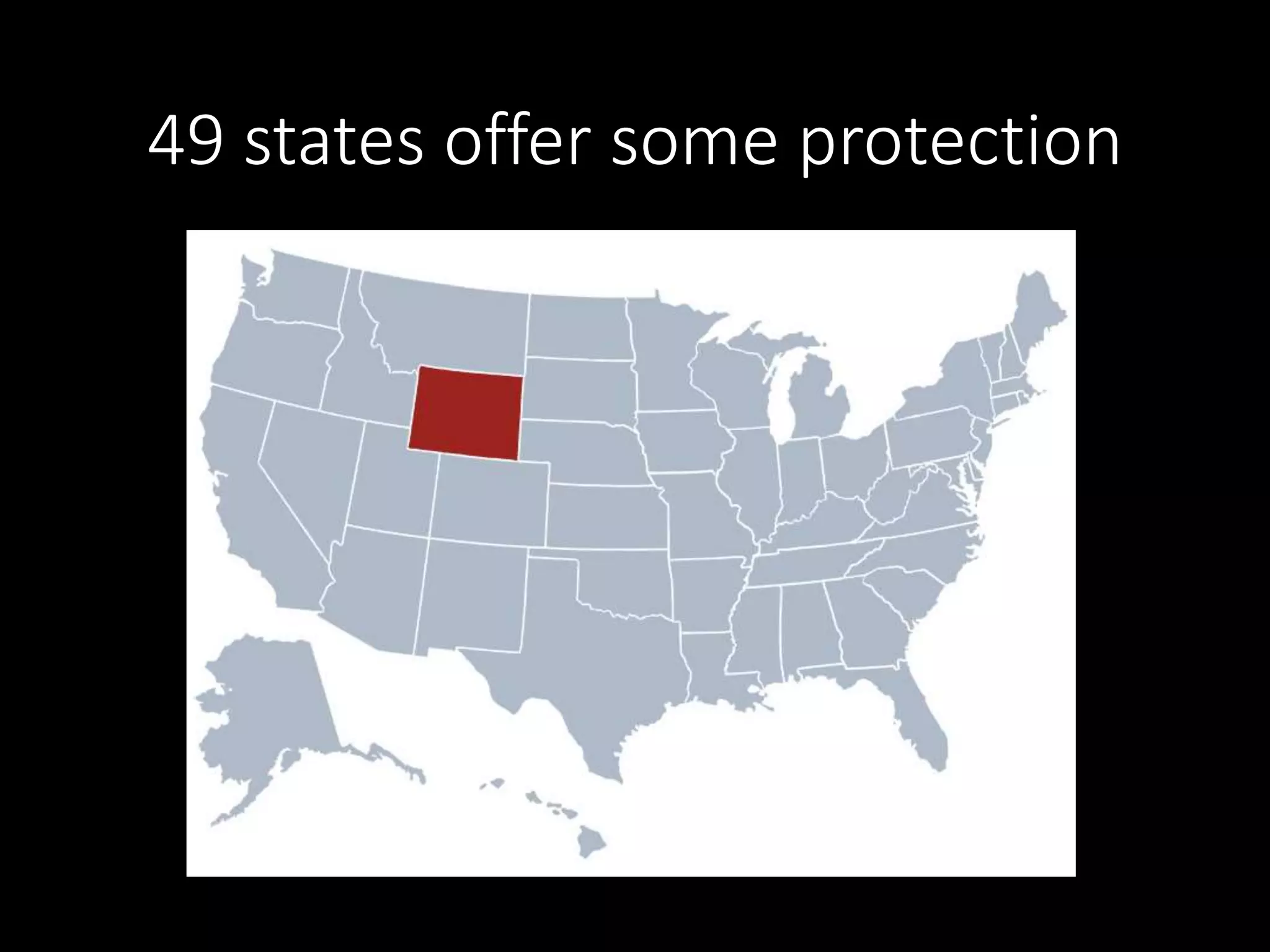
49 states offer some protection
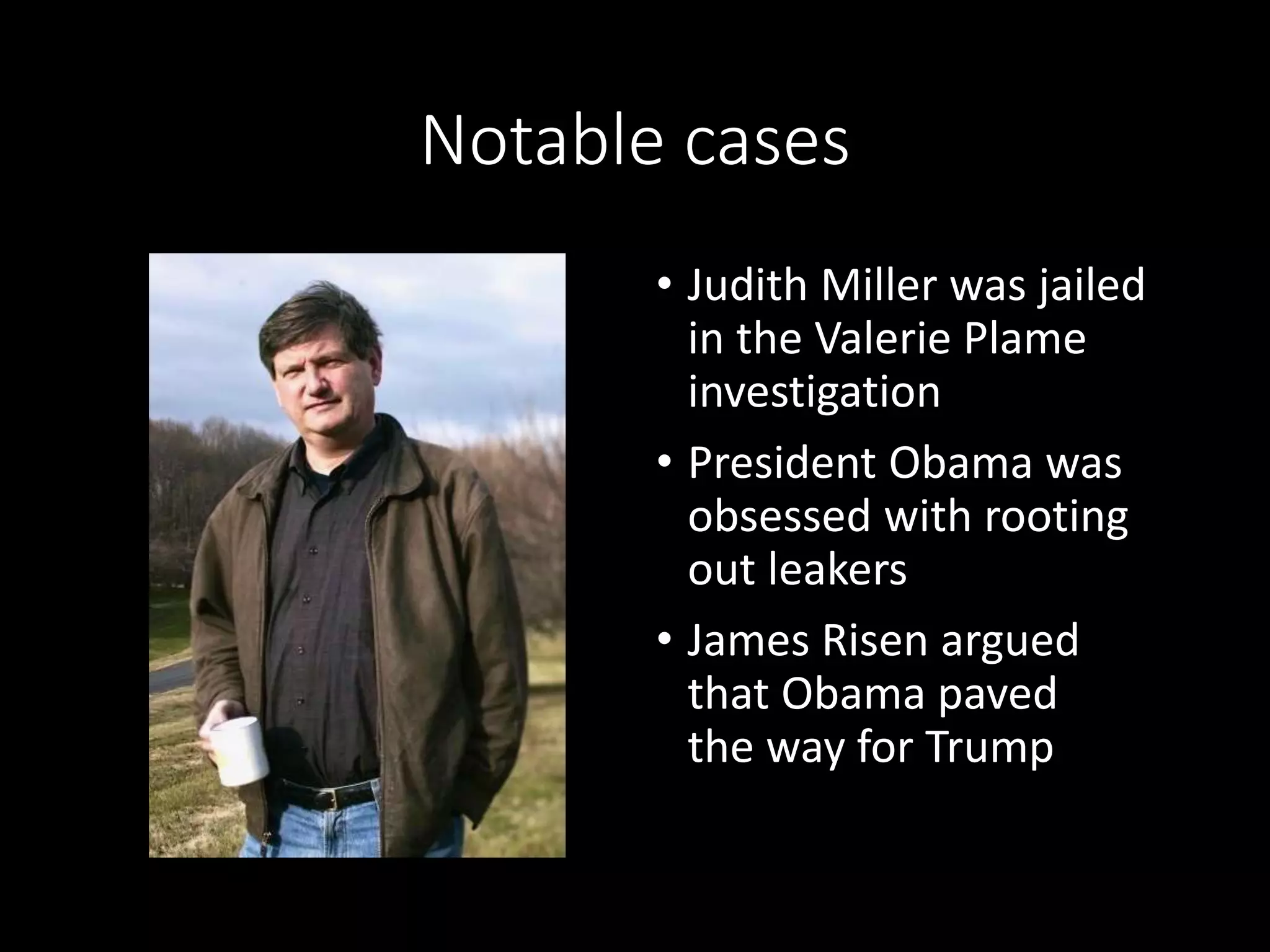
Notable cases
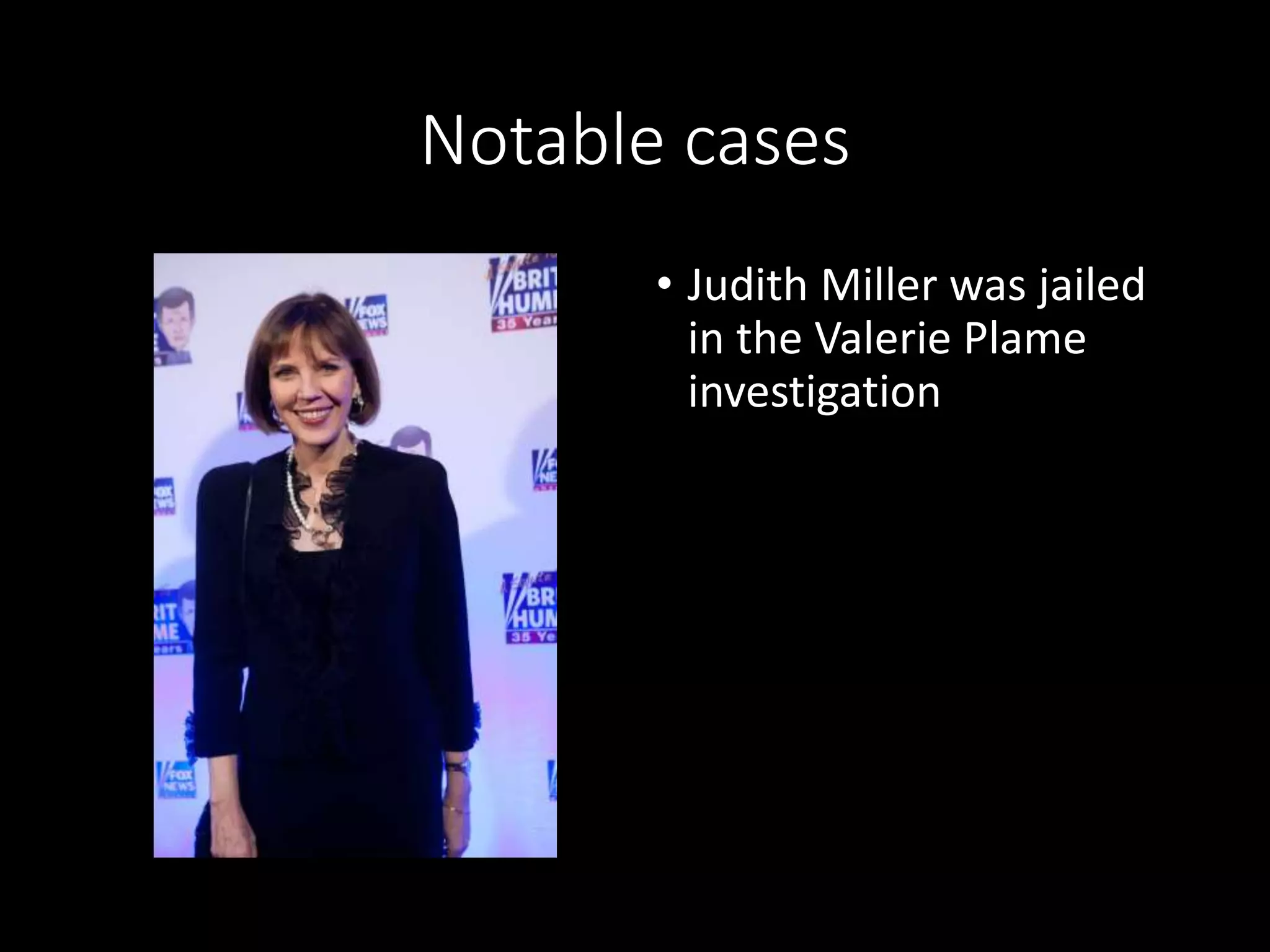
• Judith Miller was jailed
in the Valerie Plame
investigation
Notable cases
• Judith Miller was jailed
in the Valerie Plame
investigation
• President Obama was
obsessed with rooting
out leakers
Notable cases
• Judith Miller was jailed
in the Valerie Plame
investigation
• President Obama was
obsessed with rooting
out leakers
• James Risen argued
that Obama paved
the way for Trump
The national-security dilemma
• Prior restraint — censorship — is considered to be
the worst possible violation of freedom of the press
The national-security dilemma
• Prior restraint — censorship — is considered to be
the worst possible violation of freedom of the press
• With a truly serious breach of national security, the
damage is done unless censorship is imposed
The national-security dilemma
• Prior restraint — censorship — is considered to be
the worst possible violation of freedom of the press
• With a truly serious breach of national security, the
damage is done unless censorship is imposed
• How do we balance freedom of the press with the
need to protect national security?
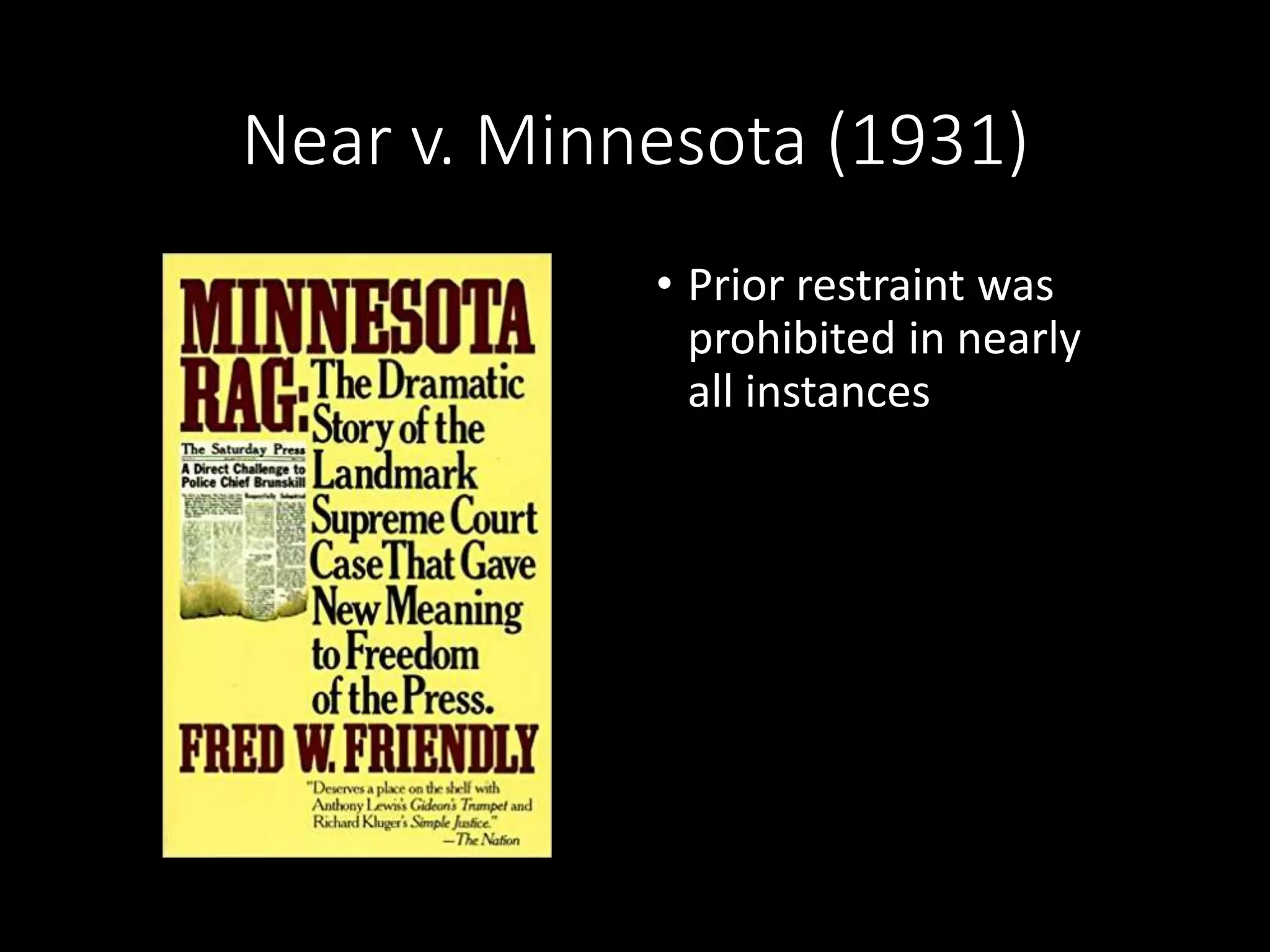
Near v. Minnesota (1931)
• Prior restraint was
prohibited in nearly
all instances
Near v. Minnesota (1931)
• Prior restraint was
prohibited in nearly
all instances
• Three exceptions
• Incitement to violence
• Obscenity
• Serious breaches of
national security
Near v. Minnesota (1931)
• Prior restraint was
prohibited in nearly
all instances
• Three exceptions
• Incitement to violence
• Obscenity
• Serious breaches of
national security
• Punishment could take
place after the fact
Col. Robert McCormick
The publisher of the
Chicago Tribune, he faced
serious charges, and
could have been
executed, for revealing
that the U.S. had cracked
Japanese codes
The Pentagon Papers (1971)
• Not quite a landmark
case as the justices
affirmed Near decision
The Pentagon Papers (1971)
• Not quite a landmark
case as the justices
affirmed Near decision
• A majority wrote that
the Times and the Post
could faces charges
The Pentagon Papers (1971)
• Not quite a landmark
case as the justices
affirmed Near decision
• A majority wrote that
the Times and the Post
could faces charges
• Nixon tried to bring a
case but soon got
caught up in Watergate
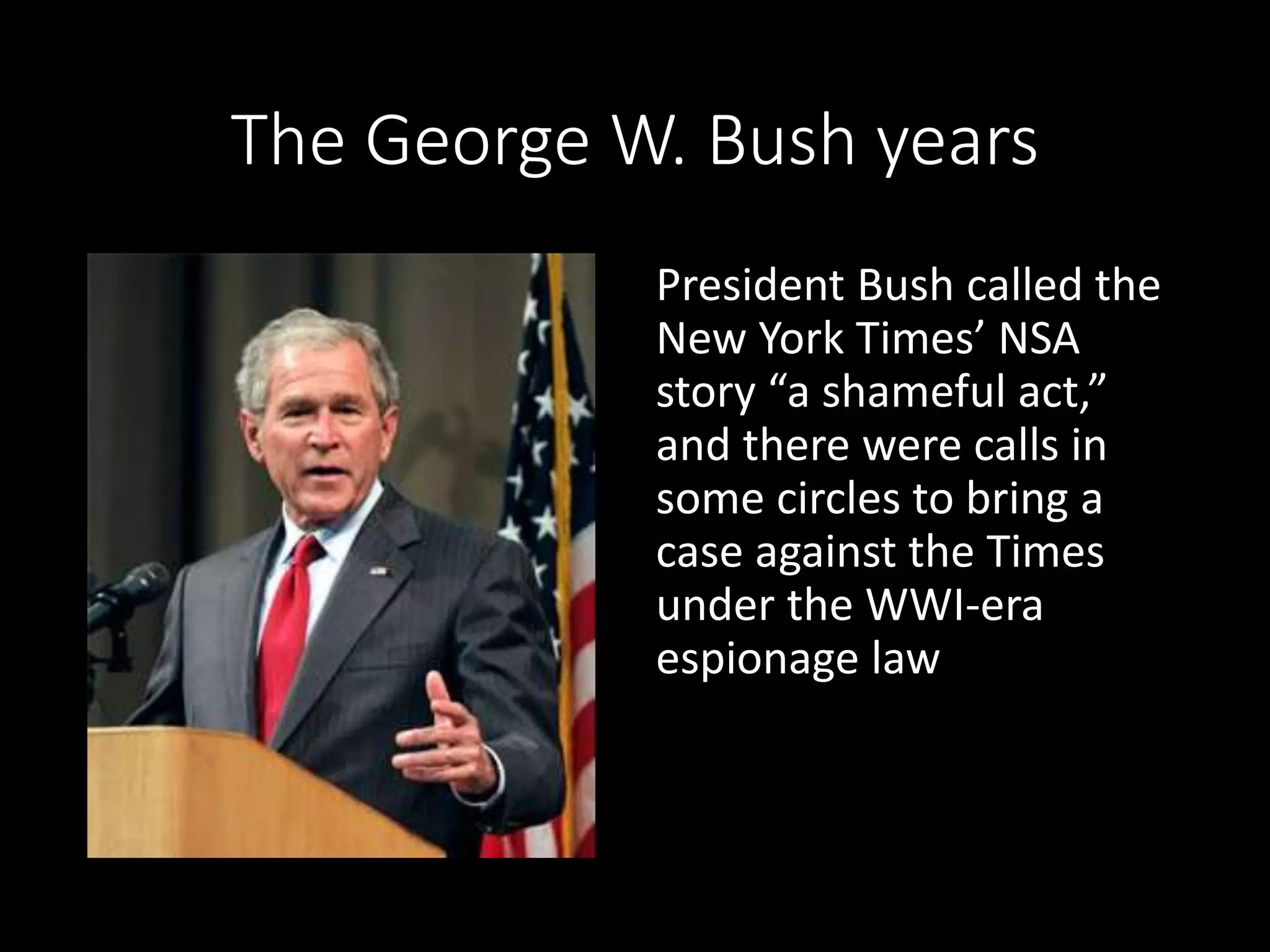
The George W. Bush years
President Bush called the
New York Times’ NSA
story “a shameful act,”
and there were calls in
some circles to bring a
case against the Times
under the WWI-era
espionage law
For journalists, two routes to jail
• Protecting anonymous
sources
For journalists, two routes to jail
• Protecting anonymous
sources
• Breaching national
security
For journalists, two routes to jail
• Protecting anonymous
sources
• Breaching national
security
• President Trump may
believe the Washington
Post did both in
reporting on the Oval
Office meeting with the
Russians.

Lock Them Up!

  • 1.
    Lock them up! Thepresident urges federal officials to investigate journalists who rely on leaks and report “fake news”
  • 2.
    Comey meets withTrump “Mr. Trump … [said] that Mr. Comey should consider putting reporters in prison for publishing classified information, according to one of Mr. Comey’s associates.” — New York Times, 5/16/17
  • 3.
  • 4.
    What does theConstitution say? • Do you think journalists have a right to protect their anonymous sources?
  • 5.
    What does theConstitution say? • Do you think journalists have a right to protect their anonymous sources? • Do you think journalists have a right to publish news that endangers national security?
  • 6.
    What does theConstitution say? • Do you think journalists have a right to protect their anonymous sources? • Do you think journalists have a right to publish news that endangers national security? • They do not. They are protected only by social norms.
  • 7.
    An age-old dilemma •In 1848, John Nugent of the New York Herald was held for refusing to identify a source to the Senate
  • 8.
    An age-old dilemma •In 1848, John Nugent of the New York Herald was held for refusing to identify a source to the Senate • He was confined to a committee room and continued to file stories datelined “Custody of the Sergeant-at-Arms”
  • 9.
    An age-old dilemma •In 1848, John Nugent of the New York Herald was held for refusing to identify a source to the Senate • He was confined to a committee room and continued to file stories datelined “Custody of the Sergeant-at-Arms” • The sergeant-at-arms would take Nugent home each night; after a month, the Senate gave up
  • 10.
    Branzburg v. Hayes(1972) • On a 5-4 vote, the Supreme Court ruled that the First Amendment does not protect reporters who wish to keep their confidential sources anonymous
  • 11.
    Branzburg v. Hayes(1972) • On a 5-4 vote, the Supreme Court ruled that the First Amendment does not protect reporters who wish to keep their confidential sources anonymous • Justice Lewis Powell’s “enigmatic concurring opinion” suggested that judges should engage in a case-by-case analysis
  • 12.
    Branzburg v. Hayes(1972) • On a 5-4 vote, the Supreme Court ruled that the First Amendment does not protect reporters who wish to keep their confidential sources anonymous • Justice Lewis Powell’s “enigmatic concurring opinion” suggested that judges should engage in a case-by-case analysis • Judges are reluctant to force journalists to reveal their sources, but there is no reporter’s privilege at the federal level
  • 13.
    49 states offersome protection
  • 14.
    Notable cases • JudithMiller was jailed in the Valerie Plame investigation
  • 15.
    Notable cases • JudithMiller was jailed in the Valerie Plame investigation • President Obama was obsessed with rooting out leakers
  • 16.
    Notable cases • JudithMiller was jailed in the Valerie Plame investigation • President Obama was obsessed with rooting out leakers • James Risen argued that Obama paved the way for Trump
  • 17.
    The national-security dilemma •Prior restraint — censorship — is considered to be the worst possible violation of freedom of the press
  • 18.
    The national-security dilemma •Prior restraint — censorship — is considered to be the worst possible violation of freedom of the press • With a truly serious breach of national security, the damage is done unless censorship is imposed
  • 19.
    The national-security dilemma •Prior restraint — censorship — is considered to be the worst possible violation of freedom of the press • With a truly serious breach of national security, the damage is done unless censorship is imposed • How do we balance freedom of the press with the need to protect national security?
  • 20.
    Near v. Minnesota(1931) • Prior restraint was prohibited in nearly all instances
  • 21.
    Near v. Minnesota(1931) • Prior restraint was prohibited in nearly all instances • Three exceptions • Incitement to violence • Obscenity • Serious breaches of national security
  • 22.
    Near v. Minnesota(1931) • Prior restraint was prohibited in nearly all instances • Three exceptions • Incitement to violence • Obscenity • Serious breaches of national security • Punishment could take place after the fact
  • 23.
    Col. Robert McCormick Thepublisher of the Chicago Tribune, he faced serious charges, and could have been executed, for revealing that the U.S. had cracked Japanese codes
  • 24.
    The Pentagon Papers(1971) • Not quite a landmark case as the justices affirmed Near decision
  • 25.
    The Pentagon Papers(1971) • Not quite a landmark case as the justices affirmed Near decision • A majority wrote that the Times and the Post could faces charges
  • 26.
    The Pentagon Papers(1971) • Not quite a landmark case as the justices affirmed Near decision • A majority wrote that the Times and the Post could faces charges • Nixon tried to bring a case but soon got caught up in Watergate
  • 27.
    The George W.Bush years President Bush called the New York Times’ NSA story “a shameful act,” and there were calls in some circles to bring a case against the Times under the WWI-era espionage law
  • 28.
    For journalists, tworoutes to jail • Protecting anonymous sources
  • 29.
    For journalists, tworoutes to jail • Protecting anonymous sources • Breaching national security
  • 30.
    For journalists, tworoutes to jail • Protecting anonymous sources • Breaching national security • President Trump may believe the Washington Post did both in reporting on the Oval Office meeting with the Russians.