LOCATING AN
ARCHAEOLOGICAL SITE
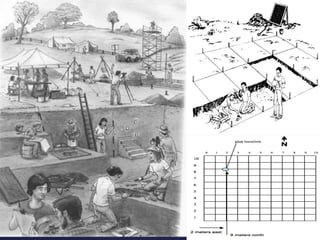
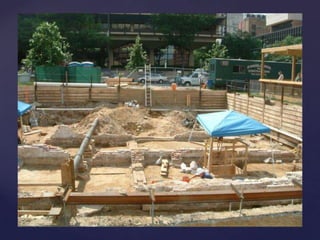
Main concern in excavating a site is to understand its
history.
 Ways of locating sites:
AccidentalPloughing, land
reclamation, building, quarrying, dredging, constructin
g infrastructure (highways, railways, etc) and war.
 Written SourcesLiterary clues, folklore, maps, legends and place
names.

Tells


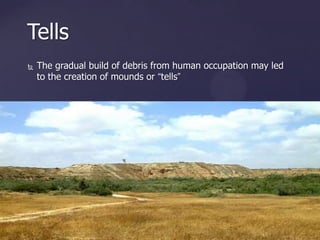
The gradual build of debris from human occupation may led
to the creation of mounds or “tells”
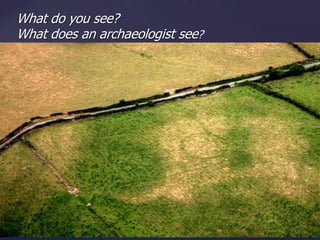
What do you see?
What does an archaeologist see?
AERIAL SURVEY


Ancient sites can be discovered from the air in several
ways.

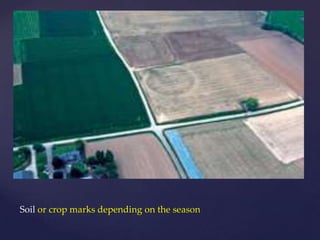
CROP MARKS
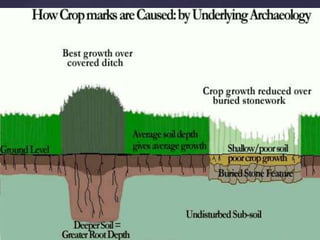
 Crops grow irregularly and slower when planted over
the remains of walls, buildings roads.
 Crops growing over ancient pits and trenches grow
faster and taller.
 From the air outline ancient remains are clear.
 Infrared photography makes this clearer.
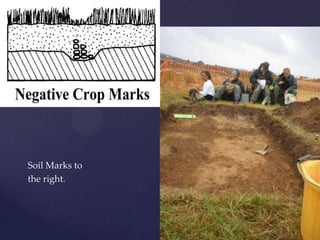
Soil Marks to
the right.
SOIL/SCORCHED MARKS


After a field has been freshly ploughed areas where
the soil is darker may indicate a pit, ditch or mound
is located below the surface.

SHADOW MARKS


Visible from air where low earthworks or mounds
existed and cast shadows when the Sun is low in the
sky (early morning, sunset and winter).
Soil or crop marks depending on the season
SATELLITE PHOTOGRAPHY
 Used to find lost city of Ubar in the Persian
Gulf (5,000 years old).
 SURVEYING TECHNIQUES
 Simple observation - field walking where
physical features are noted and finds
recorded.
 Location of finds are plotted on a site map.
 Concentration of finds would indicate a
good place to start excavation.
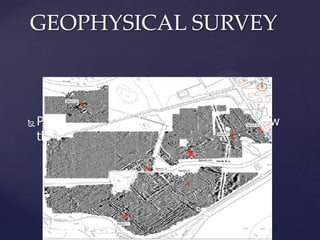
GEOPHYSICAL SURVEY



Produces a visual plan of the features below
the surface of the site.
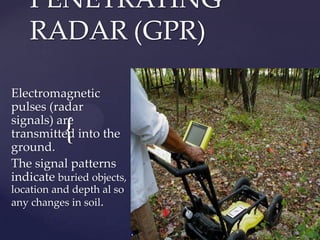
PENETRATING
RADAR (GPR)
Electromagnetic
pulses (radar
signals) are
transmitted into the
ground.
The signal patterns
indicate buried objects,

{

location and depth al so
any changes in soil.
An electric current is passed through two
metal probes in the ground.
Buried structures have a high resistance
reading.
Pits and trenches have a low resistance
reading.
.

RESISTIVITY SURVEY
This method determines the magnetic
properties of the soil’s subsurface.

High readings indicate the presence of
iron, bricks and/or burnt soil.
Low readings suggest the ground has been
disturbed and/or decayed organic materials.

MAGNETIC SURVEYING
Exercise


Select three of the following sites and explain what they are
and the clues/methods used to locate them.

Sutton Hoo
 Staffordshire Hoard
 The Dead Sea Scroll
 The Maiden Hall treasure
 Palace of Knossos
 Machu Picchu
 Catul Huyuk


Locating an archaeological site

  • 3.
    LOCATING AN ARCHAEOLOGICAL SITE Mainconcern in excavating a site is to understand its history.  Ways of locating sites: AccidentalPloughing, land reclamation, building, quarrying, dredging, constructin g infrastructure (highways, railways, etc) and war.  Written SourcesLiterary clues, folklore, maps, legends and place names. 
  • 4.
    Tells  The gradual buildof debris from human occupation may led to the creation of mounds or “tells”
  • 5.
    What do yousee? What does an archaeologist see?
  • 6.
    AERIAL SURVEY  Ancient sitescan be discovered from the air in several ways. CROP MARKS  Crops grow irregularly and slower when planted over the remains of walls, buildings roads.  Crops growing over ancient pits and trenches grow faster and taller.  From the air outline ancient remains are clear.  Infrared photography makes this clearer.
  • 8.
  • 9.
    SOIL/SCORCHED MARKS  After afield has been freshly ploughed areas where the soil is darker may indicate a pit, ditch or mound is located below the surface. SHADOW MARKS  Visible from air where low earthworks or mounds existed and cast shadows when the Sun is low in the sky (early morning, sunset and winter).
  • 10.
    Soil or cropmarks depending on the season
  • 11.
    SATELLITE PHOTOGRAPHY  Usedto find lost city of Ubar in the Persian Gulf (5,000 years old).  SURVEYING TECHNIQUES  Simple observation - field walking where physical features are noted and finds recorded.  Location of finds are plotted on a site map.  Concentration of finds would indicate a good place to start excavation.
  • 12.
    GEOPHYSICAL SURVEY  Produces avisual plan of the features below the surface of the site.
  • 13.
    PENETRATING RADAR (GPR) Electromagnetic pulses (radar signals)are transmitted into the ground. The signal patterns indicate buried objects, { location and depth al so any changes in soil.
  • 14.
    An electric currentis passed through two metal probes in the ground. Buried structures have a high resistance reading. Pits and trenches have a low resistance reading. . RESISTIVITY SURVEY
  • 15.
    This method determinesthe magnetic properties of the soil’s subsurface. High readings indicate the presence of iron, bricks and/or burnt soil. Low readings suggest the ground has been disturbed and/or decayed organic materials. MAGNETIC SURVEYING
  • 16.
    Exercise  Select three ofthe following sites and explain what they are and the clues/methods used to locate them. Sutton Hoo  Staffordshire Hoard  The Dead Sea Scroll  The Maiden Hall treasure  Palace of Knossos  Machu Picchu  Catul Huyuk 