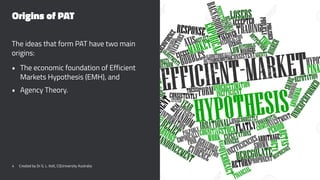
Positive Accounting Theory (PAT) aims to explain accounting practices by predicting which firms will use certain practices based on incentives. It originated from ideas in the Efficient Markets Hypothesis and Agency Theory. Watts and Zimmerman promoted PAT in research beginning in 1978. It assumes managers act in self-interest and choose accounting practices based on how capital markets will reward or punish unexpected news. While standards provide minimums, managers have discretion in areas like asset measurement, allowing them to disclose information favoring their interests.