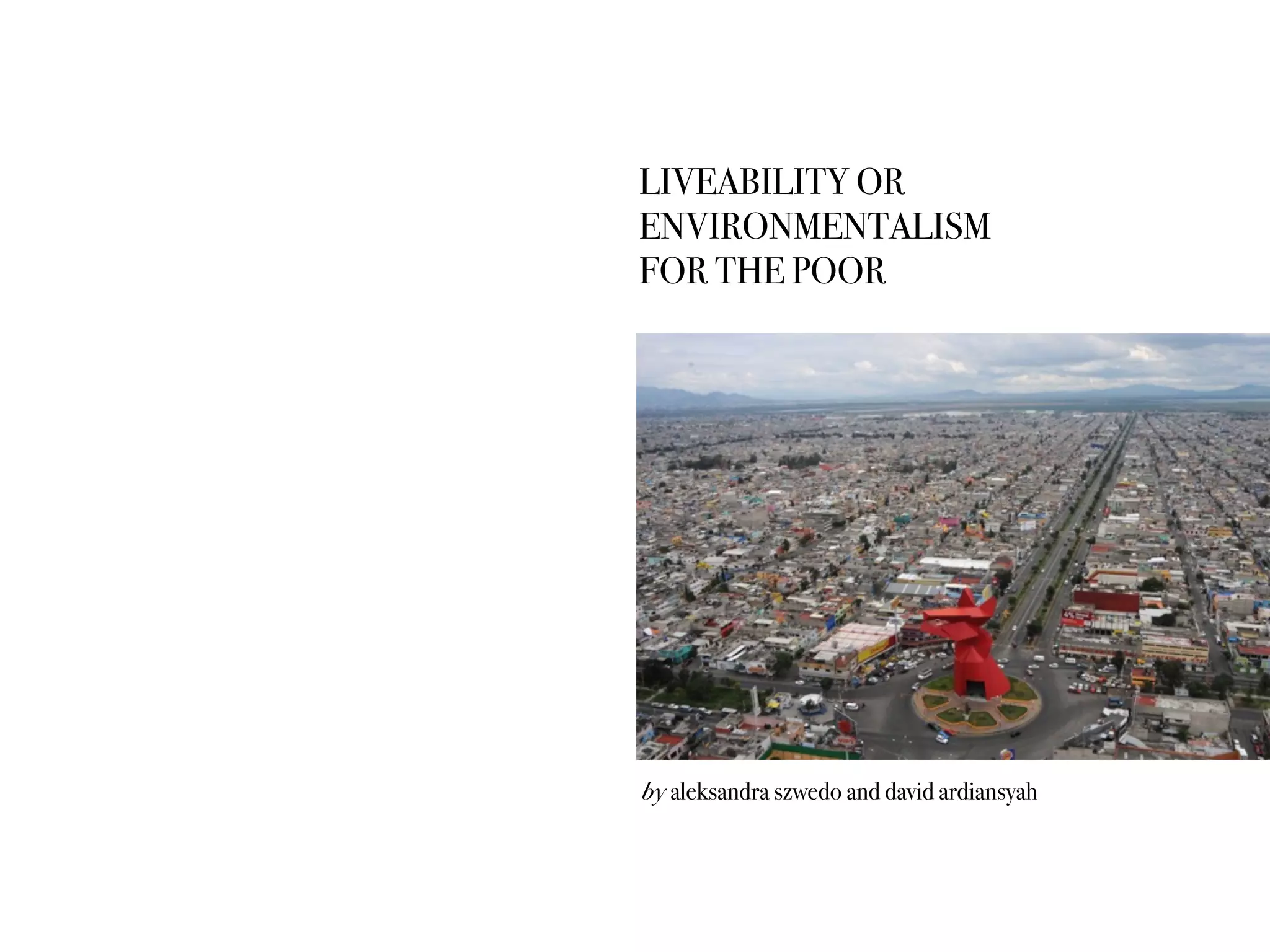
LIVEABILITY OR
ENVIRONMENTALISM
FOR THE POOR
by aleksandra szwedo and david ardiansyah
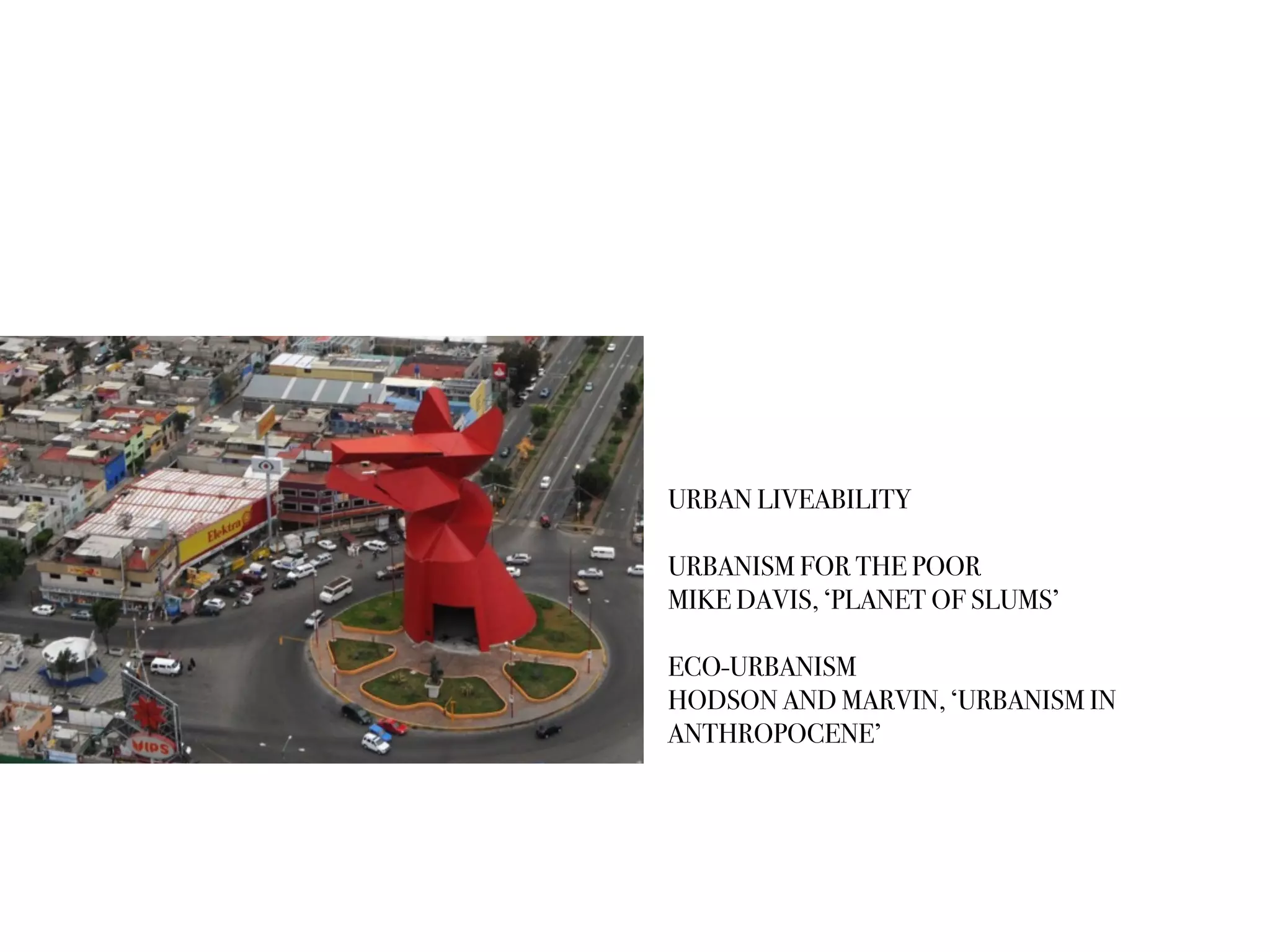
URBAN LIVEABILITY
URBANISM FOR THE POOR
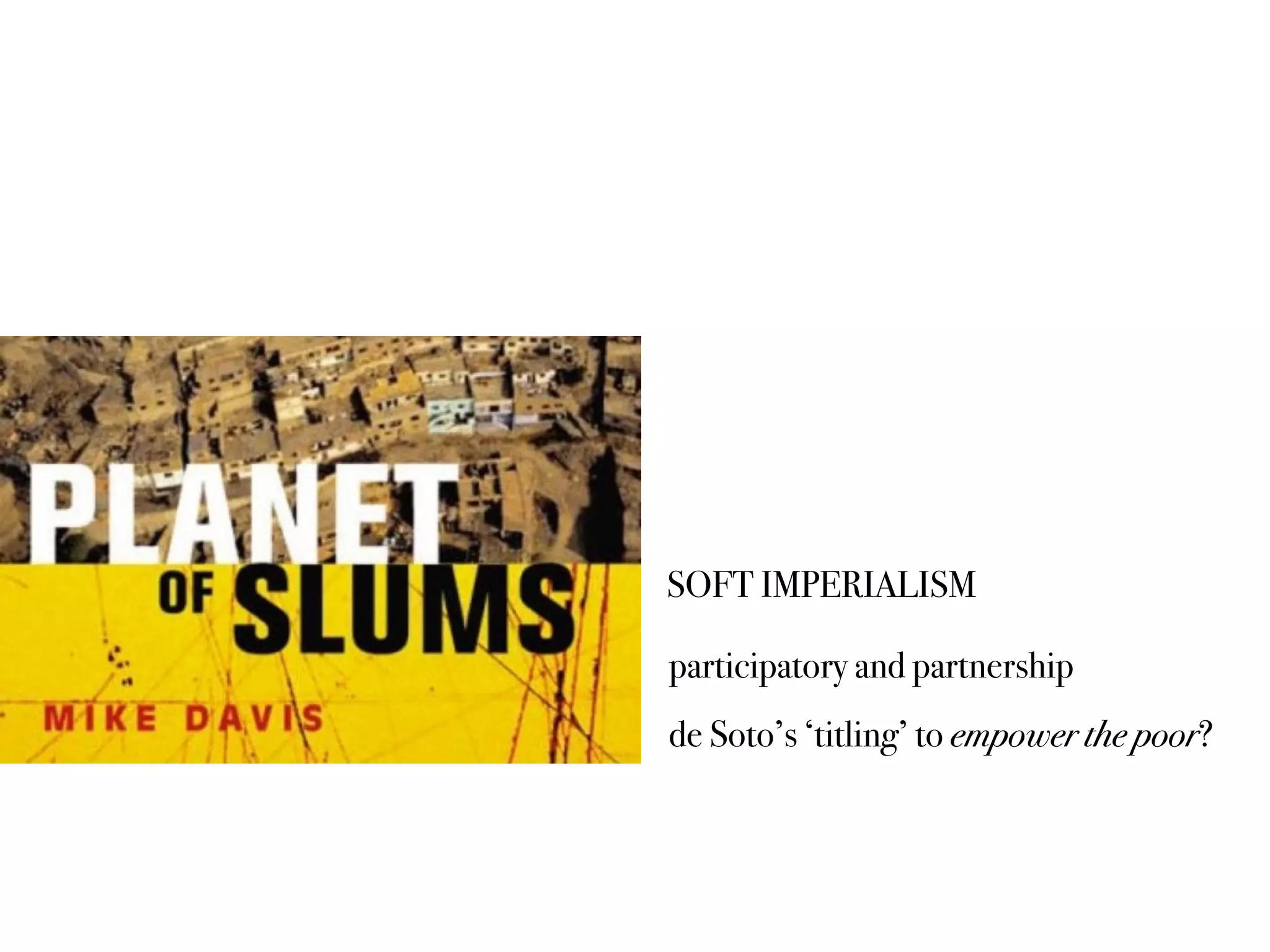
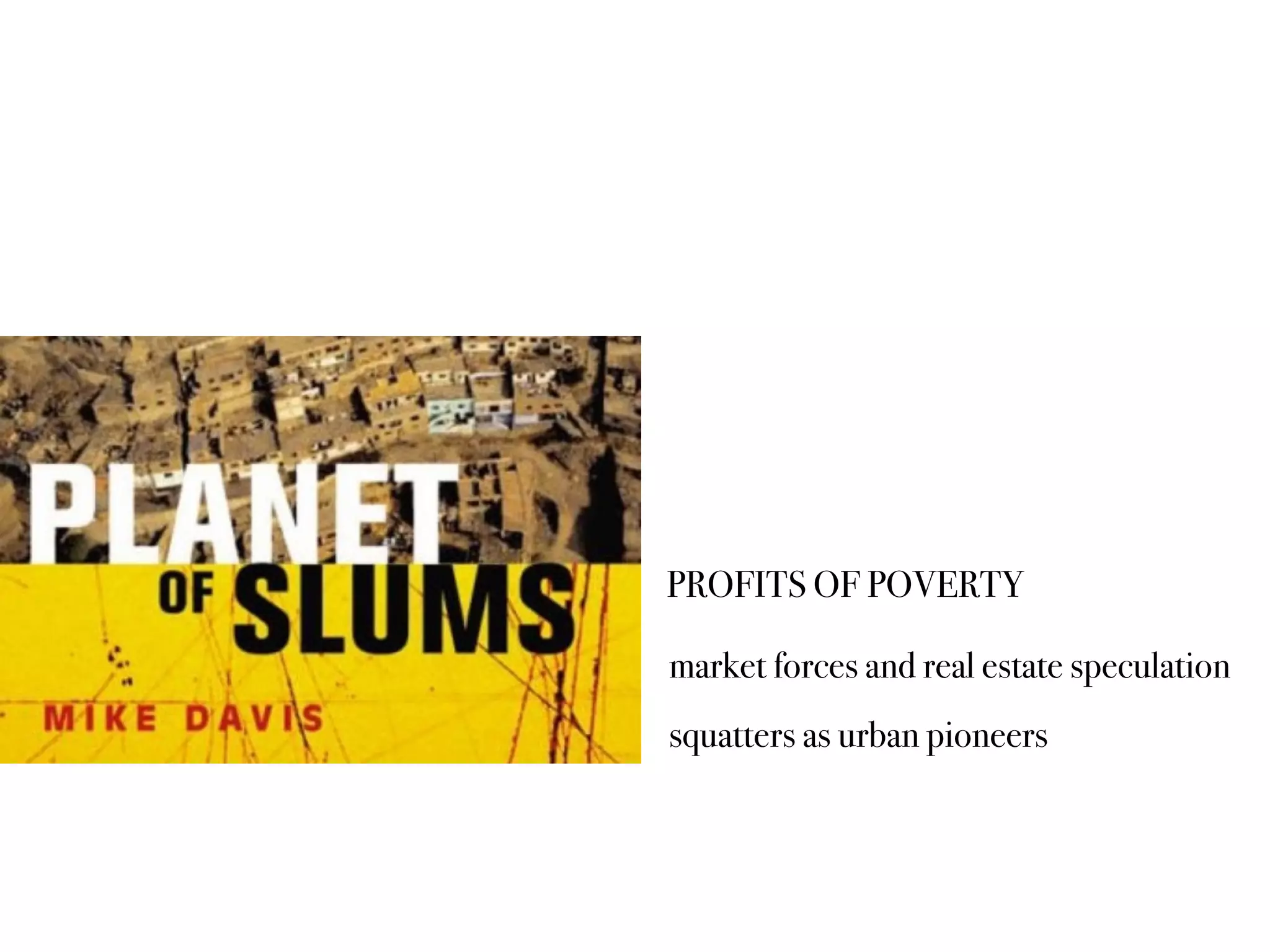
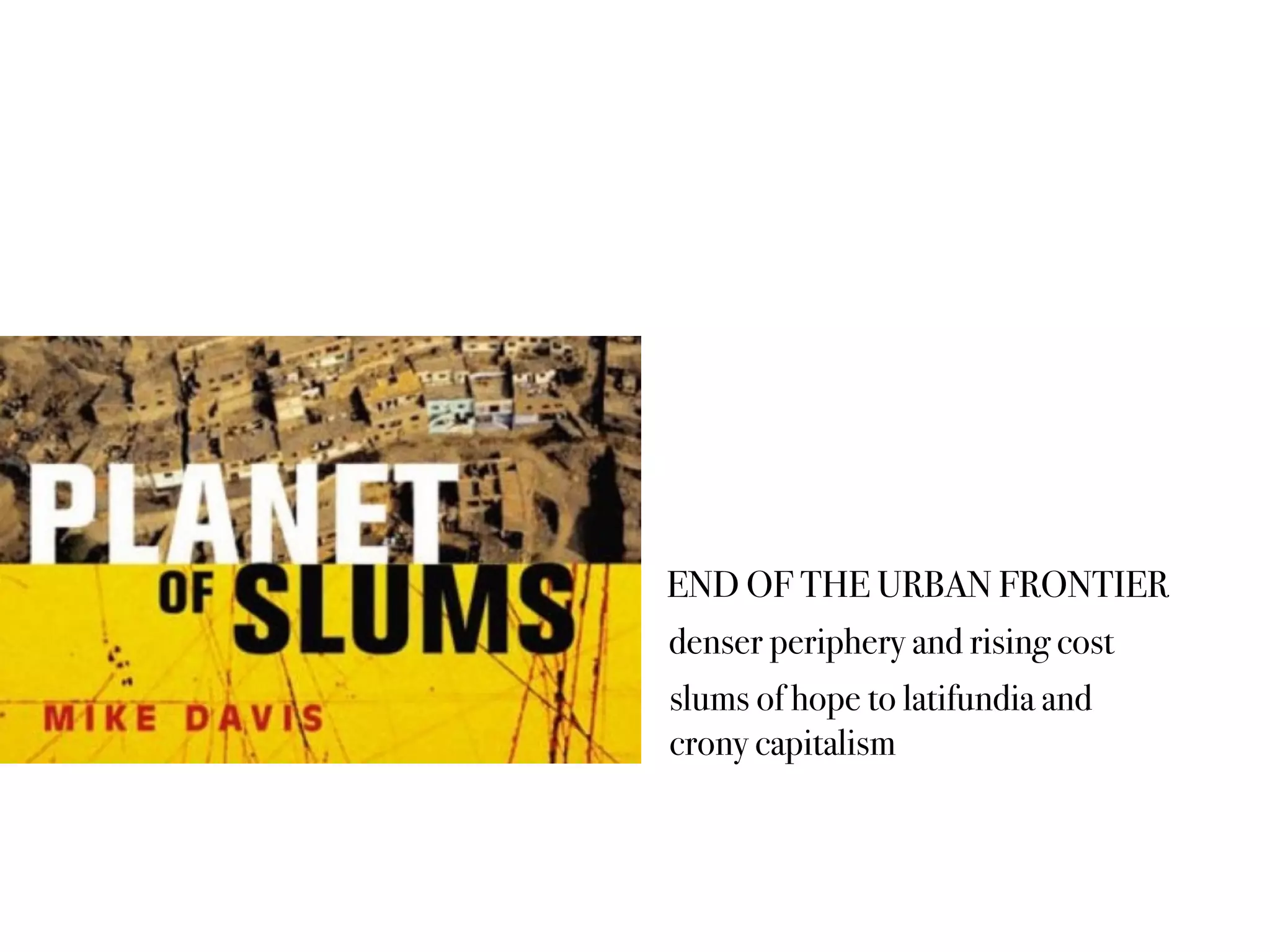
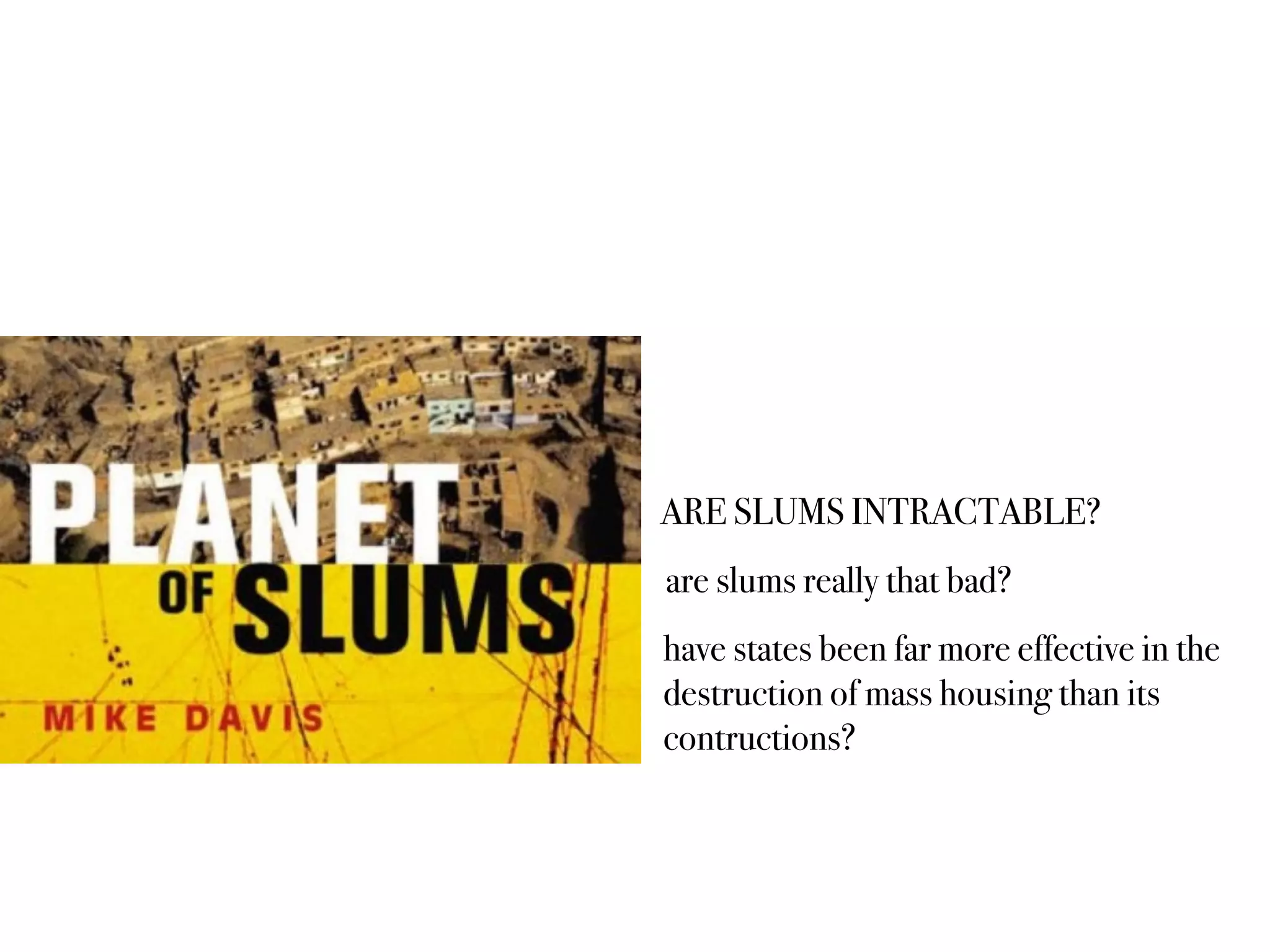
MIKE DAVIS, ‘PLANET OF SLUMS’
ECO-URBANISM
HODSON AND MARVIN, ‘URBANISM IN
ANTHROPOCENE’
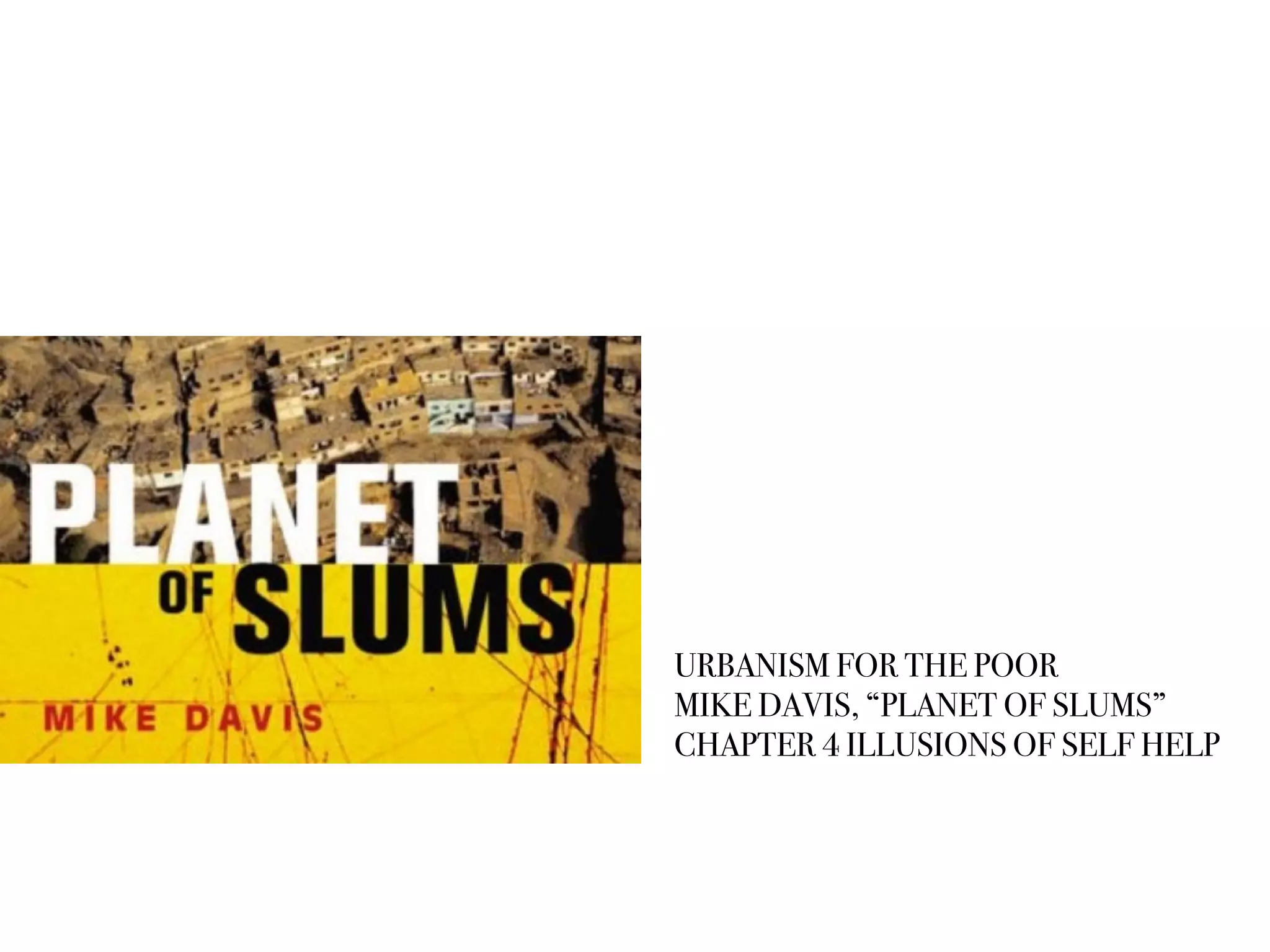
URBANISM FOR THE POOR
MIKE DAVIS, “PLANET OF SLUMS”
CHAPTER 4 ILLUSIONS OF SELF HELP
THE ‘FRIENDS’ OF THE POOR
OR ARE THEY?
site and services
self-help is a myth?
SOFT IMPERIALISM
participatory and partnership
de Soto’s ‘titling’ to empower the poor?
PROFITS OF POVERTY
market forces and real estate speculation
squatters as urban pioneers
END OF THE URBAN FRONTIER
denser periphery and rising cost
slums of hope to latifundia and
crony capitalism
ARE SLUMS INTRACTABLE?
are slums really that bad?
have states been far more effective in the
destruction of mass housing than its
contructions?
SLUMS OF HOPE OR JUST ILLUSIONS?
It would be foolish to pass from one distortion — that the slums
are places of crime, disease and despair — to the opposite that they
can be safely left to look after themselves.
Jeremy Seabrook
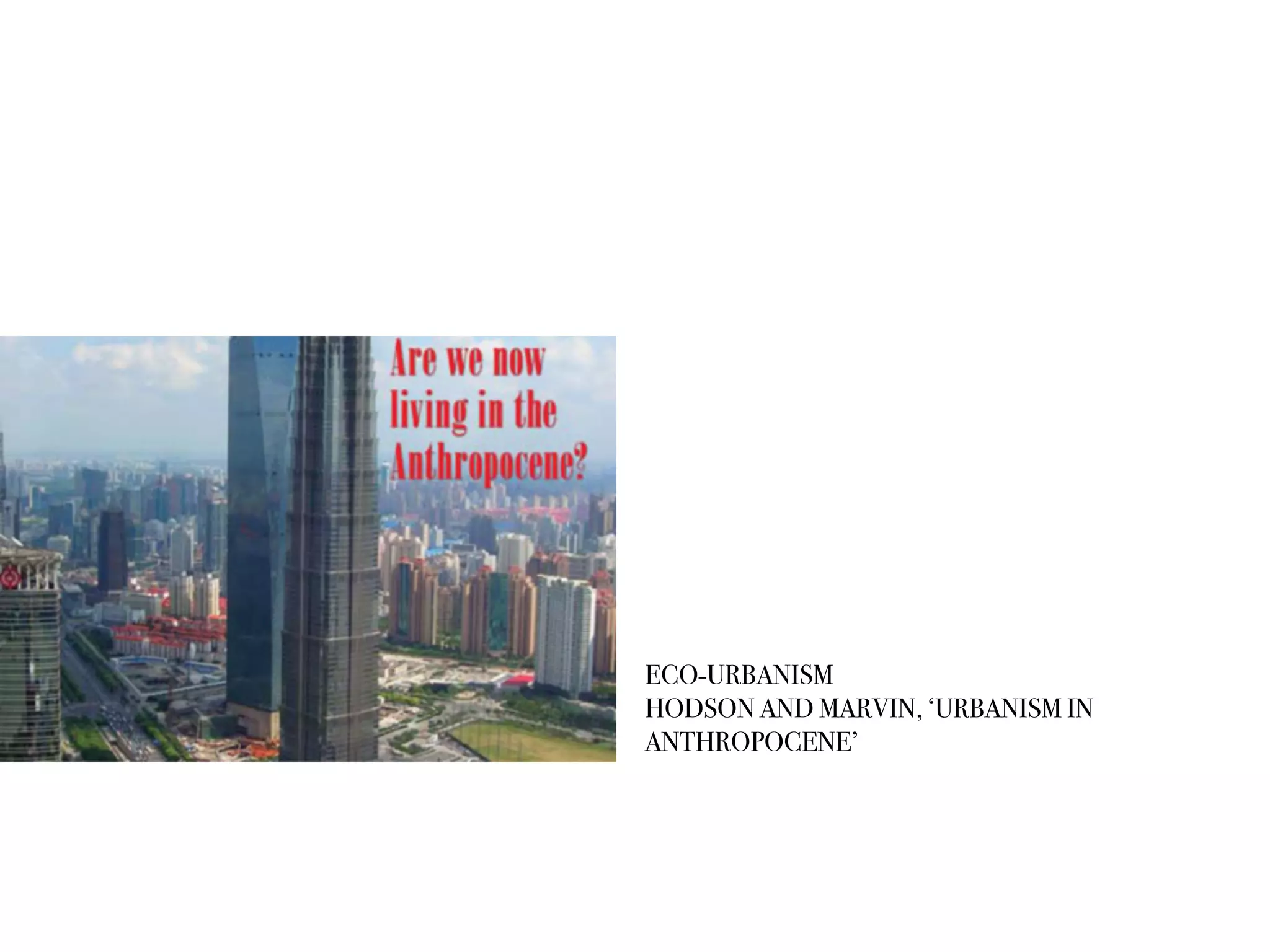
ECO-URBANISM
HODSON AND MARVIN, ‘URBANISM IN
ANTHROPOCENE’
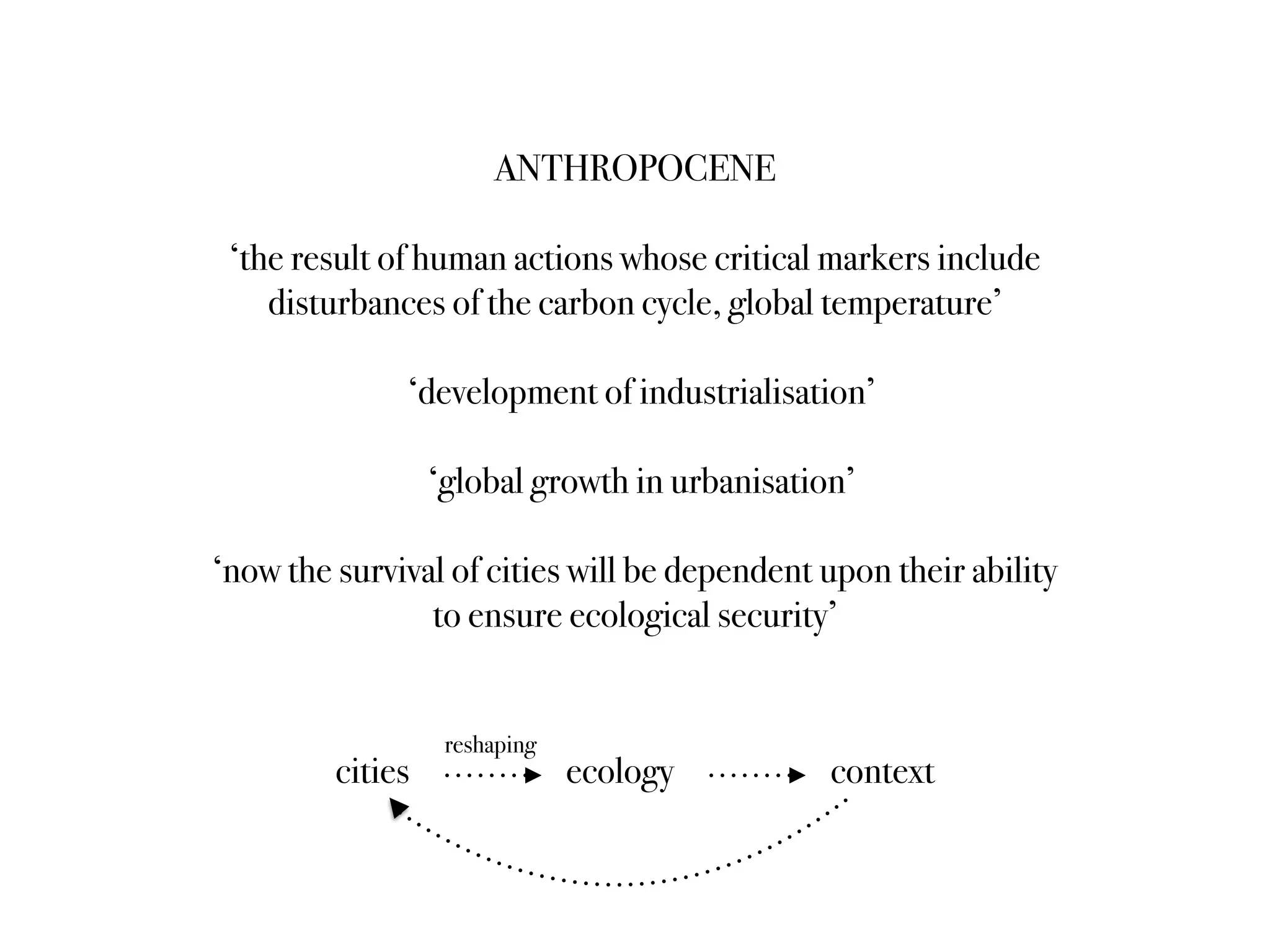
ANTHROPOCENE
‘the result of human actions whose critical markers include
disturbances of the carbon cycle, global temperature’
‘development of industrialisation’
‘global growth in urbanisation’
‘now the survival of cities will be dependent upon their ability
to ensure ecological security’
cities ecology context
reshaping
ECO-TOWNS
reduce CO2 emissions by 80%
below 1990 levels by 2050
energy emissions - 0 or below
water efficient (water neutrality)
waste as fuel
eg. Whitehill Bordon
ECO-BLOCKS

urban gated communities (self-
sufficient unit)
resource self-sufficient
energy from on-site renewables
water and waste recycle
eg. Quingdao Eco-block project
ECO-ISLANDS
6000 new apartments and businesses
50% of power from renewable
resources
eg. Treasure Island, former naval air
base, San Francisco
ECO-CITIES
‘Dongtan is ¾ the size of Manhattan and
is designed as a sustainable city to attract
a whole range of commercial and leisure
investments to what is currently a large
area of mostly agricultural land’
eg. Dongtan, Masdar
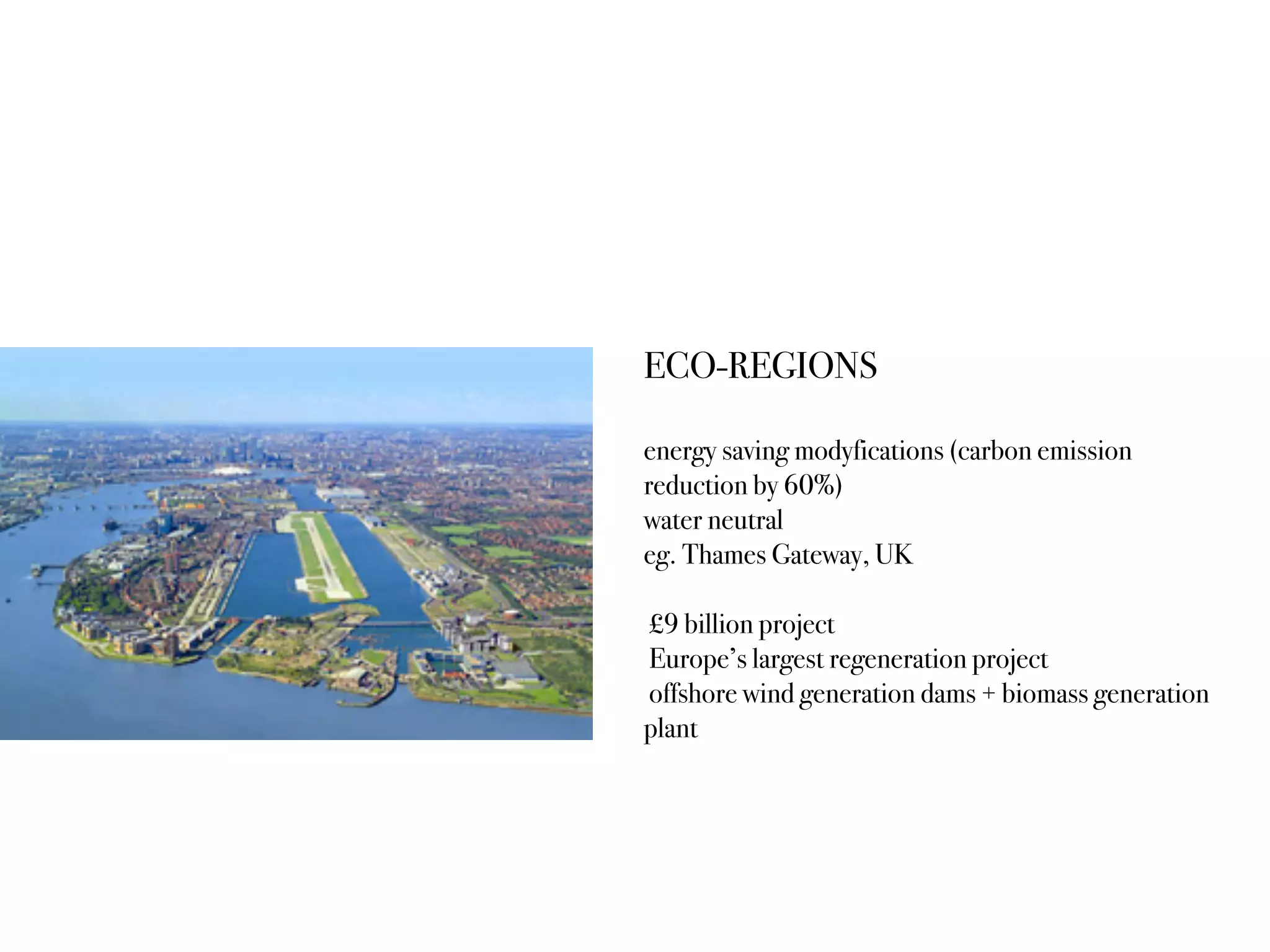
ECO-REGIONS
energy saving modyfications (carbon emission
reduction by 60%)
water neutral
eg. Thames Gateway, UK
£9 billion project
Europe’s largest regeneration project
offshore wind generation dams + biomass generation
plant
creating one size fits all by ‘replicating eco-city
developments’
new development
money intensive (directed at richer communities)
gated communities
ALTERNATIVES?
community-based initiatives
local and community control of infrastructure
ensuring more equitable access to
environmental resources for low-income
households
eg. LID, Transition Towns, Relocalisation
FAIR CITY
users and resources
progressive socio-technical change
new development and retrofitting the existing
emphasise questions about need and politics
of interdependencies
debate of the consequences of the new style of
urbanism rather than eco-technic products
do you agree?
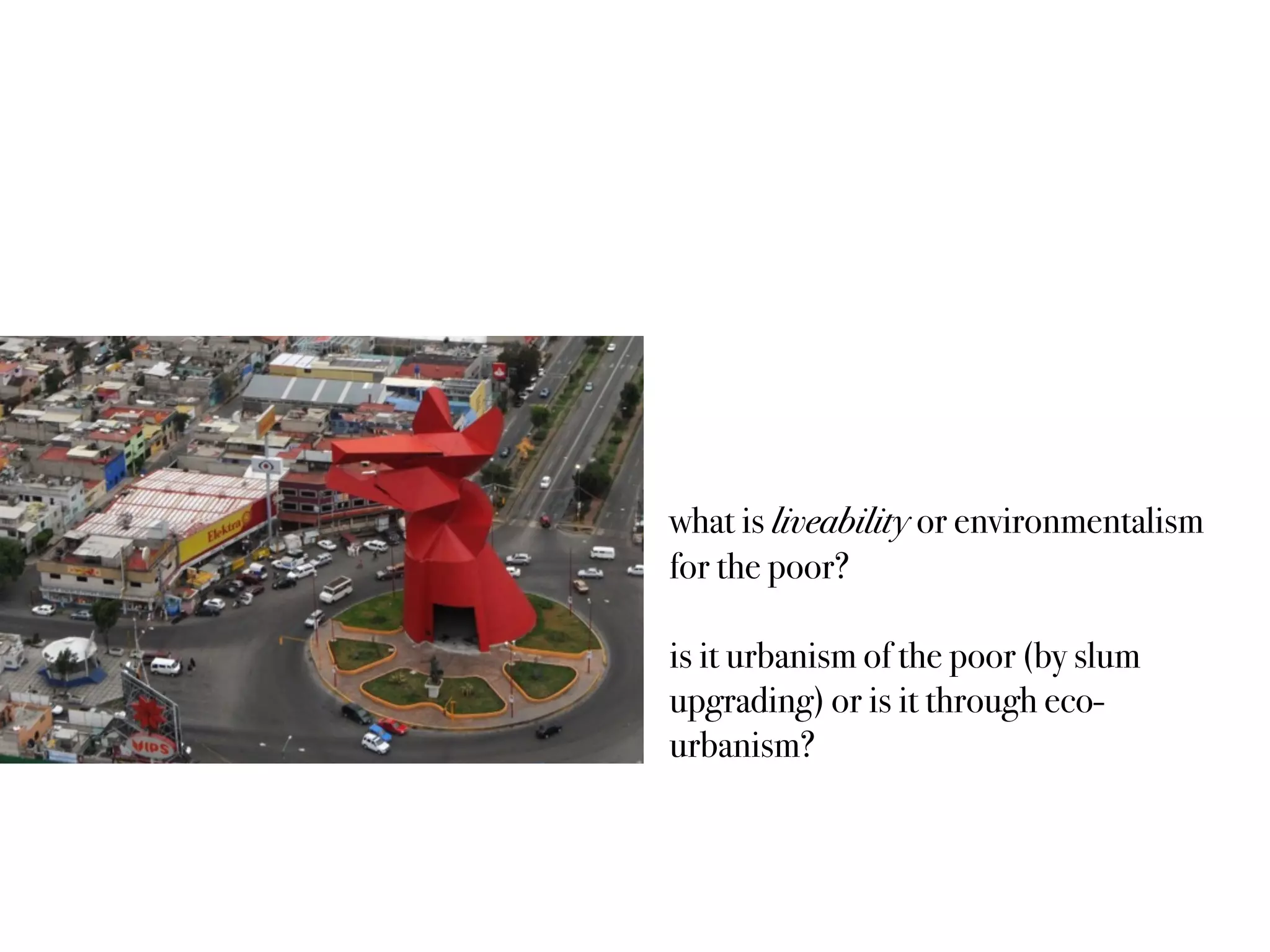
what is liveability or environmentalism
for the poor?
is it urbanism of the poor (by slum
upgrading) or is it through eco-
urbanism?
fin
thank you

Liveability or Environmentalism for the Poor

  • 1.
    LIVEABILITY OR ENVIRONMENTALISM FOR THEPOOR by aleksandra szwedo and david ardiansyah
  • 2.
    URBAN LIVEABILITY URBANISM FORTHE POOR MIKE DAVIS, ‘PLANET OF SLUMS’ ECO-URBANISM HODSON AND MARVIN, ‘URBANISM IN ANTHROPOCENE’
  • 3.
    URBANISM FOR THEPOOR MIKE DAVIS, “PLANET OF SLUMS” CHAPTER 4 ILLUSIONS OF SELF HELP
  • 4.
    THE ‘FRIENDS’ OFTHE POOR OR ARE THEY? site and services self-help is a myth?
  • 5.
    SOFT IMPERIALISM participatory andpartnership de Soto’s ‘titling’ to empower the poor?
  • 6.
    PROFITS OF POVERTY marketforces and real estate speculation squatters as urban pioneers
  • 7.
    END OF THEURBAN FRONTIER denser periphery and rising cost slums of hope to latifundia and crony capitalism
  • 8.
    ARE SLUMS INTRACTABLE? areslums really that bad? have states been far more effective in the destruction of mass housing than its contructions?
  • 9.
    SLUMS OF HOPEOR JUST ILLUSIONS? It would be foolish to pass from one distortion — that the slums are places of crime, disease and despair — to the opposite that they can be safely left to look after themselves. Jeremy Seabrook
  • 10.
    ECO-URBANISM HODSON AND MARVIN,‘URBANISM IN ANTHROPOCENE’
  • 11.
    ANTHROPOCENE ‘the result ofhuman actions whose critical markers include disturbances of the carbon cycle, global temperature’ ‘development of industrialisation’ ‘global growth in urbanisation’ ‘now the survival of cities will be dependent upon their ability to ensure ecological security’ cities ecology context reshaping
  • 12.
    ECO-TOWNS reduce CO2 emissionsby 80% below 1990 levels by 2050 energy emissions - 0 or below water efficient (water neutrality) waste as fuel eg. Whitehill Bordon
  • 13.
    ECO-BLOCKS
 urban gated communities(self- sufficient unit) resource self-sufficient energy from on-site renewables water and waste recycle eg. Quingdao Eco-block project
  • 14.
    ECO-ISLANDS 6000 new apartmentsand businesses 50% of power from renewable resources eg. Treasure Island, former naval air base, San Francisco
  • 15.
    ECO-CITIES ‘Dongtan is ¾the size of Manhattan and is designed as a sustainable city to attract a whole range of commercial and leisure investments to what is currently a large area of mostly agricultural land’ eg. Dongtan, Masdar
  • 16.
    ECO-REGIONS energy saving modyfications(carbon emission reduction by 60%) water neutral eg. Thames Gateway, UK £9 billion project Europe’s largest regeneration project offshore wind generation dams + biomass generation plant
  • 17.
    creating one sizefits all by ‘replicating eco-city developments’ new development money intensive (directed at richer communities) gated communities
  • 18.
    ALTERNATIVES? community-based initiatives local andcommunity control of infrastructure ensuring more equitable access to environmental resources for low-income households eg. LID, Transition Towns, Relocalisation
  • 20.
    FAIR CITY users andresources progressive socio-technical change new development and retrofitting the existing emphasise questions about need and politics of interdependencies debate of the consequences of the new style of urbanism rather than eco-technic products
  • 21.
  • 22.
    what is liveabilityor environmentalism for the poor? is it urbanism of the poor (by slum upgrading) or is it through eco- urbanism?
  • 23.
  • 24.