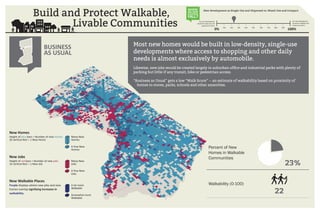
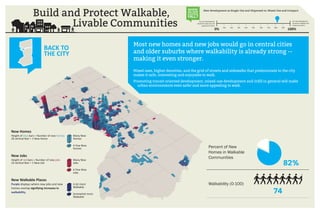
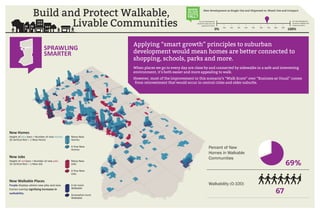
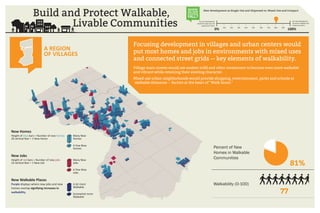
The document compares different development scenarios on their impact to walkability. The "Business as Usual" scenario results in the lowest walkability score, as most new development would consist of single-use, automobile-dependent suburbs. Concentrating new homes and jobs in existing cities and walkable suburbs, as in the "Back to the City" scenario, substantially improves walkability. Applying smart growth principles in suburbs and focusing development in villages and urban centers, as in the "Sprawling Smarter" and "A Region of Villages" scenarios, also significantly boost walkability over the business as usual approach.