Literal vs. Figurative
Language
What is literal language?
• To write or say something that
means its actual definition
• It states exactly what it means
• It stays the same all the time
What is figurative language?
•Words or phrases that mean
something different than what it
actually says
•Figurative is an antonym (means the
opposite) of literal
•It is language that your brain has
to FIGURE out
Figurative language
•There is room for interpretation
•It does NOT mean exactly what it sounds
like
•A person has to make a 'smart' guess based
on what is happening in the environment or
with the person when the language is being
used
Literal vs. Figurative
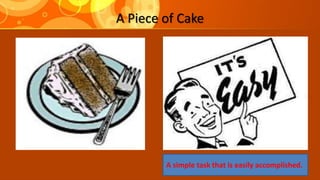
A Piece of Cake
A simple task that is easily accomplished.
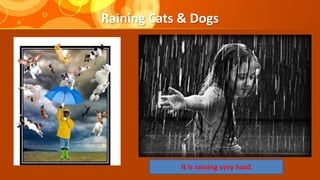
Raining Cats & Dogs
It is raining very hard.
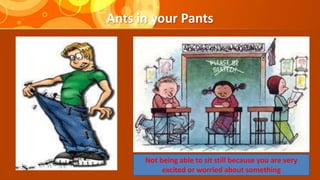
Ants in your Pants
Not being able to sit still because you are very
excited or worried about something
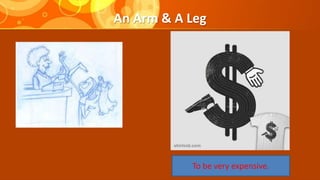
An Arm & A Leg
To be very expensive.
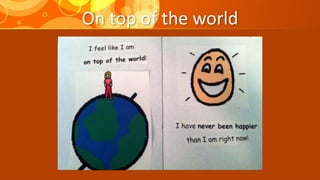
On top of the world
Types of Figurative Language
• Simile
• Metaphor
• Personification
• Hyperbole
• Idiom
SIMILE
A simile is a comparison of two
people, objects, or ideas that uses
the words “like” or “as”
Example
• The shop owner is as busy as a bee.
• It was quiet like a library at
midnight. (Brenda Woods)
• She floated gracefully down the
halls like a butterfly.
METAPHOR
A metaphor compares people,
things or ideas without using the
words like or as. It makes direct
connection.
Example
• You are what you eat.
• He was a solid rock against his
enemies.
• That test was a nightmare.
PERSONIFICATION
Personification describing
something that isn’t human by
giving it human-like qualities.
Example
• The stars dances playfully in the moonlit
sky.
• Most pianos have pretty good manners,
but Steven can make them sound rude.
• The trees dropped their leaves and
rested.
HYPERBOLE
Hyperbole is an exaggerated
statement used to create an effect.
It is used to emphasize a point.
Example
• I am about to starve to death.
• There's enough food in the
cupboard to feed an entire army!
• You’re as light as a feather.
• I walked a million miles to get here.
IDIOM
An idiom is an expression in one
language that cannot be matched
or directly translated word-for-
word in other language. It is
commonly known that it’s meaning
is not literal
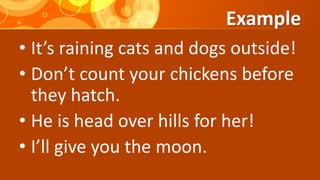
Example
• It’s raining cats and dogs outside!
• Don’t count your chickens before
they hatch.
• He is head over hills for her!
• I’ll give you the moon.
OXYMORON
An oxymoron is a figure of speech containing
words that seem to contradict each other. As
with other rhetorical devices, oxymorons are
used for a variety of purposes. Sometimes
they're used to create a little bit of drama for the
reader; sometimes they're used to make a
person stop and think, whether that's to laugh
or to wonder.
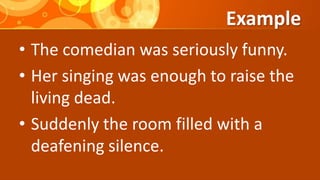
Example
• The comedian was seriously funny.
• Her singing was enough to raise the
living dead.
• Suddenly the room filled with a
deafening silence.
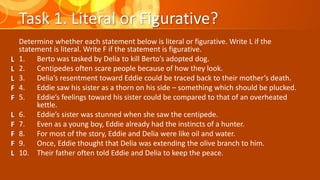
Task 1. Literal or Figurative?
Determine whether each statement below is literal or figurative. Write L if the
statement is literal. Write F if the statement is figurative.
1. Berto was tasked by Delia to kill Berto’s adopted dog.
2. Centipedes often scare people because of how they look.
3. Delia’s resentment toward Eddie could be traced back to their mother’s death.
4. Eddie saw his sister as a thorn on his side – something which should be plucked.
5. Eddie’s feelings toward his sister could be compared to that of an overheated
kettle.
6. Eddie’s sister was stunned when she saw the centipede.
7. Even as a young boy, Eddie already had the instincts of a hunter.
8. For most of the story, Eddie and Delia were like oil and water.
9. Once, Eddie thought that Delia was extending the olive branch to him.
10. Their father often told Eddie and Delia to keep the peace.
L
L
L
F
F
L
F
F
F
L
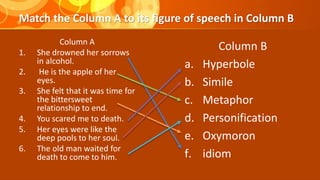
Match the Column A to its figure of speech in Column B
Column A
1. She drowned her sorrows
in alcohol.
2. He is the apple of her
eyes.
3. She felt that it was time for
the bittersweet
relationship to end.
4. You scared me to death.
5. Her eyes were like the
deep pools to her soul.
6. The old man waited for
death to come to him.
Column B
a. Hyperbole
b. Simile
c. Metaphor
d. Personification
e. Oxymoron
f. idiom
LITERAL-VS.-FIGURATIVE-LANGAUGE.pptx....

LITERAL-VS.-FIGURATIVE-LANGAUGE.pptx....

  • 1.
  • 2.
    What is literallanguage? • To write or say something that means its actual definition • It states exactly what it means • It stays the same all the time
  • 3.
    What is figurativelanguage? •Words or phrases that mean something different than what it actually says •Figurative is an antonym (means the opposite) of literal •It is language that your brain has to FIGURE out
  • 4.
    Figurative language •There isroom for interpretation •It does NOT mean exactly what it sounds like •A person has to make a 'smart' guess based on what is happening in the environment or with the person when the language is being used
  • 5.
  • 6.
    A Piece ofCake A simple task that is easily accomplished.
  • 7.
    Raining Cats &Dogs It is raining very hard.
  • 8.
    Ants in yourPants Not being able to sit still because you are very excited or worried about something
  • 9.
    An Arm &A Leg To be very expensive.
  • 10.
    On top ofthe world
  • 11.
    Types of FigurativeLanguage • Simile • Metaphor • Personification • Hyperbole • Idiom
  • 12.
    SIMILE A simile isa comparison of two people, objects, or ideas that uses the words “like” or “as”
  • 13.
    Example • The shopowner is as busy as a bee. • It was quiet like a library at midnight. (Brenda Woods) • She floated gracefully down the halls like a butterfly.
  • 14.
    METAPHOR A metaphor comparespeople, things or ideas without using the words like or as. It makes direct connection.
  • 15.
    Example • You arewhat you eat. • He was a solid rock against his enemies. • That test was a nightmare.
  • 16.
    PERSONIFICATION Personification describing something thatisn’t human by giving it human-like qualities.
  • 17.
    Example • The starsdances playfully in the moonlit sky. • Most pianos have pretty good manners, but Steven can make them sound rude. • The trees dropped their leaves and rested.
  • 18.
    HYPERBOLE Hyperbole is anexaggerated statement used to create an effect. It is used to emphasize a point.
  • 19.
    Example • I amabout to starve to death. • There's enough food in the cupboard to feed an entire army! • You’re as light as a feather. • I walked a million miles to get here.
  • 20.
    IDIOM An idiom isan expression in one language that cannot be matched or directly translated word-for- word in other language. It is commonly known that it’s meaning is not literal
  • 21.
    Example • It’s rainingcats and dogs outside! • Don’t count your chickens before they hatch. • He is head over hills for her! • I’ll give you the moon.
  • 22.
    OXYMORON An oxymoron isa figure of speech containing words that seem to contradict each other. As with other rhetorical devices, oxymorons are used for a variety of purposes. Sometimes they're used to create a little bit of drama for the reader; sometimes they're used to make a person stop and think, whether that's to laugh or to wonder.
  • 23.
    Example • The comedianwas seriously funny. • Her singing was enough to raise the living dead. • Suddenly the room filled with a deafening silence.
  • 24.
    Task 1. Literalor Figurative? Determine whether each statement below is literal or figurative. Write L if the statement is literal. Write F if the statement is figurative. 1. Berto was tasked by Delia to kill Berto’s adopted dog. 2. Centipedes often scare people because of how they look. 3. Delia’s resentment toward Eddie could be traced back to their mother’s death. 4. Eddie saw his sister as a thorn on his side – something which should be plucked. 5. Eddie’s feelings toward his sister could be compared to that of an overheated kettle. 6. Eddie’s sister was stunned when she saw the centipede. 7. Even as a young boy, Eddie already had the instincts of a hunter. 8. For most of the story, Eddie and Delia were like oil and water. 9. Once, Eddie thought that Delia was extending the olive branch to him. 10. Their father often told Eddie and Delia to keep the peace. L L L F F L F F F L
  • 25.
    Match the ColumnA to its figure of speech in Column B Column A 1. She drowned her sorrows in alcohol. 2. He is the apple of her eyes. 3. She felt that it was time for the bittersweet relationship to end. 4. You scared me to death. 5. Her eyes were like the deep pools to her soul. 6. The old man waited for death to come to him. Column B a. Hyperbole b. Simile c. Metaphor d. Personification e. Oxymoron f. idiom