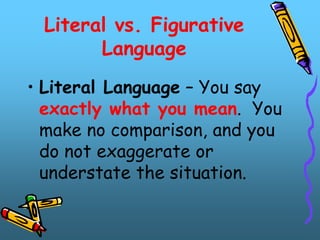
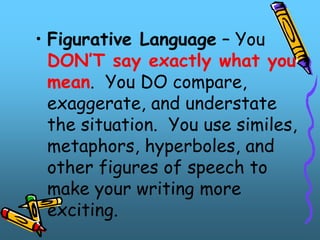
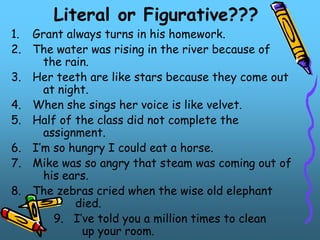
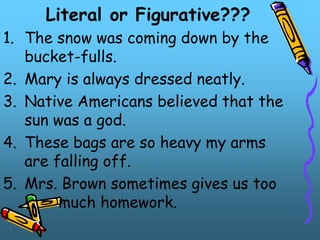
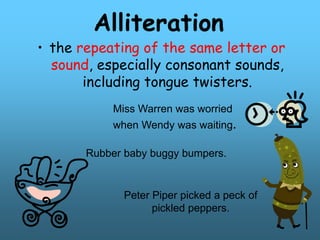
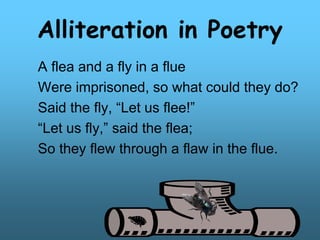
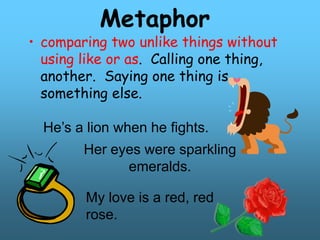
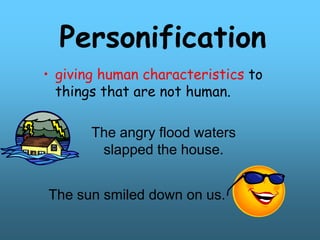
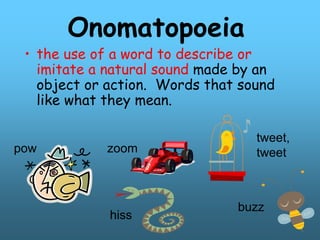
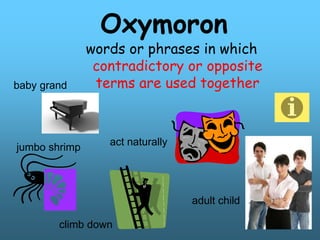
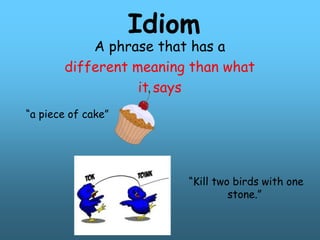
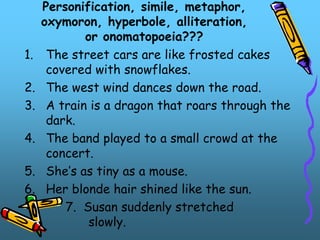
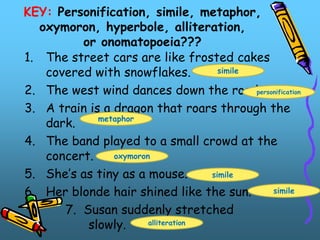
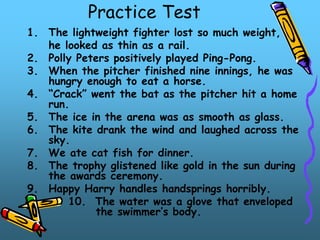
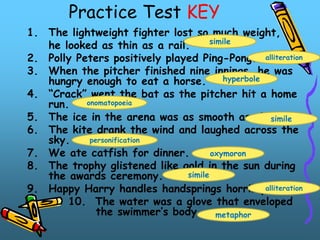
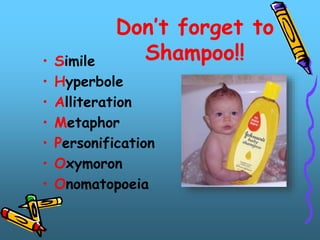
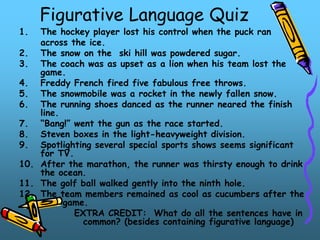
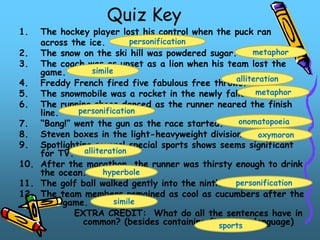
The document discusses different types of literal and figurative language. It defines literal language as saying exactly what is meant without comparisons, exaggerations, or understatements. Figurative language does not say exactly what is meant and uses devices like similes, metaphors, hyperboles, and other figures of speech to make writing more exciting. It then provides examples to distinguish between literal and figurative phrases. The rest of the document outlines seven common types of figurative language - simile, hyperbole, alliteration, metaphor, personification, onomatopoeia, and oxymoron. It gives definitions and examples for each type.