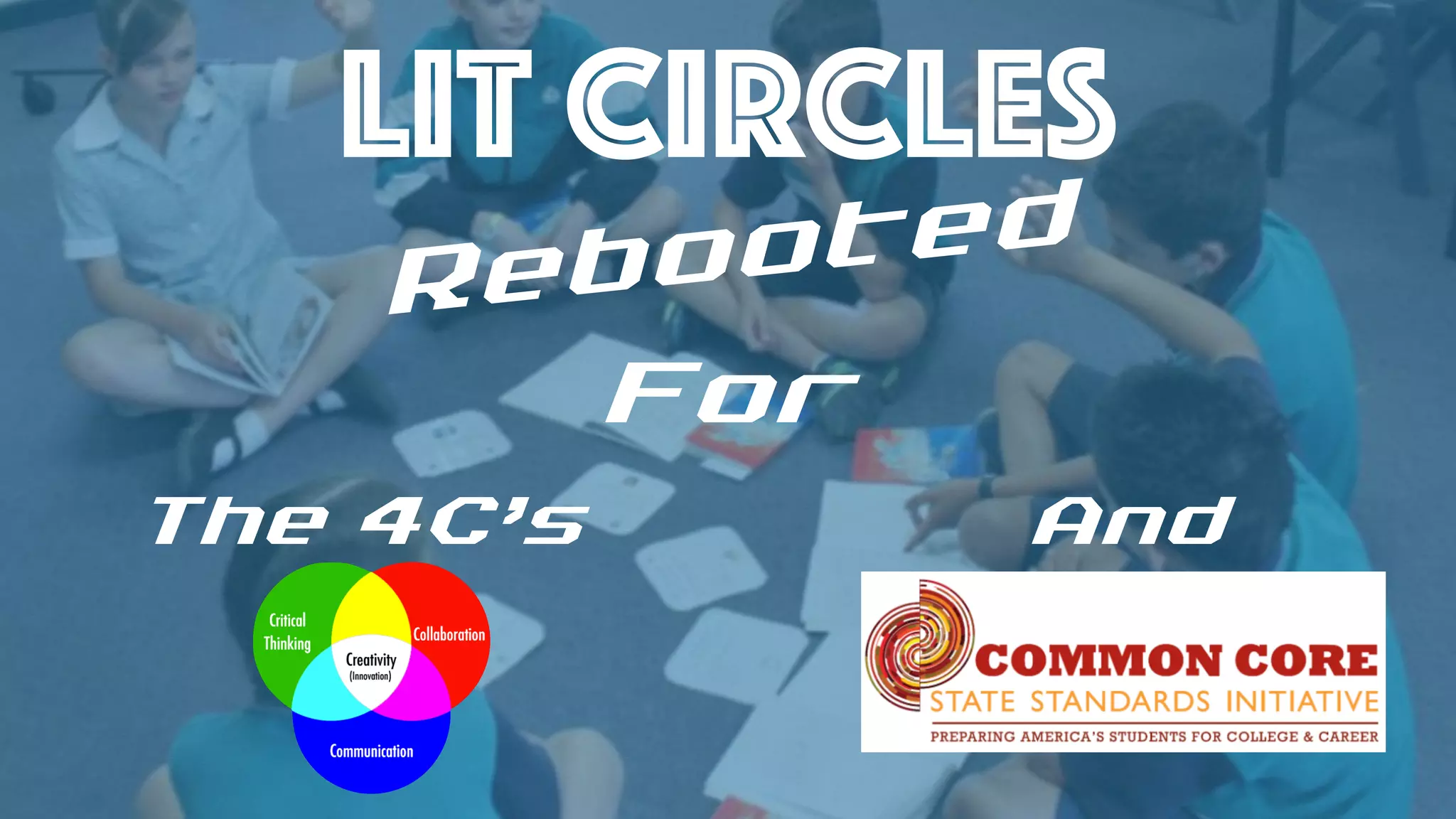
LIT CIRCLES
Rebooted
For
The 4Câs And
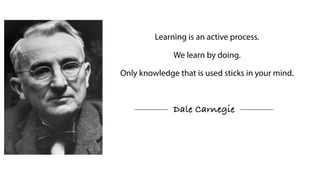
Learning is an active process.
We learn by doing.
Only knowledge that is used sticks in your mind.
Dale Carnegie
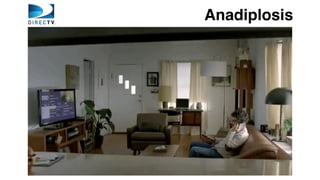
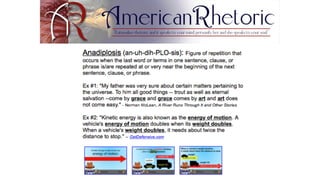
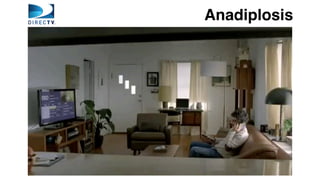
Anadiplosis
Define:
QUICK:
Write an example of
Anadiplosis
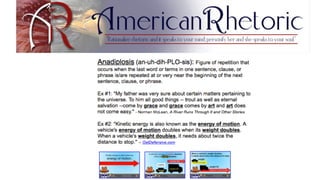
Anadiplosis
QUICK:
Write an example of
Anadiplosis
Learning is an active process.
We learn by doing.
Only knowledge that is used sticks in your mind.
Dale Carnegie
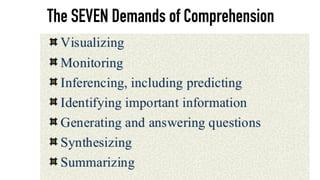
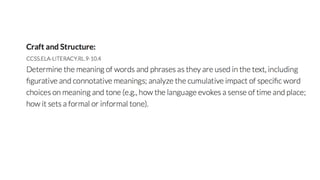
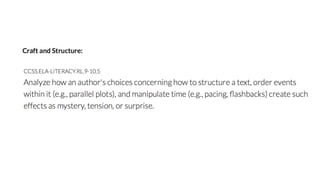
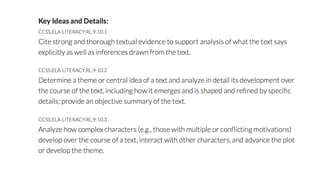
The SEVEN Demands of Comprehension
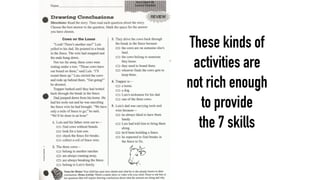
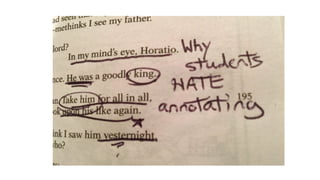
These kinds of
activities are
not rich enough
to provide
the 7 skills
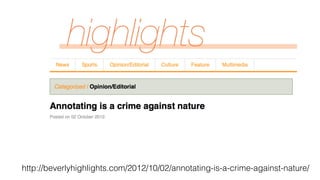
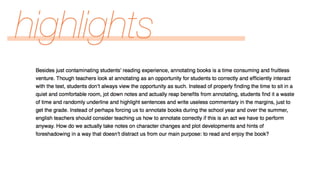
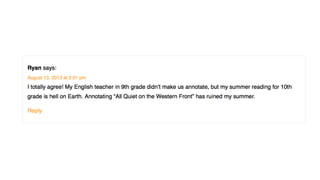
http://beverlyhighlights.com/2012/10/02/annotating-is-a-crime-against-nature/
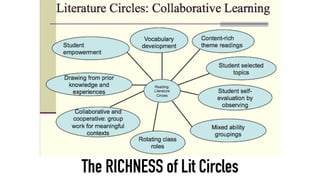
The RICHNESS of Lit Circles
LIT CIRCLE PITFALLS
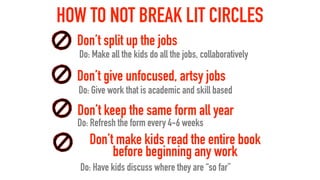
HOW TO NOT BREAK LIT CIRCLES
Do: Make all the kids do all the jobs, collaboratively
Do: Give work that is academic and skill based
Don’t split up the jobs
Don’t give unfocused, artsy jobs
Do: Refresh the form every 4-6 weeks
Don’t keep the same form all year
Don’t make kids read the entire book
before beginning any work
Do: Have kids discuss where they are “so far”
LIT CIRCLE PITFALLS
Is it academic?
Is it creative?
Is it interesting?
Does it make kids better readers?
Do they enjoy the process?
Put your parent hat on, if your
own child brought this lit circle home…..
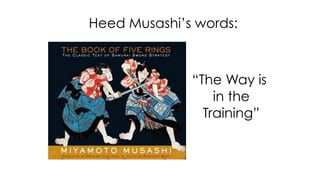
Heed Musashi’s words:
“The Way is
in the
Training”
Or heed Gladwell:
Students will
cheat if they
don’t know
how to do the
given task -
Paraphrased
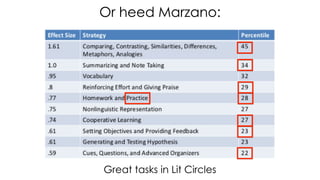
Or heed Marzano:
Great tasks in Lit Circles
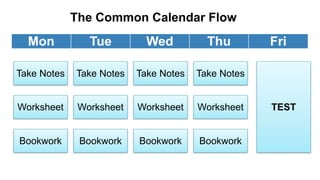
Take Notes Take Notes Take Notes Take Notes
Worksheet Worksheet Worksheet Worksheet
Bookwork Bookwork Bookwork Bookwork
TEST
The Common Calendar Flow
THE
SUSHI
METHOD
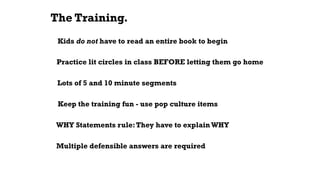
The Training.
Kids do not have to read an entire book to begin
Keep the training fun - use pop culture items
Practice lit circles in class BEFORE letting them go home
Lots of 5 and 10 minute segments
WHY Statements rule:They have to explainWHY
Multiple defensible answers are required
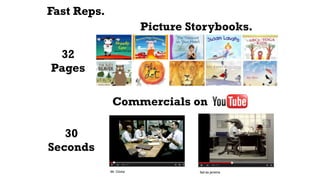
Fast Reps.
Picture Storybooks.
Commercials on
32
Pages
30
Seconds
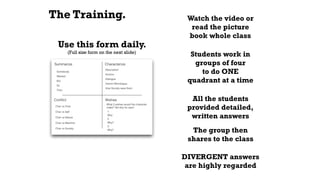
The Training.
Use this form daily.
Watch the video or
read the picture
book whole class
(Full size form on the next slide)
Students work in
groups of four
to do ONE
quadrant at a time
All the students
provided detailed,
written answers
The group then
shares to the class
DIVERGENT answers
are highly regarded
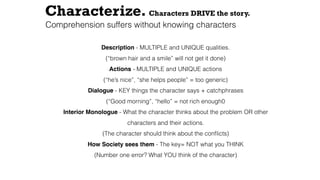
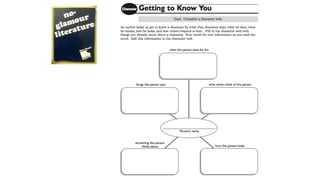
Characterize. Characters DRIVE the story.
Description - MULTIPLE and UNIQUE qualities.
(“brown hair and a smile” will not get it done)
Actions - MULTIPLE and UNIQUE actions
(“he’s nice”, “she helps people” = too generic)
Dialogue - KEY things the character says + catchphrases
(“Good morning”, “hello” = not rich enough0
Interior Monologue - What the character thinks about the problem OR other
characters and their actions.
(The character should think about the conflicts)
How Society sees them - The key= NOT what you THINK
(Number one error? What YOU think of the character)
Comprehension suffers without knowing characters
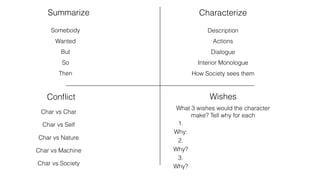
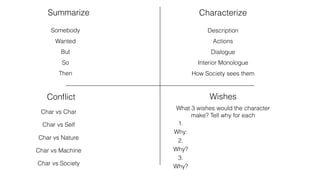
Summarize Characterize
Conflict Wishes
Somebody
Wanted
But
So
Then
Char vs Char
Char vs Self
Char vs Nature
Char vs Machine
Char vs Society
Description
Actions
Dialogue
Interior Monologue
How Society sees them
What 3 wishes would the character
make? Tell why for each
1.
Why:
2.
Why?
3.
Why?
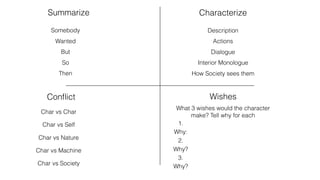
Summarize Characterize
Conflict Wishes
Somebody
Wanted
But
So
Then
Char vs Char
Char vs Self
Char vs Nature
Char vs Machine
Char vs Society
Description
Actions
Dialogue
Interior Monologue
How Society sees them
What 3 wishes would the character
make? Tell why for each
1.
Why:
2.
Why?
3.
Why?
Summarize Characterize
Conflict Wishes
Somebody
Wanted
But
So
Then
Char vs Char
Char vs Self
Char vs Nature
Char vs Machine
Char vs Society
Description
Actions
Dialogue
Interior Monologue
How Society sees them
What 3 wishes would the character
make? Tell why for each
1.
Why:
2.
Why?
3.
Why?
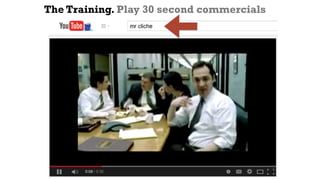
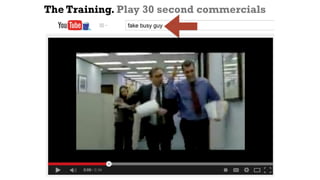
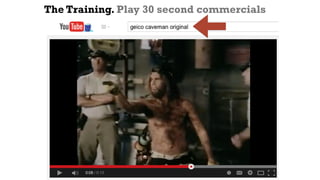
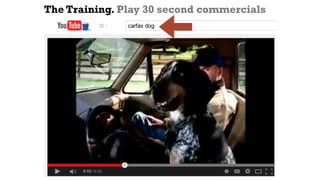
The Training. Play 30 second commercials
Download off YouTube. Optional
BUY-IN.
YOUR STUDENTS WILL ASK
TO WATCH AND ANALYZE VIDEOS OVER AND
OVER
Note: This is “close watching”
as opposed to “close reading” -
but the skills gained are the same
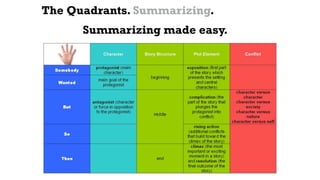
The Quadrants. Summarizing.
Summarizing made easy.
1. Somebody: Who is the main character (protagonist)
2. Wanted: What does the main character want or need?
3. But: What gets in the way of the main character?
4. So: What does the main character do about it?
5. Then: What was the resolution of the story?
Summarizing made easy.
The Quadrants. Summarizing.
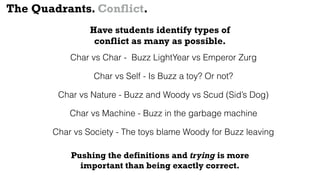
Char vs Char - Buzz LightYear vs Emperor Zurg
Char vs Self - Is Buzz a toy? Or not?
Char vs Nature - Buzz and Woody vs Scud (Sid’s Dog)
Char vs Machine - Buzz in the garbage machine
Char vs Society - The toys blame Woody for Buzz leaving
The Quadrants. Conflict.
Have students identify types of
conflict as many as possible.
Pushing the definitions and trying is more
important than being exactly correct.
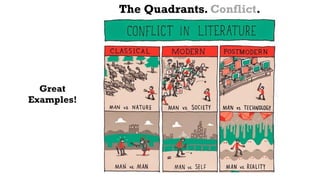
The Quadrants. Conflict.
Great
Examples!
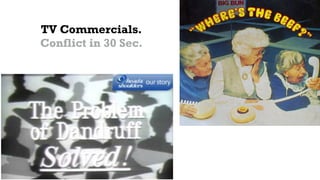
TV Commercials.
Conflict in 30 Sec.
The Quadrants. Conflict.
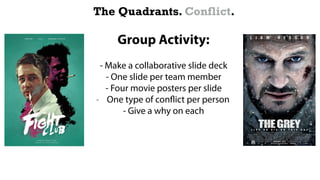
Group Activity:
- Make a collaborative slide deck
- One slide per team member
- Four movie posters per slide
- One type of conflict per person
- Give a why on each
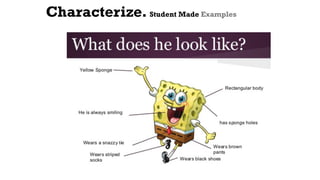
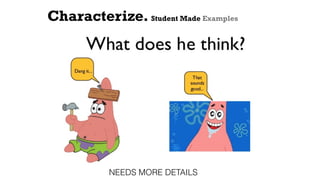
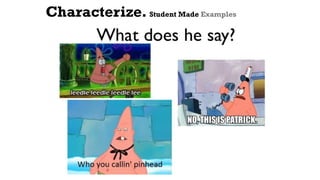
Characterize. Student Made Examples
NEEDS MORE DETAILS
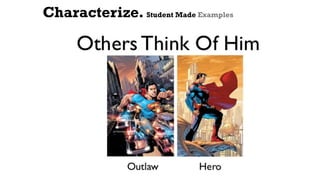
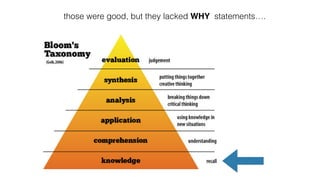
Characterize. Student Made Examples
those were good, but they lacked WHY statements….
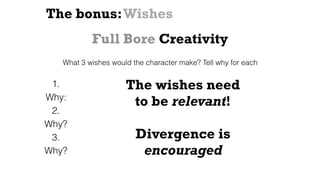
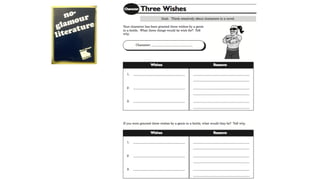
The bonus:Wishes
What 3 wishes would the character make? Tell why for each
1.
Why:
2.
Why?
3.
Why?
The wishes need
to be relevant!
Divergence is
encouraged
Full Bore Creativity
The bonus:Wishes
What 3 wishes would the character make? Tell why for each
1.
Why:
2.
Why?
3.
Why?
THE WHY STATEMENTS
ARE THE KINGS
OF THISWORK -
KIDS SHOULD PROVIDE
REASONING IN A SENTENCE
Full Bore Creativity
Why the change?
The Training. Play 30 second commercials
Find commercials on
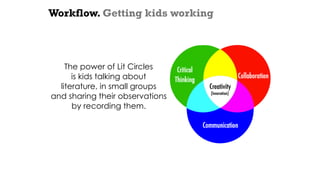
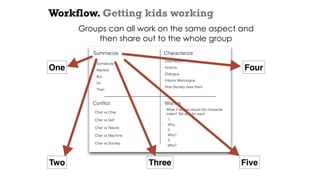
Workflow. Getting kids working
The power of Lit Circles
is kids talking about
literature, in small groups
and sharing their observations
by recording them.
Workflow. Getting kids working
One
Two Three
Four
Five
Groups can all work on the same aspect and
then share out to the whole group
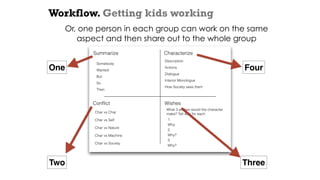
Workflow. Getting kids working
One
Two Three
Four
Or, one person in each group can work on the same
aspect and then share out to the whole group
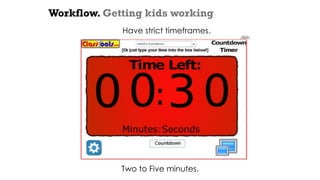
Workflow. Getting kids working
Have strict timeframes.
Two to Five minutes.
Workflow. Getting kids working
Timeframes create intensity.
Text.Translating the skills
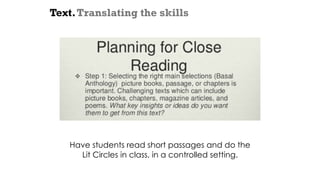
Have students read short passages and do the
Lit Circles in class, in a controlled setting.
Building TEXT-TO-SELF Connections
Text.Translating the skills
A key thing to teach for
independent reading
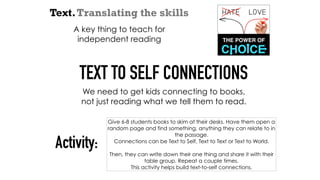
TEXT TO SELF CONNECTIONS
We need to get kids connecting to books,
not just reading what we tell them to read.
Give 6-8 students books to skim at their desks. Have them open a
random page and find something, anything they can relate to in
the passage.
Connections can be Text to Self, Text to Text or Text to World.
Then, they can write down their one thing and share it with their
table group. Repeat a couple times.
This activity helps build text-to-self connections.
Activity:
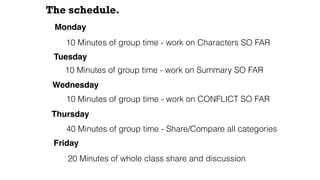
Monday
Tuesday
Wednesday
The schedule.
Thursday
Friday
10 Minutes of group time - work on Characters SO FAR
10 Minutes of group time - work on Summary SO FAR
10 Minutes of group time - work on CONFLICT SO FAR
40 Minutes of group time - Share/Compare all categories
20 Minutes of whole class share and discussion
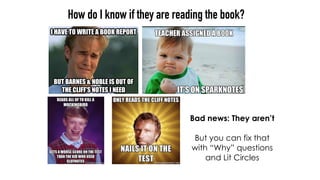
How do I know if they are reading the book?
Bad news: They aren’t
But you can fix that
with “Why” questions
and Lit Circles
Literary Devices
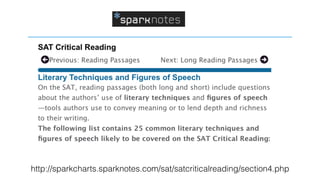
http://sparkcharts.sparknotes.com/sat/satcriticalreading/section4.php
Literary Devices
Literary Devices
Literary Devices
Literary Devices
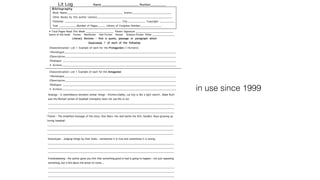
Lit Log Name ___________________ Number________
Book Name__________________________________ Author________________________
Other Books by this author (series)______________________________________________
Publisher __________________________________ City___________ Copyright _________
Year ___________Number of Pages_____ Library of Congress Number_____________
Bibliography
Literary Devices - find a quote, passage or paragraph which
illustrates 1 of each of the following:
Characterization- List 1 Example of each for the Protagonist(///Actions)
1Monologue___________________________________________________________________
2Description__________________________________________________________________
3Dialogue ____________________________________________________________________
4 Actions_____________________________________________________________________
Analogy - A resemblance between similar things - Kitchen=Galley, car key is like a light switch , Babe Ruth
was the Michael Jordan of baseball (metaphor does not use like or as)
___________________________________________________________________________
___________________________________________________________________________
___________________________________________________________________________
Theme - The simplified message of the story: Star Wars- the Jedi battle the Sith, Sandlot- Boys growing up
loving baseball.
___________________________________________________________________________
___________________________________________________________________________
___________________________________________________________________________
Stereotype - Judging things by their looks - sometimes it is true and sometimes it is wrong.
___________________________________________________________________________
___________________________________________________________________________
___________________________________________________________________________
Foreshadowing - the author gives you hint that something good or bad is going to happen - not just repeating
something, but a hint about the action to come....
___________________________________________________________________________
___________________________________________________________________________
___________________________________________________________________________
• Total Pages Read This Week _________________ Parent Signature _______________________
Genre of the book: Fiction Nonfiction Hist Fiction Humor Science Fiction Other ______________
Characterization- List 1 Example of each for the Antagonist
1Monologue___________________________________________________________________
2Description__________________________________________________________________
3Dialogue ____________________________________________________________________
4 Actions_____________________________________________________________________ in use since 1999
GOOGLE FORM LIT CIRCLE
tinyurl.com/CATELitCircle
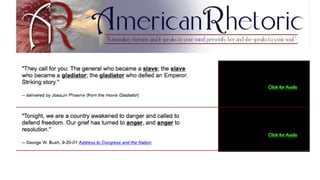
Anadiplosis
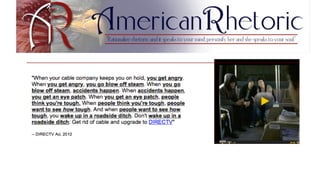
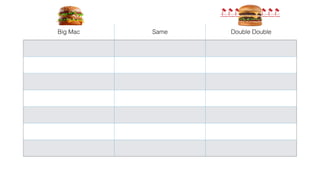
Big Mac Same Double Double
Baseball Same Football
Lit Circle: You Build
Focus on completion, with immediate feedback (grades)
Don’t send things home.
Don’t take things home.
Clear rubrics. Focus on skills, not facts.
Don’t teach books
Teach SKILLS
CHOICE
is the only
THING
Book levels
DO NOT MATTER
Read together
Share
Report alone
THIS WILL HAPPEN
Kids will see Irony, Paradox,
Poetic Justice,
Foreshadowing and
more in REAL LIFE
NOT just books.
THIS PROCESS
IS MORE
IMPORTANT
THAN
STANDARDIZED
SCORES
Learning is an active process.
We learn by doing.
Only knowledge that is used sticks in your mind.
Dale Carnegie
LIT CIRCLES
Rebooted
For
The 4Câs And
jcorippo@cue.org

Lit Circles Rebooted - CATE Version

  • 1.
  • 2.
    Learning is anactive process. We learn by doing. Only knowledge that is used sticks in your mind. Dale Carnegie
  • 3.
  • 4.
  • 8.
  • 9.
  • 10.
    Learning is anactive process. We learn by doing. Only knowledge that is used sticks in your mind. Dale Carnegie
  • 11.
    The SEVEN Demandsof Comprehension
  • 12.
    These kinds of activitiesare not rich enough to provide the 7 skills
  • 17.
  • 21.
    The RICHNESS ofLit Circles
  • 22.
  • 23.
    HOW TO NOTBREAK LIT CIRCLES Do: Make all the kids do all the jobs, collaboratively Do: Give work that is academic and skill based Don’t split up the jobs Don’t give unfocused, artsy jobs Do: Refresh the form every 4-6 weeks Don’t keep the same form all year Don’t make kids read the entire book before beginning any work Do: Have kids discuss where they are “so far”
  • 24.
    LIT CIRCLE PITFALLS Isit academic? Is it creative? Is it interesting? Does it make kids better readers? Do they enjoy the process? Put your parent hat on, if your own child brought this lit circle home…..
  • 25.
    Heed Musashi’s words: “TheWay is in the Training”
  • 26.
    Or heed Gladwell: Studentswill cheat if they don’t know how to do the given task - Paraphrased
  • 27.
    Or heed Marzano: Greattasks in Lit Circles
  • 28.
    Take Notes TakeNotes Take Notes Take Notes Worksheet Worksheet Worksheet Worksheet Bookwork Bookwork Bookwork Bookwork TEST The Common Calendar Flow
  • 30.
  • 33.
    The Training. Kids donot have to read an entire book to begin Keep the training fun - use pop culture items Practice lit circles in class BEFORE letting them go home Lots of 5 and 10 minute segments WHY Statements rule:They have to explainWHY Multiple defensible answers are required
  • 34.
  • 35.
    The Training. Use thisform daily. Watch the video or read the picture book whole class (Full size form on the next slide) Students work in groups of four to do ONE quadrant at a time All the students provided detailed, written answers The group then shares to the class DIVERGENT answers are highly regarded
  • 37.
    Characterize. Characters DRIVEthe story. Description - MULTIPLE and UNIQUE qualities. (“brown hair and a smile” will not get it done) Actions - MULTIPLE and UNIQUE actions (“he’s nice”, “she helps people” = too generic) Dialogue - KEY things the character says + catchphrases (“Good morning”, “hello” = not rich enough0 Interior Monologue - What the character thinks about the problem OR other characters and their actions. (The character should think about the conflicts) How Society sees them - The key= NOT what you THINK (Number one error? What YOU think of the character) Comprehension suffers without knowing characters
  • 38.
    Summarize Characterize Conflict Wishes Somebody Wanted But So Then Charvs Char Char vs Self Char vs Nature Char vs Machine Char vs Society Description Actions Dialogue Interior Monologue How Society sees them What 3 wishes would the character make? Tell why for each 1. Why: 2. Why? 3. Why?
  • 40.
    Summarize Characterize Conflict Wishes Somebody Wanted But So Then Charvs Char Char vs Self Char vs Nature Char vs Machine Char vs Society Description Actions Dialogue Interior Monologue How Society sees them What 3 wishes would the character make? Tell why for each 1. Why: 2. Why? 3. Why?
  • 42.
    Summarize Characterize Conflict Wishes Somebody Wanted But So Then Charvs Char Char vs Self Char vs Nature Char vs Machine Char vs Society Description Actions Dialogue Interior Monologue How Society sees them What 3 wishes would the character make? Tell why for each 1. Why: 2. Why? 3. Why?
  • 43.
    The Training. Play30 second commercials
  • 44.
    The Training. Play30 second commercials
  • 45.
    The Training. Play30 second commercials
  • 46.
    The Training. Play30 second commercials
  • 47.
  • 48.
    BUY-IN. YOUR STUDENTS WILLASK TO WATCH AND ANALYZE VIDEOS OVER AND OVER Note: This is “close watching” as opposed to “close reading” - but the skills gained are the same
  • 49.
    The Quadrants. Summarizing. Summarizingmade easy. 1. Somebody: Who is the main character (protagonist) 2. Wanted: What does the main character want or need? 3. But: What gets in the way of the main character? 4. So: What does the main character do about it? 5. Then: What was the resolution of the story?
  • 50.
    Summarizing made easy. TheQuadrants. Summarizing.
  • 51.
  • 52.
    Char vs Char- Buzz LightYear vs Emperor Zurg Char vs Self - Is Buzz a toy? Or not? Char vs Nature - Buzz and Woody vs Scud (Sid’s Dog) Char vs Machine - Buzz in the garbage machine Char vs Society - The toys blame Woody for Buzz leaving The Quadrants. Conflict. Have students identify types of conflict as many as possible. Pushing the definitions and trying is more important than being exactly correct.
  • 53.
  • 54.
  • 55.
    The Quadrants. Conflict. GroupActivity: - Make a collaborative slide deck - One slide per team member - Four movie posters per slide - One type of conflict per person - Give a why on each
  • 56.
  • 57.
  • 58.
    Characterize. Student MadeExamples NEEDS MORE DETAILS
  • 59.
  • 60.
    those were good,but they lacked WHY statements….
  • 61.
    The bonus:Wishes What 3wishes would the character make? Tell why for each 1. Why: 2. Why? 3. Why? The wishes need to be relevant! Divergence is encouraged Full Bore Creativity
  • 62.
    The bonus:Wishes What 3wishes would the character make? Tell why for each 1. Why: 2. Why? 3. Why? THE WHY STATEMENTS ARE THE KINGS OF THISWORK - KIDS SHOULD PROVIDE REASONING IN A SENTENCE Full Bore Creativity
  • 63.
  • 65.
    The Training. Play30 second commercials Find commercials on
  • 66.
    Workflow. Getting kidsworking The power of Lit Circles is kids talking about literature, in small groups and sharing their observations by recording them.
  • 67.
    Workflow. Getting kidsworking One Two Three Four Five Groups can all work on the same aspect and then share out to the whole group
  • 68.
    Workflow. Getting kidsworking One Two Three Four Or, one person in each group can work on the same aspect and then share out to the whole group
  • 69.
    Workflow. Getting kidsworking Have strict timeframes. Two to Five minutes.
  • 70.
    Workflow. Getting kidsworking Timeframes create intensity.
  • 71.
    Text.Translating the skills Havestudents read short passages and do the Lit Circles in class, in a controlled setting.
  • 72.
  • 74.
    Text.Translating the skills Akey thing to teach for independent reading TEXT TO SELF CONNECTIONS We need to get kids connecting to books, not just reading what we tell them to read. Give 6-8 students books to skim at their desks. Have them open a random page and find something, anything they can relate to in the passage. Connections can be Text to Self, Text to Text or Text to World. Then, they can write down their one thing and share it with their table group. Repeat a couple times. This activity helps build text-to-self connections. Activity:
  • 75.
    Monday Tuesday Wednesday The schedule. Thursday Friday 10 Minutesof group time - work on Characters SO FAR 10 Minutes of group time - work on Summary SO FAR 10 Minutes of group time - work on CONFLICT SO FAR 40 Minutes of group time - Share/Compare all categories 20 Minutes of whole class share and discussion
  • 76.
    How do Iknow if they are reading the book? Bad news: They aren’t But you can fix that with “Why” questions and Lit Circles
  • 78.
  • 79.
  • 83.
  • 84.
  • 85.
  • 86.
  • 87.
    Lit Log Name___________________ Number________ Book Name__________________________________ Author________________________ Other Books by this author (series)______________________________________________ Publisher __________________________________ City___________ Copyright _________ Year ___________Number of Pages_____ Library of Congress Number_____________ Bibliography Literary Devices - find a quote, passage or paragraph which illustrates 1 of each of the following: Characterization- List 1 Example of each for the Protagonist(///Actions) 1Monologue___________________________________________________________________ 2Description__________________________________________________________________ 3Dialogue ____________________________________________________________________ 4 Actions_____________________________________________________________________ Analogy - A resemblance between similar things - Kitchen=Galley, car key is like a light switch , Babe Ruth was the Michael Jordan of baseball (metaphor does not use like or as) ___________________________________________________________________________ ___________________________________________________________________________ ___________________________________________________________________________ Theme - The simplified message of the story: Star Wars- the Jedi battle the Sith, Sandlot- Boys growing up loving baseball. ___________________________________________________________________________ ___________________________________________________________________________ ___________________________________________________________________________ Stereotype - Judging things by their looks - sometimes it is true and sometimes it is wrong. ___________________________________________________________________________ ___________________________________________________________________________ ___________________________________________________________________________ Foreshadowing - the author gives you hint that something good or bad is going to happen - not just repeating something, but a hint about the action to come.... ___________________________________________________________________________ ___________________________________________________________________________ ___________________________________________________________________________ • Total Pages Read This Week _________________ Parent Signature _______________________ Genre of the book: Fiction Nonfiction Hist Fiction Humor Science Fiction Other ______________ Characterization- List 1 Example of each for the Antagonist 1Monologue___________________________________________________________________ 2Description__________________________________________________________________ 3Dialogue ____________________________________________________________________ 4 Actions_____________________________________________________________________ in use since 1999
  • 88.
    GOOGLE FORM LITCIRCLE tinyurl.com/CATELitCircle
  • 89.
  • 90.
    Big Mac SameDouble Double
  • 91.
  • 100.
  • 101.
    Focus on completion,with immediate feedback (grades) Don’t send things home. Don’t take things home. Clear rubrics. Focus on skills, not facts.
  • 102.
  • 103.
  • 104.
  • 105.
  • 106.
    THIS WILL HAPPEN Kidswill see Irony, Paradox, Poetic Justice, Foreshadowing and more in REAL LIFE NOT just books.
  • 107.
  • 108.
    Learning is anactive process. We learn by doing. Only knowledge that is used sticks in your mind. Dale Carnegie
  • 109.