
Devi Purnama Ningrum
          031109206
                 7-B
“is to get the learners' four skills of listening,
     speaking, reading and writing in the new
                                       language”
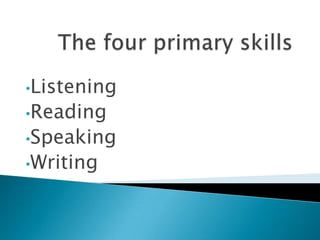
•Listening
•Reading
•Speaking
•Writing
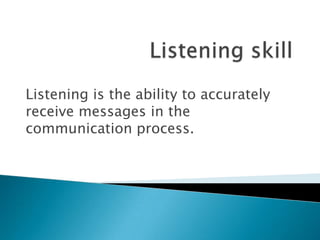
Listening is the ability to accurately
receive messages in the
communication process.
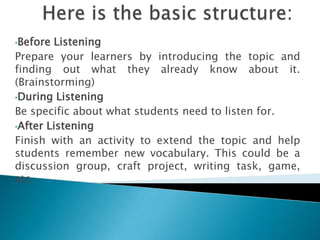
•Before Listening
Prepare your learners by introducing the topic and
finding out what they already know about it.
(Brainstorming)
•During Listening

Be specific about what students need to listen for.
•After Listening

Finish with an activity to extend the topic and help
students remember new vocabulary. This could be a
discussion group, craft project, writing task, game,
etc.
•Appreciative    listening

•Empathetic     listening

•Comprehensive      listening

•Critical   listening
DO’s
Be mentally prepared to listen
Evaluate the speech not the speaker
Be unbiased to the speaker by depersonalizing your feelings
Fight distractions by closing off sound sources
Be open minded
Ask questions to clarify and not to overshadow intelligence
Paraphrase from time to time
Send appropriate non-verbal signals time to time
Don’ts

Not to pay undue emphasis on vocabulary as you can use the
context to understand the meaning
Not to pay too much attention to the accessories and clothing
of the speaker
Not to prepare your responses while the speaker is speaking
Avoid preconceptions and prejudices
Not to get distracted by outside influences
Not to interrupt too often
Not to show boredom

Listening skill

  • 1.
    Devi Purnama Ningrum 031109206 7-B
  • 2.
    “is to getthe learners' four skills of listening, speaking, reading and writing in the new language”
  • 3.
  • 4.
    Listening is theability to accurately receive messages in the communication process.
  • 5.
    •Before Listening Prepare yourlearners by introducing the topic and finding out what they already know about it. (Brainstorming) •During Listening Be specific about what students need to listen for. •After Listening Finish with an activity to extend the topic and help students remember new vocabulary. This could be a discussion group, craft project, writing task, game, etc.
  • 6.
    •Appreciative listening •Empathetic listening •Comprehensive listening •Critical listening
  • 7.
    DO’s Be mentally preparedto listen Evaluate the speech not the speaker Be unbiased to the speaker by depersonalizing your feelings Fight distractions by closing off sound sources Be open minded Ask questions to clarify and not to overshadow intelligence Paraphrase from time to time Send appropriate non-verbal signals time to time
  • 8.
    Don’ts Not to payundue emphasis on vocabulary as you can use the context to understand the meaning Not to pay too much attention to the accessories and clothing of the speaker Not to prepare your responses while the speaker is speaking Avoid preconceptions and prejudices Not to get distracted by outside influences Not to interrupt too often Not to show boredom