Downloaded 107 times
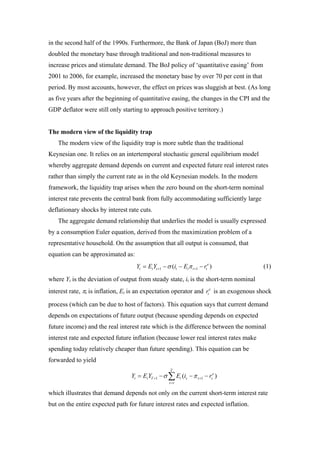




- A liquidity trap is a situation where the short-term nominal interest rate is zero, meaning that increasing the money supply has no effect on output or prices according to traditional Keynesian theory. - Modern theory argues that monetary policy can still be effective even at zero interest rates by managing expectations about future money supply levels when interest rates rise above zero again. - For monetary policy to be effective in a liquidity trap, central banks must commit to maintaining lower future interest rates once deflationary shocks subside in order to stimulate expectations about future money supply levels and interest rates.


