LIPIDS OR FATS

Tania Narváez López 2010 0221.
Geormara Céspedes F. 2010 0363.
• The fat is located under the skin, serving as
 energy reserve, producing more than twice the
 energy that the liberated by protein and
 carbohydrates.

• Fat helps make food more enjoyable, since the
 presence of this in the meals is essential to
 appreciate the aroma and taste of different foods,
 also helping the feeling of fullness that we have
 when we eat it.
Types of lipids
• Lipids are a very diverse group of organic
 compounds mainly consisting of carbon,
 hydrogen and oxygen, sometimes being able to
 contain sulphur, nitrogen or phosphorus.

• There are three types of lipids in the different
 foods we eat: fats, phospholipids, and
 cholesterol.
Fats
Saturated fat:
• They are considered as 'bad
 fats', which when consumed in excess
 can cause cholesterol problems and
 disorders of circulation.

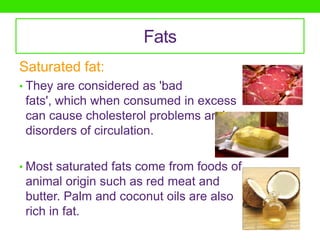
• Most saturated fats come from foods of
 animal origin such as red meat and
 butter. Palm and coconut oils are also
 rich in fat.
Unsaturated fats:
 They are beneficial to health fats because they
  regulate the level of cholesterol and prevent
  cardiovascular disease. They can be:
• Monounsaturated fats: present in the olive,
  rapeseed oil, nuts (pistachios, almonds,
  hazelnuts, macadamia nuts or cashews),
  peanuts, avocados and their oils.
Unsaturated fats:

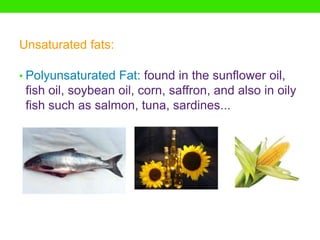
• Polyunsaturated Fat: found in the sunflower oil,
 fish oil, soybean oil, corn, saffron, and also in oily
 fish such as salmon, tuna, sardines...
Phospholipids

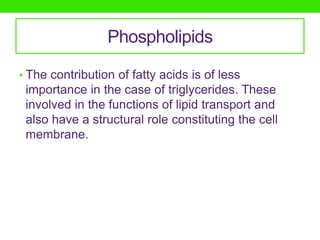
• The contribution of fatty acids is of less
 importance in the case of triglycerides. These
 involved in the functions of lipid transport and
 also have a structural role constituting the cell
 membrane.
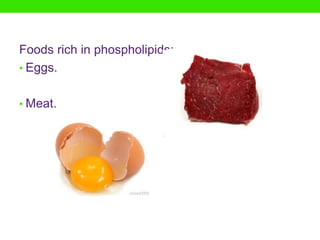
Foods rich in phospholipids:
• Eggs.


• Meat.
Cholesterol
oIs essential in the formation of the cell membrane.


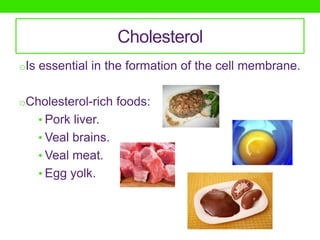
oCholesterol-rich foods:
   • Pork liver.
   • Veal brains.
   • Veal meat.
   • Egg yolk.
Function of lipids
• Energy
• Regulator
• Transport
• Structural

Lipids or fats pp

  • 1.
    LIPIDS OR FATS TaniaNarváez López 2010 0221. Geormara Céspedes F. 2010 0363.
  • 2.
    • The fatis located under the skin, serving as energy reserve, producing more than twice the energy that the liberated by protein and carbohydrates. • Fat helps make food more enjoyable, since the presence of this in the meals is essential to appreciate the aroma and taste of different foods, also helping the feeling of fullness that we have when we eat it.
  • 3.
    Types of lipids •Lipids are a very diverse group of organic compounds mainly consisting of carbon, hydrogen and oxygen, sometimes being able to contain sulphur, nitrogen or phosphorus. • There are three types of lipids in the different foods we eat: fats, phospholipids, and cholesterol.
  • 4.
    Fats Saturated fat: • Theyare considered as 'bad fats', which when consumed in excess can cause cholesterol problems and disorders of circulation. • Most saturated fats come from foods of animal origin such as red meat and butter. Palm and coconut oils are also rich in fat.
  • 5.
    Unsaturated fats: Theyare beneficial to health fats because they regulate the level of cholesterol and prevent cardiovascular disease. They can be: • Monounsaturated fats: present in the olive, rapeseed oil, nuts (pistachios, almonds, hazelnuts, macadamia nuts or cashews), peanuts, avocados and their oils.
  • 6.
    Unsaturated fats: • PolyunsaturatedFat: found in the sunflower oil, fish oil, soybean oil, corn, saffron, and also in oily fish such as salmon, tuna, sardines...
  • 7.
    Phospholipids • The contributionof fatty acids is of less importance in the case of triglycerides. These involved in the functions of lipid transport and also have a structural role constituting the cell membrane.
  • 8.
    Foods rich inphospholipids: • Eggs. • Meat.
  • 9.
    Cholesterol oIs essential inthe formation of the cell membrane. oCholesterol-rich foods: • Pork liver. • Veal brains. • Veal meat. • Egg yolk.
  • 10.
    Function of lipids •Energy • Regulator • Transport • Structural