Presented By: Hafiza Madiha Jaffar
Clinical Nutritionist
 Fats are a sub-group of organic compound known as lipids.
 We all need some fat in our diet for energy.
 Some fats are not good for us, like fried foods.
 Only 10% of our diet should come from fat.
 They are found in living organisms
 Insoluble in water
 Fats are triglycerides molecules made from the
reaction of one glycerol with three fatty acids.
Glycerol + 3Fatty Acids  Fats
 Fats can be classified as either
 Saturated Fat
 Unsaturated Fat
 Classification of fats depending on the
number of carbon-carbon double bonds in the
fatty acid chains of the molecule
 they contain no double bonds with 2-24 or more
carbons.
 They are solid at room temperature except if they
are short chained. •
 They may be even or odd numbered. Examples:
 Butter
 Ghee
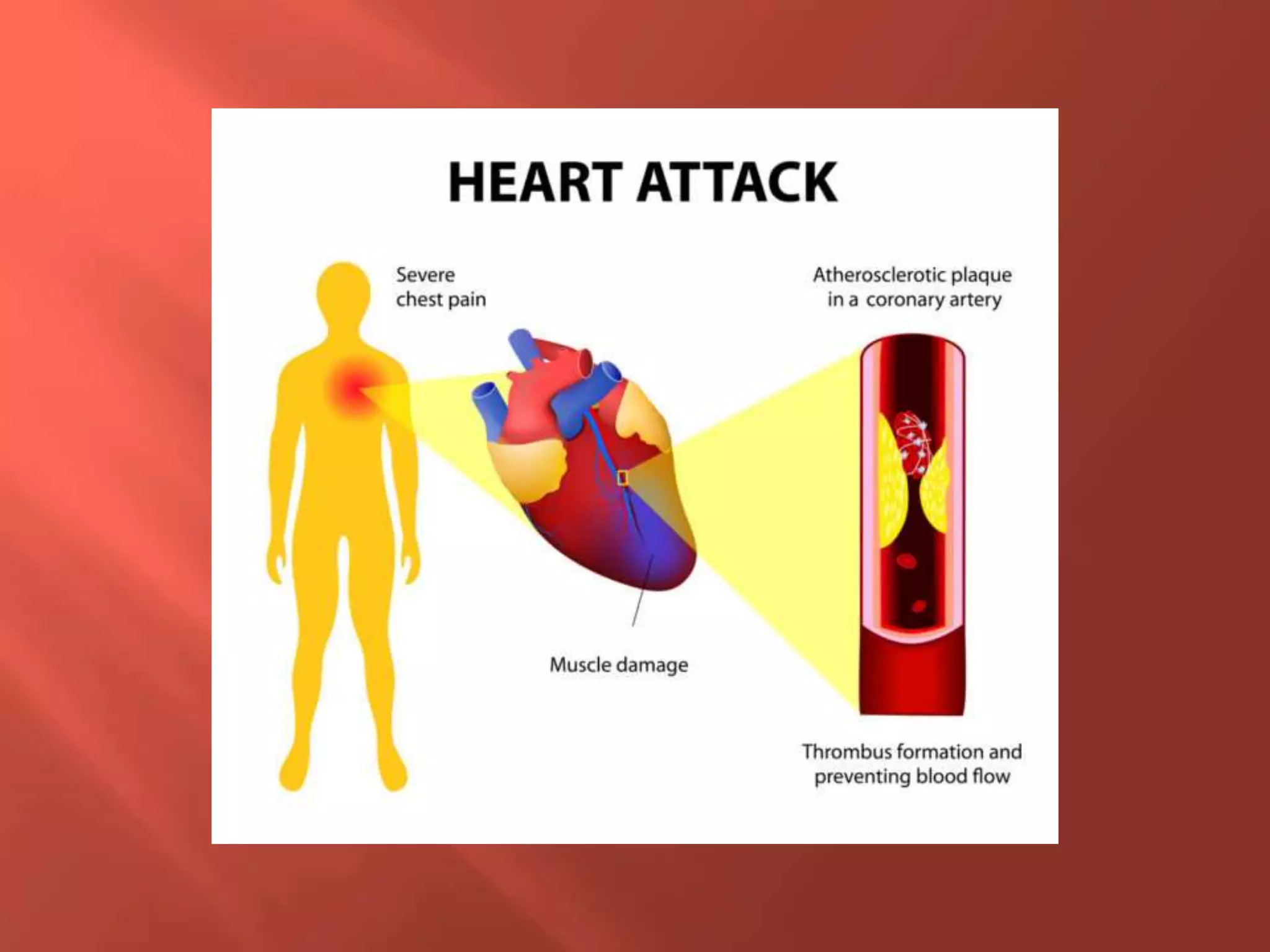
 Consumption of saturated fats carries some
health risks in that they have been linked to
heart disease.
 Fats that contain more double bonds in their
structure
 These fats are generally liquid at room temperature
 Has one double bond
Example:
 Olive Oil
 Canola Oil
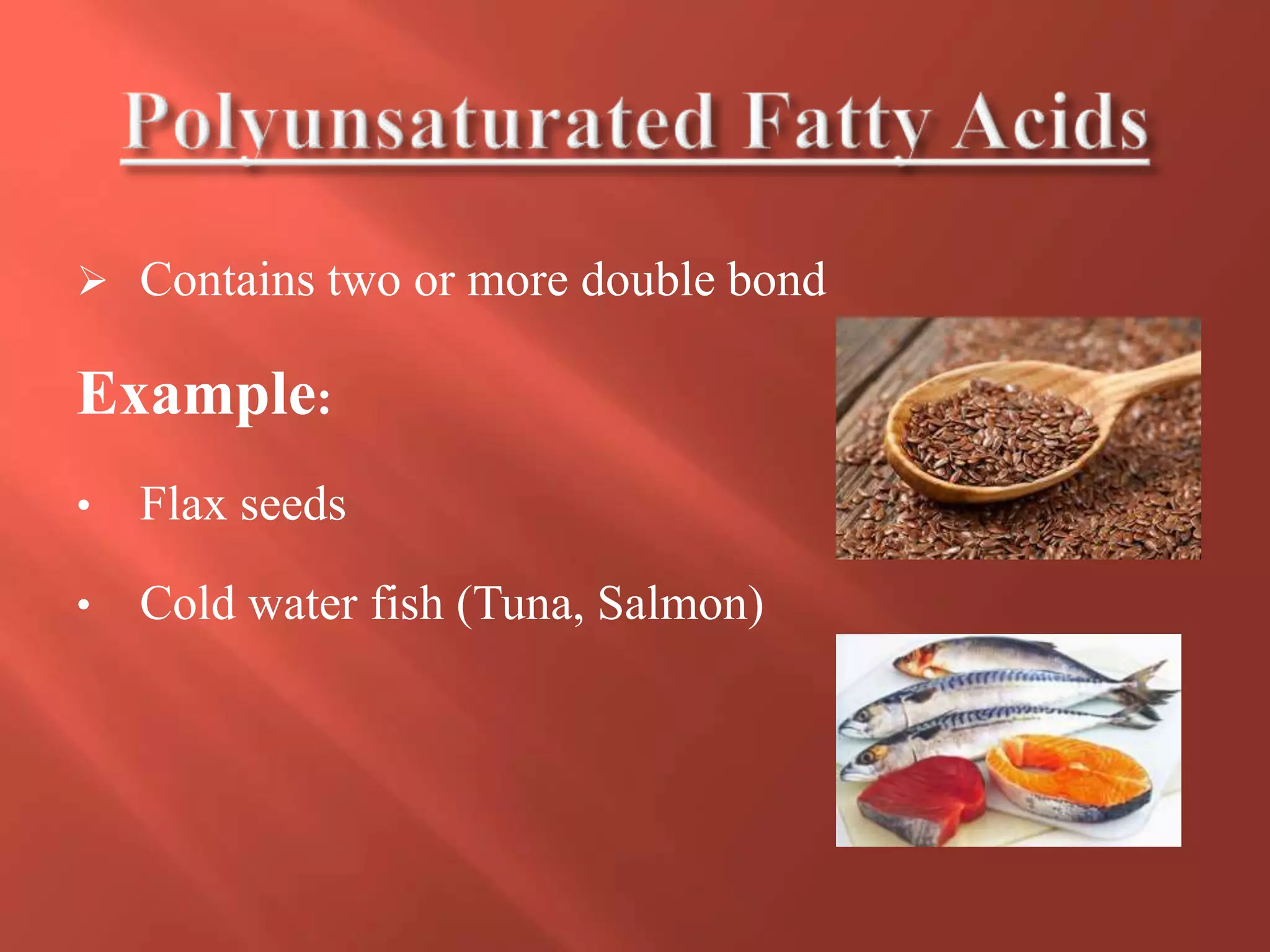
 Contains two or more double bond
Example:
• Flax seeds
• Cold water fish (Tuna, Salmon)
 Fats are concentrated source of energy as one gram
of fat provides 9 Kcal
 Fats can be used as a reserve, or long term source of
energy.
 Fats serves as an insulation material to allow body
heat to be conserved and also lining and protecting
delicate internal organs from physical damage such
as kidneys
 Fats are essential for the proper maintenance
of cell membrane in the body and are used in
the production of certain hormones
 Fats helps in the absorption of fat-soluble
vitamins in the diet
 Vegetable Oils
 Hydrogenated Oils
 Cream
 Butter
 Margarine
 Meat, Poultry, Fis
 Whole Milk
 Ice Cream
 Cheese
Micro-nutrient ( Fats )

Micro-nutrient ( Fats )

  • 2.
    Presented By: HafizaMadiha Jaffar Clinical Nutritionist
  • 3.
     Fats area sub-group of organic compound known as lipids.  We all need some fat in our diet for energy.  Some fats are not good for us, like fried foods.  Only 10% of our diet should come from fat.  They are found in living organisms  Insoluble in water
  • 4.
     Fats aretriglycerides molecules made from the reaction of one glycerol with three fatty acids. Glycerol + 3Fatty Acids  Fats
  • 5.
     Fats canbe classified as either  Saturated Fat  Unsaturated Fat
  • 6.
     Classification offats depending on the number of carbon-carbon double bonds in the fatty acid chains of the molecule
  • 8.
     they containno double bonds with 2-24 or more carbons.  They are solid at room temperature except if they are short chained. •  They may be even or odd numbered. Examples:  Butter  Ghee
  • 9.
     Consumption ofsaturated fats carries some health risks in that they have been linked to heart disease.
  • 11.
     Fats thatcontain more double bonds in their structure  These fats are generally liquid at room temperature
  • 12.
     Has onedouble bond Example:  Olive Oil  Canola Oil
  • 13.
     Contains twoor more double bond Example: • Flax seeds • Cold water fish (Tuna, Salmon)
  • 14.
     Fats areconcentrated source of energy as one gram of fat provides 9 Kcal  Fats can be used as a reserve, or long term source of energy.  Fats serves as an insulation material to allow body heat to be conserved and also lining and protecting delicate internal organs from physical damage such as kidneys
  • 15.
     Fats areessential for the proper maintenance of cell membrane in the body and are used in the production of certain hormones  Fats helps in the absorption of fat-soluble vitamins in the diet
  • 16.
     Vegetable Oils Hydrogenated Oils  Cream  Butter  Margarine  Meat, Poultry, Fis  Whole Milk  Ice Cream  Cheese