Dr. Pronay Bala
Assistant Professor,
Agriculture, Haji Lalmia City College,
Gopalganj
Eat Fat with
Perfect Analysis
Fats
Fat refers to the class of nutrients known as lipids. The
lipid family includes triglycerides (fats and oils),
phospholipids, and sterols.
Every triglyceride contains one molecule of
glycerol and three fatty acids.
2
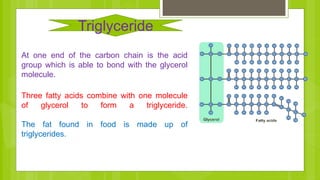
At one end of the carbon chain is the acid
group which is able to bond with the glycerol
molecule.
Three fatty acids combine with one molecule
of glycerol to form a triglyceride.
The fat found in food is made up of
triglycerides.
Triglyceride
5
Fatty Acids
Long-chain carboxylic acids
Insoluble in water
Typically 12-18 carbon atoms (even number)
Some contain double bonds
corn oil contains 86%
unsaturated fatty acids and
14% saturated fatty acids
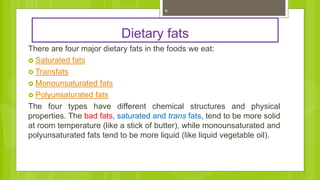
Dietary fats
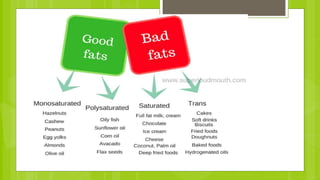
There are four major dietary fats in the foods we eat:
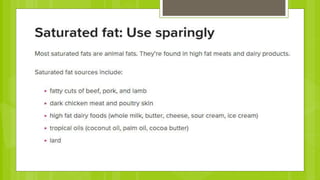
 Saturated fats
 Transfats
 Monounsaturated fats
 Polyunsaturated fats
The four types have different chemical structures and physical
properties. The bad fats, saturated and trans fats, tend to be more solid
at room temperature (like a stick of butter), while monounsaturated and
polyunsaturated fats tend to be more liquid (like liquid vegetable oil).
6
7
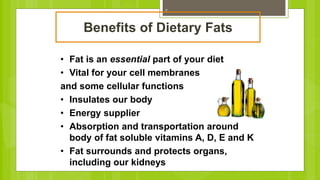
Benefits of Dietary Fats
• Fat is an essential part of your diet
• Vital for your cell membranes
and some cellular functions
• Insulates our body
• Energy supplier
• Absorption and transportation around
body of fat soluble vitamins A, D, E and K
• Fat surrounds and protects organs,
including our kidneys
8
Fats in Your Diet
• Try not to eat any trans fats
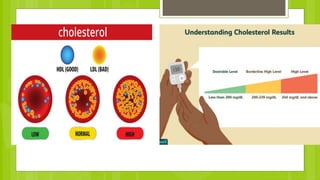
– Increases bad (LDL) cholesterol, lowers good (HDL)
cholesterol – risk of heart disease
• Keep saturated fat consumption to a minimum
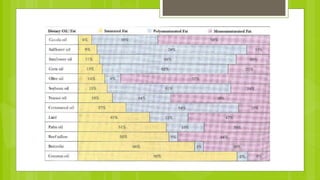
• Monounsaturated and polyunsaturated fats –
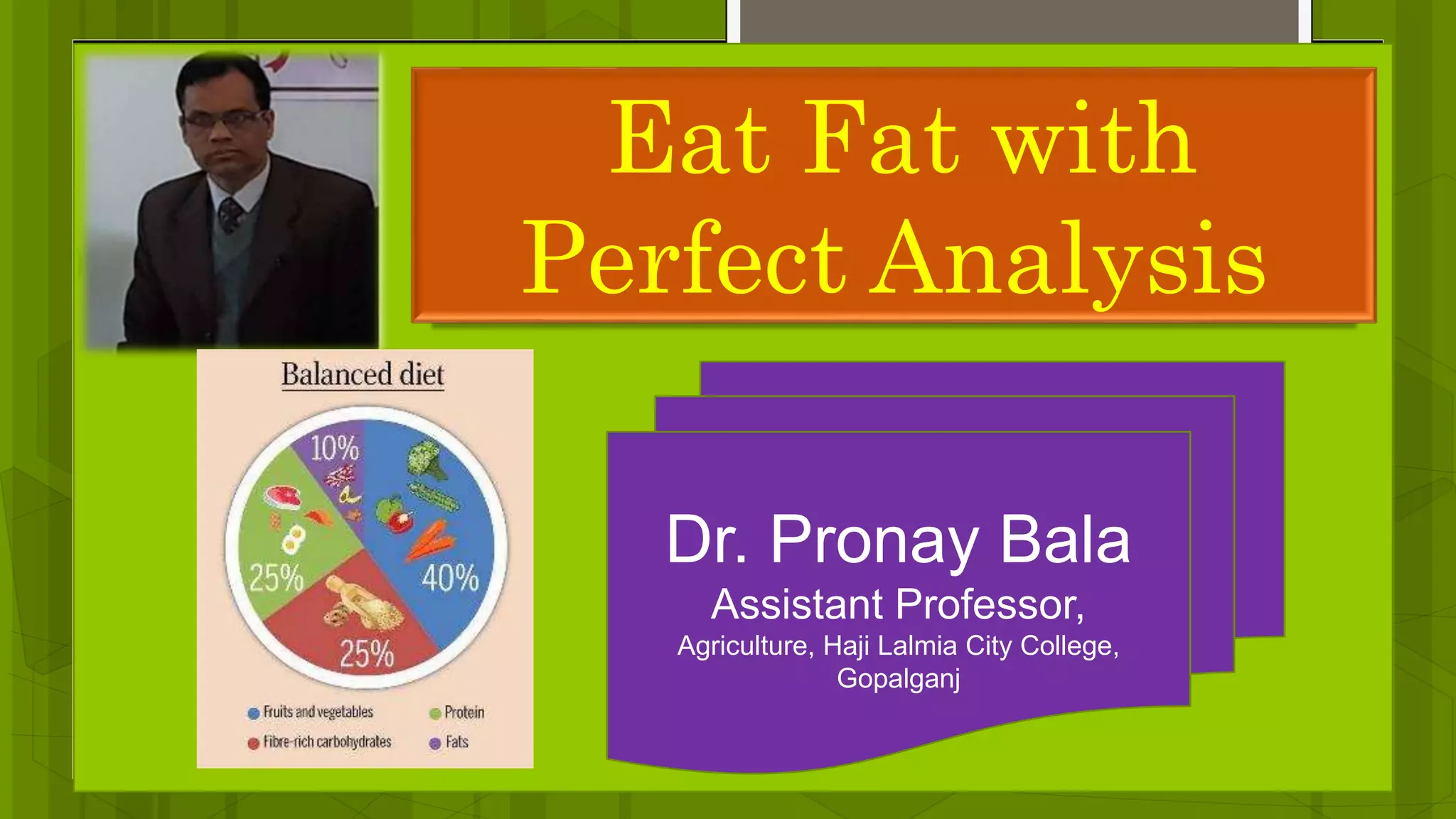
between 15-30% daily caloric intake
– Sources: olive oil, safflower oil, peanut oil and corn oil
• Avoid hydrogenated or partially hydrogenated
oils – added hydrogen to make it solid, preserve –
check labels!
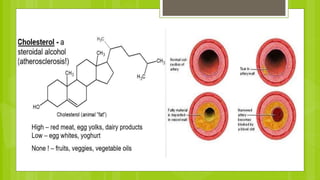
Cholesterol is a waxy, fat-like substance
that's found in all the cells in your body. Your
body needs some cholesterol to make
hormones, vitamin D, and substances that
help you digest foods. Your body makes all
the cholesterol it needs.
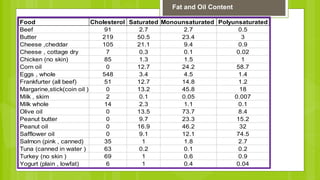
Fat and Oil Content
Food Cholesterol Saturated Monounsaturated Polyunsaturated
Beef 91 2.7 2.7 0.5
Butter 219 50.5 23.4 3
Cheese ,cheddar 105 21.1 9.4 0.9
Cheese , cottage dry 7 0.3 0.1 0.02
Chicken (no skin) 85 1.3 1.5 1
Corn oil 0 12.7 24.2 58.7
Eggs , whole 548 3.4 4.5 1.4
Frankfurter (all beef) 51 12.7 14.8 1.2
Margarine,stick(coin oil ) 0 13.2 45.8 18
Milk , skim 2 0.1 0.05 0.007
Milk whole 14 2.3 1.1 0.1
Olive oil 0 13.5 73.7 8.4
Peanut butter 0 9.7 23.3 15.2
Peanut oil 0 16.9 46.2 32
Safflower oil 0 9.1 12.1 74.5
Salmon (pink , canned) 35 1 1.8 2.7
Tuna (canned in water ) 63 0.2 0.1 0.2
Turkey (no skin ) 69 1 0.6 0.9
Yogurt (plain , lowfat) 6 1 0.4 0.04
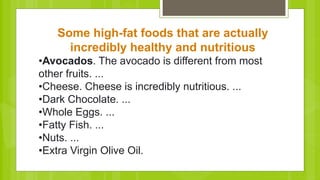
Some high-fat foods that are actually
incredibly healthy and nutritious
•Avocados. The avocado is different from most
other fruits. ...
•Cheese. Cheese is incredibly nutritious. ...
•Dark Chocolate. ...
•Whole Eggs. ...
•Fatty Fish. ...
•Nuts. ...
•Extra Virgin Olive Oil.
Trans fat: Avoid when possible
Short for “trans fatty acids,” trans fat appears in foods that contain
partially hydrogenated vegetable oils. These are the worst fats for
you. You might find trans fat in:
•fried foods (French fries, doughnuts, deep-fried fast foods)
•margarine (stick and tub)
•vegetable shortening
•baked goods (cookies, cakes, pastries)
•processed snack foods (crackers, microwave popcorn)
Like saturated fat, trans fat can raise LDL (bad) cholesterol, also
known as “bad” cholesterol. Trans fat can also suppress HDL (good)
cholesterol levels, or “good” cholesterol.
Thanks
to all

Fat in food

  • 1.
    Dr. Pronay Bala AssistantProfessor, Agriculture, Haji Lalmia City College, Gopalganj Eat Fat with Perfect Analysis
  • 2.
    Fats Fat refers tothe class of nutrients known as lipids. The lipid family includes triglycerides (fats and oils), phospholipids, and sterols. Every triglyceride contains one molecule of glycerol and three fatty acids. 2
  • 4.
    At one endof the carbon chain is the acid group which is able to bond with the glycerol molecule. Three fatty acids combine with one molecule of glycerol to form a triglyceride. The fat found in food is made up of triglycerides. Triglyceride
  • 5.
    5 Fatty Acids Long-chain carboxylicacids Insoluble in water Typically 12-18 carbon atoms (even number) Some contain double bonds corn oil contains 86% unsaturated fatty acids and 14% saturated fatty acids
  • 6.
    Dietary fats There arefour major dietary fats in the foods we eat:  Saturated fats  Transfats  Monounsaturated fats  Polyunsaturated fats The four types have different chemical structures and physical properties. The bad fats, saturated and trans fats, tend to be more solid at room temperature (like a stick of butter), while monounsaturated and polyunsaturated fats tend to be more liquid (like liquid vegetable oil). 6
  • 7.
    7 Benefits of DietaryFats • Fat is an essential part of your diet • Vital for your cell membranes and some cellular functions • Insulates our body • Energy supplier • Absorption and transportation around body of fat soluble vitamins A, D, E and K • Fat surrounds and protects organs, including our kidneys
  • 8.
    8 Fats in YourDiet • Try not to eat any trans fats – Increases bad (LDL) cholesterol, lowers good (HDL) cholesterol – risk of heart disease • Keep saturated fat consumption to a minimum • Monounsaturated and polyunsaturated fats – between 15-30% daily caloric intake – Sources: olive oil, safflower oil, peanut oil and corn oil • Avoid hydrogenated or partially hydrogenated oils – added hydrogen to make it solid, preserve – check labels!
  • 10.
    Cholesterol is awaxy, fat-like substance that's found in all the cells in your body. Your body needs some cholesterol to make hormones, vitamin D, and substances that help you digest foods. Your body makes all the cholesterol it needs.
  • 14.
    Fat and OilContent Food Cholesterol Saturated Monounsaturated Polyunsaturated Beef 91 2.7 2.7 0.5 Butter 219 50.5 23.4 3 Cheese ,cheddar 105 21.1 9.4 0.9 Cheese , cottage dry 7 0.3 0.1 0.02 Chicken (no skin) 85 1.3 1.5 1 Corn oil 0 12.7 24.2 58.7 Eggs , whole 548 3.4 4.5 1.4 Frankfurter (all beef) 51 12.7 14.8 1.2 Margarine,stick(coin oil ) 0 13.2 45.8 18 Milk , skim 2 0.1 0.05 0.007 Milk whole 14 2.3 1.1 0.1 Olive oil 0 13.5 73.7 8.4 Peanut butter 0 9.7 23.3 15.2 Peanut oil 0 16.9 46.2 32 Safflower oil 0 9.1 12.1 74.5 Salmon (pink , canned) 35 1 1.8 2.7 Tuna (canned in water ) 63 0.2 0.1 0.2 Turkey (no skin ) 69 1 0.6 0.9 Yogurt (plain , lowfat) 6 1 0.4 0.04
  • 15.
    Some high-fat foodsthat are actually incredibly healthy and nutritious •Avocados. The avocado is different from most other fruits. ... •Cheese. Cheese is incredibly nutritious. ... •Dark Chocolate. ... •Whole Eggs. ... •Fatty Fish. ... •Nuts. ... •Extra Virgin Olive Oil.
  • 19.
    Trans fat: Avoidwhen possible Short for “trans fatty acids,” trans fat appears in foods that contain partially hydrogenated vegetable oils. These are the worst fats for you. You might find trans fat in: •fried foods (French fries, doughnuts, deep-fried fast foods) •margarine (stick and tub) •vegetable shortening •baked goods (cookies, cakes, pastries) •processed snack foods (crackers, microwave popcorn) Like saturated fat, trans fat can raise LDL (bad) cholesterol, also known as “bad” cholesterol. Trans fat can also suppress HDL (good) cholesterol levels, or “good” cholesterol.
  • 21.

Editor's Notes

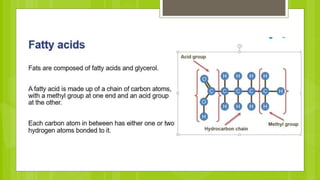
  • #6 Fatty Acids are organic compounds composed of a carbon chain with hydrogens attached an an acid group (COOH) at one end, and a methyl group (CH3) at the other end.