
ELEMENTS OF LINUX 
SECURITY 
Dr. Jayaraj Poroor 
Presented at TIFAC CORE in Cyber Security 
(2009) 
Amrita University
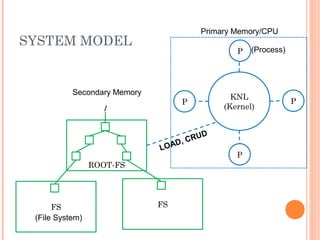
SYSTEM MODEL 
/ 
ROOT-FS 
FS FS 
Primary Memory/CPU 
P 
KNL 
P (Kernel) P 
P 
LOAD, CRUD 
Secondary Memory 
(Process) 
(File System)
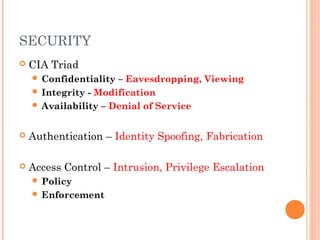
SECURITY 
 CIA Triad 
 Confidentiality – Eavesdropping, Viewing 
 Integrity - Modification 
 Availability – Denial of Service 
 Authentication – Identity Spoofing, Fabrication 
 Access Control – Intrusion, Privilege Escalation 
 Policy 
 Enforcement
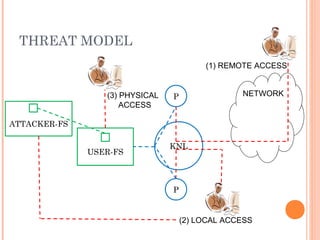
THREAT MODEL 
(3) PHYSICAL NETWORK 
USER-FS 
P 
KNL 
P 
ACCESS 
(1) REMOTE ACCESS 
(2) LOCAL ACCESS 
ATTACKER-FS
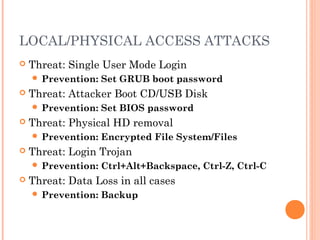
LOCAL/PHYSICAL ACCESS ATTACKS 
 Threat: Single User Mode Login 
 Prevention: Set GRUB boot password 
 Threat: Attacker Boot CD/USB Disk 
 Prevention: Set BIOS password 
 Threat: Physical HD removal 
 Prevention: Encrypted File System/Files 
 Threat: Login Trojan 
 Prevention: Ctrl+Alt+Backspace, Ctrl-Z, Ctrl-C 
 Threat: Data Loss in all cases 
 Prevention: Backup
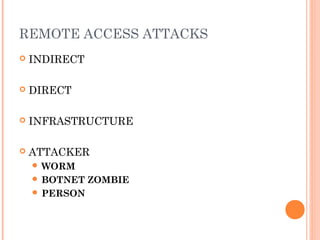
REMOTE ACCESS ATTACKS 
 INDIRECT 
 DIRECT 
 INFRASTRUCTURE 
 ATTACKER 
WORM 
 BOTNET ZOMBIE 
 PERSON
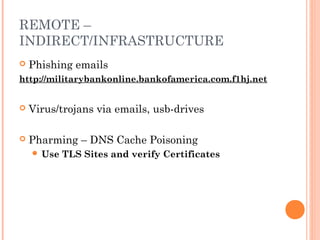
REMOTE – 
INDIRECT/INFRASTRUCTURE 
 Phishing emails 
http://militarybankonline.bankofamerica.com.f1hj.net 
 Virus/trojans via emails, usb-drives 
 Pharming – DNS Cache Poisoning 
 Use TLS Sites and verify Certificates
DIRECT REMOTE ATTACKS 
• Open/Weak WiFi 
– Use WPA2 and strong keys 
• Attacking Network Services 
– Port scanning 
– Banner grabbing, OS Fingerprinting 
– Exploit known vulnerabilities 
– DoS attacks 
– Remote login: password guessing
POST-EXPLOIT 
 Install Root-kit, backdoor 
 Botnet Zombie 
 Steal data and leave without trace 
 Destroy data
COUNTER-MEASURES 
 Principle of Least Privilege 
 Fail-safe Defaults 
 Open Design 
 Separation of Privilege 
 Least Common Mechanism
IN PRACTICE 
 MINIMIZE EXPLOIT POTENTIAL 
 MINIMIZE POST-EXPLOIT DAMAGE 
 MAXIMIZE CHANCE OF DISCOVERY
MINIMIZE EXPLOIT POTENTIAL 
• Update patches 
• Configure iptables firewall 
• iptables -A INPUT -p tcp --dport 80 --syn -j 
ACCEPT 
• iptables -A INPUT -p tcp --syn -j DROP 
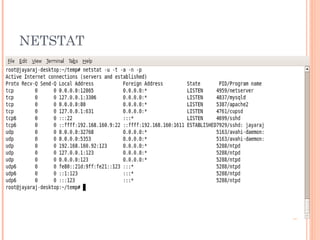
• Disable unnecessary services 
• Use netstat, nmap 
• Don’t run insecure services 
• Don’t use ftp/telnet, use sftp/ssh
NETSTAT
MINIMIZE POST-EXPLOIT DAMAGE 
 Don’t run as root 
 setuid(), setgid() 
 Use CHROOT jail 
 chroot 
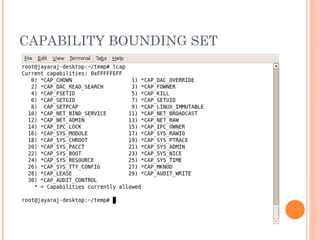
 Use POSIX Capabilities 
 lcap, getpcaps, setpcaps 
 Use EXT2 ACL 
mount –o acl, setfacl, getfacl 
 setfacl –m u:test:r file
CAPABILITY BOUNDING SET
MAXIMIZE CHANCE OF DISCOVERY 
• IDS 
– Tripwire, Snort 
• Monitor Syslog 
• Use chkrootkit 
 Use Kernel Audits for critical files 
 auditctl, ausearch 
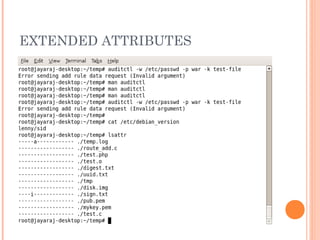
 Use EXT2 Extended Attributes 
 lsattr, chattr 
 Immutable (i), Append-only (a), Safe-delete (s), 
Allow Undelete (u)
EXTENDED ATTRIBUTES
TRY OUT WITHOUT BURNING 
YOURSELF 
 SCRATCH FILE SYSTEM 
 dd if=/dev/zero bs=1024 count=1024 of=disk.img 
mke2fs disk.img 
mount –o loop,acl disk.img <dir> 
 VIRTUA L MACHINE 
 http://www.virtualbox.org
REFERENCES 
OWASP – http://www.owasp.org 
 Open Web Application Security Project 
MITRE – http://www.mitre.org 
 SANS – http://www.sans.org 
 System Administration & Network Security 
 COBIT – http://www.isaca.org/cobit/ 
 Control Objectives for Information & Related 
Technology 
 ISO 17799 – http://www.iso.org 
 Risk-based Information Security Management 
 Anti-Phishing.Org - http://www.antiphishing.org/ 
 CMU CERT/CC - http://www.cert.org/
THANK YOU

Linux security-fosster-09

  • 1.
    ELEMENTS OF LINUX SECURITY Dr. Jayaraj Poroor Presented at TIFAC CORE in Cyber Security (2009) Amrita University
  • 2.
    SYSTEM MODEL / ROOT-FS FS FS Primary Memory/CPU P KNL P (Kernel) P P LOAD, CRUD Secondary Memory (Process) (File System)
  • 3.
    SECURITY  CIATriad  Confidentiality – Eavesdropping, Viewing  Integrity - Modification  Availability – Denial of Service  Authentication – Identity Spoofing, Fabrication  Access Control – Intrusion, Privilege Escalation  Policy  Enforcement
  • 4.
    THREAT MODEL (3)PHYSICAL NETWORK USER-FS P KNL P ACCESS (1) REMOTE ACCESS (2) LOCAL ACCESS ATTACKER-FS
  • 5.
    LOCAL/PHYSICAL ACCESS ATTACKS  Threat: Single User Mode Login  Prevention: Set GRUB boot password  Threat: Attacker Boot CD/USB Disk  Prevention: Set BIOS password  Threat: Physical HD removal  Prevention: Encrypted File System/Files  Threat: Login Trojan  Prevention: Ctrl+Alt+Backspace, Ctrl-Z, Ctrl-C  Threat: Data Loss in all cases  Prevention: Backup
  • 6.
    REMOTE ACCESS ATTACKS  INDIRECT  DIRECT  INFRASTRUCTURE  ATTACKER WORM  BOTNET ZOMBIE  PERSON
  • 7.
    REMOTE – INDIRECT/INFRASTRUCTURE  Phishing emails http://militarybankonline.bankofamerica.com.f1hj.net  Virus/trojans via emails, usb-drives  Pharming – DNS Cache Poisoning  Use TLS Sites and verify Certificates
  • 8.
    DIRECT REMOTE ATTACKS • Open/Weak WiFi – Use WPA2 and strong keys • Attacking Network Services – Port scanning – Banner grabbing, OS Fingerprinting – Exploit known vulnerabilities – DoS attacks – Remote login: password guessing
  • 9.
    POST-EXPLOIT  InstallRoot-kit, backdoor  Botnet Zombie  Steal data and leave without trace  Destroy data
  • 10.
    COUNTER-MEASURES  Principleof Least Privilege  Fail-safe Defaults  Open Design  Separation of Privilege  Least Common Mechanism
  • 11.
    IN PRACTICE MINIMIZE EXPLOIT POTENTIAL  MINIMIZE POST-EXPLOIT DAMAGE  MAXIMIZE CHANCE OF DISCOVERY
  • 12.
    MINIMIZE EXPLOIT POTENTIAL • Update patches • Configure iptables firewall • iptables -A INPUT -p tcp --dport 80 --syn -j ACCEPT • iptables -A INPUT -p tcp --syn -j DROP • Disable unnecessary services • Use netstat, nmap • Don’t run insecure services • Don’t use ftp/telnet, use sftp/ssh
  • 13.
  • 14.
    MINIMIZE POST-EXPLOIT DAMAGE  Don’t run as root  setuid(), setgid()  Use CHROOT jail  chroot  Use POSIX Capabilities  lcap, getpcaps, setpcaps  Use EXT2 ACL mount –o acl, setfacl, getfacl  setfacl –m u:test:r file
  • 15.
  • 16.
    MAXIMIZE CHANCE OFDISCOVERY • IDS – Tripwire, Snort • Monitor Syslog • Use chkrootkit  Use Kernel Audits for critical files  auditctl, ausearch  Use EXT2 Extended Attributes  lsattr, chattr  Immutable (i), Append-only (a), Safe-delete (s), Allow Undelete (u)
  • 17.
  • 18.
    TRY OUT WITHOUTBURNING YOURSELF  SCRATCH FILE SYSTEM  dd if=/dev/zero bs=1024 count=1024 of=disk.img mke2fs disk.img mount –o loop,acl disk.img <dir>  VIRTUA L MACHINE  http://www.virtualbox.org
  • 19.
    REFERENCES OWASP –http://www.owasp.org  Open Web Application Security Project MITRE – http://www.mitre.org  SANS – http://www.sans.org  System Administration & Network Security  COBIT – http://www.isaca.org/cobit/  Control Objectives for Information & Related Technology  ISO 17799 – http://www.iso.org  Risk-based Information Security Management  Anti-Phishing.Org - http://www.antiphishing.org/  CMU CERT/CC - http://www.cert.org/
  • 20.