HAND GESTURE RECOGNITION WITH
CONVOLUTION NEURAL NETWORKS
MENTOR : DR. K. VENKATESWARA RAO SIRE
5
LITERATURE SURVEY
9
10
8
11
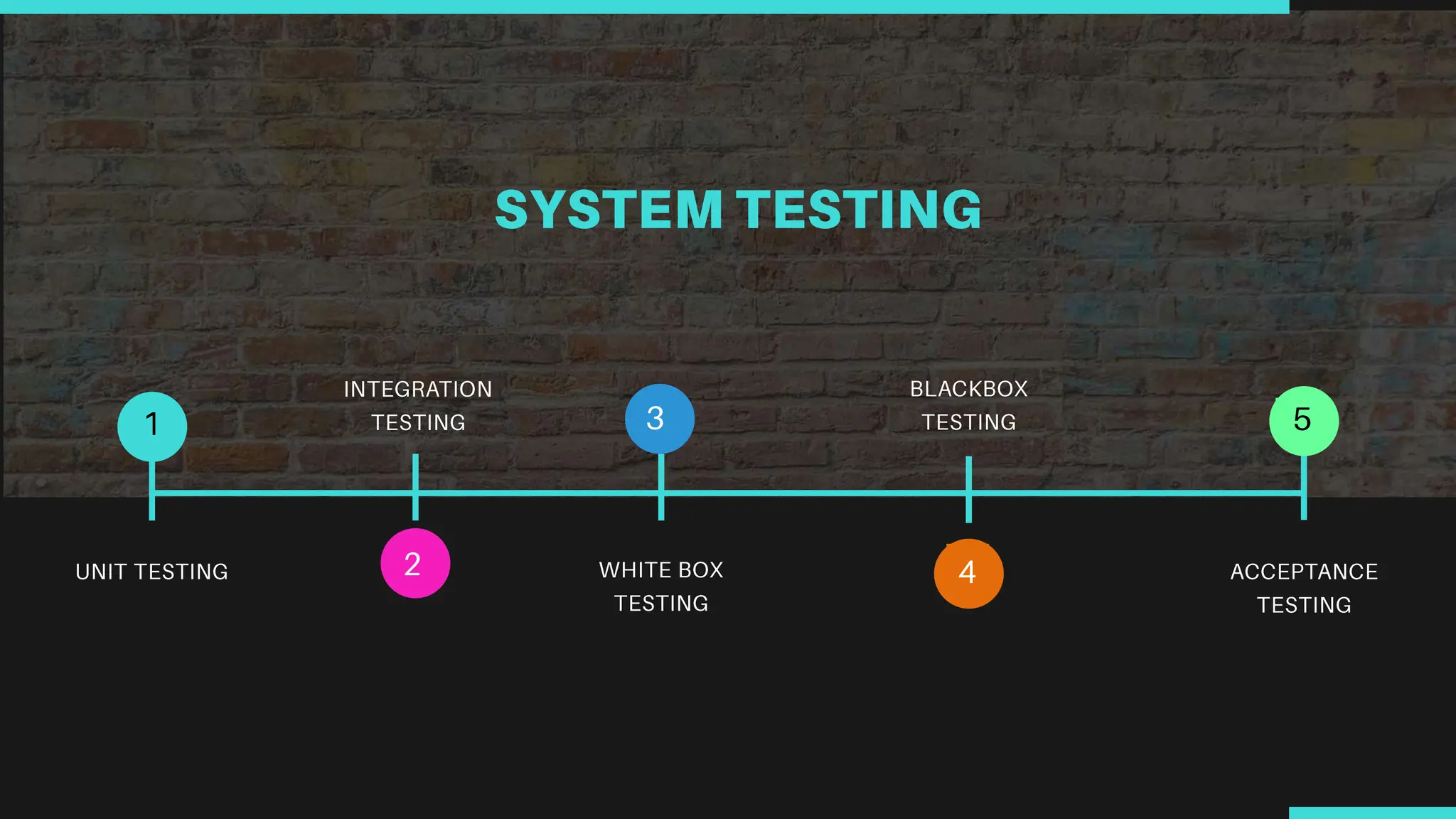
SYSTEM TESTING
SYSTEM CONFIGURATION
CONCLUSION
REFERENCES
FUTURE ENHANCEMENTS
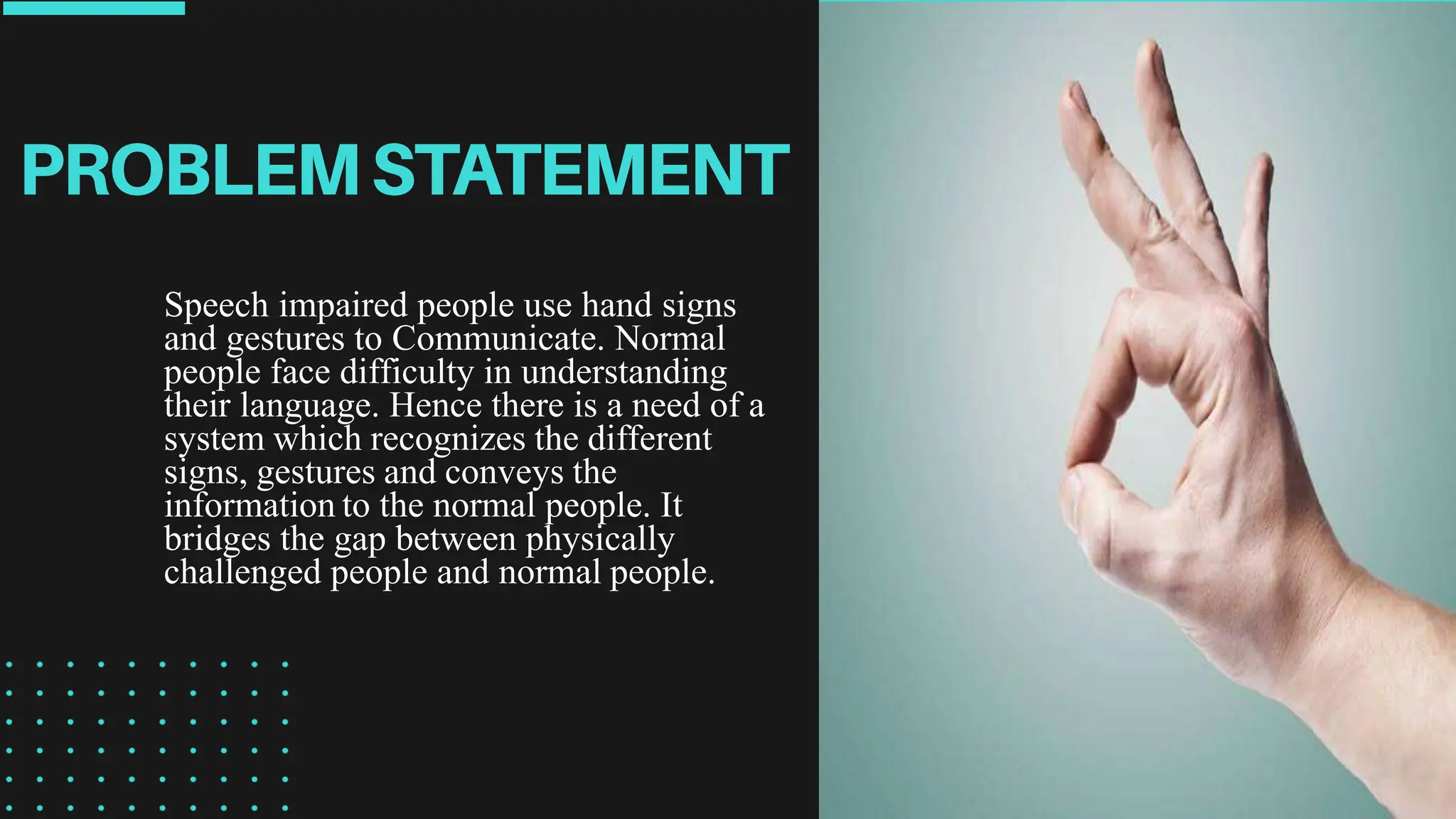
Speech impaired people use hand signs
and gestures to Communicate. Normal
people face difficulty in understanding
their language. Hence there is a need of a
system which recognizes the different
signs, gestures and conveys the
information to the normal people. It
bridges the gap between physically
challenged people and normal people.
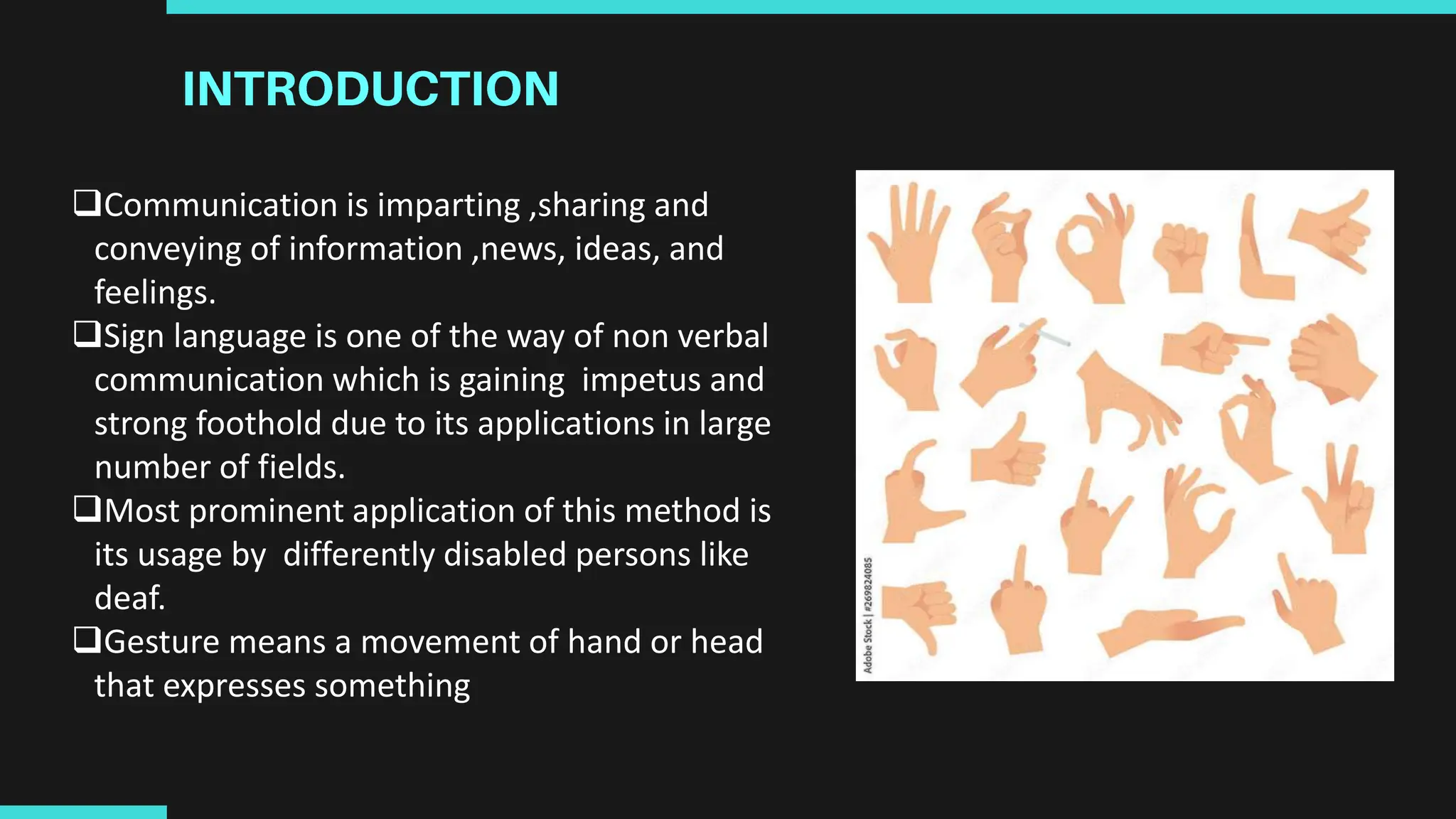
Communication is imparting ,sharing and
conveying of information ,news, ideas, and
feelings.
Sign language is one of the way of non verbal
communication which is gaining impetus and
strong foothold due to its applications in large
number of fields.
Most prominent application of this method is
its usage by differently disabled persons like
deaf.
Gesture means a movement of hand or head
that expresses something
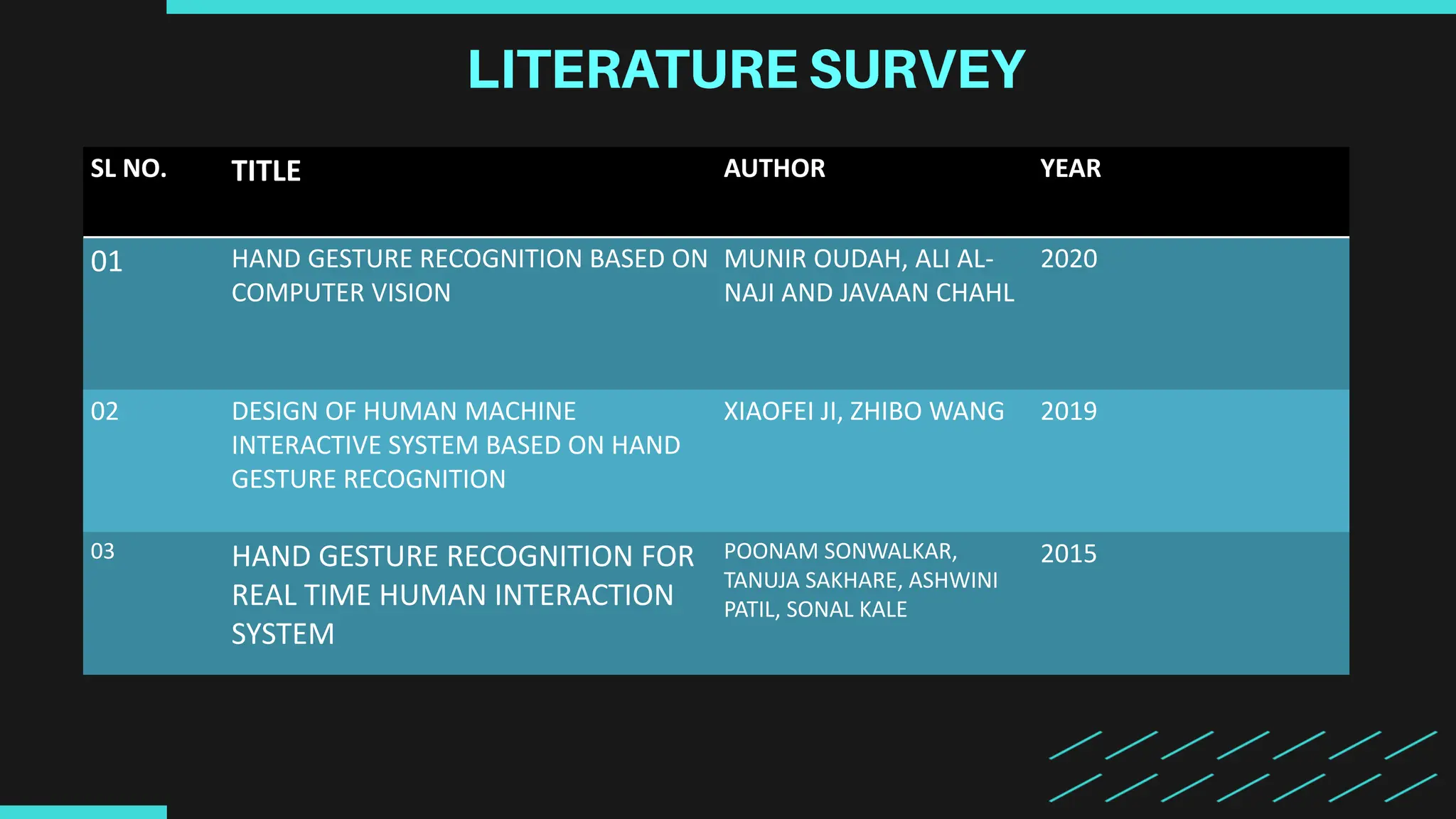
SL NO. TITLE AUTHOR YEAR
01 HAND GESTURE RECOGNITION BASED ON
COMPUTER VISION
MUNIR OUDAH, ALI AL-
NAJI AND JAVAAN CHAHL
2020
02 DESIGN OF HUMAN MACHINE
INTERACTIVE SYSTEM BASED ON HAND
GESTURE RECOGNITION
XIAOFEI JI, ZHIBO WANG 2019
03 HAND GESTURE RECOGNITION FOR
REAL TIME HUMAN INTERACTION
SYSTEM
POONAM SONWALKAR,
TANUJA SAKHARE, ASHWINI
PATIL, SONAL KALE
2015
MODEL 1:Hand Gesture Recognition on Digital Image Processing Using
MATLAB
 It was found by Team of Researches and Engineers Working in Field of
Computer vision and Image Processing
 This model is combination of digital image processing techniques and
machine learning algorithms
 Limitations:
o Limited Recognition of dynamic gestures
o High Computational Requirements
o Sensitivity to Hand Orientation and Position
MODEL 2:System For Recognition Of Indian SignLanguage Of Deaf People
Using OTSU’S Algorithm
 It Was Found By Team of Researches and Engineers From SIT ,India
 OTSU’S Algorithm Uses Image Processing Techniques To Classify Hand
Gestures
 Limitations:
o Low Accuracy
o Difficulty in Adapting To New Users
o Limited No of Hand Gestures
PROPOSED SYSTEM
MODEL NAME
MODEL ARCHITECTURE
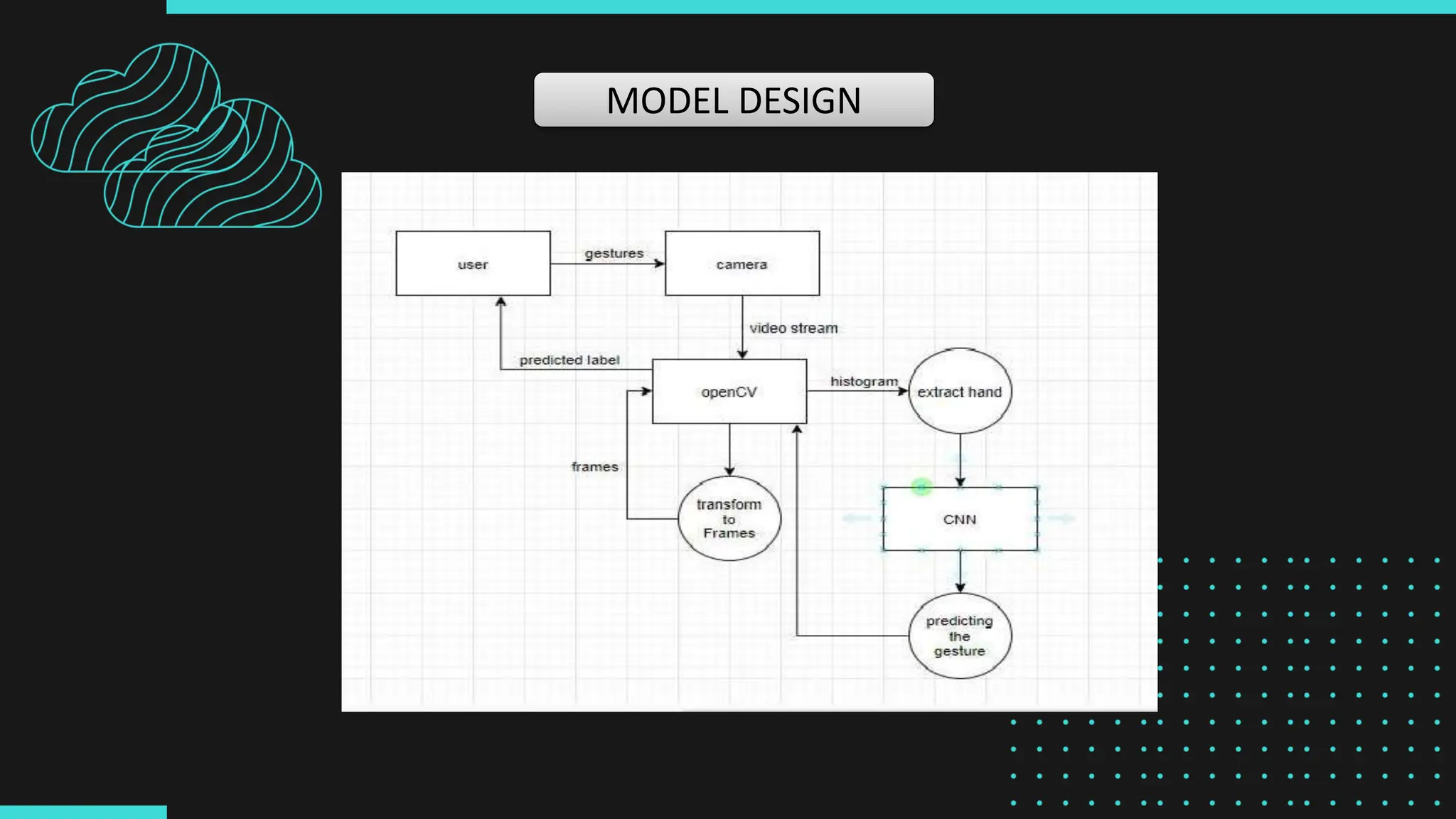
MODEL DESIGN
PROPOSED SYSTEM
MODEL NAME
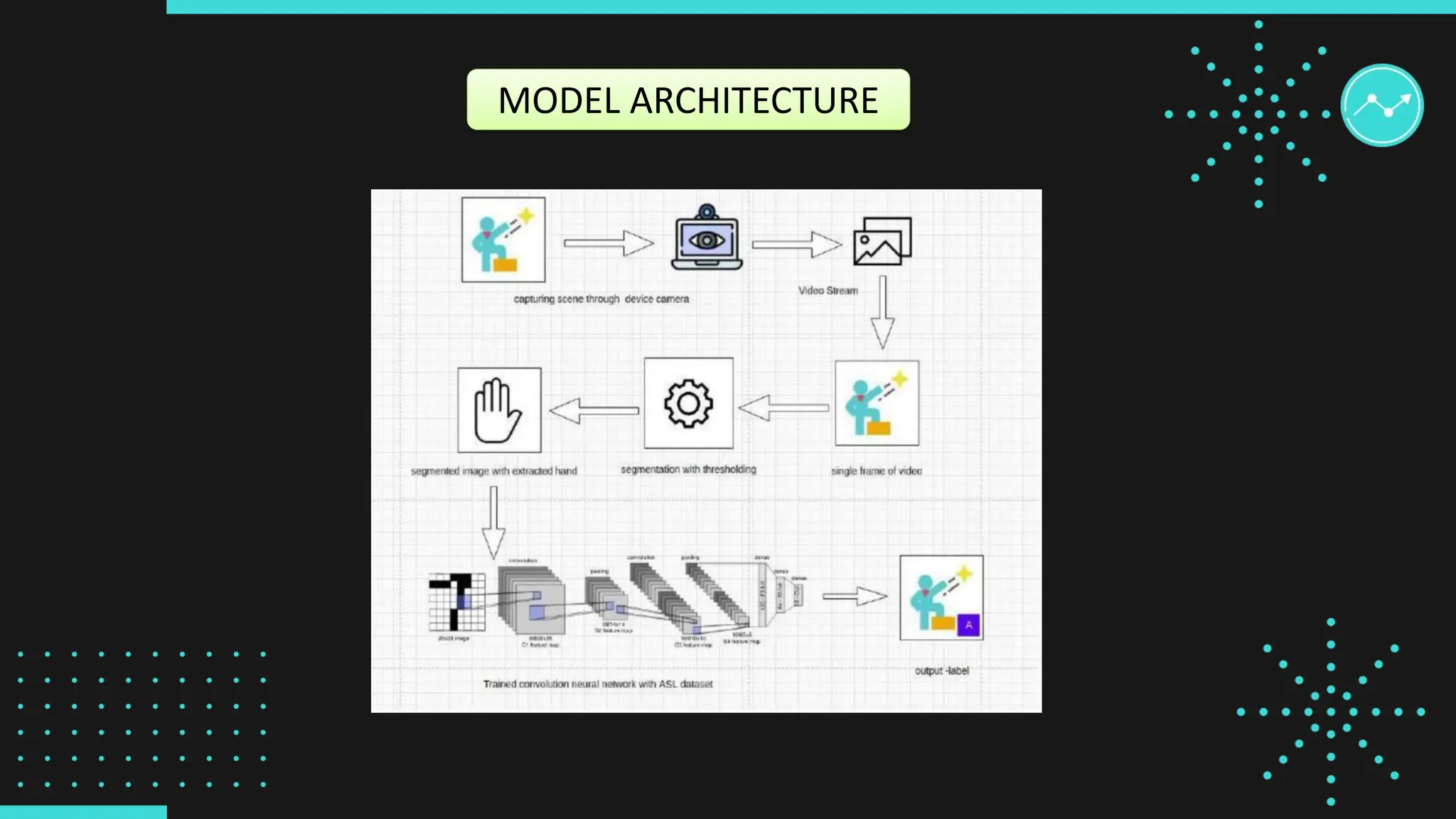
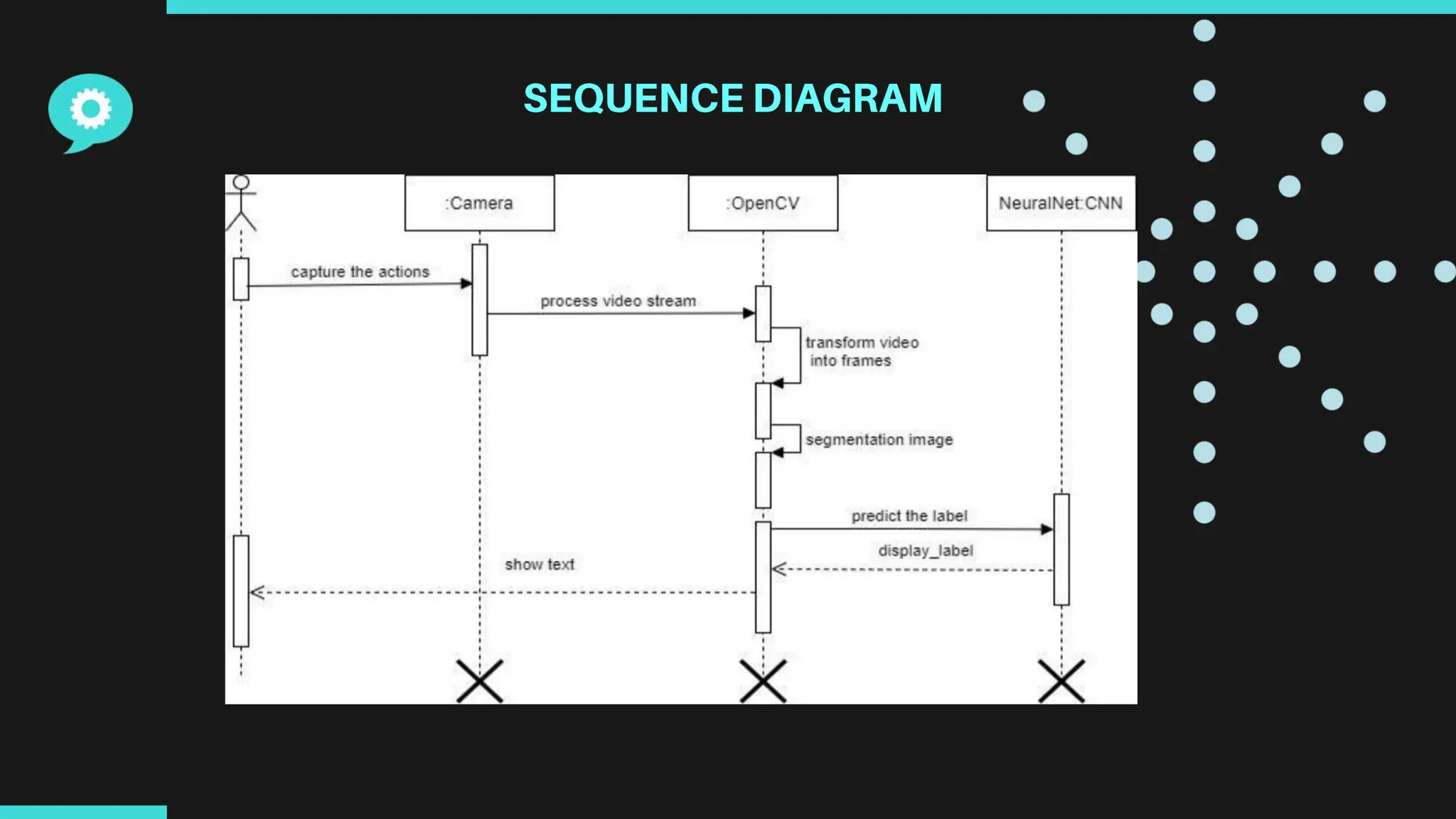
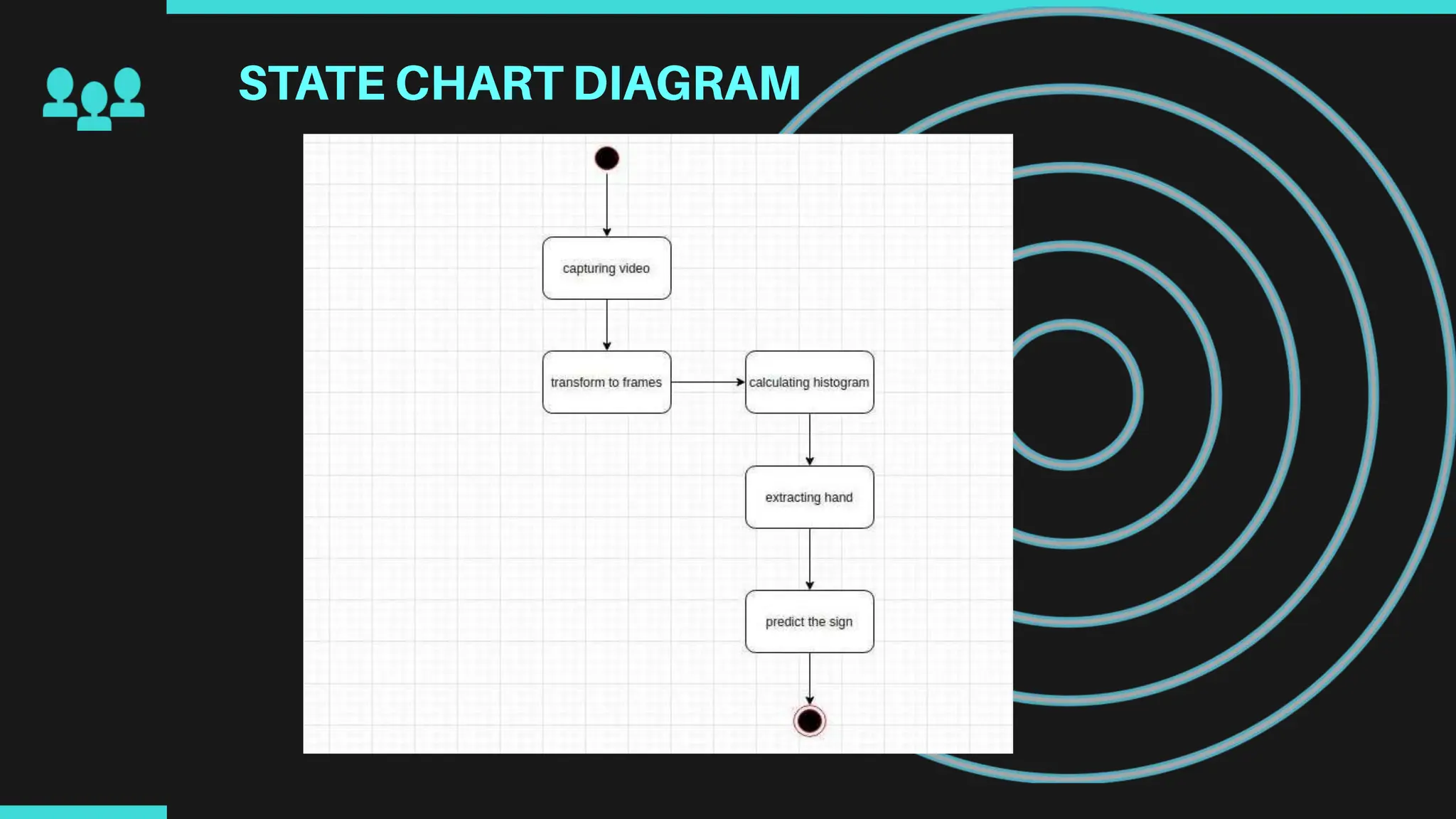
Our proposed system is sign language recognition
system using convolution neural networks which
recognizes various hand gestures by capturing video
and converting it into frames. Then the hand pixels
are segmented and the image it obtained and sent for
comparison to the trained model. Thus our system is
more robust in getting exact text labels of letters.
MODEL ARCHITECTURE
MODEL DESIGN
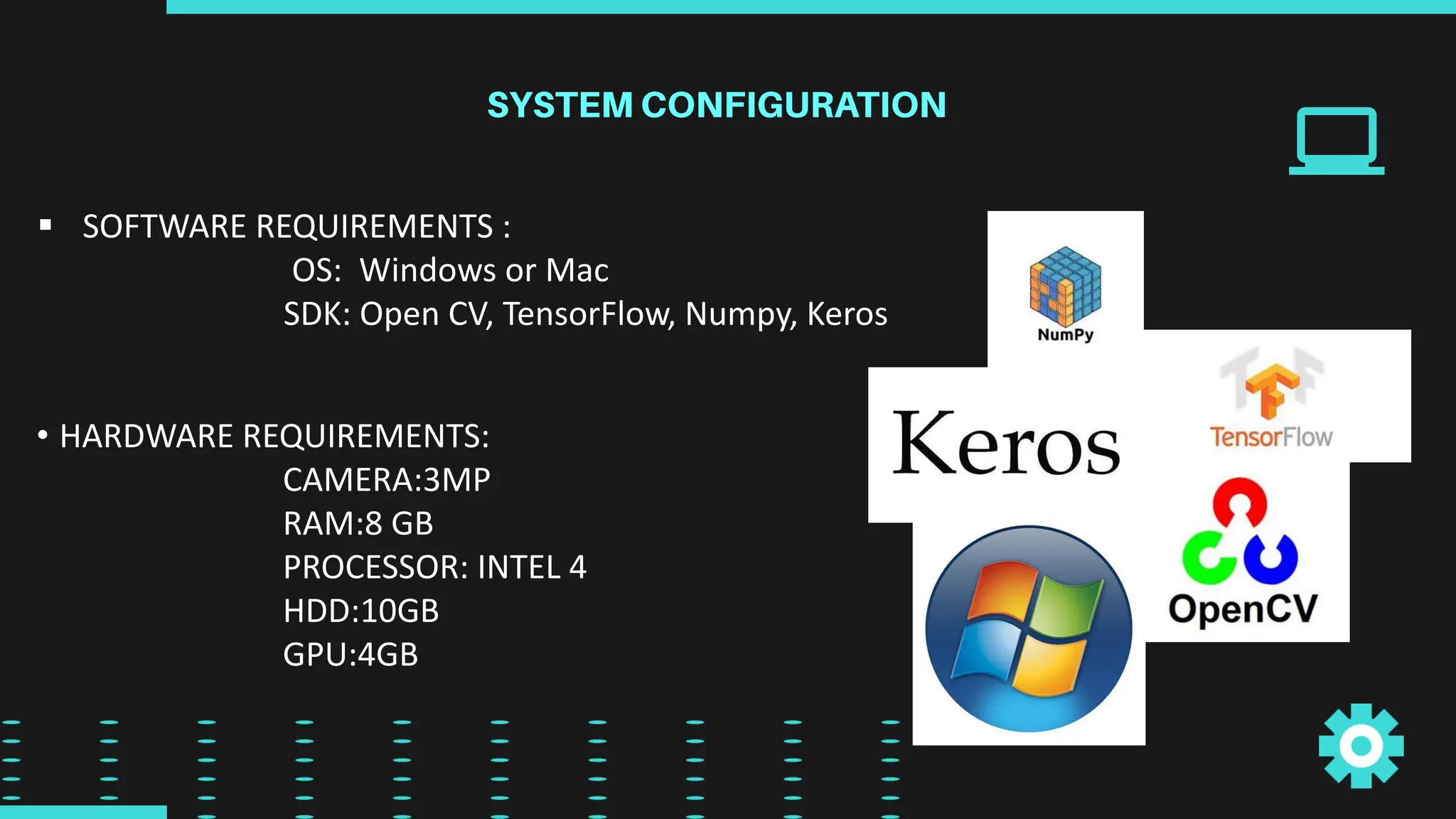
 SOFTWARE REQUIREMENTS :
OS: Windows or Mac
SDK: Open CV, TensorFlow, Numpy, Keros
• HARDWARE REQUIREMENTS:
CAMERA:3MP
RAM:8 GB
PROCESSOR: INTEL 4
HDD:10GB
GPU:4GB
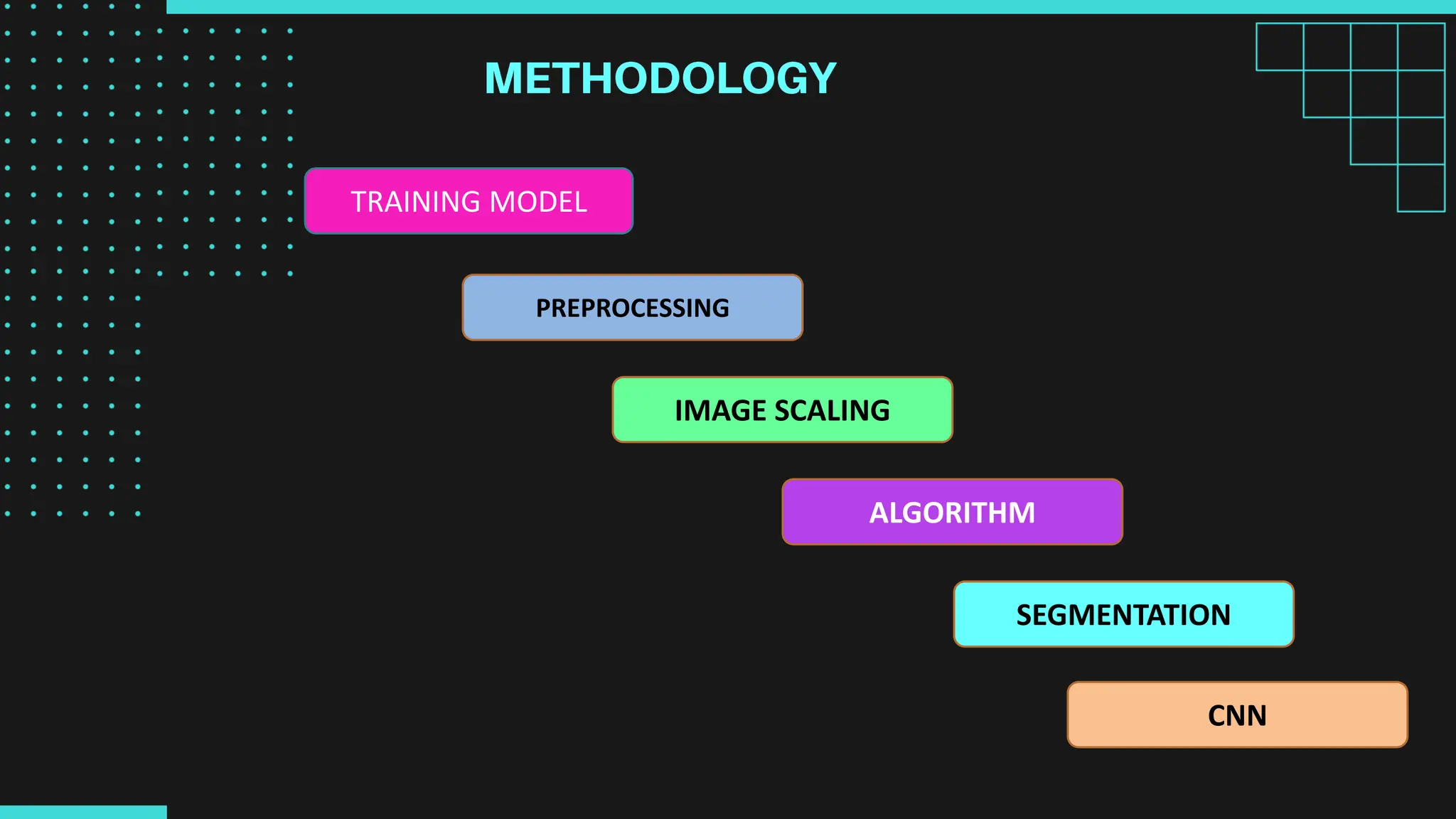
TRAINING MODEL
PREPROCESSING
IMAGE SCALING
SEGMENTATION
ALGORITHM
CNN
RESULTS
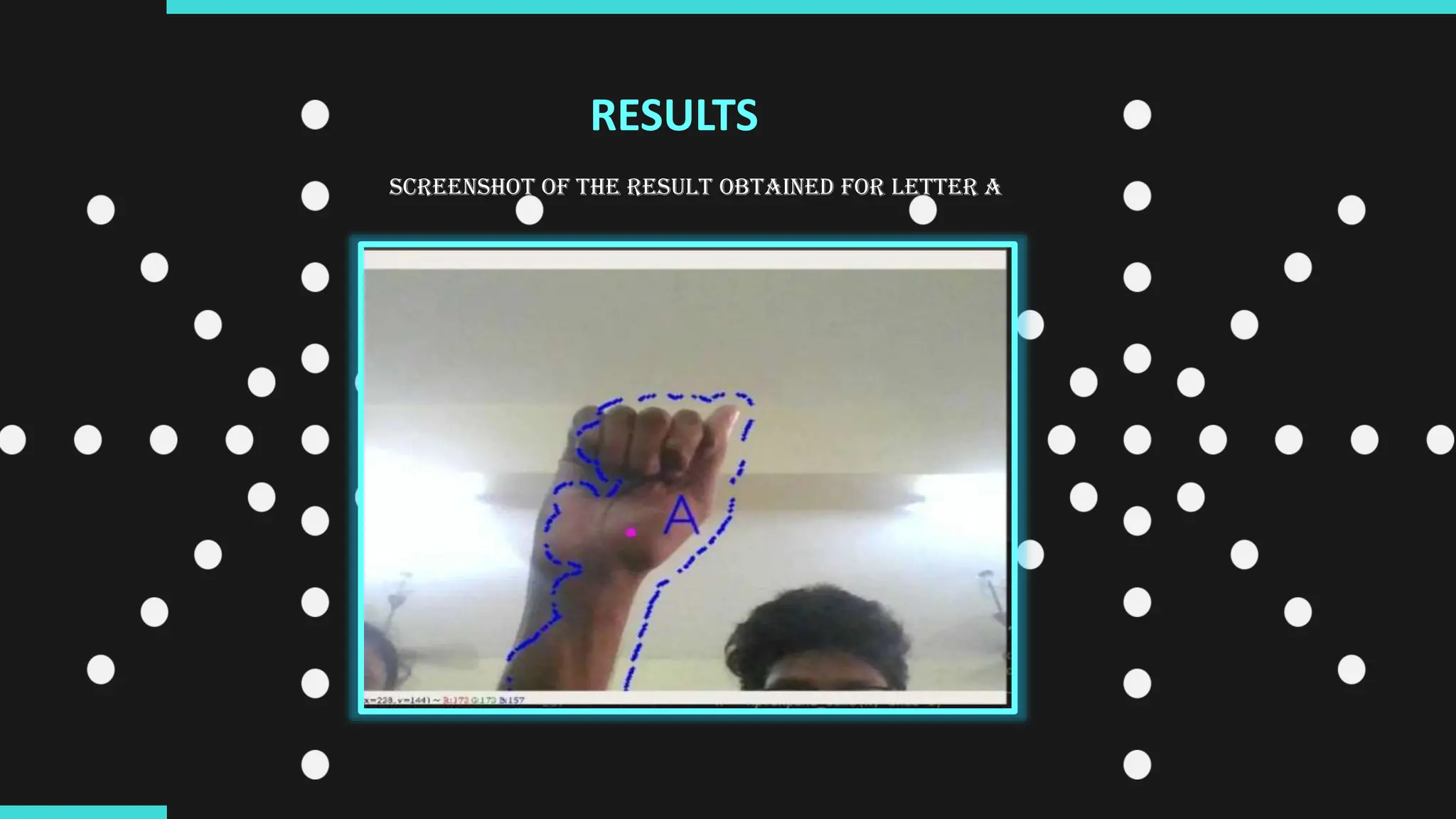
Screenshot of the result obtained for letter A
RESULTS
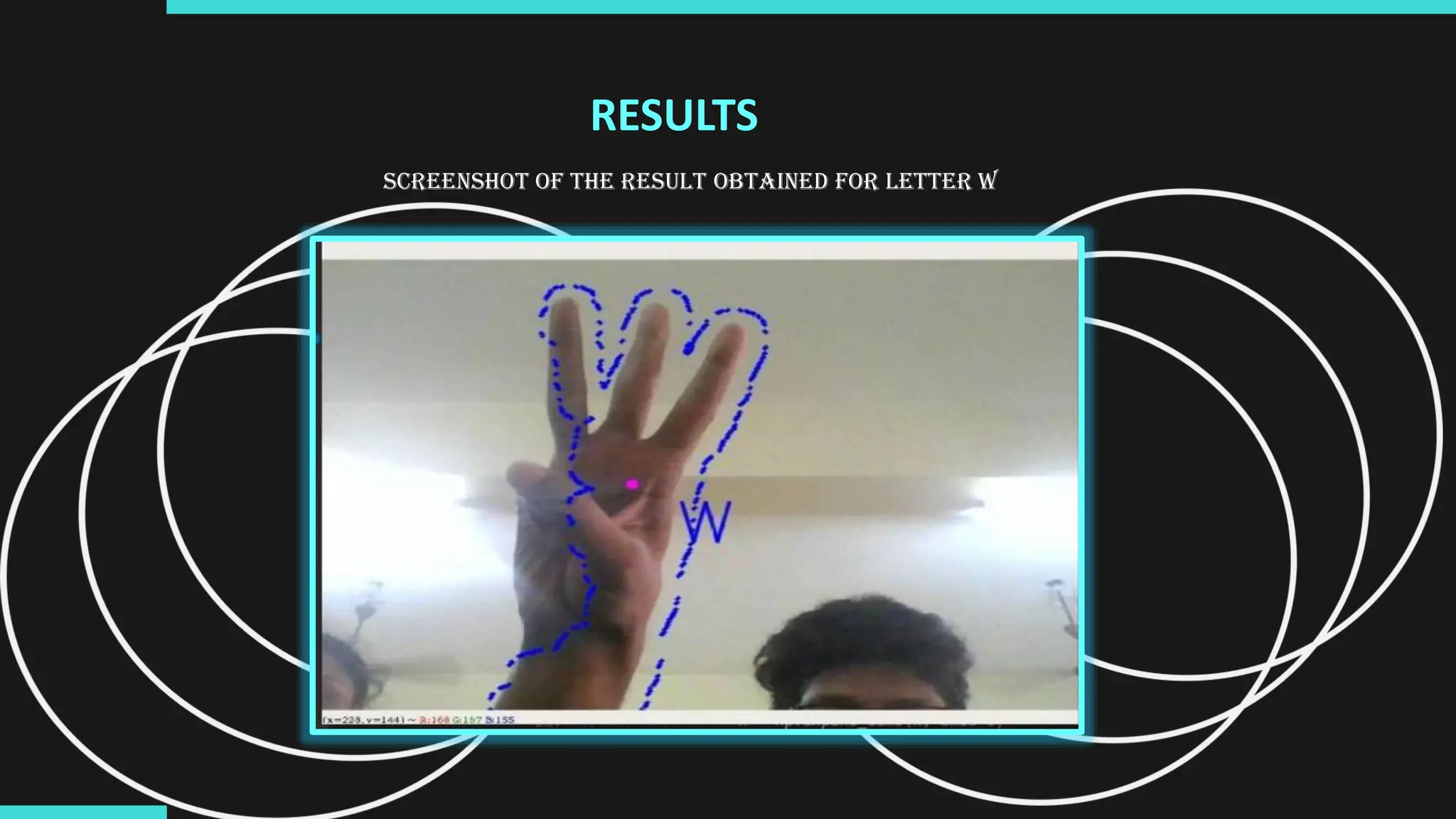
Screenshot of the result obtained for letter W
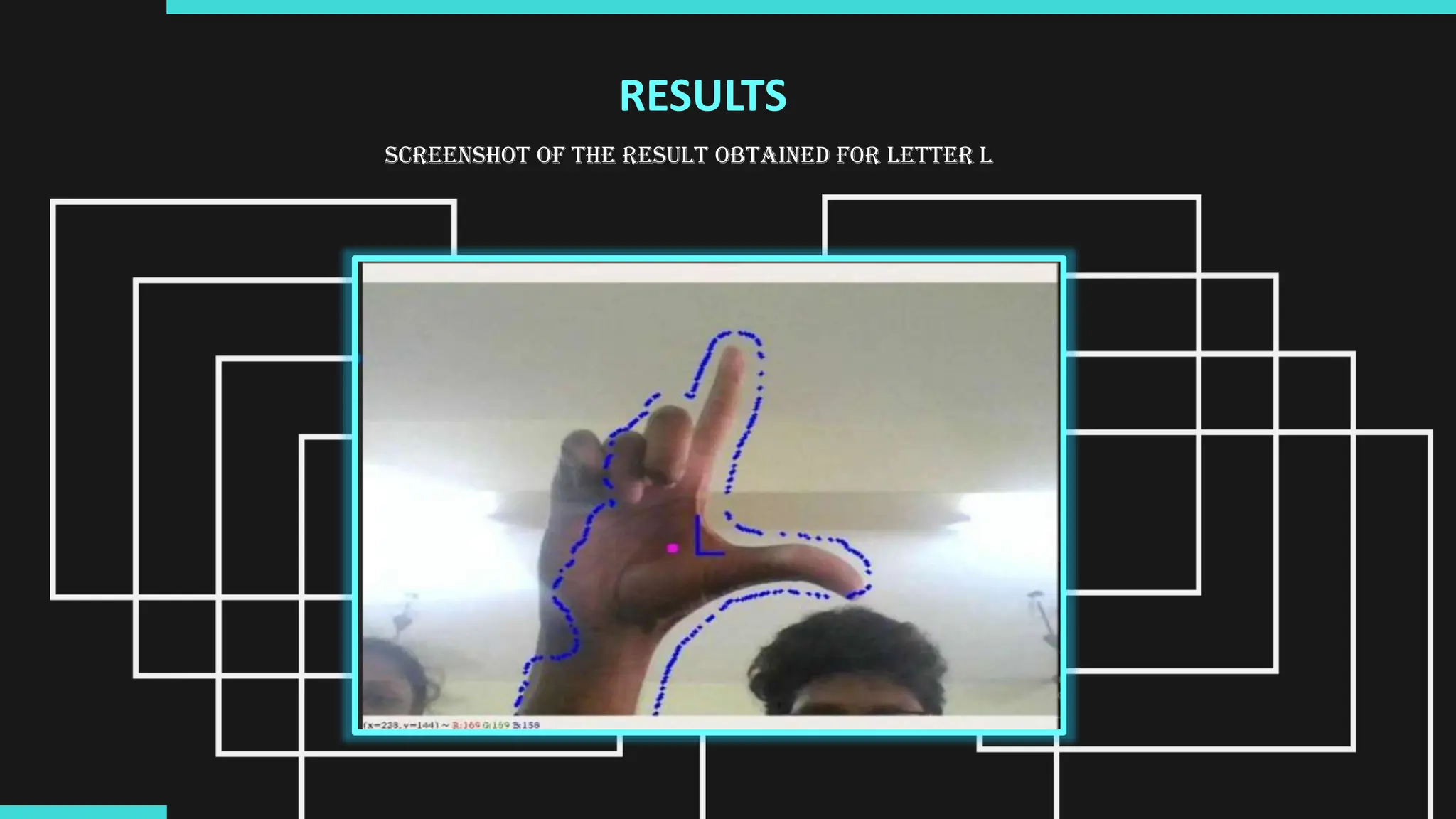
RESULTS
Screenshot of the result obtained for letter L
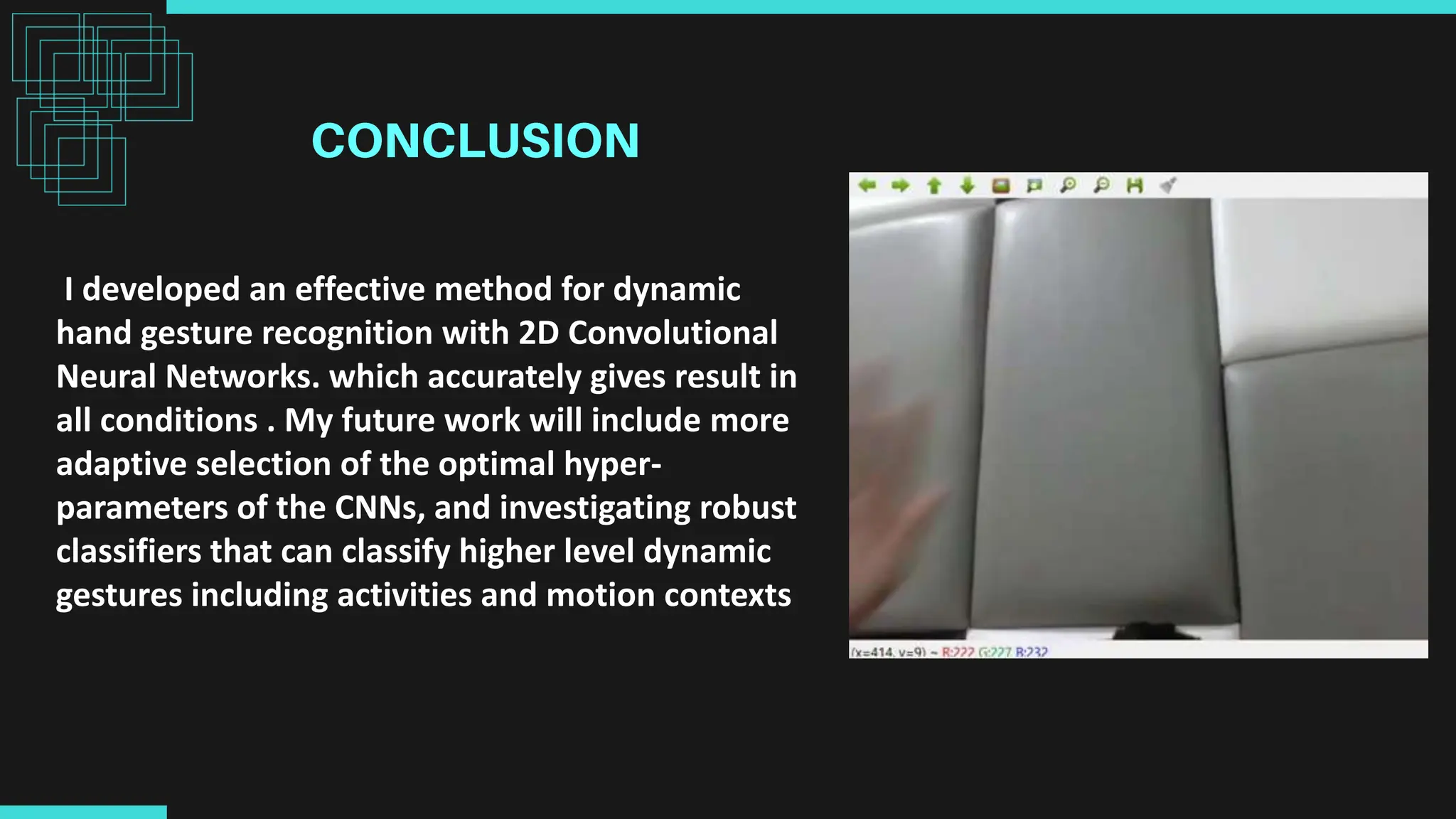
I developed an effective method for dynamic
hand gesture recognition with 2D Convolutional
Neural Networks. which accurately gives result in
all conditions . My future work will include more
adaptive selection of the optimal hyper-
parameters of the CNNs, and investigating robust
classifiers that can classify higher level dynamic
gestures including activities and motion contexts
The proposed sign language recognition system used to recognize sign language
letters can be further extended to recognize gestures facial expressions. Instead
of displaying letter labels it will be more appropriate to display sentences as
more appropriate translation of language. This also increases readability. The
scope of different sign languages can be increased. More training data can be
added to detect the letter with more accuracy. This project can further be
extended to convert the signs to speech.
 [1] S. Mitra and T. Acharya. Gesture recognition: A survey. IEEE
Systems, Man, and Cybernetics, 37:311–324, 2007.
 [2] V. I. Pavlovic, R. Sharma, and T. S. Huang. Visual interpretation of
hand gestures for human-computer interaction: A review. PAMI,
19:677–695, 1997.
 [3J. J. LaViola Jr. An introduction to 3D gestural interfaces. In
SIGGRAPH Course, 2014.
 [4] S. B. Wang, A. Quattoni, L. Morency, D. Demirdjian, and T. Darrell.
Hidden conditional random fields for gesture recognition. In CVPR,
pages 1521–1527, 2006
THANK YOU

Hand gesture recognition PROJECT PPT.pptx

  • 1.
    HAND GESTURE RECOGNITIONWITH CONVOLUTION NEURAL NETWORKS MENTOR : DR. K. VENKATESWARA RAO SIRE
  • 2.
    5 LITERATURE SURVEY 9 10 8 11 SYSTEM TESTING SYSTEMCONFIGURATION CONCLUSION REFERENCES FUTURE ENHANCEMENTS
  • 3.
    Speech impaired peopleuse hand signs and gestures to Communicate. Normal people face difficulty in understanding their language. Hence there is a need of a system which recognizes the different signs, gestures and conveys the information to the normal people. It bridges the gap between physically challenged people and normal people.
  • 4.
    Communication is imparting,sharing and conveying of information ,news, ideas, and feelings. Sign language is one of the way of non verbal communication which is gaining impetus and strong foothold due to its applications in large number of fields. Most prominent application of this method is its usage by differently disabled persons like deaf. Gesture means a movement of hand or head that expresses something
  • 5.
    SL NO. TITLEAUTHOR YEAR 01 HAND GESTURE RECOGNITION BASED ON COMPUTER VISION MUNIR OUDAH, ALI AL- NAJI AND JAVAAN CHAHL 2020 02 DESIGN OF HUMAN MACHINE INTERACTIVE SYSTEM BASED ON HAND GESTURE RECOGNITION XIAOFEI JI, ZHIBO WANG 2019 03 HAND GESTURE RECOGNITION FOR REAL TIME HUMAN INTERACTION SYSTEM POONAM SONWALKAR, TANUJA SAKHARE, ASHWINI PATIL, SONAL KALE 2015
  • 6.
    MODEL 1:Hand GestureRecognition on Digital Image Processing Using MATLAB  It was found by Team of Researches and Engineers Working in Field of Computer vision and Image Processing  This model is combination of digital image processing techniques and machine learning algorithms  Limitations: o Limited Recognition of dynamic gestures o High Computational Requirements o Sensitivity to Hand Orientation and Position
  • 7.
    MODEL 2:System ForRecognition Of Indian SignLanguage Of Deaf People Using OTSU’S Algorithm  It Was Found By Team of Researches and Engineers From SIT ,India  OTSU’S Algorithm Uses Image Processing Techniques To Classify Hand Gestures  Limitations: o Low Accuracy o Difficulty in Adapting To New Users o Limited No of Hand Gestures
  • 8.
    PROPOSED SYSTEM MODEL NAME MODELARCHITECTURE MODEL DESIGN
  • 9.
    PROPOSED SYSTEM MODEL NAME Ourproposed system is sign language recognition system using convolution neural networks which recognizes various hand gestures by capturing video and converting it into frames. Then the hand pixels are segmented and the image it obtained and sent for comparison to the trained model. Thus our system is more robust in getting exact text labels of letters.
  • 10.
  • 11.
  • 14.
     SOFTWARE REQUIREMENTS: OS: Windows or Mac SDK: Open CV, TensorFlow, Numpy, Keros • HARDWARE REQUIREMENTS: CAMERA:3MP RAM:8 GB PROCESSOR: INTEL 4 HDD:10GB GPU:4GB
  • 15.
  • 16.
    RESULTS Screenshot of theresult obtained for letter A
  • 17.
    RESULTS Screenshot of theresult obtained for letter W
  • 18.
    RESULTS Screenshot of theresult obtained for letter L
  • 20.
    I developed aneffective method for dynamic hand gesture recognition with 2D Convolutional Neural Networks. which accurately gives result in all conditions . My future work will include more adaptive selection of the optimal hyper- parameters of the CNNs, and investigating robust classifiers that can classify higher level dynamic gestures including activities and motion contexts
  • 21.
    The proposed signlanguage recognition system used to recognize sign language letters can be further extended to recognize gestures facial expressions. Instead of displaying letter labels it will be more appropriate to display sentences as more appropriate translation of language. This also increases readability. The scope of different sign languages can be increased. More training data can be added to detect the letter with more accuracy. This project can further be extended to convert the signs to speech.
  • 22.
     [1] S.Mitra and T. Acharya. Gesture recognition: A survey. IEEE Systems, Man, and Cybernetics, 37:311–324, 2007.  [2] V. I. Pavlovic, R. Sharma, and T. S. Huang. Visual interpretation of hand gestures for human-computer interaction: A review. PAMI, 19:677–695, 1997.  [3J. J. LaViola Jr. An introduction to 3D gestural interfaces. In SIGGRAPH Course, 2014.  [4] S. B. Wang, A. Quattoni, L. Morency, D. Demirdjian, and T. Darrell. Hidden conditional random fields for gesture recognition. In CVPR, pages 1521–1527, 2006
  • 23.