From Linear Books to
an Open World Adventure
A case study of taxonomy to drive interactive,
personalized reader experiences
Joe Pairman
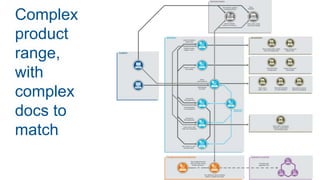
Complex
product
range,
with
complex
docs to
match
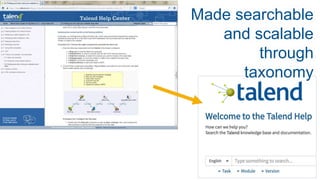
Made searchable
and scalable
through
taxonomy
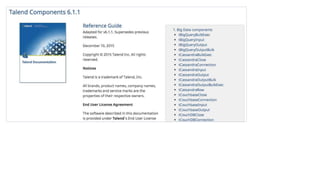
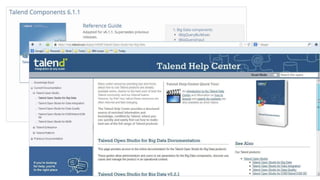
The starting point: legacy, book-
oriented XML format (DocBook)
Making content more searchable
and helpful
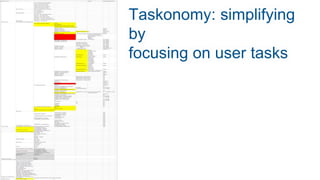
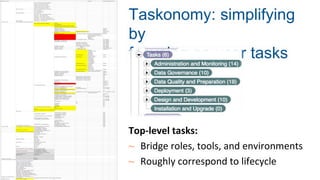
Taskonomy: simplifying
by
focusing on user tasks
Taskonomy: simplifying
by
focusing on user tasks
Top-level tasks:
~ Bridge roles, tools, and environments
~ Roughly correspond to lifecycle
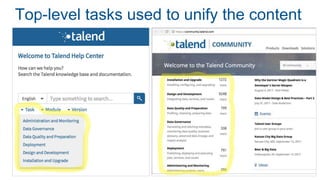
Top-level tasks used to unify the content
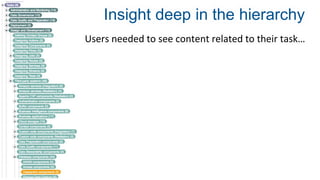
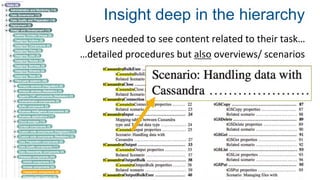
Insight deep in the hierarchy
Users needed to see content related to their task…
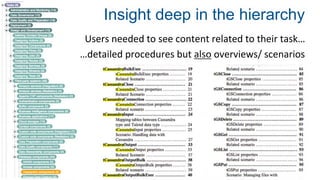
Insight deep in the hierarchy
Users needed to see content related to their task…
…detailed procedures but also overviews/ scenarios
Insight deep in the hierarchy
Users needed to see content related to their task…
…detailed procedures but also overviews/ scenarios
Insight deep in the hierarchy
Users needed to see content related to their task…
…detailed procedures but also overviews/ scenarios
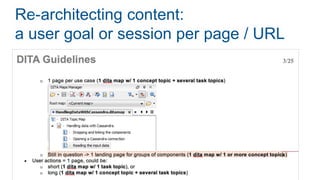
Re-architecting content:
a user goal or session per page / URL
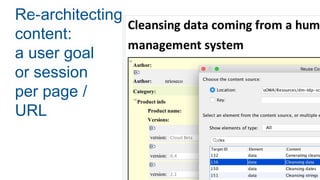
Re-architecting
content:
a user goal
or session
per page /
URL
Re-architecting
content:
a user goal
or session
per page /
URL
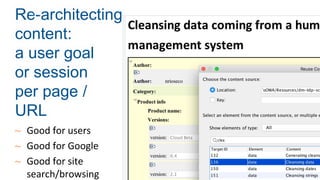
~ Good for users
~ Good for Google
~ Good for site
search/browsing
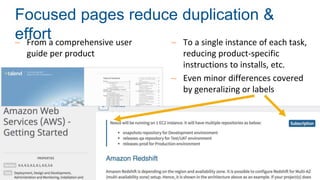
Focused pages reduce duplication &
effort~ From a comprehensive user
guide per product
Focused pages reduce duplication &
effort~ From a comprehensive user
guide per product
~ To a single instance of each task,
reducing product-specific
instructions to installs, etc.
Focused pages reduce duplication &
effort~ From a comprehensive user
guide per product
~ To a single instance of each task,
reducing product-specific
instructions to installs, etc.
~ Even minor differences covered
by generalizing or labels
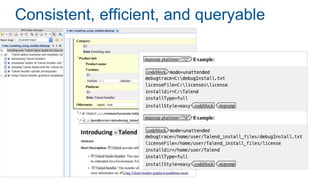
Consistency and efficiency
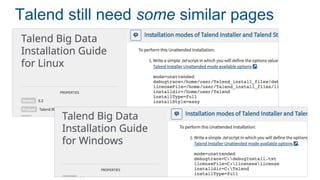
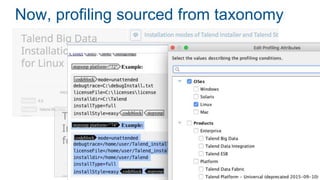
Talend still need some similar pages
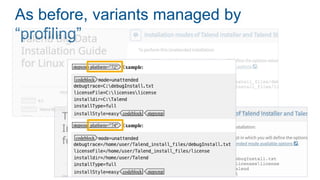
As before, variants managed by
“profiling”
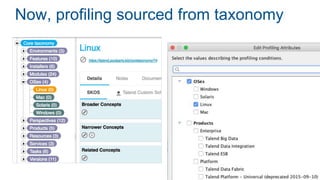
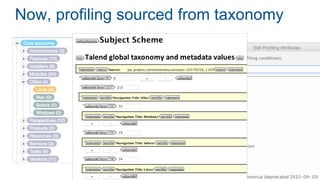
Now, profiling sourced from taxonomy
Consistent, efficient, and queryable
content
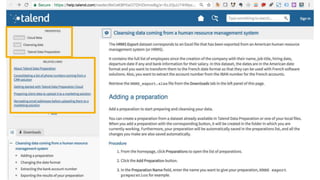
Simple recommendations,
based on taxonomy
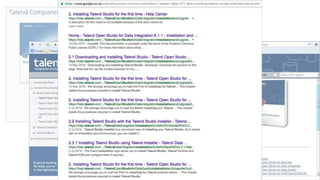
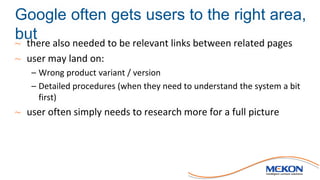
Google often gets users to the right area,
but~ there also needed to be relevant links between related pages
~ user may land on:
– Wrong product variant / version
– Detailed procedures (when they need to understand the system a bit
first)
~ user often simply needs to research more for a full picture
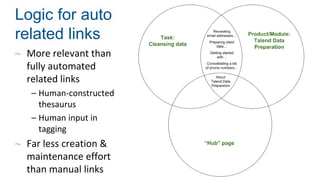
Logic for auto
related links
~ More relevant than
fully automated
related links
– Human-constructed
thesaurus
– Human input in
tagging
~ Far less creation &
maintenance effort
than manual links
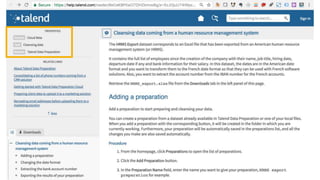
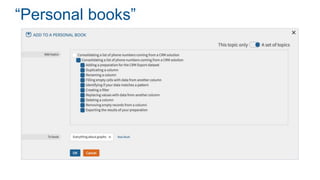
“Personal books”
Lessons learned
Lessons learned
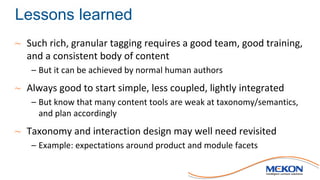
~ Such rich, granular tagging requires a good team, good training,
and a consistent body of content
– But it can be achieved by normal human authors
~ Always good to start simple, less coupled, lightly integrated
– But know that many content tools are weak at taxonomy/semantics,
and plan accordingly
~ Taxonomy and interaction design may well need revisited
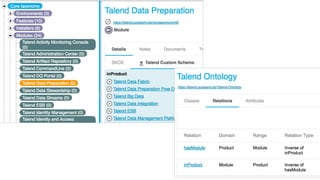
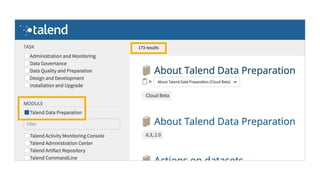
– Example: expectations around product and module facets
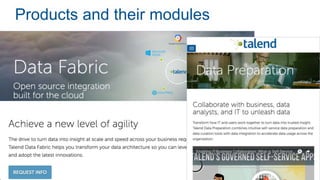
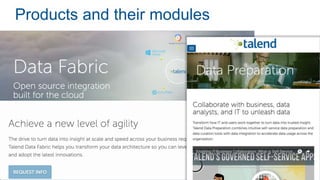
Products and their modules
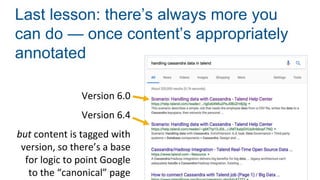
Last lesson: there’s always more you
can do — once content’s appropriately
annotated
Version 6.0
Version 6.4
but content is tagged with
version, so there’s a base
for logic to point Google
to the “canonical” page
The result
Working with a taxonomy enables us to bridge silos between
cross-format, heterogeneous pieces of content.
It is the centerpiece of our top-down and bottom-up navigation.
Relations between concepts can be leveraged at any stage of the
documentation workflow: at authoring time, before publishing and
also to check online content.
~ François Violette, Information Architect, Talend
Questions /
suggestions?~ joepairman@mekon.com
~ @joepairman

Linear books to open world adventure

Editor's Notes

  • #5 Fairly simple taxonomy principles. Deep involvement with content. Findability but also improving the content itself.
  • #14 Talend Help Center directly; community not yet
  • #19 Not assuming context
  • #22 Not just that pages themselves are more searchable; there are fewer of them
  • #29 Bit of ontology to support this