More about
limits and
asymptotes
Objectives
1.Analyzing limits at infinity
2.Determining horizontal and vertical
asymptotes
3.Applying limits at infinity
Asymptotes
Definition of an asymptote
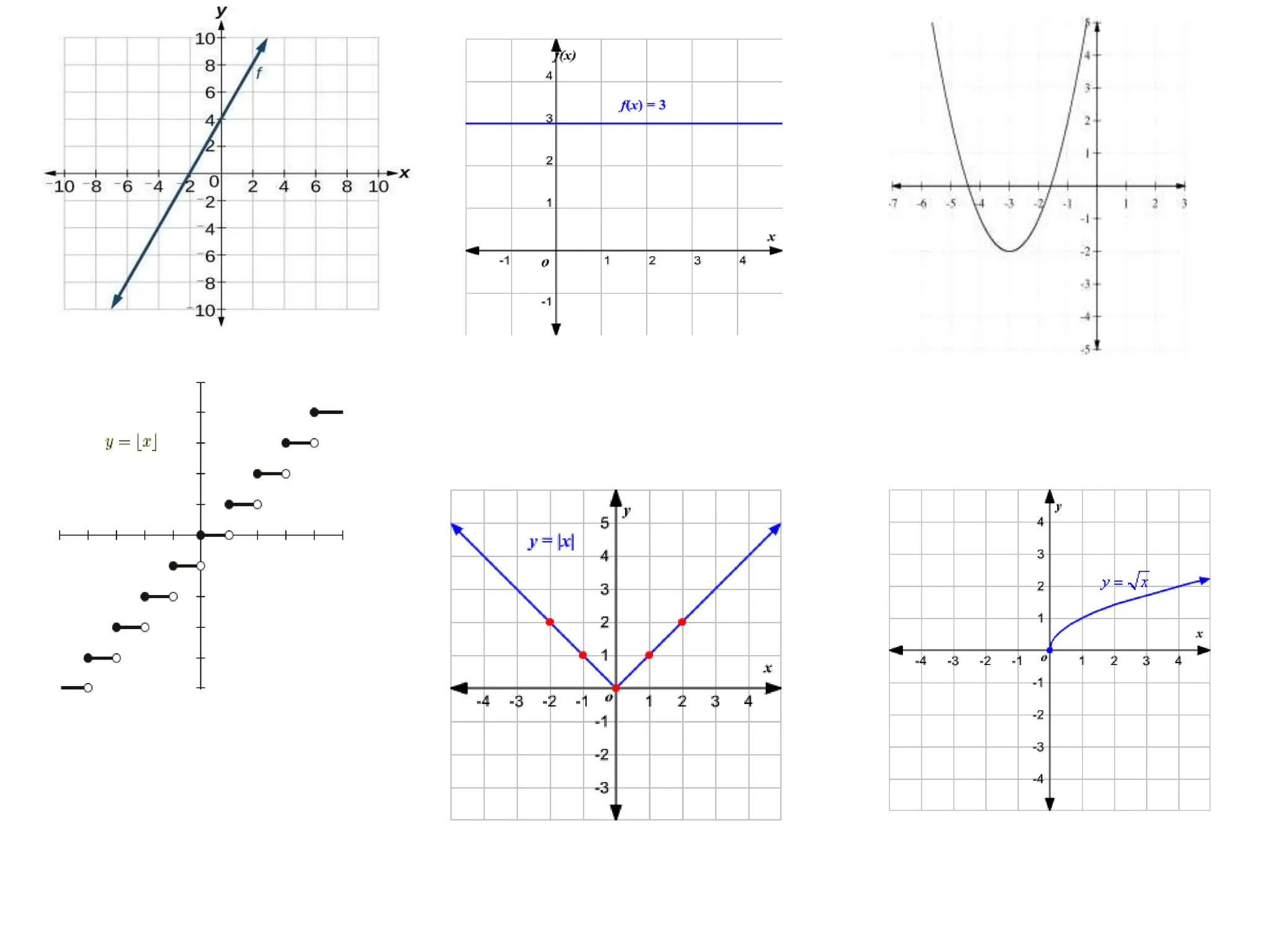
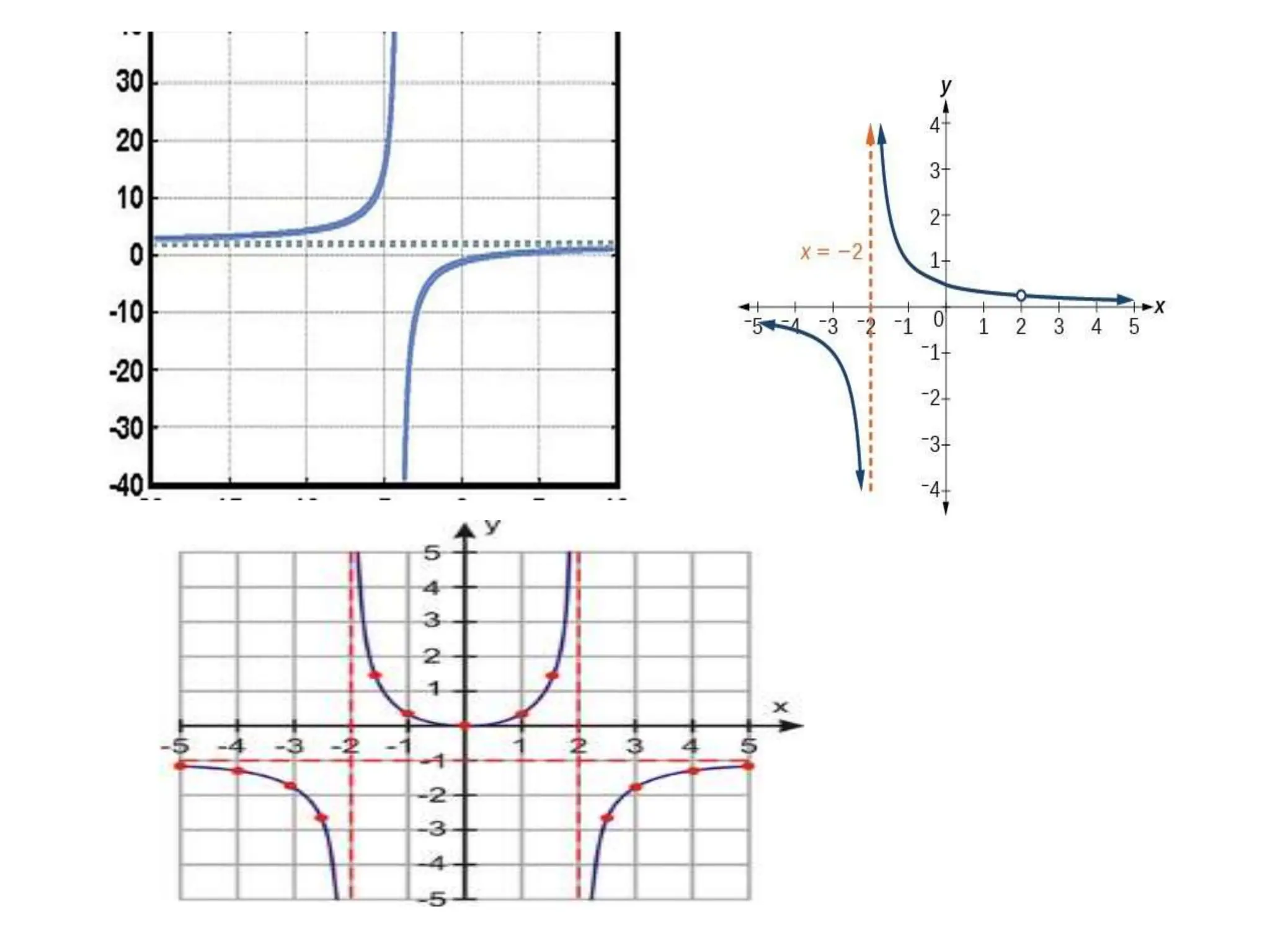
• An asymptote is a straight line which acts as a
boundary for the graph of a function.
• When a function has an asymptote (and not all
functions have them) the function gets closer
and closer to the asymptote as the input value to
the function approaches either a specific value a
or positive or negative infinity.
• The functions most likely to have asymptotes are
rational functions
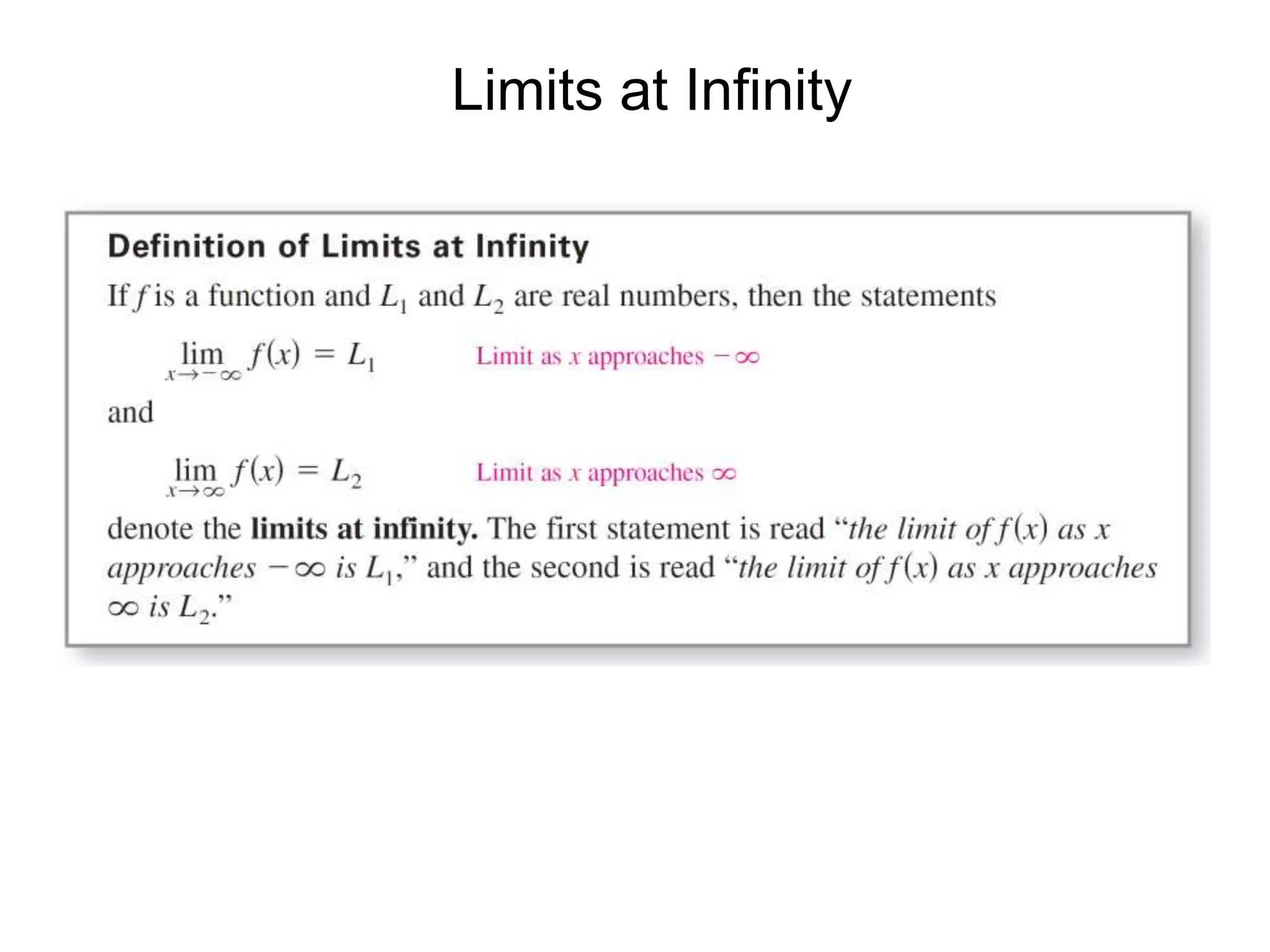
Limits at Infinity
Limits at Infinity
•To help evaluate
limits at infinity,
use the following
definition.
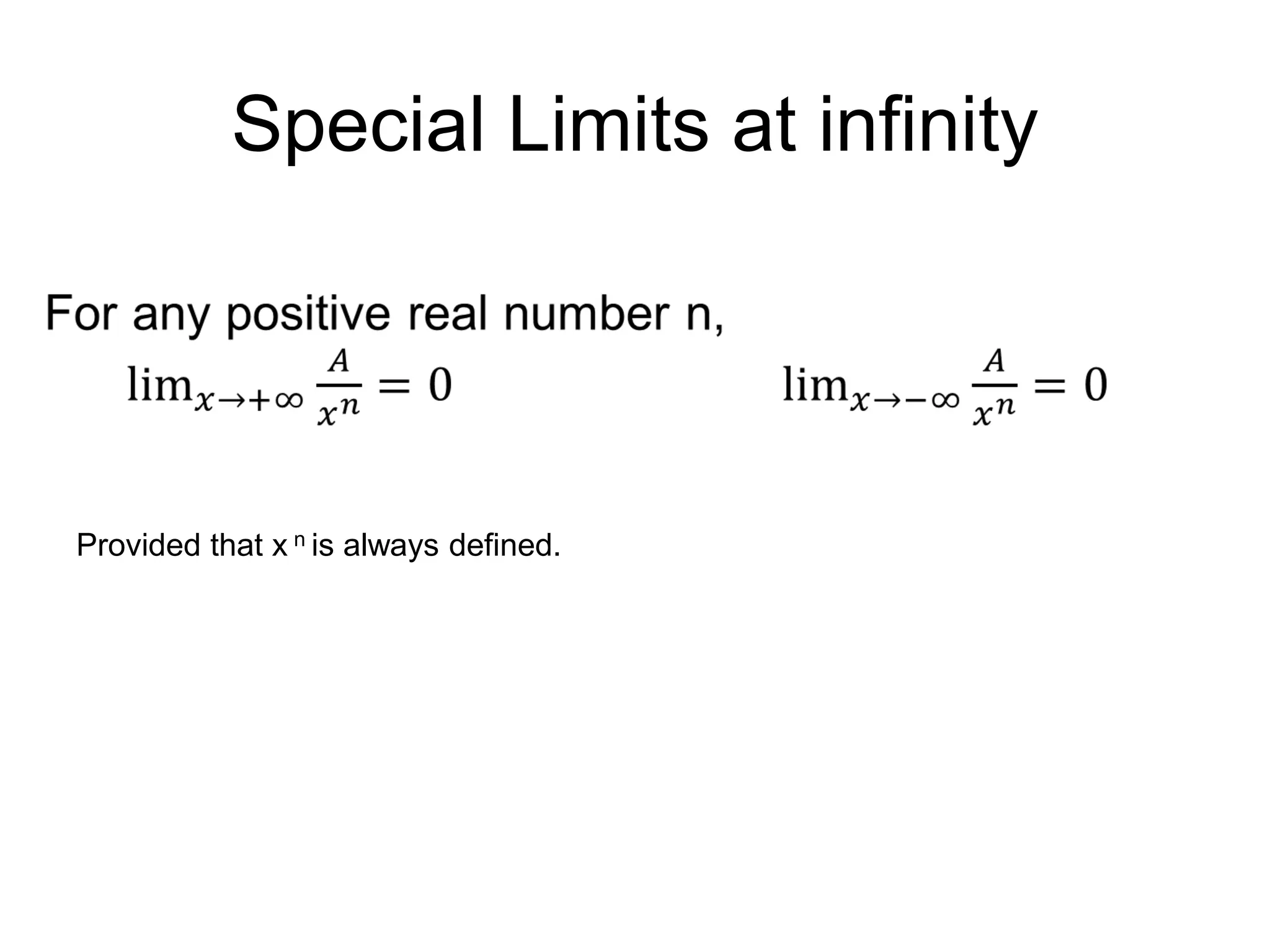
Special Limits at infinity
Provided that x n is always defined.
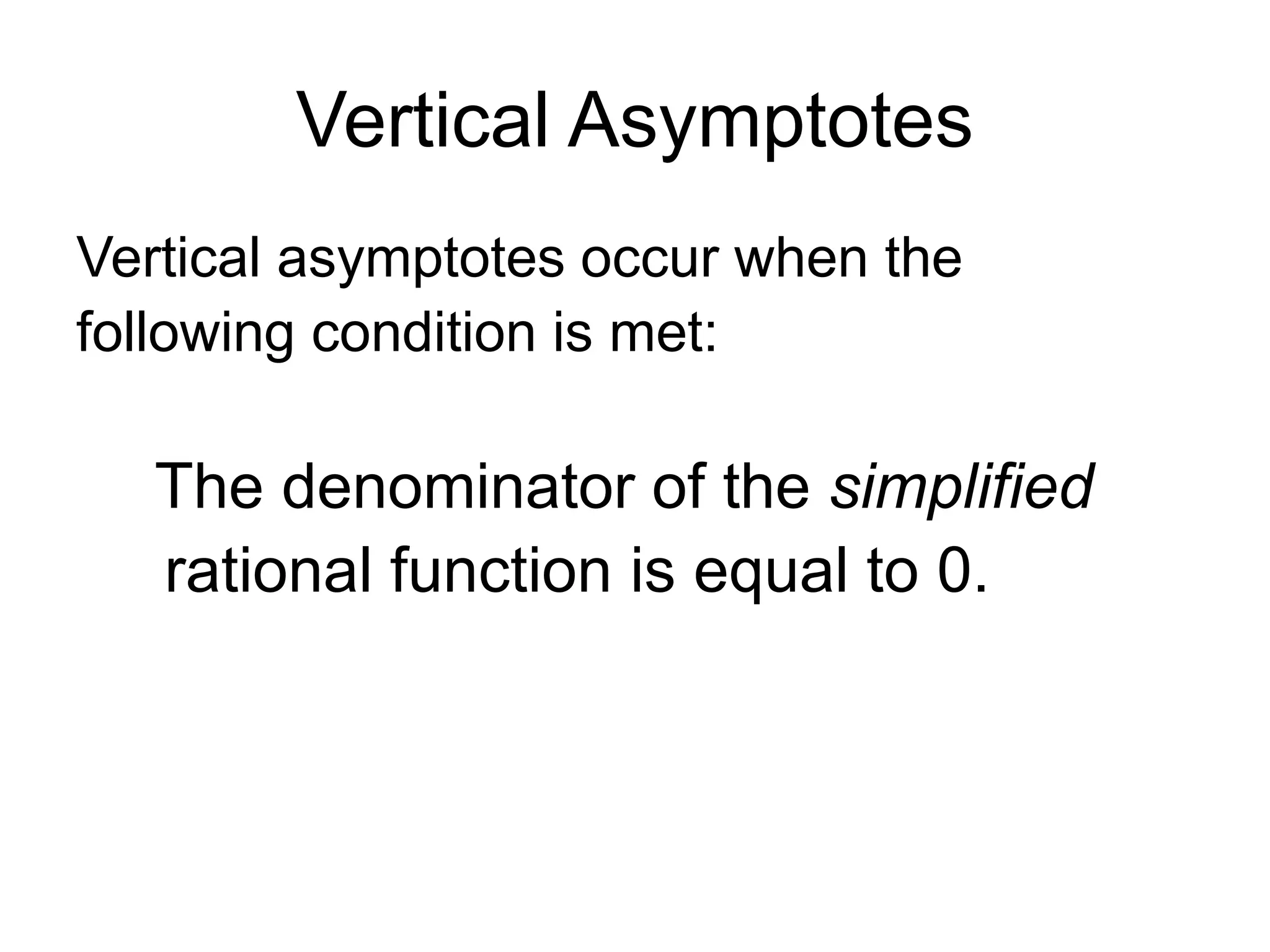
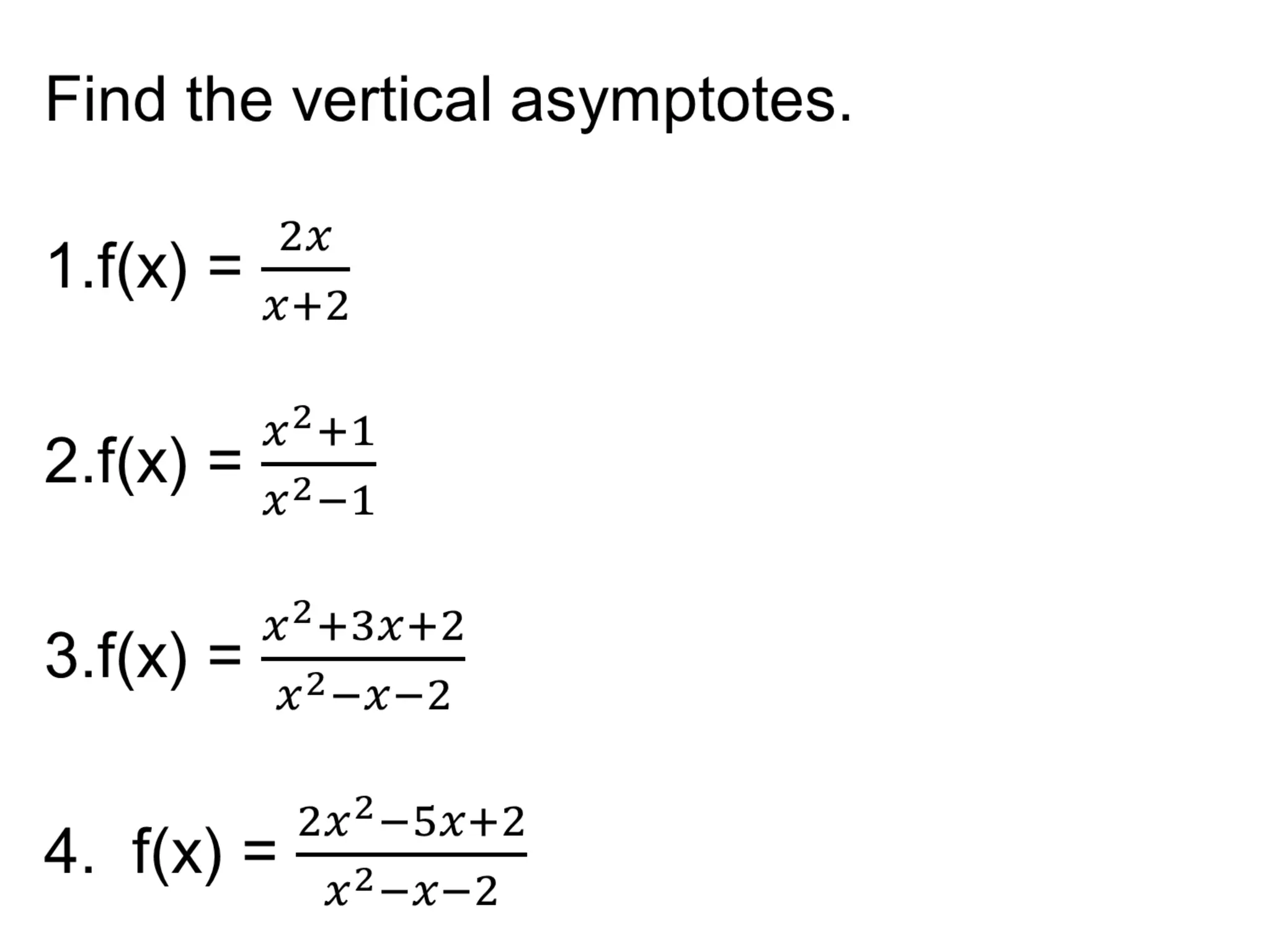
Vertical Asymptotes
Vertical asymptotes occur when the
following condition is met:
The denominator of the simplified
rational function is equal to 0.
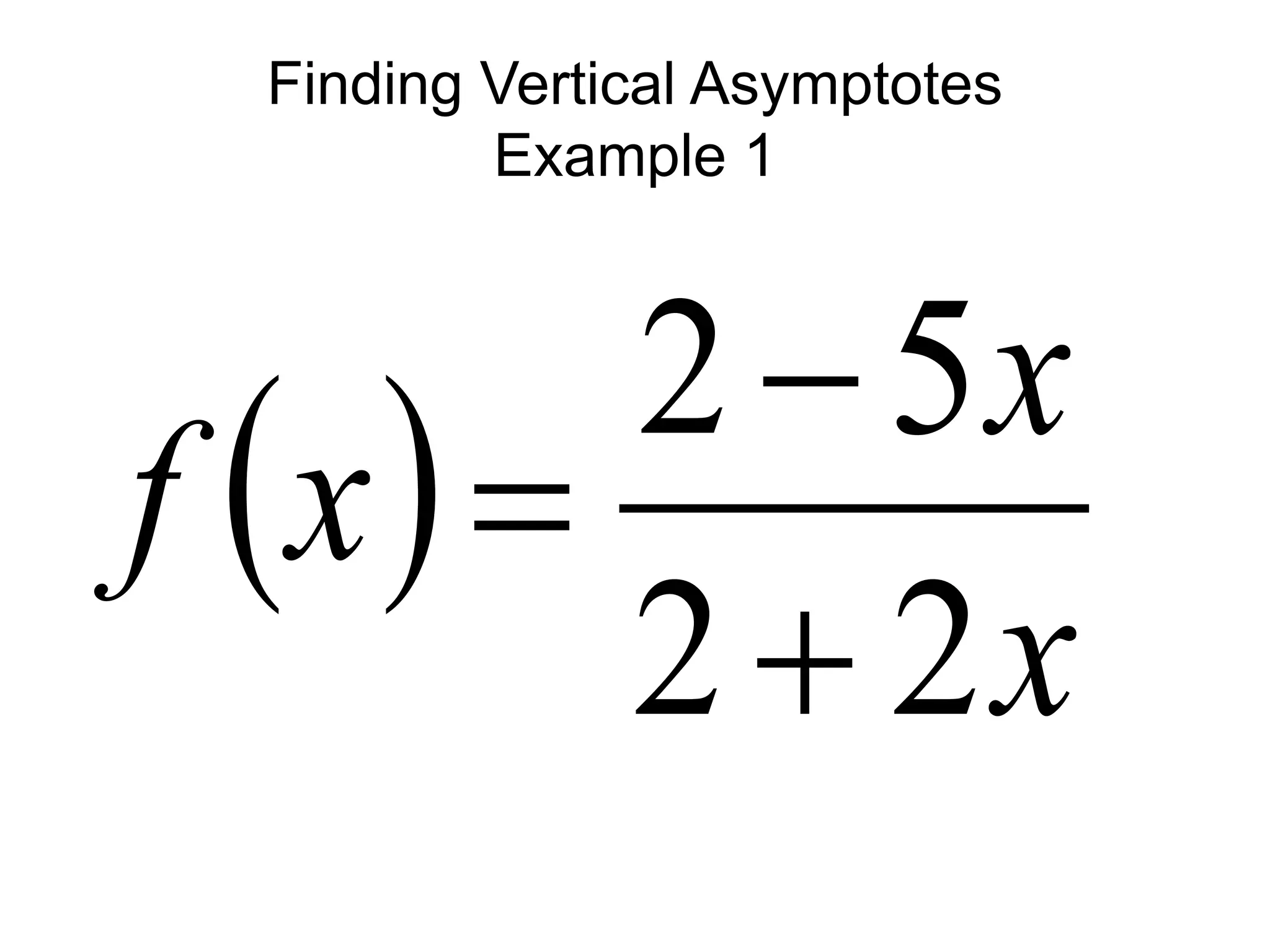
Finding Vertical Asymptotes
Example 1
 
x
x
x
f
2
2
5
2



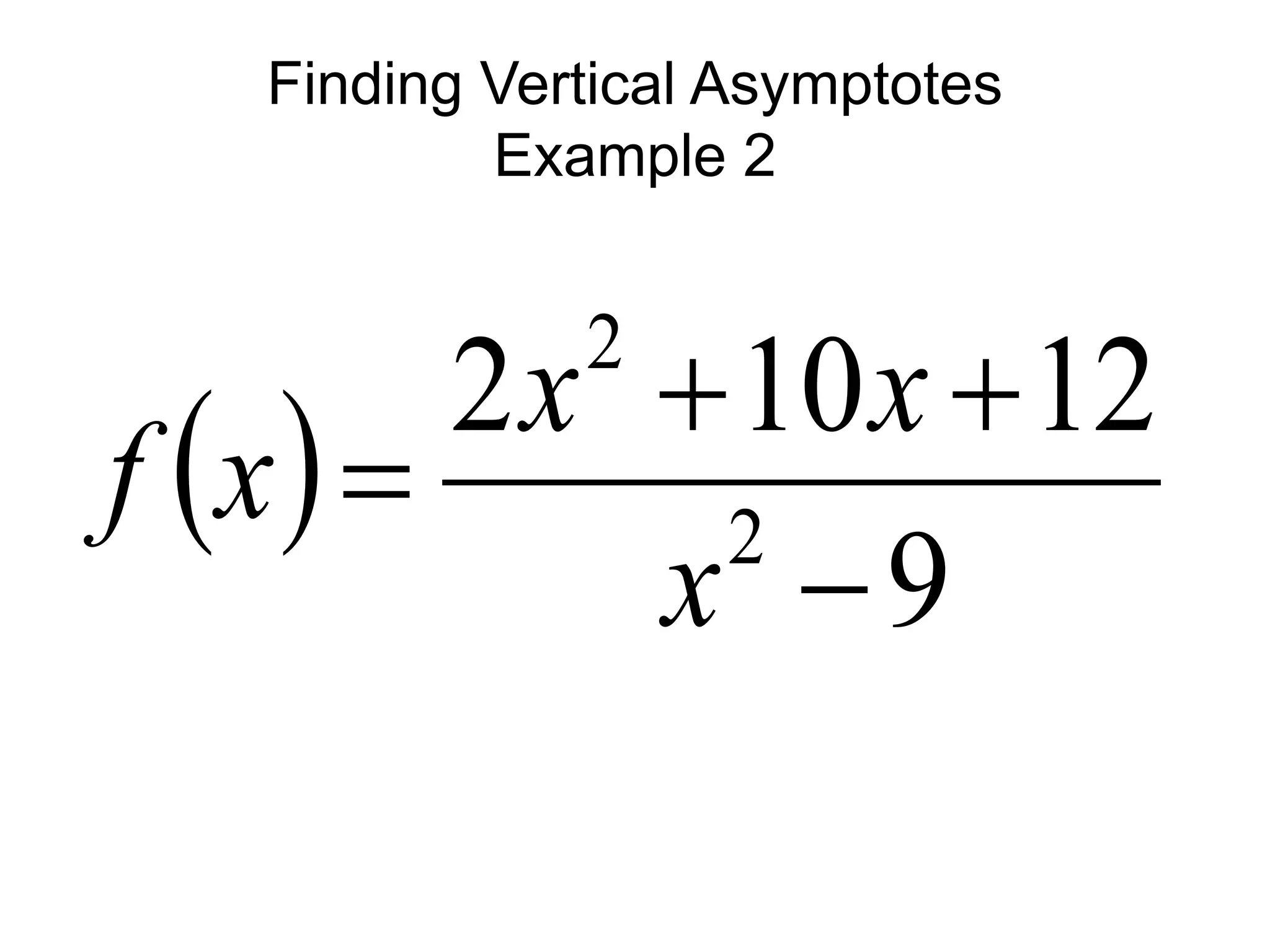
Finding Vertical Asymptotes
Example 2
 
9
12
10
2
2
2




x
x
x
x
f
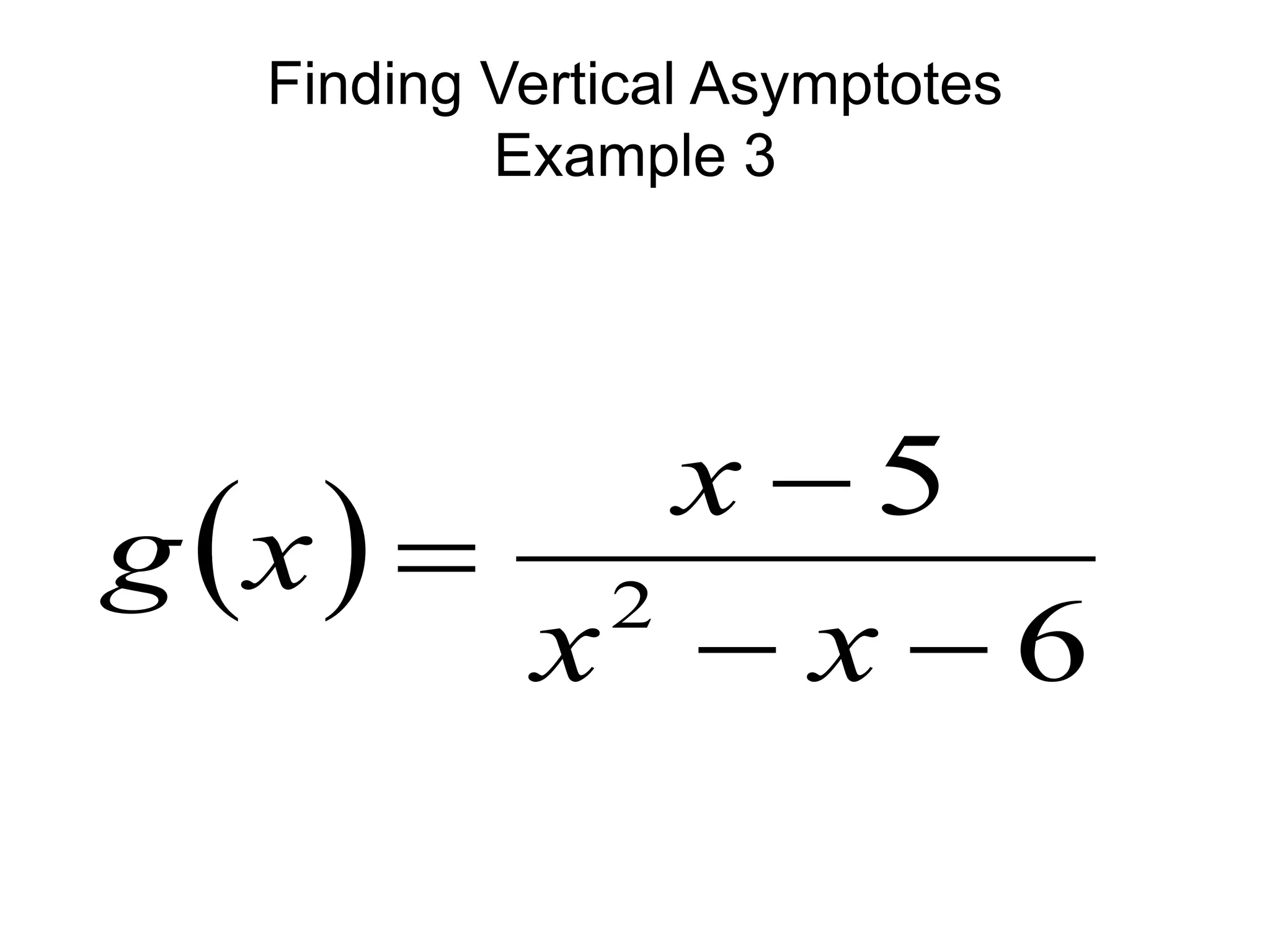
Finding Vertical Asymptotes
Example 3
 
6
5
2




x
x
x
x
g
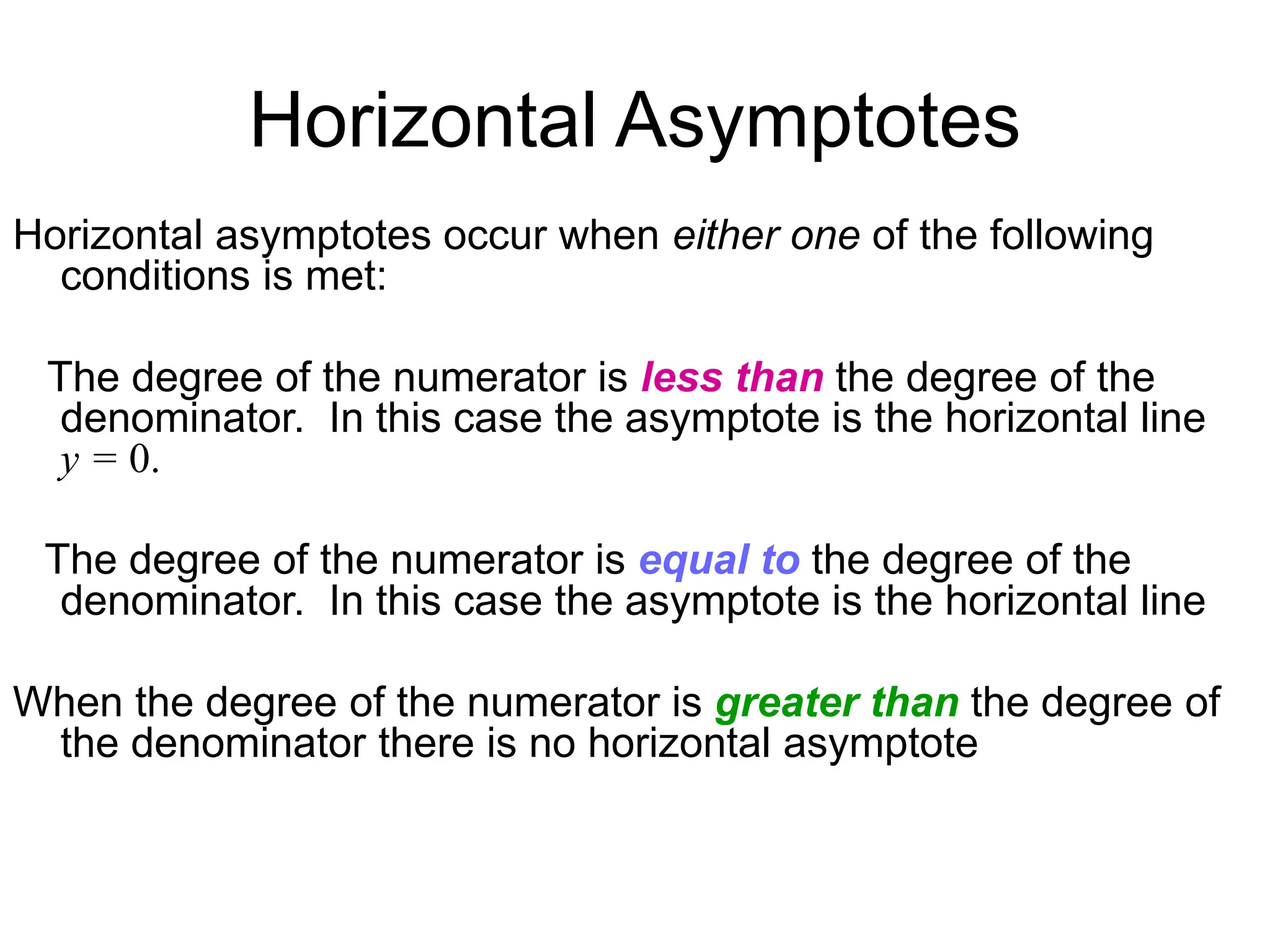
Horizontal Asymptotes
Horizontal asymptotes occur when either one of the following
conditions is met:
The degree of the numerator is less than the degree of the
denominator. In this case the asymptote is the horizontal line
y = 0.
The degree of the numerator is equal to the degree of the
denominator. In this case the asymptote is the horizontal line
When the degree of the numerator is greater than the degree of
the denominator there is no horizontal asymptote
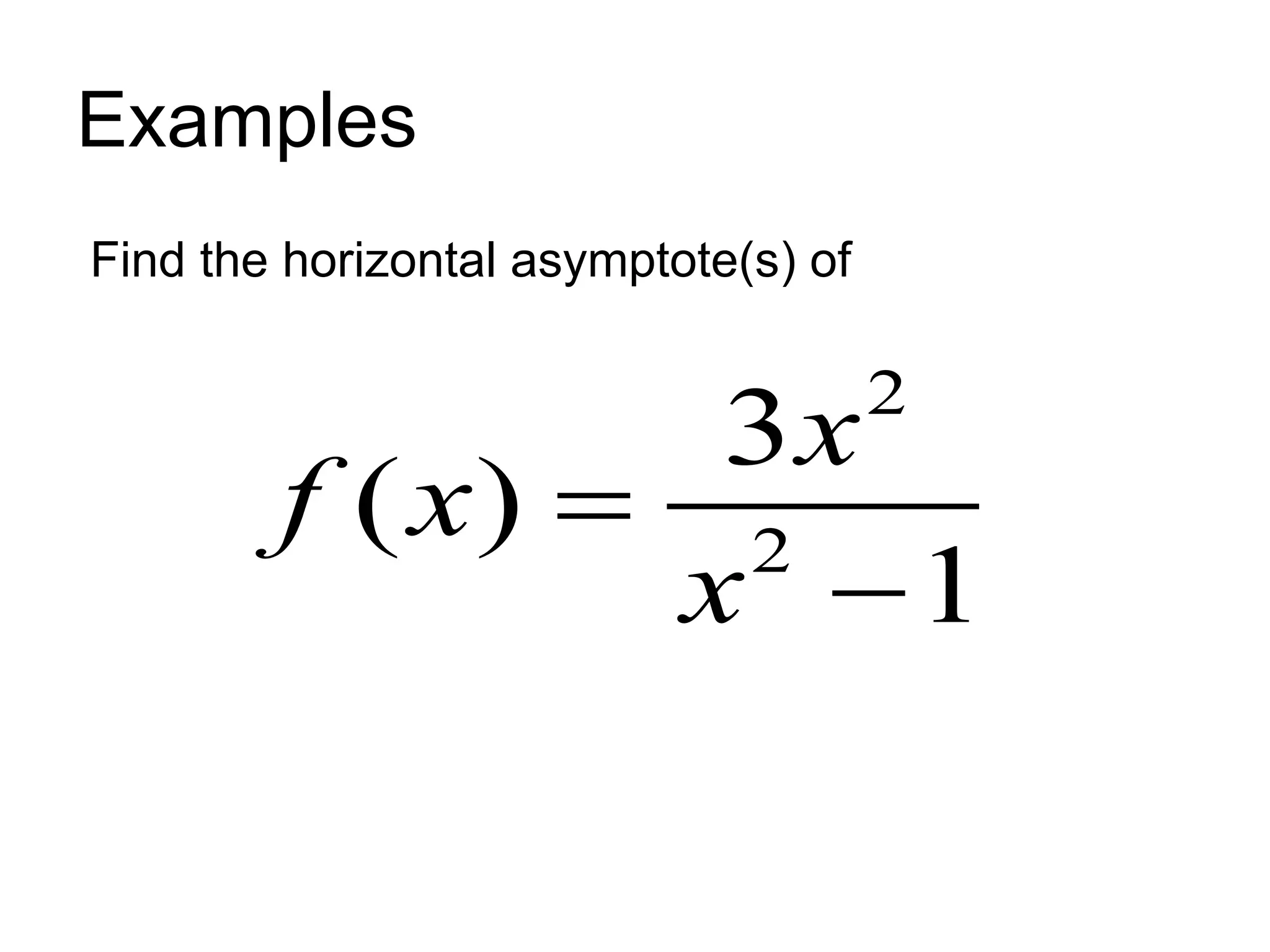
Examples
Find the horizontal asymptote(s) of
2
2
3
( )
1
x
f x
x


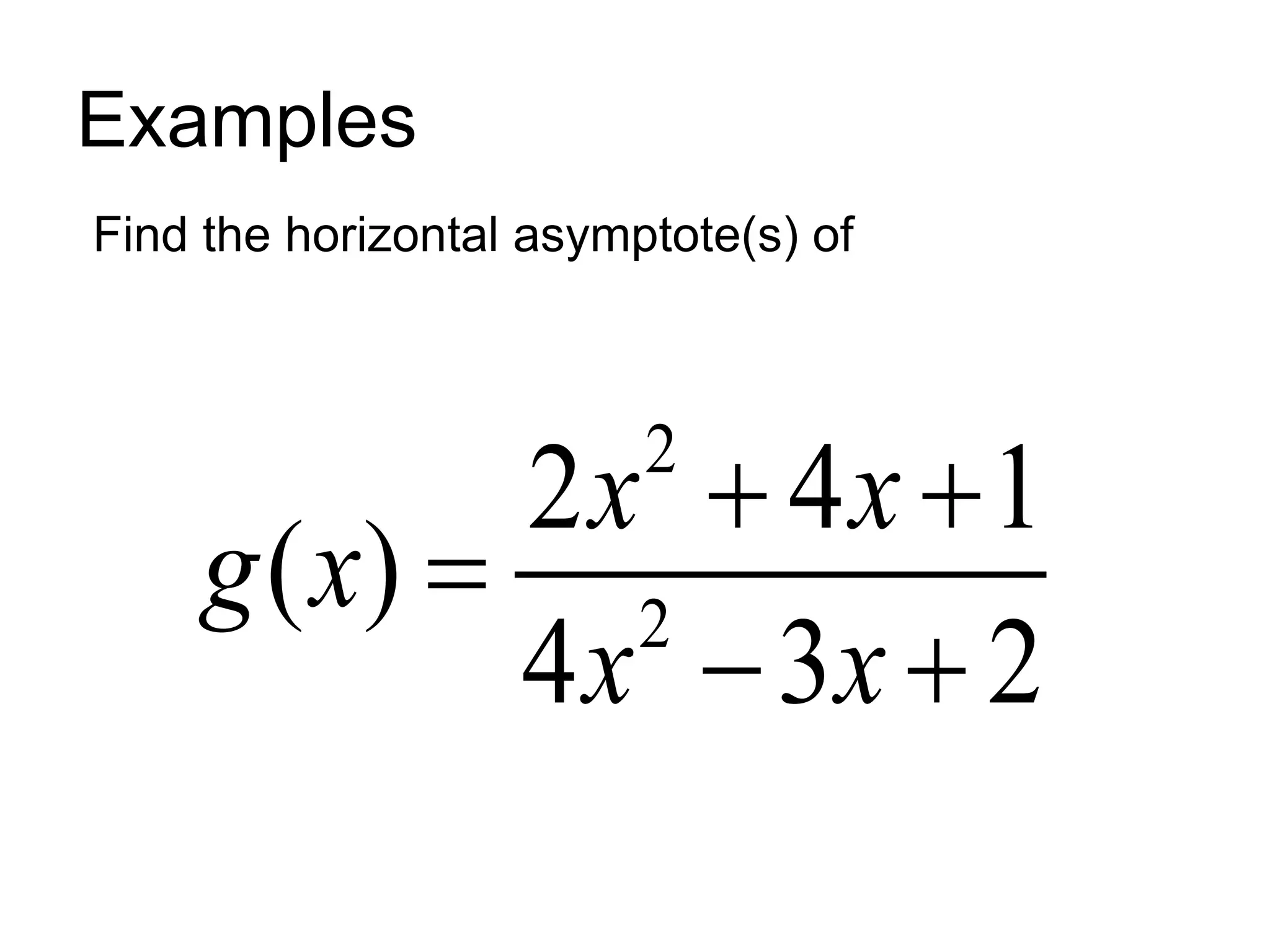
Examples
Find the horizontal asymptote(s) of
2
2
2 4 1
( )
4 3 2
x x
g x
x x
 

 
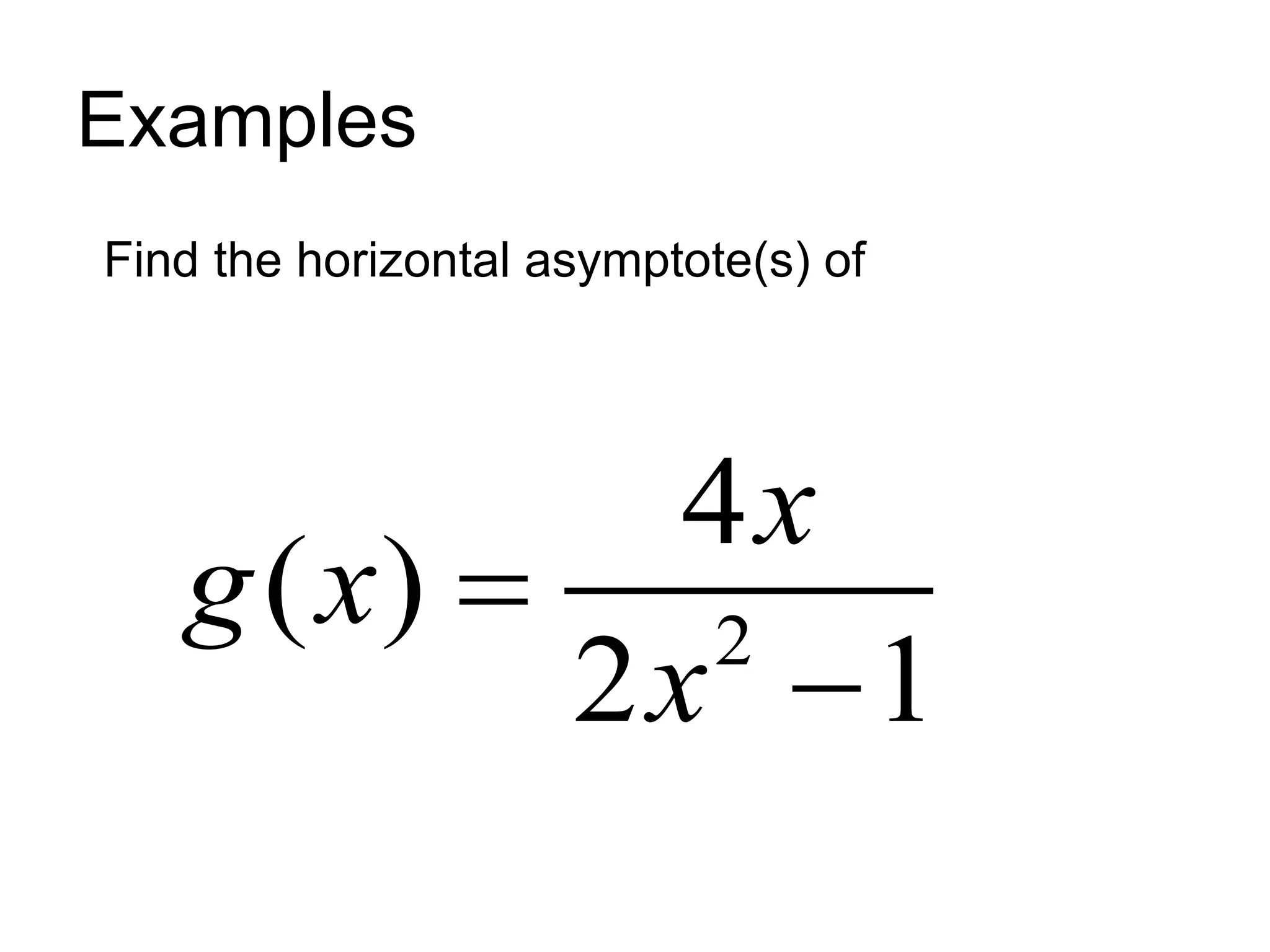
Examples
Find the horizontal asymptote(s) of
2
4
( )
2 1
x
g x
x


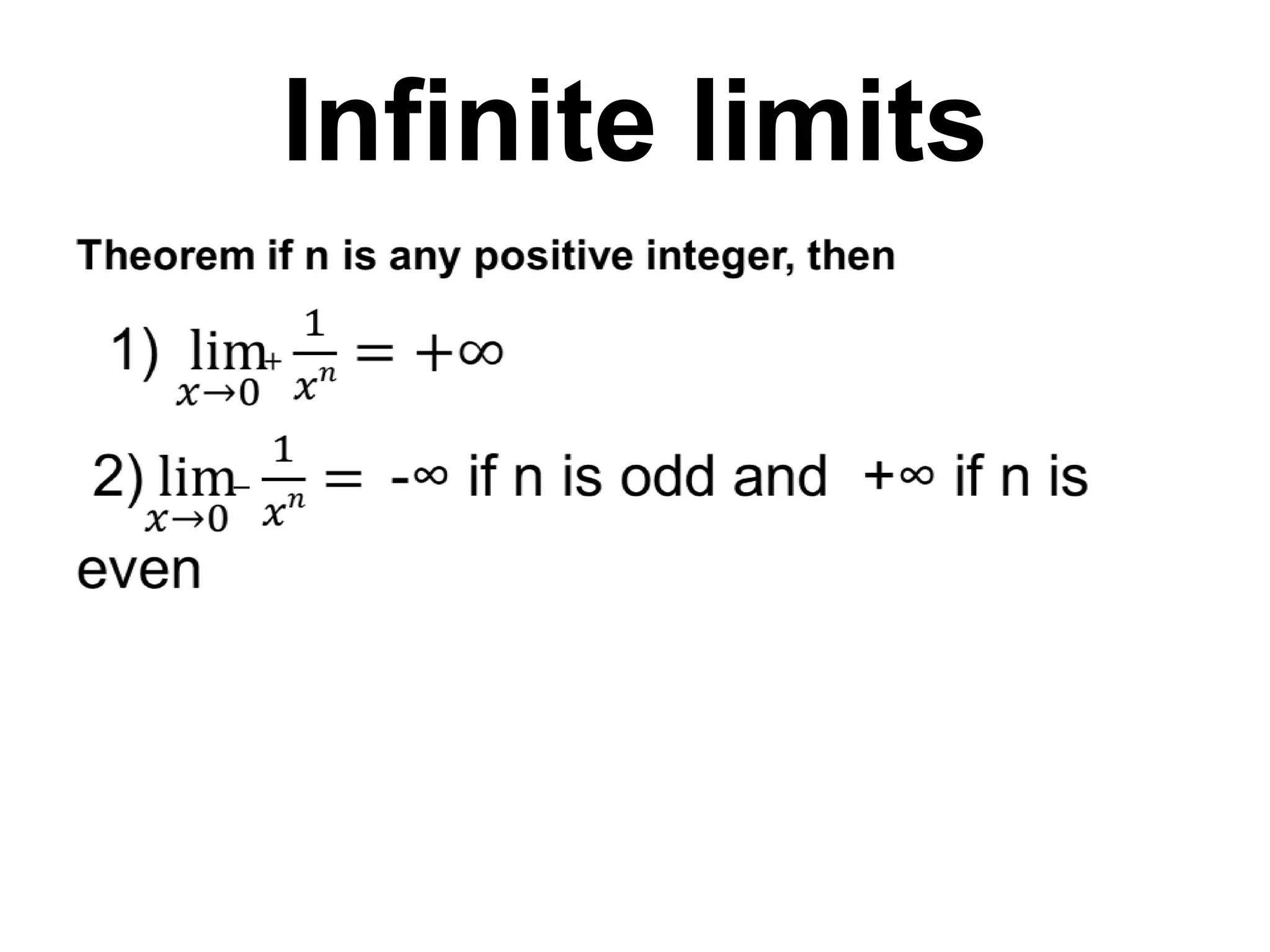
Infinite limits
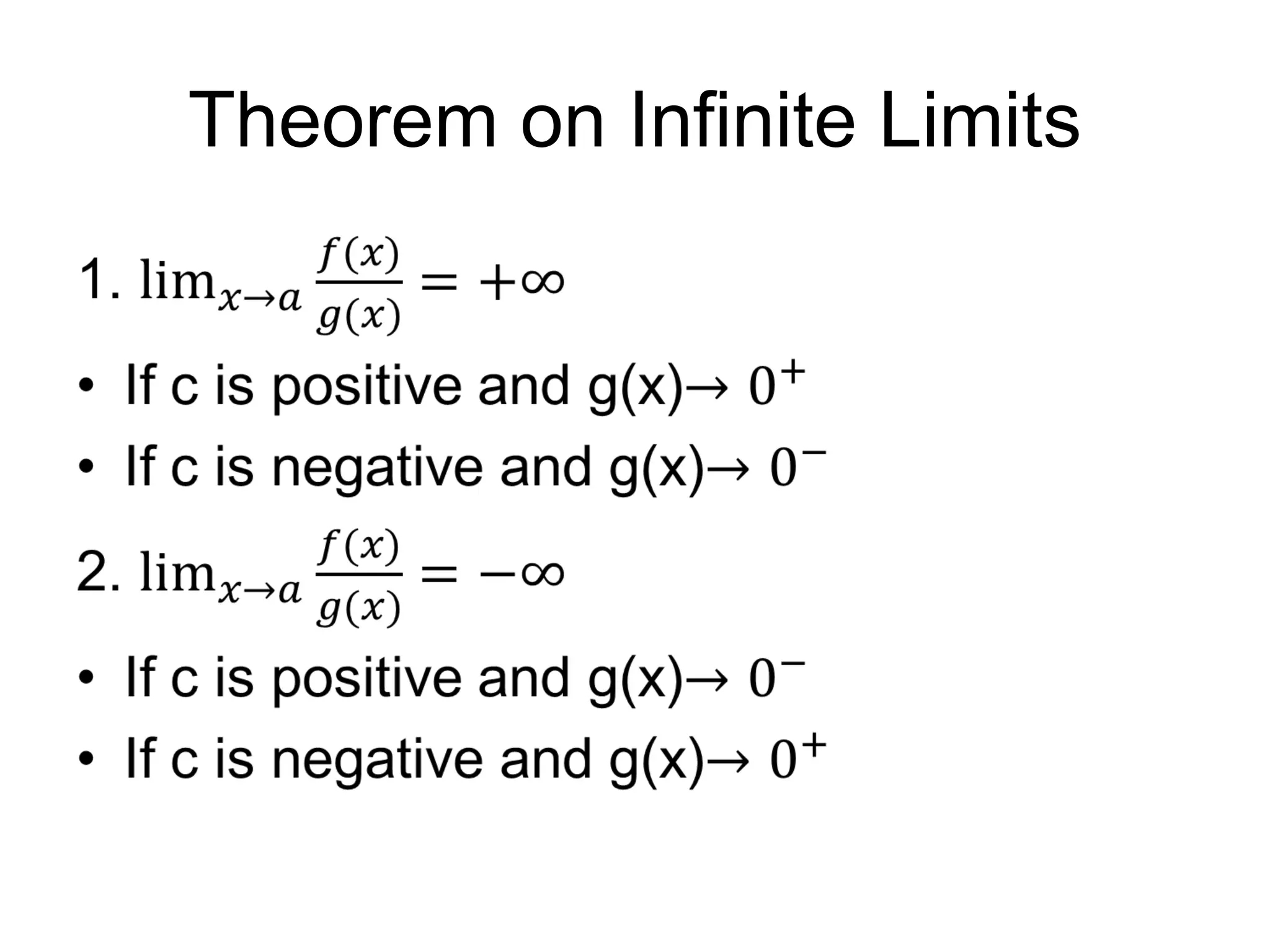
Theorem on Infinite Limits

Limits-at-Infinity in Basic Calculus ppt