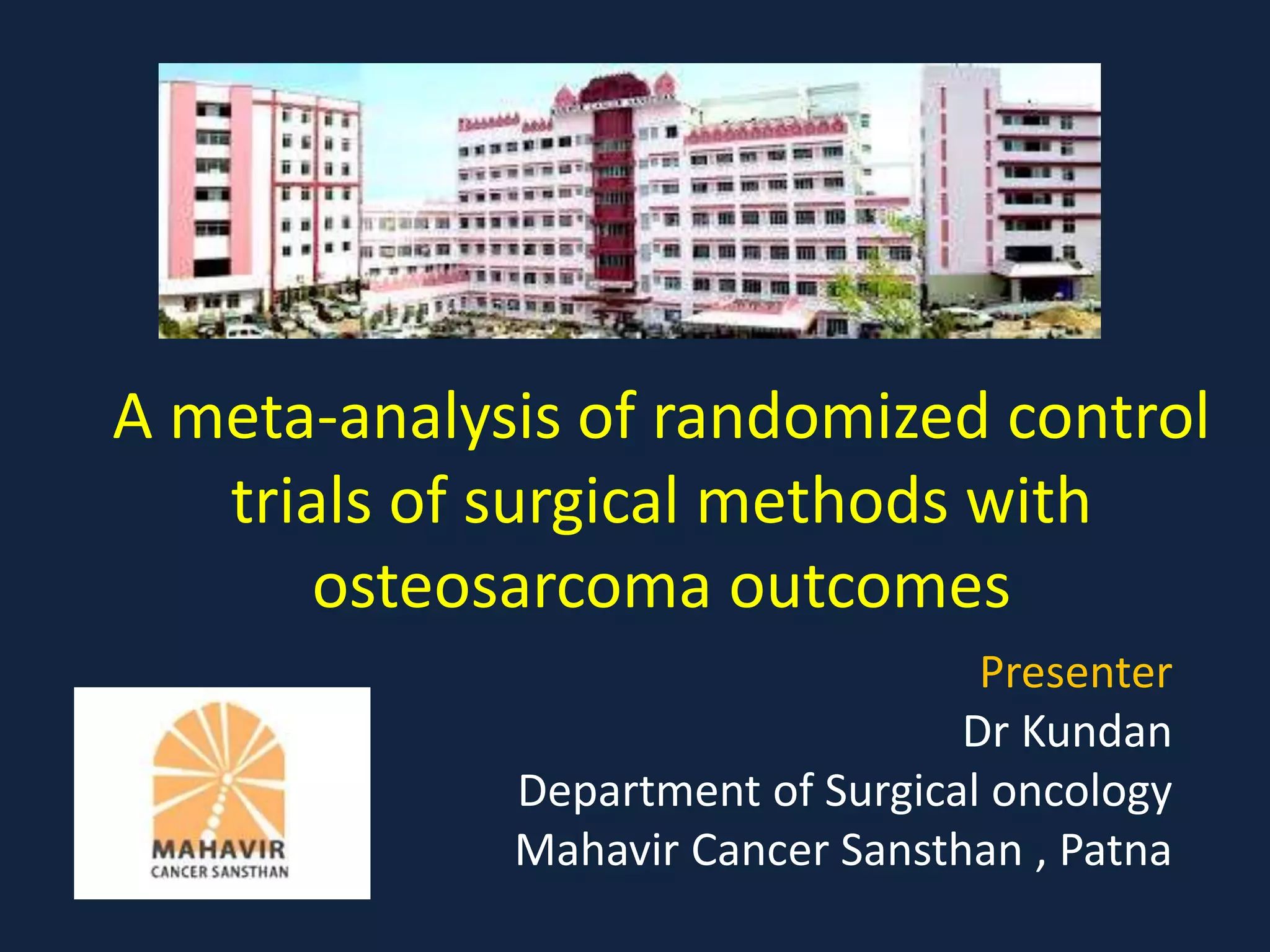
A meta-analysis of randomized control
trials of surgical methods with
osteosarcoma outcomes
Presenter
Dr Kundan
Department of Surgical oncology
Mahavir Cancer Sansthan , Patna
• Prior to neoadjuvant chemotherapy, amputations and
disarticulations were the dominant treatments for
osteosarcoma with a 5-year overall survival (OS) rate of only
about 20% .
• LSS has functional and physiological advantages over
traditional amputative procedures when combined with
neoadjuvant or adjuvant chemotherapy.
• Previous studies have shown that LSS is applicative for
localized osteosarcoma, while amputation is suitable for
aggressive malignant osteosarcoma
• It has been reported that the risk of local recurrence and the
5-year OS rate did not differ significantly between LSS and
amputation in osteosarcoma patients with pathological
fractures.
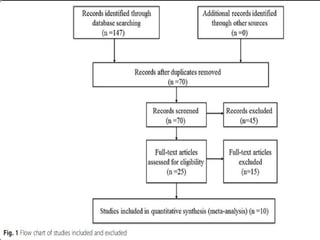
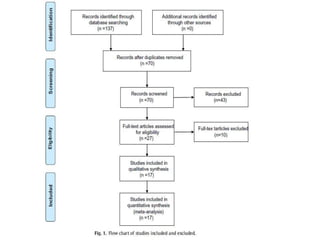
Literature search
• MEDLINE, Cochrane, EMBASE, and Google
Scholar databases were searched for relevant
data till April 30, 2016.
• Exclusion standard
LSS or amputation groups without a
comparison,
case series with less than 20 total patients,
letters, case reports, editorials, or reviews
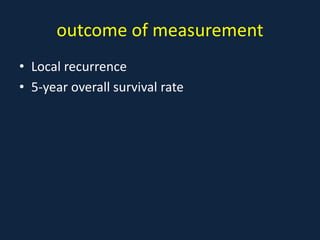
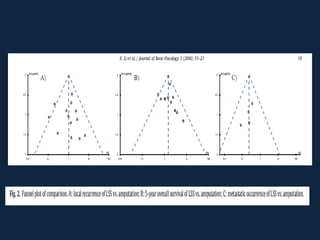
outcome of measurement
• Local recurrence
• 5-year overall survival rate
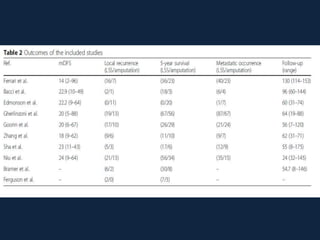
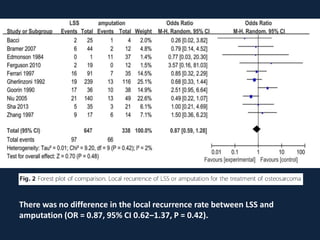
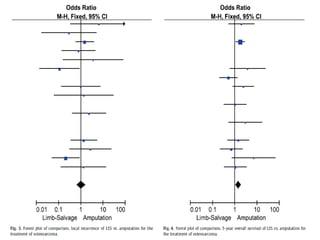
There was no difference in the local recurrence rate between LSS and
amputation (OR = 0.87, 95% CI 0.62–1.37, P = 0.42).
Results
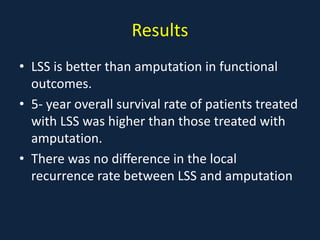
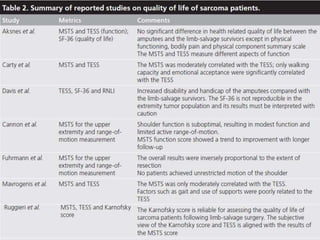
• LSS is better than amputation in functional
outcomes.
• 5- year overall survival rate of patients treated
with LSS was higher than those treated with
amputation.
• There was no difference in the local
recurrence rate between LSS and amputation
Results
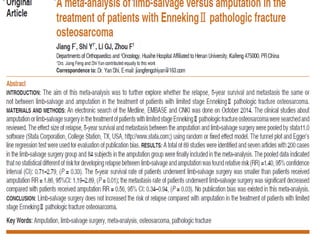
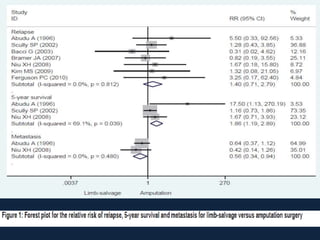
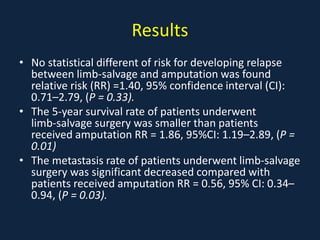
• No statistical different of risk for developing relapse
between limb-salvage and amputation was found
relative risk (RR) =1.40, 95% confidence interval (CI):
0.71–2.79, (P = 0.33).
• The 5-year survival rate of patients underwent
limb-salvage surgery was smaller than patients
received amputation RR = 1.86, 95%CI: 1.19–2.89, (P =
0.01)
• The metastasis rate of patients underwent limb-salvage
surgery was significant decreased compared with
patients received amputation RR = 0.56, 95% CI: 0.34–
0.94, (P = 0.03).
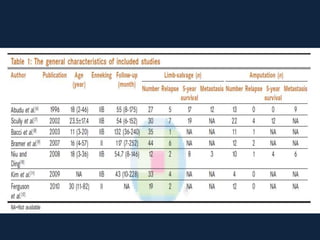
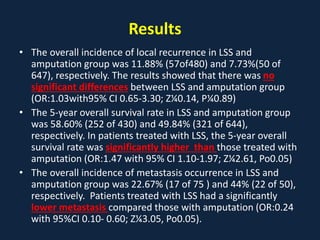
• The overall incidence of local recurrence in LSS and
amputation group was 11.88% (57of480) and 7.73%(50 of
647), respectively. The results showed that there was no
significant differences between LSS and amputation group
(OR:1.03with95% CI 0.65-3.30; Z¼0.14, P¼0.89)
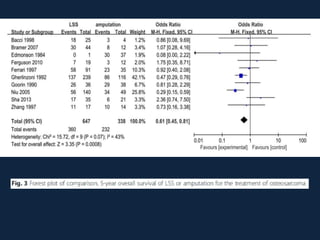
• The 5-year overall survival rate in LSS and amputation group
was 58.60% (252 of 430) and 49.84% (321 of 644),
respectively. In patients treated with LSS, the 5-year overall
survival rate was significantly higher than those treated with
amputation (OR:1.47 with 95% CI 1.10-1.97; Z¼2.61, Po0.05)
• The overall incidence of metastasis occurrence in LSS and
amputation group was 22.67% (17 of 75 ) and 44% (22 of 50),
respectively. Patients treated with LSS had a significantly
lower metastasis compared those with amputation (OR:0.24
with 95%CI 0.10- 0.60; Z¼3.05, Po0.05).
Results
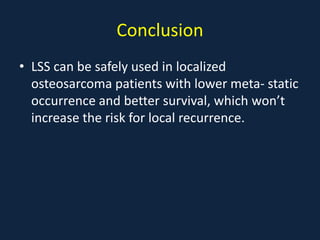
Conclusion
• LSS can be safely used in localized
osteosarcoma patients with lower meta- static
occurrence and better survival, which won’t
increase the risk for local recurrence.
limb salvage therapy

limb salvage therapy

  • 1.
    A meta-analysis ofrandomized control trials of surgical methods with osteosarcoma outcomes Presenter Dr Kundan Department of Surgical oncology Mahavir Cancer Sansthan , Patna
  • 3.
    • Prior toneoadjuvant chemotherapy, amputations and disarticulations were the dominant treatments for osteosarcoma with a 5-year overall survival (OS) rate of only about 20% . • LSS has functional and physiological advantages over traditional amputative procedures when combined with neoadjuvant or adjuvant chemotherapy. • Previous studies have shown that LSS is applicative for localized osteosarcoma, while amputation is suitable for aggressive malignant osteosarcoma • It has been reported that the risk of local recurrence and the 5-year OS rate did not differ significantly between LSS and amputation in osteosarcoma patients with pathological fractures.
  • 4.
    Literature search • MEDLINE,Cochrane, EMBASE, and Google Scholar databases were searched for relevant data till April 30, 2016. • Exclusion standard LSS or amputation groups without a comparison, case series with less than 20 total patients, letters, case reports, editorials, or reviews
  • 7.
    outcome of measurement •Local recurrence • 5-year overall survival rate
  • 9.
    There was nodifference in the local recurrence rate between LSS and amputation (OR = 0.87, 95% CI 0.62–1.37, P = 0.42).
  • 12.
    Results • LSS isbetter than amputation in functional outcomes. • 5- year overall survival rate of patients treated with LSS was higher than those treated with amputation. • There was no difference in the local recurrence rate between LSS and amputation
  • 16.
    Results • No statisticaldifferent of risk for developing relapse between limb-salvage and amputation was found relative risk (RR) =1.40, 95% confidence interval (CI): 0.71–2.79, (P = 0.33). • The 5-year survival rate of patients underwent limb-salvage surgery was smaller than patients received amputation RR = 1.86, 95%CI: 1.19–2.89, (P = 0.01) • The metastasis rate of patients underwent limb-salvage surgery was significant decreased compared with patients received amputation RR = 0.56, 95% CI: 0.34– 0.94, (P = 0.03).
  • 21.
    • The overallincidence of local recurrence in LSS and amputation group was 11.88% (57of480) and 7.73%(50 of 647), respectively. The results showed that there was no significant differences between LSS and amputation group (OR:1.03with95% CI 0.65-3.30; Z¼0.14, P¼0.89) • The 5-year overall survival rate in LSS and amputation group was 58.60% (252 of 430) and 49.84% (321 of 644), respectively. In patients treated with LSS, the 5-year overall survival rate was significantly higher than those treated with amputation (OR:1.47 with 95% CI 1.10-1.97; Z¼2.61, Po0.05) • The overall incidence of metastasis occurrence in LSS and amputation group was 22.67% (17 of 75 ) and 44% (22 of 50), respectively. Patients treated with LSS had a significantly lower metastasis compared those with amputation (OR:0.24 with 95%CI 0.10- 0.60; Z¼3.05, Po0.05). Results
  • 22.
    Conclusion • LSS canbe safely used in localized osteosarcoma patients with lower meta- static occurrence and better survival, which won’t increase the risk for local recurrence.