Karl W. Berger, P.E. 
DCM, Inc. 
Centreville, VA 
IEEE/ASME National Capital Land Transportation Committee 
December 8, 2009
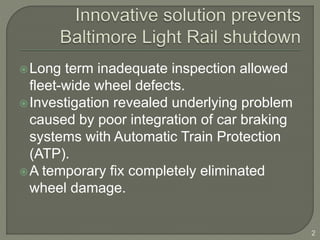
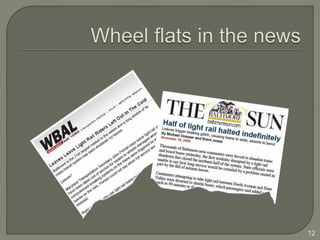
Long term inadequate inspection allowed 
fleet-wide wheel defects. 
Investigation revealed underlying problem 
caused by poor integration of car braking 
systems with Automatic Train Protection 
(ATP). 
A temporary fix completely eliminated 
wheel damage. 
2
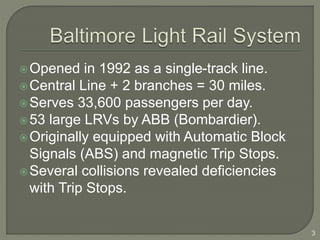
Opened in 1992 as a single-track line. 
Central Line + 2 branches = 30 miles. 
Serves 33,600 passengers per day. 
53 large LRVs by ABB (Bombardier). 
Originally equipped with Automatic Block 
Signals (ABS) and magnetic Trip Stops. 
Several collisions revealed deficiencies 
with Trip Stops. 
3
Progressively upgraded Central Line 
between 2004 and 2006. 
Replaced ABS with Cab Signaling with 
Automatic Train Protection. 
Removed wayside signals and trip stops. 
Reduced headways from 17 minutes to 8 
minutes. 
Improved service reliability. 
4
 Wayside signal system impresses each 
track block with a speed codes. 
 Speed code inductively coupled to lead 
vehicle in train. 
 Operator normally controls train below 
received speed code. 
 Audible alert if operator exceeds speed. 
 Automatic Train Protection applies brakes 
if operator or vehicle fails to respond. 
5
Guaranteed Emergency Brake Rate 
(GEBR) of 1.5mphps (0.67 m/s2) 
implemented with vital systems. 
GEBR achieved with single-point failures 
in braking systems. 
Signal block lengths designed to include 
adjustment for grade and curvature. 
6
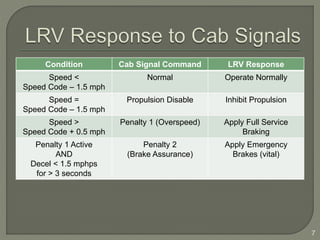
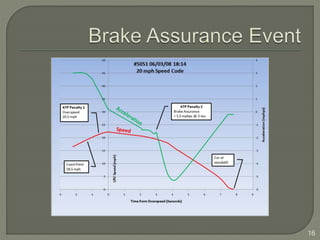
Condition Cab Signal Command LRV Response 
Speed < 
Speed Code – 1.5 mph 
Normal Operate Normally 
Speed = 
Speed Code – 1.5 mph 
Propulsion Disable Inhibit Propulsion 
Speed > 
Speed Code + 0.5 mph 
Penalty 1 (Overspeed) Apply Full Service 
Braking 
Penalty 1 Active 
AND 
Decel < 1.5 mphps 
for > 3 seconds 
Penalty 2 
(Brake Assurance) 
Apply Emergency 
Brakes (vital) 
7
APPROACH8 – Used at interlockings. 
Immediate Penalty 2 Emergency Brake on 
Loss of Speed Code or Overspeed. 
8
Constraints due to nearly obsolete car 
control computer. 
Added redundancy to remove single-point 
failures in friction and track brake systems. 
Added two emergency magnet valves for 
ATP Emergency Brake applications. 
9
April 2008 – broken wheel found on LRV 
prior to entering service. 
Fleet inspection found many wheels with 
excessive damage and flats. 
Investigation started. 
10
The fall leaf season intensified the 
problem. 
Northern half of system shut down in early 
November 2008. 
Only 7 cars operational by mid-November. 
Intensified research into problem and 
solutions. 
11
12
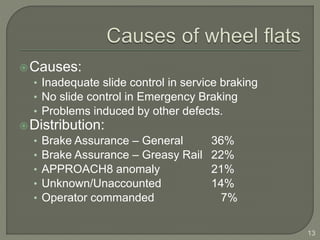
Causes: 
• Inadequate slide control in service braking 
• No slide control in Emergency Braking 
• Problems induced by other defects. 
Distribution: 
• Brake Assurance – General 36% 
• Brake Assurance – Greasy Rail 22% 
• APPROACH8 anomaly 21% 
• Unknown/Unaccounted 14% 
• Operator commanded 7% 
13
Component failures in signal cabins 
caused momentary loss of speed code at 
interlockings. (APPROCH8 Anomaly) 
Excessive grease on curves reduced 
adhesions. 
Accounted for 43% of Emergency Brake 
flats. 
14
Inadequate slide control in service braking 
– typically 0.8 to 1.2 mphps during slide. 
No slide control in Emergency Braking. 
Higher adhesion demand on unpowered 
center trucks. 
Maintenance was not refilling sand boxes. 
15
16
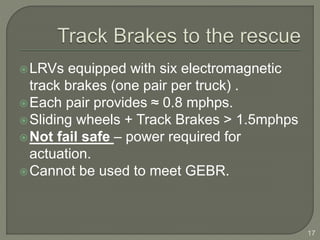
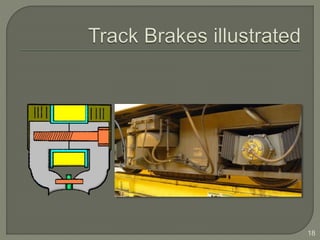
LRVs equipped with six electromagnetic 
track brakes (one pair per truck) . 
Each pair provides ≈ 0.8 mphps. 
Sliding wheels + Track Brakes > 1.5mphps 
Not fail safe – power required for 
actuation. 
Cannot be used to meet GEBR. 
17
18
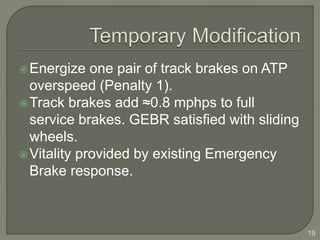
Energize one pair of track brakes on ATP 
overspeed (Penalty 1). 
Track brakes add ≈0.8 mphps to full 
service brakes. GEBR satisfied with sliding 
wheels. 
Vitality provided by existing Emergency 
Brake response. 
19
Added two diodes and an On/Off switch. 
Effectiveness verified by test. 
Vitality of ATP confirmed by Failure Mode 
Effects and Criticality Analysis. 
Entire fleet retrofitted and tested in one 
week. 
Full service over entire system restored by 
the end of November 2008. 
20
21
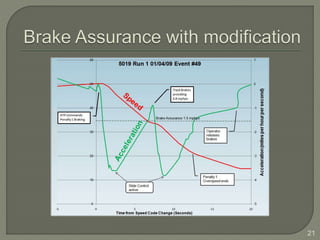
Wheel flatting eliminated. 
Center Truck track brakes shoe life 
reduced to 3 months. 
ATP software modification added 
discrimination and restored acceptable 
shoe life. 
22
Improve dynamic brake slide control. 
Improve friction brake slide control. 
Replace car control computer. 
Improve ATP integration. 
23
24

Light Rail Braking & Automatic Train Protection

  • 1.
    Karl W. Berger,P.E. DCM, Inc. Centreville, VA IEEE/ASME National Capital Land Transportation Committee December 8, 2009
  • 2.
    Long term inadequateinspection allowed fleet-wide wheel defects. Investigation revealed underlying problem caused by poor integration of car braking systems with Automatic Train Protection (ATP). A temporary fix completely eliminated wheel damage. 2
  • 3.
    Opened in 1992as a single-track line. Central Line + 2 branches = 30 miles. Serves 33,600 passengers per day. 53 large LRVs by ABB (Bombardier). Originally equipped with Automatic Block Signals (ABS) and magnetic Trip Stops. Several collisions revealed deficiencies with Trip Stops. 3
  • 4.
    Progressively upgraded CentralLine between 2004 and 2006. Replaced ABS with Cab Signaling with Automatic Train Protection. Removed wayside signals and trip stops. Reduced headways from 17 minutes to 8 minutes. Improved service reliability. 4
  • 5.
     Wayside signalsystem impresses each track block with a speed codes.  Speed code inductively coupled to lead vehicle in train.  Operator normally controls train below received speed code.  Audible alert if operator exceeds speed.  Automatic Train Protection applies brakes if operator or vehicle fails to respond. 5
  • 6.
    Guaranteed Emergency BrakeRate (GEBR) of 1.5mphps (0.67 m/s2) implemented with vital systems. GEBR achieved with single-point failures in braking systems. Signal block lengths designed to include adjustment for grade and curvature. 6
  • 7.
    Condition Cab SignalCommand LRV Response Speed < Speed Code – 1.5 mph Normal Operate Normally Speed = Speed Code – 1.5 mph Propulsion Disable Inhibit Propulsion Speed > Speed Code + 0.5 mph Penalty 1 (Overspeed) Apply Full Service Braking Penalty 1 Active AND Decel < 1.5 mphps for > 3 seconds Penalty 2 (Brake Assurance) Apply Emergency Brakes (vital) 7
  • 8.
    APPROACH8 – Usedat interlockings. Immediate Penalty 2 Emergency Brake on Loss of Speed Code or Overspeed. 8
  • 9.
    Constraints due tonearly obsolete car control computer. Added redundancy to remove single-point failures in friction and track brake systems. Added two emergency magnet valves for ATP Emergency Brake applications. 9
  • 10.
    April 2008 –broken wheel found on LRV prior to entering service. Fleet inspection found many wheels with excessive damage and flats. Investigation started. 10
  • 11.
    The fall leafseason intensified the problem. Northern half of system shut down in early November 2008. Only 7 cars operational by mid-November. Intensified research into problem and solutions. 11
  • 12.
  • 13.
    Causes: • Inadequateslide control in service braking • No slide control in Emergency Braking • Problems induced by other defects. Distribution: • Brake Assurance – General 36% • Brake Assurance – Greasy Rail 22% • APPROACH8 anomaly 21% • Unknown/Unaccounted 14% • Operator commanded 7% 13
  • 14.
    Component failures insignal cabins caused momentary loss of speed code at interlockings. (APPROCH8 Anomaly) Excessive grease on curves reduced adhesions. Accounted for 43% of Emergency Brake flats. 14
  • 15.
    Inadequate slide controlin service braking – typically 0.8 to 1.2 mphps during slide. No slide control in Emergency Braking. Higher adhesion demand on unpowered center trucks. Maintenance was not refilling sand boxes. 15
  • 16.
  • 17.
    LRVs equipped withsix electromagnetic track brakes (one pair per truck) . Each pair provides ≈ 0.8 mphps. Sliding wheels + Track Brakes > 1.5mphps Not fail safe – power required for actuation. Cannot be used to meet GEBR. 17
  • 18.
  • 19.
    Energize one pairof track brakes on ATP overspeed (Penalty 1). Track brakes add ≈0.8 mphps to full service brakes. GEBR satisfied with sliding wheels. Vitality provided by existing Emergency Brake response. 19
  • 20.
    Added two diodesand an On/Off switch. Effectiveness verified by test. Vitality of ATP confirmed by Failure Mode Effects and Criticality Analysis. Entire fleet retrofitted and tested in one week. Full service over entire system restored by the end of November 2008. 20
  • 21.
  • 22.
    Wheel flatting eliminated. Center Truck track brakes shoe life reduced to 3 months. ATP software modification added discrimination and restored acceptable shoe life. 22
  • 23.
    Improve dynamic brakeslide control. Improve friction brake slide control. Replace car control computer. Improve ATP integration. 23
  • 24.