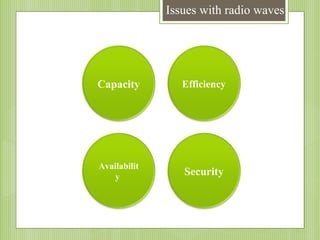
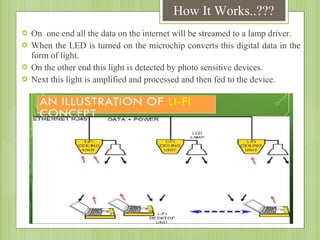
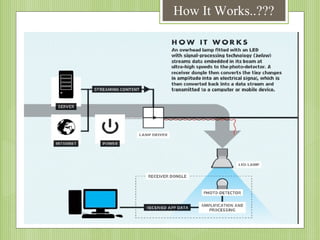
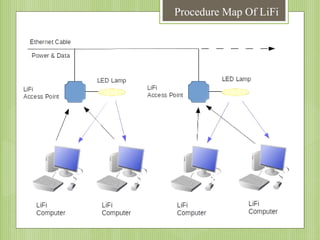
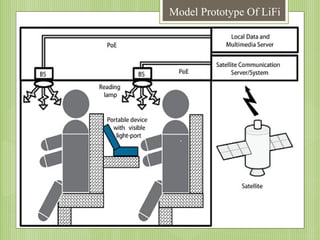
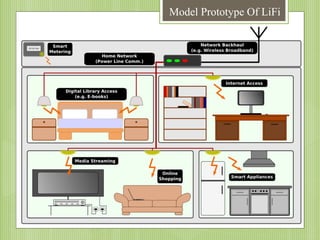
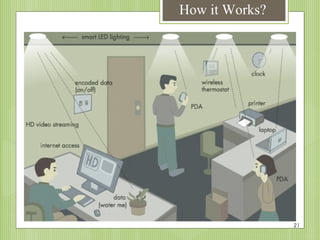
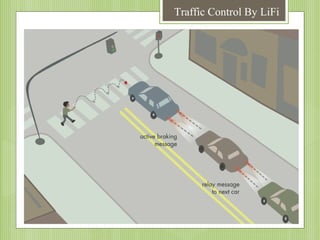
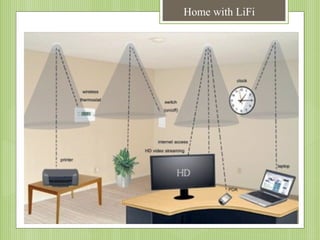
The document discusses the potential for using visible light communication (LiFi) as an alternative to traditional radio frequency wireless communication technologies. It notes that the 1.4 million existing cellular base stations use significant energy with low efficiency, while the radio frequency spectrum is limited and issues like availability and security exist. LiFi uses high-speed pulses of light for wireless transmission and has advantages like large available spectrum, high efficiency when combined with LED lights, availability anywhere light exists, and improved security since light does not pass through walls. While it has limitations like needing line of sight and potential external light interference, it has been proven in demonstrations and could see applications like in hospitals, traffic lights, and aircraft once costs decrease.