Death and Dying 
A Look At Aspects of Death, 
Palliative Care and Grief
Changes in Leading Causes of 
Death in the U. S. 
 Life expectancy has been increased by 
25 years 
 In 1900, infectious diseases killed most 
 In 2000, chronic diseases (heart 
disease, cancer, stroke) are major 
killers
Most Common Causes of 
Death in U. S. 
 Heart disease 
 Malignant neoplasms 
 Cerebrovascular disease 
 Chronic lower respiratory disease 
 Accidents 
 Diabetes Mellitus 
 Alzheimer’s Disease 
 Influenza and Pneumonia
Deadliest Diseases Worldwide 
 Low-income countries 
 Middle-income countries 
 High-income countries 
(WHO, 2004)
Biological Aspects of Death 
 Physiological death-when vital organs 
cease to function 
 Body shuts down 
 Increase sleep 
 Eat less 
 Blood pools 
 Breathing sporadic 
 Clinical death-when brain ceases to 
function
Aspects of Death 
 Social 
 When people stop calling or visiting 
 Even health care professionals do this 
(‘circling the drain’) 
 What to do for those who are dying?
Aspects of Death 
 Psychological 
 When person accepts his or her death and 
begins to withdraw 
 Can occur much sooner than biological 
death
Kubler-Ross: Five Stages of 
Dying 
 Denial 
 Anger 
 Bargaining 
 Depression 
 Acceptance
What is hospice? 
Hospitality, place for travelers, 
home for the sick
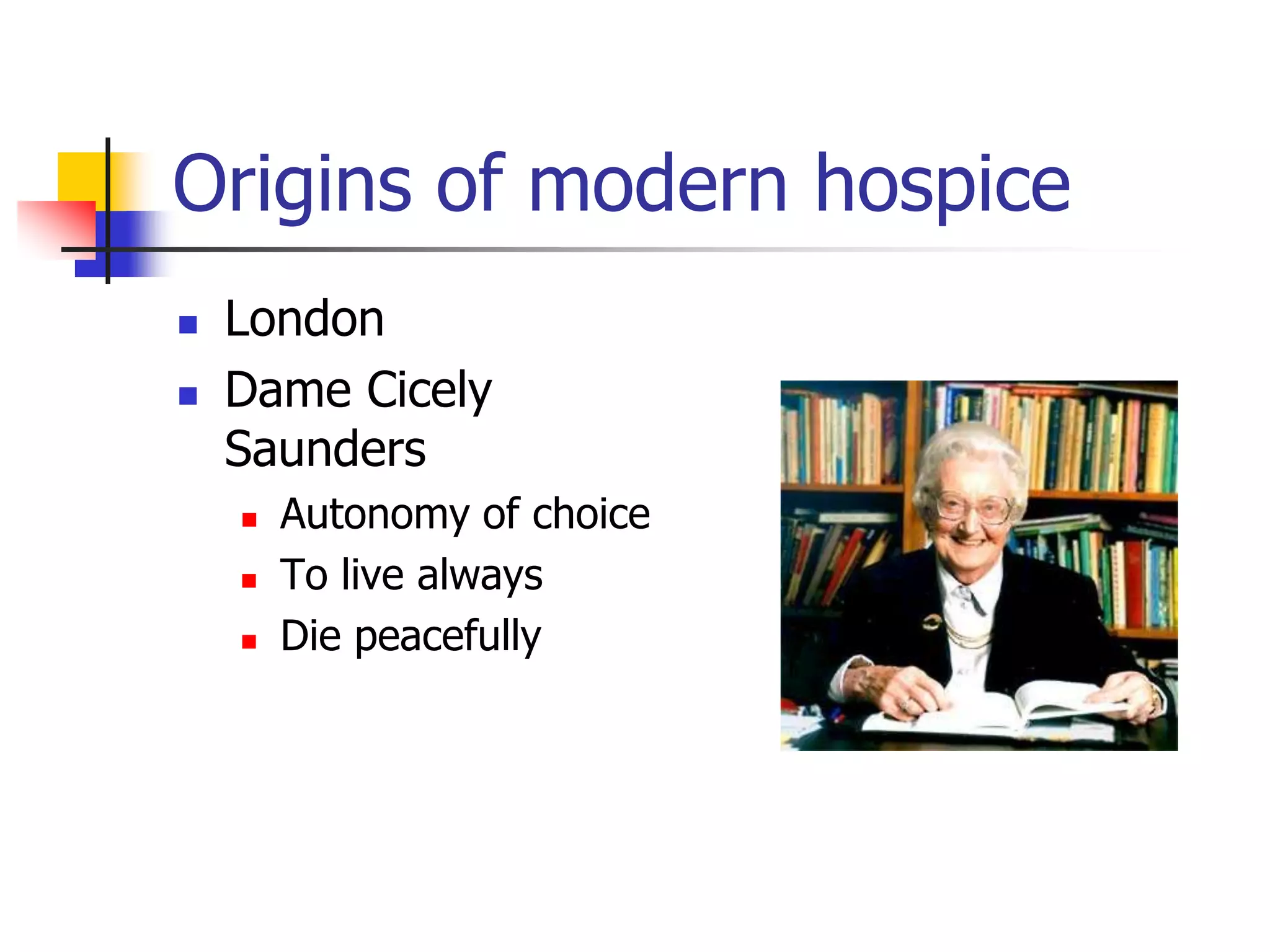
Origins of modern hospice 
 London 
 Dame Cicely 
Saunders 
 Autonomy of choice 
 To live always 
 Die peacefully
Saunders’ 7 Pains 
 Physical 
 Spiritual 
 Intellectual 
 Emotional 
 Interpersonal 
 Financial 
 Bureaucratic
Palliative Care 
 Care for the dying 
 Focus on comfort and pain relief 
 Nausea, shortness of breath 
 Bed sores, pain 
 Double-effect of pain medication 
administration 
 Focus on dying with dignity
Hospice Team 
 RN-total care 
 MSW family/legal 
 Chaplain 
 CNA-bathing, grooming 
 Physician 
 Volunteers 
 (see audio clips at the end of your lesson)
Grief and Loss 
 Grief 
 Anticipatory grief 
 Grief and mixed emotions 
 What to do for those in grief 
 Disenfranchised grief

Lifespan Psychology Module 11 Death and Dying

  • 1.
    Death and Dying A Look At Aspects of Death, Palliative Care and Grief
  • 2.
    Changes in LeadingCauses of Death in the U. S.  Life expectancy has been increased by 25 years  In 1900, infectious diseases killed most  In 2000, chronic diseases (heart disease, cancer, stroke) are major killers
  • 3.
    Most Common Causesof Death in U. S.  Heart disease  Malignant neoplasms  Cerebrovascular disease  Chronic lower respiratory disease  Accidents  Diabetes Mellitus  Alzheimer’s Disease  Influenza and Pneumonia
  • 4.
    Deadliest Diseases Worldwide  Low-income countries  Middle-income countries  High-income countries (WHO, 2004)
  • 5.
    Biological Aspects ofDeath  Physiological death-when vital organs cease to function  Body shuts down  Increase sleep  Eat less  Blood pools  Breathing sporadic  Clinical death-when brain ceases to function
  • 6.
    Aspects of Death  Social  When people stop calling or visiting  Even health care professionals do this (‘circling the drain’)  What to do for those who are dying?
  • 7.
    Aspects of Death  Psychological  When person accepts his or her death and begins to withdraw  Can occur much sooner than biological death
  • 8.
    Kubler-Ross: Five Stagesof Dying  Denial  Anger  Bargaining  Depression  Acceptance
  • 9.
    What is hospice? Hospitality, place for travelers, home for the sick
  • 10.
    Origins of modernhospice  London  Dame Cicely Saunders  Autonomy of choice  To live always  Die peacefully
  • 11.
    Saunders’ 7 Pains  Physical  Spiritual  Intellectual  Emotional  Interpersonal  Financial  Bureaucratic
  • 12.
    Palliative Care Care for the dying  Focus on comfort and pain relief  Nausea, shortness of breath  Bed sores, pain  Double-effect of pain medication administration  Focus on dying with dignity
  • 13.
    Hospice Team RN-total care  MSW family/legal  Chaplain  CNA-bathing, grooming  Physician  Volunteers  (see audio clips at the end of your lesson)
  • 14.
    Grief and Loss  Grief  Anticipatory grief  Grief and mixed emotions  What to do for those in grief  Disenfranchised grief