Downloaded 80 times
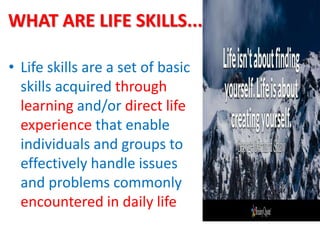
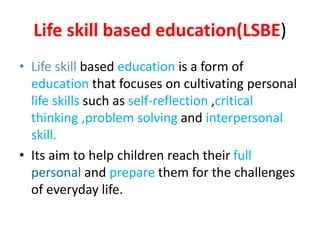
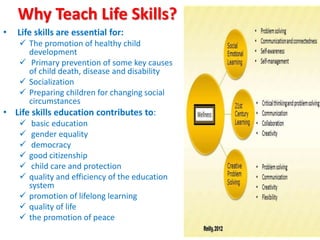
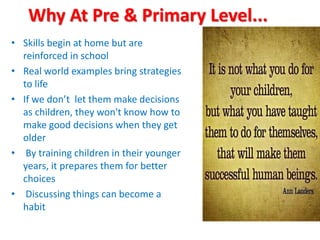
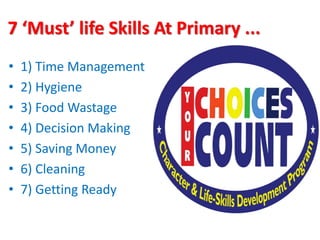
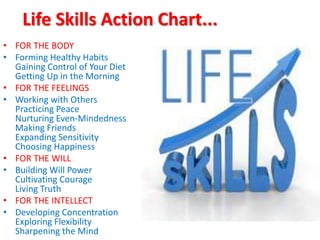
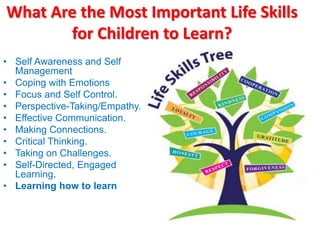


This document discusses life skills education for primary learners. It defines life skills as basic skills acquired through learning and experience that help individuals handle daily problems. Life skills education focuses on developing personal skills like critical thinking, problem solving, and interpersonal skills to help children reach their full potential and prepare for life's challenges. Teaching life skills at a young age is important as it helps promote healthy development, prevent issues, and prepares children for changing social environments. Some key life skills for primary students include time management, hygiene, decision making, and cleaning. The benefits of life skills education include improved health, social, educational, and self outcomes for children.


