
Liferay Module Framework
Why modularity matters

Miguel Ángel Pastor Olivar
A little bit about me
Working at the "infrastructure" side

Cloud computing and distributed systems

Interests in concurrent and distributed programming.
Functional programming advocate!

Scala, OSGI and AspectJ enthusiast. Erlang aficionado

Email: miguel.pastor at liferay dot com

Twitter handler: miguelinlas3
The need for modularity
What does modularity mean?
Systems composed of relatively small self-contained units

Clear interfaces defined between them
The need for modularity
Large systems are extremely complex to develop and
maintain

Highly coupled systems

Cloud computing
   Multiple deployments are co-located

Footprint and performance

Distributed development
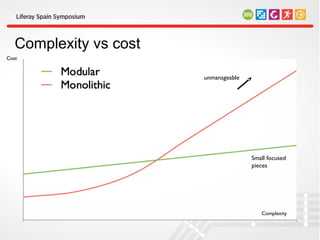
Complexity vs cost
Cost


                        unmanageable


                                       Small focused
                                       pieces


                                          Complexity
What are you looking for?
Modules

Deployment mechanism

Dependency management

Dynamism

Encapsulation

Versioning
Liferay & Modularity
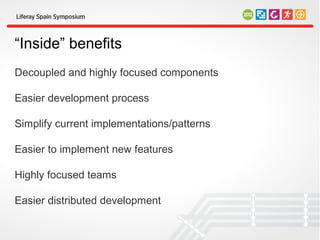
“Inside” benefits
Decoupled and highly focused components

Easier development process

Simplify current implementations/patterns

Easier to implement new features

Highly focused teams

Easier distributed development
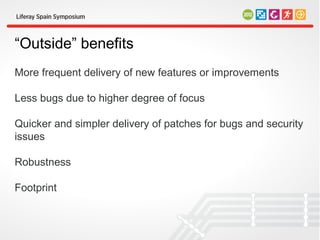
“Outside” benefits
More frequent delivery of new features or improvements

Less bugs due to higher degree of focus

Quicker and simpler delivery of patches for bugs and security
issues

Robustness

Footprint
Becoming real!
OSGI (Open Service Gateway Initiatives) as foundation


Currently in development. Available in 6.2


Let's see some insights!
A quick intro to OSGI
OSGI features/benefits
 Reduce complexity
   Developing bundles

 Dynamism
    Real world is dynamic; deal with it!

 Deployment mechanism
   Determine how components are installed and managed

 Dynamic updates
    Do not bring down the whole system
OSGI features/benefits
 Versioning
    Multiple versions of the same component

 Small and fast
   About 300K jar file

 Non intrusive. Runs everywhere.

 Widely used
    Eclipse, Glassfish, JBoss, Virgo RT, . . .
OSGI architecture

                                  Services

                                               S
                                               e
                                Lifecycle      c
         Bundles                               u
                                               r
                                               i
                                  Modules
                                               t
                                               y


                    Executing environment


                               Java Virtual Machine


                                  Operating system
OSGI architecture
 Bundles
    OSGI components

 Services
    Connecting in a dynamic way. POJOs.

 Life-cycle
     How to install, start, stop, update and uninstall bundles
OSGI architecture
 Modules
   About encapsulating and importing/exporting code

 Security
    All aspects related to security

 Execution environment
    What methods and classes are available
OSGI lifecycle
                                        REFRESH,
                                        UPDATE

            INSTALL


                         INSTALLED
                                                           STARTING
               RESOLVE
                                                   START
                                     REFRESH,
                                     UPDATE


UNINSTALL
                         RESOLVED                           ACTIVE


                                                                 STOP
                              UNINSTALL


                                                           STOPPING

                      UNINSTALLED
Liferay Module Framework
         internals
Main points
 Embedded OSGI framework
   Ideally should be “agnostic”

 HTTP Service implementation

 Backwards compatible

 Enabled by a configuration property
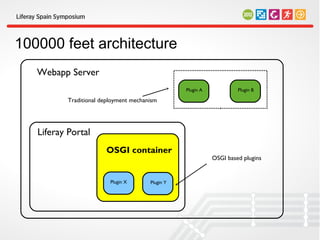
100000 feet architecture
   Webapp Server
                                                   Plugin A            Plugin B

           Traditional deployment mechanism


   Liferay Portal
                        OSGI container
                                                              OSGI based plugins


                          Plugin X      Plugin Y
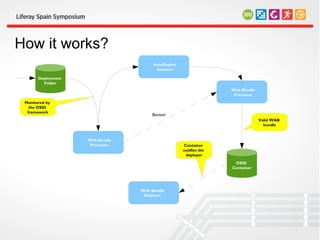
How it works?
                                      AutoDeploy
                                       listeners

       Deployment
         Folder
                                                                  Web Bundle
                                                                   Processor
 Monitored by
   the OSGI
  framework
                                     Blocked
                                                                               Valid WAB
                                                                                 bundle


                    Web Bundle
                     Processor                     Container
                                                   notifies the
                                                    deployer
                                                                   OSGI
                                                                  Container


                                 Web Bundle
                                  Deployer
Leveraging all the power!
 The module admin portlet
Leveraging all the power!
    New kind of plugins
Q&A

Liferay Module Framework

  • 1.
    Liferay Module Framework Whymodularity matters Miguel Ángel Pastor Olivar
  • 2.
    A little bitabout me Working at the "infrastructure" side Cloud computing and distributed systems Interests in concurrent and distributed programming. Functional programming advocate! Scala, OSGI and AspectJ enthusiast. Erlang aficionado Email: miguel.pastor at liferay dot com Twitter handler: miguelinlas3
  • 3.
    The need formodularity
  • 4.
    What does modularitymean? Systems composed of relatively small self-contained units Clear interfaces defined between them
  • 5.
    The need formodularity Large systems are extremely complex to develop and maintain Highly coupled systems Cloud computing Multiple deployments are co-located Footprint and performance Distributed development
  • 6.
    Complexity vs cost Cost unmanageable Small focused pieces Complexity
  • 7.
    What are youlooking for? Modules Deployment mechanism Dependency management Dynamism Encapsulation Versioning
  • 8.
  • 9.
    “Inside” benefits Decoupled andhighly focused components Easier development process Simplify current implementations/patterns Easier to implement new features Highly focused teams Easier distributed development
  • 10.
    “Outside” benefits More frequentdelivery of new features or improvements Less bugs due to higher degree of focus Quicker and simpler delivery of patches for bugs and security issues Robustness Footprint
  • 11.
    Becoming real! OSGI (OpenService Gateway Initiatives) as foundation Currently in development. Available in 6.2 Let's see some insights!
  • 12.
  • 13.
    OSGI features/benefits Reducecomplexity Developing bundles Dynamism Real world is dynamic; deal with it! Deployment mechanism Determine how components are installed and managed Dynamic updates Do not bring down the whole system
  • 14.
    OSGI features/benefits Versioning Multiple versions of the same component Small and fast About 300K jar file Non intrusive. Runs everywhere. Widely used Eclipse, Glassfish, JBoss, Virgo RT, . . .
  • 15.
    OSGI architecture Services S e Lifecycle c Bundles u r i Modules t y Executing environment Java Virtual Machine Operating system
  • 16.
    OSGI architecture Bundles OSGI components Services Connecting in a dynamic way. POJOs. Life-cycle How to install, start, stop, update and uninstall bundles
  • 17.
    OSGI architecture Modules About encapsulating and importing/exporting code Security All aspects related to security Execution environment What methods and classes are available
  • 18.
    OSGI lifecycle REFRESH, UPDATE INSTALL INSTALLED STARTING RESOLVE START REFRESH, UPDATE UNINSTALL RESOLVED ACTIVE STOP UNINSTALL STOPPING UNINSTALLED
  • 19.
  • 20.
    Main points EmbeddedOSGI framework Ideally should be “agnostic” HTTP Service implementation Backwards compatible Enabled by a configuration property
  • 21.
    100000 feet architecture Webapp Server Plugin A Plugin B Traditional deployment mechanism Liferay Portal OSGI container OSGI based plugins Plugin X Plugin Y
  • 22.
    How it works? AutoDeploy listeners Deployment Folder Web Bundle Processor Monitored by the OSGI framework Blocked Valid WAB bundle Web Bundle Processor Container notifies the deployer OSGI Container Web Bundle Deployer
  • 23.
    Leveraging all thepower! The module admin portlet
  • 24.
    Leveraging all thepower! New kind of plugins
  • 25.