Community nutrition project
Presented by:
(2nd year Nutrition and
Dietetics)
Sarah Kfoury ,
Petra Bou Younan ,
Stephanie Nehme.
1
OutlineIntroduction
Body
1. Balanced diet( source of nutrients and their recommended values)
2. Supplements
3. Benefits of healthy weight gain
4. Risk of disease
5. Benefits of physical activity
6. Physical status during pregnancy
7. Food safety and food-borne illness
Conclusion
Questions??
2
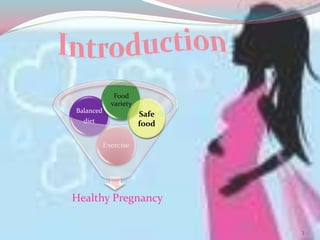
Healthy Pregnancy
Exercise
Balanced
diet
Food
variety
Safe
food
3
4
5
6
7
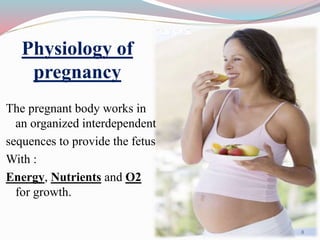
Physiology of
pregnancy
The pregnant body works in
an organized interdependent
sequences to provide the fetus
With :
Energy, Nutrients and O2
for growth.
8
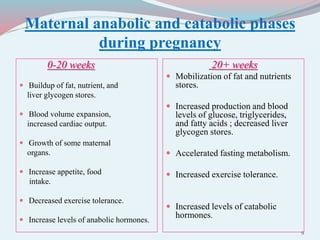
Maternal anabolic and catabolic phases
during pregnancy
0-20 weeks
 Buildup of fat, nutrient, and
liver glycogen stores.

 Blood volume expansion,
increased cardiac output.
 Growth of some maternal
organs.
 Increase appetite, food
intake.
 Decreased exercise tolerance.
 Increase levels of anabolic hormones.
20+ weeks
 Mobilization of fat and nutrients
stores.
 Increased production and blood
levels of glucose, triglycerides,
and fatty acids ; decreased liver
glycogen stores.
 Accelerated fasting metabolism.
 Increased exercise tolerance.
 Increased levels of catabolic
hormones.
9
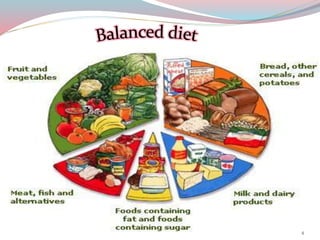
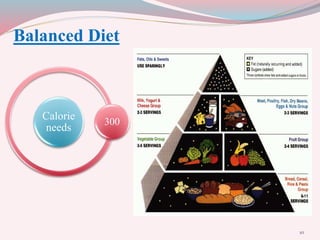
Balanced Diet
Calorie
needs
300
10
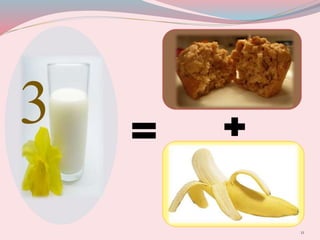
3
11
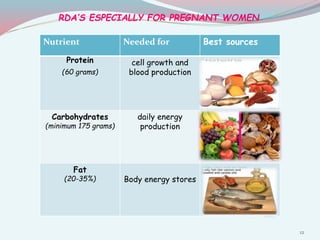
Nutrient Needed for Best sources
Protein
(60 grams)
cell growth and
blood production
Carbohydrates
(minimum 175 grams)
daily energy
production
Fat
(20-35%) Body energy stores
RDA’S ESPECIALLY FOR PREGNANT WOMEN
12
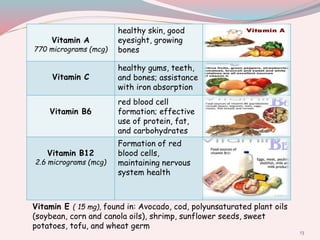
Vitamin A
770 micrograms (mcg)
healthy skin, good
eyesight, growing
bones
Vitamin C
healthy gums, teeth,
and bones; assistance
with iron absorption
Vitamin B6
red blood cell
formation; effective
use of protein, fat,
and carbohydrates
Vitamin B12
2.6 micrograms (mcg)
Formation of red
blood cells,
maintaining nervous
system health
Vitamin E ( 15 mg), found in: Avocado, cod, polyunsaturated plant oils
(soybean, corn and canola oils), shrimp, sunflower seeds, sweet
potatoes, tofu, and wheat germ
13
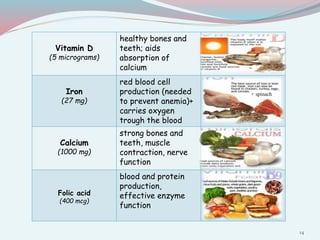
Vitamin D
(5 micrograms)
healthy bones and
teeth; aids
absorption of
calcium
Iron
(27 mg)
red blood cell
production (needed
to prevent anemia)+
carries oxygen
trough the blood
Calcium
(1000 mg)
strong bones and
teeth, muscle
contraction, nerve
function
milk, cheese, yogurt,
sardines or salmon
with bones, spinach
Folic acid
(400 mcg)
blood and protein
production,
effective enzyme
function
14
+ spinach
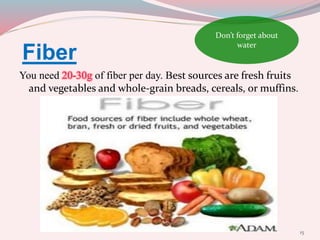
Fiber
You need 20-30g of fiber per day. Best sources are fresh fruits
and vegetables and whole-grain breads, cereals, or muffins.
15
Don’t forget about
water
Caffeine
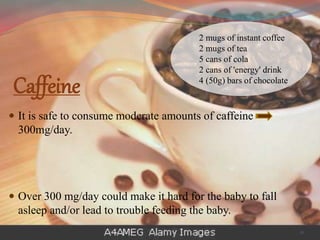
 It is safe to consume moderate amounts of caffeine
300mg/day.
 Over 300 mg/day could make it hard for the baby to fall
asleep and/or lead to trouble feeding the baby.
2 mugs of instant coffee
2 mugs of tea
5 cans of cola
2 cans of 'energy' drink
4 (50g) bars of chocolate
16
SODIUM
 It’s a natural part of fluids in the human body, and is
found in blood and sweat.
 The Institute of Medicine recommends no more than
1,500 mg of sodium per day (3,800 mg of salt).
17
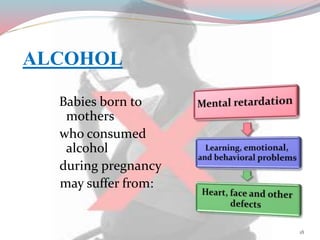
ALCOHOL
Babies born to
mothers
who consumed
alcohol
during pregnancy
may suffer from:
18
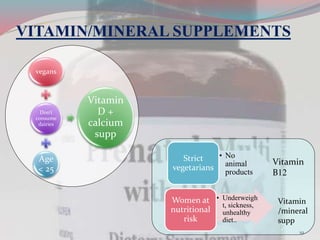
VITAMIN/MINERAL SUPPLEMENTS
vegans
Don’t
consume
dairies
Age
< 25
Vitamin
D +
calcium
supp
• No
animal
products
Strict
vegetarians
• Underweigh
t, sickness,
unhealthy
diet..
Women at
nutritional
risk
Vitamin
B12
Vitamin
/mineral
supp
19
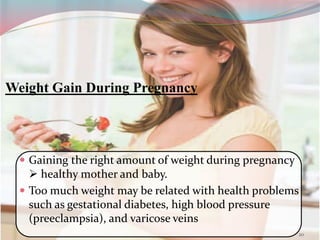
Weight Gain During Pregnancy
 Gaining the right amount of weight during pregnancy
 healthy mother and baby.
 Too much weight may be related with health problems
such as gestational diabetes, high blood pressure
(preeclampsia), and varicose veins
20
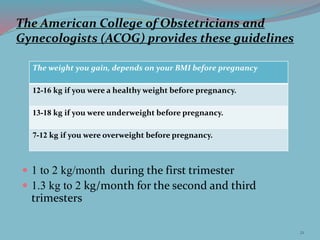
The American College of Obstetricians and
Gynecologists (ACOG) provides these guidelines
 1 to 2 kg/month during the first trimester
 1.3 kg to 2 kg/month for the second and third
trimesters
The weight you gain, depends on your BMI before pregnancy
12-16 kg if you were a healthy weight before pregnancy.
13-18 kg if you were underweight before pregnancy.
7-12 kg if you were overweight before pregnancy.
21
22
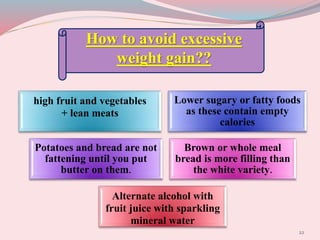
How to avoid excessive
weight gain??
high fruit and vegetables
+ lean meats
Lower sugary or fatty foods
as these contain empty
calories
Potatoes and bread are not
fattening until you put
butter on them.
Brown or whole meal
bread is more filling than
the white variety.
Alternate alcohol with
fruit juice with sparkling
mineral water
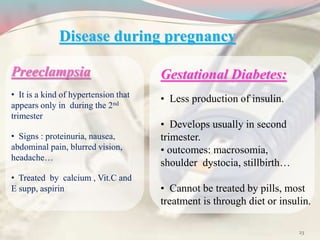
Disease during pregnancy
Gestational Diabetes:
• Less production of insulin.
• Develops usually in second
trimester.
• outcomes: macrosomia,
shoulder dystocia, stillbirth…
• Cannot be treated by pills, most
treatment is through diet or insulin.
Preeclampsia
• It is a kind of hypertension that
appears only in during the 2nd
trimester
• Signs : proteinuria, nausea,
abdominal pain, blurred vision,
headache…
• Treated by calcium , Vit.C and
E supp, aspirin
23
Low birth weight
Caused by:
 poor nutrition
 substance use (cigarettes, alcohol, drugs).
 sexually transmitted disease ,other contagious diseases or no pre-
natal care.
Health risks:
 respiratory infections
 Blindness
 learning disabilities
 heart infections.
 Cerebral defect
24
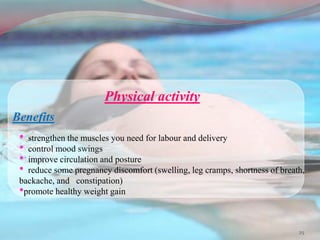
Benefits
• strengthen the muscles you need for labour and delivery
• control mood swings
• improve circulation and posture
• reduce some pregnancy discomfort (swelling, leg cramps, shortness of breath,
backache, and constipation)
•promote healthy weight gain
Physical activity
25
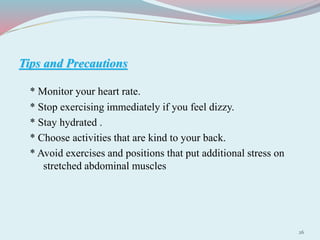
Tips and Precautions
* Monitor your heart rate.
* Stop exercising immediately if you feel dizzy.
* Stay hydrated .
* Choose activities that are kind to your back.
* Avoid exercises and positions that put additional stress on
stretched abdominal muscles
26
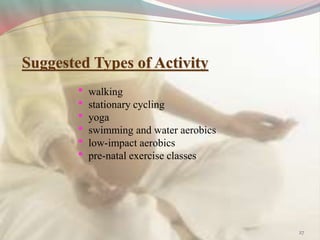
• walking
• stationary cycling
• yoga
• swimming and water aerobics
• low-impact aerobics
• pre-natal exercise classes
Suggested Types of Activity
27
Activity to avoid
 Involve bouncing/balancing/single-leg standing
- May result in a loss of balance or falling
 Involve excessive bouncing or jarring movement
- Cause your body temperature to rise dramatically
 In line skating and water skiing
28
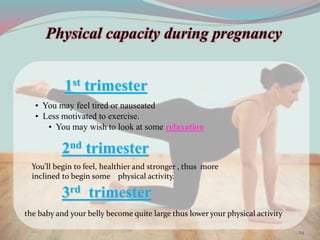
• You may feel tired or nauseated
• Less motivated to exercise.
• You may wish to look at some relaxation
1st trimester
You’ll begin to feel, healthier and stronger , thus more
inclined to begin some physical activity.
the baby and your belly become quite large thus lower your physical activity
2nd trimester
3rd trimester
Physical capacity during pregnancy
29
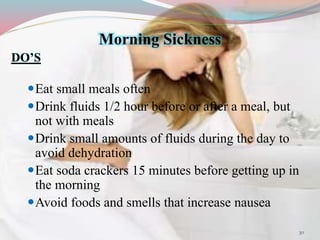
Morning Sickness
DO’S
Eat small meals often
Drink fluids 1/2 hour before or after a meal, but
not with meals
Drink small amounts of fluids during the day to
avoid dehydration
Eat soda crackers 15 minutes before getting up in
the morning
Avoid foods and smells that increase nausea
30
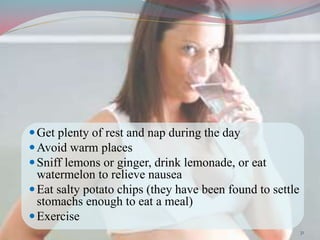
Get plenty of rest and nap during the day
Avoid warm places
Sniff lemons or ginger, drink lemonade, or eat
watermelon to relieve nausea
Eat salty potato chips (they have been found to settle
stomachs enough to eat a meal)
Exercise
31
Don'ts:
 Do not lie down after eating
 Do not skip meals
 Do not cook or eat spicy food
32
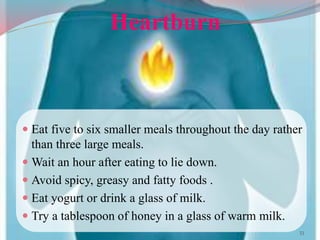
Heartburn
 Eat five to six smaller meals throughout the day rather
than three large meals.
 Wait an hour after eating to lie down.
 Avoid spicy, greasy and fatty foods .
 Eat yogurt or drink a glass of milk.
 Try a tablespoon of honey in a glass of warm milk.
33
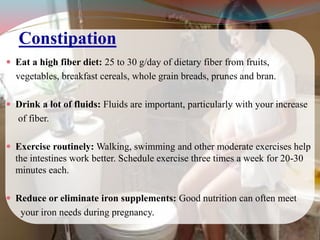
Constipation
 Eat a high fiber diet: 25 to 30 g/day of dietary fiber from fruits,
vegetables, breakfast cereals, whole grain breads, prunes and bran.
 Drink a lot of fluids: Fluids are important, particularly with your increase
of fiber.
 Exercise routinely: Walking, swimming and other moderate exercises help
the intestines work better. Schedule exercise three times a week for 20-30
minutes each.
 Reduce or eliminate iron supplements: Good nutrition can often meet
your iron needs during pregnancy.
34
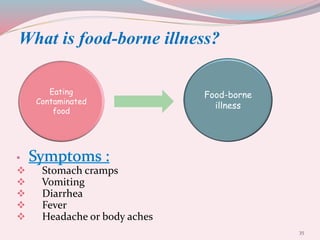
What is food-borne illness?
• Symptoms :
 Stomach cramps
 Vomiting
 Diarrhea
 Fever
 Headache or body aches
Eating
Contaminated
food
Food-borne
illness
35
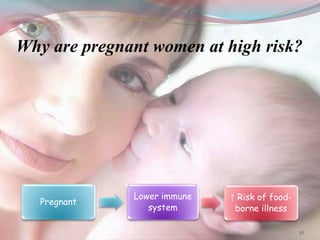
Why are pregnant women at high risk?
Pregnant
Lower immune
system
↑ Risk of food-
borne illness
36
37
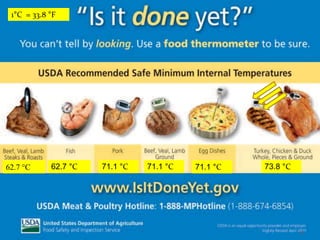
1°C = 33.8 °F
62.7 °C 62.7 °C 71.1 °C 71.1 °C 71.1 °C 73.8 °C
38
39
40
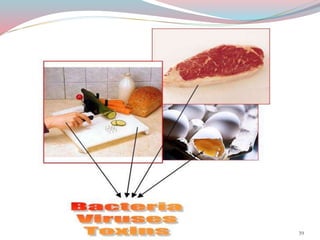
Food-borne Risks for Pregnant Women
As a mom-to-be, there are 4 specific food-
borne risks that you need to be aware of.
These risks can cause serious illness or
death to you or your unborn child.
41
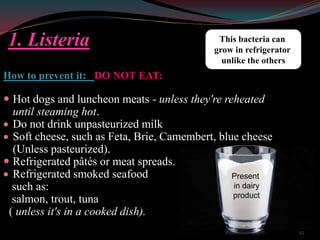
1. Listeria
How to prevent it: DO NOT EAT:
 Hot dogs and luncheon meats - unless they're reheated
until steaming hot.
 Do not drink unpasteurized milk
 Soft cheese, such as Feta, Brie, Camembert, blue cheese
(Unless pasteurized).
 Refrigerated pâtés or meat spreads.
 Refrigerated smoked seafood
such as:
salmon, trout, tuna
( unless it's in a cooked dish).
This bacteria can
grow in refrigerator
unlike the others
Present
in dairy
product
42
2. Methylmercury
Found in:
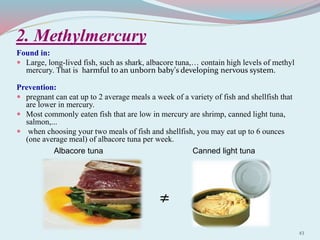
 Large, long-lived fish, such as shark, albacore tuna,… contain high levels of methyl
mercury. That is harmful to an unborn baby's developing nervous system.
Prevention:
 pregnant can eat up to 2 average meals a week of a variety of fish and shellfish that
are lower in mercury.
 Most commonly eaten fish that are low in mercury are shrimp, canned light tuna,
salmon,...
 when choosing your two meals of fish and shellfish, you may eat up to 6 ounces
(one average meal) of albacore tuna per week.
≠
Albacore tuna Canned light tuna
43
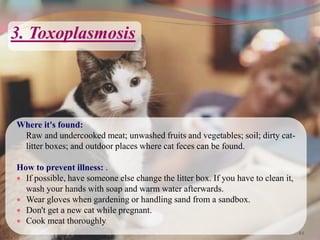
3. Toxoplasmosis
Where it's found:
Raw and undercooked meat; unwashed fruits and vegetables; soil; dirty cat-
litter boxes; and outdoor places where cat feces can be found.
How to prevent illness: .
 If possible, have someone else change the litter box. If you have to clean it,
wash your hands with soap and warm water afterwards.
 Wear gloves when gardening or handling sand from a sandbox.
 Don't get a new cat while pregnant.
 Cook meat thoroughly
44
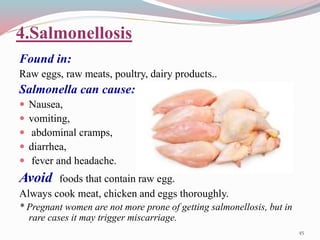
4.Salmonellosis
Found in:
Raw eggs, raw meats, poultry, dairy products..
Salmonella can cause:
 Nausea,
 vomiting,
 abdominal cramps,
 diarrhea,
 fever and headache.
Avoid foods that contain raw egg.
Always cook meat, chicken and eggs thoroughly.
* Pregnant women are not more prone of getting salmonellosis, but in
rare cases it may trigger miscarriage.
45
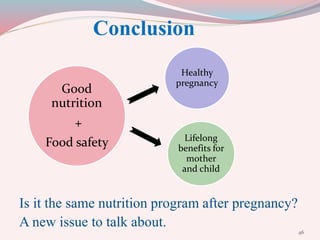
Conclusion
Is it the same nutrition program after pregnancy?
A new issue to talk about.
Good
nutrition
+
Food safety
Healthy
pregnancy
Lifelong
benefits for
mother
and child
46
Questions??
47

final power point pregnancy MODIFIED

  • 1.
    Community nutrition project Presentedby: (2nd year Nutrition and Dietetics) Sarah Kfoury , Petra Bou Younan , Stephanie Nehme. 1
  • 2.
    OutlineIntroduction Body 1. Balanced diet(source of nutrients and their recommended values) 2. Supplements 3. Benefits of healthy weight gain 4. Risk of disease 5. Benefits of physical activity 6. Physical status during pregnancy 7. Food safety and food-borne illness Conclusion Questions?? 2
  • 3.
  • 4.
  • 5.
  • 6.
  • 7.
  • 8.
    Physiology of pregnancy The pregnantbody works in an organized interdependent sequences to provide the fetus With : Energy, Nutrients and O2 for growth. 8
  • 9.
    Maternal anabolic andcatabolic phases during pregnancy 0-20 weeks  Buildup of fat, nutrient, and liver glycogen stores.  Blood volume expansion, increased cardiac output.  Growth of some maternal organs.  Increase appetite, food intake.  Decreased exercise tolerance.  Increase levels of anabolic hormones. 20+ weeks  Mobilization of fat and nutrients stores.  Increased production and blood levels of glucose, triglycerides, and fatty acids ; decreased liver glycogen stores.  Accelerated fasting metabolism.  Increased exercise tolerance.  Increased levels of catabolic hormones. 9
  • 10.
  • 11.
  • 12.
    Nutrient Needed forBest sources Protein (60 grams) cell growth and blood production Carbohydrates (minimum 175 grams) daily energy production Fat (20-35%) Body energy stores RDA’S ESPECIALLY FOR PREGNANT WOMEN 12
  • 13.
    Vitamin A 770 micrograms(mcg) healthy skin, good eyesight, growing bones Vitamin C healthy gums, teeth, and bones; assistance with iron absorption Vitamin B6 red blood cell formation; effective use of protein, fat, and carbohydrates Vitamin B12 2.6 micrograms (mcg) Formation of red blood cells, maintaining nervous system health Vitamin E ( 15 mg), found in: Avocado, cod, polyunsaturated plant oils (soybean, corn and canola oils), shrimp, sunflower seeds, sweet potatoes, tofu, and wheat germ 13
  • 14.
    Vitamin D (5 micrograms) healthybones and teeth; aids absorption of calcium Iron (27 mg) red blood cell production (needed to prevent anemia)+ carries oxygen trough the blood Calcium (1000 mg) strong bones and teeth, muscle contraction, nerve function milk, cheese, yogurt, sardines or salmon with bones, spinach Folic acid (400 mcg) blood and protein production, effective enzyme function 14 + spinach
  • 15.
    Fiber You need 20-30gof fiber per day. Best sources are fresh fruits and vegetables and whole-grain breads, cereals, or muffins. 15 Don’t forget about water
  • 16.
    Caffeine  It issafe to consume moderate amounts of caffeine 300mg/day.  Over 300 mg/day could make it hard for the baby to fall asleep and/or lead to trouble feeding the baby. 2 mugs of instant coffee 2 mugs of tea 5 cans of cola 2 cans of 'energy' drink 4 (50g) bars of chocolate 16
  • 17.
    SODIUM  It’s anatural part of fluids in the human body, and is found in blood and sweat.  The Institute of Medicine recommends no more than 1,500 mg of sodium per day (3,800 mg of salt). 17
  • 18.
    ALCOHOL Babies born to mothers whoconsumed alcohol during pregnancy may suffer from: 18
  • 19.
    VITAMIN/MINERAL SUPPLEMENTS vegans Don’t consume dairies Age < 25 Vitamin D+ calcium supp • No animal products Strict vegetarians • Underweigh t, sickness, unhealthy diet.. Women at nutritional risk Vitamin B12 Vitamin /mineral supp 19
  • 20.
    Weight Gain DuringPregnancy  Gaining the right amount of weight during pregnancy  healthy mother and baby.  Too much weight may be related with health problems such as gestational diabetes, high blood pressure (preeclampsia), and varicose veins 20
  • 21.
    The American Collegeof Obstetricians and Gynecologists (ACOG) provides these guidelines  1 to 2 kg/month during the first trimester  1.3 kg to 2 kg/month for the second and third trimesters The weight you gain, depends on your BMI before pregnancy 12-16 kg if you were a healthy weight before pregnancy. 13-18 kg if you were underweight before pregnancy. 7-12 kg if you were overweight before pregnancy. 21
  • 22.
    22 How to avoidexcessive weight gain?? high fruit and vegetables + lean meats Lower sugary or fatty foods as these contain empty calories Potatoes and bread are not fattening until you put butter on them. Brown or whole meal bread is more filling than the white variety. Alternate alcohol with fruit juice with sparkling mineral water
  • 23.
    Disease during pregnancy GestationalDiabetes: • Less production of insulin. • Develops usually in second trimester. • outcomes: macrosomia, shoulder dystocia, stillbirth… • Cannot be treated by pills, most treatment is through diet or insulin. Preeclampsia • It is a kind of hypertension that appears only in during the 2nd trimester • Signs : proteinuria, nausea, abdominal pain, blurred vision, headache… • Treated by calcium , Vit.C and E supp, aspirin 23
  • 24.
    Low birth weight Causedby:  poor nutrition  substance use (cigarettes, alcohol, drugs).  sexually transmitted disease ,other contagious diseases or no pre- natal care. Health risks:  respiratory infections  Blindness  learning disabilities  heart infections.  Cerebral defect 24
  • 25.
    Benefits • strengthen themuscles you need for labour and delivery • control mood swings • improve circulation and posture • reduce some pregnancy discomfort (swelling, leg cramps, shortness of breath, backache, and constipation) •promote healthy weight gain Physical activity 25
  • 26.
    Tips and Precautions *Monitor your heart rate. * Stop exercising immediately if you feel dizzy. * Stay hydrated . * Choose activities that are kind to your back. * Avoid exercises and positions that put additional stress on stretched abdominal muscles 26
  • 27.
    • walking • stationarycycling • yoga • swimming and water aerobics • low-impact aerobics • pre-natal exercise classes Suggested Types of Activity 27
  • 28.
    Activity to avoid Involve bouncing/balancing/single-leg standing - May result in a loss of balance or falling  Involve excessive bouncing or jarring movement - Cause your body temperature to rise dramatically  In line skating and water skiing 28
  • 29.
    • You mayfeel tired or nauseated • Less motivated to exercise. • You may wish to look at some relaxation 1st trimester You’ll begin to feel, healthier and stronger , thus more inclined to begin some physical activity. the baby and your belly become quite large thus lower your physical activity 2nd trimester 3rd trimester Physical capacity during pregnancy 29
  • 30.
    Morning Sickness DO’S Eat smallmeals often Drink fluids 1/2 hour before or after a meal, but not with meals Drink small amounts of fluids during the day to avoid dehydration Eat soda crackers 15 minutes before getting up in the morning Avoid foods and smells that increase nausea 30
  • 31.
    Get plenty ofrest and nap during the day Avoid warm places Sniff lemons or ginger, drink lemonade, or eat watermelon to relieve nausea Eat salty potato chips (they have been found to settle stomachs enough to eat a meal) Exercise 31
  • 32.
    Don'ts:  Do notlie down after eating  Do not skip meals  Do not cook or eat spicy food 32
  • 33.
    Heartburn  Eat fiveto six smaller meals throughout the day rather than three large meals.  Wait an hour after eating to lie down.  Avoid spicy, greasy and fatty foods .  Eat yogurt or drink a glass of milk.  Try a tablespoon of honey in a glass of warm milk. 33
  • 34.
    Constipation  Eat ahigh fiber diet: 25 to 30 g/day of dietary fiber from fruits, vegetables, breakfast cereals, whole grain breads, prunes and bran.  Drink a lot of fluids: Fluids are important, particularly with your increase of fiber.  Exercise routinely: Walking, swimming and other moderate exercises help the intestines work better. Schedule exercise three times a week for 20-30 minutes each.  Reduce or eliminate iron supplements: Good nutrition can often meet your iron needs during pregnancy. 34
  • 35.
    What is food-borneillness? • Symptoms :  Stomach cramps  Vomiting  Diarrhea  Fever  Headache or body aches Eating Contaminated food Food-borne illness 35
  • 36.
    Why are pregnantwomen at high risk? Pregnant Lower immune system ↑ Risk of food- borne illness 36
  • 37.
  • 38.
    1°C = 33.8°F 62.7 °C 62.7 °C 71.1 °C 71.1 °C 71.1 °C 73.8 °C 38
  • 39.
  • 40.
  • 41.
    Food-borne Risks forPregnant Women As a mom-to-be, there are 4 specific food- borne risks that you need to be aware of. These risks can cause serious illness or death to you or your unborn child. 41
  • 42.
    1. Listeria How toprevent it: DO NOT EAT:  Hot dogs and luncheon meats - unless they're reheated until steaming hot.  Do not drink unpasteurized milk  Soft cheese, such as Feta, Brie, Camembert, blue cheese (Unless pasteurized).  Refrigerated pâtés or meat spreads.  Refrigerated smoked seafood such as: salmon, trout, tuna ( unless it's in a cooked dish). This bacteria can grow in refrigerator unlike the others Present in dairy product 42
  • 43.
    2. Methylmercury Found in: Large, long-lived fish, such as shark, albacore tuna,… contain high levels of methyl mercury. That is harmful to an unborn baby's developing nervous system. Prevention:  pregnant can eat up to 2 average meals a week of a variety of fish and shellfish that are lower in mercury.  Most commonly eaten fish that are low in mercury are shrimp, canned light tuna, salmon,...  when choosing your two meals of fish and shellfish, you may eat up to 6 ounces (one average meal) of albacore tuna per week. ≠ Albacore tuna Canned light tuna 43
  • 44.
    3. Toxoplasmosis Where it'sfound: Raw and undercooked meat; unwashed fruits and vegetables; soil; dirty cat- litter boxes; and outdoor places where cat feces can be found. How to prevent illness: .  If possible, have someone else change the litter box. If you have to clean it, wash your hands with soap and warm water afterwards.  Wear gloves when gardening or handling sand from a sandbox.  Don't get a new cat while pregnant.  Cook meat thoroughly 44
  • 45.
    4.Salmonellosis Found in: Raw eggs,raw meats, poultry, dairy products.. Salmonella can cause:  Nausea,  vomiting,  abdominal cramps,  diarrhea,  fever and headache. Avoid foods that contain raw egg. Always cook meat, chicken and eggs thoroughly. * Pregnant women are not more prone of getting salmonellosis, but in rare cases it may trigger miscarriage. 45
  • 46.
    Conclusion Is it thesame nutrition program after pregnancy? A new issue to talk about. Good nutrition + Food safety Healthy pregnancy Lifelong benefits for mother and child 46
  • 47.