LIBRARY AND ITS
TYPE
PRESENTED BY
O.P PARIHAR
COA GWALIOR
LIBRARY
Library is a collection of books from
various sources and arranged in
systematical order for use of users.
Published books, periodicals, audio-
visual material are available in all
libraries. Libraries is a service
organization.
FATHER OF THE LIBRARY
Dr. Shiyali Ramamrita Ranganathan
is the father of library. He was from
Tamilnadu. He was born in 12 Aug
1892 and death in 27 Sep 1972. He
used colon classification system for
arrange the books in the library.
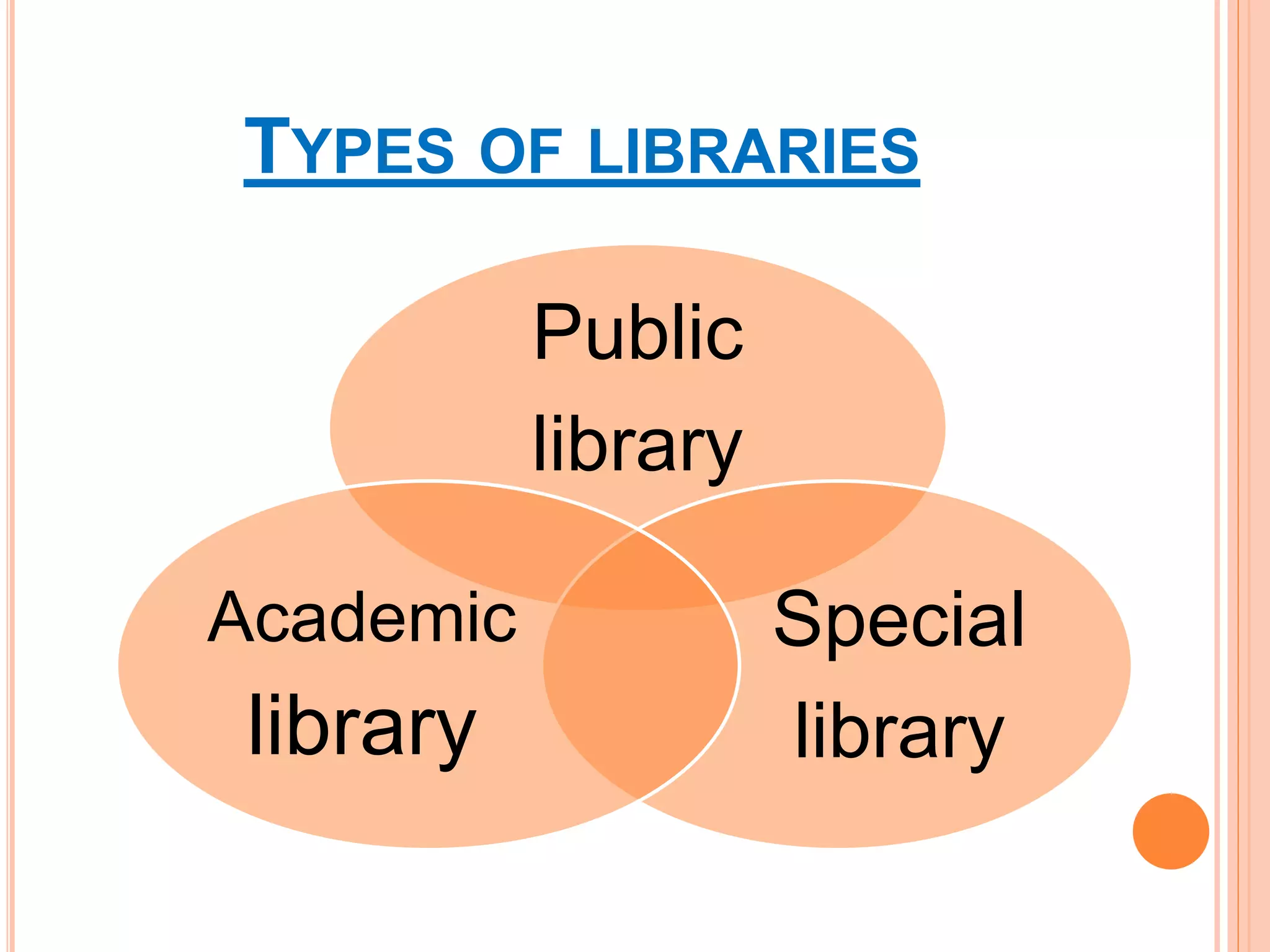
TYPES OF LIBRARIES
Public
library
Special
library
Academic
library
PUBLIC LIBRARY
Public libraries in the real sense
run by public for and of their own.
Public libraries are those which
provide free of cost service to the
people of a particular region. It is
made by people and use by
people . Examples : Delhi Public
Library.
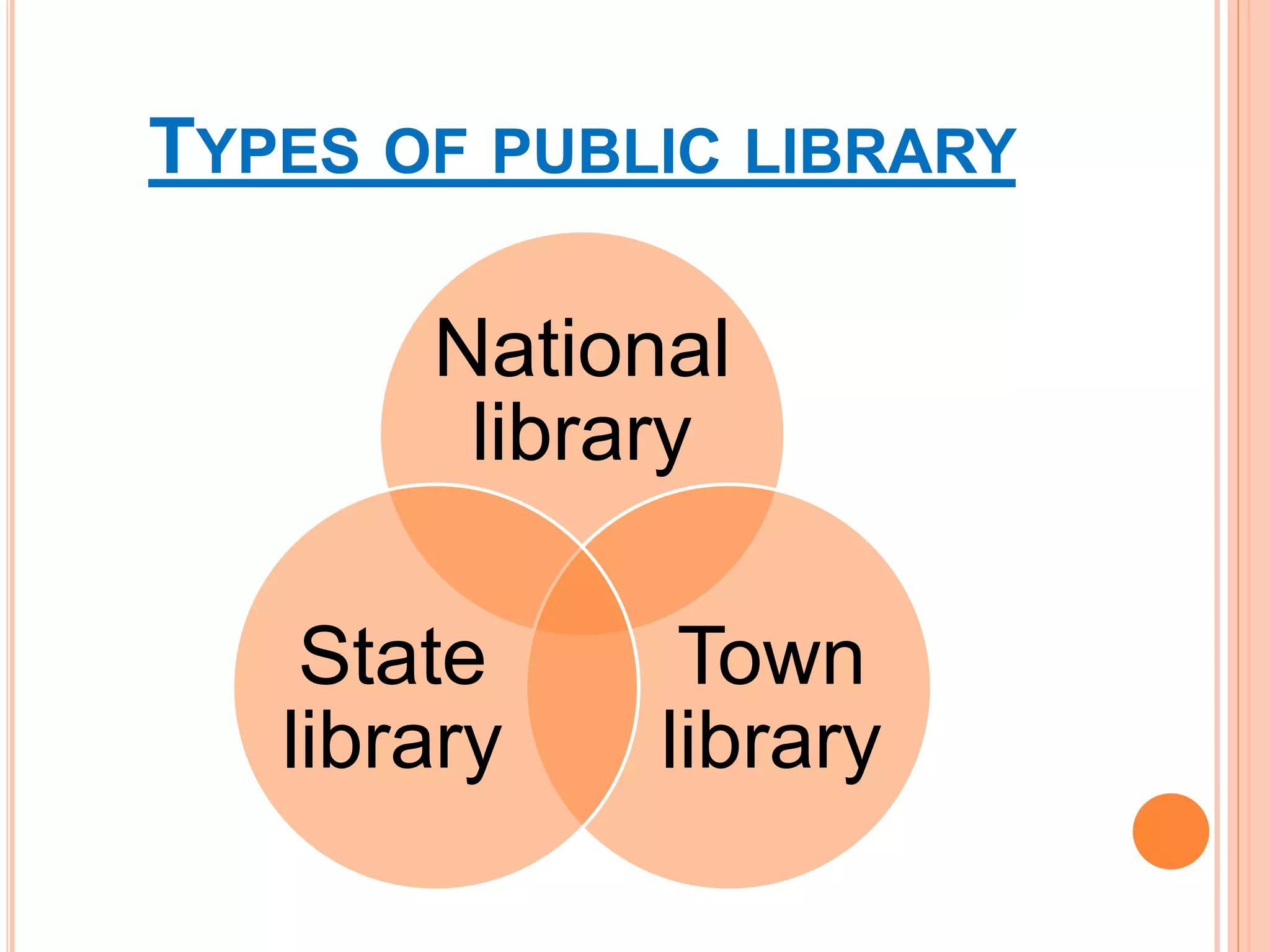
TYPES OF PUBLIC LIBRARY
National
library
Town
library
State
library
ACADEMIC LIBRARY
Academic library is those library
which is available in particular
institution and provide those
reading material which is use in
that library. It is only use for
teachers and students of that
institution.
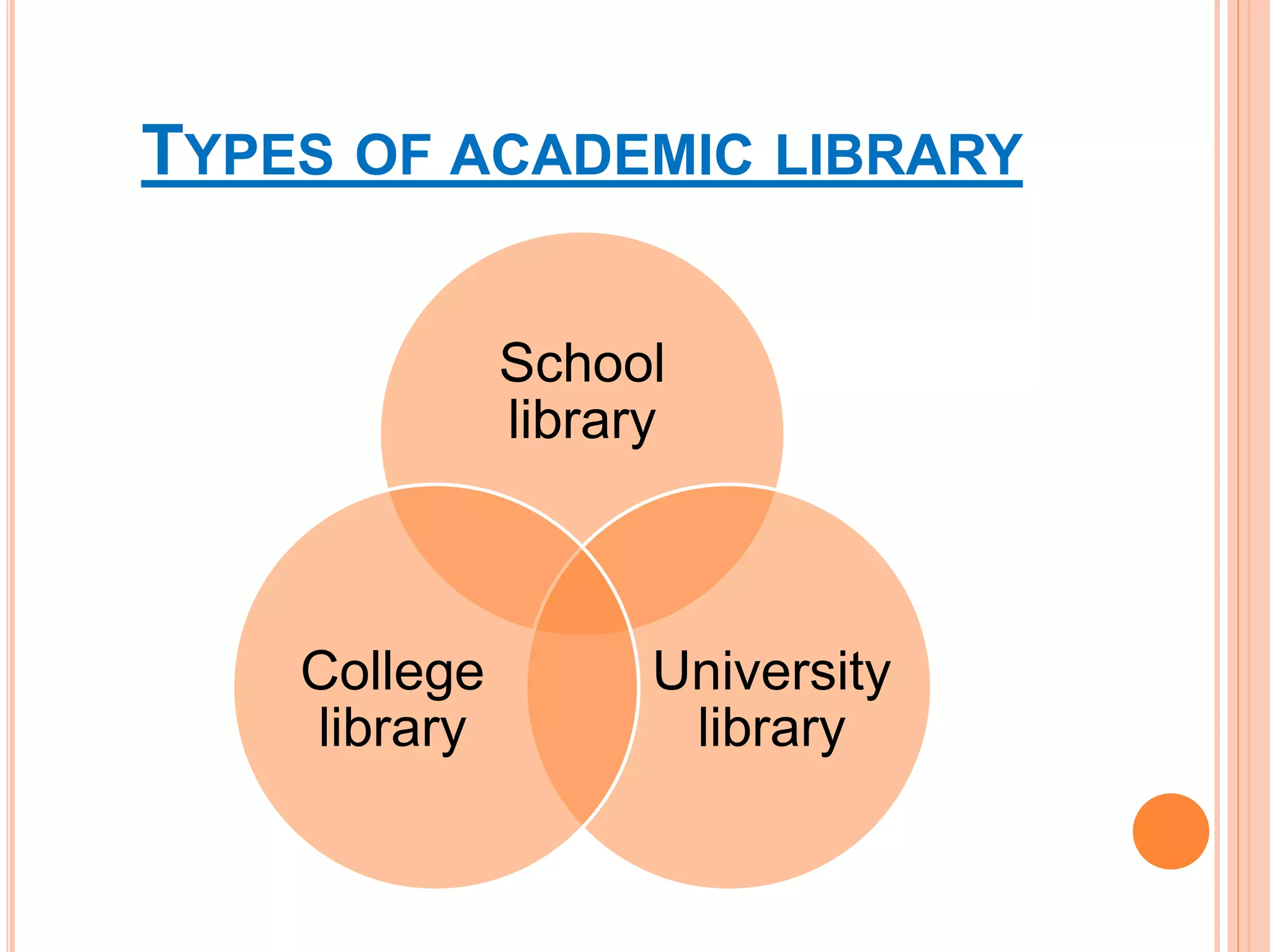
TYPES OF ACADEMIC LIBRARY
School
library
University
library
College
library
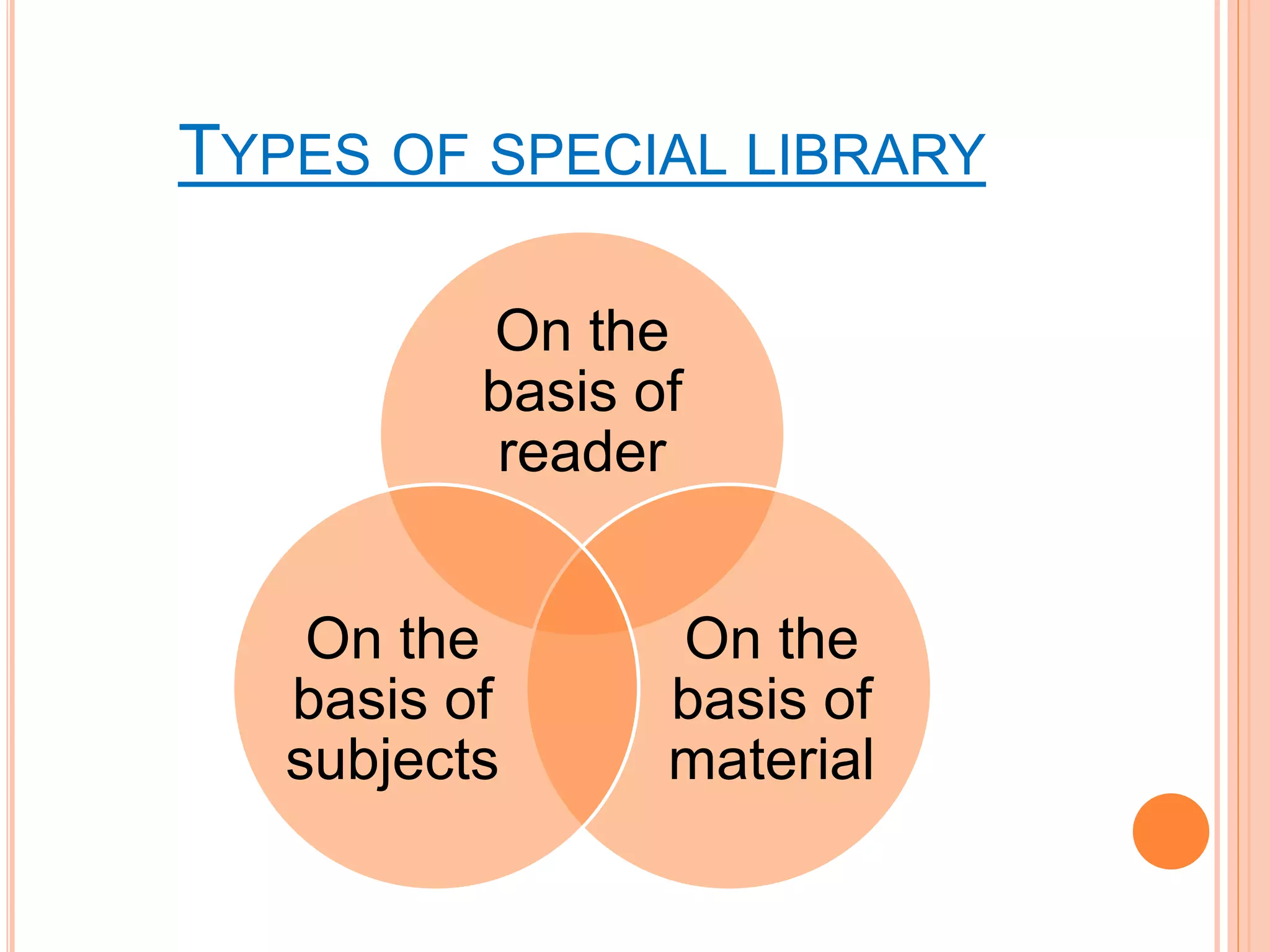
TYPES OF SPECIAL LIBRARY
On the
basis of
reader
On the
basis of
material
On the
basis of
subjects
IMPORTANCE OF LIBRARY
 To built a nation.
 To help in research work.
 To help in personality development.
 To conservation of knowledge &
ideas.
IMPORTANCE OF LIBRARY
 To help in self studies.
 To increase the knowledge.
 To get up-to-date information.
 Proper utilization of time.
 To help in basic education.
 To get any sub or any type of books
from one place.
PRINCIPLES OF LIBRARY
Books are for use.
Every reader his or her book.
Every book its reader.
Save the time of the reader.
Library is a growing organism.
CONCLUSION
At the end, we can think that
library is the most important in
our life. It made us an
educated person. We can get
a lot of information from library.
THANKS

Library types (1)

  • 1.
    LIBRARY AND ITS TYPE PRESENTEDBY O.P PARIHAR COA GWALIOR
  • 2.
    LIBRARY Library is acollection of books from various sources and arranged in systematical order for use of users. Published books, periodicals, audio- visual material are available in all libraries. Libraries is a service organization.
  • 3.
    FATHER OF THELIBRARY Dr. Shiyali Ramamrita Ranganathan is the father of library. He was from Tamilnadu. He was born in 12 Aug 1892 and death in 27 Sep 1972. He used colon classification system for arrange the books in the library.
  • 4.
  • 5.
    PUBLIC LIBRARY Public librariesin the real sense run by public for and of their own. Public libraries are those which provide free of cost service to the people of a particular region. It is made by people and use by people . Examples : Delhi Public Library.
  • 6.
    TYPES OF PUBLICLIBRARY National library Town library State library
  • 7.
    ACADEMIC LIBRARY Academic libraryis those library which is available in particular institution and provide those reading material which is use in that library. It is only use for teachers and students of that institution.
  • 8.
    TYPES OF ACADEMICLIBRARY School library University library College library
  • 9.
    TYPES OF SPECIALLIBRARY On the basis of reader On the basis of material On the basis of subjects
  • 10.
    IMPORTANCE OF LIBRARY To built a nation.  To help in research work.  To help in personality development.  To conservation of knowledge & ideas.
  • 11.
    IMPORTANCE OF LIBRARY To help in self studies.  To increase the knowledge.  To get up-to-date information.  Proper utilization of time.  To help in basic education.  To get any sub or any type of books from one place.
  • 12.
    PRINCIPLES OF LIBRARY Booksare for use. Every reader his or her book. Every book its reader. Save the time of the reader. Library is a growing organism.
  • 13.
    CONCLUSION At the end,we can think that library is the most important in our life. It made us an educated person. We can get a lot of information from library.
  • 14.