KNOW YOUR LIBRARY 
By NehaSinghal, M.philScholar, Dpt. of LIS, DU
A Library is an organized collection of documents with an aim to preserve them and make them available for use to a defined community. (service-oriented) 
The word is derived from the latinword liber, ‘’a book’’. but now in 21stcentury the boundary has expanded and collection is no longer limited to only books. 
It can have: Periodicals,newspapers,manuscripts,films,maps,prints, documents,microform,CDs,cassettes,videotapes,DVDs, Blu-ray Discs,e-books,audiobooks,databases, and other formats.
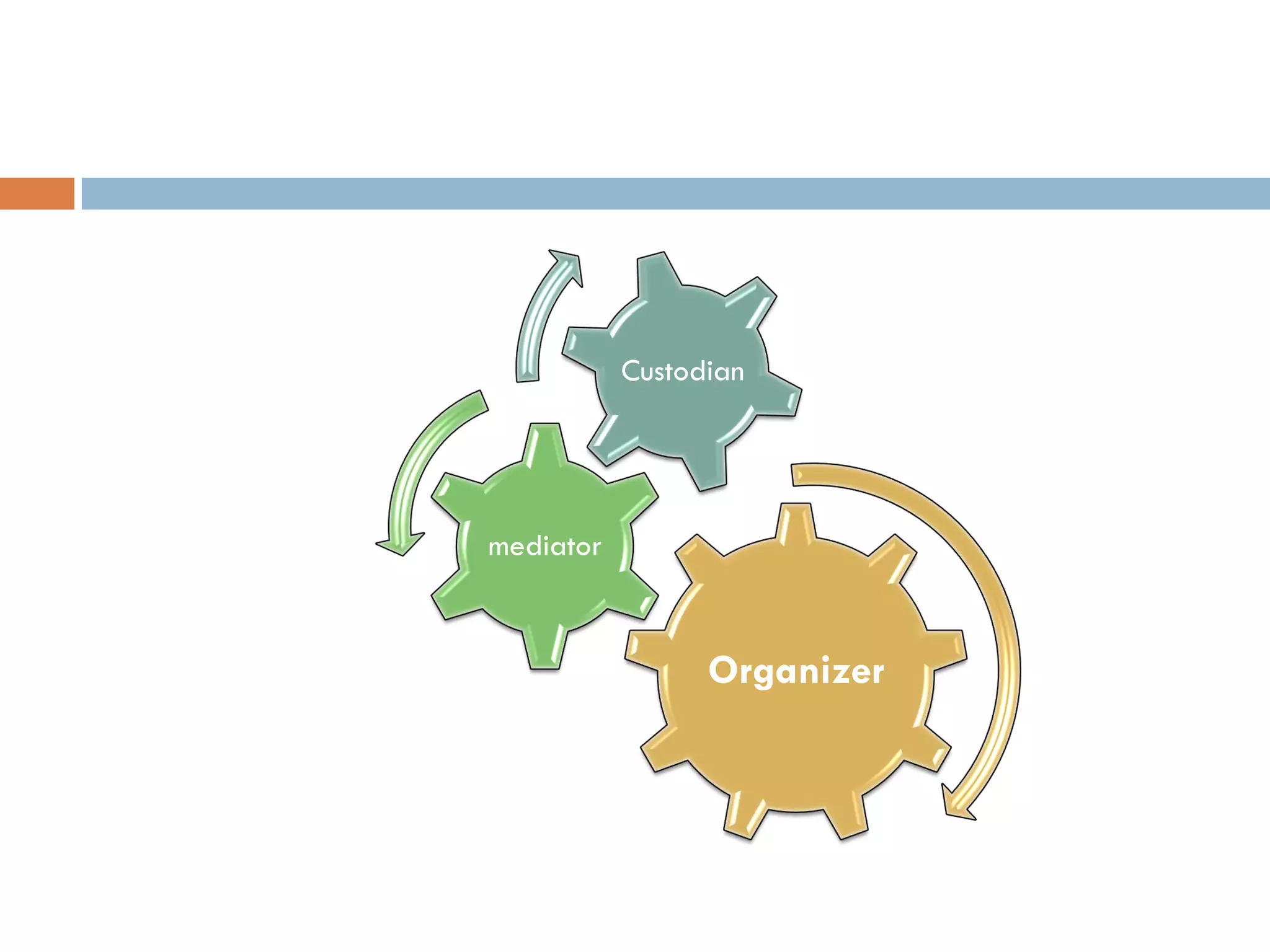
Organizermediator 
Custodian
MULTIPLE ROLES OF LIBRARY: Why to visit libraries? 
Supplements classroom studies 
Self study 
Continuing education 
Research 
Recreation 
Up-to-date information 
Cultural hub 
Preservation of knowledge 
Social agency 
Personality development
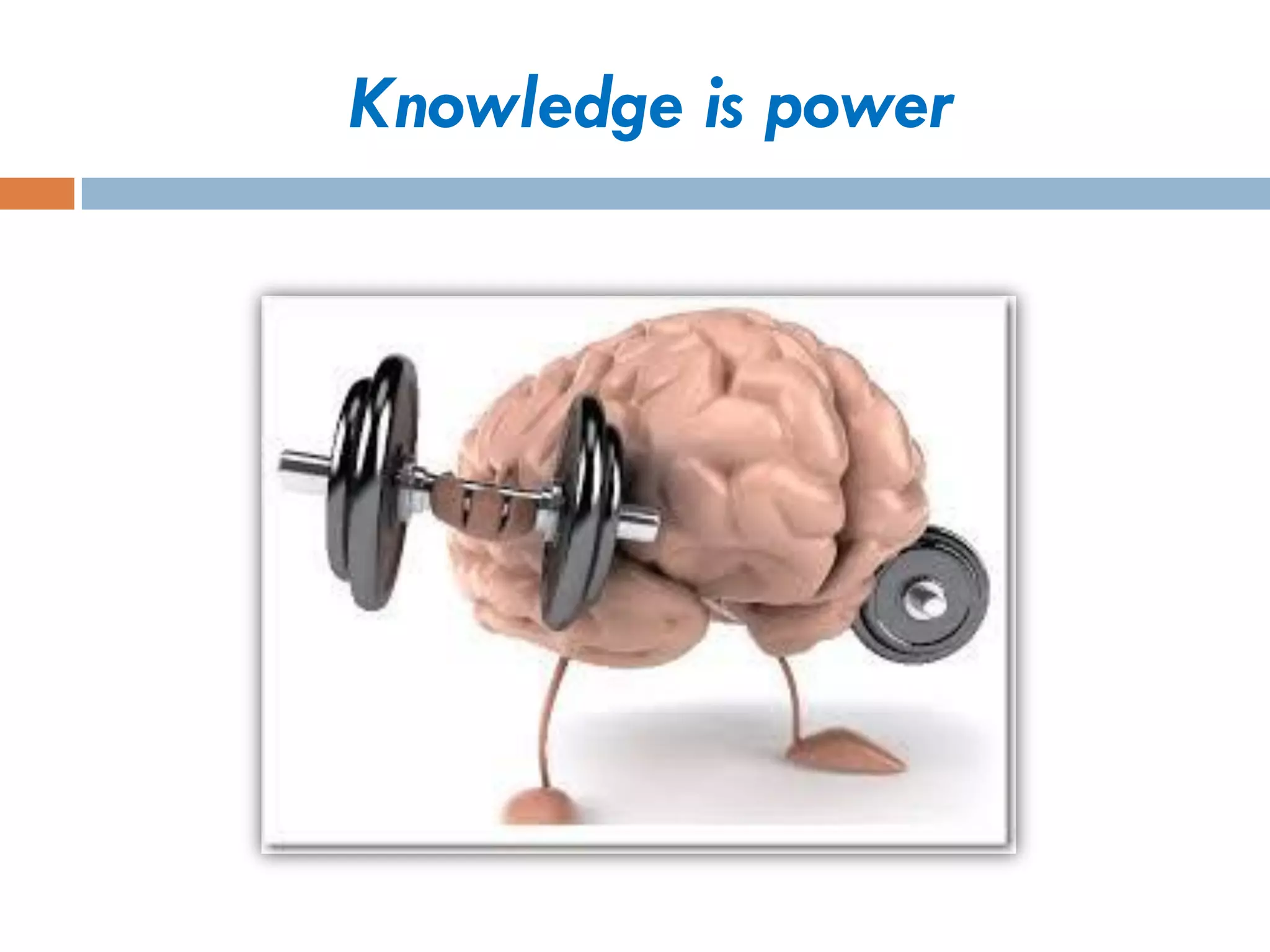
Knowledge is power
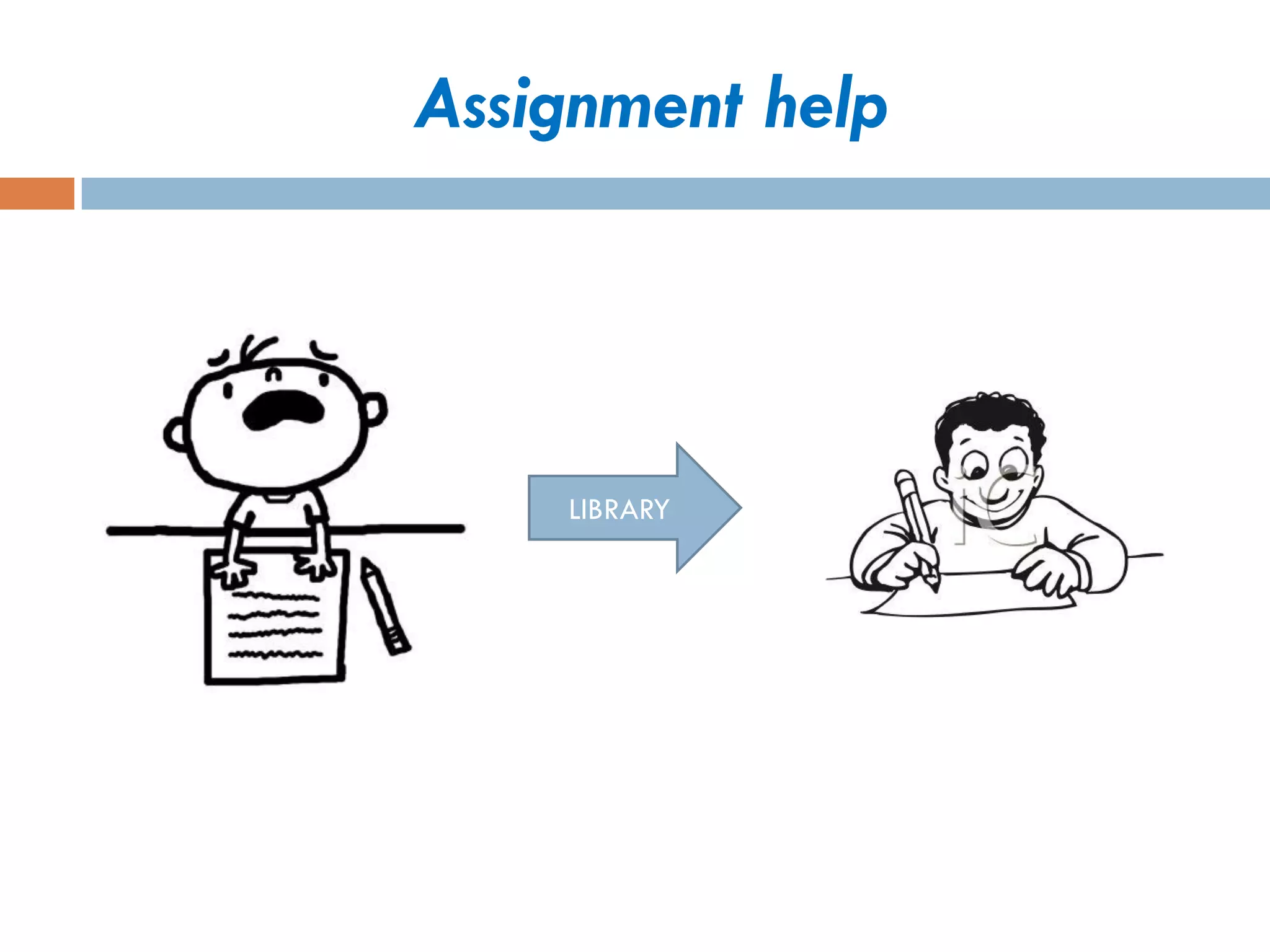
Assignment helpLIBRARY
Self-study
Career and skill development
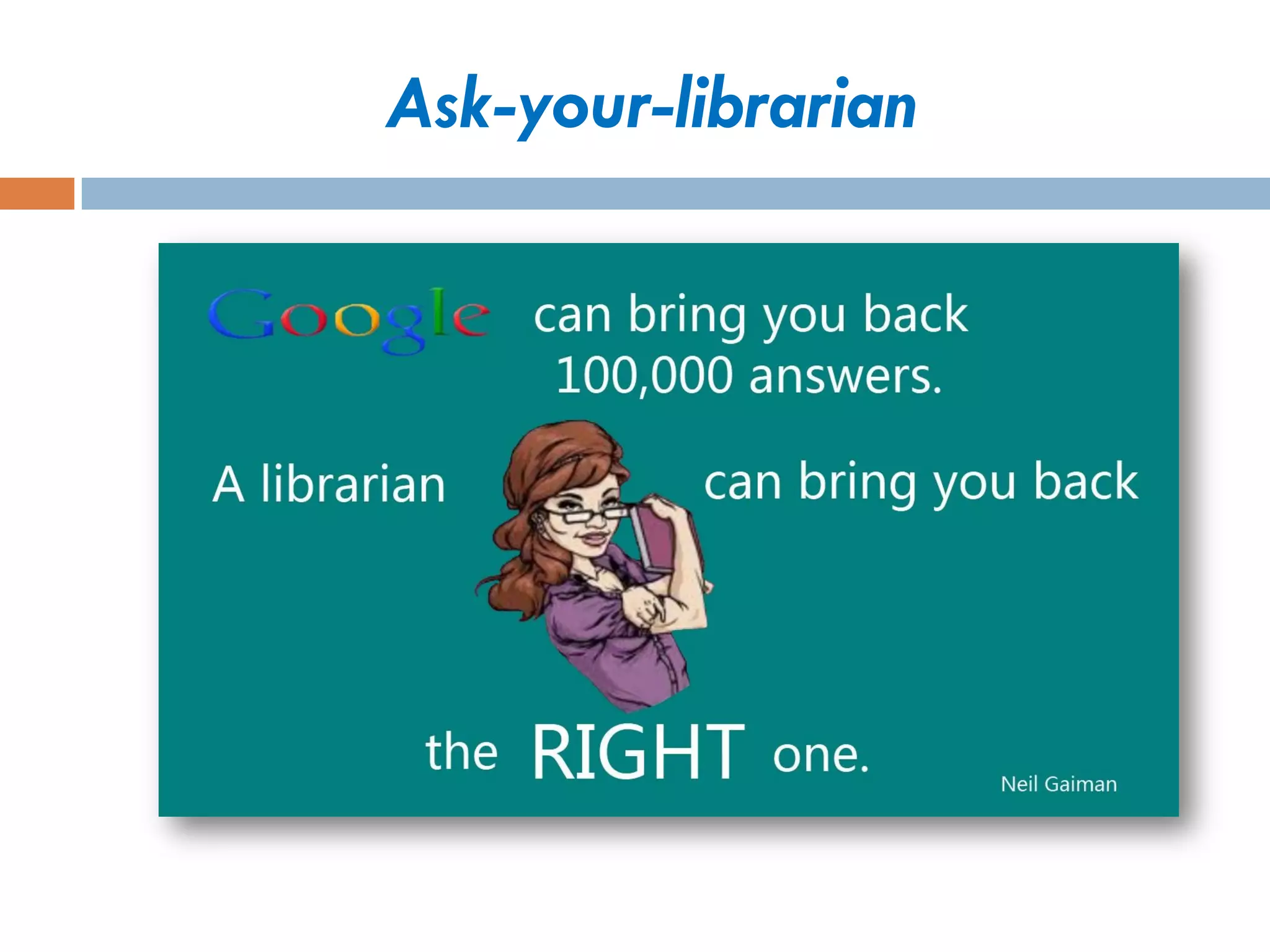
Ask-your-librarian
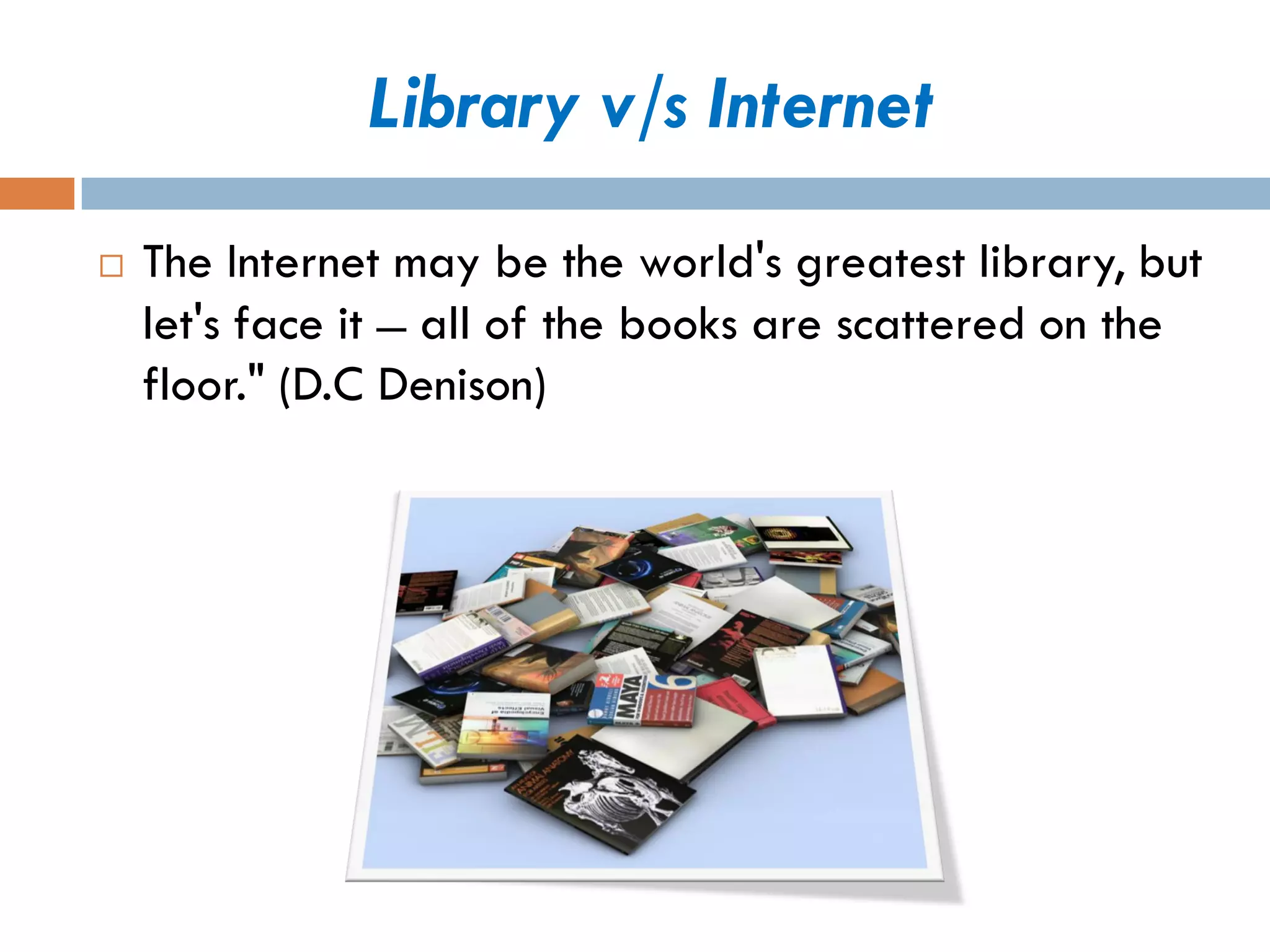
Library v/s Internet 
The Internet may be the world's greatest library, but let's face it̶all of the books are scattered on the floor."(D.C Denison)
Social and cultural hub
PRINCLIPLES OF LIBRARY 
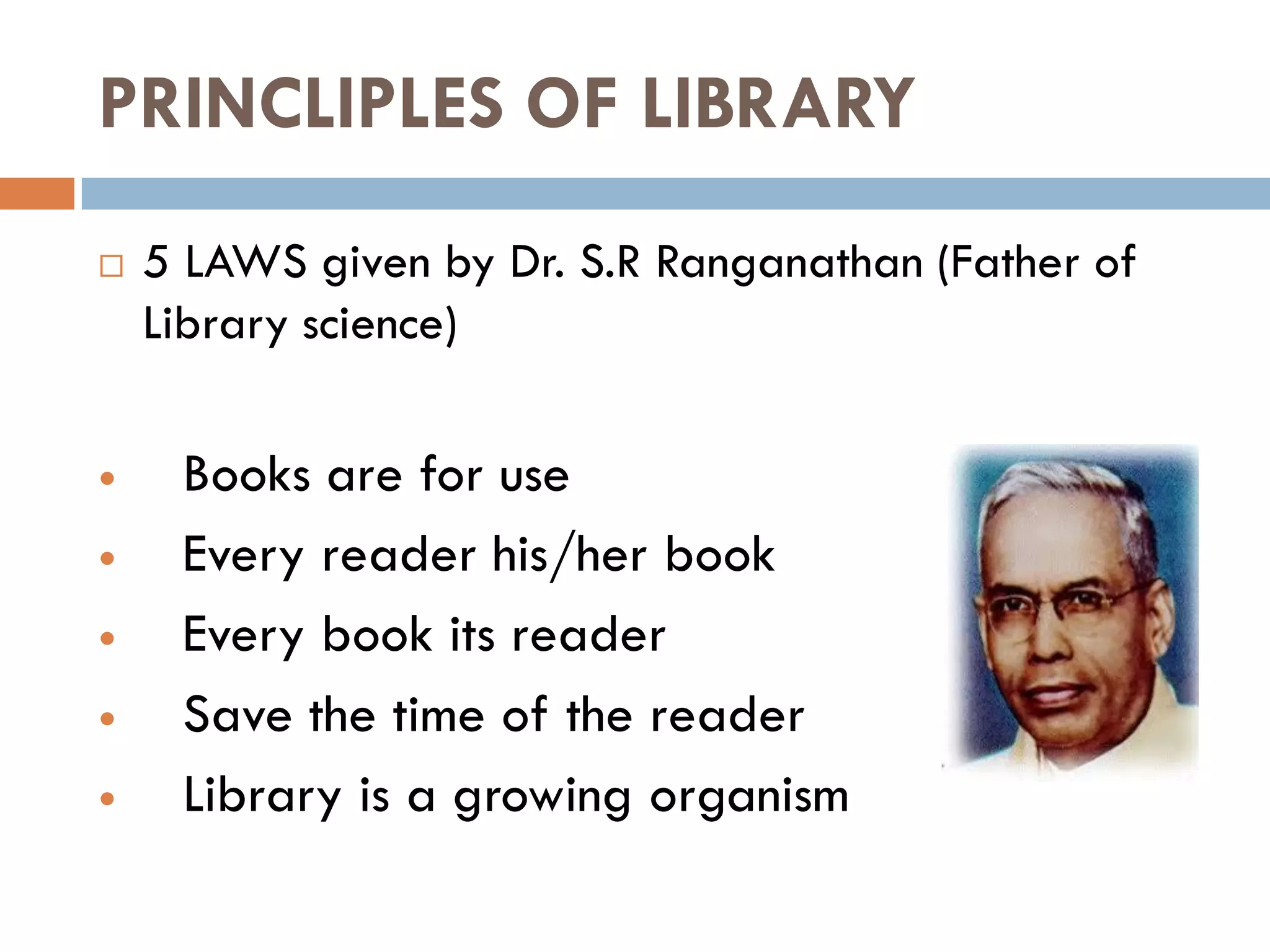
5 LAWS given by Dr. S.R Ranganathan(Father of Library science) 
Books are for use 
Every reader his/her book 
Every book its reader 
Save the time of the reader 
Library is a growing organism
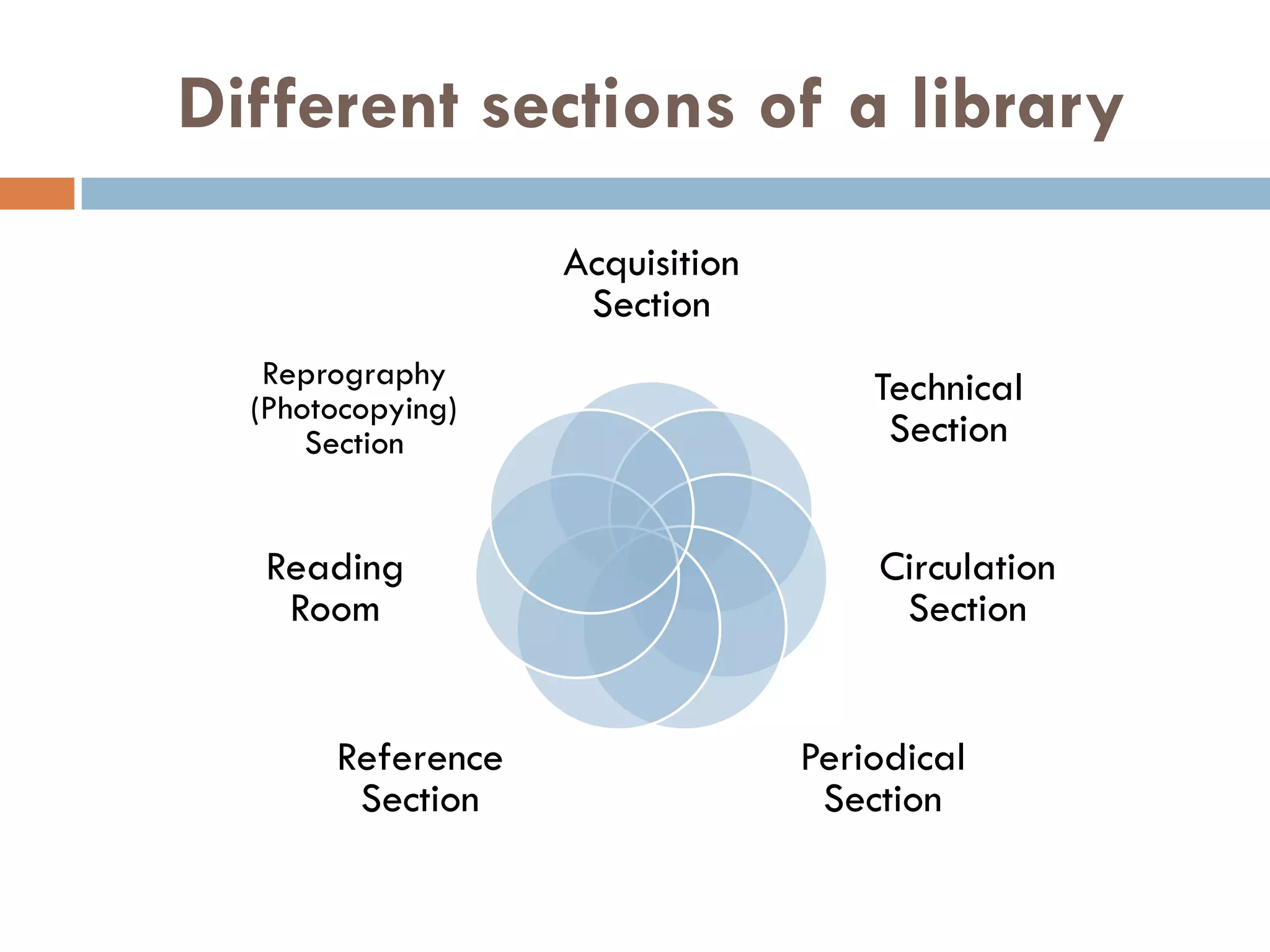
Different sections of a library 
Acquisition SectionTechnical Section 
Circulation Section 
Periodical SectionReference Section 
Reading Room 
Reprography (Photocopying) Section
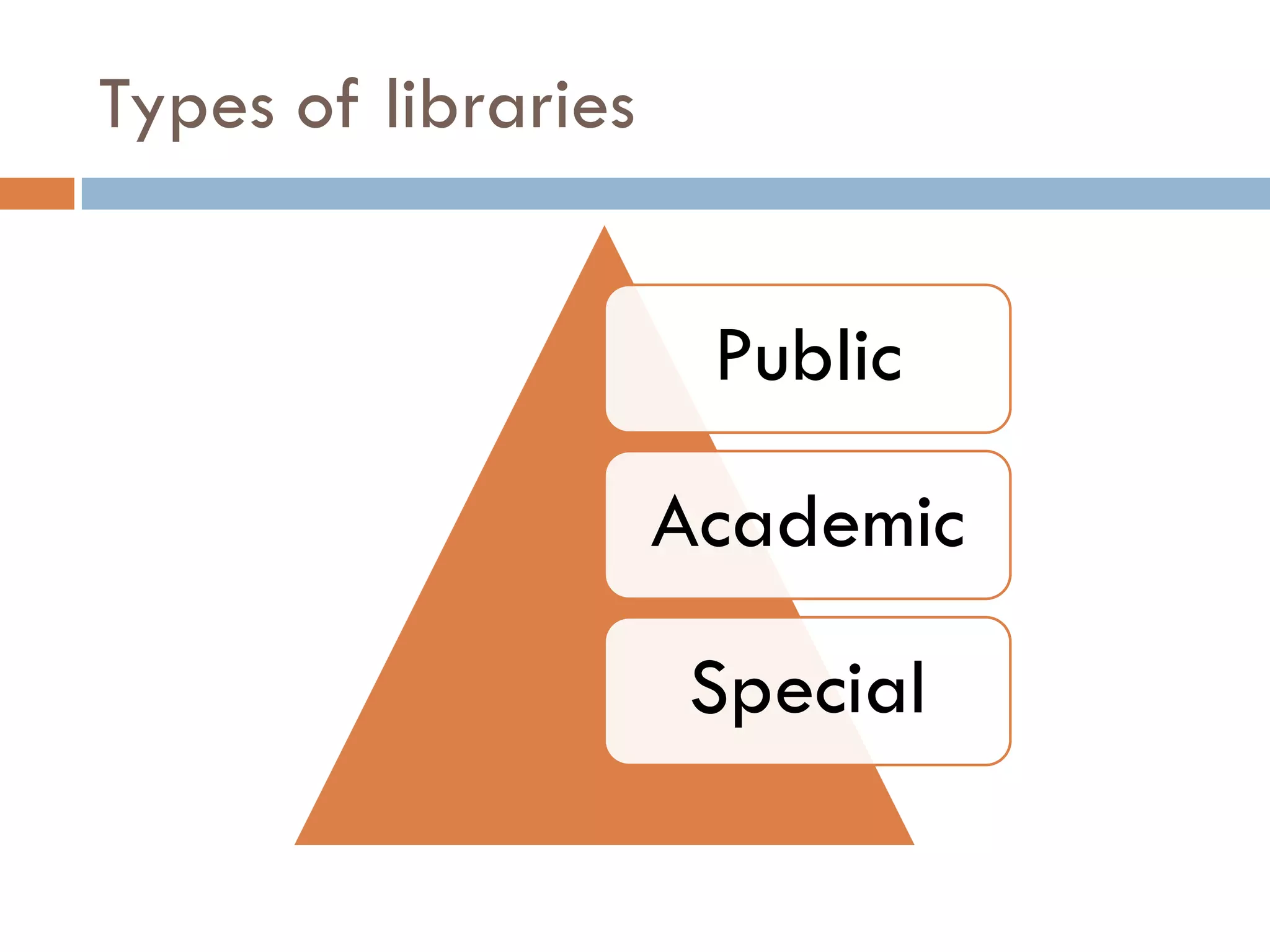
Types of libraries 
Public 
Academic Special
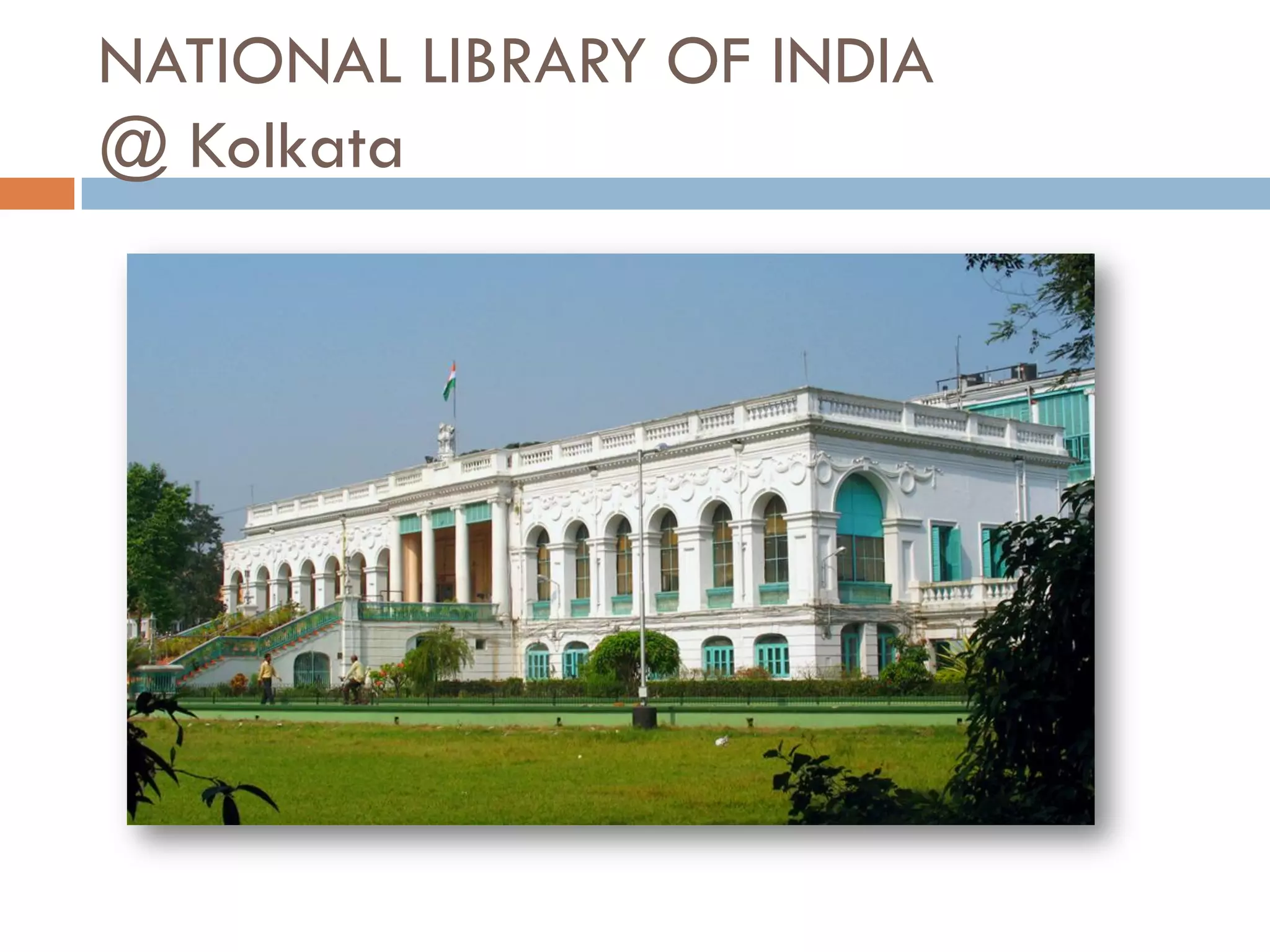
NATIONAL LIBRARY OF INDIA@ Kolkata
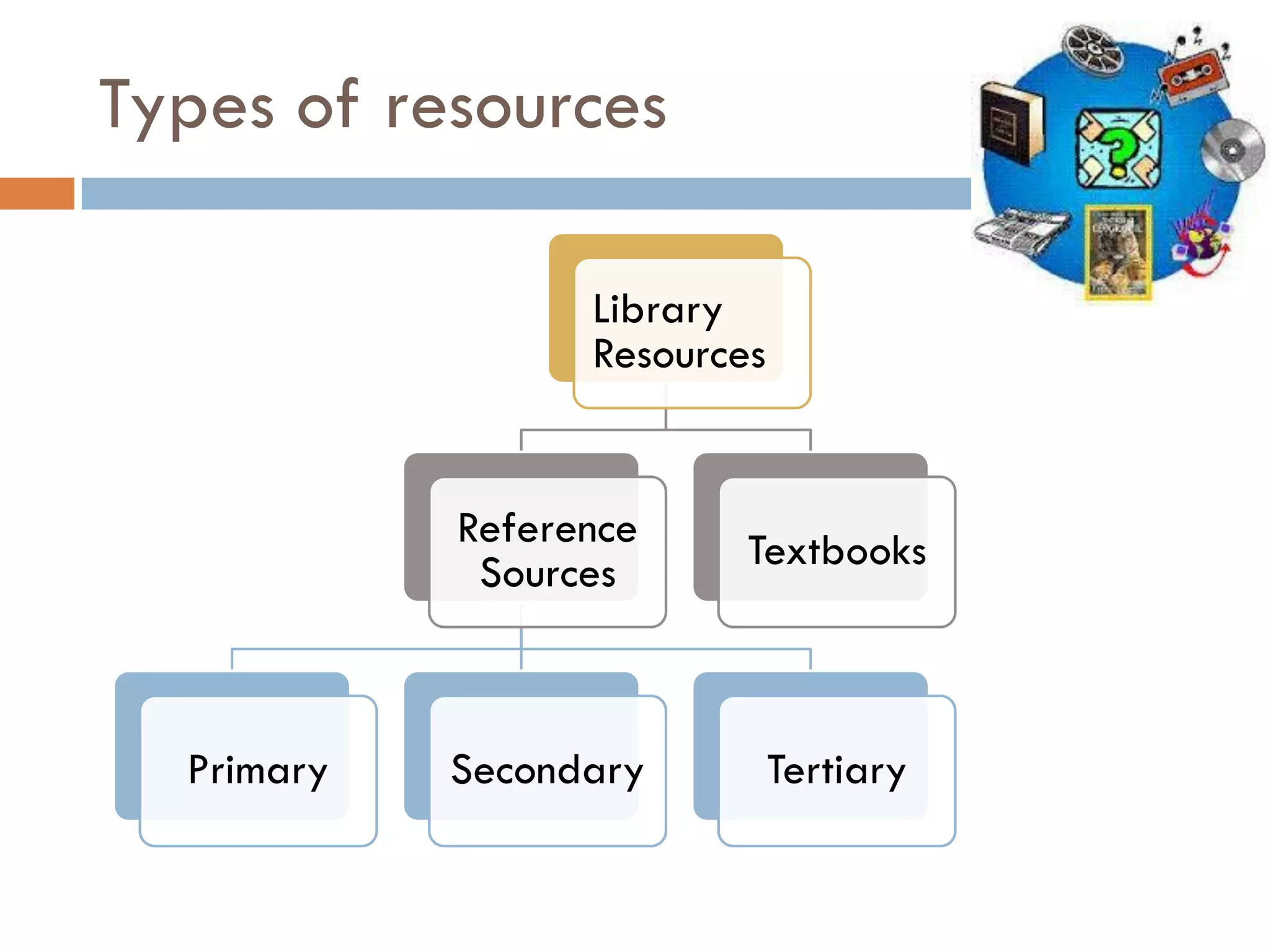
Types of resources 
Library Resources 
Reference Sources 
PrimarySecondary 
Tertiary 
Textbooks
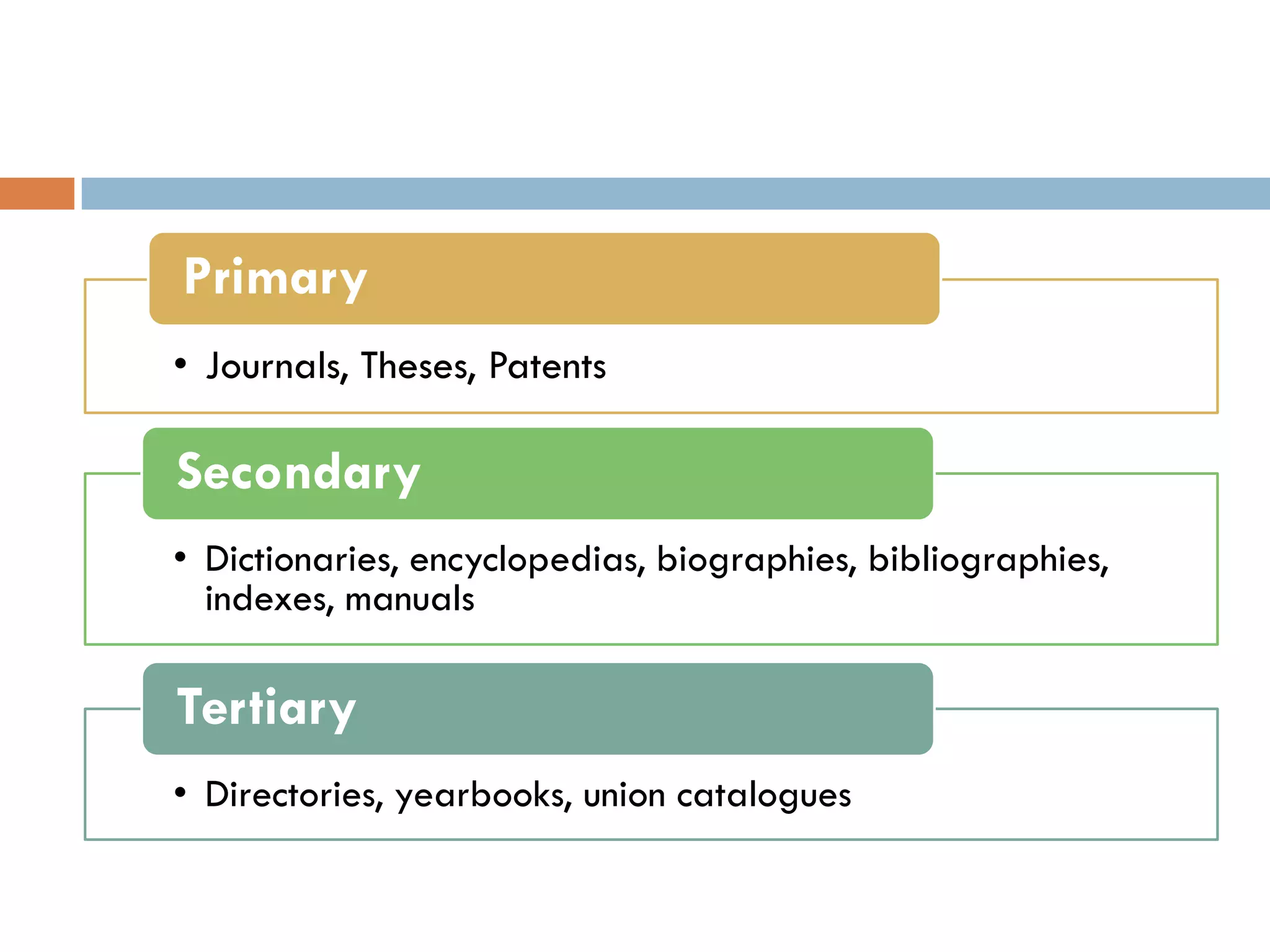
•Journals, Theses, Patents 
Primary 
•Dictionaries, encyclopedias, biographies, bibliographies, indexes, manualsSecondary 
•Directories, yearbooks, union catalogues 
Tertiary
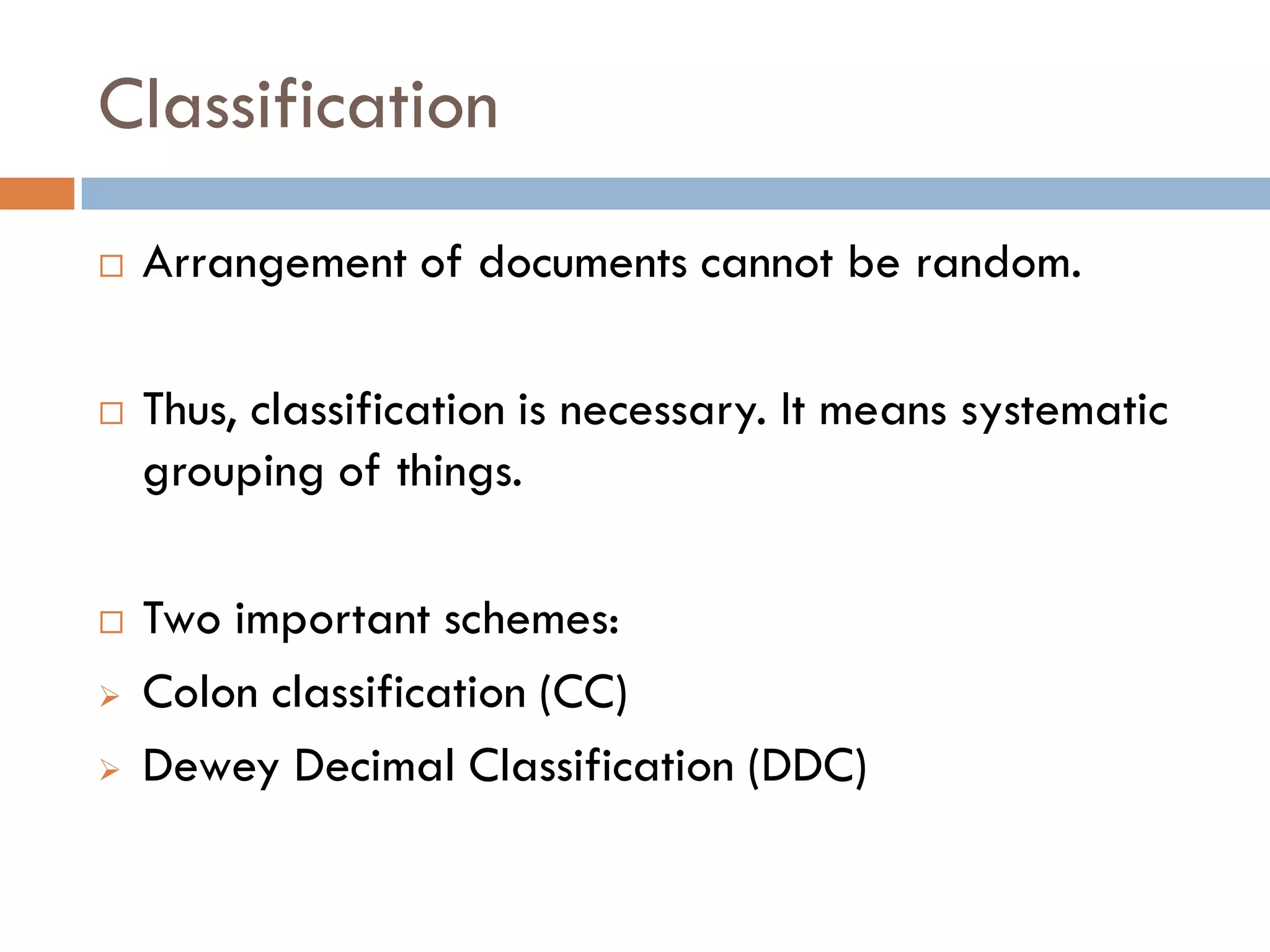
Classification 
Arrangement of documents cannot be random. 
Thus, classification is necessary. It means systematic grouping of things. 
Two important schemes: 
Colon classification (CC) 
Dewey Decimal Classification (DDC)
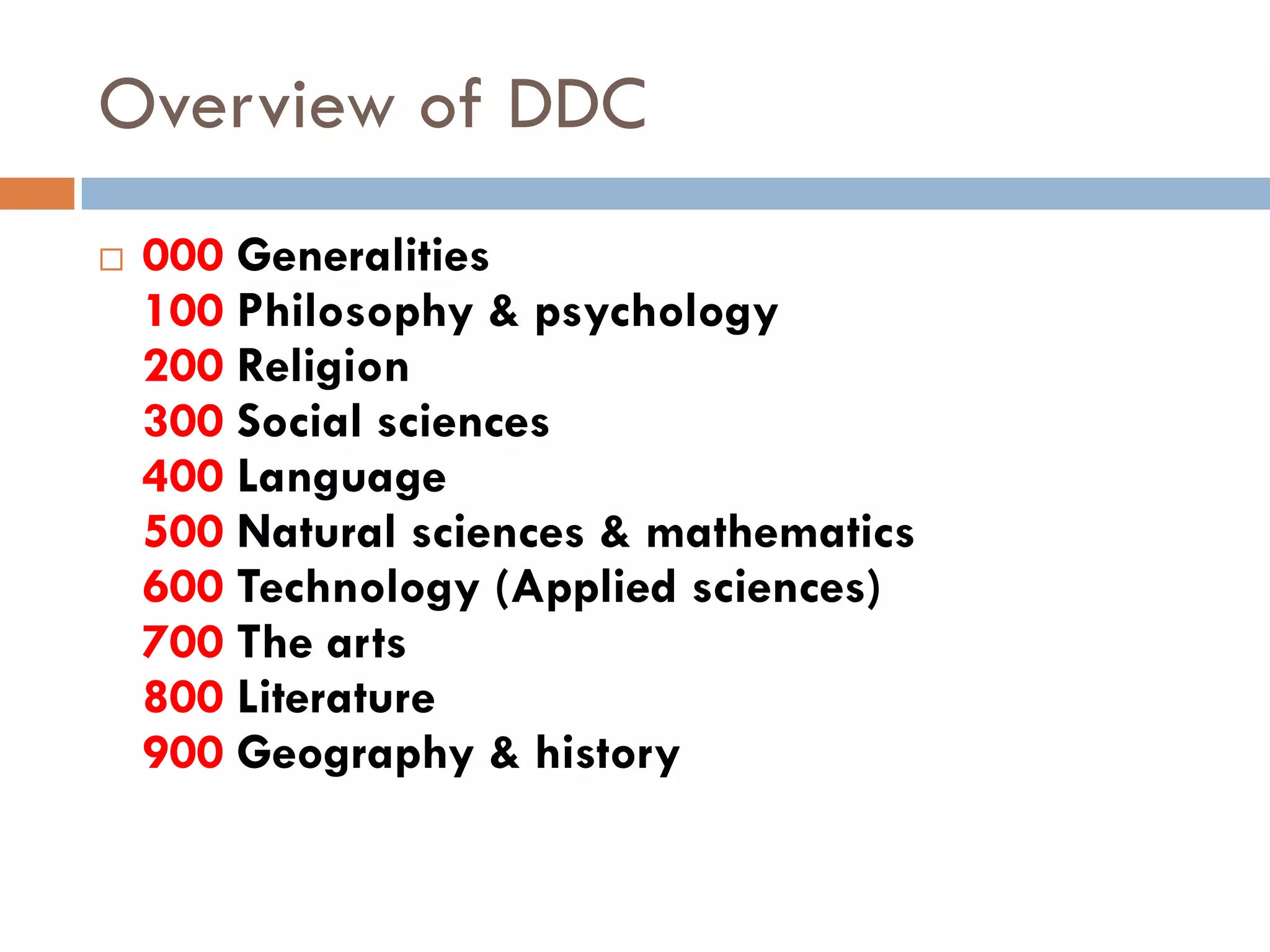
Overview of DDC 
000Generalities100Philosophy & psychology200Religion300Social sciences400Language500Natural sciences & mathematics600Technology (Applied sciences) 700 The arts800Literature 900Geography & history
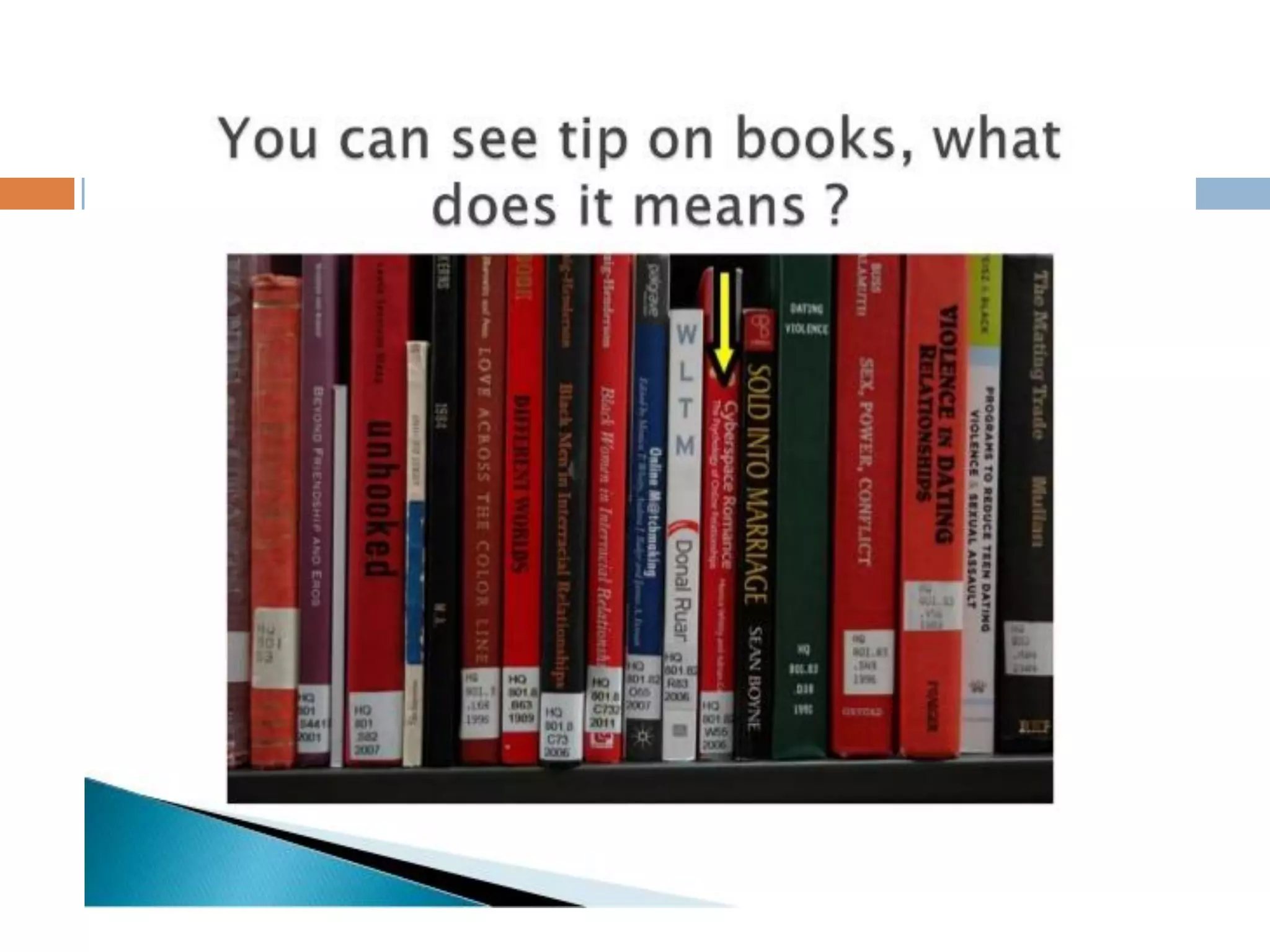
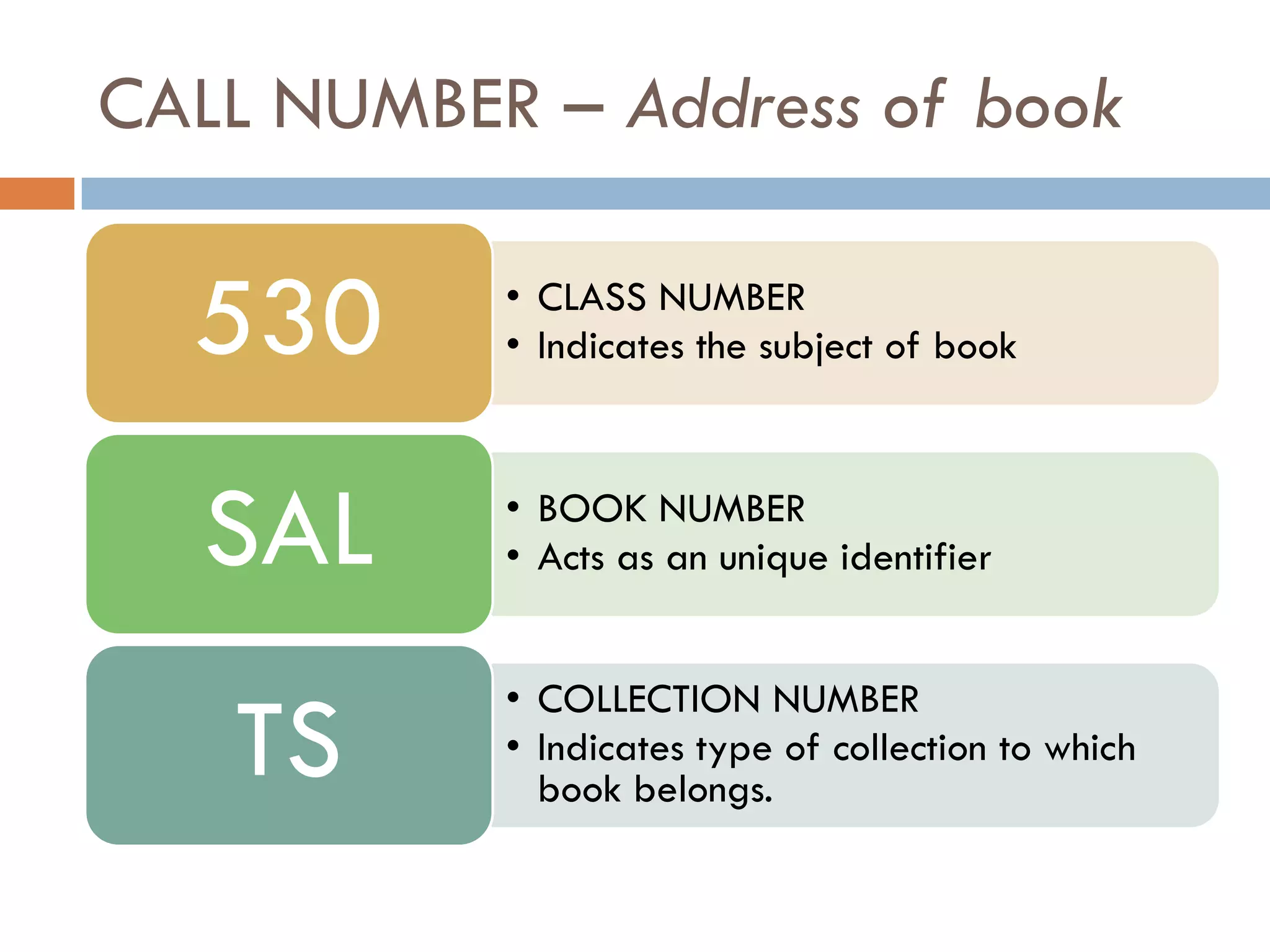
CALL NUMBER –Address of book 
•CLASS NUMBER 
•Indicates the subject of book 
530 
•BOOK NUMBER 
•Acts as an unique identifier 
SAL 
•COLLECTION NUMBER 
•Indicates type of collection to which book belongs. 
TS
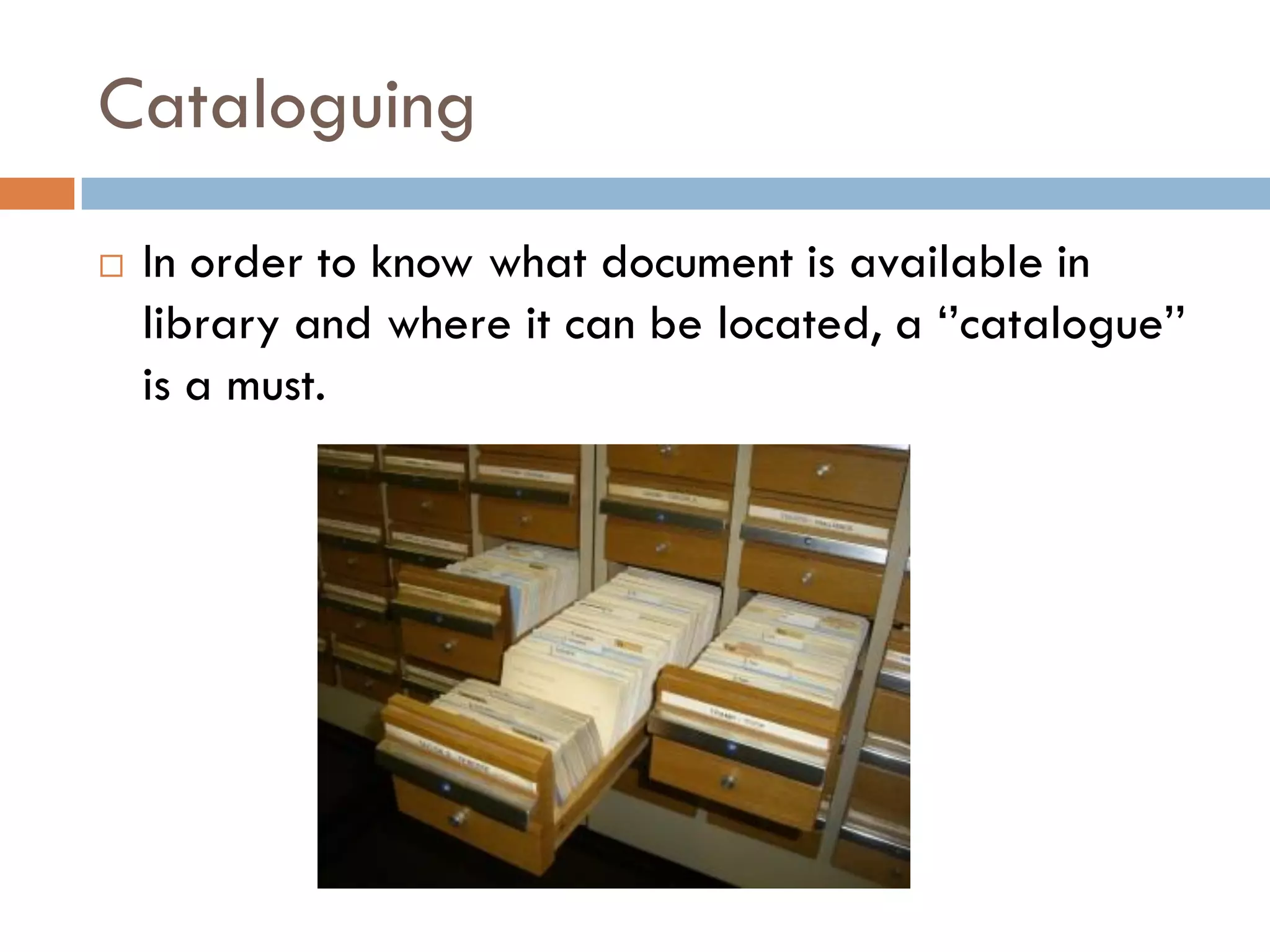
Cataloguing 
In order to know what document is available in library and where it can be located, a ‘’catalogue’’ is a must.
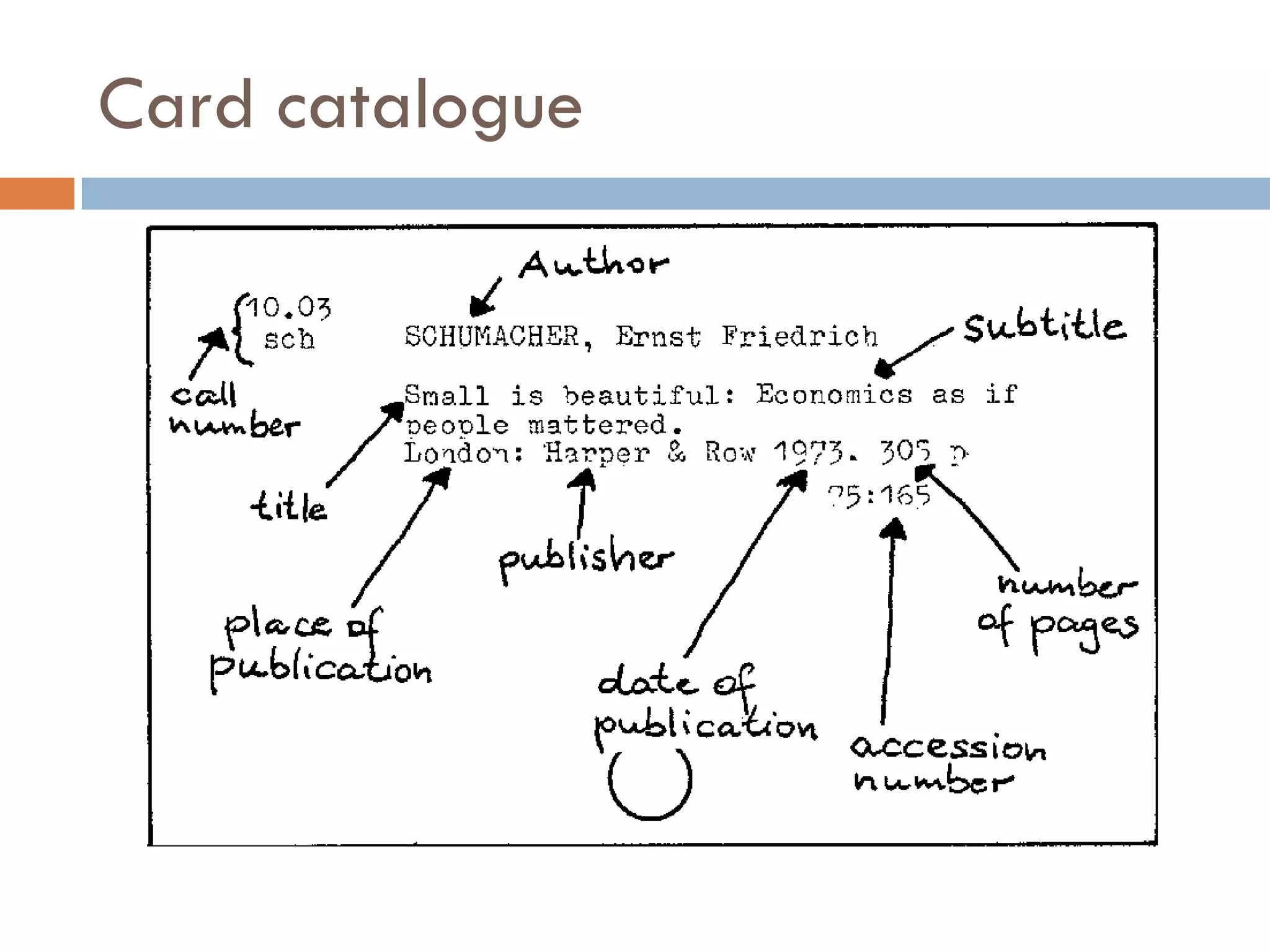
Card catalogue
OPAC 
Online Public Access Catalogue 
It is an online database or record of materials held by a library 
User can search for a document by entering a ‘’search’’ term which can be author name, title, publisher, subject topics etc.
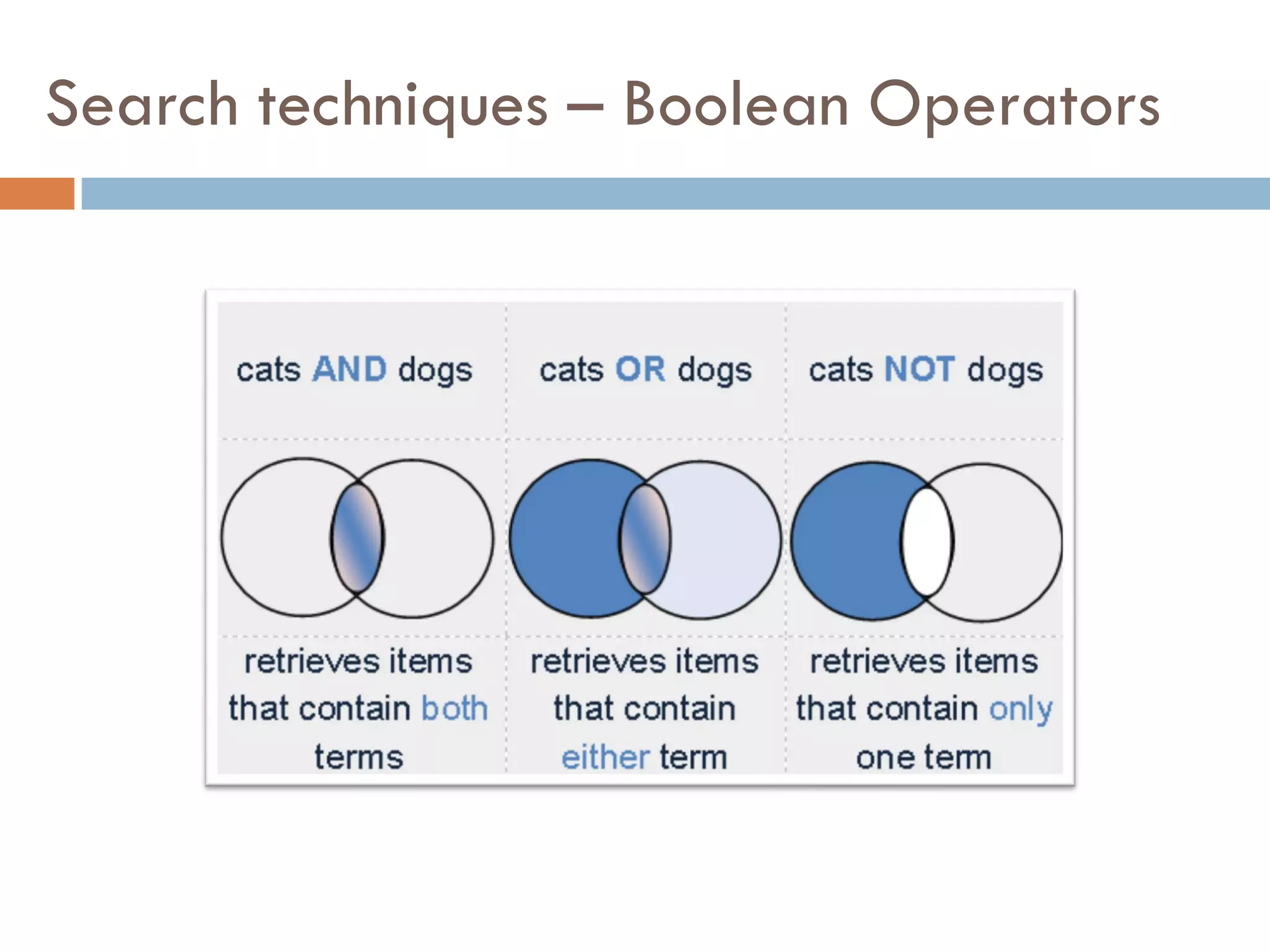
Search techniques –Boolean Operators
Some Public Libraries in Delhi 
Delhi Public Library, ChandniChowk 
Marwari Library, ChandniChowk 
PurshottamDas library, LajpatNagar 
HardayalSingh Muncipallibrary, ChandniChowk 
DayalSingh Library, I.T.O 
RamakrishnanMission Library, PanchkuiaRoad 
Dr. Vijay Pal Memorial Library, KeshavPuram 
Library of Amartya, South Delhi 
BhartiyaVidyaBhawanLibrary, C.P 
American Centre Library, C.P 
British Council Library, C.P
Useful online tools 
Slideshare 
DULS e-resources 
Google scholar 
Coursera 
Google alerts 
Google translators 
Prezi 
Resumebuilder.net 
EncylopaediaBritannica 
Webdunia.com 
Directory of Open Access Journals (DOAJ) 
Public Library of Science (PLOS)
Library science as a career option 
Librarian 
Researcher 
Information officer 
Documentation officer 
Knowledge manager 
Archivist 
Cataloguer/classifier 
Cybrarian 
Information analyst
Workplaces… 
Public/Government libraries 
Universities/colleges/schools and other academic institutions 
News agencies and organizations 
Private organizations 
Foreign embassies 
Photo/film/radio/television/Music libraries 
Information centers/documentation centers 
Museums and galleries
Library Orientation

Library Orientation

  • 1.
    KNOW YOUR LIBRARY By NehaSinghal, M.philScholar, Dpt. of LIS, DU
  • 2.
    A Library isan organized collection of documents with an aim to preserve them and make them available for use to a defined community. (service-oriented) The word is derived from the latinword liber, ‘’a book’’. but now in 21stcentury the boundary has expanded and collection is no longer limited to only books. It can have: Periodicals,newspapers,manuscripts,films,maps,prints, documents,microform,CDs,cassettes,videotapes,DVDs, Blu-ray Discs,e-books,audiobooks,databases, and other formats.
  • 3.
  • 4.
    MULTIPLE ROLES OFLIBRARY: Why to visit libraries? Supplements classroom studies Self study Continuing education Research Recreation Up-to-date information Cultural hub Preservation of knowledge Social agency Personality development
  • 5.
  • 6.
  • 7.
  • 8.
    Career and skilldevelopment
  • 9.
  • 10.
    Library v/s Internet The Internet may be the world's greatest library, but let's face it̶all of the books are scattered on the floor."(D.C Denison)
  • 11.
  • 12.
    PRINCLIPLES OF LIBRARY 5 LAWS given by Dr. S.R Ranganathan(Father of Library science) Books are for use Every reader his/her book Every book its reader Save the time of the reader Library is a growing organism
  • 13.
    Different sections ofa library Acquisition SectionTechnical Section Circulation Section Periodical SectionReference Section Reading Room Reprography (Photocopying) Section
  • 14.
    Types of libraries Public Academic Special
  • 15.
    NATIONAL LIBRARY OFINDIA@ Kolkata
  • 16.
    Types of resources Library Resources Reference Sources PrimarySecondary Tertiary Textbooks
  • 17.
    •Journals, Theses, Patents Primary •Dictionaries, encyclopedias, biographies, bibliographies, indexes, manualsSecondary •Directories, yearbooks, union catalogues Tertiary
  • 18.
    Classification Arrangement ofdocuments cannot be random. Thus, classification is necessary. It means systematic grouping of things. Two important schemes: Colon classification (CC) Dewey Decimal Classification (DDC)
  • 20.
    Overview of DDC 000Generalities100Philosophy & psychology200Religion300Social sciences400Language500Natural sciences & mathematics600Technology (Applied sciences) 700 The arts800Literature 900Geography & history
  • 21.
    CALL NUMBER –Addressof book •CLASS NUMBER •Indicates the subject of book 530 •BOOK NUMBER •Acts as an unique identifier SAL •COLLECTION NUMBER •Indicates type of collection to which book belongs. TS
  • 22.
    Cataloguing In orderto know what document is available in library and where it can be located, a ‘’catalogue’’ is a must.
  • 23.
  • 24.
    OPAC Online PublicAccess Catalogue It is an online database or record of materials held by a library User can search for a document by entering a ‘’search’’ term which can be author name, title, publisher, subject topics etc.
  • 25.
  • 26.
    Some Public Librariesin Delhi Delhi Public Library, ChandniChowk Marwari Library, ChandniChowk PurshottamDas library, LajpatNagar HardayalSingh Muncipallibrary, ChandniChowk DayalSingh Library, I.T.O RamakrishnanMission Library, PanchkuiaRoad Dr. Vijay Pal Memorial Library, KeshavPuram Library of Amartya, South Delhi BhartiyaVidyaBhawanLibrary, C.P American Centre Library, C.P British Council Library, C.P
  • 27.
    Useful online tools Slideshare DULS e-resources Google scholar Coursera Google alerts Google translators Prezi Resumebuilder.net EncylopaediaBritannica Webdunia.com Directory of Open Access Journals (DOAJ) Public Library of Science (PLOS)
  • 28.
    Library science asa career option Librarian Researcher Information officer Documentation officer Knowledge manager Archivist Cataloguer/classifier Cybrarian Information analyst
  • 29.
    Workplaces… Public/Government libraries Universities/colleges/schools and other academic institutions News agencies and organizations Private organizations Foreign embassies Photo/film/radio/television/Music libraries Information centers/documentation centers Museums and galleries