Level 3 Visual Art/Painting
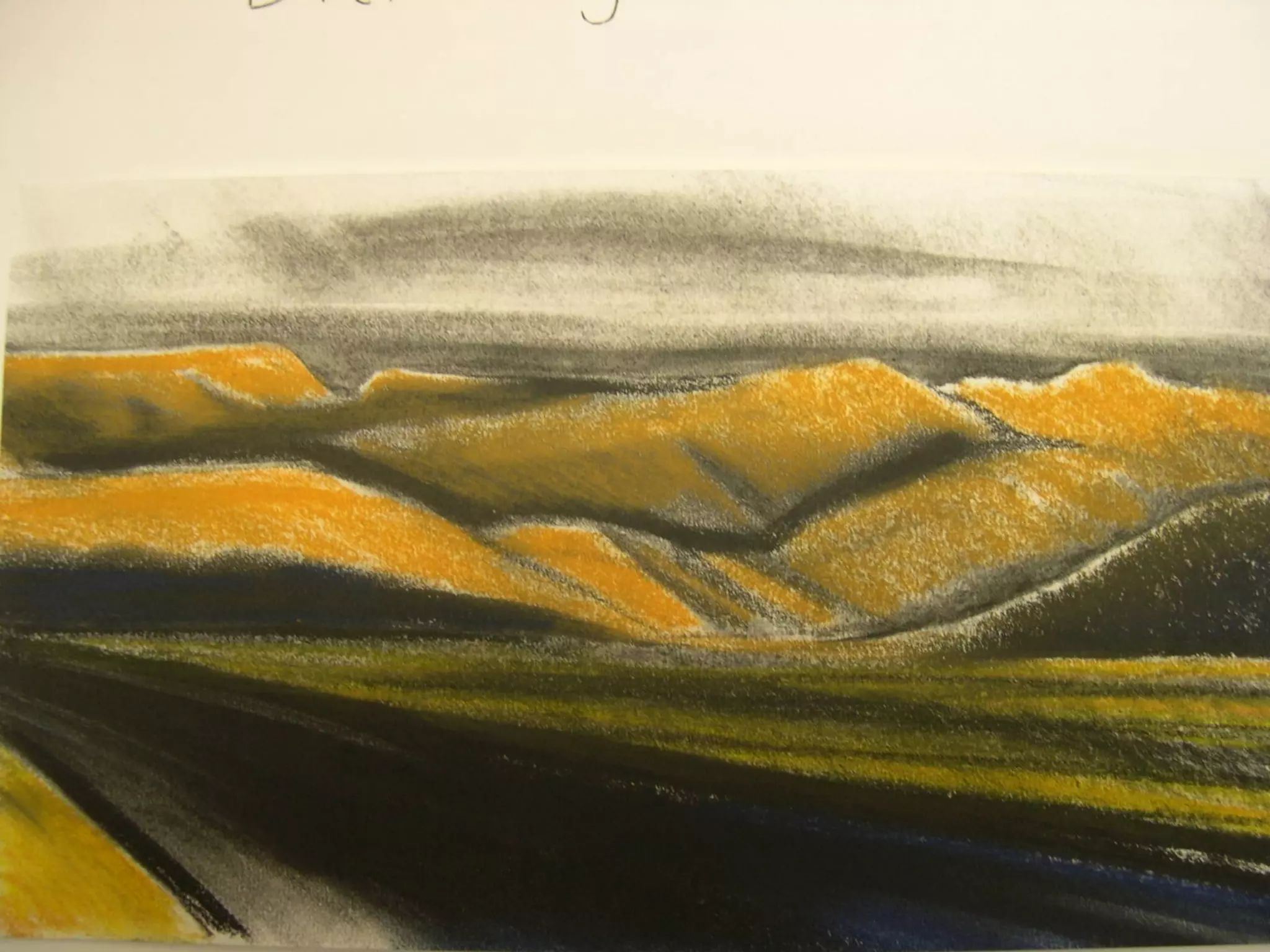
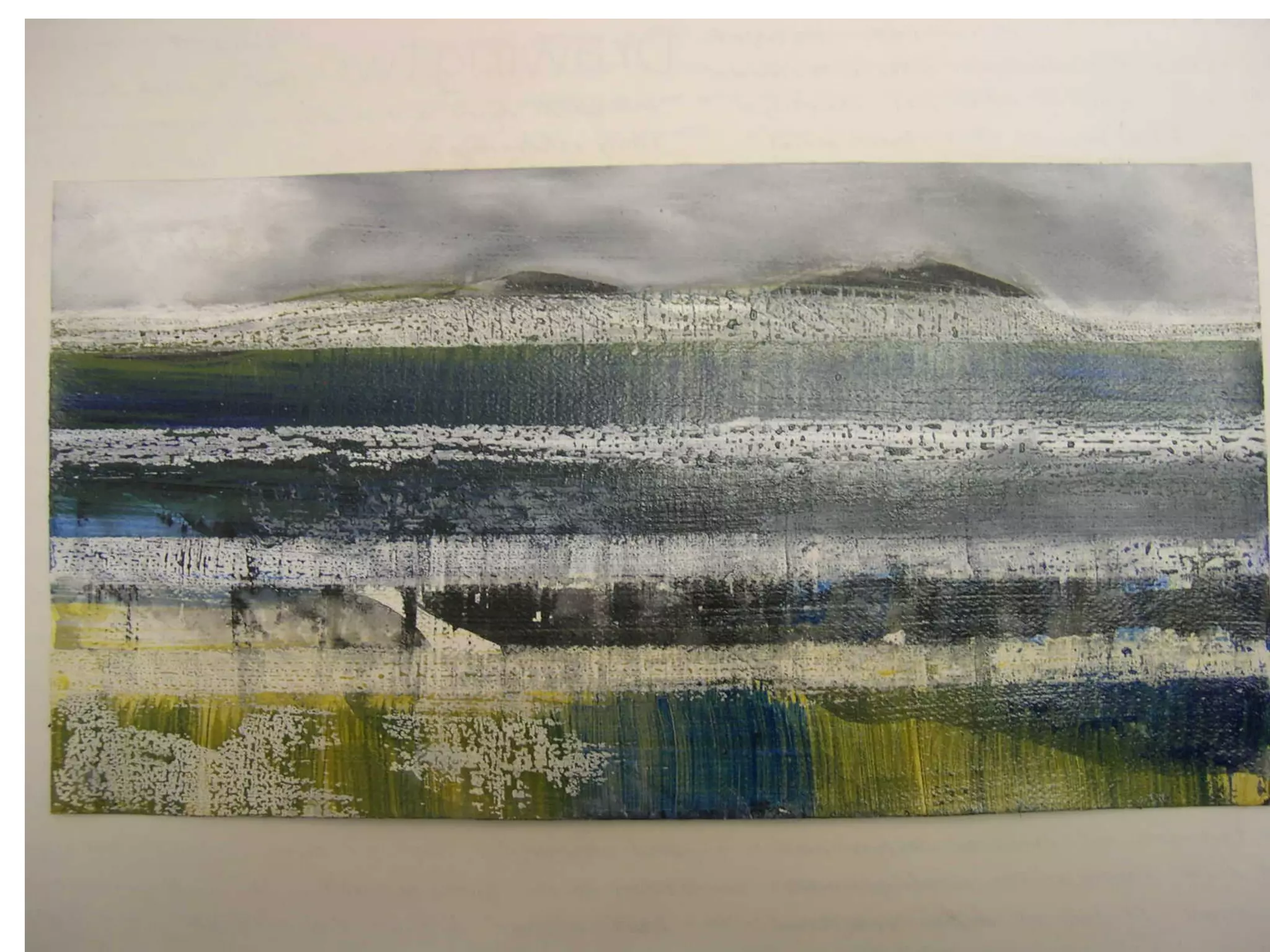
THEMES AND SUBJECT MATTER FOR  PAINTING NCEA LEVEL 3 Select ONE of the categories to study. You will need to identify the subject matter & collate visual resources as part of the research study  METHODS Research on relevant technical information relating to the art making should be an important part of the research. Critically reflect on, respond to, & evaluate your own & others practice & work in the Visual Arts METHODS, PROCESSES & PROCEDURES SHOULD BE APPROPRIATE TO THE MODEL ARTIST/S & THE PICTORIAL CONCERNS IDENTIFIED From  Level 8 NZ Arts Curriculum. Students will apply knowledge of elements, principles, & conventions in a selected field of the Visual Arts. Students will extend & refine skills with techniques, tools & materials to produce a body of work in a selected field of the visual arts using appropriate processes & procedures. Landscape drawing for print demonstrating layers of surface & texture. Materials used include gesso, shellac & black ink. Drawing using oils on card pre-prepared with a black oil painted ground & with a white taped inset. Theme of reality & illusion based on Gerhardt Richter  Crayons & oil stick on a black ground painted with oil paint on white card. Artist reference Elmer Bischoff STILL LIFE. EXTERIOR/ CONSTRUCTION. INTERIOR/ SPATIAL. LANDSCAPE FIGURATION.
Black & white gesso ground on arches paper with oil sticks & 8B pencil Arches paper painted with gesso & worked with 8B pencil, wiped & blended with water for tones. Artist reference Jim Dine. Theme: domestic interior. Painted canvas ground with paint & chalk pastels Ground on white card overdrawn with oil sticks wax crayons & 8B pencil  Artist reference Pat Steir Theme: reflected landscape in the rear vision mirror Ground prepared with tones of oil paint scraped & blended on arches paper & overdrawn with wax oil pastels, 8B pencil & oil sticks
COLIN MCCAHON (NZ) WILLIAM SUTTON (NZ) JASPER JOHNS JOHN FIRTH SMITH (NZ) CEZANNE MONET DAVID PARK BRUCE MCGRAW RICHARD DIEBENCORN RALPH HOTERE (NZ) ROSS BLECKNER JOHNATHON LASKER TERRY FROST MONDRIAN KEN DONE SABINA OTT MERVYN WILLIAMS (NZ) JONATHON LASKER BRUCE NAUMAN ROSS BLECKNER DAVID REED SIGMAR POLKE WILLIAM DE KOONING FRANZ KLINE WILLIAM BAZIOTES PHILLIP GUSTON KITAJ DAVID HOCKNEY SIMON MCINTYRE (NZ) BILL HAMMOND (NZ) KRISTY GORMAN (NZ) LOUISE FONG (NZ) JOHN REYNOLDS (NZ) JOAN BROWN ELMER BISHOFF EDWARD HOPPER WAYNE THIEBAUD MORANDI ERIC FISCHL MATISSE HANS HOFMANN ARTHUR BOYD MOTHERWELL JASPER JOHNS SIMON OGDEN (NZ) FRANK AUERBACH SIMON MCINTYRE (NZ) CY TWOMBLY WAYNE THIEBAULD PHILLIP TRUSTUM (NZ) NICKY FOREMAN (NZ) ROSS GREY (NZ) BEN NICHOLSON SEAN SCULLY HOWARD  HODGKINS TAPIES GORKY ERIC FISCHL LUCIEN FREUD PHILLIP PEARLSTEIN NATHAN OLIVERIA ROSALIE GASGOINE (NZ) DICK FRIZZELL (NZ) MARK ROTHCO DAVID SALLE VUILLARD PAUL NASH MOTHERWELL GERHART RICHTER AUDREY FLACK ARTHUR BOYD SEREPHINE PICK (NZ) SUSAN ROTHENBERG RICHARD KILLEEN (NZ) MICHAEL TUFFERY (NZ) FATU FEUU (NZ) PHILLIPA BLAIR (NZ) ROB MCLEOD (NZ) SHANE COTTON (NZ) PATRICK HERON FRANCES BACON DE CHIRICO PETER GIBSON SMITH (NZ) ROSS RITCHIE (NZ) PAT STEIR JENNIFER BARTLETT GERDA LEENARDS (NZ) MICHAEL SHEPHERD (NZ) ALAN PEARSON (NZ) GRAHAM SYDNEY (NZ) CALLUM INNES BONNARD DUFY FRANZ KLINE ANDRE DERAIN JOHN WALKER GAUGUIN MONET TURNER EUAN MCLEOD (NZ) SYLVIA SIDDELL (NZ) GEOFFREY HARRIS (NZ) SASKIA LEEK (NZ) REVOR MOFFITT (NZ) JIM DINE JOHN WALKER BRICE MARSDEN JUDE RAE  (NZ) LARRY RIVERS ELIZABETH MURRAY FRANCES HODGKINS (NZ) WILLIAM SCOTT ROBERT ELLIS (NZ) MICHAEL SMITHERS (NZ) RENE MAGRITTE DAVID BLACKBURN STEPHEN BANBURY LEON KOSSOFF IMMENDORFF JOHN HOYLAND JOHN PAPAS (NZ) BARBARA STRATHDEE (NZ) JOAN SNYDER KARL MAUGHAN (NZ) BONNARD JOHN DRAWBRIDGE (NZ) MAX BECKMAN FREDA KAHLO ROBERT RYMAN TONY FOMISON (NZ)
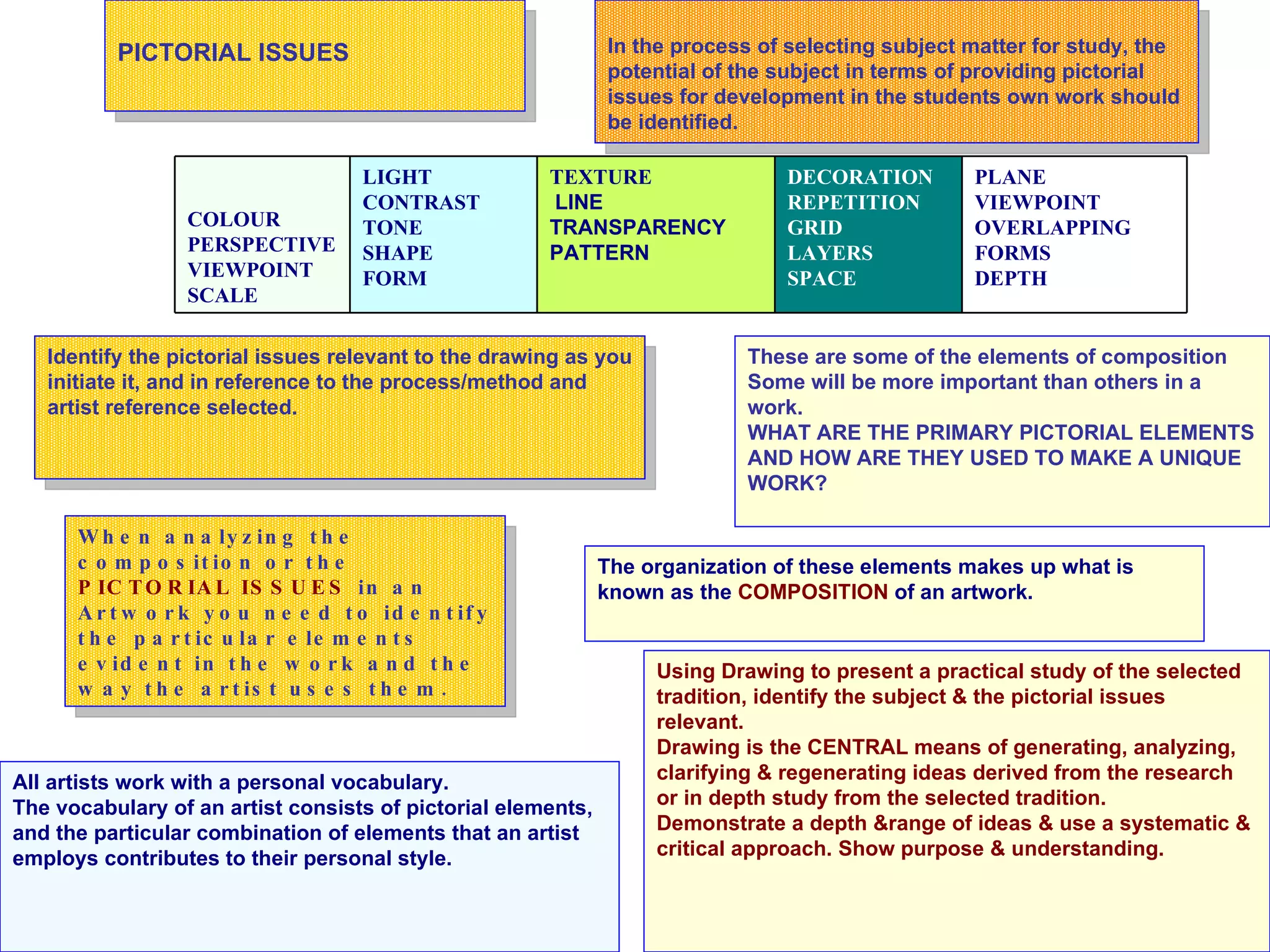
Identify the pictorial issues relevant to the drawing as you initiate it, and in reference to the process/method and artist reference selected.  These are some of the elements of composition Some will be more important than others in a work. WHAT ARE THE PRIMARY PICTORIAL ELEMENTS AND HOW ARE THEY USED TO MAKE A UNIQUE WORK? The organization of these elements makes up what is known as the  COMPOSITION  of an artwork. When analyzing the composition or the  PICTORIAL ISSUES  in an Artwork you need to identify the particular elements evident in the work and the way the artist uses them.  All artists work with a personal vocabulary. The vocabulary of an artist consists of pictorial elements, and the particular combination of elements that an artist employs contributes to their personal style. In the process of selecting subject matter for study, the potential of the subject in terms of providing pictorial issues for development in the students own work should be identified. PICTORIAL ISSUES Using Drawing to present a practical study of the selected tradition, identify the subject & the pictorial issues relevant.  Drawing is the CENTRAL means of generating, analyzing, clarifying & regenerating ideas derived from the research or in depth study from the selected tradition. Demonstrate a depth &range of ideas & use a systematic & critical approach. Show purpose & understanding.   PLANE VIEWPOINT  OVERLAPPING FORMS  DEPTH DECORATION REPETITION GRID LAYERS SPACE TEXTURE LINE TRANSPARENCY PATTERN LIGHT CONTRAST TONE SHAPE FORM COLOUR PERSPECTIVE VIEWPOINT SCALE
TASK 1 Select from  ONE  of the SUBJECT or THEMATIC categories as listed. Consider carefully & make sure that the subject or theme chosen is manageable, accessible & relevant, & of sufficient interest to sustain a years work  RESEARCH  the treatment of your subject within a historical & a contemporary context. Write an overview & provide examples to illustrate your comments. (Time frame One week) TASK 2 Select  TWO ARTISTS  & study  ONE  work  from each. Comment on each work in depth & compare & contrast the way the two artists treat the subject.  (To be recorded in the diary/workbook) (Time frame One week) TASK 3 Select a New Zealand artist & identify the tradition of the work selected (description & context)  List the concepts & ideas in selected works & comment on how these relate to other work by the same artist. Discuss the  LINKS  between the identified tradition & the influences on the New Zealand artist studied. (Time frame One week) TASK 4 Produce a Portfolio of  FIVE  drawings & painting studies (Time frame for the drawing sequence: Two weeks) Use  ONE  of your selected artists  AS A MODEL  for the drawing portfolio. (The artist selected MUST represent relevant & contemporary practice)  Critically analyse & discuss your own work &  demonstrate through the practical investigation your understanding of  the links between the selected tradition and relevant recent New Zealand and/or international practice.  (Time frame One week) In the practical investigation  you must work from the theme or  SUBJECT MATTER  selected for your research Record all the research information in your art diary including the practical investigation. Label & identify each task. Use your own words & identify any quotes with footnotes & acknowledge all source material Provide a  BIBLIOGRAPHY  for all tasks including web sites & internet addresses.
3.1 research for Painting
 
 
Drawing for 3.1 painting


Printmaking folio: artistic references include Kim Westcott & John Firth Smith

Level 3, 3.1

  • 1.
    Level 3 VisualArt/Painting
  • 2.
    THEMES AND SUBJECTMATTER FOR PAINTING NCEA LEVEL 3 Select ONE of the categories to study. You will need to identify the subject matter & collate visual resources as part of the research study METHODS Research on relevant technical information relating to the art making should be an important part of the research. Critically reflect on, respond to, & evaluate your own & others practice & work in the Visual Arts METHODS, PROCESSES & PROCEDURES SHOULD BE APPROPRIATE TO THE MODEL ARTIST/S & THE PICTORIAL CONCERNS IDENTIFIED From Level 8 NZ Arts Curriculum. Students will apply knowledge of elements, principles, & conventions in a selected field of the Visual Arts. Students will extend & refine skills with techniques, tools & materials to produce a body of work in a selected field of the visual arts using appropriate processes & procedures. Landscape drawing for print demonstrating layers of surface & texture. Materials used include gesso, shellac & black ink. Drawing using oils on card pre-prepared with a black oil painted ground & with a white taped inset. Theme of reality & illusion based on Gerhardt Richter Crayons & oil stick on a black ground painted with oil paint on white card. Artist reference Elmer Bischoff STILL LIFE. EXTERIOR/ CONSTRUCTION. INTERIOR/ SPATIAL. LANDSCAPE FIGURATION.
  • 3.
    Black & whitegesso ground on arches paper with oil sticks & 8B pencil Arches paper painted with gesso & worked with 8B pencil, wiped & blended with water for tones. Artist reference Jim Dine. Theme: domestic interior. Painted canvas ground with paint & chalk pastels Ground on white card overdrawn with oil sticks wax crayons & 8B pencil Artist reference Pat Steir Theme: reflected landscape in the rear vision mirror Ground prepared with tones of oil paint scraped & blended on arches paper & overdrawn with wax oil pastels, 8B pencil & oil sticks
  • 4.
    COLIN MCCAHON (NZ)WILLIAM SUTTON (NZ) JASPER JOHNS JOHN FIRTH SMITH (NZ) CEZANNE MONET DAVID PARK BRUCE MCGRAW RICHARD DIEBENCORN RALPH HOTERE (NZ) ROSS BLECKNER JOHNATHON LASKER TERRY FROST MONDRIAN KEN DONE SABINA OTT MERVYN WILLIAMS (NZ) JONATHON LASKER BRUCE NAUMAN ROSS BLECKNER DAVID REED SIGMAR POLKE WILLIAM DE KOONING FRANZ KLINE WILLIAM BAZIOTES PHILLIP GUSTON KITAJ DAVID HOCKNEY SIMON MCINTYRE (NZ) BILL HAMMOND (NZ) KRISTY GORMAN (NZ) LOUISE FONG (NZ) JOHN REYNOLDS (NZ) JOAN BROWN ELMER BISHOFF EDWARD HOPPER WAYNE THIEBAUD MORANDI ERIC FISCHL MATISSE HANS HOFMANN ARTHUR BOYD MOTHERWELL JASPER JOHNS SIMON OGDEN (NZ) FRANK AUERBACH SIMON MCINTYRE (NZ) CY TWOMBLY WAYNE THIEBAULD PHILLIP TRUSTUM (NZ) NICKY FOREMAN (NZ) ROSS GREY (NZ) BEN NICHOLSON SEAN SCULLY HOWARD HODGKINS TAPIES GORKY ERIC FISCHL LUCIEN FREUD PHILLIP PEARLSTEIN NATHAN OLIVERIA ROSALIE GASGOINE (NZ) DICK FRIZZELL (NZ) MARK ROTHCO DAVID SALLE VUILLARD PAUL NASH MOTHERWELL GERHART RICHTER AUDREY FLACK ARTHUR BOYD SEREPHINE PICK (NZ) SUSAN ROTHENBERG RICHARD KILLEEN (NZ) MICHAEL TUFFERY (NZ) FATU FEUU (NZ) PHILLIPA BLAIR (NZ) ROB MCLEOD (NZ) SHANE COTTON (NZ) PATRICK HERON FRANCES BACON DE CHIRICO PETER GIBSON SMITH (NZ) ROSS RITCHIE (NZ) PAT STEIR JENNIFER BARTLETT GERDA LEENARDS (NZ) MICHAEL SHEPHERD (NZ) ALAN PEARSON (NZ) GRAHAM SYDNEY (NZ) CALLUM INNES BONNARD DUFY FRANZ KLINE ANDRE DERAIN JOHN WALKER GAUGUIN MONET TURNER EUAN MCLEOD (NZ) SYLVIA SIDDELL (NZ) GEOFFREY HARRIS (NZ) SASKIA LEEK (NZ) REVOR MOFFITT (NZ) JIM DINE JOHN WALKER BRICE MARSDEN JUDE RAE (NZ) LARRY RIVERS ELIZABETH MURRAY FRANCES HODGKINS (NZ) WILLIAM SCOTT ROBERT ELLIS (NZ) MICHAEL SMITHERS (NZ) RENE MAGRITTE DAVID BLACKBURN STEPHEN BANBURY LEON KOSSOFF IMMENDORFF JOHN HOYLAND JOHN PAPAS (NZ) BARBARA STRATHDEE (NZ) JOAN SNYDER KARL MAUGHAN (NZ) BONNARD JOHN DRAWBRIDGE (NZ) MAX BECKMAN FREDA KAHLO ROBERT RYMAN TONY FOMISON (NZ)
  • 5.
    Identify the pictorialissues relevant to the drawing as you initiate it, and in reference to the process/method and artist reference selected. These are some of the elements of composition Some will be more important than others in a work. WHAT ARE THE PRIMARY PICTORIAL ELEMENTS AND HOW ARE THEY USED TO MAKE A UNIQUE WORK? The organization of these elements makes up what is known as the COMPOSITION of an artwork. When analyzing the composition or the PICTORIAL ISSUES in an Artwork you need to identify the particular elements evident in the work and the way the artist uses them. All artists work with a personal vocabulary. The vocabulary of an artist consists of pictorial elements, and the particular combination of elements that an artist employs contributes to their personal style. In the process of selecting subject matter for study, the potential of the subject in terms of providing pictorial issues for development in the students own work should be identified. PICTORIAL ISSUES Using Drawing to present a practical study of the selected tradition, identify the subject & the pictorial issues relevant. Drawing is the CENTRAL means of generating, analyzing, clarifying & regenerating ideas derived from the research or in depth study from the selected tradition. Demonstrate a depth &range of ideas & use a systematic & critical approach. Show purpose & understanding. PLANE VIEWPOINT OVERLAPPING FORMS DEPTH DECORATION REPETITION GRID LAYERS SPACE TEXTURE LINE TRANSPARENCY PATTERN LIGHT CONTRAST TONE SHAPE FORM COLOUR PERSPECTIVE VIEWPOINT SCALE
  • 6.
    TASK 1 Selectfrom ONE of the SUBJECT or THEMATIC categories as listed. Consider carefully & make sure that the subject or theme chosen is manageable, accessible & relevant, & of sufficient interest to sustain a years work RESEARCH the treatment of your subject within a historical & a contemporary context. Write an overview & provide examples to illustrate your comments. (Time frame One week) TASK 2 Select TWO ARTISTS & study ONE work from each. Comment on each work in depth & compare & contrast the way the two artists treat the subject. (To be recorded in the diary/workbook) (Time frame One week) TASK 3 Select a New Zealand artist & identify the tradition of the work selected (description & context) List the concepts & ideas in selected works & comment on how these relate to other work by the same artist. Discuss the LINKS between the identified tradition & the influences on the New Zealand artist studied. (Time frame One week) TASK 4 Produce a Portfolio of FIVE drawings & painting studies (Time frame for the drawing sequence: Two weeks) Use ONE of your selected artists AS A MODEL for the drawing portfolio. (The artist selected MUST represent relevant & contemporary practice) Critically analyse & discuss your own work & demonstrate through the practical investigation your understanding of the links between the selected tradition and relevant recent New Zealand and/or international practice. (Time frame One week) In the practical investigation you must work from the theme or SUBJECT MATTER selected for your research Record all the research information in your art diary including the practical investigation. Label & identify each task. Use your own words & identify any quotes with footnotes & acknowledge all source material Provide a BIBLIOGRAPHY for all tasks including web sites & internet addresses.
  • 7.
  • 8.
  • 9.
  • 10.
  • 11.
  • 12.
  • 13.
  • 14.
  • 15.
    Printmaking folio: artisticreferences include Kim Westcott & John Firth Smith