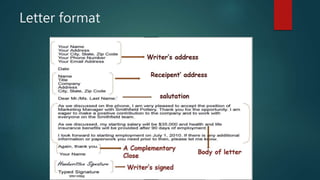
The document discusses different types of letters, including informal letters used to communicate with friends and family, formal letters used to communicate professionally or request information, and personal letters sent between individuals. It provides guidelines for writing letters, such as identifying the audience and purpose, examining the tone of any previous correspondence, and analyzing the reader. Key aspects of personal letters are described, like including a writer's address, date, recipient's address, salutation, body, complementary close, signature, and typed name. Formatting of letters and things to remember, like using a formal or informal tone based on the recipient and including a salutation and complementary close, are also covered.