PICTURE WORD INDUCTION MODELLet the fun begin !
In the past, the main focus of education students has been geared toward functional skills and transition to adulthood.The focus has included academics, since No Child Left Behind Act of 2001which mandated that all students should be tested with state accountability assessments.History of Educating Students with Intellectual Disabilities
PWIM Introduced inModels of Teaching ClassIs a practical guide to teaching beginning    language learners of all ages Begins with what the students already know and    respects their ability to think Allows students to hear the words pronounced    correctly many times and develops sight-word    vocabulary Is designed to enable students to be    immediately successful as language learners
Could PWIM be modifiedto be used in a Special Educationsetting and incorporate a whole language philosophy and phonics?
PWIM is an inquiry oriented language arts strategy that uses pictures containing familiar objects and actions to elicit words from children‘s listening and speaking vocabulary.Is PWIM only for primary children?   PWIM is effective with children of all grade levels.Is PWIM useful for small or large group instruction?   Teachers can use PWIM with whole classes, small groups or individuals.
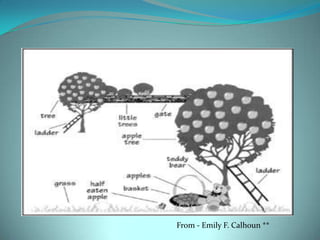
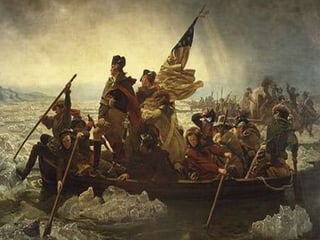
Tell me about the picture component of this model.     Teachers select a picture for the students to study. The children identify what they see in the picture for the teacher to label. The children read and review the words generated.
From - Emily F. Calhoun **
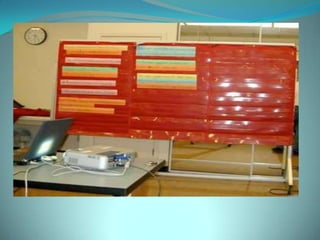
Then what do you do with the words?     Each child receives their own copy of the words generated from  the picture.  The children are invited to classify the words according to properties or attributes they can identify.This sounds pretty simple. Is there more to the Picture Word Inductive Model?     Yes… After the children become very familiar with their new words they create a title for the picture. Following steps include building sentences both together as a group and individually, and then onto creating paragraphs.
How does PWIM enhance student learning? PWIM improves student sight vocabulary. Students name the words, see them printed and hear them many times. When constructing the sentences, teachers model the correct sentence form.The children learn from teacher modeling and use that experience to create their own sentences. When the students classify their words and sentences they are selecting common attributes.  The students search for and identify attributes that can be used to distinguish examples of a given group or category from non-examples.
Are the goals of PWIM the same for both the older and younger students?While the activities may differ, the instructional goals for students of all ages are the same.The PWIM goals are to:1) build sight vocabulary as a basis for reading, learning phonics and spelling generalizations2) gain confidence in one's ability to learn3) learn how to inquire into language and use knowledge and skills to read, write and participate fully in education
Let The Fun Begin

Let The Fun Begin

  • 1.
    PICTURE WORD INDUCTIONMODELLet the fun begin !
  • 2.
    In the past,the main focus of education students has been geared toward functional skills and transition to adulthood.The focus has included academics, since No Child Left Behind Act of 2001which mandated that all students should be tested with state accountability assessments.History of Educating Students with Intellectual Disabilities
  • 3.
    PWIM Introduced inModelsof Teaching ClassIs a practical guide to teaching beginning language learners of all ages Begins with what the students already know and respects their ability to think Allows students to hear the words pronounced correctly many times and develops sight-word vocabulary Is designed to enable students to be immediately successful as language learners
  • 4.
    Could PWIM bemodifiedto be used in a Special Educationsetting and incorporate a whole language philosophy and phonics?
  • 5.
    PWIM is aninquiry oriented language arts strategy that uses pictures containing familiar objects and actions to elicit words from children‘s listening and speaking vocabulary.Is PWIM only for primary children? PWIM is effective with children of all grade levels.Is PWIM useful for small or large group instruction? Teachers can use PWIM with whole classes, small groups or individuals.
  • 6.
    Tell me aboutthe picture component of this model. Teachers select a picture for the students to study. The children identify what they see in the picture for the teacher to label. The children read and review the words generated.
  • 7.
    From - EmilyF. Calhoun **
  • 8.
    Then what doyou do with the words? Each child receives their own copy of the words generated from the picture. The children are invited to classify the words according to properties or attributes they can identify.This sounds pretty simple. Is there more to the Picture Word Inductive Model? Yes… After the children become very familiar with their new words they create a title for the picture. Following steps include building sentences both together as a group and individually, and then onto creating paragraphs.
  • 10.
    How does PWIMenhance student learning? PWIM improves student sight vocabulary. Students name the words, see them printed and hear them many times. When constructing the sentences, teachers model the correct sentence form.The children learn from teacher modeling and use that experience to create their own sentences. When the students classify their words and sentences they are selecting common attributes. The students search for and identify attributes that can be used to distinguish examples of a given group or category from non-examples.
  • 11.
    Are the goalsof PWIM the same for both the older and younger students?While the activities may differ, the instructional goals for students of all ages are the same.The PWIM goals are to:1) build sight vocabulary as a basis for reading, learning phonics and spelling generalizations2) gain confidence in one's ability to learn3) learn how to inquire into language and use knowledge and skills to read, write and participate fully in education